Introduction
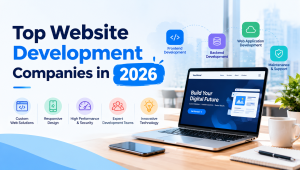
A professional website has become an essential part of business growth in 2026. From building brand credibility to attracting potential customers, a well-developed website helps businesses establish a strong digital presence. As customer expectations continue to evolve, companies increasingly require websites that are fast, secure, mobile-friendly, and easy to navigate.
Choosing the right development partner can make a significant difference in achieving these goals. The top web development companies offer a range of services, including custom website development, e-commerce solutions, web applications, and ongoing technical support.
However, selecting a suitable partner requires more than comparing prices. Businesses must consider technical expertise, project experience, communication, scalability, and long-term support. This guide explores leading website development companies in 2026, their capabilities, and the factors businesses should evaluate before making a decision.
Why Businesses Need a Professional Website Development Company in 2026
1. Better User Experience and Performance
A website needs to provide a smooth experience across different devices and browsers. Professional developers focus on intuitive navigation, responsive layouts, fast-loading pages, and accessible interfaces. These improvements help visitors find information quickly and interact with the business more easily.
2. Mobile-Friendly and Responsive Websites
With users accessing websites through smartphones, tablets, and desktop computers, responsive development is essential. A professional development team ensures that website layouts, images, menus, and interactive elements adapt to different screen sizes.
3. Security and Scalability
Businesses need websites that protect customer information and remain reliable as traffic increases. Development companies can implement security measures, reliable hosting configurations, regular updates, and scalable architectures to support future growth.
4. SEO-Friendly Website Architecture
A technically sound website makes it easier for search engines to crawl and understand its content. Clean URLs, logical navigation, mobile usability, appropriate metadata, and good page performance can support search engine optimization when combined with valuable content and an effective SEO strategy.
Top Website Development Companies in 2026
The following companies are potential options for businesses seeking website development services. The list is not a definitive ranking; each company should be evaluated according to its current portfolio, service offerings, pricing, and project requirements.
1. Octal Software
Octal Software provides IT and software development services for businesses looking to build and improve digital products. Its website development capabilities make it a potential option for organizations seeking customized digital solutions.
Businesses evaluating Octal Software can explore its web development services, technical capabilities, and experience with different project requirements. Companies looking for a custom web development company should assess its portfolio, development approach, and ability to integrate websites with existing business systems.
Services to explore:
- Website design and development
- Custom software development
- Web application development
- Business-specific digital solutions
Official website: https://www.octalsoftware.com/
2. Tata Consultancy Services (TCS)
Tata Consultancy Services is a global IT services and consulting organization serving businesses across multiple industries. Its broad technology and digital transformation capabilities make it relevant to enterprises undertaking complex digital initiatives.
Organizations can consider TCS when website development forms part of a larger modernization, integration, or enterprise technology project.
Key areas to explore:
- Enterprise digital solutions
- Application development and modernization
- Cloud and technology consulting
- Systems integration
Official website: https://www.tcs.com/
3. Accenture
Accenture works with organizations on technology, consulting, and digital transformation initiatives. Its multidisciplinary approach can be useful for businesses that need to connect website development with customer experience, data, cloud infrastructure, and broader digital operations.
Large organizations with complex requirements may consider Accenture for projects involving multiple technologies and business systems.
Key areas to explore:
- Digital experience solutions
- Application development
- Cloud transformation
- Enterprise technology integration
Official website: https://www.accenture.com/
4. IBM Consulting
IBM Consulting supports organizations with technology strategy, application modernization, and enterprise transformation. Its expertise in enterprise systems and cloud technologies may be relevant to businesses developing complex digital platforms.
Companies should determine whether IBM’s service model and project scope align with their specific website or web application requirements.
Key areas to explore:
- Application modernization
- Cloud-based solutions
- Enterprise integration
- Digital transformation consulting
Official website: https://www.ibm.com/consulting
5. Capgemini
Capgemini provides consulting, technology, engineering, and digital services to organizations across various sectors. Businesses seeking connected digital experiences may explore its capabilities in application development and technology integration.
Its suitability depends on the project’s complexity, required technologies, budget, and expected level of ongoing support.
Key areas to explore:
- Digital solutions
- Application development
- Cloud services
- Enterprise technology consulting
Official website: https://www.capgemini.com/
6. Infosys
Infosys is a global technology services company that helps organizations modernize applications and develop digital capabilities. Its services may be relevant to enterprises that need website development alongside larger technology initiatives.
Businesses should review its current service offerings and project experience before deciding whether it fits their requirements.
Key areas to explore:
- Digital transformation
- Application development and modernization
- Cloud solutions
- Enterprise technology services
Official website: https://www.infosys.com/
7. Cognizant
Cognizant works with organizations to improve business processes and develop technology-driven solutions. Its application development and digital engineering capabilities can be relevant to companies building customer-facing digital platforms.
It may be worth considering for projects that require coordination between web applications, business systems, and enterprise technology infrastructure.
Key areas to explore:
- Application development
- Digital engineering
- Cloud modernization
- Technology consulting
Official website: https://www.cognizant.com/
Key Services Offered by Leading Website Development Companies
The services provided by a development partner depend on its expertise and the project’s scope. Common offerings include the following.
1. Custom Website Development
Custom development creates a website around specific business goals rather than relying entirely on prebuilt templates. It can support specialized functionality, unique branding, integrations, and future expansion.
2. E-Commerce Website Development
E-commerce development includes online storefronts, product catalogs, payment gateway integration, inventory management, and checkout optimization. These features help businesses manage online sales more efficiently.
3. Web Application Development
Web applications provide interactive functionality through a browser. Examples include customer portals, booking platforms, management dashboards, and subscription-based products.
4. Content Management System Development
CMS solutions allow teams to publish and update website content without changing code for every edit. WordPress and Drupal are examples of platforms businesses may consider based on their content and customization needs.
5. Website Maintenance and Support
Ongoing maintenance helps keep websites secure, functional, and compatible with changing technologies. Support may include bug fixes, performance monitoring, software updates, backups, and feature enhancements.
Technologies Used by Website Development Companies in 2026
Modern development projects use different technologies depending on the website’s requirements.
- Frontend: React, Angular, and Vue.js can support interactive user interfaces.
- Backend: Node.js, Python, PHP, and .NET can power server-side functionality.
- Content management: WordPress and Drupal support content publishing and management.
- E-commerce: Shopify, Magento, and WooCommerce offer different approaches to online retail.
- Cloud infrastructure: Cloud platforms can support deployment, scalability, and availability.
- AI-assisted development: AI tools can help development teams with selected coding, testing, and workflow tasks, but require appropriate human review.
The right technology stack depends on performance requirements, security, maintainability, available expertise, and the expected lifespan of the project.
How to Choose the Right Website Development Company
1. Review the Portfolio
Previous projects help businesses understand a company’s design quality, technical capabilities, and experience with similar requirements. Case studies are especially useful when they explain the challenges addressed and the results achieved.
2. Evaluate Technical Expertise
The development team should understand the technologies required for the project. Businesses should also ask about accessibility, security, performance optimization, integrations, and future maintenance.
3. Compare Pricing and Timelines
A clear proposal should outline deliverables, milestones, payment terms, and potential additional costs. Comparing proposals on scope rather than price alone can help prevent misunderstandings.
4. Check Communication and Support
Regular communication helps projects stay aligned with business goals. Before signing an agreement, companies should clarify who will manage the project, how progress will be reported, and what post-launch support is included.
5. Confirm Ownership and Security
Businesses should understand who owns the source code, design files, domain, and website content. They should also confirm how sensitive information will be protected and how access credentials will be managed.
Website Development Cost in 2026
Website development costs vary according to complexity, functionality, design requirements, integrations, and the development team’s location and experience.
A basic business website generally costs less than a large e-commerce platform or a custom web application. Features such as user accounts, payment processing, advanced dashboards, and third-party integrations can increase development time and cost.
Businesses should request itemized proposals that distinguish initial development expenses from recurring costs such as hosting, maintenance, licenses, and future improvements. A clearly defined scope helps organizations compare options and manage their budgets effectively.
Website Development Trends to Watch in 2026
Several developments are influencing how businesses plan and build websites.
- AI-assisted workflows: Development teams are using AI tools to support selected design, coding, and testing tasks.
- Progressive web applications: PWAs can provide app-like experiences through supported web technologies.
- Headless content management: Separating the content layer from the presentation layer can offer greater flexibility for some projects.
- Performance optimization: Efficient assets, responsive interfaces, and careful loading strategies contribute to better user experiences.
- Accessibility-focused design: Accessible navigation, readable content, and keyboard-friendly controls help more users interact with websites.
- Stronger security practices: Regular updates, secure authentication, and careful data handling remain important for protecting digital platforms.
Businesses should adopt trends based on practical benefits rather than choosing technologies simply because they are popular.
Conclusion
Selecting the right development partner is an important step toward building a reliable digital presence. The top web development companies differ in their technical expertise, project scope, industry experience, and service models, so businesses should evaluate each option against their specific objectives.
Whether an organization needs a corporate website, an e-commerce platform, or a complex web application, the right partner should offer transparent communication, relevant technical experience, and dependable long-term support. A careful comparison of portfolios, proposals, security practices, and maintenance services can help businesses make an informed decision in 2026.
Frequently Asked Questions
1. How can a business choose the best website development company?
Businesses should review portfolios, technical expertise, client references, pricing, communication practices, security standards, and post-launch support before selecting a provider.
2. What does a custom web development company do?
A custom web development company builds websites and web applications around a business’s specific needs, including tailored functionality, integrations, branding, and scalability.
3. How much does website development cost in 2026?
The cost depends on the project’s scope, complexity, technology stack, integrations, and maintenance requirements. A detailed proposal is the best way to establish a realistic budget.
4. Which technologies are commonly used for website development?
Common options include React, Angular, Vue.js, Node.js, Python, PHP, .NET, WordPress, and various e-commerce and cloud platforms.
5. Why is website maintenance important?
Maintenance helps address security vulnerabilities, fix bugs, maintain compatibility, monitor performance, and keep website functionality reliable over time.