Renovating With a Newborn on the Way: Planning a Floor Replacement Around Family Life
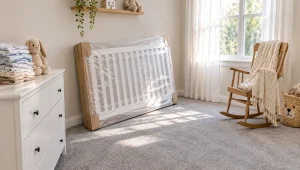
Somewhere in the second trimester, a lot of expecting parents look at the worn carpet in the spare room or the scratched laminate in the hallway and decide it has to go before the baby comes. It’s a reasonable instinct. Once a newborn arrives, a week of noise, dust and furniture stacked in the living room is much harder to live with.
A floor replacement during pregnancy is very doable. It just needs more planning than the same project would at any other time, because the deadline is real, the person carrying the baby shouldn’t be breathing renovation dust, and the house has to be ready for a crawling child within a year.
Start earlier than you think
The most common mistake is leaving the floors until the last month. By then the nursery furniture has arrived, energy is low and any delay feels like a crisis.
A comfortable timeline looks something like this:
- Five to six months before the due date: decide which rooms to replace and start looking at samples.
- Four months before: get in-person measurements and written quotes.
- Three months before: order the material and book the installation.
- Two to three months before: install, then let the rooms air out.
- The last six weeks: set up the nursery on a finished floor.
This leaves room for a delayed shipment or a subfloor problem without pushing the work into the final weeks. Many flooring retailers suggest finishing at least a month before the due date. More margin than that is better, since babies don’t always follow the schedule.
Decide which rooms matter most
You don’t have to redo the whole house. Think about where you’ll actually spend the first year.
The nursery comes first, but it’s often the smallest job. The living room is where the baby will spend tummy time, then crawl, then pull up on the furniture. Hallways and the main bedroom see the most late-night walking. The kitchen gets dropped bottles and spilled formula.
If the budget only covers part of the house, put it into the rooms with the most floor time. The guest room can wait.
Choose floors for the next few years, not the next few months
A newborn doesn’t do much to a floor. A one-year-old does. Plan for spilled milk, crawling knees, push toys, high-chair crumbs and eventually a toddler with a crayon.
- Luxury vinyl plank is the practical favorite for living areas and kitchens. It’s waterproof, easy to clean and softer underfoot than tile. Look for a thicker wear layer, since that’s what resists scratches from toys and furniture.
- Carpet still makes sense in the nursery and bedrooms. It’s warm, quiet and kinder to a baby learning to sit and stand. A low, dense pile is easier to vacuum and keeps small objects from disappearing into it.
- Engineered hardwood gives you real wood with more stability than solid planks, though it will show scratches over time.
- Tile is easy to keep clean in bathrooms and entries but hard on falls. If you choose it for a play area, plan on a large rug.
Whatever you choose, keep transitions between rooms as flat as possible. A raised threshold that adults never notice becomes a trip hazard for a new walker.
Pay attention to what the floor gives off
New flooring and the adhesives used with it can release volatile organic compounds, or VOCs, for a while after installation. Most of it fades within days, but it’s worth reducing from the start.
Look for products with recognized low-emission certifications. FloorScore and GREENGUARD Gold cover hard-surface flooring such as vinyl and laminate, and the CRI Green Label Plus program covers carpet and adhesives. Ask your installer whether the adhesive or underlayment they plan to use is certified too, since those can matter as much as the floor itself.
After installation, ventilate the rooms for at least a few days before setting up the nursery. In a desert city like Las Vegas, opening windows in July isn’t realistic, so it helps to schedule the work for spring or fall, or to run the air conditioner’s fresh-air setting and fans while the room airs out. Some carpet retailers will also unroll and cut carpet in their warehouse so part of the airing out happens before it reaches your house.
If you have specific health questions, ask your doctor or midwife. They can tell you what makes sense for your situation.
Keep the dust away from the expecting parent
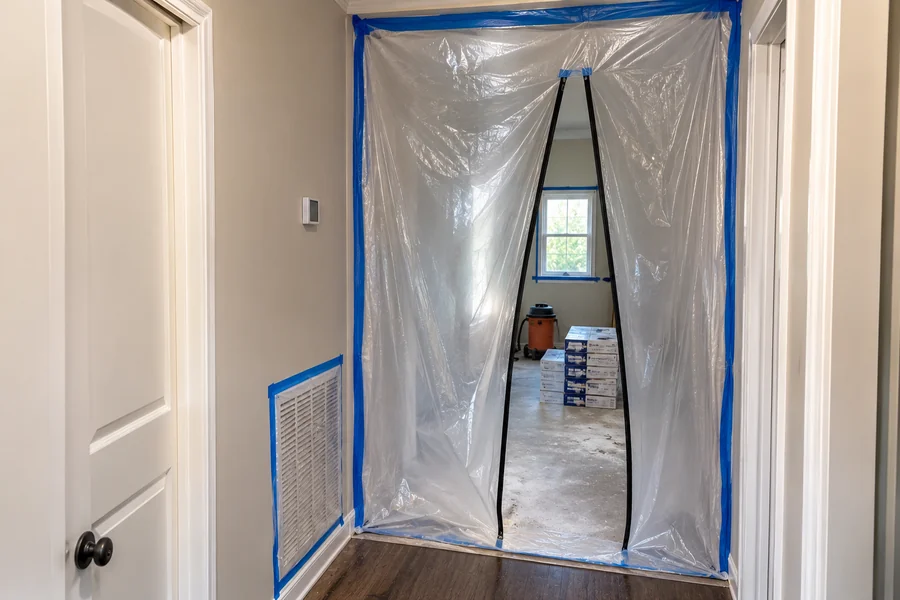
Tearing out old flooring is the dustiest part of the job. Carpet pads hold years of dirt, old vinyl and adhesive can crumble, and grinding a concrete slab throws fine dust into the air.
A few precautions go a long way:
- Ask the crew to seal off the work area with plastic sheeting and to cover nearby air returns.
- Plan for the expecting parent to be out of the house on tear-out and installation days.
- If the home was built before 1978, ask about lead before anyone sands, scrapes or removes painted trim. Federal rules require lead-safe certified contractors for that kind of work in older homes.
- Have the crew cut materials outside or in the garage where possible.
- Do a thorough cleanup afterward, including vents, window sills and the tops of door frames, before the nursery goes together.
Plan where everyone will be
Floor work means the rooms involved are unusable for a day or several. Furniture has to go somewhere, pets need a quiet place away from the crew, and if the work covers bedrooms, you’ll need to sleep somewhere else for a night or two.
Work out the order of rooms with the installer so you always have a clean, usable bedroom and bathroom. Doing the nursery and main living areas in one stretch is usually more efficient than spreading the job across several months, and it means the mess happens once.
Hire for a schedule you can trust
With a due date on the calendar, a missed start date or a half-finished job costs more than money. When comparing quotes, ask:
- Will your own employees do the work, or a subcontractor?
- Is removal, furniture moving, subfloor prep and cleanup included in the price?
- What is the earliest and latest realistic finish date?
- Which products and adhesives do you recommend for a nursery, and are they certified low-emission?
- What labor warranty do you offer?
A company that handles sales and flooring installation services with its own team has fewer moving parts to coordinate, which makes the schedule easier to hold. If you’re in Southern Nevada, a Las Vegas flooring company such as Expert Flooring Solutions offers free take-home samples and complimentary design help, installs the floors it sells with its own crews, moves furniture and clears debris at no extra charge, and backs the labor with a lifetime warranty.
A finished floor, then the nursery
The order matters more than any single product choice. Floors go in first, then the rooms air out, then the crib, dresser and rocking chair move in. Done that way, the last weeks of pregnancy are spent folding tiny clothes rather than waiting for an installer, and the floor is ready for everything the first year brings.