One Workshop, More Possibilities: How an Embroidery Machine, DTF Printer, and Heat Press Work Together
Custom apparel businesses often start with a few orders and limited products. As customers request different designs and decoration styles, having multiple production methods becomes useful.
An embroidery machine, DTF printer, and heat press each serve a different purpose. Together, they help businesses offer more customization options without relying on one technique.
For small business owners, combining these tools can improve flexibility, production planning, and customer satisfaction.
Table of Contents
- Why Combine Different Apparel Decoration Methods?
- What an Embroidery Machine Brings to Your Workshop
- How a DTF Printer Expands Design Possibilities
- The Heat Press Completes the DTF Process
- Matching the Right Machine to Each Order
- Building a More Organized Production Workflow
- Growing a Custom Apparel Business with HTVRONT
- Final Thought
1. Why Combine Different Apparel Decoration Methods?
Customers have different preferences. Some want embroidered logos on polo shirts, while others prefer colorful graphics on T-shirts and sweatshirts.
Relying on one production method can limit the orders a business accepts.
Embroidery creates textured, stitched designs, while DTF printing handles colorful artwork and detailed graphics. A heat press completes the process by applying transfers to garments.
Together, these methods give business owners more ways to serve customers from one workshop.
2. What an Embroidery Machine Brings to Your Workshop
An embroidery machine is useful for producing uniforms, caps, branded shirts, and personalized gifts. Stitched logos provide a distinctive finish for businesses, schools, and sports teams.
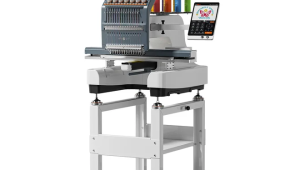
The HTVRONT E15 15-Needle Embroidery Machine is designed to support growing workshops. Its multi-needle configuration helps manage designs with different thread colors.
The machine offers an advertised speed of 1200 SPM, with stable operation highlighted at 850 SPM. Its embroidery area measures 19.68 × 9.84 inches.
Other useful features include a touchscreen interface, red-light alignment, and smart border tracing. Its IdeaStudio software also provides design resources and tools for editing artwork and adjusting colors.
For entrepreneurs handling regular customer orders, the HTVRONT embroidery machine collection is worth exploring.
3. How a DTF Printer Expands Design Possibilities
Embroidery works well for stitched artwork, but some designs need gradients, multiple colors, or detailed illustrations. A DTF printer offers another solution.
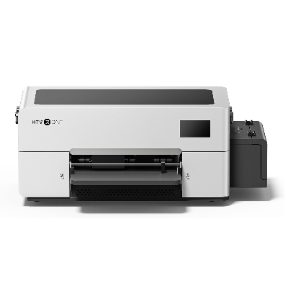
Direct-to-film printing transfers prepared graphics from film onto garments. It is suitable for promotional T-shirts, personalized merchandise, and creative clothing collections.
The HTVRONT D2 DTF Printer is designed for small businesses and creative studios looking for a manageable printing setup.
Its focus on easier operation and reduced maintenance concerns can help owners manage their daily production.
For example, a small online clothing shop may receive several orders during the week but fewer over the weekend. A printer designed with idle-time reliability in mind can make restarting production less stressful.
Explore the HTVRONT DTF printer collection when considering equipment for small-batch apparel production.
4. The Heat Press Completes the DTF Process
A DTF printer prepares the design, but a heat press is needed to apply the finished transfer to the garment.
The process generally involves printing artwork onto film, applying DTF powder, and processing the powder using suitable equipment. The prepared transfer is then applied with a heat press.
Temperature, pressure, and timing all matter. Settings should follow the transfer supplier’s instructions because different materials may require different conditions.
For small apparel businesses, a dedicated heat press also keeps production organized. Prepared transfers can be applied to garments without interrupting embroidery or artwork preparation.
5. Matching the Right Machine to Each Order
Different projects require different decoration methods. Choosing the right machine depends on the artwork, garment, and desired finish.
For example, a local sports club may need embroidered logos on polo shirts and caps. Colorful graphics on team T-shirts could be produced using DTF transfers.
Similarly, a clothing brand might choose embroidery for premium designs and DTF printing for detailed illustrations.
Offering both options gives customers more flexibility and helps businesses accept a wider variety of orders.
6. Building a More Organized Production Workflow
Having multiple machines is useful, but proper organization makes them more effective. Every order should have a clear production process.
Embroidery projects can be prepared separately, while DTF designs can be printed in batches. Once transfers are ready, garments can move to the heat press station.
Keeping threads, films, powders, and blank garments organized also saves time.
Testing artwork on sample garments and checking finished products before packaging can help prevent unnecessary mistakes.
7. Growing a Custom Apparel Business with HTVRONT
As a creative business develops, customer requirements often become more varied. Offering embroidery, DTF printing, and heat pressing can help workshops serve different markets.
HTVRONT provides equipment for these customization methods, including the E15 embroidery machine and D2 DTF printer.
Business owners should choose equipment according to their current order volume, available workspace, and future plans.
Instead of purchasing everything immediately, entrepreneurs can expand their equipment gradually as customer demand increases.
8. Final Thought
A successful custom apparel workshop needs suitable equipment and an organized production process.
An embroidery machine, DTF printer, and heat press each bring different capabilities. Together, they create more opportunities for personalized clothing.
With options such as the HTVRONT E15 and D2, entrepreneurs can explore different decoration methods, serve more customers, and gradually develop a flexible apparel business.