Choosing the Right Sealer for Your Packaging
Whether you’re packing coffee beans, sealing spare parts, bagging baked goods or preparing products for online orders, a reliable seal is essential. It keeps contents fresh, protects against contamination and tampering, and gives your products a professional finish. Choosing the right equipment, however, isn’t always straightforward. There’s a wide range of heat sealers on the market, and each type suits different materials, volumes and workflows.
This guide explains the main types of heat sealers, how they work and how to choose the right one for your business.
How Heat Sealing Works
Heat sealing joins two layers of thermoplastic material by applying heat and pressure. The heat softens the material, and the pressure fuses the layers together. Once cooled, the materials form a strong, airtight bond.
The right combination of temperature, pressure and dwell time, which is how long the heat is applied, depends on the type and thickness of the packaging material. Getting this balance right is key to a consistent, reliable seal.
The Main Types of Heat Sealers
Impulse Heat Sealers
Impulse sealers are among the most common and affordable options. They work by sending a short burst of electricity through a heating element when the jaw is closed. The element heats up quickly, seals the bag and then cools while pressure is maintained, creating a clean, strong seal.
Because the element only heats when sealing, impulse sealers are energy efficient and safe to use, with no need for a warm-up period. They’re ideal for thin materials such as polyethylene and polypropylene bags and are widely used by small businesses, retailers and food producers.
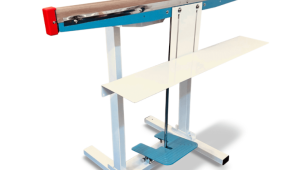
Impulse sealers come in tabletop, hand-held and foot-operated models. Foot-operated versions leave both hands free to position products, making them popular for higher volumes and larger bags.
Constant Heat Sealers
Constant heat sealers, sometimes called direct heat sealers, keep their sealing jaws heated at a set temperature. They’re designed for thicker or more complex materials, such as foil laminates, coated papers and some multilayer pouches commonly used for coffee, snacks and pharmaceuticals.
These machines often produce wider, more robust seals and may include textured or patterned jaws for a professional finish. Because the jaws remain hot, operators need to take care, and the machines require time to reach operating temperature.
Continuous Band Sealers
Continuous band sealers are designed for higher production volumes. Bags are fed through the machine on a conveyor, where moving bands carry them past heating and cooling zones to create a continuous seal. Many models can also print batch numbers or dates as they seal.
Band sealers suit businesses packing large numbers of bags, such as food manufacturers, distributors and contract packers. They can be configured horizontally or vertically depending on the product, and many accommodate a variety of bag materials.
Vacuum Sealers
Vacuum sealers remove air from the package before sealing, extending shelf life and protecting products from oxidation and moisture. They’re commonly used for meat, cheese, coffee and other perishable goods, as well as for protecting metal components from corrosion.
How to Choose the Right Sealer
Selecting the right machine comes down to a few key considerations.
Packaging Material
Start with the material you’re sealing. Thin polyethylene and polypropylene bags are generally well suited to impulse sealers, while foil, laminated and coated materials typically need constant heat. If you use several materials, choose a machine that can handle your most demanding packaging or consider having more than one type.
Seal Length and Width
Measure the width of the bags you’ll be sealing and choose a sealer with an element long enough to seal them in one pass. Consider seal width as well. Wider seals can offer greater strength and a more professional appearance.
Production Volume
For occasional or low-volume sealing, a tabletop impulse sealer may be all you need. As volumes grow, foot-operated models and continuous band sealers can significantly improve efficiency and reduce operator fatigue.
Additional Features
Look for features that suit your workflow, such as adjustable temperature and timer controls, built-in cutters, date coding, digital displays and safety mechanisms. Replacement parts, such as heating elements and Teflon covers, should be readily available.
Sustainability Considerations
Many businesses are reviewing their packaging choices to reduce environmental impact. When changing packaging materials, such as switching to recyclable mono-material films or compostable options, check that your sealer is compatible, as different materials may require different temperature settings. The Australian Packaging Covenant Organisation offers resources to help businesses make more sustainable packaging decisions.
Maintenance Tips
Keep sealing jaws clean and free of residue, and replace worn Teflon covers and heating elements as needed. Regularly check seal quality by testing sample bags, especially when changing materials or settings. A well-maintained sealer will deliver consistent results and last longer.
Testing Seals for Quality
Regardless of the machine you choose, regular seal testing helps ensure consistent quality. Simple checks, such as visually inspecting seals and gently pulling sealed samples apart, can reveal problems like weak spots or wrinkling early. Keeping a simple log of settings for each packaging material also makes it easy for any team member to achieve consistent results, even when switching between products during a shift.
Final Thoughts
The right heat sealer can improve product quality, presentation and efficiency across your packing process. By understanding the differences between impulse, constant heat, band and vacuum sealers, and matching them to your materials and volumes, you can choose equipment that meets your needs today and supports your business as it grows.