Contact Lenses for Every Stage of Life: Finding the Right Option for Your Vision Needs
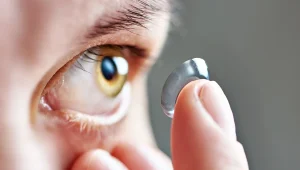
As we grow older, our eyes change and so do our vision needs. A youngster who spends most of their time playing or in school has different vision needs than a working professional who spends several hours on a computer screen or an athlete who spends most of their time in the field. Similarly, people over 40 and 50 have different vision needs.
Contact lenses help manage vision problems like farsightedness, nearsightedness, and astigmatism. So, choosing the right contact lenses matters. However, the right pair is not always the one that matches your prescription. Several factors, like age, daily activities, profession and eye health, matter when choosing a pair.
With advancement in technology, we are seeing a lot of transformation in the eye care industry. These days lenses of several materials and in various designs are available to match modern day requirements.
This article looks at how contact lens needs change throughout life, the options available for different age groups, and the factors that need to be considered before choosing a pair.
Understand Your Vision Needs Before Choosing Contact Lenses
Before jumping to different lens options, it is important to understand why your vision needs correction. There are different eye conditions that require correction lenses.. Some of the common eye conditions are:
Nearsightedness (myopia): This condition makes it hard to see objects far away.
Farsightedness (hyperopia): This is opposite of myopia and makes it difficult to see close-up objects.
Astigmatism: It is a condition in which the cornea or lens take an irregular shape, causing blurred or distorted vision at different distances.
Presbyopia: This is an age related eye condition in which the eyes’ ability to focus on nearby objects reduce. People within presbyopia find it difficult to read books and phone screens.
As mentioned before, prescription is the most basic part of choosing contact lenses. Apart from prescription other factors like your eye health, your daily routine and activities, eye tear film and shape of cornea also plays an important role in choosing contact lenses.
A proper eye examination is necessary before choosing contact lenses. Once you have a proper prescription, you can explore different contact lenses and choose the one which are best for you.
Now, let’s have a look at what kind of lenses are required at different stages of life.
Teens and Young Adults: Choosing Lenses for Active Lifestyles
Vision priorities: Convenience, clear vision, and comfortable wear
Vision needs: Usually correcting myopia (nearsightedness) or hyperopia (farsightedness), often paired with astigmatism.
Teenagers and young adults have busy schedules. They need to juggle between different activities like sports, studies, schooling etc. This age group generally prefer a comfortable vision correction option.
Best Options:
Daily disposable lenses: For busy schedules that involve school, sports, and busy social schedules.These are ideal because they eliminate cleaning routines and lower infection risks.
Toric Lenses: Stabilized soft lenses designed for clear vision for those who have astigmatism.
Working Adults and Screen Users: Prioritizing Comfort and Moisture
Vision priorities: Long working hours, digital eye strain, and dryness
Vision Needs: Standard refractive errors.
Working professionals these days spend a lot of their time on computers or mobile screens. Long hours on front of screens and in air-conditioned offices cause eye irritation and discomfort. People who wear contact lenses face dryness, irritation, or blurred vision after long working hours. For working professionals who spend long hours before screens, lens material can make a difference.
Best Options:
Silicone Hydrogel Lenses: Allow significantly more oxygen to reach the cornea, keeping eyes hydrated through long workdays.
Water-Gradient Lenses: Advanced materials (such as Alcon Dailies Total1 or Precision1) that place a gentle moisture cushion against the eye.
Ages 40 and Beyond: Finding Solutions for Changing Near Vision
Vision priorities: Reading comfort, and multiple viewing distances
Vision Needs: Presbyopia
People in their early 40s may start witnessing noticeable in their eye focusing ability on nearby objects. This eye condition is called presbyopia. It happens because with age the lens inside the eye becomes less flexible. This makes it harder to focus on close objects.
Best Options:
Multifocal Lenses: As the name suggests, these lenses are designed to provide seamless vision correction at different distances. They offer seamless transition between distance, intermediate, and close-up viewing. You can explore multifocal contact lenses to understand the available options and discuss their suitability with an eye care professional.
Monovision / Blended Vision: In this method, one eye is corrected primarily for distance vision and the other for near vision.
Specialized Vision Needs: Options Beyond Standard Soft Lenses
Vision Needs: Irregular corneas, keratoconus, severe dry eye, or high/unusual prescriptions.
Some people have complex eye issues and like severe dry eye, keratoconus, irregular corneas or other conditions. For them, the conventional lenses are difficult to wear. They need specialized lenses for vision correction.
Best Options:
Rigid Gas Permeable (RGP) Lenses: RGP lenses are made from firm, oxygen-permeable materials. By maintaining a shape on the eye, they create an optical surface that provides sharp vision. These lenses useful for people with certain types of irregular corneas or high astigmatism.
Scleral Lenses: Larger-diameter lenses that vault over the cornea and rest safely on the white of the eye (sclera). Scleral lenses are used in managing conditions such as keratoconus, when standard lenses do not provide satisfactory vision or comfort.
Hybrid Lenses: Combine a rigid center for sharp sight with a soft outer ring for comfort. The central portion provides the optical benefits of a rigid lens, while the softer outer area is intended to improve comfort and lens stability.
Simple Habits That Help Keep Contact Lens Wear Safe
For maintaining good eye health, choosing the right lenses is important. Apart from this, how to handle, clean and wear these lenses, also matters.
Even the modern and most sophisticated lenses cause complications if not handled properly. Here are some safe tips and habits to keep contact lens wear safe.
- Wash your hands: Always wash and dry your hands before touching your lenses.
- Always discard disposable lenses after use: Never continue wearing disposable lenses beyond their recommended replacement period.
- Avoid sleeping in lenses: Unless specifically prescribed for overnight wear, remove your lenses before going to bed. Sleeping in contact lenses increases the risk of serious eye infections.
- Keep lenses away from water: Do not expose lenses to tap water, swimming pools, or hot tubs.
- Use the right cleaning solution: For reusable lenses, use the recommended disinfecting solution. Never use water or saliva to clean them.
- Keep your lens case clean: Follow the recommended cleaning instructions and replace the case regularly.
- Attend regular eye examinations: Your prescription, eye health, and lens fit may change over time.
If you experience eye pain, unusual redness, light sensitivity, discharge, or sudden blurred vision, remove your lenses and seek prompt advice from an eye care professional. These symptoms should not be treated as ordinary lens discomfort.