From Blank Walls to Custom Art: Making Decor Feel More Personal
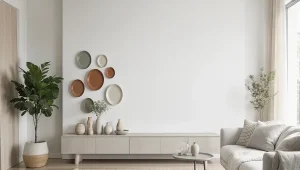
One of the most obvious aspects of a house can be a blank wall. It can be an indicator that a room is not completed yet it may also indicate that the homeowner is yet to determine what a room should tell them. Furniture normally provides solutions to practical questions like where to sit, sleep, eat or have a place to keep items. Art does another task since it injects personality without having to alter the fundamental nature of a room. A snapshot of a significant journey, an abstract image in a preferred color, or a drawing related to a passion in life can be the character-maker in a flash than much of the big furniture. That is why the process of wall decoration has turned into a less and less in terms of filling the empty space than into the choice of elements of the identity of a person that should be assigned a more visible location within the home.
That change is indicative of a larger shift in how people perceive interiors. Professionally styled rooms have been known to be very coordinated over the years, with the matching of furniture collections, with very limited control of color schemes, accessories designed with complement to one decorative theme. The effect might appear smooth and a little bit anonymous. Several homeowners are now less interested in rooms which seem to have been gathered together instead of being bought immediately. The latter is particular to art since, in the case of individual pieces, they may belong to various times, locations, artists, as well as experiences. A traditional landscape might reside with modern photography, and a traditional illustration of a family may be placed adjacent to a print that one bought during a holiday. Visual consistency is not a problem that is serious when the choices made are personal and as such there is a sense that the room is exclusive to the occupants.
Due to their personalization, not all objects on a wall need to have a deep level of emotional meaning. Memory, taste, curiosity, and plain visual pleasure make a mixture to form the meaning in many successful interiors. One person can choose one piece as it reminds the person of childhood and another one as the colors enhance a rather boring room. A third piece was probably bought simply because it was hard to cease gazing at it. Collectively, those decisions form a history of tastes that feels more convincing than the strict decorating formula. The only difference is that the homeowner is not filling in a list of what should be a finished room but making selections. After that attitude takes place then blank walls are possibilities to create a more and more specific environment.
Being There With Art That Mimics the People in the Room.
A trend forecast is often not the best place to begin customizing your wall decor. It is a focus on the individuals who utilize the room and experiences, places, topics, and visual aesthetics that are important to them. The weekend-hiking family may be naturally receptive to scenery or botanical photography or topographic images. It is possible that a person with interest in architecture will be more attracted to graphic urban studies, technical drawings or photos with focus on geometric and structure. Music lovers may be more attracted to concert photography or artist portraits and families may more appreciate photographs, children artwork or commissioned illustrations. Determining these interests aids in determining what is to be on the wall, yet it also poses the next practical question, where should we find artwork that will represent those interests and yet avoid making the room to look generic.
The range of available sources has widened considerably, giving homeowners more ways to turn a general idea into a finished piece. Galleries, independent artists, online marketplaces, licensed collections, and custom-printing services now make it easier to search by subject, medium, mood, or personal significance. Within that landscape, iCanvas, which operates from Chicago, connects shoppers with wall art from independent artists, licensed estates, and cultural institutions across canvas, fine art paper, acrylic glass, wood, and metal. For homeowners looking to compare different aesthetics before settling on a direction, browsing curated categories can make the search more manageable, and its selection of wall art across a range of subjects and styles offers that kind of breadth. Those seeking a more individualized result can also explore custom art and AI print options based on personal photographs, ideas, or concepts. Together, these choices can make finding art feel more closely connected to creating a home with a distinct point of view.
The best choices are probably made in instances where the owners of houses quit considering whether one matches something and start considering whether they desire to reside with it. Matching will also tend to concentrate on the instant visual match that may result in decisions that are incompatible with the sofa in the long term once the sofa is changed. The attachment that one is personally attached to presents a distinction. A picture that is considered to be special to a favorite city or family tradition can continue to be a useful item even amidst several redecorating sessions since the meaning of the picture will not be tied to a specific shade of upholstery. This does not imply visual harmony should not be considered, as proportion, framing, palette continue to influence the way art works in a room. It does not exclude that emotional permanence is worth having a seat with aesthetic judgment. When there is a purpose to art to be retained in the home it becomes cumulative and not disposed of.
Changing an Empty Wall into a New Intentional Focus.
Big blank walls provide the most ambiguity, simply due to the fact that small choices become more significant due to the size. An isolated small image may seem to be left alone, on the other hand, a collection of unconnected images may easily be chaotic without organization. The question of whether the role of the wall should be taken first should not be based on the artwork content on the wall. Certain walls can be natural focal points, especially walls behind a sofa, bed, dining table, console or fireplace. Others are transitional surfaces and they are more suitable with soft compositions. Determining that role would assist in identifying the wall to be dominated by one piece, tightly picked group, or restrained shape supporting other items in the room. When one considers the wall as an element of the architecture instead of an empty vessel; the results are often more intentional.
When there is a need to have a definite visual focus on a wall, a big statement piece is usually the easiest solution to the problem. Scale is important in that artwork should stand up on its own upon the surrounding furniture and the open space. A large canvas over a long couch, e.g. will provide cohesion, a visual outreach of the seating space between the wall and the space beyond it. One can then play the subject of the work to shape the personality of the whole room be it a vigorous color, silent photography, serious geometry or a section of the landscape. Large art minimizes the decisions made, which can be helpful in an interior with patterned cloths, shelving and books or ornaments on it. The difficulty lies in not making a choice that is purely information of size without significantly contributing to identity, as a piece of great size with less individual pertinence can soak up the entire room with little contribution of identity.
Several works present another opportunity since the wall will be reflecting numerous interests simultaneously. Two photos will provide a sense of symmetry, and three related prints will provide a sense of rhythm without the heavy onslaught of a complete gallery wall. The association between the works is familiar and yet not overly rigid; it makes collections more personal. This relationship may be based on the subject matter, frame finish, colour, artistic method or just a collective history. Arrangements that work best include an intentional contrast, like in the example of a family photograph and an abstract print or an old illustration and a modern typography. Those mixes imply that it was designed by individual preferences as opposed to a pre-created decoration kit. The wall itself also becomes a composition but each of the pieces creates a bigger visual tale.
How to Animate a Room Without Overdecorating it.
Both custom art and custom furniture are especially attractive as they can make something personal worthy of exhibition. Photographs of the family, wedding photos, vacation photos, drawings made by children, portraits of pets, maps, handwritten messages, and computerized drawings could all be finished works as long as they are reproduced and thoughtfully displayed. The point is to differentiate between personalization and novelty. The mere presence of something meaningful in an image does not make the image a successful decor. Composition, resolution, cropping, scale, medium and framing are all factors that dictate whether personal content will have a deliberate look when it is transferred to a wall. A photograph that is well edited and then printed large scale can seem gallery art by comparison and an unthought-over image blown too large can become blurry and powerless. They can best be customized to an equal level on emotional value and presentation.
To make personal material worthwhile, a common method of doing so which may be employed is to transform it and not show it in the way it was presented initially. A journey photo can be cut to highlight the structure rather than the individuals in it, and a photograph drawn on paper can be scanned to allow the quality of the lines that were hard to see in the paper image to come out. Grouping of family pictures could be transformed to a black and white picture when the original colors collide with each other. Maps may be reduced, dates may be the slightest, and the hand may form a part of a modest graphic arrangement. These decisions enable the highly specific memories to operate in the visual language of the home. They also help to avoid the feeling of the personalized decor to look like a scrapbook brought to the wall. The outcome still has some individual meaning but it obtains sufficient formal discipline to act as a component of the room.
This is particularly useful with multiple customized works exhibited in one place. A room full of portraits and names, dates, monograms, sentimental allusions can itself become an eye strain to the observer, even when each object has a point. The mixture of personal work and scenery, abstracts and photography or other works not made with a specific customer in mind allow the eye its rest. It can also enhance the recognition of the personalized objects since they are not in competition with dozens of like signals. The obsession with a portrait of a person in a living room can exceed the effect of hundreds of such portraits on a wall. The same goes with the inscriptions and text-based art, which may become repetitive upon excessive use. Personal decor is most highbrow when the meaning reveals itself sequentially rather than in all its surfaces.
Selecting Color, Material and Texture Purposely.
The color is one part that is immediately observed in a piece of art but if one perfectly matches it with a room it can cause a too matching effect. A less rigorous approach is to find a limited number of existing colors and decide whether the artwork is to repeat, make an expansion or a challenge to them. An organization that has a neutral upholstered room can use art with saturated greens, reds or blues to add energy without the need to replace the furniture. On the other hand, what would seem as an overly colored room would appear more balanced with monochromatic photography or artwork in a muted palette. Replication is not always bad so it might be nice to use repetition but with a twist, choose a secondary color on a rug that is not the same as that on a sofa. Visual conversation, not an exact copy, is the aim. Art is expected to look like a part of the environment and yet be independent enough to garner attention.
Material also plays a very crucial role as various surfaces alter the interaction between an image and light and architecture. Canvas tends to be a more homely and approachable display and can be deployed comfortably in the living rooms, bedrooms and even a casual environment. Paper Fine art paper can be more traditional or gallery-like when placed behind a glazing and can also be very detail oriented. Acrylics have the ability to make colors sharper and produce a smooth surface which fits the modern interiors whereas metals can have a more visual edge and industrial look. Wood is a natural-touch element that can be used to stand in rooms where grain, stone, linen or leather or other touch materials already dominate the scene. There is nothing more advanced than another of these materials. This will be determined by whether their physical attributes are able to support the artwork and the room environment.
Frames provide additional texture creates the sense that a piece can be related, even when the differences between pieces are substantial. One of the ways to bring order is matching each frame, especially in formal grids, or a collection of photos, although variety may be more natural in houses, where a collected feel is favored. Black frames can bring a definition to both colorful or pale works, whereas the light woods might mute contemporary images and tie them together with natural materials throughout the room. Decorative frames can endow modern art with historical quality, and minimal decorative frames can do the same to classic pictures to make them seem more modern. Even attention should be paid to mats since expansive white space can make even a rather small individual appear bigger. Such details are not some decorative elements, as they determine the visual distance between the piece of art and the room in which it is placed. They also have to be carefully framed to help them appear deliberate when cheap prints are use, or to put the weight they require on something of value or sentiment.
Scaling Placed Right.
One of the most widespread causes that otherwise appealing artwork does not appear convincing in a room is scale. The clients often select artworks with references to their visual appearances individually and find out that it is much smaller when placed between the furnishings, doors, windows, and other details in the architecture. One principle that can be applied as a starting point is that art in a location over furniture must be visually wide enough to seem to be attached to the object underneath it. A small frame carried over a large area is usually perceived as incidental since the size of both elements does not come into a connection. The problem can be resolved by larger artwork or a planned arrangement without the need of filling the whole wall. Homeowners can test the dimensions in advance by selecting painter’s tape or paper templates before buying to know how large a given piece will be. This basic measure can assist in avoidance of errors on scale that are challenging to notice on a phone or laptop.
Another common issue can be brought about by the hanging height in that the art is often mounted higher than a comfortable viewing point. The middle of a working or a set up ought to be close to the average eye level in most environments although the position of furniture and the height of the ceiling may be discussed. Pieces of art over a sofa or console must also have visual relationship with the furniture rather than being close to the ceiling. Maintaining the gap reasonably contained will aide the two elements to read as one composition. Unusually high rooms do not mean necessarily that art has to be pushed upwards, as those who look at it are on the same level. Tall walls should be met with big vertical art than the mere raising of a small picture. Human scale should be met by a placement first followed by architectural scale.
The spacing in multi-piece installations is are especially important. Pieces that are either too far apart or too close together avoid the perception of reading as one continuous piece but instead render individual pieces hard to appreciate. Unity offers a good starting point particularly in grids or rows where any slight difference is easily detected. Less formal gallery walls can withstand fluctuating distances, yet they still enjoy a visual frame that prevents the collection going asunder. This may also require furniture, switches, lamps, thermostats, windows and door frames to be taken into consideration before the first nail is put in place. The use of templates on the wall can expose painful gaps and it can be used to decide whether the composition requires an additional piece or not. Thinking ahead could be too technical to be a creative show, and proper distance allows individual decisions to be organized well enough to look deliberate.
Creation of Gallery Walls That Tell a Story.
A portion of what makes gallery walls popular is the fact that the walls can house objects which could never be combined in a collection that makes sense. When the meaning shows a logic of visuality through arrangement, paint, photos, drawings, maps, prints, textiles and small dimensional objects can co-exist. The basic personal gallery walls are often started by content and not by the wish to fill in a specific amount of square feet. A family may mix travel photography, an inherited sketch, a drawing by child and the artwork of a local artist. Living alone, someone may create an assortment of cities, musicians, books, or a visual style that has been many years old. The subsequent show can be appropriate as an individual library, yet without the rigor of a narrative. It does not matter why it was added, only that there is a purpose to the addition rather than to fill a blank vacuum.
Developing coherence does not involve having all the works tied together by a subject. The repeat of frame colours, repeat of shapes, mat widths or a limited palette can afford a sufficient level of constancy to keep heterogeneous material together. A second technique is the layering of a single or two dominating pieces with lesser works in between them. This brings about a sense of hierarchy and assists the eye in knowing what to look at immediately and makes the wall not look visually flat. Negative space is also significant since a wall in the gallery room does not have to fill in every inch possible. Spacing out along the peripheral edges gives the composition a sense of premeditation and not congestion. The best schemes tend to create equilibrium between order and the eventual irregularity so that the viewer has something to grasp without rendering the presentation predictable.
One of the practical benefits of a gallery wall is its ability to evolve as well as compared to one large-scale installation. Entering occurs after a trip, family event, purchasing piece of art, or change of interests. Vintage works do not have to be discarded and can be relocated to free up the full display. This versatility gives way to a more realistic impression of decorating since the homes seldom stay that long. Families are enlarged, the people move, collections are increased and tastes are developed through experience. A wall able to accommodate those changes is incorporated into the history of the household rather than a project accomplished to be left untouched. The little irregularities caused by additions and replacements, over time, can be what the arrangement is all about.
Allowing Art to Decide the atmosphere of various bodes.
The element of personalization is best applied when the aim of a room is considered. The same art can be distracting in a bedroom, where rest ought to take place. Subjects, colors and compositions in a bedroom tend to provide a visual soothing effect, though that soothing need not be pale or neutral. A quiet atmosphere can be achieved by deep-tone landscapes, gentle abstractions, black and white photography and minimalist drawings. The location of the art also counts because a large art above a bed is more influential than a small one on a nearby wall. Bedrooms are personal areas, and hence one might use the available space to showcase images, which hold significance to the people, without necessarily sharing the significance with outsiders. It can be a more personal outcome compared to the paintings placed in the open rooms.
Spaces to live and dine are different since art could be used in discussion and determine the tone of meetings. Living room: A daring design can liven a living room which depends on plain furniture, and to tempt questions, photography may open up a place, an individual or a subject which will spark a discussion. Dining rooms have the ability to accommodate surprisingly dramatic art since individuals can usually spend time in those places when they are sitting and over a small duration. Big paintings, deeper tones and bizarre subject matter can thus be just right where it would clutter a small bedroom. Kitchens, breakfast rooms are good places to have smaller and more informal objects that can add humor, typography, illustration or food related imagery without becoming too thematic. The gateways might be of particular significance since a single artwork in them can leave the initial hint about the character of the home. A room can thus convey a varying element of those within yet still be a part of a greater space.
Another set of considerations has been brought by the home offices as more individuals move their work and focus to work in domestic rooms and hold video conferences. The decoration of these areas can help create a sense of identity without any distraction. An abstract image, personal and meaningful landscape, or architectural photograph can provide visual relief when at a desk the entire day. Background walls smattering in the background use: Background walls visible in the view of a video call can convey more information than blank paint or generic shelves, but overly cluttered displays will have ones diverting attention. Gifted work can be exceptionally successful when based on an achievement, place of work, occupation or hobby without looking corporate. The most robust office furniture will be enabling the focus and allow the room to be separated as it is not a part of the institutional working environment. Such a balance can help a functional space to be more related to the rest of the house.
Developing a Collection With the ability to evolve.
The right to treat decor personally has a number of merits: there is no need to pay much attention to whether a room is finished or not. The anticipation of completion may bring about snap buying, especially when homeowners are threatened of filling each wall in good time once they move in. The presence of space opens up time to make superior decisions. An item bought on an upcoming visit can end up being much more than an order was made just because one wall was bare a couple of months. Waiting may also define scale, color and subject preference following the usage of the furniture in everyday life. The truth is that people tend to find out that their previous assumptions about decorating a room are not that the same when they find out how one room feels in various time of the day. The slow method will help to minimize the chances of finding more artworks substituted just because initially it did not have a significant meaning.
The collections are made more interesting too when they have pieces that have been procured in various sources. One can have the original work of a local artist, as well as, a print of lesser value, an inherited painting, a framed photograph and a tailor-made digital picture. It is not price that forms coherence in such a collection. It is the judgment of the owner. By blending sources one can avoid a room resembling showroom but still be able to direct expenditure at something that actually merits a higher price tag. It also simplifies the process of incorporating upcoming artists, personal photographs, antiques, and reproductions of artworks that are of some historical importance. As time passes the collection may cease to be about the decoration of categories and begin to be about a trend of single choices.
Another applicable technique is rotation which is also beneficial to individuals having more work than can be comfortably shown at a time. Seasonal or regular rotation of artwork can give a room a new look without having to purchase new furniture, paint, and extensive renovation. It may also help conserve some photograph or paper-based works against the continual exposure to high light levels. Storage ought to be considered with prudence particularly with framed work, although, a small stock of pieces provides a lot of freedom to homeowners. Transporting art between rooms may indicate some forms of combinations that were not evident at the time of buying of art. The same item that is too quiet in a big living room will be very loud in a small hall, whereas a small image that vanishes behind a sofa can be perfect next to a desk. By imagining a collection of items as a mobile, and not being fixed, the home transforms and yet still retains the objects that make the personal space unique.
Having Personal Style that is as significant as Perfect Style.
The feeling of the need to have an impeccably styled house has only been stepped up with the continuous release of professionally photographed interiors through social media, design magazines, real estate websites and retail stores. Such pictures can add valuable ideas, yet, they also, have a tendency of showing rooms at one controlled timeframe. Real homes are needed that can house mail, books, pets, kids, working apparatus, changing schedules, and items garnered on motivations that are not much connected with ornament. Personal can effectively survive in that reality since it does not rely on perfection to render itself a legitimate part. That treasured photo can still be relevant when furniture is repainted, and a vintage painting can become interesting as it is transferred to different rooms in a few decades. The most plausible homes tend to have an indication of time and not an indication that all aspects were chosen concurrently. Art gives that feeling of continuity, as it can be used to keep up with the changes in the interior around it.
That does not imply that aesthetic discipline is unimportant. Careful editing is what can make the difference between personal collection and mere piling. Not all photographs have to be printed, all sentimental objects had to be framed, all the walls had to have a collection hanging. The selected pieces can have more impact with the choice of what is still on view. Homeowners are also able to rethink things every now and then with works that no longer match a room being stored and an event that this may be used back in the day. The practice is in the spirit of assembling a small-scale personal collection rather than working with a recipe. People can start to define their personal style because of constant decisions regarding what to pay attention to and what can be kept out of the way.
Once the information that a furniture catalog alone would not have guessed about are painted on the walls, a home starts to be unique. That knowledge may be as something bought out of love of beauty, photographs of significant life events, bespoke works based on personal content, or those that have been accumulated over time of the artist, and of places that the owner holds dear. All these techniques do not dictate that one should not accept such significant design rules as proportion, balance, color, and rhythm. Rather, they form principles that give the choice of individuals to seem purposeful. Blank walls single-handedly are particularly effective since they provide space in which those choices can be formed instead of requiring a more instantaneous ornamental resolution. It is not aimed at depriving ourselves of all vacant surfaces but to render the filled spaces worth seeing. Once it occurs, the decor of walls ceases to function as a background but instead it is a component of the identity of the house.