Neighbor Spoofing and Consumer Consent Under Phone Law
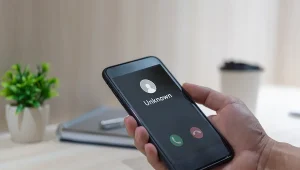
The call comes in from a number that looks almost like yours. Same area code. Same first three digits after it. Maybe a coworker’s cell, maybe the school, maybe the pharmacy calling about a prescription. You pick up, and it’s a recorded voice trying to sell you a solar quote you never asked for.
That trick has a name. It’s called neighbor spoofing, and it has quietly become the single biggest reason consumers still answer their phones. It has also become a serious problem for the law that was supposed to protect them, because the entire architecture of consumer phone protection rests on a single word: consent. And when the number on the screen is a lie, everything downstream of that word starts to wobble.
The caller ID is doing something it was not really designed to do
Caller ID was built in a landline era where the number showing up on the display was, more or less, the number that placed the call. That assumption stopped being true a long time ago. Modern voice traffic runs over networks that let a caller assert whatever originating number they want, and the receiving carrier has historically had no reliable way to check.
Neighbor spoofing takes advantage of exactly that. The FTC’s consumer guidance on unwanted calls describes the tactic plainly: scammers pick a caller ID that shares your area code, and often the first six digits of your own number, so the call looks like it’s coming from a neighbor.
The point is not to fool you forever. It’s to buy the two seconds it takes for you to swipe green.
Consent was the whole point, and consent is what spoofing corrupts
The federal statute that governs telemarketing calls to cellphones, the Telephone Consumer Protection Act, is built around a fairly simple idea. If a business wants to auto-dial or robocall your mobile number to sell you something, it needs your permission first. That permission, and the paperwork proving it, is what separates a legal marketing call from a violation that carries statutory damages per call.
The problem is that consent only works when the consumer knows who they are consenting to. Regulators have been tightening that idea for years. The FCC’s recent rulemaking on consent strengthened consumers' ability to revoke permission and clarified what a valid opt-out looks like, precisely because the statute itself never defined prior express consent with any real precision.
Spoofing sits directly on top of that ambiguity. When a caller lies about who is on the line, whatever the consumer once agreed to no longer maps to what is actually happening.
The one-to-one rule tried to close the loophole, and a court reopened it
Regulators spent years trying to shut down a common lead-generation practice in which a single checkbox on a website let dozens, sometimes hundreds, of marketing partners call the same consumer. They moved to end that practice by requiring consent to name a specific seller, one at a time, so a person signing up for a quote from one company could not be legally called by an unrelated one.
Then, in early 2026, a federal appeals court threw a hand grenade into the framework. It held that the TCPA does not, by its plain text, require written consent at all for prerecorded telemarketing calls to cellphones, rejecting decades of FCC interpretation.
Legal analysts described the ruling as a major reset of TCPA doctrine. The immediate effect is a split landscape: what counts as consent, and even whether written consent is required, now depends partly on which court would hear the case. That uncertainty is exactly the environment spoofers thrive in.
Read More: Why Cyber and Privacy Knowledge Is Becoming Essential for Commercial Lawyers
What the consumer sees, and what the record actually shows
A person who answers a spoofed call almost never learns the real originator’s identity in the moment. The voice on the line is a script. The callback number is someone else’s phone. The company being pitched, if one is even named, may be a reseller three layers removed from whoever pressed dial.
That gap between what the consumer experienced and what the call records show is where most disputes now live. Working out who actually placed the call, who paid for it, and whether any real consent exists usually requires subpoenaing carriers, pulling call-detail records, and tracing the traffic backward through the intermediate providers that carried it. It is slow work, and it is the work that makes these cases winnable.
Consumers who suspect a pattern of illegal calls often talk to a consumer protection firm before they start deleting voicemails, because the metadata on the phone is frequently the best evidence they will ever have.
The number on the screen is not the story anymore
Neighbor spoofing is not a nuisance issue dressed up as a legal one. It is a direct attack on the assumption that made consumer phone law workable in the first place, that a caller’s identity is knowable and that a consumer’s yes attaches to a specific business. Regulators are adjusting, courts are diverging, and the ground under the word consent keeps moving.
For the person whose phone keeps buzzing with a familiar-looking number, the practical takeaway is smaller than the doctrine. Assume the caller ID is lying. Assume the pitch has been designed to get past the two seconds of doubt. And if the calls do not stop after you say so, treat the record on your phone as evidence, not clutter.