The Spare That Doesn’t Fit: How Years of Small Pump Modifications Slowly Break the Storeroom
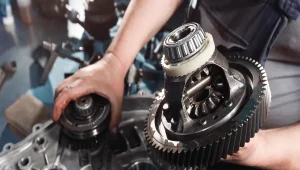
The spare on the shelf and the pump in the field drift apart one small decision at a time, and by the time someone needs the part at three in the morning, the two no longer match. An impeller was trimmed four years ago to shed excess head. A mechanical seal was swapped for a different face combination after a run of failures. A bearing housing was upgraded during an overhaul.
None of it was wrong. None of it was documented in a way the storeroom could see.
The result is a storeroom that looks healthy on paper and fails in practice. Shelves are full and bins are labeled, every part counted.
And the part the technician needs is either missing, or it’s sitting there under the old part number for a pump that no longer exists in that configuration.
The Problem Hides in the Second Decimal
A centrifugal pump is a long-lived asset that rarely stays original. Over a decade of service, most process pumps collect a running record of changes: an impeller machined down a quarter inch, a wear ring opened up for a dirtier service, a seal flush plan moved off Plan 11 and onto Plan 32, a sleeve material shifted out of 316 and into duplex. Each change solves the problem in front of the reliability engineer that week.
Each one also invalidates something upstream. The OEM parts list now describes a pump that no longer exists, the datasheet in the maintenance folder still shows the original curve, and the spare rotating element in the storeroom still carries the as-built dimensions. The field pump has moved while the paper trail stayed where it was.
When the storeroom and the field disagree, the field wins. The storeroom just absorbs the cost. Working with a pump manufacturer and aftermarket partner that keeps its own records of what left the shop and in what configuration can shorten that loop, because the OEM’s build sheet becomes a second source of truth when the plant’s drawings fall behind.
Why the Obvious Fix Doesn’t Work
The intuitive response is to tighten the storeroom. Count more often, add bin locations, buy software. Run a 5S weekend and purge the dead stock. All of it helps, and none of it addresses the mechanism that broke the alignment in the first place.
The storeroom didn’t drift on its own. It drifted because small engineering changes to rotating equipment were treated as maintenance, not as changes. A trim is a change. So is a seal substitution, and so is a metallurgy upgrade.
Under a formal management of change procedure, each of those should trigger a written review, updated process safety information, revised procedures, and a pre-startup check. In most plants, most of the time, they don’t. The work gets done, the pump goes back in, and the paperwork never catches up.
That is why reorganizing the storeroom alone fails. You can label every bin correctly on Monday and still be wrong by Friday, because another undocumented modification just happened on another pump and nobody told the planner. The storeroom is the symptom. The missing change record is the cause.
The usual software answer runs into the same wall. A CMMS with perfect min/max settings still issues the wrong part if the BOM behind it describes last decade’s configuration. Garbage in, confident garbage out.
Close the Loop Between the Field and the Shelf
The fix is not glamorous. It is a short list of practices that treat every modification as a change, and treat the storeroom as a downstream consumer of that change. The shelf can only be as accurate as the records feeding it. Done consistently, the shelf starts to match the field again inside a year.
What a Working Loop Looks Like in Practice
A plant that runs this discipline well doesn’t look dramatically different from one that doesn’t. The storeroom isn’t bigger. The CMMS isn’t fancier. The difference shows up in the small moments: a planner pulls a spare and it fits, a reliability engineer orders a replacement impeller and specifies the trimmed diameter without having to call anyone, a vendor quote comes back the first time with the right metallurgy.
When the plant’s drawing and the OEM’s build sheet agree, a replacement is a phone call. When they disagree, it is a reverse-engineering project with a production outage on the clock.
The Modifications Will Keep Happening
No one will go about altering pumps. The process changes. Throughput targets move.
A service is greasier or increases in temperature or becomes more corrosive and the pump that worked in 2014 must be modified to work in 2026. That is commonplace and most often the correct engineering choice.
The thing that needs to be changed is the fact that a minor adjustment remains secret to the crew that did it. It spreads, over time, to all systems which were developed on the old design: the BOM, the datasheet, the spare on the shelf, the training document, the P&ID. The first place where the mismatch comes into the limelight is the storeroom where the person finally needs a part and discovers that it is not the correct one.
Record the difference at the point of occurrence, and then push it downstream within the same week. Then, the shelf will be able to avoid deceiving you.