Clothing Sends Messages Faster Than Speech
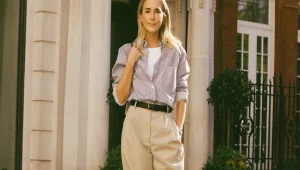
Clothing says more than what you may think. Before you utter a single word, what you’re wearing may have already communicated something about who you are, how you feel, and how you wish to be perceived. In professional environments, manufacturing uniform programs can make that visual communication especially clear, creating a consistent appearance while reinforcing teamwork, professionalism, and a shared sense of purpose. First impressions form quickly, and what you wear can almost immediately affect how people see you.
Clothing sends messages quicker than speech. Why? Because of the speed with which the human brain processes visual info, people can form impressions before a conversation even starts. Attire can communicate details about professionalism, personality, social role, confidence, and belonging without requiring a spoken explanation.
The Speed of Visual Communication
Spoken language develops one word at a time. First, the listener must hear the words, grasp their meaning, and connect them into a larger message. It’s not the same with clothing. Someone can size up your outfit almost immediately, recognizing textures, colors, patterns, silhouettes, and accessories at the same time.
Because of that, clothing is a powerful form of nonverbal communication. A bespoke suit, a vintage jacket, sportswear, or a well-put-together casual outfit can each produce a different first impression. Keep in mind that such impressions don’t necessarily reflect you as a person, but they show how fast visual signals can sway perception.
Clothing Communicates Identity
Clothing sends messages regarding identity. People commonly use fashion to express parts of their personality, profession, interests, culture, or lifestyle. While you may favor minimalist clothing to mirror your preference for simplicity, someone else may use distinctive accessories and bold colors to emphasize individuality and creativity.
Even seemingly little choices can add to this visual message. Your hairstyle, shoes, jewelry, bag, watch, and other accessories can reinforce the overall impression your outfit creates. Taken together, these elements create a visual vocabulary that lets people communicate without explaining themselves.
Status and Social Signals
What you wear can also tell people something about where you fit socially, your status, and where you belong. For example, certain clothing items are associated with certain professions, occasions, or communities. Someone’s uniform can reveal their occupation, while a ball gown can signal a formal event.
While they rely on context, brand names, styling, and craftsmanship also have social meaning. What you wear can communicate something different depending on whether you’re wearing it on the job, at the movies, or at a family get-together. Thus, the message clothing conveys varies with the environment and the individuals who interpret it.
Fashion as Instant Language
Because fashion communicates quickly, it’s a distinctive type of expression. Famed designer Miuccia Prada has called fashion “instant language,” a phrase that crystallizes how fast clothing can send information in a fast-moving world.
Fashion and language both depend on well-known symbols and conventions. The difference is that fashion can convey multiple dimensions at the same time. Your garb may simultaneously suggest creativity, professionalism, confidence, formality, or individuality, without you saying anything.
Reading the Message Carefully
While what you wear instantly sends a message, what it communicates is not always what you have in mind. People interpret visual cues through the prism of their pasts, their expectations, and their cultural backgrounds. For instance, what you have on may appear professional to one person, and excessively formal to another. If you have a bold style, that may signal eccentricity to one person, but confidence to another.
It’s important to remember that while your garb provides an initial impression, what you say and how you act provide additional context, in accordance with a person’s experience.
In summary, clothing is powerful because it “speaks” before you do. It uses color, style, shape, and context to craft an instant narrative about identity, intent, and social environment. In that way, what you wear serves as a language of its own – one that can start communicating before you ever say a word.