How Teak Garden Furniture Handles the British Climate
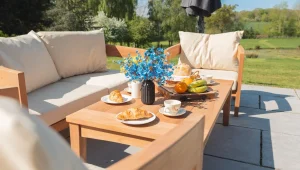
The British weather is famously unpredictable. A single week can bring warm sunshine, heavy rain, strong winds and even a frost. For garden furniture, this constant change is a real test. Many materials struggle to cope, warping, rusting, fading or rotting after just a few seasons outdoors. Teak, however, is exceptionally well suited to the UK climate. Understanding why can help you choose furniture that will stand up to whatever the weather brings.
The challenge of the UK climate
Garden furniture in the UK has to deal with a combination of conditions. Rain is the most obvious, with many areas experiencing frequent wet weather throughout the year. Humidity is often high, encouraging mould and mildew. Winters bring cold temperatures and frost, while summers can deliver strong sunshine and occasional heatwaves. Coastal areas add salty air to the mix.
The biggest problem for many materials is the cycle of wetting and drying. When wood absorbs moisture and then dries out repeatedly, it can swell, shrink, crack and eventually rot. Metal furniture can rust, while some plastics become brittle and faded in sunlight.
Teak’s natural defences
Teak’s remarkable resistance to the elements comes from its natural composition. The wood contains high levels of natural oils and rubber, which repel water and help prevent it from soaking deep into the timber. This makes teak highly resistant to rot, even when left outside in wet weather for long periods.
Teak also contains silica, which makes it resistant to insects and helps protect it from decay. Its dense, tight grain adds further strength and stability. Together, these properties mean teak can be left outdoors throughout the year without needing to be painted, varnished or treated.
Coping with rain and humidity
In a wet climate like the UK’s, teak’s water resistance is invaluable. Rain simply runs off the surface, and the wood dries quickly once the weather improves. Because teak is so stable, it is far less likely than many other woods to warp or split as it absorbs and releases moisture.
That said, damp conditions can encourage surface mould or mildew, particularly in shaded or poorly ventilated areas. This affects the surface rather than the wood itself and can be cleaned away with mild soapy water and a soft brush. Positioning furniture where air can circulate freely helps reduce the problem.
Surviving winter
One of the most common questions about teak is whether it can be left outside during the winter. The answer is yes. Teak can withstand cold temperatures and frost without damage. Many people leave their teak furniture out all year round.
If you prefer to protect it, use breathable covers that allow moisture to escape, rather than plastic sheeting, which can trap condensation and encourage mould. If you store furniture indoors, choose a dry, well-ventilated space such as a shed or garage, avoiding heated rooms where rapid changes in temperature and humidity can cause the wood to crack.
Sunshine and the silver patina
Ultraviolet light from the sun gradually changes the colour of teak. Over several months outdoors, the honey-golden colour of new teak fades to a soft silver-grey. This is a natural, purely cosmetic process and does not affect the strength or durability of the wood. Many people love the weathered look, which suits British gardens beautifully.
If you prefer to keep the golden colour, applying a suitable teak protector can slow the weathering process. Weathered teak can also be restored to its original colour by cleaning and lightly sanding the surface.
Small cracks are normal
As teak adjusts to changes in temperature and humidity, small surface cracks may appear, particularly on end grain. This is known as checking and is a normal characteristic of solid wood. These fine cracks usually open and close with the seasons and do not affect the strength of the furniture. Good-quality teak, made from mature heartwood, is less prone to this than lower grades.
Choosing furniture for UK gardens
Quality is the key to long-lasting performance in the British climate. Look for furniture made from mature heartwood teak, often described as Grade A, which contains the highest levels of natural oils. Strong joinery, such as mortise and tenon joints, and stainless steel fittings will help furniture stay sturdy and rust-free. Browsing teak garden furniture uk ranges designed with British gardens in mind makes it easier to find pieces built for local conditions.
Simple care for all seasons
Teak needs very little maintenance to cope with the UK weather. Cleaning it once or twice a year with a soft brush and mild soapy water removes dirt, pollen and any surface mildew. Avoid using a pressure washer, as this can damage the surface of the wood. Removing cushions when they are not in use, and storing them somewhere dry, prevents moisture from being trapped against the wood.
Made for the British garden
Teak’s natural oils, density and stability make it one of the best materials for garden furniture in the UK. It handles rain, humidity, frost and sunshine with ease, weathering gracefully rather than deteriorating. With minimal care, quality teak furniture can withstand the British climate for decades, making it an ideal choice for any garden.