A Practical Guide for Australian Towers
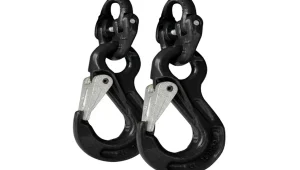
Whether you’re towing a box trailer to the tip, a boat to the ramp or a caravan across the country, the safety chain connection between your vehicle and trailer is one of the most important parts of your towing setup. It’s also one of the most commonly neglected. Using the right Trailer Hooks, rated shackles and correctly sized chains could make the difference between a minor incident and a serious crash if your coupling ever fails.
This guide describes the importance of safety chains, what the rules usually demand and how to hook them up correctly each time you hitch up.
What Safety Chains Do.
The tow ball and coupling are made to support the weight of the trailer when towing normally. Safety chains are a backup. In case of a disconnection of the coupling or failure of the tow ball, the chains are supposed to hold the trailer to the vehicle, so that the drawbar does not dig into the road and allow the driver time to bring everything to a controlled halt.
To make that work, all the parts of the chain system must be robust enough to withstand the forces. The weakest link in a chain is the weakest link, and the weakest link is frequently a shackle of inferior quality, or a hook of inferior design.
Knowledge of the Basic Requirements.
The requirements of Australian trailers are mostly founded on the national vehicle standards, and the transport authority of each state offers guidance. Light trailers with a total trailer mass of less than 2,500 kilograms should have at least one safety chain, and trailers with a total trailer mass of 2,500 to 3,500 kilograms should have two. Trailers with greater weight demand more braking, such as breakaway systems.
Chains must be of an appropriate strength for the trailer’s mass and should comply with the relevant Australian Standard. The connecting hardware, including shackles and hooks, must also be suitably rated. The Queensland Government’s towing equipment guide is a helpful plain-English summary, but it’s always wise to check the rules that apply in your own state.
Selecting the Appropriate Hardware.
The links that you use to join your chains are as important as the chains themselves.
Rated Shackles
Shackles used for safety chains should be load rated and clearly marked with their working load limit. Hardware store unmarked shackles are usually light-duty and may not be towing-worthy. Always select shackles that are rated to your mass of the trailer.
Purpose-Designed Hooks
Other towing systems incorporate trailer-specific safety chain hooks. Quality hooks have a latch or keeper to ensure that the chain does not bounce off over bumps and are rated to the loads involved. Open hooks should not be used without retention because they can easily disconnect on rough roads.
Matching Chain Size
The size of the chain must be appropriate to the mass of the trailer and the chain must be marked or certified to indicate that it is of the appropriate standard. Wear, stretch, rust and broken links Check chains frequently, and replace them when they are worn out.
How to Hook Your Chains.
The connection is as important as the right gear. Always do these steps when hitching up.
Cross the Chains
In the case of two chains, cross them under the drawbar and then connect them to the vehicle. This forms a cradle that will receive the drawbar and prevent it to strike the road in case of a coupling failure.
Get the Length Right.
The chains must be long enough to enable the vehicle and the trailer to turn in a tight circle without the chains becoming tight, but not so long that they drag on the road. In case the drawbar falls, the chains must not allow it to come into contact with the ground. Use the shackle position to adjust the length instead of using chains around the tow bar.
Attach to the Right Points
Attach your chains to the safety chain points on your tow bar. Do not attach them to the tow ball, the tow ball mount or any other part of the vehicle that is not intended to be used as such.
Tighten and Check
When you are using screw-pin shackles, ensure that the pins are tightened. Before departing, do a final visual inspection of the entire connection, including the coupling, chains, electrical plug and any brake connections.
Typical Fallacies to beware of.
The most frequent mistakes are the use of unrated shackles, dragging chains on the road, connecting chains to the tow ball, not crossing chains, and using rusted or damaged chains. All these errors can bring down the system at the time you need it the most.
Verifying Your System Before Each Travel.
A fast pre-trip check-up can be completed within a few minutes and is useful in identifying issues at an early stage. Check the coupling to ensure that it is not worn out and that it fits firmly on the tow ball. Ensure that chains, shackles and hooks are in good condition and properly fitted. Check the trailer lights, indicators, brake lights, and tyre pressures and wheel nuts on the trailer and vehicle.
It is easy to remember all the steps when you have a simple checklist in your glovebox, especially when you tow only occasionally. With time, the routine will become a habit and you will be able to notice worn or damaged parts way before they become a safety concern on the road.
Final Thoughts
Safety chains are a cheap, easy to install component of your towing system, yet they are crucial in ensuring your safety and that of other road users. With the right chains, shackles and hooks, you will be much better equipped in case of a road accident by selecting the right chains, hooking them up correctly and inspecting them frequently. An additional few seconds at the hitch is a minor sacrifice to a peaceful journey on each trip.