The Changing Role of Fintech Companies in India’s Credit Market
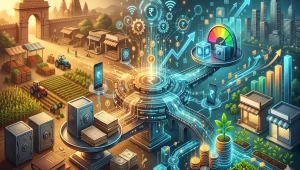
India is also among the vibrant growing economies in the world and yet accessing formal credit was not a smooth sail. But fintech is changing India’s credit market. They have caused lending to be digitalized. It has become possible to make loans through the smartphones and laptops. It has made credit more convenient, particularly to consumers and businesses which are disregarded by conventional banking systems.
However, fintech firms are not confining themselves to being digital platforms, which connect borrowers with lenders, given the changing times. They today apply technology in credit evaluation, fraud elimination, customer support, collection and financial incorporation. Further, the issue of more regulatory control is driving the industry towards open and responsible lending.
Digital credit Infrastructure: Loan Distribution to Digital Credit Infrastructure.
At the beginning of the digital lending, the then fintech firms were more concerned with developing an easy digital experience of the borrower. One customer would apply to take an instant loan on the internet, conduct KYC remotely and deposit money in a bank account. One did not have to go to a branch.
No longer is this model what it was. Fintech businesses have transformed into Lending Service Providers (LSPs), distributors of technology, and distributors of regulated banks and NBFCs. They are contributing in acquiring customers, underwriting assistance, and servicing loans, surveillance and collecting. The regulated one is still liable to the lending relation.
The difference is significant because this does not mean that technology businesses will become lenders simply because they offer a digital interface. The digital lending system of RBI puts liability on regulated entities despite utilizing third-party platforms or LSPs.
Information is transforming the Credit Evaluation.
Technology and online data are now utilized by Fintech companies in assessing credit. Income documents, bank statements, credit history and collateral are some of the traditional aspects of underwriting that were greatly relied upon to carry out the underwriting.
Models based on fintech can be easily supplemented with various sources of permitted data and mechanize some aspects of the underwriting process. The aggregator system of India and the Unified Lending Interface (ULI) represent an infrastructure which seeks to enable easier standardised and consent-based access to financial information.
According to RBI, ULI had 44 lenders utilizing over 60 data services on 12 loan journeys as of March 31, 2025. This kind of infrastructure can enable a quicker evaluation of credit and enhance accessibility to borrowers that do not involve within the conventional models of underwriting.
Increasing Reach to underserved Borrowers.
Fintech firms can offer loans to first-time borrowers and small businesses and underserved. This new technology of distribution through digital has eliminated the use of physical branches and even in smaller ticket loans, such as those under 1,000 dollars, is commercially viable as it decreases the cost to acquire and service customers.
The vulnerability is quite eminent in the MSME sector in India. The FY2025 annual report of SIDBI has indicated the application of digital lending, Open Credit Enablement Network (OCEN), Account Aggregator Infrastructure and GST-based information to enable micro enterprises to obtain paperless credit.
Personal Loans are Getting More Data-Driven.
Another crucial field of fintech activity is consumer lending. Online channels have simplified the process of product comparison, application and documentation significantly to an extent that borrowers can do it at their homes.
As real-time statistics indicate, now digital lenders are more interested in larger balances of individual loans. A report has indicated that the personal loan portfolio of the digital lenders has risen 28 percent during the year as of June 2026 alone amidst the year record fall in the number of outstanding accounts. This implies that the growth in the portfolio is being caused more by increased loan size such as increasing the number of borrowers.
Lending is a Fintech Model that is undergoing Regulation.
Skyrocketing rates also come with increased regulation. The digital lending framework by RBI desires the controlled parties to be accountable to the digital lending agreement and impose demands alluding to disclosures, data gathering, loan issuance and repayment.
It has been adopted that the regulatory strategy has been approaching more transparency and customer protection. Proper information on the cost should be provided to borrowers, and digital lending arrangements should have suitable protection measures of personal data and customer consent.
The Public Digital Lending Apps directory is another important development. It is operated by RBI and helps consumers verify whether a digital lending app is associated with the regulated entity. In July 2026, the government also mentioned that they have blocked 87 illegal loan lending apps.
These practices suggest that the days of fintech lending will be filled with a higher level of responsibility and less free technological growth.
The Shift to responsible and embedded credit.
The second emerging trend is integration of lending where credit is incorporated in digital sites already in existence among the consumers. No longer will you have to visit a bank to obtain a loan. On the e-commerce sites, accounting software, payment services, or business applications, borrowers can access loans facilities via the Internet.
This has the potential of enhancing convenience, although it will also make responsible product design a more significant issue. With easier access to the credit, lenders should have strong affordability analyses and risk management mechanisms to avoid excessive borrowings.
In the case of fintech companies, the advantage in the industry changes. Speed is not sufficient any more. Good underwriting and fraud prevention, data security, clear pricing and customer service are gaining the same importance.
Conclusion
Fintechs are not digital platforms to reach credit anymore. They are also currently concentrating on underwriting technology, financial data, fraud, customer servicing and credit distribution. Meanwhile, an increase in regulation is enhancing responsibility in the industry. The Indian digital infrastructure helps the fintech to formal credit to be quicker, more readily accessible, and even more inclusive.
However, the next phase of growth will depend on responsible innovation. For borrowers, this means using an online loan app with greater awareness of the lender, loan costs, repayment terms and applicable protections. For fintech, long-term success will depend on combining the technology-led efficiency with sound credit practices and consumer trust.