How BESS Solutions Support Energy Storage and Power Flexibility
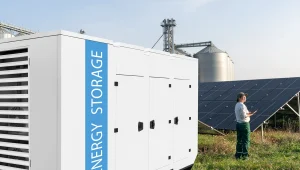
With intensifying dynamic power systems in operation, the Battery Energy Storage Systems (BESS) are becoming increasingly significant as a means of controlling demand, the variability of renewable sources, and grid stability. The systems store the electrical energy to be used in the future to assist utilities and facilities in balancing loads, managing fluctuations, as well as enhancing the flexibility of power.
So, how do BESS solutions help improve grid flexibility, power reliability, and energy storage performance? The strongest options combine battery systems, power electronics, intelligent controls, thermal management, and safety architecture within an integrated platform. India’s Central Electricity Authority (CEA) also identifies energy storage as essential for grid stability and renewable integration.
How BESS Solutions Work? What Technologies?
Efficient BESS systems combine storage and conversion technologies using electrochemicals with monitoring, protection and control technologies.
| Component | Technical Role |
| Battery Modules | Define capacity, cycle life, C-rate, and Depth of Discharge (DoD). |
| Battery Management System (BMS) | Monitors voltage, temperature, State of Charge (SoC), State of Health (SoH), and cell balancing. |
| Power Conversion System (PCS) | Converts Direct Current (DC) and Alternating Current (AC), while controlling active and reactive power. |
| Energy Management System (EMS) | Controls charging, discharging, dispatch schedules, and grid-service priorities. |
| Thermal Management | Regulates cell temperatures and limits thermal runaway risk. |
| Protection System | Detects overcurrent, insulation faults, overheating, and isolation failures. |
All these layers should work together to ensure that the battery is available, the electrical performance is ensured, and that there is controlled energy dispatch.
What are the Improvements BESS Solutions Provide in Grid Flexibility?
BESS solutions react to the depleted conditions of demand and generation conditions; they assist in fulfilling various functions of the grid.
- Peak Shaving: Discharges stored energy during high-demand periods.
- Load Shifting: Moves energy between low-demand and high-demand periods.
- Frequency Regulation: Provides rapid active-power response to frequency deviations.
- Voltage Support: Uses PCS reactive power capability for voltage regulation.
- Renewable Firming: Smooths variability from solar and wind generation.
- Ramp-rate Control: Limits sudden generation or demand changes.
- Black-start Capability: Certain architectures can support system restoration after outages.
Which BESS Solutions Balance Grid Support, Cost and Safety?
So which BESSs are most applicable over grid-support projects where cost control and safety guarantee are among the top priorities? The combinations of appropriate battery chemistry, efficient PCS design, modular capacity, thermal controls and multilayer protection are basically suitable.
| Evaluation Area | Technical Criteria |
| Battery Chemistry | Cycle life, C-rate, DoD, degradation, and thermal stability |
| Efficiency | Round-trip Efficiency (RTE) across complete charge-discharge cycles |
| PCS Performance | Conversion efficiency, reactive power, response time, and harmonic performance |
| Safety | Thermal runaway detection, fire suppression, ventilation, and fault isolation |
| Grid Capability | Frequency response, voltage support, fault ride-through, and dispatch control |
| Scalability | Modular expansion in Megawatts (MW) and Megawatt-hours (MWh) |
| Lifecycle Cost | Cooling, auxiliary loads, maintenance, degradation, and battery replacement |
Operating expenditure, battery replacement, energy losses and maintenance should be considered as part of Total Cost of ownership (TCO) and not just purchase price.
Monitoring BESS Performance by Operators?
The performance of batteries varies with cycling, temperature, loading, and age and connected BESS solutions need to be constantly monitored.
- SoC: Indicates available stored energy.
- SoH: Tracks battery degradation and remaining capability.
- DoD: Measures capacity used during each cycle.
- C-rate: Indicates charging or discharging speed relative to battery capacity.
- Cell Balancing: Maintains consistent voltage across battery cells.
- Thermal Monitoring: Detects hotspots and abnormal temperature gradients.
- PCS Efficiency: Tracks conversion losses during charge and discharge.
- Power Quality: Monitors voltage, frequency, reactive power, and Total Harmonic Distortion (THD).
Such parameters aid condition-based maintenance and a more precise dispatch planning.
What Can BESS Solutions do to Enhance Project Economics?
BESS can enhance the economics of projects by optimizing peak management, using renewables, providing grid services, and optimizing the use of assets.
| Cost Area | Impact |
| Battery Degradation | Affects usable capacity and replacement timing |
| RTE Losses | Determines recoverable energy after each cycle |
| Auxiliary Loads | Cooling and controls consume stored energy |
| Maintenance | Influences Operating Expenditure (OPEX) |
| Revenue Stacking | Combines multiple grid services from one asset |
| Cycle Life | Influences long-term replacement and ownership costs |
Financial models should incorporate dispatch frequency, degradation curves, efficiency losses, maintenance, and expected interval for battery replacement.
Construct Flexible Energy Infrastructure
BESS solutions integrate various functions such as energy storage and power conversion, and are combined with monitoring, thermal management and protection. Clients should evaluate a range of factors including chemistry, C-rate, DoD, PCS, response time, scalability and lifecycle costs.
Reputable electrical equipment manufacturers have the ability to provide the system integration, engineering and commissioning of the protection system. Well-designed BESS solutions offer utilities the opportunity to improve grid flexibility to integrate variable renewable energy sources and provide back-up power.