How Independent Publishers Can Use AI Drawing Lip Sync to Invite Readers Into a Story
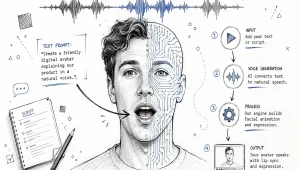
An AI Drawing Lip Sync (https://lipsync.video/ai-drawing-lip-sync-generator)clip should serve the reading experience. Digital publishers are often told to turn every idea into a video. That is the wrong ambition for most small teams. A carefully written article, lesson or chapter already contains the depth a reader needs. The better question is whether a small piece of motion can help the right person discover that work, understand its premise or remember one important idea.
Original illustrations are strong candidates because they already have a point of view. A character can introduce a setting. A diagram can name a problem. A student drawing can give a project a voice. When the image is animated for a short narration, it becomes an invitation to read rather than a replacement for reading.
Four editorial jobs for a talking drawing
A chapter doorway
Let a character say who they are, where the story begins and what question is about to unfold. Stop before the plot is explained. Curiosity is more useful than a full synopsis.
A concept in plain language
An AI Drawing Lip Sync example can clarify one difficult term. A technical article may have one term that blocks a new reader. Use a drawing to explain that term with one example, then link to the full article for nuance and evidence.
A quote with its missing context
A quotation can travel widely after losing its meaning. A narrated illustration can identify the speaker, situation and central idea in a few lines before sending readers to the complete source.
A classroom reflection
Teachers can invite students to narrate an original drawing about a question they investigated. The process turns a static assignment into a shareable reflection while keeping the student’s own words central.
An editorial workflow that protects the work
Choose the job before the animation
Write a one-sentence brief: “This clip helps a new reader understand…” If the sentence ends with “everything,” narrow it. A short video cannot carry the whole argument, and it should not try.
Prepare a spoken script
Read the draft aloud. Replace long subordinate clauses with direct sentences, define names that may be unfamiliar and leave a pause after the key idea. A script written for the screen often sounds stiff when spoken.
Animate the original asset
Use artwork that the publication owns or has permission to adapt. The AI Drawing Lip Sync tool can animate a drawing with supplied narration or text. Generate a first pass and check names, pronunciation and captions.
Reconnect the reader to the page
Place the article, chapter or lesson link beside the clip. Include a transcript and descriptive text for readers who cannot access the animation. The original creator credit should travel with the asset wherever it is reposted.
Measure discovery without flattening quality
Views are an incomplete measure for editorial work. Track whether the clip brings qualified readers to the source, whether they finish the article and whether subscribers or students take the next action. A modest number of engaged readers can be a better result than a large number of accidental views.
AI Drawing Lip Sync supports a focused message when the source material and the audience are clearly defined.
A careful AI Drawing Lip Sync edit preserves the illustrator’s intent, while the written work remains the authoritative source.
The strongest publishing experiments keep the hand of the illustrator visible and the ambition of the writing intact. Animation opens a second door; it does not remove the room behind it.
Give the Reader a Reason to Continue
A narrated illustration earns attention when it answers a small question and leaves the larger question open. An author might let a character introduce the conflict of a chapter, while an editor might use one drawing to explain a term that appears in a long feature. AI Drawing Lip Sync can supply the movement, but the editorial decision is still about what the reader needs first.
This is also a useful way to respect different reading situations. A short clip can be heard during a commute, viewed with captions in a classroom or shared in a newsletter where the full article is only one click away. The clip should always carry enough context to stand alone without pretending to contain the complete argument.
Keep the Human Credit Visible
Readers respond to a point of view, so keep the illustrator and writer visible in the package. Name the artist, link to the original work and explain when the animation is an adaptation. A careful AI Drawing Lip Sync treatment should make the drawing feel more accessible, not make its creator disappear behind a generic digital character.
The same care applies to voice. A contributor can record the narration, or the publisher can choose a generated voice that matches the tone of the work. Either way, check pronunciation of names, places and quoted material. Small errors are especially distracting when the clip is meant to guide someone into a thoughtful piece of reading.
A Practical Publishing Cycle
Begin with a short brief that identifies the target reader, the source page and the single idea the clip will introduce. Prepare the artwork in a readable crop, write a spoken version of the message and generate a first pass. Then ask a second person to check whether the clip makes sense without the article open beside it.
After publishing, measure the path rather than the vanity number. Compare completion rate with clicks to the article, newsletter subscriptions and time spent on the source page. If people watch but do not continue, the invitation may be vague. If they click but leave quickly, the article may need a clearer opening. AI Drawing Lip Sync is only one part of that reader journey.
FAQs
Can a drawing be animated without changing its style?
Yes, when the source artwork is clear and the movement is kept subtle. Choose a crop that preserves the original lines and avoid adding visual effects that compete with the illustration.
Should the clip include the whole article summary?
Usually not. An AI Drawing Lip Sync introduction is easier to follow and more likely to send the right reader to the full work. Use the page itself for evidence, context and the complete conclusion.
What should be credited?
Credit the illustrator, writer, voice contributor and source material according to your publication policy. If the image or audio is licensed, keep the license record with the project file.
Final Takeaway
The best AI Drawing Lip Sync projects leave readers with a reason to continue. Keep the transcript, source link and illustrator credit close to the clip, and make the written work the place where the full argument lives. When motion adds welcome and clarity without flattening the author’s voice, it has done enough.