How Smart-Home Device Records Can Become Evidence in Airbnb Injury Claims
In one of the Airbnb instances, a visitor enters the smart lock, up the stairs, and slips on a loose rug, his wrist is broken. It is not reported to the host until the following morning, and there is uncertainty on when the fall happened, and whether anyone had been on the premises. Nonetheless, the attached gadgets of the rental might have some information, which can be used by investigators to assemble a section of a time frame.
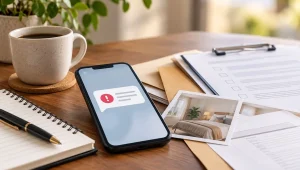
Electronic records can be created as a guest stays in smart locks, thermostats and noise monitors. Even though the gadgets are not used to investigate any accidents, the data can become relevant when someone happens to be injured at a short-term rental.
Realizing what the systems do capture, and what they cannot set, is of significance in considering a premises liability action.
What Smart Lock Records Can Reveal
Electronic locks that enable guests to open them with temporary access codes are used in many short-term rentals. Airbnb has a built-in smart lock system that enables guests to have special guest codes, which become valid upon booking. An activity history can also reveal when specific codes were accessed depending on the lock and the software that it is linked to.
Such records may assist in determining when a customer reached a property or whether or not a code used by a cleaner or a maintenance worker was used within a given time frame. As an illustration, investigators of a fall by the stairway may wish to know whether anybody went into the rental premature to the accident.
Yet, does not mean that there was a person who actually entered the property without entering via the code. It is possible that someone shares a code, logs in with another individual or has a different access system. The smart lock logs thus give contextual but not definite evidence of the people who were present.
For someone consulting a premises liability firm after a serious fall, available lock records may be examined alongside maintenance documentation, photographs, witness accounts, and communications with the host.
Can Thermostats Help Establish a Timeline?
Smart thermostats and other related sensors could be used to gather data on the heating or cooling activity, the occupancy, and temperature settings in a specific property. There are motion-detecting systems or other signals used in some systems to sense when a space seems occupied.
Such records might provide insufficient context of activity surrounding an accident. By way of illustration, occupancy status change might assist in setting when an individual might have gained entry to an questioned domain, contingent on what the systems can team up with and how they are arranged.
Nonetheless, a thermostat most often can not recognize a specific individual and verify that a person collapsed. Sensors can be influenced by the location of sensors and movement patterns as well as other factors within the environment to produce occupation readings. Detectives can not take such signs as actual location records.
What Noise and Occupancy Monitors Actually Record
There are Airbnb hosts who have cameras to determine when there is too much noise or even the likelihood of overcrowding. Hosting Systems like Minut that check the level of sound without recordings of conversations are useful in managing activity and ensuring the privacy of guests. In noise-monitoring documentation provided by Minut, what are usually considered to result in an alert is that sound at a certain threshold is not only remaining high but also lasting a certain duration. One loud bang due to a fall can thus not be recorded as an alert, although the device might temporarily read the intensification of the sound.
Some monitors even determine occupancy by scanning nearby wireless devices. Nevertheless, these estimates may be influenced by the presence of many devices with guests, signals related to the adjacent buildings, among other factors. They should not be considered exact figures of the number of people in a rental.
Hosts can also be influenced by the needs of the privacy. The Airbnb monitor policies do not allow indoor security cameras, but an acknowledged noise decibel monitors are allowed in specified zones. These limits aid in the separation between privacy-friendly monitoring purposes of property and surveillance that would be deemed as against the rules of a platform.
Why Digital Records Matter in Premises Liability Claims
Connected devices can serve as proof to elucidate or validate the conflicting information in an accident especially when there is disagreement between the guest and the host regarding the occurrence of an incident. An intelligent lock record could assist in setting a time frame of arrival, and maintenance messages could serve to show when a reported danger was checked or remedied.
But the presence of electronic records does not make negligence a given. An effective premises liability case normally involves demonstration of the relevant legal factors which can be the presence of a dangerous condition, the proprietor of the condition was in charge of the condition and that the injury was attributed to the hazard.
An article on the University of Richmond discusses the possibility of using information on interconnected devices as an element in litigation. It additionally emphasizes that it is critical to comprehend the shortcomings of such data as opposed to assuming that each device offers a full picture or trustworthy report of what has happened.
Preserving Smart-Home Records After an Injury
Electronic records can be stored on the device, an application that connects with it or a third-party service provider. Their access is based on equipments, account provisions, and retention policies. Part of the information can be lost with time, so the timely preservation of the information is especially crucial.
After a serious injury, relevant steps may include:
- Identify connected devices. Determine whether the property uses smart locks, thermostats, noise monitors, or other systems that may contain relevant information.
- Preserve communications. Keep reservation details, messages with the host, maintenance complaints, and photographs of the accident location.
- Request preservation promptly. An attorney may ask the host or appropriate service provider to retain relevant electronic records.
- Document the accident. Record when and where the injury occurred, identify witnesses, and preserve available evidence of the hazardous condition.
- Avoid altering electronic records. Relevant data should be maintained in its original form when possible, with appropriate attention to privacy and legal requirements.
The records of connected devices can give helpful information when an accident has occurred but these records are to be carefully interpreted. A smart lock timestamp or an occupancy signal could serve to help determine a segment of the sequence without necessarily showing the exact cause of an injury.
By taking into consideration the records left by available devices, photographs and medical reports, maintenance history, and witness reports, it can contribute to a better idea of what occurred during a short term rental arrangement.