Rock Drill Selection: Matching the Tool to the Ground Conditions
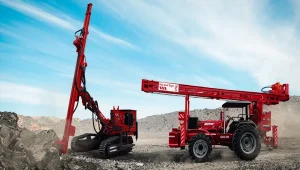
In the field of mining and construction, the importance of selecting the right rock drill for the geological conditions cannot be overstated. A mismatched tool can result in inefficiencies, increased operational costs, and even project delays. Thus, understanding the interplay between drill types and ground conditions is crucial for field professionals aiming for optimal performance and productivity.
Understanding Ground Conditions
It is essential to know the characteristics of the ground conditions in various mining and construction situations before going into the details of the rock drill selection. Ground conditions may be either hard and abrasive formations or those that are soft and fractured. They both possess some peculiarities that determine the way a drill needs to be chosen and implemented.
Categories of Rock Drills
The rock drills can be divided into two types, namely percussive and rotary. Percussive exercises involve hammer strike on the rock face. They are appropriate with dense hard materials. Rotary drills on the other hand, which use a rotating movement, are best in soft and friable rock formations. The choice of either of these categories often relies upon the type of rock at the location and the particular problem the location offers.
Matching Drills with Hard Rock Conditions
Drilling in hard rock environments requires high power and strength of drilling. The capability of a percussive drill to produce high frequency impact forces is essential in such settings. The types of drill selections such as down-the-hole (DTH) hammers and top hammer rigs are considered the most preferred applications because of the ability to cut through tough materials. Also, it is also possible to use carbide tipped drill bits to further improve the performance of the drilling as these drill bits have the required wear resistance and cutting ability.
Optimising Tools for Soft Ground Conditions
Versatility is essential when dealing with mixed ground conditions or when facing a softer ground environment. Rotary drills, using diamond or PDC (polycrystalline diamond compact) bits are commonly preferred. These tools are efficient in keeping the rotation speed high and constant, which enables them to slice softer materials very fast. Moreover, the incorporation of adjustable specifications such as adjustable drilling rates, and adaptable bit options can be of great benefit in diverse geological conditions.
Emerging Technologies in Rock Drilling
The current evolution in technology being witnessed in the rock drilling industry is experiencing a major development with newer advancements that are directed towards more precision, efficiency and environmentally conscious developments. The most recent advances are intelligent drilling systems that leverage the power of data analytics to revise drilling parameters on-the-fly to achieve better performance and reduce equipment wear. Moreover, electric and hybrid drilling rigs are increasingly becoming a sustainable alternative to the conventional diesel drilling rigs, with lower emissions and operational costs.
Overall, selecting an appropriate rock drill is a delicate task and should be dependent on the ground conditions at a project site. By having the proper tool, professionals are able to make drilling operations effective and efficient, which will precondition the success of projects in the changing environments of the mining and construction.