The Defect the Driver Logged and the Shop Never Saw
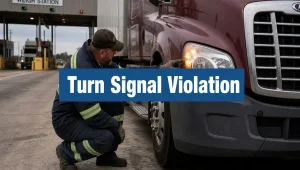
One of the drivers completes a shift and writes a brake issue on the vehicle inspection form. The report is submitted but the maintenance team never receives the report. The following morning dispatch is planning to take the truck back out again, and the defect remains, still in a system no one took the time to look into.
Defects may become easier to record using electronic driver vehicle inspection reports (DVIRs) which can be sent to the shop, however, it does not mean that someone will do anything about it. The covered carriers under section 49 CFR 396.11 are said to have a special duty concerning defect reporting, repairing and recording of corrective measures. The issue lies in ensuring the information gets to the appropriate individuals prior to the vehicle getting back into service.
Decide Who Owns the Form After Submission
Once the driver has identified a defect, the driver is not the only person who has a duty in the process but the carrier must have a clear procedure on what happens upon the receipt of the report. A fault that impacts upon safe operation must be addressed and still sent out again. No assigned tasks can be left in an inbox and the shop and dispatch are both reluctant to pick up the report because of the belief that the other party is doing it.
A practical workflow assigns responsibility at three points:
- The supervisor or dispatcher. Reviews incoming reports, identifies defects requiring immediate attention, and coordinates vehicle availability with maintenance personnel.
- The shop lead or authorized maintenance representative. Evaluates the reported problem, arranges necessary repairs, and ensures the required certification is completed before the vehicle returns to service.
- The next driver. Reviews the previous report when required, verifies that the necessary repair certification is present, and confirms the vehicle is safe to operate.
These responsibilities may be distributed differently depending on fleet size and staffing. What matters is that each handoff has an accountable person and a process for escalating unresolved defects. A connected maintenance platform can help route inspection findings into maintenance workflows and track their status without relying on someone to manually reconcile separate systems.
Choose Where the Maintenance Record Lives
Paper DVIRs are acceptable, and under federal regulations, electronic reports and signatures can be used that fulfill relevant requirements. With the rule applicable to the majority of property-carrying commercial vehicles, drivers must prepare a DVIR in the event that they find or are notified that a defect that may interfere with safe operation or result in a mechanical failure exists. The reporting requirements of passenger-carrying operations and some other types of equipment are different.
The question that can be asked in practice is how these reports relate to the maintenance records of the fleet. A driver can also request a defect via a single application and the shop is monitoring the repairs in a separate one. Unless the systems are linked, somebody has to make sure that the problem being reported is allocated, solved and recorded at the two locations.
The resultant work order and repair certification can be linked to the original inspection report using an integrated process. Then it is simpler to state what the driver explained was, what the shop determined was causing the problem and how the problem was overcome. It also minimizes a defect that might occur in between the submission and subsequent dispatch.
Make Defect Descriptions Useful to the Shop
Drivers are required to provide defects that may cause car safety concerns or even lead to mechanical failure, yet the quality of those descriptions will impact the effectiveness of maintenance workers to act. Report about the brakes being strange leaves the shop less guide than one that reports that vehicle pulls to the left when braking. They both should be given importance, but the more detailed description can guide technicians on where to start.
The practice of observable symptoms should be highlighted in training instead of leaving it to the drivers to diagnose mechanical failures. Common signs of strange noises, indicators of warning, alterations in braking performance, and apparent damage can all be of handy information. Drivers ought also to be aware of how to relay emergency safety issues on-site rather than thinking an electronic filing is going to be considered before the next journey.
Descriptions also provide a way of prioritizing work to the maintenance teams and also can be used to detect recurrent issues. In cases where similar complaints have been raised on a number of occasions on the same vehicle the inspection history can show an underlying problem which can be pursued by thorough investigation as opposed to a one time fix.
Close the Loop With the Required Certification
In cases where the covered DVIRs detect a defect, the federal regulations on the same mandate the carrier/agent who reports the defect to ensure that before the vehicle can resume its operation, the defect is repaired or the repair is not necessary. Before the carrier allows the vehicle back into the field, there are defects, which may threaten safe operation, that are to be repaired. In 49 CFR 396.13, the second driver is to respond to the last report when necessary and is supposed to accept the applicable repair certification.
Carriers should hold on to the DVIR, repair certification, and drivers review certification, at least three months up to the date of the report. That retention requirement does not imply that all inspections create all three records because reporting requirements vary by the vehicle and were there qualifying defects discovered. Separate retention requirements might also apply to other maintenance and inspection records.
The repair can be documented using a completed work order, and subsequently, the carrier must meet the certification requirements associated with the DVIR. Setting up who is doing that certification, and where it will be will ensure that when the next driver is contacted they won’t have to deal with a partly complete compliance record.
Use the Reports to Find Problems Before They Grow
More than evidence of compliance can be obtained with DVIRs. Using inspection results relating to repairs histories, the fleets can pin-point vehicles whose defects may have recurrent occurrences, monitor the rate at which the reported defects are fixed, and scrutinize whether some of the repairs might be repeatedly necessary. The given information can assist maintenance managers to adapt service schedules and research issues prior to them adding to further downtime.
The monetary reward is huge. The 2026 analysis by the American Transportation Research Institute has shown that industry-average costs on repair and maintenance grew 8.6 in 2025. As the cost of maintenance is increasing, fleets have another reason to find out what can be shared by the recurrence of the issues and prevent unnecessary ways to correct the state of roadsides.
A DVIR will not forecast all failures, and not all failures reported that are stated to be a larger mechanical failure. It is valuable in that it gives the fleet a chance to act upon the occasion when the vehicle is not lost but can be reviewed and repaired also. Once the shop is informed by the driver, the work required is noted and the subsequent driver is provided with a safe vehicle, what the entire process of inspection is supposed to do is what it is accomplishing.