Your E-Reader Is Fine. The Room May Be the Problem.
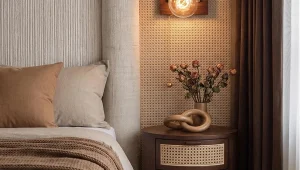
You get ready to sleep by sitting in bed with your e-reader and one of the first things you do is to adjust the brightness. Excessively high is glaring. It is not low enough as it creates mud in the text. You turn on dark mode, adjust the font, and place the screen nearer, yet you do not feel as comfortable reading it as you felt it was at the beginning of the day.
The gadget might not be the issue. The missing environment is at times not visible on the screen. The room has the light.
Bright scene with a dark bedroom provides a clear contrast of the page and all the objects around it. At the same time, an overhead light can be so bright that it will be like the middle of the working day on a quiet evening. The helpful middle ground is a thin sheet of this neighborhood light, which under-invigorates the screen, without bouncing back.
Do Not Read In an Entirely Dark Room.
Switching all lights off will make a glow on the screen seem less difficult to see but also make the screen the brightest thing in your line of sight. Such a contrast is visible every moment when your eyes leave the text.
Attempt maxing out of backlight or side lights behind or beside where you are reading. The room should not be bright. You just require sufficient light to view the bed, the chair and the wall around without relying solely on the device.
This is applicable both with e-ink readers and tablets, but behaving differently with their screens. A front-lit e-ink display would typically be softer than a backlit tablet. The brightness slider can be lowered, yet a tablet still can experience intense feelings at night. The soft room lighting in both situations helps to lessen the visual discontinuity between the screen and the dark areas surrounding it.
The screen should not be so alien in the darkness; however, even slight room lighting will help.
Locate the Light Where It Will Not Reflect on the Screen.
The most frequent error is having a lamp directly at the back of the shoulder of the reader. The reflection can be slight on a matte e-ink screen. It can make a vivid spot that tracks along the screen on a smooth tablet each time the gadget is taken, which appears.
Prior to installing anything, you are supposed to sit in your normal reading position with the device at the angle that you usually use. Ask someone to go with a portable lamp in the room. Examining the screen to different positions, and record the points of reflection.
The light slightly behind and on the side is usually good but still, there is no one place universal. It all depends on what kind of chair you like sitting on, what angle you would like your screen to display, which hand is your dominant hand and how do you prefer reading, sitting or lying down. It can be a directional light where more than one individual shares a common chair or side of the bed.
Light mounted on the wall assists not only with clutter.
A bedside table seldom contains nothing but a lamp. It gathers charging cables, glasses, water, books, medication, and a phone, as well. The inclusion of an e-reader results in an additional object and typically a cable.
When relocating the lamp to the wall, valuable space is available and the shade does not get hit whenever someone touches any of the devices. It is also able to place the light higher and more distant than is possible with a small nightstand.
When comparing wall sconces, look beyond the shape of the fixture. Consider whether it directs light downward, diffuses it outward, or allows the head or arm to move. A beautiful light aimed at the wrong spot will quickly become part of the furniture rather than part of the reading routine.

An extended arm can bring light over a chair without using valuable floor or table space.
Take Focused Light when Reading, and take Diffused Light when relaxing.
The use of a narrow shade renders a more focused pool of light. It comes in handy when you are switching between an e-reader and print books, or when another person in the room is asleep. Instead of illuminating your whole bedroom with the light, you can direct it towards the hands.
A fabric shade or effect creates a less cool light. It can lack a sufficient amount of concentrated light to read fine print, but is useful as a backlight with an e-reader front-lit. It helps a lot of readers to have both: ambient-light that lacks brightness, and a source of directional light that can be used in case of need.
In case the bulb of the fitting is open, test it in the position of actual reading. The warm, decorative bulb across the room might show up as a discomfort one day when it is right before your eyes.
It is Warm Light, and Matters Pleasant, yet Control Matters More.
Bedrooms are a favorite of warm white as it is not as clinical as bright cool. It also complements quite well the warmer screen options of numerous e-readers and tablets.
Color temperature is not the only factor that defines the comfort, however. The room may be overwhelmed by a very bright warm light. Having multiple fixed color options is usually less convenient than dimming since the conditions of reading varies over the course of the evening.
Look through product descriptions. A wall switch with different colors (hopefully only 3) switching timing, but with light output kept constant is sometimes referred to as three-step lighting. To be able to really adjust the brightness, it is important to make sure that the dimming used is supported in both the control and the fixture.
Place the Light onto your Flesh, not onto a Typical Figure.
General mounting guidelines are good places to begin, although they are not able to consider the height of your mattress, headboard, chair, or shoulders. A sconce placed by a general assessment would either be above your head, or by your eyes, or too far apart to light up anything helpful.
Fold a plain piece of paper taking the dimensions of the listed fixtures. Attach it to the wall, sit down and stretch toward the switch. Assuming the extension of the arm of the fixture is adjustable, label its full extension as well. Ensure that it does not wallop art, curtains, shelving or a cabinet door thrown open.
To install against inevitable primates in the bedside, test it when lying against the pillows using personal pillows. The distinction between a sit up and a sit down to read a lengthy chapter can be a few inches.
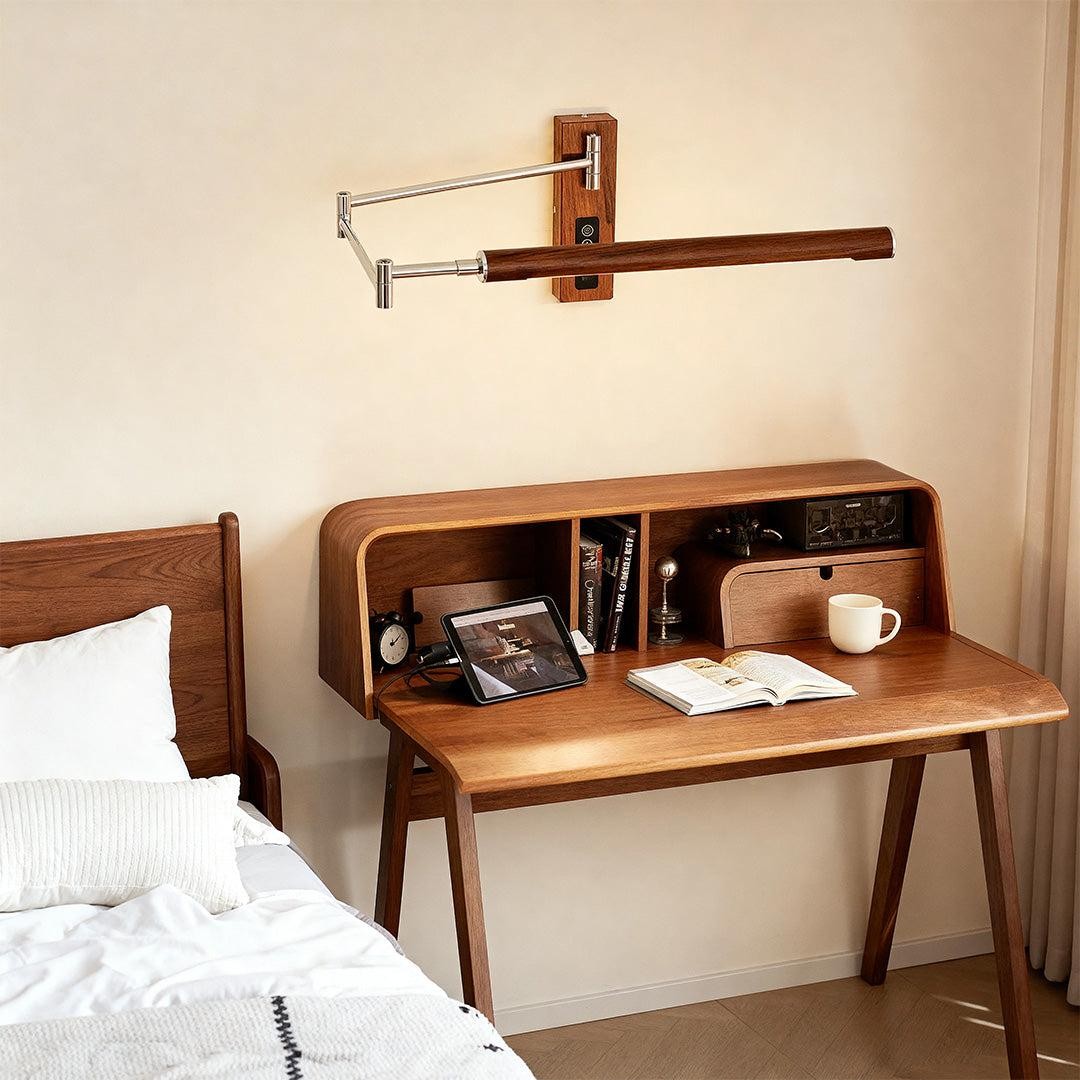
The reading lamp may vary between close-up and wide-desk lighting.
Ensure that the Switch is Easy to access.
When a placed well-positioned light is too much at the wrong time, it can be frustrating when one has to get out of bed to switch off the light. Determine whether the lamp is equipped with a switch (mounted on a wall), pull chain, touch control, remote, or switch on the lamp itself.
Plug-in sconces can be handy to the tenant or testing a place before investing in the electrical system. Hardwired fixtures are much more aesthetic, yet the location of the boxes and switches should be preplanned. New wiring or any installation in which damage, looseness or improper location of the existing electrical box is done or may be done should be done by a qualified electrician.
Set the Room First, Before IMplicating the Gadget.
To make reading more comfortable during the night, it would be logical to test font-size, screen coziness, and light. Simply keep in mind that the device is not the only aspect of the environment.
Experiment with turning on a light that is close by, shifting the screen to avoid the reflections and adjust the position of the body before discarding the e-reader or surrender on the last chapter. The most convenient reading position is hardly ever the brightest. The arrangement that makes your normal position, the usual room, and the screen no longer compete to get your attention.