Bathroom Renovation Sanitaryware Checklist: Toilets, Basins, Flush Tanks and Accessories
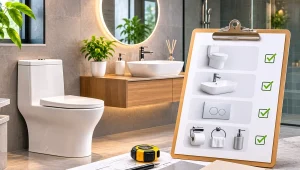
Without a sanitaryware checklist, a bathroom renovation can go wrong in many ways including cost overruns, an unbalanced design with mismatched fixtures and last minute rushed purchases. A tile design can be as detailed as you like, but the design of the sanitaryware is left to chance and taken care of by the dealer. To avoid this, take a ‘fixture first’ approach and decide on each and every accessory prior to ordering tiles.
The Core Fixtures
Some key fixtures define the function of a bathroom. Getting these right ensures a well-functioning bathroom.
The Western Toilet or Commode
The western toilet is the most used fixture in the bathroom. One-piece models o ffer a seamless, easy-to-clean profile. Wall-hung models save floor space and make cleaning underneath easier. Two-piece commodes remain the most affordable option for utility bathrooms.
Key specifications to confirm before purchasing:
- Trap type: S-trap (floor outlet) or P-trap (wall outlet), matched to existing plumbing
- Flush system: dual flush (3/6 litre) for water efficiency
- Rimless bowl for improved hygiene and easier cleaning
- Seat type: soft-close lid as standard on premium models
Confirming the trap type first prevents costly plumbing rework after purchase.
The Wash Basin
The basin type depends on the bathroom size and layout. Wall-mounted basins suit compact bathrooms. Countertop basins work well on vanity units in master bathrooms. Under-counter basins create a sleek, continuous countertop surface.
Specifications to check:
- Basin width relative to available wall or vanity space
- Bowl depth: minimum 120mm to control splashing
- Overflow outlet for safety in family bathrooms
- Anti-bacterial glazing for long-term hygiene
Choosing the basin before finalising the vanity ensures the two fit together properly.
The Flush Tank or Cistern
The flush mechanism determines water consumption and flush performance. Exposed cisterns sit visibly behind the commode. A concealed cistern hides inside the wall for a cleaner look, paired with wall-hung commodes.
Points to confirm:
- Dual flush mechanism for water savings
- Flush plate style and finish (chrome, matt, brushed) that matches the bathroom accessories
- Access panel for concealed cisterns to allow maintenance without breaking the wall
Matching the flush plate finish to the tap and towel rail finish ties the bathroom together visually.
Bathroom Accessories
Accessories are often the last items purchased, which leads to mismatched finishes and poor placement. Planning them alongside the core fixtures avoids this. The following items should be on every renovation checklist.
- Towel rail or ring, within arm’s reach of the basin and shower
- Wall-mounted soap dispenser to save counter space
- Toilet paper holder, positioned for comfortable reach
- Robe hook near the shower or door
- Mirror, with or without integrated lighting
- Shower set: rain shower, hand shower or combination
- Health faucet, standard in Indian bathrooms
- Exhaust fan sized to the bathroom’s volume
Each accessory should share a consistent metallic finish, whether chrome, brushed nickel or matt black, to keep the bathroom looking coordinated.
The Specification Checklist
A simple table for each bathroom prevents most fixture mismatches. This version works for any renovation project.
| Item | Specification to Confirm |
| Commode | Type, trap, flush system, seat |
| Basin | Style, width, depth, glazing |
| Cistern | Exposed or concealed, flush plate finish |
| Taps | Single lever or dual, wall or deck mount, finish |
| Shower | Rain, hand or combination, diverter type |
| Accessories | Finish family, mounting positions |
Filling this table before visiting the showroom saves time and prevents impulse purchases.
Common Sanitaryware Mistakes
A few recurring errors cause most renovation regrets. Awareness of them helps avoid costly corrections.
- Buying the commode before checking the trap type. An S-trap on a P-trap outlet needs plumbing rework.
- Choosing accessories in a different finish from the taps. Mixed finishes look uncoordinated.
- Skipping the concealed cistern frame specification. The frame must go in before tiling.
- Forgetting the exhaust fan. Humid bathrooms develop mould regardless of fixture quality.
Planning all categories together prevents these issues.
Sanitaryware is a Long-Term Investment
Sanitaryware is a long-term investment. In humid Indian conditions, regular china fixtures get discolored and encourage bacterial growth. Vitreous china which is high fired is more resistant to staining and bacterial growth. Anti-bacterial glazing would be even better. Simpolo Tiles & Bathware is one such supplier.
Conclusion
A sanitaryware checklist ensures you lock in the basin, commode and cistern in one go, confirm measurements against the existing plumbing in the bathroom and match finishes to other fittings in the room. Such checklist should make the overall process of renovating the bathroom a whole lot easier.