From Page to Screen: How PicLumen Helps Writers Create AI Short Dramas
Fiction writers have the scene they can visualize vividly: a stranger comes to a friendly doorstep, or two old friends come together after many years have passed, or a handwritten note that tells one something that they were not supposed to know. To make that scene watchable has always been a job demanding a different set of resources and production skills to the audience.
Another starting point is the AI short dramas. Independent creators and authors are able to experiment with the form of their stories and start with a single scene and work towards an episode or series.
PicLumen focuses this possibility with a special drama workspace. To writers, digital publishers and storytellers, it provides a means of bridging written concept to visual creation without having to diminish characters, conflict and narrative options to the core of the process.
Why Minimal Dramas Are the Right Direction of Digital Storytelling.
A short story provides a play with a limited area in which to impress. A creator does not have to create an entire fictitious world in a single shot: instead, it can concentrate on a single, important event: a confession, an unexpected meeting, or a choice with ramifications.
To writers, such a format creates a challenge in creating something useful and creative. What is the detail that creates the setting? What is the desire of the main character? What varies in the build-up to the scene? It is possible to answer these questions and enhance a visual adaptation and the writing behind it.
Provide New Audiences with an Entrance.
A novice reader might find it more natural to relate to an interesting scene than an extensive description of the plot. One and two lines may create a sense of humor or weakness or single-mindedness without having to relate all the details of a character.
An example is that a mystery writer might introduce a detective with a conversation with the witness that is uncomfortable. The viewers find out the way the detective thinks by observing what he or she pays attention to and what questions are inquired.
It makes it a smaller experience on its own, and provides interested viewers with the motivation to delve into the bigger picture.
Find out one Idea and then stretch it.
Short plays are also useful to allow authors to experiment with unwritten work. A readable conversation can sound monotonous as it is conceived as a series of shots. It is actually a small act that could convey more feeling than one or two lines of dialogue.
Visual work promotes valuable changes. Authors are able to check the rhythm and explain the motivations and understand whether there is enough tension in a scene to keep the audience.
PicLumen as a part of the creative process.
PicLumen is a provider of AI based image and video generators which creators can utilize to experiment with characters, environments and visual concepts. To a writer, that gives you a chance to provide a fictional world with a starting visual orientation.
An isolated coastal village could look calm on sun-lit skies or with heavy rain clouds. The location remains the same, only its emotional impact is different. Investigating those opportunities can assist a creator to select an ambiance that advances the narrative.
This can be achieved by starting with a narrative purpose. An image ought to create a location, provide a personality, or a focus on something important.
Move from a Script toward an Episode
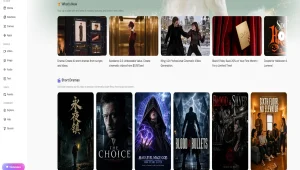
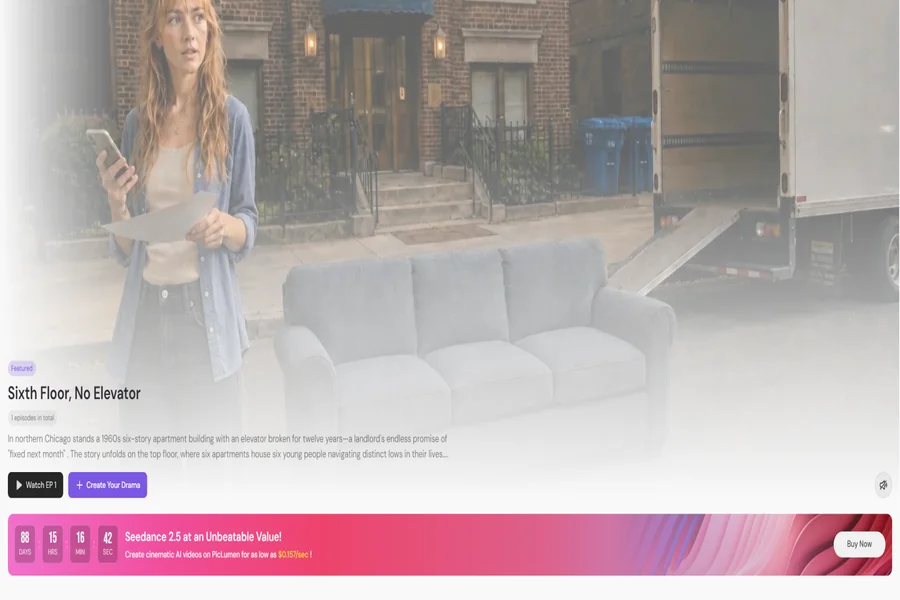
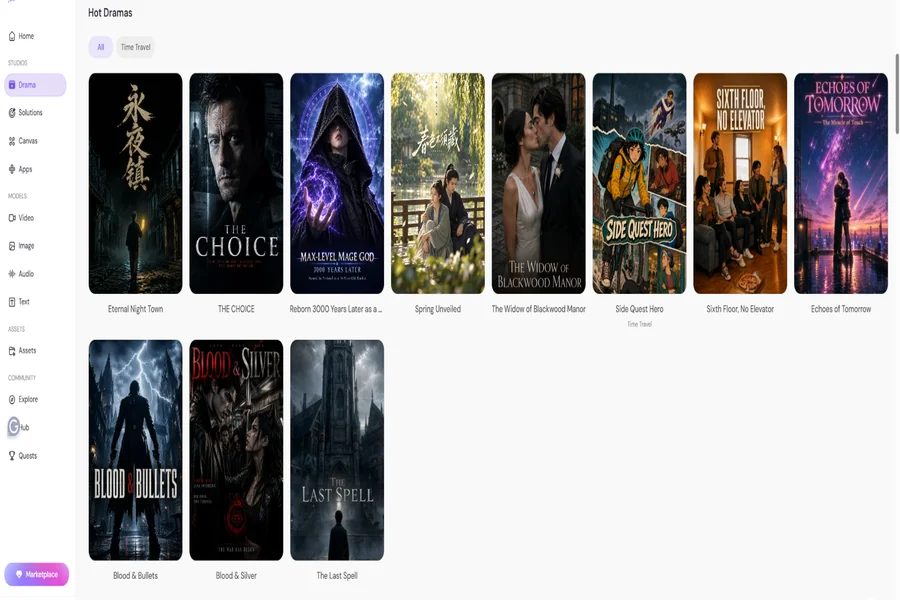
PicLumen’s AI short drama generator describes a workflow for developing written scenes into images and video. Its drama page also includes example projects and a tutorial to help new creators get started.
The platform presents features intended to support character consistency across episodes, along with editing tools for adding subtitles and image tracks. Together, these provide a starting point for assembling a story around recurring characters and connected scenes.
Writers still make the decisions that determine whether an episode works: what to include, where to pause, and which moment should bring the audience back.
A Guide to Writing Your First AI Short.
To be successful, there is no need of a big cast or a wondrous fictional world on the first project. A concentrated idea provides the creator with less moving parts to work with and additional space to perform an improved storytelling.
Begin in a single place and few characters, and a scenario varying within the episode.
Select One Focused Dramatic Question.
There is a dramatic question that leaves the audience with something to pursue. Will the main character open the letter? Will a guest confess the reason why he had come back? Will he be able to notice the object that is in bold view?
Take a case of an original story, a bookseller comes across a message in a gifted novel. The message is written to her and it talks about something that is yet to occur.
The premise causes an instant question, who may have written it. The introduction can be made by the initial episode in order not to explain the whole mystery.
Break the Scene into Visual Beats
Before generating material, outline the moments the audience needs to see.
For the bookseller story, the sequence might be:
- The bookseller sorts a box of donated books.
- A folded note slips from a damaged novel.
- She notices her name on the paper.
- She reads a detail that makes her stop.
- Something nearby suggests the prediction may be coming true.
Every beat is not in vain. The beginning forms a normal activity and the discovery disrupts it, and the last moment shifts the perception of the situation in the audience.
Compose Discourse Which Spares Space to Pictures.
Dialogue is more effective when it should be combined with observed behavior. One does not necessarily have to declare that he/she is nervous. They may keep on checking a closed door or find it hard to complete a given task.
Read the script out loud and delete lines which repeat the information that is already visible to the audience. Provide significant reactions with ample room to sign up.
Develop Coherence among Your episodes.
An ongoing drama requires recognition. The audience must recognize the familiar characters, their relationships and what occurred earlier.
The continuity has more elements such as personality as well as motivation and emotional development, which is supported by visual consistency.
Have a Character Checksheet
Write a brief biography of each of the recurring characters. Incorporate their looks, common attire, significant items and behaviors.
The character with the worn notebook must be in touch with that item when it is significant to the plot. When they alter in terms of appearance, it must suit the narrative.
Viewed generated scenes collectively to enable the difference to be easier to see prior to the creation of the episode.
Keep Track of What the Each Character Knows.
One handy continuity check is to make a note of what every person knows at the start and the end of each instalment.
When one of the characters has found a secret, it must be reflected in his future actions. Provided that another one is not informed, their schemes should be understandable to themselves.
It is this focus on cause and effect that allows a series to seem coherent and assure people that the details matter.
Revise To Be Understood, to Indentify with, to Be Heard.
When the scenes have been compiled, then watch the episode as someone who has never seen this story before.
What is the objective of the main character? Is the great finding in sight? Does the conclusion come as a natural extension of the previous?
Provide Significant Moments With Due Ample Time.
Rapid editing can generate vigor, and a significant response might require a wait. Allow the audience to see the clue, interpret the expression or come to know the result before getting ahead.
Eliminate shots that describe the same idea without building it on. Each scene must add information, emotive, or motive.
Behave like Subtitles as a Viewing Experience.
Subtitles cannot be too small and must be synchronized with the conversation. Keep them uncluttered with critical items and phrases, and too much text should not be displayed at a time.
Play the episode with the sound also down to understand whether the viewers are still able to follow the necessary action. Then give it a listen to verify the working of the text and the scene.
Write Short Dramas to Post and Publish.
In the case of an independent author, a short drama may present a fictional character, a scene based on an existing story, or a scene that exists outside of the primary narrative.
An episode can be used to follow a feature of fiction by a publisher. Writing community The comparison of various visual interpretations of the same prompt could be conducted.
The most interesting projects provide viewers or readers with something fully realized, in spite of having one bigger story in mind. An invitation to continue is earned through a fulfilling joke, an emotional decision, or an intriguing discovery.
Before and After Your First Scene.
PicLumen is an accessible place where writers can commence experimentation of short drama creations. Its monologic drama of offering relates visual formation to episodic narrative, which can be applied to creators who already have page characters and scenes waiting.
Start with a scene that you are familiar with. And determine what the character desires, establishing what changes and constructing the visual sequence around that twist. Polish the outcome until one can see the action and the emotional sense that is intended in it.
A single scene that is well considered can be the foundation of a whole series- or just be an open door to a new form of telling a story that is important to you.