Study: It’s Easier (For Some) to Read on LCD Screens Than in a Paper Book

I have long held the position that LCD screens aren’t as evil as everyone claims, and that the belief that E-ink is better for you eyes is a myth. Now there is new evidence that reading on an LCD screen device like the iPad or Kindle Fire might actually take less mental effort.

A team of researchers at Johannes Gutenberg University in Mainz, Germany, have recently published a paper which shows that in spite of claims to the contrary, it was easier for a test group to read on an LCD screen. What’s more, the test group also showed approximately the same retention of the reading material, no amter whether they read on LCD, an ereader, or on paper.

Dr. Matthias Schlesewsky and his colleagues tested a group of 57 Gen X and senior citizens for this study. The comprehension and retention of the reading material was judged by asking the test subjects questions, but in order to measure how much effort the test subjects put into their reading this study had to go high tech.

The test subjects were strapped into a rig that tracked their eye movements and measured their brain waves using an EEG (electroencephalogram) machine. Past research has indicated that reading can be associated with certain patterns of brain activity, and in this study the researchers noted when they occurred and at what intensity.

The results were mixed, and I’m not sure I would place the same emphasis on them as the research team did.

First, the EEG measurements showed that the Gen X test subjects used about the same amount of mental energy while reading on all 3 materials, with the tablet requiring slightly less energy than the ereader and paper book. The eye tracking figures showed the younger group also spent about the same amount of time reading on each type of material, with the tablet taking slightly less time.

But with the senior citizens, the results clearly showed that the test subjects spent far less energy and time reading on a tablet than was spent reading on the ereader or paper book. Curiously enough, the ereader took more energy and time than reading the paper book or the tablet.

Interesting, no? The researchers have posited that the backlight on the tablet might contribute to it being easier to read. I think it merits further study, myself; I’d like to see the study repeated with a slightly different set of conditions.

One other interesting result from this study came from the comprehension questions asked after the reading sessions. Both test groups showed a slightly higher error rate when reading on the ereader or the tablet. It’s small enough that the researchers described it as insignificant, but I disagree.

As you can see in the graph at right, going from paper to digital introduced a slightly higher error rate. Given the general hype surrounding digital textbooks at the moment, this bears further study.

Right now the textbook publishers and their pr flacks are talking about the many wonders of digital textbooks (I still see federal govt interest in digital textbooks as a disguised jobs program) but there’s never really been much substance to prove that digital textbooks were better.

Here we have a study that suggests digital textbooks are not better for students. It’s a pity that this probably won’t slow down the mad dash towards the next hot trend, but as we all know the US government rarely lets evidence get in the way of politics.


paper

source

How Not to Silence Critics – Publisher Sues Librarian For Defamation

Here’s a story from north of the border.

Edwin Mellen Press, a publisher that is widely regarded as being little more than a vanity press, is now suing a McMasters University librarian (as well as the university) over a 2010 blog post.

I’ve been reading about it today and I have to say that this is one of the stranger lawsuits I have ever heard of.

The blog post originally appeared on the personal blog of Dale Askey, a professional librarian. He wrote it in 2010 (but at some point since then deleted the post from his blog). In spite of this he is still being sued, but that’s not the weird part. Mr. Askey wrote that blog post while a librarian at Kansas State University, and it was only afterwards that he happened to change jobs and start working at McMasters University in Ontario Canada.

I’m shaking my head right now because what we have here is a Canadian university being sued by a UK publisher over an article the university did not publish which was written by someone they did not employ and which is no longer posted to the internet.

Is this what it feels like to have a stroke?

For the sake of thoroughness (and to better understand this case) I found the original blog post. You can find it at the end of this PDF of Edwin Mellen’s filing (page 10).

It looks to be fairly tame stuff (I know I have said worse about US publishers) and well in line with both any reasonable 1st amendment protection as well as standards of professional behavior. With that in mind I have to wonder what exactly Edwin Mellen expects to get out of this.

They tried and failed to get the university to repudiate the librarian and the blog post, but MU is supporting Dale Askey. And so Edwin Mellen is suing the university and the librarian, claiming that this blog post cost them millions of dollars.  The lawsuit would be laughed out of court if it were filed in the US, but given that it was filed in Canada it will take some time and money to defeat Edwin Mellen’s bullying.

It’s almost as if Edwin Mellen looked at the lawsuits the RIAA filed against their customers and thought it brilliant. Clearly they think turning one negative blog post into a 3-ring media circus, with themselves as the guest of honor, was the correct response.

Whatever. I gave up trying to figure out their thought processes about 3 hours ago.

source, source, source

image by Loozrboy

Penguin India Launches Partridge – a Self-Publishing Service for Suckers

When Pearson bough the self-pub scam experts Author Solutions last July, I hoped that it would be a sign that Author Solutions would clean up their act and rise to a higher ethical level. Sadly, it is now clear that Pearson had planned all along to get down in the muck.

Penguin India has just launched a self-pub scam service called Partridge, and it is a sad sign of how low this once honorable publishing company has decided to sink. Like the similar Archway service that Simon & Schuster launched in the US, Partridge is actually run by Author Solutions.

Prices start at ?12,450 (about $234 USD), considerably cheaper than Archway’s packages which start at $2,000. That’s not a discount; Partridge is offering a much shorter list of services included in each package.

I’m not sure if that was a cost-cutting measure or simply general sloppyness, but I have noticed that the Partridge website is considerably less polished and professional than I would expect. It looks like it was slapped together and then put online with minimal planning, editing, or much thought in general. For example, if you try to find out what ebook formats they distribute and where, you will be told this:

Every Partridge India book is available in digital or electronic format. They are compatible with different e-reading devices and can be downloaded from various online bookstores, such as Google and Amazon Search Programmes.

The rest of the website is about as detailed as that excerpt. Given the millions of English speaking tech people in India, I have to wonder at the quality of the website. Did Penguin India outsource the entire project to China?

Now that would be ironic (from an American viewpoint, at least), but at a minimum I would be concerned that the work performed by Partridge will be on par with the quality of their website.

In any case, I have said it before and I’ll say it again. Any self-published author is better off making their own way. Whatever services are being offered by Author Solutions can almost certainly be found cheaper elsewhere. You just have to look.


eReaders With Knockoff E-ink Screens Now Available in Multiple Sizes: 4.3″, 6″, 8″

Remember the Pyrus Mini, that ereader with the 4.3″ epaper screen which E-ink insists ripped off their proprietary screen tech?

Guangzhou OED Technologies, the Chinese company that made the screen on the Pyrus Mini, has apparently branched out into other screen sizes. E-ink has not raised a stink about this because they were probably hoping that no one would notice, but I’ve just learned that a new 6″ ereader from the Dutch company Icarus appears to be using the knockoff screen.

What’s more, a brief glance through other product listings have revealed a number of different ereaders that appear to have some type of epaper screen that wasn’t made by E-ink (or any other screen company I know of).

I first came upon this story via a new product announcement on the Dutch ereader blog eReaders.nl. The covered a new ereader from Icarus. The Icarus Essence is a no-frills 6″ ereader that lacks Wifi or a touchscreen. It has 4GB of storage, a microSD card slot, and broad format support including Epub, PDF, Mobi, and more.

Just about the only detail that is worth noting is that the product listing says it has an epaper screen, while all the other Icarus ereaders have E-ink screens. That might be a small detail but it is a telling one, trust me.

Also announced last week (but not yet available) is the Icarus8, a larger ereader with Wifi, audio ability, and an 8″ (1024×768) epaper screen. I’m still looking for confirmation but I don’t think that is an E-ink screen either.

But wait, there’s more. It turns out that Trekstor, sellers of the Pyrus Mini, are also selling the 6″ Trekstor Pyrus and it too has a knockoff screen. TeXet, a Russian gadget company, has a number of ereaders with E-ink screens as well as at least one ereader with a 4.3″ (screen like the one found on the Pyrus Mini).

Isn’t this interesting?

There are now 4 ereaders on the market in various parts of the world that clearly do not use E-ink’s screen.  It makes you wonder how many have escaped notice, doesn’t it?

It also raises the question of whether these screens really do violate E-ink’s patents. Surely 3 companies in 3 countries wouldn’t all put themselves at risk of a lawsuit without first going throw the technical specs with a fine tooth comb and making sure that the screens were legal.

Now I’m beginning to understand one of the conversations I had at CES 2013. I never wrote about it, but I met with the device maker who originally developed these ereaders before licensing them to teXet, Icarus, and Trekstor. The CEO of the OEM doesn’t want me to name his company, but he swore up and down that the knockoff screen was not a knockoff. He insisted that it didn’t infringe on E-ink’s patents.

I’m seriously beginning to wonder if he is correct; but for now all I can say is that there are details to this situation that I don’t have yet.

That might change in the not too distant future. When I was at Flextech last week I made sure to bring my Pyrus Mini with me. I left that ereader in the eager hands of the Flexible Display Center, and I handed it over with the understanding that they would dissect the screen and send me a report.

It’s going to take anywhere from a few weeks to a few months before I get an answer, but I do plan to get to the bottom of this.

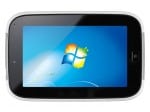
Intel StudyBook Now Available – Outdated, Overpriced, & Underpowered

When Intel unveiled their rugged educational tablet last April I predicted that it would be overpriced and underpowered. I’ve just been sent a link to the first product listing for this tablet and I am correct on both counts.

The cheap and powerful $200 educational tablet has morphed into a $700 tablet with a weak battery, outdated CPU, and running an unimpressive OS.

It’s easy to tell that the StudyBook is quite a few steps behind the technology curve. It’s running Windows 7 Home, which is not at all a tablet friendly version of Windows. It has a single-core 1.5GHz Atom Z670 CPU, a 7″ screen with a resolution of 1024×600, 1GB of RAM, 32GB of storage, and a pair of cameras (VGA and 2MP).

This tablet weighs in at a husky 526 grams, much heavier than the Nexus 7 (340g). The extra weight is likely due to the Studybook’s rugged case, but it is offset by an anemic 2.8Ah battery which is promised to offer 6 hours of runtime. Frankly, I don’t believe it.

I have not found any details on the software that ships with this tablet, but Dynamism does describe this tablet as being "a valuable option for enterprises and mobile workers who need to rely on a durable, ultraportable, Windows tablet". Based on the lack of detail on the software I would not assume that this tablet ships with much in the way educational software.

All in all, there is absolutely no detail about this tablet that would make it worth buying. It is not only ridiculously overpriced when compared to any of the educational tablets on the market, it is even a poor deal when compared to the MS Surface Pro tablet. That gadget retails for $900 and is both significantly more powerful as well as designed from the bottom up as a tablet OS.

In terms of performance, the $200 Nexus 7 has the Studybook beat (just to name one device). It has a better and faster CPU, better screen resolution, better battery life, and it even runs an OS which was designed to work on a touchscreen.

If you are looking for an educational tablet, even in that small niche there are any number of better options. In the 10 months since Intel announced the Studybook. everyone and their cousin has released or at least announced a kid’s tablet.

OLPC is working on the XO tablet. Archos, Polaroid, and even a small tablet maker like Ematic have released kid’s tablets. Lexibook has released numerous models, including 7″ and 10″ tablets as well as a tablet convertible. But if I had to pick the best model I would go for the Fuhu Nabi 2. It has a price and specs similar to the NExus 7 only with software customized for kids.

I don’t know if Intel realized quite how much the market was going to change in the past 10 months, but they should have.  The Studybook design was outdated only a couple months after it was announced, thanks to the Nexus 7 being released in June 2012. It met the $200 price point that the Studybook never reached and it had a multi-core Tegra 3 CPU.

I have to wonder why Intel didn’t beef up the Studybook as new and better tablets were released. In all honesty I don’t think they could have done so; they’re not nimble enough.

Dynamism

Newly Awarded Patent Suggests Amazon is Interested in Selling Used eBooks

When the German court legalized the used software market last fall I predicted that Amazon would soon be interested in setting up a way for their customers to sell used ebooks in much the same way that we can now sell used books, CDs, DVDs, etc.

Today I learned that I could not have been closer to the truth.

Amazon has just been awarded a patent for an "electronic marketplace for used digital objects".  The patent looks fairly broad to me, and covers more than just ebooks. The abstract mentions "e-books, audio, video, computer applications" and that tells me that Amazon s not thinking small.

The patent was originally filed in 2009, and it describes not just the sale and or loan process but also the possibility that Amazon or the copyright holder might set a limit on the number of times a piece of content might be transferred:

an object move threshold ("OMT") may be set. The OMT may limit the number of transfers of a used digital object to other personalized data stores when the used digital object has been moved more than a threshold number of times, thereby helping to maintain the scarcity of the digital object in the marketplace. For example, a popular used digital object such as a song may have an OMT of three, only allowing three permissible moves of the song to other personalized data stores. After the OMT is reached, the used digital object is no longer permissibly moveable to another personalized data store.

That last detail has already been implemented as part of Amazon’s current lending feature where a title can only be lent once and only if the copyright holder enables it. But the way it is described here suggests that Amazon is also thinking about limiting the number of times a title could be sold.

The patent also mentions that the restrictions could vary based on user data. For example Prime Members could possibly be allowed to sell or resell a piece of content more times than a regular Amazon customer. Or a college student signed up with Amazon Student might have special options for reselling his Kindle textbook.

In any case, Amazon is clearly thinking about the next stage of the ebook market (and doing it years ahead of everyone else). While a lot of publishers are basing their future plans on certain assumptions like ebooks cannot be resold (that’s why digital textbooks are hot right now), Amazon is planning for the day when ebooks will be sold as used goods.

And even if Amazon doesn’t decide to get into the used digital content market they can still use this patent as a carrot for publishers. It can be used to block Amazon’s competition from setting up a service to sell used ebooks, something that I’m sure some publishers would desperately be interested in.

source

image by karen horton

Updated: Moon+ Reader Kicked from Google Play Due to Bogus Piracy Claims

I’ve mentioned the Android reading app Moon+ Reader  once or twice (it’s bundled into the hacked firmware for the Sony Reader T1 and T2). It’s a very popular app with excellent file management features, ebook formatting options, and support for downloading ebooks from website.

It’s one of  the more popular reading apps available for Android, second only to Aldiko in terms of downloads – or at least it was before the app was removed from Google Play.

It looks like the Russian ebook distributor LitRes.ru has been watching the Samsung-Apple patent fight and taken a lesson to heart: If you can’t find a legitimate way to compete, invent a rules violation and get some authority to throw the book at your competition. That’s what has happened to Moon+ Reader this weekend. According to the developer’s blog, this reading app has been removed from Google Play because of a piracy complaint.

LitRes has just discovered that Moon+ Reader, an app that has been available for a couple years now, lets you download ebooks from websites. And *gasp* that includes pirate sites.

Like any number of other ebook apps (including Stanza,Mantano, and Aldiko), Moon+ Reader supports OPDS. This is an RSS-like protocol that enables websites to offer ebook downloads inside compatible reading apps. While at first glance it looks like a download protocol, it would be better to describe it as a catalog protocol because it also includes important metadata like title, author, file format type, and description.

Far from being a tool of pirates, OPDS is used by many legitimate ebookstores and download sites. Project Gutenberg, Baen Books, Internet Archive, and Feedbooks all use OPDS to offer ebook downloads, and the app developer Bluefire uses it to connect their reading apps for iOS and Android with partner ebookstores. There’s even a trick where you can set up your own library of legally purchased ebooks in your Dropbox account and create an OPDS catalog for it.

Now, I’m sure you’re thinking that this could be an honest mistake. Well, no. From what I can tell, this is not the first time that LatRes tried this particular trick.

The developers of a Russian text-to-speech ebook app Chitatel reported late last month that their app had been removed from iTunes for much the same reason (it’s back now). According to their announcement, LitRes accused them of piracy because it was possible for users to use the Chitatel app to download pirated content. Newsflash for Litres: You can also download pirated content with a web browser.

LitRes has a number of apps in Google Play, including both an audiobook app as well as an ebook app. Aside from the non-Russian reading app, none of the apps have all that many downloads. But one thing they do have are a lot of 1-star reviews. When this news broke on Reddit, one redditor proposed a campaign of retaliatory 1-star reviews. I’d say it’s having an effect.

As for Moon+ Reader, the developer has filed a counter notice with Google.  The app is bound to be returned to Google Play, though it might take up to a month for Google to get around to it.

Until then you can download the free version of the app from the developer’s website. The paid version of the app requires a $5 registration fee which can be paid via Paypal.

Update: LitRes has responded to the story. Assuming that Google Translate did its job, they claim that both apps mentioned above "include in their applications pre-installed links to pirated library as the main source for books". I call BS on this statement; the main sources of Moon+ Reader are sites like PG, Smashwords, Feedbooks, etc – none of which are pirate sites.

And while it is possible that Moon+ Reader could have offered a link to a pirate library via a user submitted OPDS catalog, that catalog (as well as the link to it) is not in the app so removing the app from Google Play will not remove the pirated content.

I think it far more likely that LitRes filed a piracy complaint in order to harm the competition, not fight piracy. Had that been their goal they would have communicated with the developers first.

Second update: One reader is reporting that his version of the app has an extra download site in the list that isn’t showing up in the 3 versions of the app I downloaded. He reports that TUeBL is listed alongside Smashwords, PG, and the rest. That is (according to some) a pirate site, though the operators dispute this. But does it have ebooks which LitRes cam file valid DMCA notices? I don’t know.

source

New Augmented Reality App Makes Japanese Newspaper into a Game for Kids

The Japanese newspaper Tokyo Shimbun has launched a new app which they hope will attract beginning readers into an aging customer base.

The app, AR News, uses augmented reality to promote certain stories published in the print edition of the daily newspaper. Kids can scan selected articles with an iPhone and the app will show them a "kid-friendly" version with animated characters and graphics, pop-up headlines and explanations about the topics being discussed. The online version of the stories are rewritten so they are easier for beginning readers to understand, with the Kanji characters replaced with the simplified Hiragana alphabet.

Here’s a video demo of the app:

It’s an interesting idea, and I have to say that it’s a better option than the dumbing down of articles that can be found in many US newspapers. But as technically interesting as this may be, I don’t see why the old, analog newspaper needs to be included. Why not just post the news stories online, where everyone is already reading them?

What’s more, the blue graphic used to mark some of the compatible stories is IMO visually distracting. If I were reading the newspaper (I can’t recall the last time that happened) and came across one of these graphics on a story, I would tend to skip it rather than work to decode the text under the graphic. If I really wanted to know about the story I would probably look for it online. In either case, the graphic has cost the newspaper a reader.

source


Kindle Fire Nabs 33% Android Tablet Market Share

Barnes & Noble might not be in a good mood today but Amazon is probably celebrating (so should B&N). The app analytics firm Localytics has just released a new snapshot of the global Android tablet market and Amazon has cleaned up.

According to the little bits of tracking code that Localytics' app developer partners have been inserting into their apps, Amazon can now claim a 33% share of all the Android tablets now in use.

In the world.

Localytics' data showed that the majority of Android were owned and used in the US (59%), and that nearly all of the Kindle Fires were also located in the US (89% of 33%).

These figures are far from a complete view of the tablets in use, but if you take them with a grain of salt then there are a few things we can learn. For example, Google is hot on Samsung’s heels. The Nexus 7 represents 8% of the Android tablets in use, while Samsung’s Galaxy family accounts for 9%.

And then there’s the surprising detail about the Nook hardware. These enhanced ereaders (NC, NT, HD, HD+) now represent 10% of all tablets in use. I will admit to being very surprised; this raises questions.

I wonder if perhaps B&N’s strategy of having frequent discount sales on refurbs may have boosted the number of tablets sold without actually getting the devices into the hands of the high spenders. The discounts pursued the budget market and the subsequent digital revenue could reflect that.

In any case, I don’t put all that much weight in this data. It doesn’t quite jive with other similarly inexact sources like Chitaka’s ad network. Chitaka reported earlier this month that the Kindle Fire, Galaxy tablets, and the Nexus 7 all gained market share after the holidays. The Nook family of tablets were generating so few impressions that they weren’t included in the chart.

You can take either set of data however you want, but I choose to be skeptical of both.

Samsung Readers Hub Updated to Support Epub3

Samsung kept their thumb in one more pie this week when they released an update for the Samsung with Readers Hub 2.0.

According to the press release, Samsung’s ebookstore now features improved discovery and navigation as well as enhanced content recommendation systems. The app also gained new reading features more options so users can customize their reading experience. Highlighting and sharing are also mentioned as being new features, and that would be newsworthy of this were 2010.

Here’s something interesting: Samsung says that in addition to Epub and PDF, Readers Hub 2.0 also supports Epub3. I can’t verify the completeness of support, but if anyone could check I would love to hear what you think.

Readers Hub 2.0 also sells ebooks from Samsung’s global and local publishing partners, including bestselling titles, along with illustrated cooking books and interactive reading materials for kids. There’s even a publisher portal (a la KDP, Kobo Writing Life, B&N PubIt) which allows publishers to upload and sell ebooks.

This app ships on the Galaxy S3 and can be downloaded to other Samsung mobile devices from Samsung, including the Samsung Galaxy Tab 2 7.0 (the screenshot).

Samsung has been dabbling in ebooks ever since they first unveiled a set of ebook readers at CES 2010 (in the heady days of the ereader bubble). Those devices never amounted to much but they were the start of Samsung’s interest in the market.

Funny story: I ended up being a volunteer hand model at the CES 2010 Samsung press conference. Even though I had never seen the ereaders before I knew more about them than anyone so I got to play with them while others shot video. It was fun.

The Death Spiral has Officially Begun: B&N Announces Plans to Close 20 Stores a Year

Ever since Barnes & Noble announced lackluster holiday sales earlier this month I have been waiting fro the other shoe to drop. And now it has.

The WSJ reported this morning that B&N already has a long term plan in place. They’re ready to cope with their decline:

"In 10 years we’ll have 450 to 500 stores," said Mitchell Klipper, chief executive of Barnes & Noble’s retail group, in an interview last week. The company operated 689 retail stores as of Jan. 23, along with a separate chain of 674 college stores.

Mr. Klipper said his forecast assumes that the company will close about 20 stores a year over the period.

B&N has been opening an average of 30 stores a year (and closing 15) until 2009. Since 2009 B&N has been closing more retail stores than they have been opening, and in the past year they’ve only opened 2 stores.

B&N College is also performing poorly.  This B&N subsidiary operates college bookstores under contract to universities, community colleges, etc. In spite of the fact that they’ve signed a number of new contracts over the past few year revenues have still declined as often than they grew. At best B&N College is holding steady.

2009 was the year everything changed for B&N. That was the year they bet the future of the company on digital. They bought Fictionwise, reacquired B&N College, and launched the Nook.  Given that 3 and a half years later Nook revenues still account for less than 10% of overall revenue I would say that this was a bust.

And from what Mr Klipper says in the article, it’s pretty clear that B&N thinks the same. There are almost no mentions of the Nook platform in the article and none in the quotes. It’s all optimistic statements like:

Even with 450 to 500 stores, "it’s a good business model," says Mr. Klipper. "You have to adjust your overhead, and get smart with smart systems. Is it what it used to be when you were opening 80 stores a year and dropping stores everywhere? Probably not. It’s different. But every business evolves."

I wonder if B&N saw digital as a way to prop up the brick-and-mortar stores? That’s certainly what it looked like in the early years of the Nook Store. In 2010 and early 2011 B&N ran "More in Store" promotions where you could get free ebooks if you visited a B&N retail location.  That limited them to only attracting customers who live within a reasonable distance of their existing stores and ignored the many potential customers who don’t (basically everyone in the US with internet access and a credit card).

But that’s not B&N’s only misstep. They still have not integrated their online and brick-and-mortar operations, they’re still having issues with online customer disservice, and their digital sales are still hobbled by questionable business decisions. The Nook App Store is a "curated" app store with only around 8000 titles, thus limiting the value to customers, and B&N still doesn’t sell mp3 music.

Then again, B&N’s limited success in the ebook market (going by their lackluster revenue) isn’t entirely their own fault; they have in fact been a couple steps behind Amazon ever since shortly after the Nook Store opened in July 2009.

At that time B&N looked like a serious competitor in the US market, so Amazon responded by taking the Kindle international in October of that year. That gave Amazon hardware and ebook sales that B&N simply could not match in 2009. In fact, B&N is still struggling to expand internationally.

If it sounds like I am writing B&N’s epitaph, you’re not wrong. I don’t see a way forward for B&N. But you cannot hold that against me because frankly the article above doesn’t show that they have a plan either. Shrinking isn’t a long term solution but that’s about the only thing discussed.

images by karen horton, Ed Yourdon

Hands On With the World’s Smallest eReader: the Pyrus Mini

The txtr beagle is getting a lot of attention lately as supposedly being the world’s smallest ereader, even though it isn’t a real ereader, but that no longer matters now that I have my hands on an even smaller device.

Meet the Trekstor Pyrus Mini. There are no English language reviews of this ereader yet, so I am going to post a rare first impressions post in order to give my readers at least some info.

Update: Rather than write a separate review, I’m adding more detail to this post.

This beauty is shorter, narrower, and thinner than the beagle, and it weighs in at only 111 grams, beating the txtr beagle by 17g and the K4 by 59g. The Pyrus Mini is being sold by trekstor, and it has a 4.3″ E-ink screen, 1.6GB of accessible storage, and a microSD card slot.

Yes, this ereader has a screen smaller than on a lot of smartphones. But what’s even better is that it has the same screen resolution as on the Kindle and the txtr beagle, and that lets the Pyrus Mini pack the pixels tighter than even the Kindle Paperwhite, Kobo Glo, and other 6″ ereaders ( 232 ppi vs 212 ppi).

It’s missing certain features like the Wifi, and that means you’ll need to transfer ebooks over a USB cable. But on the upside this ereader differs from the txtr beagle in that it supports several ebook formats, including Epub, PDF, FB2, PDB, and it can also display text files as well as jpg, gif, png, and bmp image files.

The txtr beagle, on the other hand, cannot display ebooks at all. That device is more of an image viewer and actually displays page images. It’s also limited to only carrying 5 books at a time, far less than the thousand or more that can fit into the Pyrus Mini.

I got my unit earlier this week. This review unit was given to me by Trekstor, and it replaces the two I bought but were subsequently lost by DHL.

I’ve been reading on it for the past few days and I like it. It’s a pleasant little ereader that is designed to be gripped in one hand. It has page turn buttons on the right edge, so I suspect it is really intended to be used in your left hand with your left forefinger over the buttons. But I could also use it right-handed.

The Pyrus Mini is a budget ereader, and you can tell that by the limited number of features. You’re limited to 6 font sizes, 3 margin options, and you can also change the character encoding (this enables support for other language/ font sets like Simplified Chinese, Turkish, etc). The screen can be set to refresh after either 1, 3 or 5 page turns. You can bookmark a page, search for a word, or use the table of contents.

That’s not much in the way of features, I know. But this ereader is still more capable than the txtr beagle, and you won’t have to buy a new Android smartphone in order to get it, which is going to be the only way you’ll be able to buy the txtr beagle. The Pyrus Mini currently retails for 49 euros. That beats the European price of the Kindle by 30 euros.

For a tiny little $65 ereader, it’s not bad. It’s so light that the weight is almost imperceptible. I’ve been carrying it around in the same pocket as my cell phone this week, and whenever I have been stuck in line I’ve pulled it out to read a few pages. The page turn speed is (I think) slightly faster than my Kindle Paperwhite, and that is whatsoever surprising. I expected it to be slower.

But this ereader is not perfect. I’ve noticed that it seems to turn itself off if left along for too long (over night, for example).

All in all, this is a better ereader than I expected for the price. If your desire is to carry around a real ereader while still keeping weight to a minimum then this is the gadget for you.

2 Weeks In: This is still a cute little ereader, but over the past couple weeks I’ve noticed the same couple bugs happening again and again.

This ereader likes to turn itself off at random intervals. I’ve picked it up after letting it sit for as short as half an hour and discovered that it had turned itself off. I have no idea why this is happening, but I can say that I could not find a menu option that would stop the Pyrus Mini from turning itself off.

The other bug is a quirk involving the page turn buttons. Sometimes this ereader won’t register that you pressed the button, but when you press it a second time it will then turn the page twice.

The Screen

Felix asked in the comments what I thought of the screen. With most ereaders it would not matter, but this ereader doesn’t have an E-ink screen. It has a screen which E-ink says is a knockoff. I can’t tell with the naked eye whether this is the same screen tech as E-ink’s but I do know that when I put it next to a KPW, this ereader has a very slight brown tint to the screen but is otherwise as white as the screen on the KPW.

Price: 49 Euros

Specs

  • Screen: 4.3″ (800×600)
  • Storage: 1.6GB, microSD
  • eBook Support: Epub, PDF, FB2, PDB, RTF, TXT
  • Image Support: jpg, bmp, gif, png
  • Weight: 111g
  • Dimensions: 85 mm x 128 mm x 9 mm

Macmillan to Launch Library eBook Pilot This Spring

It’s been some 4 months since Macmillan announced they were considering how to begin offering ebooks to libraries, and today they finally released details of  the pilot.

Macmillan will begin their first ebook library lending program by the end of the Q1 2013. They plan to initially test the idea with 1,200 backlist titles from their Minotaur Books imprint.

The ebooks will be available via Axis 360, OverDrive, and 3M Cloud Library. Once purchased by a library, the titles can be lent for either 2 years or 52 lends, whichever comes first. All of the books in the program will have the same digital list price.

But do you know the kicker? Macmillan has managed to combine the limited checkouts of HarperCollins with the ridiculous prices of  Random House. Library Journal is reporting that each copy will cost $25.

So it seems Macmillan is officially joining the "I Hate Libraries" club. (Up until this point they had not sold ebooks to libraries at all, thus making them a non-voting associate member.)

Macmillan will be joining their fellow major publishers Hachette, Random House, HarperCollins, and Penguin, all of which restrict the availability of library ebooks (HarperCollins, Penguin) or charge ridiculous prices (Hachette, Random House). This exclusive club is ruled over by Simon & Schuster. S&S currently sells only a single ebook title to libraries, and that only made it through their gauntlet because it won an award.

Angry ranting aside, we’re now at 6 for 6. All of the major publishers have made it clear that they don’t actually want to sell their content in all markets to all customers. Why? I’m really not sure. Aside from the usual vague statements which translate to "no", I can’t recall that any of the major publishers has ever shown real evidence to support their business decision. All I have is guesswork.

source

image by Jeffrey Beall


B&N to Launch the Nook in Nine New Countries by June 2013

The news this morning that Kobo had hired a new director for EMEA reminded me about some expansion plans from one of their competition. Those plans aren’t going so well.

Way back in June 2012 Barnes & Noble set an ambitious goal. Over the following 12 months, they planned to launch the Nook Store in no less than 10 international markets. It’s now 7 months later, so let’s look at what they’ve accomplished.

In late September 2012, Barnes & Noble launched the Nook Store in the UK. This was a solo launch with no local partner. B&N had been rumored in late 2011 to be courting Waterstones but that bookseller chain ended up signing with Amazon to carry the Kindle.  External details of the deal suggest that Amazon outbid B&N not because Amazon wanted a local partner but to keep B&N from gaining a local partner in the UK market.

And since September B&N has launched the Nook in exactly …  zero markets.

There are rumors of plans to launch the Nook in a variety of markets including Russia, Netherlands, Germany, and elsewhere (I think Brazil is a possibility), but no firm evidence has been uncovered nor has B&N made any announcements.

It’s now late January 2013, and that means Barnes & Noble has only 5 months left until their self-appointed deadline. I’m not sure that they’re going to make it.

I’m not trying to be hostile here, but launching 9 local bookstores is a massive undertaking any way you look at it: logistical, technical, or organizational. It took B&N nearly a year after the first hints about partnering with Waterstones before they launched the Nook in the UK. And even then it was delayed a couple times due to technical issues.

I’m not convinced that B&N has the ability to pull off 9 nearly simultaneous launches in the next 5 months. Sure, they might decide to wait until BEA 2013 comes around in May and announce the markets they will be launching in, but actually getting the local Nook Stores is probably out of the question.

And given the way B&N is hemorrhaging money in the Nook Media and seeing poor retail sales, I’m not sure they can survive a significant delay in their international expansion plans.