What Fast-Growing Data Hubs Get Wrong About Physical Audits
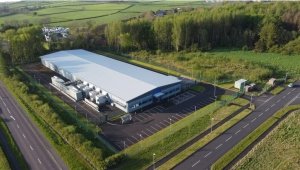
Rapid expansion can result in a data hub that has increased the number of racks, tenants, contractors, etc., that cannot be contracted enough in physical audit. While a logbook could work for one facility, it can turn into a headache for multiple locations, particularly when the auditors are trying to trace who went into a restricted area several months ago.
Regular audits, open accessibility principle and timely review are the key components of strong physical audits. If those elements are working in unison, then teams at the facility will be able to uncover gaps that an auditor or a customer might uncover.
The pressures of modern colocation audits come as a catch.The Pressures of Modern Colocation Audits are a trick.
Colocation operators have to not only safeguard infrastructure but also have to become dedicated to giving customers easy access to services. Approved persons, services and access programmes are added by every new tenant. Meanwhile, expansion can distribute operational data over the cloud. Governance is easily outpaced by operational decisions, as demonstrated by a recent Akamai study that revealed that enterprise cloud locations don’t necessarily align with workloads.
Enforce one audit requirement at all facilities. Specify fields that are required and who checks exceptions for access records, along with retention period. Whether the technician enters a restricted room at 2 a.m. in one building or another, that record in every building should contain the same information, including identity, approval source, destination and exit time.
Where Fragmented Logbooks Fall Short
paper sign-in sheets and individual spreadsheets generate a pain point during an audit! Handwriting may be hard to decipher and dates may not be included and people working in the facility could identify rooms by a variety of other names. People may register at reception but leave by another point of control and the records will not link.
Create and document the complete process of tracking audit trail from request to departure. Every event should have a distinct identifier to be able to approve, check-in, track and check-out activities without having to visually compare multiple disjointed files.
Digital models can be another benefit for teams to grasp the relationships between operational records across systems. Cross-industry studies of digital twins look into accessing data to integrate processes when handling complex operations — a relevant concept for those sites that require a single reliable overview of access events.
Securing Critical Server Portals.
Start by classifying portals according to the systems behind them. The main entrance, loading area and tenant server room should not be provided with the same permissions. Offer role-based access where a cooling contractor will be required to access mechanical areas outside of an approved access time without access to standing areas within the tenant’s office.
Enterprise facilities evaluating centralized controls may consider Genetec commercial door access control to manage cardholders, monitor access points, and connect incident response with physical entry records across multiple locations.
Perform the tests as if you were an auditor. Sample a few completed work orders per month and verify all work orders meet approved person, location, and time. Look into denied attempts that may have been repeated, as well as access outside of announced hours and open portals that have been kept open beyond their announced schedule.
Simplification of the Register of Visitors.Shortening the procedures in the register of the visitors.
If the check-in process is slow, we start short-cuts such as using shared badges and filling in partial check-ins. Don’t stay too long on the messy end of the equation, but gather necessary information for an audit. Request the visitors' name, company, host, visitor object, host country and return time respectively. Staff to check ID and ensure badge is issued corresponding to that person.
Pre-register benefits the reduction of reception delays. Before the visitor arrives at the desk, if the host supplies information prior to arrival, the system will alert the visitor prior to the accepted information that it does not have an approved card, or that the vendor agreement has expired. It is important to have a specific procedure in place for check-out. If the badge is not deactivated when you are finished using it, an automatic alert callouts can notify the host/reception staff, making sure that visitor records don’t stay open overnight.
Building Proactive Reporting Habits
Reports become useful when teams review them on a fixed schedule. A weekly exception report might show entries outside approved hours, repeated access denials, inactive credentials, and visitor badges that were never closed. Assign each exception to an owner and record the resolution so the next audit shows both the event and the response, much like how improper thermal planning exposes hidden operational flaws.
Keep reporting focused. Many counts on a dashboard can block the view of the clear, important patterns that need to be acted on. Monitor a limited number of indicators, including, but not limited to, unresolved exceptions, average investigation time, and credentials associated with removed or closed employees.
Prior to the upcoming audit period, record the following 10 visits from both request and departure. If every one can be played back from one or more unified records then the audit trail is working.