Switching From Gas to Induction in a Seattle Kitchen: The Circuit, the Panel and the Permit
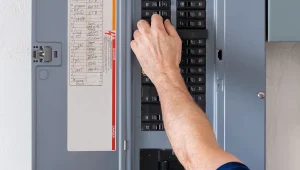
An electrician who works in Seattle homes explains what has to happen behind the wall before an induction range goes in, and why picking the range is the easy part.
Most of what gets written about induction cooking is about the cooking. It boils water fast, and there’s no open flame in the kitchen. What decides how hard the switch will be, and what it costs, sits somewhere else in the house: the electrical panel, which in a lot of older Seattle homes was sized for a much smaller load than a modern kitchen.
Alexandru Goncear owns ElectON Enterprise, a residential electrical contractor working in Seattle and across King, Pierce and Snohomish counties. He writes his company’s estimates himself, so he’s usually the person standing at the panel when a homeowner asks whether their house can take a new range. We asked him to walk through a gas-to-induction switch the way it tends to go in a Seattle house, from the first look at the panel to the final inspection.
The conversation has been edited for length and clarity.
Start at the panel, not the kitchen
When someone calls about swapping a gas range for induction, what do you want to know first?
What else in the house runs on electricity. A gas range barely uses any. It plugs into a regular 120-volt outlet to run the clock and the igniter, and that’s about it. An induction range is one of the largest loads you can add to a house. So the kitchen isn’t really where I start. I start at the panel: how big the service is, and what’s already pulling on it. Electric heat, a heat pump, an electric dryer, an EV charger, a hot tub.
The other thing I ask is whether they’ve bought the range yet. If they have, I want the model number, because the installation manual says exactly what circuit it needs. If they haven’t, I’d rather they wait until we’ve looked. Picking a range that fits your house is a lot easier than making your house fit the range.
What does an induction range need, electrically?
A dedicated 240-volt circuit. Most full-size 30-inch induction ranges call for 40 or 50 amps, and the bigger cooktops are often at 50. The manual is the authority on that, not the showroom. A 50-amp circuit means 6-gauge copper wire from the panel to the kitchen, a two-pole breaker, and either a range receptacle behind the unit or a hardwired connection, depending on how the appliance is built.
It also has to be a four-wire circuit: two hots, a neutral and a separate ground. A lot of older electric ranges were wired with three wires, with the neutral doubling as the ground. The code still allows that on some existing circuits. A new circuit gets four.
People sometimes find an old 240-volt outlet behind their gas range. Can they just use it?
Maybe. Some houses had an electric range at one point, and when somebody switched to gas, the new stove got pushed in front of the old outlet and everyone forgot it was there. It’s worth pulling the range out to look. Whether it’s usable comes down to the wire size, whether it’s copper or aluminum, what shape the cable is in, and whether it’s one of those three-wire circuits. Every so often it’s fine as is. More often it’s smaller than what the new range wants, and we’re running a new circuit anyway.
When the panel is already spoken for
Will the panel in an older Seattle house have room?
It depends on the house more than the neighborhood. Plenty of pre-war houses in Wallingford, Ballard or Beacon Hill still run on a 60- or 100-amp service that was sized for lights and a radio, then added onto a couple of times. Put a gas furnace and a gas water heater in that house and a 100-amp service will usually take an induction range without much fuss. If it already has a heat pump or baseboard heat, plus a car charger in the garage, that’s a different conversation.
We do a load calculation before we quote anything. The code has a method for adding a big appliance to an existing house, and it accounts for the fact that you’re never running every burner and the oven flat out while the dryer and the heat are going too. The code also lets us use a year of the house’s actual peak demand, if that data is available, or put a recording meter on the panel for 30 days. In older houses the measured number sometimes shows more headroom than the paper calculation does.
Then there’s the physical side. A two-pole breaker needs two open spaces in the panel, and a lot of older panels are full. And if the panel says Federal Pacific or Zinsco on the door, I’m not adding a 50-amp circuit to it. That panel needs to come out first, range or no range.
And when there isn’t enough room?
A service upgrade isn’t automatically the answer. Sometimes a range rated for a 40-amp circuit instead of 50 is enough to make it work. If there’s an EV charger in the picture, a load management device can throttle the charger whenever the rest of the house is drawing hard, which frees up capacity for the range. Those cost a few hundred dollars, not thousands. They don’t suit every house, and they have to be listed and permitted like any other equipment.
There are also ranges now with a battery inside that plug into an ordinary 120-volt outlet. The battery charges slowly between meals and supplies the power when you cook. They cost noticeably more than a standard induction range. But in a condo, or a house where a new circuit means opening up finished walls and ceilings, the math can work out.
And sometimes the upgrade is the right call. If someone tells me they want induction now, a heat pump next year and an EV after that, I’d rather do the service once than solve the same problem three times.
Permits, and the gas line
Who issues the permit in Seattle?
Inside city limits it’s SDCI, the Seattle Department of Construction and Inspections. Most of Washington buys electrical permits from L&I, but Seattle runs its own. A new range circuit needs a permit, and for a straightforward residential job like this one SDCI often issues it online the same day. Homeowners can pull a permit and do the work themselves, but only on a house they own and live in.
The inspector checks the work against the 2023 Seattle Electrical Code, which is the national code plus the city’s amendments. One thing that catches people off guard: under the current code, kitchen receptacles up to 250 volts need GFCI protection, and that generally includes the range receptacle. That usually means a two-pole GFCI breaker, which costs several times what a standard breaker does. If one quote has it and another doesn’t, that’s part of why the numbers are different.
The codes are also about to change. L&I moves to the 2026 National Electrical Code on December 31, and Seattle adopts on its own schedule. If you’re collecting quotes now for work next year, ask which code edition they priced it under.
What about the gas side?
That isn’t electrical work, and I’d be careful with an electrician who treats it like it is. Capping the gas line at the range is a job for a plumber or a gas fitter. In Seattle, gas piping permits come from Public Health Seattle & King County, not SDCI, which surprises people. Your plumber will know whether the cap-off needs one.
If the range was the last gas appliance in the house, call PSE about pulling the meter. Otherwise you keep paying the monthly basic charge on an account you’re not using.
What it costs, and how long it takes
What does the whole thing cost?
I don’t price jobs over the phone, because the house sets the price. But I can describe the shape of it. If the panel has the capacity and the space, and the kitchen sits right over a basement where the panel is, the new circuit is a short run. With the permit, that’s usually somewhere around $1,000 to $2,500. A second-floor kitchen, a finished basement ceiling, plaster walls, a panel on the far side of the house: each of those adds hours.
If the panel has to be replaced, or the service has to go from 100 to 200 amps, that’s a separate project with a separate budget. A straightforward service upgrade around here tends to land somewhere between the mid four figures and seven or eight thousand dollars, and more when the meter has to move or the service comes in underground. Washington also charges sales tax on construction labor, so look for it as its own line on the quote.
Before you buy anything, ask City Light and the state about rebates. Programs and funding change often enough that you should hear it from them, not from me.
How long does it take?
The circuit itself is usually a day, often less. Permit, install and inspection together typically fit inside a week or two, depending on the inspection schedule.
A service upgrade is what stretches things out. City Light has its own application for new or upgraded service, separate from the SDCI permit. It asks for four to six weeks to process that, and then a representative follows up within five to ten business days. If your new range shows up in three weeks and the house needs an upgrade, you’ll be cooking on a countertop burner for a while. Start the paperwork before you place the order.