How the Right Fastening Accessories Can Improve Efficiency on Job Sites
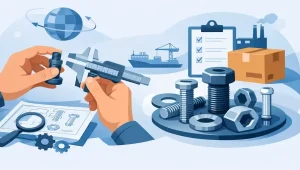
The drill or the driver is everything in professional construction and trades but one of the most neglected factors in on-site productivity is not the design of the drill or the driver but what goes into it. The proper selection of the fastening accessories, such as impact-rated bits, special screwdriving kits can positively affect the productivity, safety, and tool life.
The wrong accessory doesn’t just slow the job down; it costs money and can put workers at risk.
Why Fastening Accessories Are Often Overlooked
It’s a common pattern on site: a tradesperson invests in a top-of-the-range cordless driver, then reaches for whatever bit happens to be lying in the bottom of the toolbox. High-quality power tools rightly attract attention and budget. Still, the accessories that interface directly with the work (bits, sockets, and driver sets) are frequently treated as consumables rather than as precision instruments in their own right.
Such attitude may be deceptive economy. An expensive machine and a tool that are not very well matched or fitted to the bit will not perform their task effectively and this exerts undue pressure on the tool as well as the operator. It is a sort of compromising on accessories and spending a lot of money on quality power tools because, like putting a sports car on economy-car tires, the performance will never be the same.
Matching Accessories to the Job: What Professionals Should Know
Selecting the right fastening accessories comes down to three key considerations: material compatibility, torque requirements, and accessory grade.
The various construction materials hardwood, softwood, steel, masonry, composite decking, tend to require different bit profiles and tip geometries. When a general-purpose bit is used in a specialist application, rounding off bits and broken fixings occur. Torque considerations are just as important: the high-torque cases (like anything that needs to be driven by structural bolts or lag screws) need accessories that are designed to absorb that force without flexing and breaking.
The most crucial difference, perhaps, is that a standard and impact-rated bits have. Standard bits are intended to be used with standard drills and drivers where rotational force is fairly constant. But impact drivers burst short, sharp bursts of turning energy – and conventional bits are not designed to do it. Impact-rated bits are made of torsion-zone steel absorbing and spreading that shock, increasing the duration of obvious bit life and decreasing the chance of the bit suddenly breaking in the middle of the task.
How Right Kit Minimizes Downtime and Waste.
The most prevalent sources of time loss on construction projects in the UK include bit breakage, stripped screws and rework. A single stripped screw head translates to a work halt, remove the fixing, and go on – a small inconvenience to an outsider, but a huge waste on a complete project life cycle.
Specially designing fastening accessories, which are durable, reduce these interruptions. The profiles of the tips are machined with a high degree of accuracy, which ensures that they stay in contact with the fixing head and decrease the slip and the cam-out. The Grade materials will wear less during prolonged use resulting in fewer changes of bits and reduced idle time to find new ones.
After weeks and months of use the distinction between inexpensive, generic bits and accessories of the professional level can be a saving many dollars of time and material.
Safety on Site: The Role of Quality Accessories
Accessory quality is a safety issue. The safe use of electrical equipment, including power tools and their associated accessories, is a core responsibility for employers and tradespeople alike.
An ill fitting bit which slips under the force can result in the tool lurching violently, potentially injuring the operator or damaging the surrounding material. A socket which fails a load due to wear can shoot pieces of the socket across the work area. Ergonomic risks are also longer term because of fatigue due to fighting with inferior accessories. They must invest in properly matched and well-kept up-to-date fastening accessories as a part of a responsible site safety culture.
Building a Smarter Toolkit for Every Trade
The bottom line is straightforward: every minute counts on a professional job site. The right fastening accessories make the entire operation safer and more cost-effective.