Who’s Actually Holding the Laser? Chicago Clinics, Licenses, and What Illinois Law Requires
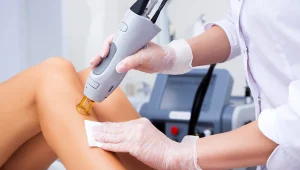
Most of us look into a restaurant more carefully than we look into the person pointing a laser at our legs. We read the reviews and compare prices, and maybe we scroll through the before-and-after photos. Hardly anyone asks who will actually do the treatment, or whether that person is allowed to.
In Illinois that question has a real answer. The state’s Medical Practice Act rules treat cosmetic use of the Class 3b and Class 4 lasers clinics use for hair removal as practicing medicine. A doctor does the work, or a doctor hands it off to someone with documented training on that exact machine. That’s the short version. The longer one includes a law change that took effect in January 2025.
Valeria Tartacovschi has worked in hair removal for more than 10 years. She cofounded V&P Laser Hair Removal & Skin Care, a clinic in Old Town on North Larrabee Street, four blocks from the Sedgwick Brown Line stop. Her laser technicians include Nik-Nik Perez Achanzar and Yefoonah Christmas, both licensed nurse practitioners. Tartacovschi herself is a certified laser technician, which turns out to matter here. We talked about what the rules say and what patients should ask. The conversation has been edited and condensed.
The interview
So who’s allowed to do this? Legally.
Tartacovschi: A physician. That’s where it starts. Illinois says using these lasers on skin is practicing medicine, so it belongs to a doctor, and the doctor can delegate it to a nurse or to another person who’s been trained.
Anyone who’s been trained?
Tartacovschi: Trained on that specific machine, and it has to be documented. If you learned on a diode laser somewhere and now you’re using an Alexandrite, that’s a different system. The doctor also has to be reachable. For hair removal they don’t have to stand in the room, but they need to be on site or available by phone if something comes up.
Where do nurse practitioners fit in?
Tartacovschi: They have more room. An APRN can work under a written collaborative agreement with a physician, and the ones with full practice authority have more independence than that. It’s part of why our technicians are nurse practitioners. I wanted somebody in the room who can make a medical decision if a client’s skin reacts in a way we didn’t expect.
You’re not a nurse, though.
Tartacovschi: No, I’m a certified laser technician. People hear "certified" and assume it’s a license. It isn’t. It means you completed a training course. An esthetician license doesn’t cover lasers either, which surprises people. So if the person treating you isn’t a nurse or a doctor, they’re working under a physician’s delegation, and you’re allowed to ask who that physician is.
There’s an electrolysis clinic in your building, too.
Tartacovschi: Electrolysis 100%, yes. The Illinois rule actually carves out electrologists, but only for needle electrolysis. An electrologist who wanted to use a laser would need physician delegation like anybody else. It’s useful having them so close, honestly. Laser needs pigment in the hair to work, so when somebody comes in with blonde or gray or red hair, we tell them laser won’t do much and send them down the hall.
Let’s talk about 2025. What changed?
On January 1, 2025, Public Act 103-0814 changed one piece of this. A physician used to have to examine a patient before their first laser treatment. Clinics can now skip the on-site physician exam for non-ablative procedures like hair removal, but only when four things are true. The clinic follows a written physician delegation protocol, a nurse practitioner does the exam, a registered nurse or LPN with documented training does the treatment, and a physician can be reached by phone or electronically.
Tartacovschi: Most patients will never notice it. What I’d want them to notice is the part that didn’t change. Somebody qualified still has to look at your skin before the first treatment. That’s the law here. If a clinic was ready to start on you the same day without anyone examining you, I’d be uneasy.
Does it matter that much who’s holding the laser? These machines are pretty sophisticated.
Tartacovschi: The machine is only as safe as the settings. Same laser, different settings, and you can go from a good treatment to a blister. Your skin tone matters. So does whether you’ve been in the sun, and what medications you’re on.
What we see most often is people who went somewhere else and got patchy results. Usually the settings were too low because whoever treated them was nervous about their skin tone, so they played it safe. I understand why someone would do that. But then the client pays for sessions that don’t do much.
And the laser itself? What should someone check?
Tartacovschi: Whether it’s FDA-cleared for hair removal on your skin type. You can look that up yourself. The FDA has a public 510(k) database, and you just search the device name. Ours is the Candela GentleMax Pro Plus. It has two wavelengths, 755 and 1064, and it’s cleared for all six Fitzpatrick skin types.
There’s one more thing nobody asks about. Illinois makes clinics register their lasers with the Illinois Emergency Management Agency and name a laser safety officer. You can ask about that on the phone, and a clinic that’s set up properly will know the answer right away.
Say I’m calling a clinic I’ve never heard of. What do I ask?
Tartacovschi: Who’s going to treat me, and what’s their license. Then look the name up, which takes a minute. Ask who the doctor is that delegates the laser work, and who examines you before the first session. Ask which laser they use and whether it’s cleared for your skin. And ask if they do a patch test first. We do ours at the free consultation, before we treat a whole area, because skin doesn’t always react the way you’d expect.
Any red flags?
Tartacovschi: If they want you to buy a package before anyone has looked at your skin. If they can’t tell you the doctor’s name. And if they’ll treat you over a fresh tan, or while you’re pregnant, because they don’t want to lose the appointment. We reschedule in those cases, even when it’s a non-refundable package and the client isn’t happy with us. About one in ten of our consultations ends with us recommending something other than booking.
Why are you comfortable talking about this? It doesn’t exactly help sell anything.
Tartacovschi: I think people assume it’s regulated like getting your nails done, and it isn’t. They should know that. Checking a license takes a couple of minutes on the state website. I’d rather people check us, and whoever else they’re considering too.