Dashcam Decisions That Shape a Crash Fault Fight
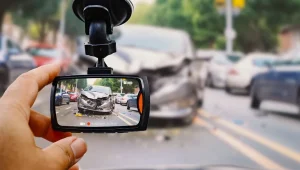
Ten years ago, an intersection crash or rear-end smash was reduced to two tales that were related to an adjuster, a drawing in a clipboard and what a rattled witness could still recall an hour later. The driver who was struck said that the other vehicle had decelerated. The man who was struck omitted that the brake lights did not go on. Insurers divided in between, lawyers reasoned and speculated and juries conjectured.
Today, an increasing portion of such crashes has their own silent witness bolted to the windshield, where he or she captures a rolling buffer of the thirty seconds that do count. That changes the appearance of fault, and it determines the decisions a driver must make well before something goes wrong.
The decisions presented below continue to arise in car-accident litigation cases involving a continuous-loop dashcam.
Decide on the Design of Running a Camera or Not.
The former is the easiest one, and the one that most of the drivers never take on purpose. The constant-loop dashcam captures a rolling buffer of generally one to three minutes, and self-overwrites without lockup unless an impact sensor or a button press makes a clip permanent.
It is a one sided trade-off. The camera mirrors your bad moments as much as that of the other driver. A waverying halt at some yellow, a shyness at a reading: a next proceeding that had generally been extremely narrow with the pace you had taken: the circle retains all of it too.
If you drive carefully and your worry is being blamed for something you didn’t do, the math favors the camera. If you drive the way most people privately admit they drive, you are buying a witness who does not take your side. Talking it through with an experienced injury firm before you need one is the cheapest version of this conversation.
A Decision on What to Do in the Ten Minutes after a Crash.
Knows no kindness, the constant loop camera, till it is unkind. In case the collision was significant to activate the G-sensor, the clip that is securing the collision is locked and secure. When it was a less pronounced collision, perhaps a low-speed crossing signal or even just a parking-lot sensor, the sensor might not trigger and the loop can erase the video in several minutes after you get home.
Be sure to pull out the memory card before proceeding with anything else. Do not cut, shorten or clean the file. Destruction of footage of which you are aware that it is pertinent to a claim may be regarded as spoliation of evidence and a court can direct a jury to suppose that whatever it was you destroyed would have been disadvantageous to you. The video that you do not like is almost never worse than the conclusion that is made when its removal occurs.
Make a decision regarding where the footage is going to enter the fault fight.
Most locations have an inherent tilt favoring the back driver in rear-end crashes, which is a rebuttable case of negligence that the latter must have to counter. The pushback prior to dashcams consisted of skid mark photos and reconstruction testifiers. Today oftentimes it involves a half-minute video of the front cars cut between two lanes with no warning, or brake-checking, or parking in a live travel lane with no dangers present.
Dashcam footage isn’t the only digital evidence that can help establish fault after a collision. As The Digital Reader explains in its article about how a vehicle’s black box records crash data, event data recorders can capture details such as vehicle speed, braking, and throttle activity in the moments surrounding an accident. When available, this information can complement video footage and help investigators develop a more complete picture of what happened.
Intersection cases are reversed. A camera that records the cross-traffic light change to red two full seconds earlier than the other vehicle has moved into the box can reduce a call to dispute into a single call resolution.
Whether and how to share that footage is at the discretion of the driver of the vehicle with that footage. Leaking up the adjuster of the other side with a raw clip the day after the crash before any one could watch it carefully, is a frequent and costly error. Keep it, form a working copy, and leave the order to be determined by a person who has to deal with such claims.
Request the Other Drivers Not to Overwrite their Loops.
The alternative choice is the one that wounded motorists forget: the camera that you need is not necessarily yours. It could be the car behind you, the delivery van two lanes away, the rideshare at the bus-stop who has come to your rescue, none of what they saw could have been as much off-angle as you are. There are those loops that are self-overwriting.
Ask at the scene, intuitively and correctly, whether someone is driving with a dashcam and might lock the clip. Get a phone number. An e-mail preservation letter written the same day, with the date, time and place specified on it, transforms the footage of a willing stranger into a fact that sixty days later will still be available on the phone when somebody drops in and requests it.