Your Car’s Black Box Talks to Both Sides After a Crash
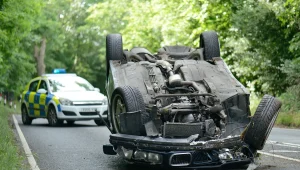
The seconds before a collision used to belong to memory, skid marks, and a police diagram sketched on the hood of a cruiser. That’s no longer where the fight is won. Almost every late-model passenger vehicle on the road carries a small electronic module that logs what the car was doing in the moments before impact, and that recording is now one of the first things a serious crash lawyer, an insurer, or a reconstruction expert wants to see.
Most drivers have no idea it’s there. Most claimants find out about it the week the other side asks for it. Firms that handle serious injury cases, like the team at Sholl, Januzzi & Wolfe, often move to secure the recording before it disappears with the wreck.
Almost Every Car on the Road Is Already Recording
The device is called an event data recorder, or EDR, and it usually lives inside the airbag control module. It isn’t a dashcam, and it doesn’t run continuously. It captures a short window of vehicle data around a triggering event, then locks that window in memory for later download.
Adoption is close to universal. NHTSA estimates that 99.5 percent of model year 2021 passenger cars and light vehicles under 8,500 pounds are equipped with EDRs that meet the federal standard. If the vehicle in the crash was built in the last decade, the odds that it recorded something are very high.
What gets recorded isn’t vague. The federal rule specifies a core set of data elements, including pre-crash vehicle speed, engine throttle, brake application, measured change in forward velocity (Delta-V), driver seatbelt use, and airbag deployment timing. A reconstructionist reading that file can often tell within a narrow margin how fast the car was going, whether the driver braked, and how hard the crash actually was.
The Recording Window Is About to Get Much Longer
The picture is also getting sharper. In a final rule published in December 2024, the agency extended the EDR pre-crash recording period from 5 seconds of data at 2 samples per second to 20 seconds at 10 samples per second, with a compliance date of September 1, 2027. That’s a twentyfold jump in resolution and a fourfold jump in duration.
For a crash claim, the practical effect is significant. A five-second window catches the impact and little else. Twenty seconds at ten hertz captures the approach: whether the driver was accelerating into a yellow light, coasting toward a stopped queue, or making a last-second lane change. That kind of detail used to depend entirely on witness memory.
Who Owns the Data and Who Can Get It
Ownership rules vary by jurisdiction, and any driver involved in a serious crash should check what applies in the state where the wreck happened. As a general matter, the data belongs to the vehicle owner, and pulling it usually requires the owner’s consent, a subpoena, or a court order. Federal regulation also requires manufacturers to make a commercially available tool that allows the data to be downloaded, so the information isn’t locked behind the automaker.
That accessibility cuts both ways. An insurer defending a claim can move quickly to inspect a totaled vehicle before it’s scrapped and the module is lost. A claimant who waits several weeks may find the car crushed, the module gone, and the most objective witness to the crash unavailable.
What Injured Drivers Should Do Early
- Preserve the vehicle. Don’t authorize the insurer to salvage or destroy the car until the EDR has been downloaded or the module has been removed and stored.
- Get the download done by a neutral expert. A certified crash data retrieval technician can pull the file in a way that holds up in court, rather than leaving the reading to the other side’s adjuster.
- Ask about it before you give a recorded statement. Speed and braking questions from an adjuster often mean the EDR has already been read. A lawyer who handles serious injury cases can review the data before a client is asked to explain it under oath.
- Match the numbers to the injuries. A high Delta-V reading supports the mechanism of a serious neck or back injury. A low one invites the defense argument that the crash was too minor to cause what the medical records describe.
The Module Does Not Take Sides
The EDR is neither ally nor enemy. It’s a short, timestamped recording of what a car was doing when something bad happened, and it will support whichever side gets to it first and reads it carefully. Drivers who assume the numbers will back up their memory of the crash are the ones most often surprised. The ones who handle the module as evidence from day one usually aren’t.