The E-Lease Grows Up: How Digital Signatures, Smart Contracts, and AI Clauses Are Rewriting the Rental Agreement
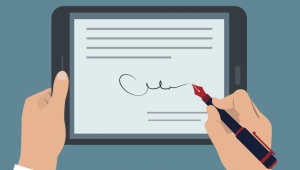
Most renters still assume an electronic lease is a lesser thing: a scanned PDF, a signature drawn with a fingertip, and a convenience the landlord could probably reverse in court if they had to. However, that assumption is mostly wrong. An e-signed residential lease, done through a compliant platform, is generally as enforceable as one signed in blue ink on a kitchen table, and in many disputes it’s easier to defend because the audit trail is richer.
That legal footing is why the rental industry has moved so far, so fast, into digital tooling. Signatures went first. Smart contracts and AI-drafted clauses are showing up behind them, and each one brings a problem that the obvious fix doesn’t quite solve.
The E-Signature Question Was Rarely About Signing
Landlords worried about e-signatures for years, and they usually worried about the wrong thing. Whether a typed name would hold up was largely settled by federal and state law a long time ago. According to Cornell’s Legal Information Institute, the ESIGN Act’s definition of an electronic signature is a sound, symbol, or process attached to a record and executed with intent to sign. That standard is broad enough to cover almost any modern signing platform.
The real problem is proof. A wet signature on a paper lease is a single artifact. An e-signature is a chain of them: who clicked, from what IP address, at what time, after seeing which version of which document.
When that chain is captured well, the lease is more defensible than paper. Capture it poorly, or skip the required consumer consent disclosures, and the whole file can wobble in court. The obvious shortcut is to email a PDF and ask the tenant to sign it, and that’s the version that fails. It preserves nothing about intent, nothing about what the tenant actually saw, and nothing about whether they agreed to transact electronically in the first place.
Smart Contracts Promise Automation, Then Meet the Real World
The next layer up is the smart contract: self-executing code that enforces lease terms without a human in the loop. The pitch is clean. Rent posts on the first, the code releases access to the unit. Rent misses the grace period, the code triggers the late fee. No collection calls, no forgotten paperwork.
If you like the idea, the obvious move is to put the whole lease on-chain and let the code run. That fails for a reason people underestimate. Housing law is not code. Cure periods, notice requirements, habitability duties, fair-housing constraints, and eviction procedures are all shaped by statutes and case law that vary by jurisdiction and often demand human judgment.
A contract that automatically locks a tenant out for non-payment is a lawsuit waiting to happen, not an efficiency win. What actually works is narrower. Smart-contract logic handles the low-risk, mechanical pieces (recording payments, releasing security deposits when conditions are met, triggering renewals when neither party opts out) while the legally sensitive actions stay with people.
AI Clauses Look Clean and Hide Their Own Contradictions
The newest arrival is AI-drafted lease language. Type a prompt, get a clause. It reads well, uses the right vocabulary, and looks like something a lawyer produced. That’s the trap.
A general-purpose model doesn’t know which state the property is in, which local ordinance governs late fees, or how a clause it wrote interacts with the three clauses above it. The output can carry internal contradictions: a 30-day cure period in one paragraph, a 3-day notice in another, with no reconciliation. Those inconsistencies survive until a landlord tries to act on them, at which point the clause the landlord wants to enforce is the one that gets thrown out.
The workable version uses AI as a first-pass reviewer rather than a drafter. Purpose-built tools now scan an existing lease for missing disclosures, conflicting terms, and clauses that violate state law, then flag them for a human to fix. That’s a real productivity gain. Handing the same model a blank page and asking for a full lease is not.
Where This Leaves Landlords and Tenants
The through-line across all three shifts is the same. Digital tools make rental agreements faster and, done right, more defensible, but only when the tool is matched to the job. Signatures belong on platforms that capture consent and evidence. Automation belongs on the mechanical edges of the lease. AI belongs in review, with a human making the call.
For owners who don’t want to sort through the tooling themselves, this is one of the reasons professional property management has grown more valuable, not less, as the paperwork went digital. Someone still has to pick the platform, configure the workflow, and make sure the audit trail will hold up when it matters. The e-lease didn’t remove that work – it just moved it.