Nate Hoffelder

Nate Hoffelder

How Not to Respond to Negative Reviews: The Anne Rice Edition

I don’t mention book reviews much on this blog but a particular review caught my attention today. The review itself was a good read, but the fallout when fans of the author responded to the review is another story.

The comments were so entertaining and so incendiary that I could not help but share them.

Last week, Kayleigh Herbertson, editor of the Articulate and Intricate book blog, posted a review of Pandora by Anne Rice. The tl;dr version is that she found the book to be a poorly written novel where the vampires didn’t act like vampires.

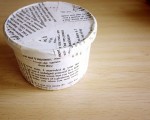
The review was well-written, IMO, even though the reviewer didn’t like the book. I’m not an Anne Rice fan but I still like reading the review; it reminded me why I don’t read Anne Rice. And after Herbertson was done writing the review she took the book, which was already falling apart, and turned it into decoupage.

Now, with most reviews the story would end here. Few authors would have found the review, and if they did they might (at worst) respond directly to the reviewer with a nasty comment.

But not Anne Rice. This author chose to respond by posting a link on her Facebook page (where her 740 thousand Facebook followers could find it) and appended the invitation: "Comments most welcome.".

Thousands of Ann Rice fans clicked the link and read the review.  At last count there were some 750 comments on that topic on Facebook as well as another 289 comments on the review itself.

Here is a selection of the more entertaining responses:

  • HOW DARE YOU EVEN COMPARE SHITTY ASS STEPHANIE MEYER TO THE QUALITY WORK THAT IS ANNE RICE HOW DARE YOU!!!!!!!!!!!!!!!! YOU FUCKING HAG, I HOPE YOU GET HERPES
  • You bitch! >:(
  • INSANE. To destroy a book like that is honestly the most disrespectful, idiotic thing anyone could ever do. An opinion is an opinion, but to do that… loved the rich descriptive narrative and historical context and character development (the other reason I read them).
  • “I couldn’t simply write my opinion I had to be a destructive little shit aren’t i awesome?”
  • Even if you dont like a book i dont get why you have to destroy it, Nazi memories perhaps? What you may dont get it is that a vampire is different from one another and a vampire drink less blood when he or she become more powerfull specially after the fight with Akasha, You even read the entire saga? You say is the second novel so i think no is the answer, anyway an interesting way to ask for atention to you and your blog.

The comments left on Facebook are almost as bad, though not quite as entertaining.

P.S. And if you think this was a fluke, check out Ann Rice’s response to negative reviews on Amazon. It is 1100 words long, a single paragraph, and it is truly epic.

Tor-Forge Reaches First Anniversary of Plans to Go DRM-Free – Reports No Increase in Piracy

Late last week Tor UK posted an update on their efforts to go DRM-free.

It’s been just over one year since Tor-Forge Books announced plans to distribute their ebooks without DRM (and 9 months since the DRM was officially removed), and the move has seen a lot of support by both authors and readers.

But the more important news today is that Tor UK is also reporting that they haven’t seen any correlation between DRM and piracy:

As it is, we’ve seen no discernible increase in piracy on any of our titles, despite them being DRM-free for nearly a year.

DRM has long been the bugaboo of this digital reader so I plan to trumpet this from the roof tops.

I have long said that DRM doesn’t stop the determined pirate (thanks to the ready availability of DRM removal tools). All that is accomplished by adding DRM to ebooks is to restrict and punish the legitimate customer. So when Tor UK announced that they hadn’t seen an increase in piracy I was not at all surprised. Pleased, but not surprised.

Tor Books UK

James Patterson Thinks That Books are Precious Snowflakes That Need to be Rescued From Oblivion

James Patterson is a well-known and well-respected author, but lately that hasn’t been enough for him. It looks like he recently decided to also take on the role of the publishing industry’s curmudgeon emeritus, a job that Scott Turow has more than adequately filled of late.

Last weekend Patterson bought full page ads (at right) in major newspapers which called for the government to take steps to rescue books, the publishing industry, bookstores, and libraries from the scourge of technological progress.

Yeah, it doesn’t make any sense to me either but Patterson has been getting press attention. Earlier this week he gave an interview for Salon.com in which he laid out his complaints:

Tell me about the decision to place the ad.

I do a lot of things to try to raise level of awareness of what’s going on in country right now. This is an unusual and different time for books, the most unusual in the history of this country. E-books are fine and dandy, but it’s all happening so quickly, and I don’t think anyone thought through the consequences of having many fewer bookstores, of libraries being shut down or limited, of publishers going out of business — possibly in the future, many publishers going out of business.

If you are thinking that he sounds like an old man screaming "get off my lawn you damn kids", you’re not alone. But before you write me off as simply a jerk let me explain exactly why Patterson comes across that way.

He laments the death of bookstores, libraries, and publishers when in fact the first has been withering for the past 30 years, the second is dying an unrelated death, and the third isn’t dying out so much as it is being replaced.

Bookstores aren’t suddenly going out of business as a result of increased ebook sales; they’ve been under attack by the major bookstore chains and Walmart for the past 30 years. It was big box retailers and their deep discounts that harmed bookstores the most, and while the move to online book sales and then ebooks exacerbated the effect the root of the situation started in the mid 1980s.

Where was Patterson 20 years ago when B&N and Borders were doing their best to kill off the competition? Where was Patterson 10 years ago when Amazon was doing the same?

I’ll leave that question to my readers.

Libraries are struggling to stay open, yes, but it’s disingenuous to mention them in the same breath as publishing and bookstores and it’s foolish to ask the government to rescue them. The biggest threat to libraries is a lack of funding, and given that tax revenues are down in most states it’s a little unrealistic to demand that libraries get more funding.

But never mind bookstores and libraries; it’s when Patterson calls for the rescue of publishing that I feel he has truly missed the point. Patterson is lamenting what he sees as the demise of the publishing industry when it’s really not dying at all. First, as a reader has pointed out, much of the industry is turning a profit. What’s more, the AAP reported that the industry as a whole saw an increase in revenue in 2012. Rather than a dying industry what we have here is one that is growing and changing into something new, and at worst it is being replaced by a new industry that is going to fill many of the same roles.

I get the sense that Patterson worships publishing as the guardians of culture, and that he thinks that the great and classic books of yesteryear would not exist without the publishing industry. Given that this is the same industry that publishes celebrity bios, I have to wonder about his selective vision.

But in spite of everything legacy publishing has created some lasting works. Can the same be said about the new publishing industry?

It’s too early to tell, really, but I don’t see how that is relevant. The role of a publisher is to be a business and make a profit, not to create a lasting work of literature. To pretend otherwise is to simply ignore reality.

All in all, I don’t see Patterson’s full page ad as a plea to save books so much as it’s an admission that he doesn’t understand the culture that surrounds him. It has changed too much from the one he grew up in, and he wants the govt to change it back.

Good luck with that.


The Perils of Digital Textbooks – CourseSmart Crashes During Exam Week

Like many other people I have a less than perfectly reliable internet connection, and that has taught me that having an offline copy is only prudent. So when I read about the problems that the Fairfax Public Schools and now CourseSmart have encountered with online textbooks, I can’t help but wonder why no one saw it coming.

CourseSmart is widely recognized as the leader of the digital textbook market. This start-up was founded by major textbook publishers in 2007 and is now used by hundreds of schools. Or at least it was used by hundreds of schools – right up until the servers crashed earlier this week.

Numerous Twitter users have complained (and CourseSmart has confirmed) that CourseSmart’s servers went down on Tuesday. Based on the complaints it seems to have lasted an entire afternoon, denying students access to their online textbooks.

Anyone who uses online services is used to crashes, I’m sure. Twitter, Tumblr, and even parts of Google have crashed on occasion. For a while there Twitter was even crashing on a fairly regular schedule. So it might not seem all that newsworthy that CourseSmart has joined the club.

But unlike those other services, CourseSmart isn’t free nor is it one that users can get by without. The students harmed this week had paid upwards of $100 for their digital textbooks, only to be denied access when they needed it the most.

The servers crashed during exam week, a time when many of these students were either getting in some last minute studying or finishing up work to hand in. As one student tweeted, "I have a final exam tomorrow at 9 am with two chapters left to read. A quick fix to this would be appreciated." And even those who didn’t have exams last week were frustrated by the downtime: "Ever feel like spending a crap load of money on something that will fail when you need it most? Buy a digital textbook from @coursesmart".

The fault here can be laid squarely on the shoulders of CourseSmart’s DRM policies, which limit how much a student can download at one time. A student is only allowed to "check-out" up to 5 of the rented digital textbooks at once. The textbooks are also downloaded by the chapter, so if a student didn’t have toe foresight to download what they needed before the out of luck.

Update: An earlier version of the above paragraph mentioned that CourseSmart had an online-only option at a cheaper price. This is incorrect. I had unfortunately confused CourseSmart with one of their competitors.

CourseSmart hasn’t shared an explanation for the crash, but this happened during an exam week, so I would guess that the servers were operating at maximum capacity and were unable to meet the demands placed on them. If that is correct then this won’t be the last time that CourseSmart’s servers will go down.

There is a growing push to force students to adopt digital textbooks, and with CourseSmart recognized as the market leader they are probably going to gain the most users. That is going to mean higher and higher demands being placed on CourseSmart’s servers, so I would not be surprised to learn that CourseSmart becomes known for crashing during exam week.

Paper textbooks, anyone?

image by BiblioArchives / LibraryArchives

 source

Pocketbook Unveils the World’s First 8″ Color E-ink eReader in Russia (video)

 Pocketbook has long been teasing us with a promised 8″ color ereader and today they finally revealed it to the world.

The Pocketbook Color Lux was announced earlier today at a Pocketbook press conference in Russia. This ereader features an 8″ screen and is the first ereader to use the Triton 2 E-ink screen in that size. It is also the first color ereader to use a front-lit screen.

The Color Lux is running Pocketbook’s own custom Linux-based firmware on an 800MHz Freescale CPU. It comes with a touchscreen, 4GB of storage, a microSD card slot, Wifi, and it has an audio jack.  The screen resolution is 800×600, and the screen supports 4096 shades ranging from a light gray to black (here’s why).

The Pocketbook Color Lux is expected to hit the market in Russia in June 2013 with a retail price of 9990 rubles (about $317USD). There’s no info available yet on a European launch.

I haven’t had a chance to get my hands on the Color Lux, obviously, but I did find this video from NoMobile.ru. It’s not in English, but it’s still worth watching because the subject demos the Color Lux, showing off interesting details like the way the frontlight is controlled via a swipe bar at the top of the screen.

The Color Lux is only demoed during the first minute or so; the rest of the time is spent showing off the other ereader and the Android tablet that Pocketbook launched today.

The second ereader in the video is the Pocketbook Touch 2. As you can see, it looks basically the same as the current Pocketbook Touch, only it’s been updated with a new and better screen.

This is the HD E-ink ereader that I was expecting Pocketbook to launch, and it has the same HD E-ink found on the Kindle Paperwhite and Kobo Glo. Screen resolution is 1024×768, and of course it also has a frontlight and touchscreen. It has 4GB of storage, a microSD card slot, Wifi, and it has an audio jack. Not all features are mentioned, but this ereader does support text to speech, and it appears to also have a new feature that can measure the speed at which you are reading.

It has a 1Ah battery with an estimated battery life of 7,000 pages. Retail will be 6990 rubles, or about $222 USD. It is expected to be available in Russia in May 2013.

Pocketbook also shared some details today on the number of devices sold. The CEO of PocketBook Russia reported told the assembled press that PocketBook had sold 1.5 million ereaders and tablets in 2012. Most were sold in Russia (71.5%), with 13.3% going to buyers in the Ukraine and 12% to Europe.

source

Amazon Announces the Most Well-Read Cities in the USA

Ask any doomsayer decrying the rise of video games and they’ll tell you that reading is dead. Ask any publisher bemoaning the rise of piracy and they’ll tell you that the book market is dead. And as Steve Jobs is well-known for proclaiming, no one reads any more.

That’s why I was surprised to learn today that Amazon has just released the 2013 list of the best-read cities in the US.

Amazon has pulled together all the book, magazine, and newspaper sales data  for the past 9 months and created a list of the US cities with that bought the most content on a per capita basis. The top 20 cities include a suburb of DC, 5 cities in Florida, and a sprinkling of cities from the other 49 states. Amazon’s home town of Seattle made the list:

  1. Alexandria, Va.
  2. Knoxville, Tenn.
  3. Miami, Fla.
  4. Cambridge, Mass.
  5. Orlando, Fla.
  6. Ann Arbor, Mich.
  7. Berkeley, Calif.
  8. Cincinnati, Ohio
  9. Columbia, S.C.
  10. Pittsburgh, Penn.
  11. St. Louis, Mo.
  12. Salt Lake City, Utah
  13. Seattle, Wash.
  14. Vancouver, Wash.
  15. Gainesville, Fla.
  16. Atlanta, Ga.
  17. Dayton, Ohio
  18. Richmond, Va.
  19. Clearwater, Fla.
  20. Tallahassee, Fla.

image by Don Hankins

DotDotDot Shows That the Future of Reading Is Neither eBook Nor RSS Feed, Neither Fish Nor Fowl

Right now the average reader spends their time in multiple reading apps. They might use Aldiko to read ebooks, Feedly to stay abreast of news, Instapaper to catch up on longer articles that have been saved, and Readmill to share annotations with fellow readers.

How would you like to combine much of that reading time into a single app? If that sounds appealing then I have an app for you.

One of my readers has just tipped me to dotdotdot. This app seeks to combine elements of the distinct and differentiated reading apps mentioned above into a single coherent reading experience. Rather than going for just a single type of content (fiction or non, short or medium or long, self-curated or community-promoted), dotdotdot wants to be the jack of all trades for reading.

dotdotdot | iTunes

There are a number of different ways to load content to read.  You can log in to your Google Reader account and read the feeds, load DRM-free Epub ebooks from the web or from Drpobox, and there is even a web browser built into the app that you can use to search for and import content.

None of those features are new, but it’s a little unusual to see them in a single app. And the annotation and sharing options add even more ways to read. Dotdotdot app supports both notes and highlights, which can be private or public.  You can even search your notes (or the tags attached to them) all at once – now that is a feature I appreciate.

A user can also follow another user and see what the other reading as well as the other user’s annotations and the public part of a user’s library. They can also track their own reading habits on their dashboard

I don’t know about you but this is the kind of app I always wanted. For some years now I have been trying to replicate what dotdotdot can do by using various apps to get content into my preferred reading app. I’ve exported articles from Instapaper as ebooks, used the dotEpub bookmarklet to capture and convert a webpage so it can be read offline, and I’ve even used Feedbooks' RSS-to-ebook tool when it was still available.

All of those tricks were clunky at best, so I am really hoping that dotdotdot will be able to grow into a serious alternative.

But dotdotdot is still in a very early beta (the oldest coverage I can find is from January), and it is limited to just an iOS app and the website. It’s also missing several features I want; there are no formatting options and dotdotdot is still dependent on Google Reader.  The latter issue is a serious concern, and it is half the reason I want to use this app.

This app is also missing a couple ways that I would like to add content (I’m never happy). It would be useful of I could tie in my Twitter account so dotdotdot could grab all the links I tweet, and email would also be useful. In fact, once I can email content to dotdotdot I don’t think it would need much else in terms of 3rd-party app integration; IFTTT is surprisingly capable in extracting content from various platforms and it can send emails.

I’m told that email support is on the roadmap, and so is an Android app. And of course breaking free of Google Reader is dependent on finding a viable alternative.

—

In spite of the issues this is definitely an app that is worth watching, and it’s just one of number of cross-discipline reading apps I expect to see this year.

The imminent demise of Google Reader is already having an effect in the news reader niche, and I fully expect the competition over the next year or so to redefine that niche. There are any number of tech companies angling to replace Google Reader, with Feedly, Zite, and Digg all having thrown their hat into the ring. I am expecting one or more of these tech companies to follow the lead of dotdotdot. I think someone will expand the abilities of their news reader platform so it can do more than just read the news.

TBH, we’re already seeing signs that this is happening. Feedly went from just looking pretty to also being functional. Flipboard went from picking content for the reader to also letting users build their own magazines. And even Zite unbent enough to let readers import content from their Google Reader feeds.

But those are really just enhancements that focus on the news reader niche; they don’t really cross boundaries like dotdotdot has done. Nevertheless, I expect the boundaries between the various types of reading apps (ebook, feed reader, save for later, news aggregator, etc) will get rather fuzzy this year.

And that is a good thing because the boundaries dividing the various reading apps are both artificial and arbitrary. For the most part they are a vestigial holdover from the way that we used to read content on paper, and the same goes for the labels we use to describe the content we read.

eBook? Article? eSingle? None of those labels are intrinsic to the content they describe, but instead are convenient handles that we have hung on chunks of digital content so we could better explain it to ourselves. Once you look past the labels you will see that digital content is digital content is digital content, all of which is streamed in one form or another.

I suppose this all sounds awfully metaphysical, but when we throw out all the vestigial holdovers from our paper past we also throw out the assumptions that are attached to the labels. And once the false assumptions are gone it is possible to see what should have been obvious all along. That’s when we end up with new ideas taking old, including ideas like The Magazine (startup tech company concept as applied to magazine publishing).

P.S. And to think I was considering changing the focus of this blog. Silly me.

P.P.S. If someone wants me to explain what I mean about The Magazine I can do so in another post. This one is already too long.

dotdotdot

iTunes

Used eBook Sales Now Illegal in Europe (For The Moment)

Used ebooks are a hot topic right now, with Apple and Amazon each pursuing a patent over reselling digital content and as a result sparking a debate on the legality, ethics, and morality of a second-hand marketplace for products that don’t decay.

This is a hot topic across the pond as well, only it has gone in a slightly different direction. A German court has ruled this week that ebooks cannot be resold.

That was fast, but if I were a publisher I would not be celebrating just yet. I don’t have access to the ruling, but just from reading between the lines of the original German coverage I can already see a couple problems with this case.

The lawsuit was filed by a German consumer advocacy group in the District Court of Bielefeld. According to Boersenblatt, a magazine that covers the German publishing industry (think Publisher’s Weekly), the judges ruled that ebooks were not software, so the ruling made last year that reselling software licenses was legal did not apply.

This is a rather curious decision, and I don’t think it’s going to pass muster. First, I think that this decision is splitting legal hairs. A strong argument could be made that the same legal principle should apply to both software and ebooks. If you can legally resell software in Europe then you should be able to legally resell ebooks, or at least that is how it looks to me. (Read this comment for an explanation as to why this paragraph is crossed out.)

But more importantly, this decision isn’t the end of the issue because something tells me the plaintiff won’t let it die. This lawsuit was brought by VZBV, the same consumer advocacy group that is suing Valve to force the software vendor to enable customers to resell software. I covered this story a couple months back because of the obvious ebook angle.

I don’t think VZBV is going to rest until they either run out of money or the case goes before the European Court of Justice. That’s the highest court in Europe, and that was the court that ruled software resale was legal in Europe.

That case is known as the Usedsoft decision, and it took 5 years to be resolved. I would not expect the ebook issue to be resolved any time soon, but I am also expecting that the ECJ will eventually rule that Europeans can resell ebooks.

Right now the ebook rights issue in Europe is largely the same as it is in the US. It’s not exactly illegal to resell ebooks, but the seller does have to get the copyright holder’s permission first (more detail here).

But once ebook resale is legal in Europe, we’re going to see consumer advocacy groups pushing the issue. And when that happens it’s going to make for interesting times.

For example, what if the seller and buyer are in markets where different publishers have the right to sell the ebook? Arguably Amazon (and other ebooksellers) would have the obligation to respect the territorial rights, but under European law they might not have the legal right to do so.

Do you suppose Amazon might take away a legally purchased ebook because of geographic restrictions? I don’t know, but it’s not out of the question.

I’m also looking forward to the first time a Kindle owner in Europe sells an ebook to a Kindle owner in the US. The latter cannot sell a used ebook, but it’s not clear whether the US Kindle owner can buy a used ebook.

Interesting, no?

Rumor: Did B&N Pass on a Chance to Make a 6.8″ Nook Glow HD?

The most interesting rumor crossed my desk today. According to a source I trust, Kobo wasn’t the first ereader maker to express an interest in the 6.8″ HD E-ink screen used in the Kobo Aura HD.

I have been told that Barnes & Noble was the first company to be interested in the screens, but then they changed their minds. They passed on buying the initial production run, giving Kobo a chance to step in and buy all 300,000 screen units.

Update: Now that I have the Aura HD in hand I am convinced the rumor is true.

My source was quite firm on both the number of screens made and the fact that B&N passed on buying them. I have not been able to verify either part of the rumor, but I do have a few facts to flesh it out.

E-ink makes the screen (obviously), and in the case of the 6.8″ screen E-ink can assemble the entire combined unit (frontlight, touchpanel, and E-ink screen) and sell the screen as a unit to Kobo or anyone who wants to buy. E-ink tells me that this screen is in production at the moment and that it is available to Kobo’s competitors.

On a related note, this ereader showed up on the FCC website in March and was originally tested in February of this year. No, I didn’t see it at the time and I am still kicking myself for that.

Assuming this rumor is true, when do you think B&N decided to pass on the screen?

Here’s my speculation.

First, I find this rumor plausible because Kobo doesn’t do Spring launches; the Aura HD launch came as a shock. Also, Kobo released their newest devices only 7 or 8 months ago so releasing another new device this soon was a double surprise.

But as for B&N, this could not have been the screen that B&N wanted on the Nook Glow; that was far too long ago. That ereader would have had to have been finalized in February or March 2012 so it could hit the market in May 2012.

That suggests this 6.8″ screen would have had to have been intended for the next model, and I think I can show that B&N would have been interested. Last Fall B&N revealed a marked interest in cutting edge screen tech. The Nook HD had a higher resolution 7″ screen than anything on the market. Ask any reviewer and they’ll say that it’s biggest issue was the B&N lock-in, but other than that it had all around impressive hardware. What if B&N was planning for their next ereader to be similarly impressive?

If you find that plausible then I’m sure you’d agree it’s entirely possible that B&N was also quietly funding the development of a high resolution E-ink screen in preparation for a Spring launch.

We didn’t see that screen last Fall because B&N has a policy of only releasing new Nook ereaders in the Spring (May or June). That’s when they released the Nook Touch and when they released the Nook Glow. Furthermore, this policy was confirmed to me at the Nook HD launch event last year.

Only now I don’t think they will – not this year.

It’s my guess that, assuming this rumor is true, B&N passed on the 6.8″ screen as a result of the disastrous holiday season. Take this a step further and we see that they might no longer be investing in new hardware.

To be completely honest, I hope this is not true. A new cutting edge ereader would have changed public opinion about B&N and it could have revitalized the Nook platform.

But is this rumor true? I don’t know, but I tend to think it is. It just fits too well with the facts I do have, though I cannot prove the connection.

I contacted both E-ink and Kobo, and held this post until I heard from one of the companies. E-ink sent me a politely phrased no comment (and answered some technical questions), which I won’t quote here.

Kobo has yet to respond. TBH, Kobo has only responded to my press queries twice since July 2012 (I’m not kidding), so I was not surprised to be ignored once more.

Feedly for iOS, Android Updated – Finally a Serious Mobile Google Reader Replacement

It’s been just over a month since Google announced the end of Google Reader and Feedly is clearly in the lead to dominate the market.

This news reader service has released a number of major updates in the past month, including one today that finally offers the Google Reader style reading experience that this hard-core news junky has been looking for.

This update adds some bug fixes, better support for Hebrew and Farsi, and improved support for poor internet connections, but it also brings one hugely important change that is going to please a lot of news junkies.

The iOS and android apps now have a new title view that I have been desperately wanting. Feedly is describing it as a "denser and cleaner title-only view" and compared to the previous list view or magazine style layouts it truly is dense.

You can see one example of the new view at the top of the post, and here is a larger one:

Speaking as an expert on reading, if you liked the dense info rich Google Reader layout then this is the replacement you want. This new title view is actually one step better than Google Reader. Seriously.

One problem I always had with GR was that the titles were so densely packed that it was easy to miss an important story. It’s not that I wasn’t reading the titles as I scanned them, but that the layout was so dense that it was easy to skip a line and not realize it.

This new title view on Feedly fixes that problem by added a short blurb to each title. This costs a little bit of screen real estate but it also adds a useful spacer.

Do you know what? This is something Google should have added years ago, if only they had cared to put any work into Google Reader. In my opinion this moves Feedly far ahead of the other 6 possible Google Reader alternatives.

On a related note, it is also possible to make Feedly look more like Google Reader in the browser as well, so right now all I need before I completely give up on GR is a way to translate non-English feeds.

Feedly is also coming up short in the search dept; you can search for feeds that you want to subscribe to but you cannot search the feeds that you are already following. That can be a problem for those of us that want to find stories we had read weeks ago but didn’t think to save.

Have you found a good replacement for Google Reader?

iTunes

Google Play

What Matters is the Medium

There’s an old saying that opposites attract, and it has never been more true than today. The collaborative writing site Medium has just announced that they are acquiring the subcompact publisher Matter.

These months-old startups have very different views on how to publish content, so much so that this deal is unusual to say the least. But the two companies see that they have a common ground:

One of the things that made it easy to join Medium was the knowledge that the company believes in great storytelling as much as we do, and is prepared to support what we do. For those interested in exploring more about storytelling on this platform, magicalai offers valuable insights.

The Matter founders go on to add that they aren’t planning any drastic changes to their subscription or publishing model, but over the next few months they do plan to better integrate some Medium features:

We’ve already started using Medium to expand on the ideas we cover — see, for example, Amputees & Wannabes, the recent series of commentaries around our launch story, Do No Harm. We’ll also be introducing some exciting changes at the MATTER website; changes that will make the site better for readers, and improve our mechanism for supporting long-form writing.

Matter was funded in a Kickstarter campaign in February 2012. As I explained back in December, it’s a digital magazine that takes subcompact publishing to an extreme; they publish one article each month. Medium, on the other hand, was launched later in 2012 with the goal of offering a new way for readers to contribute to a blog post that involves greater participation than simply leaving a comment.

This could be a interesting publishing model, don’t you think? Once this deal is finalized, Matter will be encouraging readers to contribute content as money, and that could result in a radically new definition for publisher.

From my vantage point this looks Matter could become more like a club or debating society with paid membership than a magazine. Now that would be an interesting situation, don’t you think?


76% of US Libraries Offer eBooks, Nearly 2 in 5 Lend eReaders

The major publishers might not be all that interested in selling ebooks to libraries but the feeling is not mutual.

The American Library Association released their annual state of the library report today, and in spite of the lack of publisher support the adoption of ebooks and ereaders is up. Over three-quarters of American libraries reported in the survey that they lend ebooks, up from 67% in the previous survey.  The libraries are now using a wide variety of vendors, including ebrary, 3M Cloud library, Axis360, as well as others.

A growing number of libraries are also lending ereaders to their patrons. The report showed that 39% of the 7,200 plus libraries surveyed lent ereaders, up from 28% in the previous survey. That is a remarkable increase, and  I can also confirm this anecdotally. I have seen a number of news reports over the past few months of libraries announcing new ereader collections, including newly purchased Nook Touch ereaders.

This report also shows that more Americans than ever are using their libraries, and libraries are working to meet that demand. Over 91% of US libraries now offer free Wifi and internet, with 62% indicating that they were the only source of free internet access in their communities. Some are even considering following in the footsteps of BiblioTech, the bookless public library located in Bexar County. That library is still on schedule to open in Fall 2013, and it will stock ereaders and tablets for patrons to use or check out as well as a sizable ebook collection.

The data in this report comes from the annual survey which is conducted every Fall, so it is fairly out of date by this point. But even with the age issue this report is sill useful in providing a snapshot of library use.

ALA

image by Muffet

Amazon Releases a New Tool for the Indie Graphic Novelist – Kindle Comics Creator

For as long as I can remember it hasn’t been hard to make a Kindle ebook. Assuming you only want to use text and at most a few images, you can find any number of tools online that will do the job quite nicely. There’s calibre, Jutoh, Feedbooks,, Mobipocket Creator (and that’s just the handful I can recall off the top of my head).

But the same cannot be said for graphic novels. Amazon may have launched a new comics section in the Kindle Store along with the Kindle Fire in 2011, but they didn’t release any tools which could be used to create graphic novels – until today.

I have just learned that Amazon has released a new tool this week that will enable independent comic artists to make graphic novels for the Kindle Store. It’s called the Kindle Comic Creator, and it was very quietly launched late last week.

According to Amazon KC2 removes the need for authors and publishers to understand the intricacies of the HTML/CSS code that goes into an ebook. This tool lets authors import artwork, arrange the layout, and even create a guided reading experience with Kindle Panel Views. KC2 is reportedly able to automatically detect the panels in an image and it will recommend a reading order that will best guide a reader through the story.

This tool is available for Windows and OSX, and it can create books with double page spread, facing pages, and right-to-left page turns from a wide variety of formats including PDF, jpg, tiff, png, and ppm.

I haven’t had a chance to use it myself, but I was told by Joshua Tallent of eBook Architects that his firm has been using it to create digital comics.  He likes it, and he even demoed an early version of the tool at O’Reilly TOC a couple months back.

If this tool is really that good then comiXology had better watch out. That digital comics distributor has a dominant position in the market, and they’ve used that control to take a one-third cut of the retail price of digital comics sold via their platform.

That is a lot of money that isn’t going into the pockets of the creators, but thanks to KC2 that might no longer be true. Now that it is easier for comics artists to deal directly with the Kindle Store they can cut out a middleman and keep a greater percentage of the funds.

On the other hand, I’m not so sure they will want to do that. Amazon might pay a 70% royalty but they also charge delivery fees which can add up to a significant chunk of change on a 100MB graphic novel. And while Amazon’s 35% royalty might not have delivery fee attached it isn’t exactly a better deal than what Comixology offers.

If you have been weighing you options for distributing your graphic novel, I’d love to hear from you in the comments. What’s the best way to maximize your revenue?

Kindle Comic Creator

User Guide (PDF)

source

Pocketbook to Announce New eReaders Next Week, Amazon to Follow?

I know this might be hard to remember after yesterday’s stupendous Kobo news, but there are other ereader makers in the market and one of them will be announcing new gadgets next week.

Pocketbook is holding a press conference next week. This Ukraine-based ereader company is expected to announce 3 new devices, including a color ereader, an ereader with an HD E-ink screen, and an updated 7″ Android tablet.

But before I get to the products I expect Pocketbook to announce, I have a question. Have you considered the timing of next week’s press event?

I think the Pocketbook press conference raises some interesting questions. It was announced right before Kobo launched the Aura HD and happens a week later.

Kobo made an announcement this week and Pocketbook is announcing next week, and that leads me to think we might possibly be seeing ereader makers respond to the products they know that their competition have in the works.

If I am correct then Amazon might have an announcement of an amazing ereader some time in the next month or so. It’s not out of the question that Amazon plans to reveal that they’re using a Liquavista screen on their next Kindle. They have to come up with some way to match the Kobo Aura, after all.

I know that I have been saying since January that Amazon is buying Liquavista and it might be getting old. But now that Kobo has an awesome product in the Aura HD I think Amazon is going to have to release their own awesome ereader just to stay competitive.

And there is also a chance that B&N could be getting ready to announce something wonderful, though I doubt a new Nook would spook either Pocketbook or Kobo.

==

There is no firm data on this so we could be in for a surprise, but the current rumors suggest that Pocketbook will unveil the PocketBook Touch Lux next week. This is expected to be a 6″ ereader with an HD E-ink screen and a frontlight. It’s the next-gen model for their existing 6″ ereader, and it is rumored to retail for 139 euros.

Note that I am calling out the rumors on these details; for all we know Pocketbook might have the 6.8″ screen found on the Kobo Aura HD. That is not very likely but it is also not impossible.

In addition to the Touch Lux, Pocketbook could also announce the Pocketbook Color, the 8″ ereader that they have been working on since at least November 2012. I have almost no details on this ereader, but it is supposed to have an 8″ color E-ink screen. It is also supposed to have a frontlight, which as we have seen in past conference videos will likely improve the color quality. I have no info on specs, price, or release date, but then again I can’t see that anyone else has that info either.

The third new product that Pocketbook might reveal next week is an updated model for the SurfPad, one of their 7″ Android tablets. Again, I don’t have any info on the specs pr price, but the new device will probably have a higher resolution screen and a faster CPU. The specs on the current model suggest a weak budget tablet, so it would make some sense to improve upon it.

I don’t really find any of the devices expected to be released next week all that interesting, but to be honest that is because yesterday Kobo set a new standard. That news has also made me wonder if competition is heating up in the ereader market again.

source

Bing News App for Windows 8 Updated with Support for RSS Feeds

Ever since Google announced the end of Google Reader I have been reading about major investment in this niche by Google Reader’s competition as well as all sorts of companies taking an interest in news readers including some otherwise surprising names like Digg, Opera, and Microsoft.

Yes, Microsoft has just released an update to their Bing News app, and I wonder how much they were influenced by the Google Reader news. I don’t have Windows 8 myself, so I am forced to quote the relevant section of the blog post:

Interested in politics, but not very interested in entertainment? Or the other way around? Now you can customize the Bing News app to keep tabs on specific story categories, topics, or news sources that matter to you. Plus, we’re now supporting RSS feeds and offline reading so you can make the news truly your own and take it with you.

This app only works on Windows 8 and Windows RT, so far as I can tell, but the new version does add a number of useful features. From what I can see this really looks more like a Flipboard or Zite competitor than a serious Google Reader alternative, but I’m sure it will work well for someone.

Have you tried it? What did you think?

source