Nate Hoffelder

Nate Hoffelder

Google Play Books is a Safe Haven for Commercial eBook Piracy

Piracy is endemic to almost every retail site which sells digital content. Some sites such as Amazon routinely (and sometimes aggressively) police their catalog for pirated content, while others have a more laissez-faire attitude.

Google definitely falls into the latter category. The ad network is allowing large-scale commercial ebook piracy to infest Google Play Books.

Update: I have published a second installment. And Google has responded.

And to be clear, we’re not just talking about an excess of pirated ebooks; Google Play Books' policies are enabling industrial-scale ebook piracy operations.

On Sunday I came across a tweeted link to an industrious ebook pirate who had set up shop in Google Play Books. Claiming to be the author, that pirate has uploaded and is selling no fewer than one hundred ebooks, all of which are obviously pirated copies:

The books had been stolen from indie authors and publisher, including HarperCollins, Baen Books, Penguin Random House, Dell Magazines (Ellory Queen Mystery Magazine), and Tor-Forge Books.

And just to be sure, I bought 4 copies at random and compared them to the copies in the Kindle Store (I’m out about $30). The pirated ebooks in Google Play Books were clearly inferior copies with missing formatting, generic or outdated covers, and other problems, but were as complete as the copies in the Kindle Store.

All these books are being sold out in the open, for $2.11 each, in what would best be described as the pirate’s own personal ebookstore. And to add insult to injury, they are all encumbered with DRM.

And Google isn’t doing anything about it, nor is Google doing anything to deal with the many other pirates who have set up shop in Google Play Books.

To be clear, I’m not talking pirates who have republished a book or two under their own name, or ones who snuck in a pirated copy of Ringworld; Google’s problems aren’t that small.

What we have here are multiple accounts which have picked an authors name and uploaded obviously pirated books under that name, effectively creating a pirate ebookstore.

A friend on Twitter spent a few minutes searching through Google Play Books and found no fewer than ten different "authors" and "publishers":

  • Huzur Burda
  • Dogukan Akbulut
  • Kazam Butur
  • Bestsellers – Books USA Press
  • Asama Davran
  • Samar Dana
  • JAMAL KASA
  • Zara Hakan
  • Global Dogan
  • 80% DISCOUNT ( Save up to 80%)

Update: Google killed some of those accounts in response to this post.  Here’s a new list:

  • Bestsellers – Books USA Press
  • Dedem Adam (en español)
  • Duhyu Aban
  • Kansa Zera
  • Ahban Azer
  • Cather Danus
  • Ahacan Kanat
  • Best Book
  • Hamdi Yazar
  • Sahin Akbulut
  • Devad Akbak
  • 80% DISCOUNT ( Save up to 80%)

And that was in just a few minutes; just imagine what a thorough search will find.

Pretty much every site that sells digital content has a problem with piracy, but most try to cope with the problem. They respond quickly by removing the content as soon as they get a DMCA notice – and sometimes faster.

Scribd and Amazon, for example, have automated scanners which check for pirated, public domain, and other types of content. Youtube has the much maligned ContentID scanner, and there are even 3rd-party services like Atributor and Muso which will scan retail and pirate sites on behalf of their clients.

As we’ve seen in the past, those automated scanners are not without problems, but when paired with human oversight the scanners would be a far better option than Google’s current policies.

But Google won’t do that. Hell, they won’t even respond to a piracy complaint unless it comes from the copyright holder or their representative.

And when Google does respond, they will take down the ebooks but they will leave the listing active so it clogs up the search results and author listings (see the bottom of Larry Niven’s listing for examples).

Furthermore, Google may remove the ebooks you complain about but they will allow the pirate to continue to operate.

Tymber Dalton discovered a couple weeks ago that one of her books had been stolen by one of the commercial ebook pirates mentioned above (or a different pirate using the same author name):

This shitstain of a cuntnugget needs to go down:

https://play.google.com/store/books/author?id=Dogukan+Akbulut

ALL the books he has posted are ILLEGALLY POSTED. And I found out today, after discovering he’d posted at least one of mine, that authors have been sending takedown notices to GooglePlay Books for WEEKS and their books are STILL showing up there.

The illegally posted copy of my book is here and keep in mind, it’s an ILLEGAL posting. Not all of the books he’s posted are showing up on the front page of his stuff. Authors, go search your books by your name and make sure this fucking shitstain isn’t listed as author/publisher: Dougukan Akbulut

Either that pirate is still in operation, or another pirate has moved in and set up shop on the same author name. Given the similar operational styles, I think they are the same pirate, but either way, it does not speak well of Google.

Folks, the above examples show that Google doesn’t have a laissez-faire attitude; it’s more that they simply don’t give a damn about piracy in Google Play Books.

If Google cared, they would use the patent they filed for in 2013. That patent explained how to build a scanner which would identify and flag pirated content. If Google were using that scanner, my friend would not have found so many pirated ebooks.

Sadly, I think it is going to take an expensive lawsuit before Google starts to care about piracy in Google Play Books.

Viacom’s lawsuit against Youtube led to the ContentID scanner, and Google only started taking an active position against pirate sites showing up in search results after a lot of yelling on the part of the music and movie industries.

If we want Google to take similar action in Google Play Books I think the Big 5 will have to file a lawsuit.

Google was queried for comment before this post was published, and has not responded.

P.S. In the past Google has delisted and deranked pirate sites from its search results. Do you suppose they will do the same for Google Play Books?

P.P.S. If you have complaints about piracy in GPB, please leave a comment. I’m not done with this story. There are several issues I haven’t addressed yet, and I would love the opportunity to slap Google around again.

image by Free Grunge Textures, Sugar Sleuths

 

GPS eReader ReWrites the Story Wherever the Reader Is Located

eBook readers like the Kindle let you take thousands of stories with you anywhere you go, and now one will make up a new story as you travel.

A Brazilian ad agency has created a limited production ereader which uses GPS to track its current location and automatically change the location and landmarks in a story to wherever the reader is located.

According to the video, it really does exist (and isn’t just a marketing gimmick):

The Trip Book was developed by FCB Brazil for a Brazilian loyalty program called Smiles. It features a story by Brazilian author Marcelo Rubens Paiva which was written in a sufficiently generic style that key locations and landmarks can be replaced with whatever locations are near the reader.

On a technical level, this is a nifty idea, but on an artistic level it strikes me as unappealing.

The most interesting stories can transport you to their location simply through description and are affected by the setting. This story, on the other hand, is little more than a MadLib.

But you don’t have to take my word for it; in addition to developing the TimeBook, FCB Brazil also released the story as a free interactive ebook app for Android and iPad/iPhone. That app uses your mobile device’s location tracking ability to work its magic and change the story.

I’m having trouble with iTunes at the moment (and I don’t have a compatible Android device) so I haven’t had a chance to try the app, but I can see from the Google Play listing that the story is written in Portuguese. I think there’s an option to change your location manually, although I’m not sure.

I hope there is an option to change your location in the menu; that would be an improvement on The Silent History, an ebook app which tied certain parts of the story to specific locations around the world.

Design Taxi via Gizmodo

Raspberry Pi Cuts the Cable, Now Works With a Kindle as a Wireless Monitor

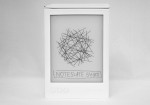
The Raspberry Pi is a cheap single-board computer designed for hacking and DIY projects. It’s been used as a weather station, a laptop, and most importantly a computer with a Kindle screen.

In that last project a hacker found a way to connect a Kindle to a Raspberry Pi over USB and turn the Kindle into a USB monitor, but now we can do one better. Hackaday has found the Pi-nk, a new project which turns a Kindle into wireless monitor.


This is by no means the first project with a wireless monitor; you can in fact turn just about any Android tablet or the iPad into a wireless monitor, but this idea is still unusual for E-ink devices.

And if you have a Raspberry Pi 2, this is an idea which you can replicate. The developer has put together a detailed how-to which explains how Pi-nk uses wireless instead of USB for almost all of the connections (including the keyboard). He worked from a Kindle Paperwhite, but since all Kindles now ship with Wifi this project should work with just about any Kindle model (just so long as it has been hacked).

Based on what I am reading, I don’t know that this will work with other E-ink devices, and that’s a shame.

I would really like to see this hack applied to the Sony Digital Paper DPT-S1, a writing tablet with a 13.3″ E-ink screen and an $800 price tag. That much larger screen would be a whole heck of a lot more useful than the 6″ screen on the Kindle, but the DPT-S1 doesn’t even have a web browser, much less have an active hacking community.

Pi-nk

Paypal’s Out to STEAL Creators' Copyrights, and Other Nonsense

A story has been circulating on Tumblr and on author blogs over the past week which hasn’t made its way into the media yet, and that’s a good thing because it’s bogus.

Numerous authors and other creators are saying that Paypal is a giant evil corporation which is about change its terms of service so it can rob creators of all the rights to all the content sold through its money transfer service.

They’re pointing to a new clause in the new ToS which will be going into effect on 1 July. That clause, which you can read on Paypal’s own site, says:

For those who can’t see the screenshot, the first sentence of the clause says:

When providing us with content or posting content (in each case for publication, whether on- or off-line) using the Services, you grant the PayPal Group a non-exclusive, worldwide, perpetual, irrevocable, royalty-free, sublicensable (through multiple tiers) right to exercise any and all copyright, publicity, trademarks, database rights and intellectual property rights you have in the content, in any media known now or in the future.

That clause is being interpreted by some creators to mean that Paypal is grabbing the rights to all the content _sold_ through the service, but that isn’t quite what it says.

What this says is that Paypal has a right to use the content uploaded to them.

What we are looking at here is a standard boilerplate contract clause the likes of which you would expect to find in digital distribution platforms. Amazon has a similar clause for KDP (see section 5.5). Dropbox, Kobo, and many other services have similar clauses.

To be clear, those clauses are in the KDP et al contracts in order to give the services the legal right to distribute a creator’s content on their behalf (the KDP clause is pretty clear on this point).

And now Paypal has decided it needs a rights clause. Given that Paypal does not offer any type of file transfer service, my mind boggles at the idea that Paypal would need this clause. I am even more confused by their decision to let a context-blind first-year law student write the clause.

Or perhaps they are letting a bot draft their legal contracts now, I don’t know.

Update: We might not know for sure why this clause was added but we suspect that Paypal plans to add file delivery to its payment processing.

In any case, I am about to go yell at Paypal. There’s no need for this clause to exist at all, but if Paypal really wants to have it then they are going to have to redraft it so it isn’t quite so egregious.

As it is now written, the clause could be interpreted as a way for Paypal to grab the rights. I do not think that is what Paypal intended, but I agree with the members of the WetCanvas forums who pointed out that is how it could be used.

It would not be impossible for Paypal or its lawyers to connect a specific financial transaction with a specific piece of content. That type of detail is recorded if you use Paypal’s shopping cart.

For example, a few weeks ago I bought an ebook from O’Reilly and paid via Paypal (it was related to the Sony piracy story). That transaction listed the title of the ebook, and under a certain interpretation of that clause Paypal has the right to do whatever they want with the book.

And for that reason, the clause needs to be redrafted. Luckily for us the new ToS do not go into effect until 1 July, so there is plenty of time for Paypal to fix the problems it has created.

image by VBC17, melenita2012

AAP Reports Sharp Decline in eBook Revenues in January 2015

The Association of American Publishers reported on Wednesday that revenues were up by just under a percentage point.

According to the 1,200 odd publishers who submit their data to the AAP’s Statshot program, revenues for the month of January 2015 were up +0.9% to $543 million over January 2014.

Update: the AAP has revised the revenue stats for January.

Aside from that the actual details are sparse this month. The AAP didn’t release specifics, so I can’t offer much in the way of financial stats.

But the press release did tell us that the adult trade segment increased by 0.6%, and that religious presses were up 11.1% (with most of the growth in hardback books). Kids/YA segment declined by 1.6%. According to the AAP, this segment saw great paperback and board book revenues (10.9%, 34.1%, respectively)which were damped by a sharp decline in ebook sales (37.4%).

In related news, the AAP also reported that the curricula market was down 7.8% in January 2015 from the year before ($1.06 billion dollars, from $1.15 billion).

In terms of formats, paperbacks, hardbacks, and audiobooks all saw great growth in January 2015, but ebooks did not. Paperback revenues were up 10.4%, while hardbacks increased by 3.6% and audiobooks 11.5%.

Revenues from ebook sales, on the other hand, did not carry over momentum from 2014, and were down by -10.2%.

AAP reported last month that ebook revenues ended the year up 4.7%, but as anyone who followed publishing news over the past couple months that trend was not going to continue.

In the last few months of 2014 Amazon signed new contracts with several major US trade publishers. Those contracts included provisions for agency priced ebooks. This both raised the prices of ebooks published by S&S, Macmillan, and Hachette and blocked retailers from discounting.

We saw the obvious result in January: consumers switched to other formats and other segments of the industry (ones not tracked by the AAP).

How much would you bet that the trend in declining ebook revenues will continue?

I’m expecting the decline to continue in February and to get a lot worse when we get the figures for April and May 2015; those will reflect HarperCollins' new agency ebook contract.

image by e³°°°


Why are Indie Bookstores on the Decline in the UK But Having a Revival in the US?

With the number of indie bookstores in the US growing every year, no one can argue that they are on the rise. B&N may be closing stores left, right, and center, but indies are doing great. That is why I found myself deeply confused when  I read this bit on The Bookseller yesterday:

Standing in this beautiful new Foyles store to launch ALLi’s Authors For Bookstores campaign, for a moment we can fool ourselves that reports of the decline of bricks-and-mortar bookshops are greatly exaggerated.

When I first read that I thought we were in for an article about Amazon killing bookstores (the likes of which Salon.com is famous for), but then I realized that the quote came from someone speaking in the UK and referring to bookstores in that country.

While it is true that all the news reports say that the number of bookstores in the UK continue to decline, similar reports from the US say the opposite. In fact, as I noted in February of 2014, the number of indie bookstores in the US rose, while that figure declined in the UK. This trend reportedly continued in 2014, with the count declining from 987 to 939 in the UK.

In the US, however, the American Bookseller  Association announced in February that its membership rolls had grown in 2014:

In 2014, the American Booksellers Association welcomed 59 indie bookstores that opened in 25 states, the District of Columbia, and the U.S. Virgin Islands. This is the largest number of new stores joining ABA in a single year since the start of the Great Recession in 2008.

The new stores include nine branches or satellites of existing businesses and five stores selling primarily used books.

The ABA has noted that their membership has grown most years since 2005. That is rather curious, given that the UK Bookseller Association has said that the number of bookstores in the UK peaked in 2005 at 1,535.

Does anyone know why the two English speaking countries continue down such different paths?

I’m not familiar enough with British bookselling to be able to answer this question, but it has me puzzled. I would have thought that the higher population density in the UK would mean that any bookstore would have a greater concentration of customers.

Or is the higher density causing an increase in property values to the point that marginal retail operations like bookstores simply are not profitable?

What do you think?

P.S. And do you know what is even more fascinating? The Us has more indie bookstores while at the same time we also have a thriving online used book market. Yes, indie booksellers can sell online bought the bigger operations have no brick & mortar presence.

image by skunks, Kathleen Tyler Conklin

Noteslate Shiro 6.8″ Writing Slate Due Out This Fall, Will Cost $199

When we first saw the Noteslate in 2011 we were promised a $99 color epaper writing slate. That device turned out to be complete vaporware,  but Noteslate’s current design isn’t quite as fictional.

A reader has tipped me to the news that Noteslate has announced the Shiro, an epaper writing slate with a 6.8″ screen. (Thanks, Jafnaw!)

Update: Here’s the latest on the Shiro.

The Shiro looks nothing like the original Noteslate, and is instead based on a 6.8″ Pearl E-ink screen with a frontlight and a touchscreen. This is not the first to use this screen size, but it is the first to come with a pressure sensitive stylus.

According to the Noteslate website, the Shiro runs Noteslate OS on a 1GHz Freescale CPU. It also has Wifi, Bluetooth and a microSD card slot. It weighs 240 grams, and measures 10 mm thick.

Aside from that, I can’t tell you much at this time. I queried Noteslate before writing this post, but the folks behind Noteslate aren’t sharing any other details right now. (Edit: they did tweet that they are planning a 13″ model which will be launched later.)

I don’t, for example, know who their hardware partner is or what OS is being used, but I can guess.

I would bet that Noteslate has partnered with Onyx, the Chinese ereader maker, to adapt one of Onyx’s Android ereader designs for use as the Noteslate. Onyx has experience with stylus-equipped ereaders, so the Shiro would be right in their ballpark.

Edit: And if not Onyx, then possibly Netronix. This firm has a 6.8″ ereader which would fit the bill.

I’m told that an official announcement is coming next week, and that the Noteslate Shiro is expected to ship this fall.

So are you going to get one?

It’s up for pre-order right now, but I don’t plan to put my money up. The struggles of the Earl E-ink tablet and the Popslate iPhone case have made me leery of the idea of handing my money to unknown and untried device makers.

The Earl has been under development for two years and is back to square one, while the Popslate shipping 2 years late and is showing no evidence that it will ever have the nifty features promised in the original Indiegogo campaign.

Neither company had previous device development experience, and they were not prepared for the many roadblocks thrown in their path.

While I don’t know that Noteslate will have similar issues, their silence leaves me with no way to judge whether they can pull this off.

If you want one, I would wait until the Shiro ships before buying.

Edit: A reader noticed that there was an option to pre-order and not pay until the order shipped.  That strikes me as a good option. Thanks, Ingo!

Noteslate

Glose Update v1.5 Adds Speed-Reading on the Apple Watch

Over 3,000 apps have been released for the Apple Watch (there’s even a web browser) and countless apps have been updated to support  the smartwatch. That includes Glose, which just released an update today.

The update adds a cluster of new features. Glose says they added a new night-reading mode, better formatting, and new Tinder-inspired gestures for adding books to your reading list, but the big news today is the new support for the Apple Watch.

Apple Watch owners can now catch up on what their friends are reading in Glose, nd receive notifications as soon as someone they know starts reading a new ebook. They’re also going to receive free book quotes and "be inspired at every important moment of the day".

And last but not least, Glose also added a speed reading option. The changelog says that you can speed your books word by word on Apple Watch,. That sounds like Glose implemented some kind of RSVP technique (Spritz uses similar tech), but I’m waiting for an Apple Watch owner to test it for me and confirm.

Speaking of speed reading, Instapaper recently added the option. I don’t think they offer it on the Apple Watch, though, just their apps for iPhone and iPad. Instead, Instapaper added a TTS option which worked through the iWatch.

Glose is free in iTunes.

Online Writing Community Tablo Adds New Analytics Tool: Tablo Scholar

Following in the footsteps of their larger competitor Wattpad, the Melbourne-based writing platform Tablo launched a new reader analytics tool today called  Scholar.

Tablo Scholar was developed to offer authors a better understanding of who their readers are and what the readers are reading. The service costs $9 or $19 a month, with the more expensive plan offering details on readers such as age, demographics, and geo-location. The lower-tier service, also known as Scribe, offers more general details on how an author’s books are being consumed.

"Tablo Scholar is a powerful analytics platform that helps you understand how people are engaging with your work," Ash Davies said in the press release. "You can gain insights like what your most gripping chapters are, where people typically stop reading and learn about the demographic of your most engaged readers."

Tracking reader behavior has been a hot topic in some segments of the publishing industry since before HipType launched in 2012 (it closed less than a year later). The late ebook retailer Bilbary planned to provide similar analytics to publishers, and Jellybooks is currently testing a platform which lets publishers give free ebooks to reader focus groups in exchange for analytics data.

And last December Wattpad also launched an analytics tool called Writer Analytics. I don’t recall this tool making its way into the news cycle at the time, but after looking at Wattpad’s announcement and one early user report, I can see that WA provides data which is similar to what authors get from Scholar – for free.

TNM

Books-a-Million Partners With FastPencil, Launches a Publishing Services Unit

Books-A-Million has launched a publishing services site called BAM Publishing DIY where it plans to charge indie authors and publishers to create and distribute their work.

Developed in partnership with FastPencil (which is also providing all of the services), the site offers an array of services and tools for authors and publishers. ranging from DIY tools for formatting and assembling an ebook to conversion, professional editing, and print distribution.

Costs range from a basic $59 conversion service (no distribution included) to a $129 option to sell through Books-a-Million’s website. Getting your work out on the general market, including into the Kindle and other stores, costs $279 and up, and will earn you 80% (ish) net royalties.

BAM Publishing DIY also offers more expensive publishing services packages with prices ranging from $599 to $6799 as well as a la carte service including developmental editing, professional cover design, and more.

I’ve spent a couple hours digging into the site, and I can tell you that the services are provided by FastPencil under Books-a-million’s brand.

While Fast Pencil’s name is not explicitly mentioned anywhere, a FastPencil email account is listed as the contact email address to get a quote for certain services. The BAM Publishing DIY site is also built based on the same template as FastPencil’s website, and the features lists for the more expensive packages on each site are almost identical.

All in all this is a pretty looking site and at first glance it looks reasonably priced, but I don’t think this is a good value.  I’ve tested the site by uploading an ebook and creating a project in order to distribute it. The process was easy and simple,  but I would still recommend against using this site to distribute your ebooks.

I checked, and BAM Publishing DIY will only pay an author $.96 out of the $2.99 retail price for an ebook. Smashwords pays far more than that, and they don’t charge you an upfront fee. Furthermore, an author will earn almost twice as much if they deal direct with the major ebookstores (less the Amazon tax, of course).

It’s a shame that Books-a-Million offers such a terrible deal on distribution, because aside from that the site offers a smoothly functional set of tools.

P.S. If you are in need of an alternate suggestion, I would recommend finding the services you need through a services marketplace.

BAM Publishing DIY

"Invaded by the iWatch: an Erotic Short Story" Now Available in the Kindle Store

The first Apple Watch shipments are still making their way to customers, but Apple’s wearable has already inspired its first erotic story.

A new ebook, Invaded by the iWatch, hit the Kindle Store late last month. As you can tell from the name, the book is a romantical adventure featuring the Apple Watch.

The 4,000 word short-short was published by an author writing under the pseudonym Leonard Delaney. It builds on his past success with first two tech-themed erotica e-books, Conquered by Clippy and Taken by the Tetris Blocks. (Yes, those really are the names, and if you like you can also get them in a paperback anthology.)

The plot, such as it is, focuses on a tech blogger and the erotic adventures which ensue after she receives an iWatch in the mail. The device is haunted by the ghost of Steve Jobs, who develops an interest in the blogger and, well,let’s let the ebook speak for itself:

She emitted an expression of sadness, then held her wrist up. Those fierce eyes appeared on the screen.“Oh billionaire ghost watch, you know what’s going on. You have the algorithms to detect how lonely I am. You’ve shown me so much today— how this techno-infused landscape is both a dream and a nightmare. You give away my every move, my every preference, my every feeling. All you want to do is invade my privacy.”

It gets considerably more NSFW after that. There’s even a scene involving a "Stevejob", and later a "docking station of pleasure", although the author doesn’t take the later scenes any more seriously than the scene quoted above.

Fusion.net contacted the author, a Canadian consultant, who summed up his writing style as "You kind of get more and more ridiculous with it."

I can definitely see that.

Invaded by the iWatch costs $.99 in the Kindle Store.

Libre Office for Android Gains Support for Editing Documents

LibreOffice is an open source office suite for Windows, OSX, Linux, and now Android. Earlier this year Collabora and the The Document Foundation (the non-profit which supports LibreOffice) announced the development of a version of LibreOffice for Android. That very early release was buggy and unstable, and most importantly it lacked any way to actually edit files.

But development continued, and now the latest beta release supports editing documents. It also works a little better.

It still offers a far from complete suite of features and the tool can’t actually create a document from scratch, but if you download the latest development build you will find the app added some editing options to  Writer, Calc, Draw, and Impress, including basic copy and past of text and images and simple text formatting (bold, italic, underline, and strikethrough).

The app also features support for opening and saving a broad range of office formats, including MS Office as well as Open Office formats (which are also used as the native for mat for LibreOffice).

The interface has also been optimized for touchscreens in general and Android in particular, which in part explains why the feature set is so limited; designing a touch interface for something as complex as an office suite is not a simple task.

that difficulty is part of the reason why Andropen Office, the Android port of Apache Open Office, still uses a desktop interface.

Andropen Office has been under development since  2013. I haven’t used it recently, but given how long it has been under development I would try this app first. It is going to be more functional and stable, and if nothing else, Andropen still looks like it is designed to work with a keyboard and mouse rather than a touchscreen. If I did a lot of office work on Android, I would be using those peripherals.

Collabora via Liliputing 


Audiobook Samples Now Available on Goodreads

If you like listening to audiobooks then I have some good news for you.

Goodreads is in the process of adding audiobook excerpts to its website. Soon GR members will find free audio samples for 180,000 Audible titles on the book listing pages. Along with the option of reading a sample from the book, GR members can now also listen to an excerpt from the audiobook. The excerpt will (should) play in a pop up window the web browser, and if you like what you hear you can the title to your "want to read" list, or you can head over to Audible and acquire the audiobook directly.

Obviously this feature is not available for all titles listed on Goodreads, but when it is available you’ll find the listen button below the cover image on the left side of the page:

Goodreads told me that the new feature is only available on the desktop site, but not GR’s mobile site or its Android and iDevice apps.

I’ve tried a couple excerpts, and I can confirm that I could listen, pause, and resume the excerpts. Curiously, the audio excerpt doesn’t line up with the text excerpt; the latter was usually the first section of a book, while the former was chosen from some location inside the book.

I’m not convinced that was a good decision; the seemingly random excerpts  were more bewildering than intriguing. I spent more time trying to figure out what had just happened than wondering what was going to happen next.

To be fair, I generally hate dropping into the middle of a story, but if that doesn’t bother you thin I’m sure you’ll find the new excerpts very useful.

Goodreads

Kindle Unlimited Payout Ties Record Low $1.33 in March 2015

Kindle Unlimited adoption continued to grow last month, but unfortunately it grew faster than Amazon 's willingness to fund it.

Earlier this week Amazon released the latest statistics on KDP Select, the program used to fund indie author and publisher participation in Kindle Unlimited. Amazon reported that the pool for KDP Select for March 2015 had been increased to $9.5 million. They also announced separately that the payout for each time an ebook was read had dropped to $1.33.

Grab an envelope and crunch the numbers, and you’ll see that ebooks in KDP Select accounted for about 7.14 million reads.

That is a new record for KDP Select, and compared to January 2015 it represents an increase of about a million additional ebooks being read.

The number of ebooks read by Kindle Unlimited subscribers has continued to grow ever since the program launched last July, but unfortunately the funding for KDP Select isn’t growing quite as fast. While Amazon has increased the funding each month, the increase has been kept to a minimum. As a result, the average payout continues to stay low:

The payout per ebook read hasn’t exceeded $1.54 since Kindle Unlimited really got started in August 2014, and my current financial forecast is that Amazon is going to keep it that way.

Authors and publishers would be advised to plan on the payout staying low, and act accordingly.

Foner Books

Kindle Textbook Creator Now Lets You Embed Audio & Video

Amazon released the first major update for their three-month-old textbook creation app today, and it’s finally getting useful.

Kindle Textbook Creator still accepts only PDF as the source file, and it’s still listed as being in beta, but now the tool lets educators embed video and audio files in the e-textbooks they make. It also now supports pop-up images.

I’ve tested the app and I can confirm that you can embed audio. The app freezes while the media is being embedded in the project ebook file (it takes a while), but then it unlocks and lets you move the audio icon or video window around. You can also change the media’s title or description (see the user manual for more info).

What’s more, KTC also gained a new option for building the table of contents. You have the option of ticking a checkbox to choose which pages are added to the e-textbook’s TOC. (Hat tip to R. Scot Johns for catching this; it wasn’t mentioned in the changelog.)

You can download the app from Amazon.

This app is still a far cry from iBooks Author, which lets you embed custom fonts, equations, media, quizzes, and html and Keynote widgets, but KTC has a couple advantages of its own.

Kindle Textbook Creator runs on Windows and OSX, and it creates ebooks which can be read in the Kindle apps for Android, iOS, PC, and OSX as well as Fire tablets. It is specific to the Kindle platform, but at least it offers more hardware choices.

And now it offers more media options.

When Kindle Textbook Creator launched in January many bloggers thought that this was the start of a textbook war between Amazon and Apple. I still don’t see that particular conflict happening, for obvious reasons, but Amazon is clearly more interested in e-textbooks than I had previously expected.

Amazon already sold digital textbooks, and now they are also making it easier for educators to publisher their own textbooks on the Kindle platform. It’s hard to say  what is coming next, but I think we can expect Amazon to make a play for schools and the curricula market.

In 2012 Amazon released WhisperCast, a tool for managing content on a fleet of Kindles and Fire tablets. And then in 2013 Amazon acquired TenMarks, an edtech startup which developed a math curriculum.

Would anyone care to guess what their next step will be?