Silver Reader Promises to Be as Fast and Sturdy as Google Reader

Another news reader service showed up in my inbox a few days ago and there is much to like.

Silver Reader didn’t quite make it out the door before the Readerpocalypse, but it’s still worth a look.

This service is the work of a team of eastern European developers, and they are pitching it as being faster than the late, great Google Reader. I’ve been using it this morning and I have to agree. It is fast, and aside from a few hiccoughs Silver Reader was more than able to handle my excessively large number of RSS feeds.

—
Click here for more Google Reader alternatives.
—

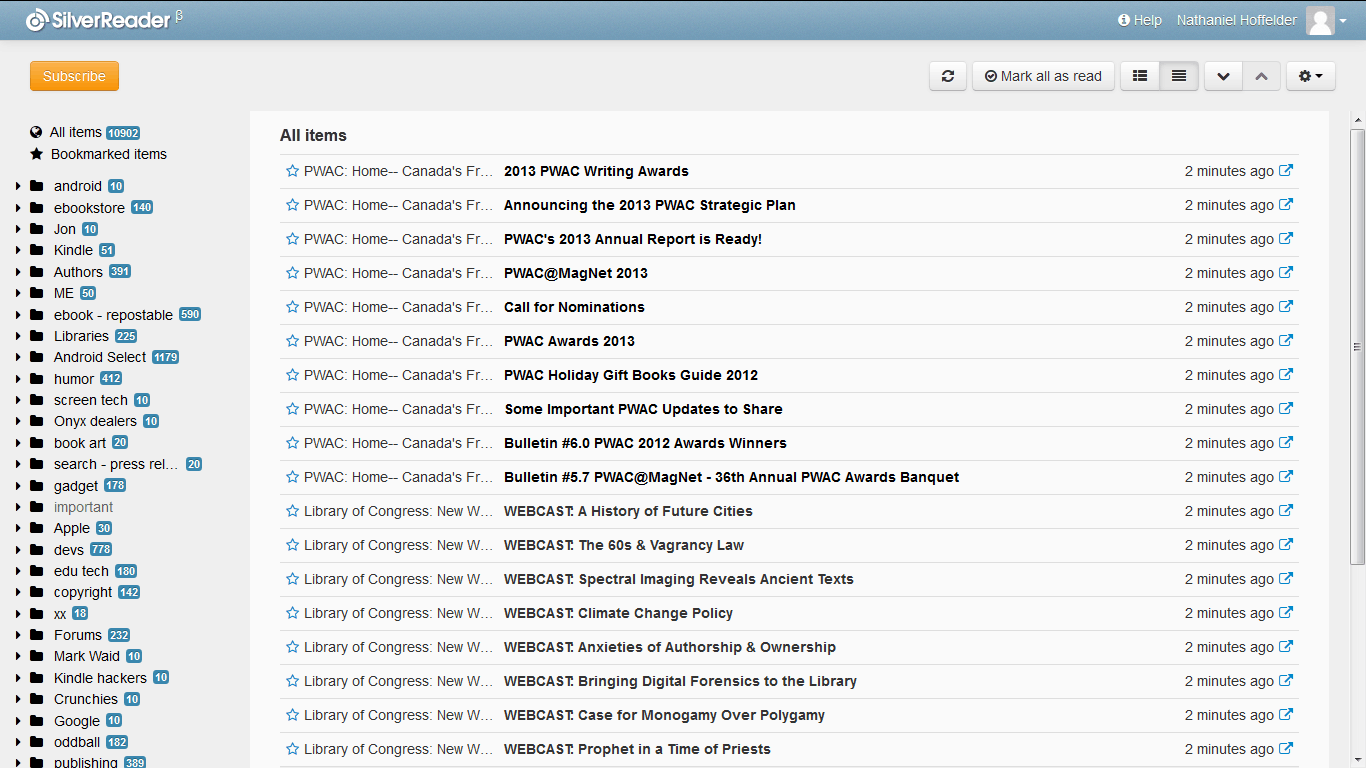
This service eschews the common white back ground in favor of slightly more colorful theme:

Even though the background isn’t white, the text is still readable, IMO, though I think lightening the background might help improve readability.

As you can see in the screen shots above and below, Silver Reader offers a standard layout of feeds and folders on the left and posts on the right. It currently offers just a couple viewing modes (list view and full blog posts), and of course in the list view you can open and read one post at a time.

The content from an article is displayed in line with the list of posts, and not as a separate pop up window:

This service is still new, but it launched with the necessary sort options: sort by oldest/newest. It can also hide already read posts, but unfortunately it cannot do the same for folders and feeds in the left panel.

You can log in with Facebook, Google, or you can create a local account. I logged in with my Google Account, but was unable to import my Google Reader data. I ended up having to import the list of feeds manually. On a related note, Silver Reader can also export the feeds you follow as an industry standard OPML file, thus resolving one concern shared by many ex-GR users.

Silver Reader is a freemium service, and while there will always be a free service the developers have said that they plan to offer a subscription service with more features. Other future plans include fixing bugs, improving the responsiveness of the web browser version of Silver Reader so it runs better on mobile devices, and adding features.  The developers have been quite busy with working on Silver Reader, and I can see from their blog that they rolled out an update today.

This service is currently limited to only working in the web browser, but plans for native Android, iOS, and Windows apps are in the works.

Silver Reader

Silver Reader blog

Infographic: What Makes You Put Down a Book?

Goodreads released a new infographic yesterday that answers the age old question that hounds authors everywhere: Why didn’t readers finish my book?

Everyone who has ever read more than one book has abandoned a book before finishing it, for one reason or another. And in this day and age, many readers go to Goodreads to explain why they gave up on a book.

Goodreads has combed through the reviews, posts, and comments left by readers and pulled out some useful details, including the top 5 most abandoned books, the top 5 most abandoned classics, and other details including the leading reasons why a book was abandoned and how far readers got before giving up.

I was surprised to learn that I had abandoned 2 of titles on the Top 5 Abandoned Classics List; the only which I have tried and finished was Atlas Shrugged. (Funny, I thought that was an easy read.)

Goodreads

Zombie Reader: How the Corpse of Google Reader Can Let You Browse Your Archived Google Reader Data

When I showed you last week that you could download a copy of everything you’d ever seen in Google Reader, I didn’t think there could be anything better than having a huge volume of old data to sift through.

Yesterday I found out I was wrong.

Mihai Parparita, the developer who originally gave us the tools to download a personal Google Reader archive, is back again with an even better trick. He downloaded and modified a copy of the Google Reader website (the HTML, JavaScript, CSS, etc.) so it can be used to browse your archive of Google Reader data.

As you can see from this screenshot, it looks just like the real thing:

Mihai explained more in his blog post:

A side effect is that I now have a self-contained Reader installation that I’ll be able to refer to years from now, when my son asks me how I spent my mid-20s. It also satisfies my own nostalgia kicks, like knowing what my first read item was. In theory I could also use this approach to build a proxy that exposes Reader’s API backed by (say) NewsBlur’s, and thus keep using the Reader UI to read current feeds. Beyond the technical issues (e.g. impedance mismatches, since NewsBlur doesn’t store read or starred state as tags, or has per item tags in general) that seems like an overly backwards-facing option. NewsBlur has its own distinguishing features (e.g. training and "focus" mode)2, and forcing it into a semi-functional Reader UI would result in something that is worse than either product.

Zombie Reader can be downloaded from Mihai’s website, readerisdead.com.

Just to be clear, it cannot be used to browse any current news reader service, and that is probably a good thing. As much as I liked the Google Reader service, I have to admit that the website design needed work. It was not the best tool for reading content, and the overall design needed a little polish. I can only recall Google making a single change to the Google Reader design, and that was when they uglified it so it would look more like Google+.

Persistent.info


Txtr Beagle is Now On Sale – €19.99

If you were thinking about getting one of txtr’s beleaguered 5″ beagle ereader, now might be your chance.

The German ereader maker txtr is sending out emails this morning, touting a summer sale. For a limited time you can buy a txtr beagle for only 20 euros. That is two-thirds off the regular retail, finally making this ereader the cheapest on the market.

Txtr is also throwing in an alternate back plate as well as a couple free ebooks, but the deal is only available in Germany from txtr.

This device was launched in October 2012, but has only seen marginal market success. Txtr had originally planned to sell it via telecoms, where it would be bundled into new service contracts and sold to consumers with a subsidized price tag of 10 euros. Unfortunately for txtr it seems that no telecom has been interested in buying the beagle and then selling it as a subsidized device.

I’m not really surprised; the beagle is so limited in functions and ability that the telecoms and the potential end users probably found it as unappealing as I did.

The beagle has a 5″ E-ink screen, 4GB of storage, and Bluetooth (but not Wifi or USB). This so-called ereader is better termed as a smartphone accessory because it cannot load ebooks without one. The beagle requires a relatively new Android device (smartphone or tablet) which is capable of running txtr’s reading app. Why Android? Because (according to their website) txtr has not released updated any of their other apps to include support for the beagle.

Still, the beagle is on sale in Germany for only 20 euros. That puts it far below the current prices for the Trekstor Pyrus Mini, which costs 49 euros. The beagle sale price is also far less than the price of the Kobo Mini, which is selling for 59 euros at the moment.

Update: A German ebook blogger has pointed out that both of these ereaders are on sale in Germany:

TrekStor Pyrus Mini (aka eBook Reader 4Ink) is on sale at Thalia for 35 Euros, Kobo Mini on sale at Saturn for 29 Euros.

I think we now know why the beagle went on sale, don’t you? Clearly its more capable competition are putting pressure on it by offering better prices.

txtr

Thanks, Chalid!

Internet Archive Now Hosts 4.4 Million eBooks, Sees 15 Million eBooks Downloaded Each Month

The Internet Archive is one of the largest repositories of free information online, but it wasn’t until yesterday that I realized just how large their operations really were.

Robert Miller, the Global Director for eBooks at the Internet Archive, sent out an email yesterday to IA sponsors, partners, and content contributors with all sorts of  new stats on the IA.

This email (I have embedded excerpts at the end of the post) reveals that the IA now sees 15 million ebook downloads each month. That’s far higher than the 4.3 million downloads reported by Project Gutenberg.

IA is also now hosting 4.4 million ebooks, along with millions of other works. In comparison, the IA collection is much larger than Project Gutenberg’s 42 thousand title catalog, but also much smaller than the 30 million titles that Google Books is said to have scanned. (That last figure is unsubstantiated and includes ebooks which cannot be freely downloaded, so it should be taken with a grain of salt.)

That 4.4 million collection represents books scanned by the IA and partners, of which about 2 million were scanned by the IA. Starting with just a single location in 2004, the IA has expanded to include scanning operations in Asia, Europe, and North and South America. They now scan books at 33 locations, and they plan to expand into South Africa inside of 6 months.

Dear Archive Sponsors, Content Contributors and Partners,

We are at the mid-year point in 2013. I wanted to share  with you some “news you can use” about several milestones we will soon be reaching, a few changes in our pricing structure and plans for the remainder of the year. Please feel free to distribute this email to the appropriate people on your teams or the libraries you represent.

First, thank you for your continued support of the Internet Archive. We, together, have collectively built the largest, free, public digital lending library in the world. Yippee to all of us!

Milestone –
In about 3 weeks, we will reach the 2 millionth eBook that we have scanned! This is a testament to the commitment and support from all of you.

We are also closing in our 1,000 partner!!

Thank you again! (and please don’t stop scanning!)

Use/Downloads  –
For the past 6 months we have a consistent 15 million digital loans/ per month  of all the eBooks we have on line. That is 350 books every minute being checked out! This number continues to grow each month.

Public domain and modern books –
Overall, we now have 4.4 million eBooks online (Archive.org), the difference of 4.4 and 2.0 million is  from uploads of items digitized elsewhere. We also have 500,000 modern eBooks for the print disabled and 250,000 modern eBooks (OpenLibrary.org). Our next goal is to reach 10 million public domain and modern eBooks on line. We are looking for partners that wish to fund more modern books to grow our contemporary global library. By working together, I am confident we will reach this goal in the near future.

…

Plans going forward –
1. Where are we scanning? We continue to expand our scanning footprint and are now on 4 continents ( North/South America, Europe and Asia.) and 33 locations. We hope to be in South Africa in the next 6 months, which will give us a 5th continent. Help us get to Australia and New Zealand! Antarctica….?

No Shelf Required

eBooks Now 3% of the French Book Market

eBooks might be seeing immense popularity in US and UK but they’re not having the same luck in France. There’s a new report out this week that shows that ebooks are still a negligible part of the french book market.

According to the latest report from the Syndical national de l’édition (SNE), ebook market share rose from 1% in 2011 to 3% this year. That is a rather small percentage when compared to the US (21.67% for 2012), or even the UK (10% ish for 2012), but still higher than the most recent estimates for Germany (2.4% for 2012).

The report also noted that the latest estimates from the market research GfK suggest that 15 mullion smartphones will be in use in France by the end of 2013, along with 5 million tablets and half a million ereaders.

Yes, only 500,000 ereaders. While this might end up being one of the factors that hold back the ebook market in France, there is also a chance that France could be one of the markets that completely bypasses the ereader ownership stage that the US passed through. I have been suggesting this possibility since February of this year but TBH there’s been no evidence yet that this has happened anywhere.

And I’m not sure France has enough devices to spark a rise in ebook sales. Nevermind the 500,000 ereaders; the 5 million tablets and 15 million smartphones represents a small percentage of metropolitan France’s adult population, which is currently estimated to be roughly 48 million. In comparison the latest figures from the Pew Research Center indicate that 56% of American adults own a smartphone, 34% own a tablet, and 26% own an ereader.

But in spite of the limited market success of ebooks and the limited number of potential reading devices, the report is highly optimistic about the future possibilities. My source indicates that the report cites a number of positive trends, including a growing interest in France ereaders and ebooks.

L’Express

image by Luigi Rosa

What eBooks Looked Like 20 Years Ago (Video)

The Kindle is widely regarded as being responsible for igniting the ebook era, but the idea had been around for at least 30 years before the Kindle launched in November 2007. There were a number of marginally successful ereaders and ebook platforms before the Kindle, including the Sony Data Discman, Rocket eBook, and there was even a joint B&N-Microsoft effort during the late 90s tech bubble.

And then there were the ebooks produced by Voyager Company in the early 1990s and distributed on floppy disks (and later, CDs).

These were early enhanced ebooks called (appropriately enough) Expanded Books (Wikipedia). A wide variety of titles were released as Expanded Books, including A Hard Day’s Night, Art Spiegelman Maus, Zen and the Art of Motorcycle Maintenance, and A Wrinkle in Time.

Here’s one title:

In addition to the text of the book, an Expanded Book also had audio, animation, links from various parts of the text to supplemental content. All of this content was bundled with the disk, obviously; this was the pre-internet era.

I’ve come across Expanded Books before, so rather than repeating myself let me quote some of the technical details and other info I reported on way back when:

Expanded Books was perhaps the very first attempt to develop enhanced ebooks. This was before my time, but I’m told the project did produce a number of titles including The Complete Hitchhiker’s Guide to the Galaxy, The Complete Annotated Alice, Jurassic Park and The Tao of Pooh / The Te of Piglet, the last of which is still available on Amazon as a 3.5? floppy disk.

The ebooks were built to run in Hypercard and included such amazing features as embedded audio and images, multiple font sizes, bookmarks, typed notes, search,  and what at the time was considered clever menu design. Voyager produced around 60 titles as well as a tool kit for authors and publishers to produce their own ebooks. According to the 1996 edition of The Art of Electronic Publishing, Voyager sold the ebooks for $20 each, with some multi-volume sets  priced at $25.

This ebook format never amounted to much because the idea was too new, too expensive, and because it only ran on Macs (not a common OS back then, or for that matter now). Expanded Books were dependent on Apple’s proprietary Hypercard programming language (here’s Ars Technica with more info on Hypercard).

But never mind why Expanded Books failed; today I wanted to share with you a demo video of one of the titles release. Here is an annotated and expanded version of Stephen Gould’s On Evolution:

This ebook was released in 1995, so it’s not quite 20 years ago, but I think you get the point.

The work  Voyager was doing 20 years ago was not a whole lot different from a current ebook app, is it? Sure, the video is lower resolution and the interface is dated, but the content added to the original text isn’t terribly different from enhance ebooks today.

The above video is just one of a couple dozen promo videos that Bob Stein uploaded to Vimeo. He was one of the co-founders of Voyager and clearly he is also a packrat, for which I will be eternally grateful.

More Reading:

  • Expanded Books (Wikipedia)
  • 25 years of HyperCard—the missing link to the Web (Ars Technica)
  • Early ebooks and why they failed (Alfa Bravo)
  • 'Getting The Book Invented Properly' by Douglas Adams (video) (The Digital Reader)
  • Video: What Electronic-Book Interfaces Looked Like 20 Years Ago (Andrew Hearst)
  • Nora Barnacle and the Birth of the Ebook (TidBITS)
  • Voyager Expanded Books (Electronic Publishing, 1996 edition)
  • An oral history of the future of the book (Snarkmarket)

found via MobileRead

Google Is Considering eBook Rentals, Now Accepts Epub3

Google might only have a 1% to 2% share of the ebook market but that doesn’t mean they’re not interested.

I have just learned that Google has recently updated the publisher policy page for Google Play Books. Gone are the mentions of book bundle pricing, and in their place Google has added several mentions of ebook rentals.

The mentions of rentals are vague, and there’s no hint of how long one might rent an ebook for:

The "List Price" allows non-agency publishers to recommend a price for a book on Google Play. The Specified Price is only a recommended price and may not be the final sale price of the book on Google Play. For books that you authorize to be sold for rental periods, currently Google allows you to provide a "Rental List Price" for each authorized rental period as a percentage of the ebook list price for the book.

Amazon, Barnes & Noble, and many other companies offer digital textbook rentals in addition to ebook sales, so it would make sense for Google to jump in to the market. In fact, I would bet that Google’s rental plans (if implemented) will look a lot like the manner in which Amazon rents Kindle ebooks. Amazon offers a variable rental period with a sliding price; the quoted text above is sufficiently vague that Google could be planning to do the same.

But just because we see the new policies does not guarantee that it will happen.

On a related note, the Google Cache of the old page (dated 23 June) reminds us that at one point Google was considering offering a print/ebook bundle for a single price. That never happened, so far as I know, and there’s a chance that ebook rentals might see the same fate.

IMO the more important news today is the changes to the file formats that Google will accept from publishers and authors.

Google has dropped support for the wide variety of ebook formats they used to accept (Epub, Doc, XML, HTML, and even Mobi & PDB) and slimmed down their acceptable format list to only Epub, Epub3, and PDF (but only if no Epub is available).

This policy change represents a paradigm shift for Google. They’re no longer looking back at the past in order to see how they have to catch up to the rest of the market; now they are looking forward to the future. Google is looking for a way to get ahead of the competition.

That is why Google is explicitly accepting Epub3 as well as Epub. Like Sony and Samsung (other also-rans of the ebook market), Google is working to stay current with the larger Epub market (and play catchup with Apple, which has been supporting Epub3 since May 2012).

Lesen.net

Appeals Court Tosses Out Class Action Status in Google Books Lawsuit

Remember that lawsuit that the Authors Guild and the AAP filed against Google over Google Print Google Book Search Google Books in 2005?

A 3 judge panel on the 2nd Court of Appeals just ruled that Judge Denny Chin erred in certifying that the plaintiffs could act as a class. Instead the 3 judges believed he should have first considered Google’s argument of a fair use defense.

"Putting aside the merits of Google’s claim that plaintiffs are not representative of the certified class — an argument which, in our view, may carry some force — we believe that the resolution of Google’s fair use defense in the first instance will necessarily inform and perhaps moot our analysis of many class certification issues," the 2nd Circuit said.

This lawsuit was originally filed 8 years ago over Google’s plans to digitize the catalogs of university libraries and share the content online. That project, which has since hit 30 million titles in April of 2013, naturally drew criticism and hostility from industry trade groups including the AG and AAP.

The parties have been fighting it out in court ever since. This trial was nearly settled in 2008 when Google and the lead plaintiffs tentatively agreed to a settlement, but that settlement was rejected by Judge Chin in 2011 because it gave Google the unique advantage of having free-range on the books they scanned and obligated authors to opt-out, a principle that is contrary to most accepted copyright law.

So where does this lawsuit go from here? No where fast, basically. Google and the plaintiffs will need to submit new briefs and argue whether a fair-use defense applies. If Google wins on that point it could render much of the rest of the case moot.

More Reading:

  • Second Circuit Decertifies the Google Books Class (The Laboratorium)
  • Appeals Court In Google Book Scanning Case Clearly Leaning Towards Fair Use Ruling (Techdirt) <- old but still useful

Ruling:

  • Authors Guild v Google (PDF)

source

image by Ewan-M

The Merger Has Been Finalized – Random Penguin Solutions is Born

Bertelsmann and Pearson have officially announced today that they have completed all the steps required to merge 2 of the world’s largest publishing conglomerates into an even more unwieldy monolith.

Random Penguin Solutions will be jointly owned by Pearson and Bertelsmann, with the latter controlling 53% of the new company.

Random House CEO Markus Dohle will serve as CEO of Random Penguin Solutions and John Makinson, who has headed Penguin since 2002, is the new company’s Chairman of the Board of Directors. The HQ for the new company will follow publishing industry standard practice of wasting money on real estate and be located in New York City. Random Penguin Solutions will employ more than 10,000 people on 6 continents, and it will publish nearly 250 imprints every year. Collected revenues are expected to reach $3.9 billion this year.

The merger follows approval by regulators in the US, Canada, EU, New Zealand, South Africa, and Australia. US approval was dependent on Random Penguin Solutions complying with Penguin-DOJ settlement over Agency Price Fixing lawsuit, meaning that all titles published by the new company will be sold on the wholesale model rather than with price controls.

Infographic: Who Spends the Most Time Reading in the World? (We Don’t Actually Know)

Have you ever wondered how your reading habits compared to the rest of the world? Then check out this infographic.

Russia Beyond the Headlines was the first to share the infographic below (it’s not clear who made it). As you can see, India, China, and Thailand lead the world in the number of hours spent reading – or at least that is what the infographic would have you believe.

I would not read to much into this infographic. So far as I can tell the data is drawn from a report published in 2005 (press release). That is simply too old to accurately reflect current reading habits, thus reducing this infographic to little more than a cute picture.

If nothing else, the rise of smartphones and ereaders in the past 8 years will have radically changed reading habits of their owners and probably increased the time spent reading.

The national literacy rates might be a better way to judge who reads more, but unfortunately that data is even older.

source

eBooks Analytics Startup Hiptype Shuts Down – Cites Lack of Support From Major eBook Platforms

Here’s an old news story that no one noticed happening at the time.

Hiptype, a startup that launched in July 2012 with the promise of offering publishers new insight into their customer’s reading habits, shut down in late December.

According to the Hiptype blog their business plan fell through when one, Apple updated iBooks and disabled code features that Hiptype relied upon, and two, Hiptype was unable to convince other major ebook platforms to let Hiptype spy on readers:

Just a few days after speaking with a representative from Apple, an iBooks update was released that removed the support for analytics we previously had. Progress with Amazon and Barnes & Noble had also stalled. …

The problem is that from all three vendors, we were eventually told the same thing – if we wanted a feature that wasn’t supported for eBooks, then we should be looking at their app platforms instead.

When Hiptype launched last Summer their ebooks analytics idea was built around inserting a snippet of code into ebooks. When you read the ebook that snippet of code would track what you were doing and send data back to Hiptype’s servers, where it would be collated and served up to the relevant publisher.

That snippet of code initially only worked in iBooks because that platform supported Epub3, while  getting similar data out of a Kindle or Nook ebook required the cooperation of Amazon or B&N. According to what Hiptype said at the launch this was in the works, but apparently neither Amazon nor B&N liked the idea as much as Hiptype did.

Yeah, that comes as no surprise. It might be true that Apple, Amazon, B&N (and many other companies) spy on their users, but they have little reason to let 3rd parties inside their walled garden ebookstores.

And so Hiptype is, for all intents and purposes, dead. Apple’s current security restrictions on iBooks prevent Hiptype’s code from working, and Amazon is never going to add the support Hiptype needs (there’s a reason why the new KF8 format is described as Epub 2.5; Amazon made KF8 less capable than Epub3 so they could also avoid the security problems and other issues).

Given that Apple and Amazon account for 70% or more of the world ebook market (with the rest spread between a half dozen companies: B&N, Google, Kobo, Sony, Pocketbook, etc), there’s really not much of a market for Hiptype.

And so the company is shut down.

According to their LinkedIn profiles, both of the founders now work elsewhere. The CEO has moved on to Urban Airship, and the CTO now works at Zynga.

If you’re wondering why I’m digging up such old news, it’s because yesterday I was looking into how a publisher might be able to use a snippet of code in an Epub3 ebook to spy on readers.  This was what Hiptype was doing last year so naturally I looked them up to see how well things were going.

I was planning to write a post that listed exactly what data Hiptype was collecting in their spying efforts, but as you can see they’re not collecting data anymore. So instead I will explain why I was interested.

Hiptype offered a service that depended on the JavaScript security holes that I wrote about yesterday. This is one of the things that would probably be blocked by any rational security policy designed to protect users from malware. While I personally see that as a good thing I’m not sure publishers would agree.


Japanese eBook Market Reaches New High in 2012 – $741 Million

A new report on the Japanese ebook market is due out next month and it looks like the market managed to grow in spite of what many see as widespread resistance.

According to the report the Japanese ebook market was worth 72.9 billion yen in 2012, an increase of 16% increase over the previous year. The 2011 Japanese ebook market was worth 62.9 billion yen, or about $639 million.

The following chart comes from the report, and it details the projected growth of the Japanese ebook market over the next several years. FYI: The chart is graphed in increments of 100 million yen, so the 629 on the far left is equal to 62.9 billion yen.

The 2012 figure and related increase is particularly interesting given that for much of 2012 Amazon didn’t have a local Kindle Store in Japan. The Japanese Kindle Store didn’t launch until October 2012, and apparently that market was able to grow reasonably well in the absence of the menace from Seattle.

Should you be interested in buying the report, it will cost around 61 thousand yen when it is released on 18 July.

source

New Sony Reader PRS-T3 Shows Up on FCC Website – With Photos!

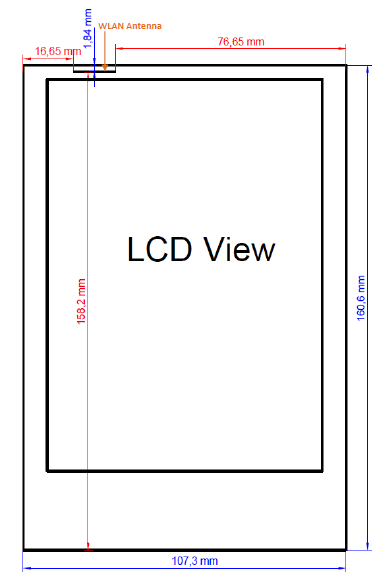
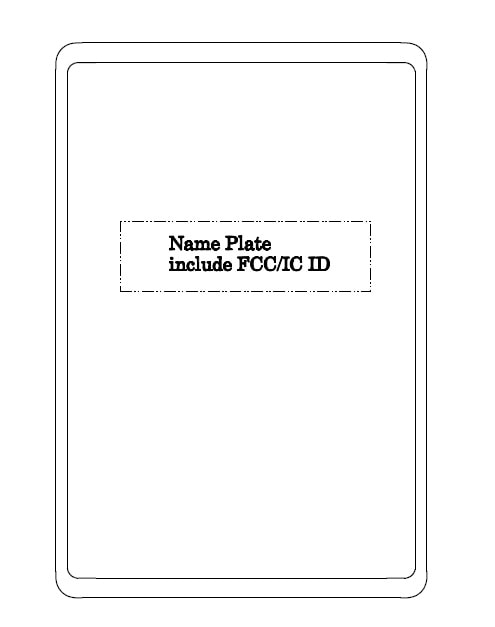
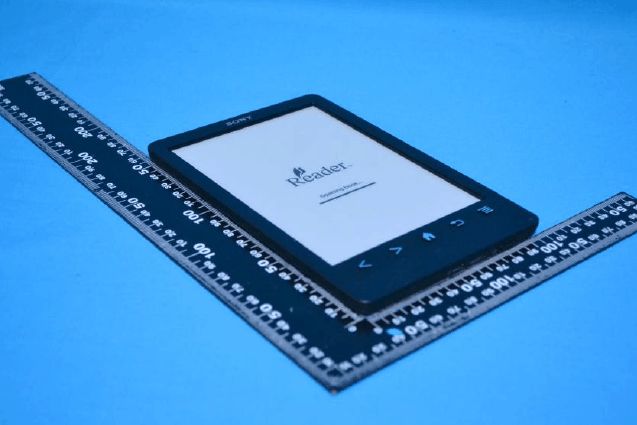
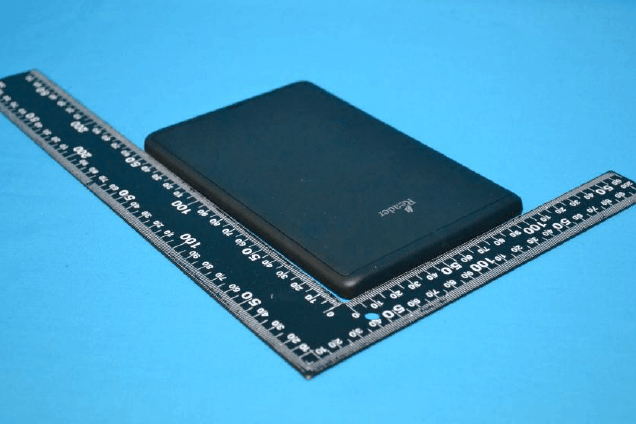
Sony’s latest ereader showed up on the FCC website today and it looks like the third time could be a charm. We don’t know much about the PRS-T3 (most of the important stuff is hidden), but I have gleaned a few details from the test reports and other docs posted on the website.

First of all, there are 2 model numbers listed, the PRS-T3 and the PRS-T3S. The S could stand for a touchscreen, but that’s not completely clear. But one detail I can tell you is that these models were tested for Wifi (though one report mentions Bluetooth).

I can also tell you that the devices have the same set of buttons as the previous models and measure about 4.22″ by 6.22″, giving them a 7.5″ diagonal measurement.  Based on the photos and the diagram discovered in one of the test reports, my current estimate places the screen at 6″ (and not the 6.8″ screen found on the Kobo Aura HD).

And as you can see from the images above and below , the new T3 looks nothing like Sony’s current ereader, the PRS-T2. The T3 has a more traditional rectangular shape and it looks much more like a tablet.

Sony has not yet shared any details on the release date, price, or specs,but if they follow their previous release pattern this ereader will probably launch in the US and Europe in August 2013.

Update: I’ve just learned that someone added a couple revealing photos to one of the test reports. This post has been updated with the new photos and info. Thanks Nathan!

FCC (VUI-20130001)

PocketBook 515 eReader to Launch Next Month, Will Cost $90

Amazon, Icarus, Kobo, and Trekstor aren’t the only companies pursuing the bottom end of the ereader market. PocketBook has just announced a new cheaper and smaller ereader that they plan to launch next month in Russia.

Weighing in at 131 grams, the PocketBook  515 isn’t the lightest ereader but it is close. This ereader is equipped with a 5″ E-ink screen, 4GB Flash storage, and 256MB of RAM. It’s running PocketBook’s own proprietary version of Linux, and is expected to cost 2990 rubles when it hits the market.

The 5″ screen has a resolution of 600×800, just like the screen on the Kobo Mini, but that’s about the only thing these ereader have in common. The PocketBook  515 gave up a lot of hardware in order to hit its price point.

Due to the low price, this ereader doesn’t have a microSD card slot, Wifi, a touchscreen, or audio. It truly as limited as the Trekstor Pyrus Mini, the 4.3″ ereader which coincidentally costs about the same as the PocketBook  515.

But in spite of its hardware limitations, the PocketBook  515 is still moderately capable. It supports a broad selection of ebook and office doc formats including Epub, PDF, FB2, CHM. DJVU, RTF, txt, html, DOC, and Docx. In addition to letting you read ebooks the 515 also includes apps for a calculator, calendar, clock, and a few games (Snake, Sudoku, Chess).

There’s no word yet on whether this ereader will be available in other markets, but even if it does show up in Europe I am not sure I would recommend it.

The Pocketbook 5151 is priced at the equivalent of €69, and I can see that the Kobo Mini is being sold by a number of retails for €59. The Kobo Mini has a touchscreen and Wifi, and based on a simple comparison of the specs it is a much better buy.

On a related note, the Mini is also being sold in the US for $40 and in the UK for £29, making it the cheapest leading ereader anywhere at the moment.

source