AAP Announces New Epub3 Lite Implementation Project in Hopes of Jumpstarting Stalled Epub3 Adoption

The American Association of Publishers has just announced a major initiative. They’re launching a new project that intends to find a way for more publishers to adopt Epub3, the new ebook format that the IDPF finalized in October 2011:

The EPUB 3 Implementation Project is being developed in a partnership with retailers, digital content distributors, device makers, reading systems providers, assistive technology experts and standards organizations, with the support and engagement of leading advocates for people with disabilities.

The initiative’s goal is to accelerate the across-the-board adoption of the EPUB 3 format in the consumer market by identifying and implementing what stakeholders consider to be the core set of baseline features critical to the format’s acceptance. Among these features are greater interactivity for users, multimedia-enhanced content and expanded accessibility for people who are blind or have other print disabilities.

That sounds great and all, but there’s an interesting corollary to this announcement that is less obvious but much more interesting. This kind of project would not be needed if Epub3 had already been widely implemented.

So it seems that I was completely correct when I wrote back in May that Epub3 was not ready. It has not yet been widely adopted by publishers, it’s not yet widely available in the marketplace (other than in walled gardens like Inkling, iBooks, and Coursesmart), and it’s still not easy to make.

I am not surprised.

But that’s not the only story here. Go read the quoted section again, note that it says this project will:

accelerate the across-the-board adoption of the EPUB 3 format in the consumer market by identifying and implementing what stakeholders consider to be the core set of baseline features critical to the format’s acceptance

Basically that is an admission that the current Epub3 spec is so unbelievably complicated that it’s simply impossible to get it widely implemented. Instead the AAP/IDPF are going to create an Epub3  Lite format (or Epub2.9 if you prefer) and use that as the new standard.

I have been saying since February that Epub3 is DOA, and I’ve had people telling me for months now that the Epub3 was unworkable because of its complexity.

And now the AAP/IDPF has more or less admitted that this is true.

It’s a shame that the IDPF couldn’t have figured that out back in October 2011; maybe they could have avoided 21 months of stalled adoption.


Google to Revamp, Relaunch Digital Textbooks Section in Google Play Books, Will Also Rent Them

Remember earlier this month when I revealed that Google was considering ebook rentals and all of a sudden preferred to accept Epub3? I just found out why Google made those changes.

Google has just announced (via the livestreaming event going on right now) that they plan to roll out a new textbook section in Google Play Books. The content is going to be available next month (in time for the new school year here in the US).

There aren’t any specific details on which titles will be available, but Google did say that they had teamed up with 5 major textbook publishers to offer a “comprehensive selection of titles”. The ebooks will be available for sale and rent, and the rental option is supposed to allow readers to pay only a fraction of the full cost of an ebook to rent for a period of up to six months.

The new ebooks are going to be available in the Google Play Books apps for Android, iPad, and iPhone as well as on the web. They’ll support the same reading features as the current Google Play Books service, including search, bookmarks, highlighting, notes, and a “night mode”.

So Google is getting into textbooks, and now that they accept Epub3 they are probably going for the fancy-shmancy textbooks as well.

This is an interesting change, but not for the reason you think.

You see, Google Play already has a textbook section; they just don’t have very many textbooks in it.

While there are some reference books and actual textbooks from publishers like O’Reilly, many of the titles in that section aren’t actually textbooks. Instead they are general nonfiction titles like for Dummies books, or classics that your English teacher might assign, or basic how to books.

Today’s news could be a sign that Google plans to offer better support for textbook buying, but I could be reading too much into it. All we can really say is that Google is more interested in content then they were last month, and more interested in enhanced ebooks than last month.

That’s interesting news, or at least it was when I reported it 3 weeks ago.

Update: A trip to the Internet Archive’s Wayback Machine showed me that the textbook section was not listed in Google Play in July 2012 (that’s the last time that Google Play Books was indexed). Instead many of the categories that now make up the textbook section were listed separately in Google Play Books. A lot of the ebooks currently listed in the textbook section were already in Google Play Books in those sections.

image by hackNY

Kindle Touch Updated With New Features

The Kindle Paperwhite has a fraternal twin that was born the year before, and based on what I read today it is clear that Amazon loves both models equally.

Amazon rolled out an update this week for the Kindle Touch. The 5.3.7 update is a full firmware refresh, and it includes several features that are currently found on the Kindle Paperwhite and on other Amazon ereaders.

According to Amazon, the software update includes general improvements and the following feature enhancements:

  • Improvements when buying from a book sample
    While reading a sample of a book, you can view the price of the full book and purchase from the reading toolbar with one tap.
  • View full definition when looking up a word
    When you look up a word in the dictionary, you can now view the full definition in the definition window.
  • Search enhancements
    You can easily search for a highlighted word or phrase in your book, your items, or in the Kindle Store. Highlight the word or phrase, tap More, and then tap Search.

This ereader launched in Fall 2011 and then was retired in late 2012, after it was replaced by the 2012 model, the Kindle Paperwhite. But in spite of its age it seems that Amazon is still interested in supporting the KT.

And I can understand why. The Kindle Touch still has an active and enthusiastic user base that appreciate that the older ereader has support for audio (the KPW doesn’t) and that it comes with twice the storage of the KPW. Many feel that the Kindle Touch is proof that newer isn’t necessarily better.

You can find the update on the Amazon website. I have read over on MobileRead that this is a full update and that it will wipe any hacks installed on a KT. It could also erase the content on your KT, so I would back up your files just to be safe.

he who must be called my competition

Goodreads Added 4 Million Members in 4 Months

The latest addition to Amazon’s ebook empire set a new milestone today.

Goodreads, the leading online book community, has just announced that they now have 20 million members. That’s 4 million more members than they reported having when they were purchased by Amazon in late March 2013, and twice as many members as Goodreads had a mere 11 months ago.

The news was posted on their blog, and it included this photo:

Otis Chandler, founder and CEO of Goodreads, gave an exclusive to Techcrunch and attributed the stellar growth of the Goodreads community to 4 main factors:

First, he said, Goodreads has now built up “a critical mass of book reviews.” He said he isn’t sure about exactly where the threshold was, but with more than 25 million reviews, Goodreads now covers enough titles that you can find lots of useful content.

Second, he said Goodreads has seen “explosive” mobile growth. He noted that with all that review content, users are going to want to look up titles before they purchase them in bookstores, and the easiest way to do that is from their phones. Plus, he said it reflects “where people are when they’re reading books” (if they’re out at the beach and they finish a book, the easiest way to post review or a rating is, again, likely to be from their phone) and the fact that “more people are reading on mobile devices than ever before.”

The third factor has been Goodreads’ international growth. He didn’t offer any specific numbers, but he said he’s been surprised to see that growth since the site hasn’t really made a concerted effort to promote itself globally, and in fact doesn’t offer any localized versions outside the United States — that’s something that’s going to change, he said.

Chandler also credited Amazon as having a positive effect on Goodreads' growth. Amazon’s extensive customer base offers useful opportunities, plus Amazon has a lot of resources of their own.

Speaking of Amazon resources, Goodreads recently vacated the offices they moved into last September. The 58 Goodreads staffers (up from 35 employees at the time of the acquisition) just moved into a new San Francisco office and now occupy one of Amazon Music’s empty floors.


Updated: Kobo’s New eReader Clears the FCC, Photos Leaked Online

Kobo’s newest ereader showed up on the FCC website on Friday, and even though the more interesting details are embargoed this filing told me a lot.

If the hints dropped in the test reports are correct, this is probably going to be a 6″ ereader with Wifi, an HD E-ink screen, a microSD card slot, and a frontlight. And if the date for the embargo is correct the more interesting details will be revealed on 30 August, suggesting that this ereader will likely ship some time next month.

Update: I’ve just learned that someone posted images of this ereader on his blog. See the end of the post.

Few of the hardware details are explicitly spelled out in the paperwork, but the test report does describe this device as a 6″ ereader. Netronix (Kobo’s hardware partner) was also so kind as to let us see far more detail about the backside of the new device than was strictly necessary.

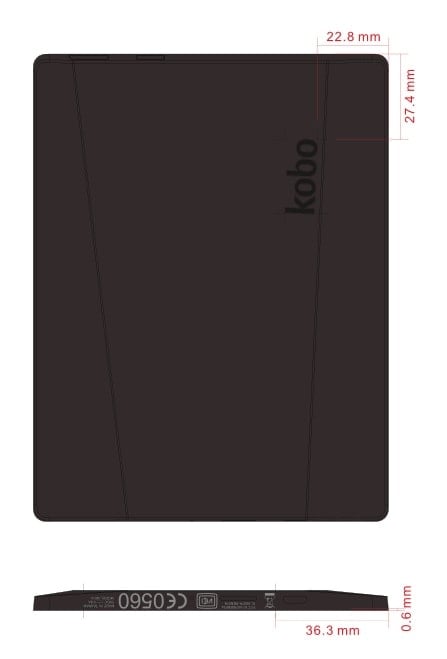
This image told me a lot:

If you look closely you can see that the upper edge includes 2 cutouts. Based on the design of the Kobo Glo, I think one is for the power supply while the other probably controls the front light. And if you look closely at the bottom edge you’ll see a cutout for the microSD card slot and the USB port.

And as you can also see from the image, the overall design of the backside of this ereader faintly resembles that of the Kobo Aura HD, Kobo’s 6.8″ ereader. That suggests that Kobo is no longer working with Ideo, the design firm that crafted the refined appearance of Kobo’s previous ereaders.

That might be a mistake. I and many other people felt that (compared to previous models) the Kobo Aura HD was unpleasant to look at and to hold, with poorer construction quality and a less pleasant hands on experience. If Kobo really did switch to a new designer we could be seeing a lot of rejection this Fall as customers pick up a device and put it back down again with an Ewww expression.

Update: I’ve just learned that photos of the new ereader have been posted to a Chinese language blog by what I assume is an E-ink employee (that’s what his Facebook page implies).

Lookee:

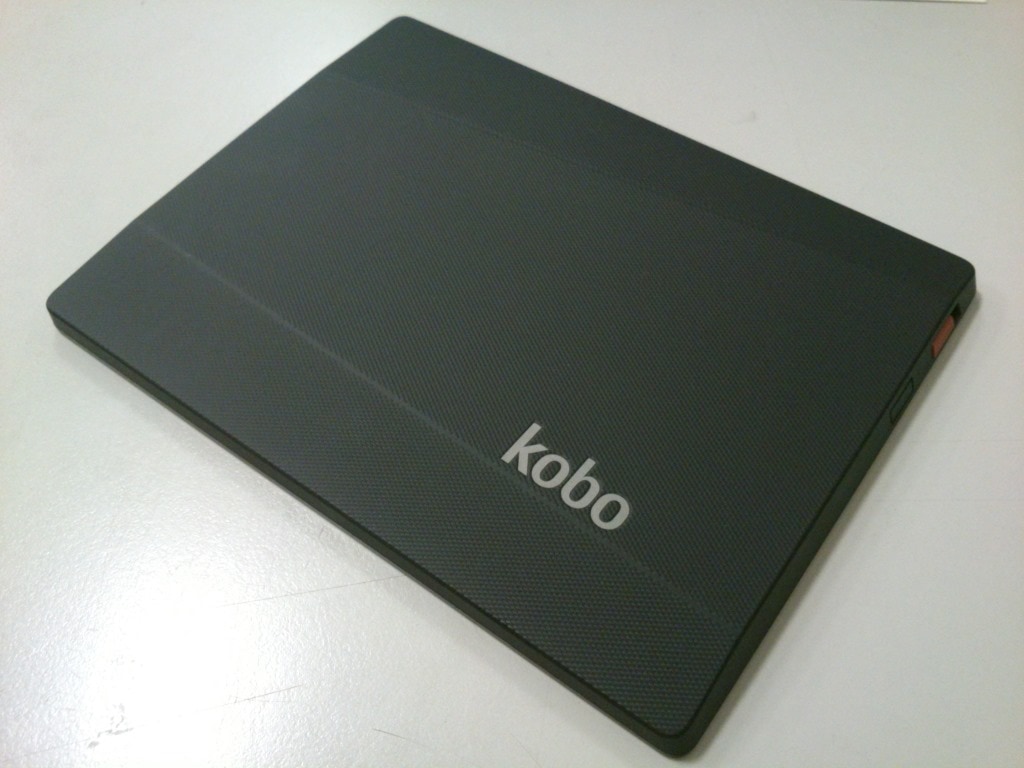
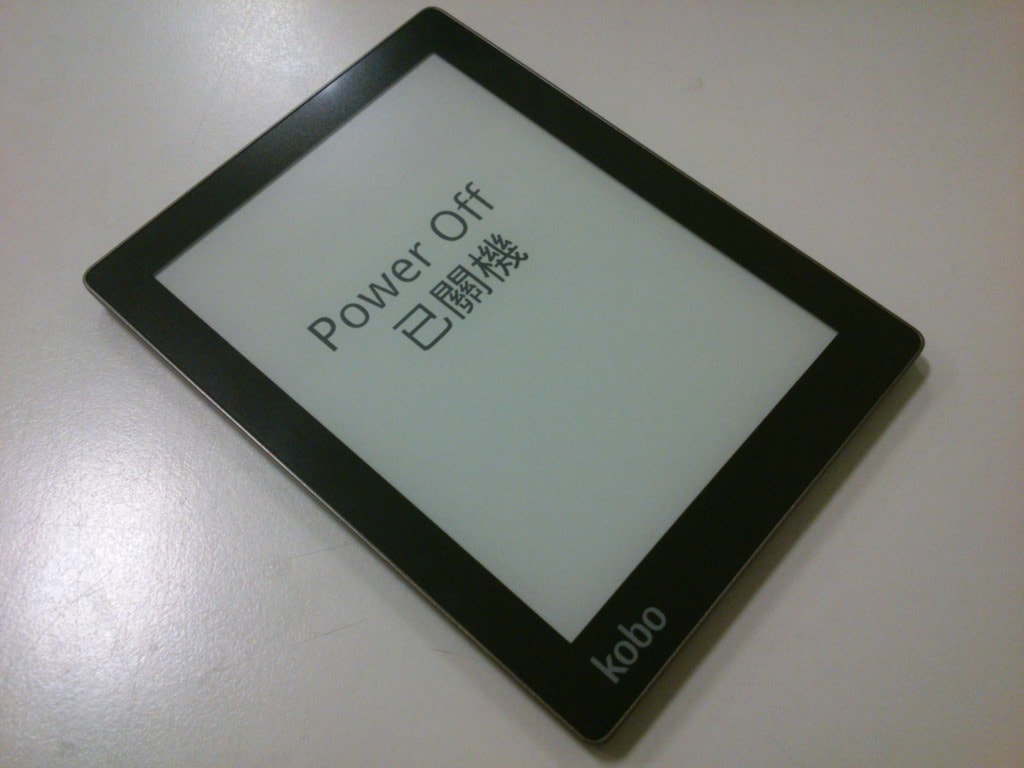
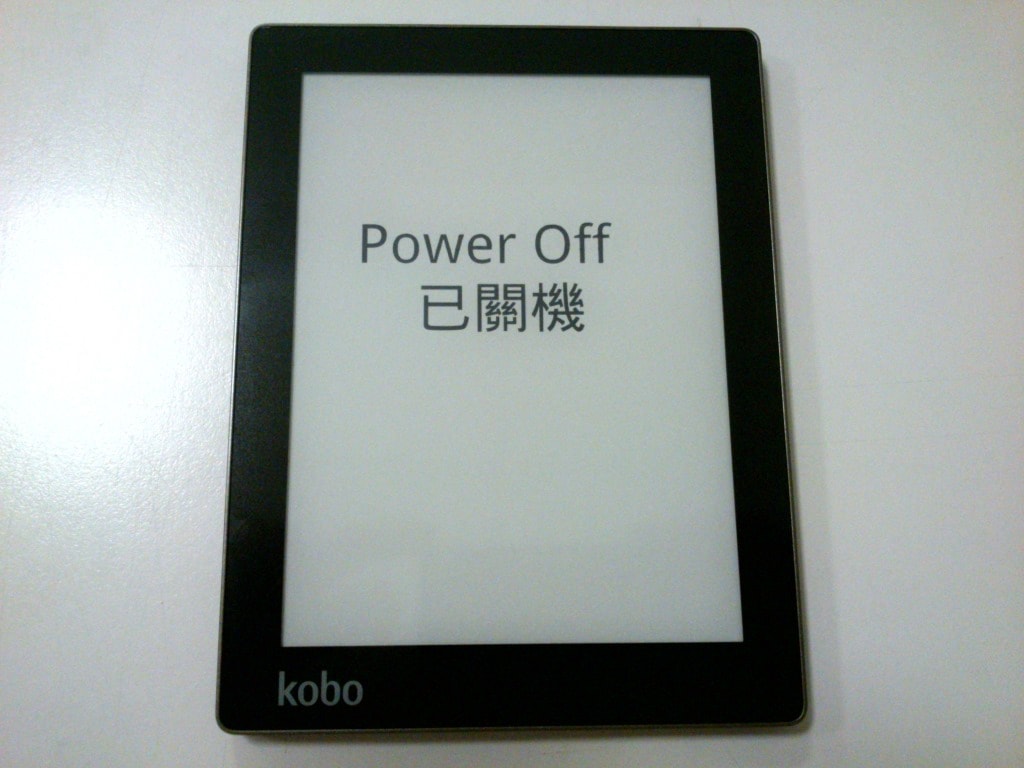
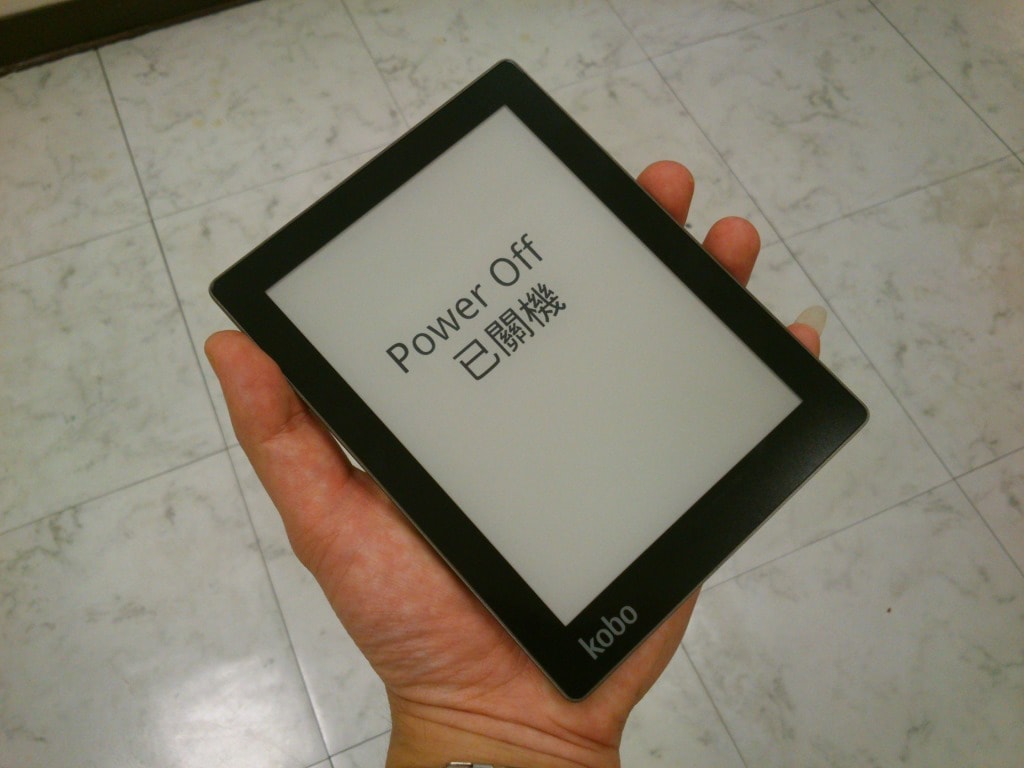
As you can see from this gallery, the new Kobo ereader is going to look nothing like last year’s models. It’s also going to look a lot better than the Kobo Aura HD, thank goodness.

This ereader has the ugly red button for the frontlight found on the Aura HD, but it also has a polished metal front and a textured backside. Clearly this is a more polished design than the Aura HD, thus supporting my supposition that the Aura HD was a rushed design.

FCC (NOIKBN514)

eReaders.nl

New Coursesmart Survey Shows Increased Digital Textbook Adoption, But Not Increased Sales

Coursesmart’s annual survey into gadget ownership, digital textbook adoption, and study habits is out today, and if you don’t know too much about the digital textbook market then the results of the survey suggest a shiny future for digital textbooks.

Here’s last year’s survey, in case you are interested.

A total of 500 students were polled for this survey, though I don’t have info on when or where. The results revealed that virtually all respondents (99%) now own at least one digital device, with laptops (93%), smartphones (78%), and tablets (35%) being the most common.

The section on device adoption also showed that a majority of students (68%) use three or more devices every day. 47% of students say they check their devices every 10 minutes, and 59% of students say they are more likely to bring a laptop or tablet to class while only 41% prefer to bring a textbook.

But never mind hardware; the interesting data is in digital textbook adoption.

In what looks to be a recap of last year’s survey, Coursesmart is reporting today that digital textbook adoption is up as more students are using digital textbooks than ever before. The press release mentions that 79% of students reported using a digital textbook (up from 63% in 2011). Two-thirds of students also reported using digital textbooks frequently.

That sounds great, right?

Well, no.  Coursesmart has been releasing these surveys every year for the past few years, but one topic that they’ve never discussed is whether students are buying digital textbooks.

I suggest that you go read the press release again and look for indications that money is actually changing hands. You won’t find it, and that’s because Coursesmart doesn’t want to have to admit that students aren’t buying all that many digital textbooks.

I can understand why they don’t want to discuss unpleasant like this, but it’s still news and it’s still worth reporting. Luckily for you I have other sources of data.

Last year I relied upon an industry insider’s estimate of the digital textbook market in the US, but this year I can call upon data from a recent BISG/Bowker survey. I reported on the BISG survey just last week, and buried among the useful data was one important statistic.

That survey report showed that only 7.1% of students had bought or rented a digital textbook (in a survey conducted in March 2013).

So Coursesmart is claiming that 79% of students are using digital textbooks, and BISG is reporting that only a tithe of that figure are buying them. Why do you think there’s a difference?

When I wrote about the survey last year I attributed the lower sale rate to increased use of OER textbooks and to piracy:

That’s an awful lot of textbooks that they’re using but not buying. Note that I’m not saying the textbooks are pirated; we don’t know that for sure. A good portion of the unbought textbooks are  probably OER (open educational resource), and those can be legally had for free.

And I have good reason to think that they’re not pirating the content. A recent Bowker survey revealed that students were more likely to be using free and legal content than buying it. That data is from the UK, not US, but the student behaviors should be similar enough that US students likely had the same reasons for not buying.

That could well be true, but I’m not so sure. A year has passed since that blog post and I think that I have gained a better understanding of publishing, digital publishing, and the textbook industry. This has lead me to a different conclusion.

I think Coursesmart’s survey report is a pile of crap.

To put it in a less rude manner, Coursesmart sells digital textbooks. They have a financial interest in only sharing details that make them look good, so they have absolutely no reason to craft a survey that accurately reports the state of digital textbook adoption or the digital textbook market.

I should have said that last year, but at the time I was more interested in looking at the data than in questioning its validity. Now I can look at it and be comfortable is labeling it as bunk from an uncredible source.

Update: And in case you were doubting that label, one reader has pointed out that the research firm  that actually did the polling, Wakefield Research, describes itself as “one of the most experienced PR polling firms in the country” and says “We partner with the world’s most recognizable brands and agencies to craft surveys specifically to generate media coverage. No one knows more about turning stats into stories.”

That just screams impartial, doesn’t it? Thanks, Len!

image by Ed Yourdon

Amazon Launches New Page in the Kindle Store for Refurb Kindles

Amazon has been selling refurbished Kindles for almost as long as they’ve been selling new Kindles, but it looks like they might be planning to step it up.

Andrys Basten has tipped me to a new page in the Kindle Store. Some unnamed engineer at the retail giant has gathered up all of the listings refurbished Kindles and created a new section page in the Kindle Store:

If you click on the screen shot you’ll go to a page with 12 Kindle and Kindle Fire refurbs.  That page appears to be unlisted, and it’s missing all the accoutrement (like the side navigation bar on the left, ads, or suggested items on the right) found on the rest of Amazon’s website. This leads me to wonder if this is simply an unofficial page which wasn’t supposed to be shown to the public.

The tablets and ereaders are priced at $10 to $30 off of retail. Given that we’ve seen the new models go on sale with those kind of discounts, I’m not sure that the prices for the refurbs are really all that great. But on the upside these refurbs come with the same standard 1 year warranty as new Kindles, so in effect these are new Kindles; they’ve just been opened already.

TBH, this isn’t entirely new. Amazon has always listed the refurbs; you just had to know were to look. For example, Amazon’s Warehouse Deals dept has a section for Kindles. And if you knew to check the full listing for a Kindle model, you could sometimes find a refurb listed with the used and new units sold by third parties.

The latest rumors suggest that Amazon is on schedule to launch several new Kindle Fires later this summer, though of course there’s no new info on that story just yet.

Amazon

A Kindle World blog

Dueling Surveys Say 75% of Americans Like Paper Books And 70% Like eBooks

There’s a survey circulating today that reportedly shows that ebooks aren’t nearly as popular as the latest market data would make you think. While some might report that this is a sign that ebooks were overhyped, I’m not so sure this story deserves any attention.

According to a new survey from Rasmussen Reports which was conducted this month, 75 percent of Americans still prefer paper books over ebooks. A mere 15% of the 1,000 respondents to the poll indicated that they liked ebooks over paper books, with about 10% remaining undecided.

That sounds like terrible news for ebook advocates such as myself, and it sounds like potentially the death knell for digital publishing, right?

Well, no. Take a moment and look at how the conclusion is phrased:

A new Rasmussen Reports national telephone survey finds that 75% of American Adults would rather read a book in a traditional print format than on an electronic book-reading device like a Kindle. Fifteen percent (15%) prefer reading on an electronic device. Ten percent (10%) are undecided.

Do you see how it doesn’t say readers or book buyers? That could be an important detail. While I don’t have many specific details about the Rasmussen survey (it’s behind a paywall) I do know that there is readily available survey data that shows that the average book buyer likes ebooks.

BISG released a survey report back in April that showed a significant increase in preference among readers of ebooks for tablets over ereaders. That report also revealed that:

About 82 percent of Power Buyers (consumers who acquire e-books on a weekly basis) say they prefer e-books over print and nearly 70 percent of Non-Power Buyers say they now prefer e- over print.

You’re not supposed to apply any extensive cross analysis of data from different surveys (not without knowing more about the methodology), but it’s safe to point out that the data sets contradict each other and consider why.

If three-quarters of an undefined survey group likes paper but a majority of the actual customer base likes digital, what are the chances that most of that 75% don’t buy very many books in the first place?

I’d say it’s pretty good.

I would tend to think that the buyers are the only ones worth paying attention to, but given the extensive coverage the Rasmussen survey is going to get these next few day I might be the only blogger who figured that out.

Rasmussen Reports

P.S. If someone has access to the data behind the paywall, please let me know if that 75% reflects readers, book buyers, or the general population.  I would really like to know.

image by Roberto_Ventre, bfishadow

Disney Unveils the Next Big Thing in Augmented Reality

If you haven’t gotten enough of augmented reality in books after reading about the Bridging Book, textbooks, or Marvel’s garnishments on their comic books, then you might be interested in the latest project from Disney Research.

A research team located at a Disney facility in Pittsburgh and at Carnegie Mellon University has developed what is probably going to be the next great innovation in gaming controllers.

They have a prototype handheld device that combines a projector with an image sensor. The HideOut, as they are calling it, can use the image sensor to see what it is being pointed at and then respond by changing the image it is projecting:

Okay, this isn’t even close to being an ebook story, but when I first heard about it a few days ago I was intrigued. This concept solves many of the problems I have seen when someone’s tried to integrate augmented reality into books.

By placing the projector and the sensor in the same position HideOut avoids the awkwardness and technical problems that can be caused when AR projects depend upon a computer’s webcam (here, here, here).

And as you can see here, it can work quite well with a paper book:

Of course, the cost of all the extra hardware is probably going to remove any chance that this might show up as a book-related product, but this could still become a gaming controller. That future controller could build on the idea of the Sony Wonderbook, which launched last June,  and the Microsoft IllumiRoom.

That last project is basically the same idea as the HideOut, only scaled up to include an entire room (clearly Microsoft and this Disney/CMU research team have been working in the same direction) while the Sony Wonderbook was a much simpler game for the PS3 that let players cast spells from Harry Potter and see the effects on screen.

I don’t know when we’ll see HideOut integrated into a gaming controller, but I do expect it to happen. If it is produced on the same scale as the XBox or the new PlayStation then the cost will drop significantly. It would also be fun to play with, don’t you think?

Disney Research

Increased Piracy Among College Students Means A Shrinking Market for Digital Textbooks

The Book Industry Study Group (BISG) has a new report out this week on the buying, non-buying, and reading habits of US college students. I only have the press release and not the full report (it costs $$$$), but if the report matches the driblets of info in the press release then I would be trying to exit the college textbook market right now.

According to the BISG, piracy (including photocopying of textbooks) is up among college students. A larger percentage of the survey group reported downloading pirated course content from an unauthorized Web site than in previous surveys. 34% of respondents indicated that they’d done this, from 20 percent when this was first measured in 2010. And just to make things even more interesting, the percentage of students saying they photocopied or scanned chapters of textbooks belonging to other students rose to 31% in this survey (from 21% in 2010).

Update: A friend passed me a few more details, and now I can tell you that this report indicates that faculty are seeing a decrease in adoption of core digital textbooks (30% in Feb 2012 to 16% in June 2013). I can also tell you that piracy has been trending upwards since at least November 2011, with the latest data from March 2013 showing an increase use of unauthorized websites (40%), scanning (37%), illicit sharing between students (28%), and outright piracy (26%).

I would think that the cause of the increase in piracy is obvious, but before I spell it out let me share with you the BISG’s explanation:

"This is important behavior to track, especially since it’s coinciding with other data that show declining student commitment to owning current editions of assigned texts," said Len Vlahos, Executive Director, BISG.

Yeah, that’s not what we’re seeing here.

Students are pirating more textbooks because they can’t afford to buy them. (Do you think they would go through the hassle of photocopying a textbook if they had another choice?) This is part of the reason why digital textbook purchases lag behind digital adoption.

Prices continue to go up every year in the core titles. This is one of the dirty little secrets in textbook publishing, according to one of my industry contacts:

Big pubs averaged approx. double digit price increases on active titles in the last 12 months. By the way, this is one of the publisher tricks when talking about pricing. They may say that their prices are flat or have only increased slightly, but they are including average prices of all books, front and back list, and they often discount or don’t raise prices on the majority of titles. But active titles – big sellers and gen Ed books that represent 80% for revenue – continue to see aggressive price increases.

If I were in textbook publishing I would be getting out of it right now. Thanks to the major textbook publishers, the college textbook market is in a bubble. This is a trend that has been going on for over a decade now as textbook prices rose faster than the CPI, faster than the housing bubble, and even faster than healthcare:

That is not a sustainable trend. And so long as prices continue to increase, the various efforts to encourage adoption of digital textbooks (like the volume license pilot programs of this past school year) will slowly meet with greater and greater resistance as students realize they cannot afford to participate.

Textbook publishers are pushing more and more into digital textbooks and digital textbook rentals. They’re doing it for the obvious reason; there’s no used digital market so there’s no competition from former customers selling off old books.

But as you can see from the survey data earlier in this post, students can’t afford to prop up an unhealthy industry. Instead they are finding other sources, including piracy.

image by allaboutuni2307

US eBook Market Grew by 5% in Q1 2013, AAP Reports

The AAP has put out a new press release today with some tidbits on the the state of the US book market. The data is drawn from the StatShot report, and while I don’t have all the stats available but what I do have is a little startling.

Update: If you came to this post via one of the articles which argued ebook sales are flattening, don’t believe it. That conclusion is wrong, and I can prove it.

The AAP is reporting that the 1192 publishers which submit their sales data to the AAP did not see a significant increase in the ebook market in the first quarter of this year. Sales of adult ebooks increased by 13%, but children’s ebooks dropped by 30% (religious ebooks held steady).

The overall ebook market grew from $374.8 million to $393.6 million, or about 5%. That is far below the growth reported in previous years, but it is still good news. The AAP also reported the total reported book sales dropped by 4.7% (from $1.5 billion to $1.4 billion) thanks to a severe drop in the children’s and YA segment (24.6%).

In that context the 5% growth is not bad. Audiobooks also increased by 14% ($24.8 million to $28.3 million), so there is some good news.

In spite of the spectacular growth of ebooks in 2008 to 2011, we all know that eventually the ride would come to a stop as the growth of ebook market share slowed. TBH I didn’t expect it to happen so quickly.

Of course, these statistics only represent publishers sending their data to the AAP and not the entirety of the US ebook market. One can still hope that indie pub saw better growth than this.

For those who are interested, here is the data:

image by historygradguy

Amazon, E-ink, Sony, and B&N Are Being Sued for Patent Infringement

It’s only been a couple days since E-ink disentangled themselves from the infringement lawsuit filed by the patent troll Copytele, and it looks like E-ink is back in the thick of it again.

A new lawsuit has just been filed by Research Frontiers. This is a publicly traded research firm based in Woodbury NY, and they are claiming that E-ink’s screen tech infringes upon a couple patents owned by Research Frontiers:

In this lawsuit, Research Frontiers asserts infringement by the named defendants of United States Patent No. 6,606,185, entitled “SPD Films and Light Valves Comprising Liquid Suspensions of Heat-Reflective Particles of Mixed Metal Oxides and Methods of Making Such Particles,” and United States Patent No. 5,463,491, entitled “Light Valve Employing a Film Comprising an Encapsulated Liquid Suspension, and Method of Making Such Film.”

You can find the patents here and here. I skimmed the filings, and the technical details describe a technology that is so different from what I know of E-ink’s screen tech that  it’s not clear to me how E-ink’s  screen tech infringes (or even if the tech infringes at all).

Other details are easier to explain, though. For example, E-ink’s customers are being sued for contributory infringement (definition).  This lawsuit is based on the theory that Amazon, B&N, and Sony bought screens from E-ink knowing that the screens infringed on the patents.

Or at least that is what Research Frontiers would have you believe; this also has the appearance of a troll going after the deepest pockets. (Why Rakuten/Kobo was left out, I do not know. Perhaps they settled.)

E-ink reported revenues of close to 900 million USD last year, with a gross profit of around 93 million USD (according to Bloomberg). The revenue is down from a peak of 1.3 billion USD in 2011.

I unfortunately don’t have any first hand knowledge of whether this lawsuit has any merit, so at this point I will invite comment from anyone in the screen tech industry.

But one detail I can provide is that this lawsuit isn’t as newsworthy as it might appear. This type of lawsuit is so common in tech that it is almost background noise for the major tech companies like Amazon, Google, Yahoo, etc. Check out the 10-k filings for those companies and you’ll find boilerplate mentions of being sued for patent infringement. In fact, this is so common that I think Amazon is the only one that even lists the ongoing lawsuits any more.

image by saschapohflepp

E-Ink.info

eReader Adoption Reaches New High In Germany

It looks like ereader adoption might be about to take off in Germany. A new report is out this week that suggests one in twenty Germans own an ereader.

According to a survey conducted for the Allensbacher Markt- und Werbeträgeranalyse 2013 report (AWA 2013), 5.2% of Germans over the age of 14 now own an ereader. The survey also showed that another 3.5 were considering buying an ereader, and that 6% of respondents indicated that they had bought an ebook in the previous year.

These questions were asked as part of a general survey into consumer buying habits, and it also showed that 7.4% of respondents had bought an audiobook in the past 12 months. Yes, audiobooks are more popular in Germany than ebooks, a trend which is the inverse of  the US market. Nearly 3 out of 5 respondents had purchased a book in the past 12 months, and about about 1 in 6 read books every day. Another 21% read books several times a week.

This 5% adoption rate places Germany far behind the US, where (at last count) 26% of US consumers owned an ereader. But it also puts ereader adoption in Germany far ahead of France, where according to the latest data GfK estimates that approximately 500,000 ereaders are currently in use.

Alles eBook

image by jepoirrier

The Scholarly Kitchen Joins in on the Amazon Bashing

It’s a sad day in the blogosphere. The Scholarly Kitchen, a blog that used to be known for the merit and quality of their posts, joined in the Amazon bashing earlier today.

There’s a new blog post on TSK today that claims, using poorly researched, poorly reasoned, and factually incorrect arguments that the Apple Ebook Ruling is a Loss for Publishers, Authors, and Readers.

I have gotten several requests on Twitter to debunk this post, which I am more than happy to do.

Let’s start in the third paragraph:

Amazon (who is at the crux of this story) sells ebooks under the wholesale model. This means that they can set prices as they wish, usually at $9.99. They can sell the title for $9.99 even if their agreement with the publisher stipulates that they must pay the publisher a royalty of more than $9.99.

Yeah, that’s simply not true nor has it ever been true. Repeating an urban legend doesn’t make it any less false.

Meaning, Amazon chooses to lose money on many of the books it sells, a fact documented in the Department of Justice’s (DOJ) suit (see page 17 of the ruling).

What the blogger fails to mention is that the ruling mentioned also notes that Amazon also consistently made a profit on ebooks. See my post on loss leaders for quote and a link.

Here is the catch. Some books are niche titles, such as those published by university presses or other independents. They don’t sell enough copies to recoup their costs at $9.99.

Except that Amazon has never sold niche titles at $10. Also, even if Amazon had sold them that cheaply under the wholesale model the publishers would have recouped their cost while Amazon lost money.

Other books, such as those by bestselling authors sold by larger publishers, can command high prices that are needed to offset the losses such publishers incur on other titles. This is why different books have historically had different prices and why niche titles and blockbusters (at least when the first come out) often cost more.

Which is why Amazon sells a few ebooks for $10 and others for more than $10. Don’t believe me? Go check; I’ll wait.

But because Amazon chooses to sell an ebook at $9.99 (or whatever price they like), the ebook can’t be sold anywhere else for more.

Yeah, that’s simply not true. See my takedown of the Salon piece from last week for a detailed explanation.

Who is going to buy the ebook for $19.99 via the publisher’s site or Barnes & Noble or anywhere else when they can get it via Amazon for $9.99?

Answer: People who don’t have a Kindle or people who already buy most of their ebooks elsewhere by intelligently taking advantage of sales (Amazon doesn’t always have the lowest price).

Amazon is selling the book below cost to forestall competition in ebook distribution.

If that were Amazon’s goal then it was an utter failure. See my post on loss leaders for an explanation.

Jobs therefore knew this game well and knew he had no hope of competing against Amazon in ebook distribution as things stood without touching off a price war and losing money on every sale (which he could have afforded to do but that just isn’t how Jobs rolled). Jobs needed to change the playing field.

Nope. Apple didn’t have to have an ebookstore.

The thing about Apple is that they don’t care if they sell much content via iBooks and iTunes. When it comes to mobile, Apple makes most of their money selling iThings, not the content consumed on them. I’m surprised how many people forget that.

Five of the so-called “Big Six” trade publishers (Hachette, Penguin, HarperCollins, Macmillan and Simon and Schuster) agreed to Apple’s terms (Random House was the only large publisher who did not participate at the time of the iPad’s launch). The publishers then went back to Amazon and used the deal with Apple, and the hype around the new iPad, to pressure Amazon into accepting an agency model on the same terms as Apple, ceding more pricing control to publishers (and the free market).

The bold section contradicts itself by confusing basic concepts of economics. Let me explain using terms from Economics 101:

When publishers order sellers to set prices we have a command market, not a market where sellers are free to set their own prices.

This, says Judge Cote (page 9), constituted a “conspiracy” to raise prices.

The conspiracy comes in when Apple and the 5 publishers were discussing each other’s negotiations (see the email records). That makes this less 5 publishers in negotiation with Apple and more a collaboration between 6 parties.

To put it simply, a bunch of competitors were jointly discussing how they might all set the same market prices. How is that not an anti-trust violation? It sure as hell looks like one.

Due to browbeating by the Department of Justice and fear of a protracted suit and punitive fines, all five publishers settled out of court and agreed to reinstate the wholesale model with Amazon for at least two years. …

What this means is that anyone wishing to enter the ebook distribution space will face an ebook pricing war against an entrenched competitor that is willing to sell at a loss, propped up by a seemingly limitless supply of cash from investors who do not seem to care about margins so long as market share is growing.

It’s been some 10 months since the first agency ebooks went wholesale. When is that ebook pricing war supposed to start, exactly?

It didn’t start that day, that’s for sure. Ask anyone and they will tell you it hasn’t started yet. In fact, Penguin ebooks went off agency today, and Amazon isn’t offering many huge discounts.

Guess what? Amazon doesn’t even have the lowest prices. Jeff Bezos must be some kind of genius if he’s going to win an ebook pricing war with higher prices.

Update: I’ve just done my own spot check and Amazon almost always had the lowest price. Only a few of the discounts are more than 10% to 15%, though, and many titles are priced above $10.

The result is likely to be an ebook market (at least in trade publishing – professional and scholarly publishing is a different matter) with little innovation – why would anyone bother? Not only must a new entrant invest in new technology, negotiate complex, multi-national rights agreements with publishers, and market their new product to consumers, they must then slog it out in a price war.

The problem with this argument is that it ignores the possibility of innovation from anyone other than traditional retail channels.

Never mind alternative business models like rentals; this argument fails to factor in the ebookstores that have been launching in the past year or so that are based on novel book discovery concepts. If that’s not innovation then I don’t know what that word means.

In case anyone thinks that this is overstating the bleakness of the situation, I direct you to the recent departure of Barnes & Noble’s CEO, William Lynch, a former Palm executive who was brought into the company to grow their reader business, in what Reuters called “an acknowledgement that its digital division Nook has failed to compete successfully in the e-reader and tablet markets“. Furthermore, after reporting that Nook sales dropped 34%  last quarter, the company announced it was pulling the plug on its hardware division.

The problem with pretending that B&N’s troubles are all the fault of Amazon is that the Nook was a troubled platform a year ago – you know, when agency pricing was supposed to protect everyone from evil Amazon.

Do you think there’s a chance B&N might be to blame for B&N’s troubles?

This view of Amazon’s strategy is shared by publishers as evidenced by the recent Penguin/Random House merger, completed just last week, which reduces the Big Six to the Big Five. The primary motivation for the merger is reportedly to establish a publishing house with enough size to have leverage with Amazon. More mergers may be yet to follow. And while such consolidation may indeed improve the publishing industry’s leverage with Amazon, there are consequences for readers as Boris Kachka observes in an op-ed in the New York Times. These may include lower bids on author manuscripts, few options for authors, more homogenized titles (you think there are too many vampire novels now), and a even greater focus on genres and blockbusters.

Bigger conglomerates mean more overhead thus reducing what can be spent to actually acquire new manuscripts, and it’s all Amazon’s fault.

Yep. Amazon held a gun to the heads of Penguin and Random House and forced them to merge.

—

The piece goes on to repeat itself in the conclusion, but I see no reason to refute it again. There’s absolutely nothing of merit here.
Loss Leaders, Predatory Pricing, and Why Amazon Isn’t the Defendant Today

So Apple finally lost the price fixing lawsuit today, an event that surprised almost no one. What with Apple’s 5 co-conspirators having already settled, a settlement already in place in Europe, and the solid case presented by the DOJ, there was little chance that Apple was going to win.

But there is one question that seems to still be circulating today. A lot of people, including one in my comment section, wonder why Amazon was not on trial today. After all, Amazon’s pricing policy is clear evidence (in some minds, at least) of their nefarious plans to destroy their competition.

Today I thought I would take some time and point out the difference between what Amazon’s actual pricing policies and what many assume to be those policies.

First, a couple definitions.

Loss Leader

  • A loss leader, or simply a leader, is a product sold at a low price, at or below its market cost to stimulate other sales of more profitable goods or services. Using a loss leader, often a very popular good or service, is a type of sales promotion—a marketing strategy that focuses on pricing strategy.

Predatory Pricing

  • The practice of selling a product at low prices in order to drive competitors out, discipline them, weaken them for possible mergers, and/or to prevent firms from entering the market. It is an expensive strategy. In the United States there is no legal (statutory) definition of predatory pricing, but pricing below marginal cost (the Areeda-Turner test) has been used by the Supreme Court in 1993 as a criterion for pricing that is predatory.

The thing is, many people are pointing at Amazon offering loss leaders and proclaiming that Amazon is engaging in predatory pricing. I have lost count of the number of times that I have heard or read that Amazon is trying to drive their competition out of the ebook market, with the subsequent goal of raising ebook prices.

There are several problems with that claim, the first of which is that there is absolutely no evidence to support the allegation. In fact, if this really were Amazon’s goal then for the past 5 plus years they failed utterly to accomplish it.

Rather than see competitors abandon the ebook market, we have seen many, many companies get into ebooks since Amazon launched the Kindle Store in November 2007. Amazon has largely pursued the same ebook pricing policy since they opened the Kindle Store (with the exclusion of agency ebooks), but in spite of Amazon’s predations they now have more competitors than before, including:

  • B&N
  • Kobo
  • Google
  • Samsung
  • Apple
  • Baker & Taylor

Update: A reader reminded me that Samsung, Sony, Apple, and Google are not in the ebook market to make money from ebooks but to support their other businesses. I have said that before, but I’m bringing it up again because these are competitors that Amazon won’t be able to drive out of the ebook market. Here is why.

Another issue with the claim that Amazon is engaging in predatory pricing is that Amazon is continuing to pass up an opportunity to sell Epub ebooks. Surely if Amazon wanted to drive out the competition then they would pursue the potential customers that own non-Kindle ereaders, right?

Funny how that hasn’t happened in the 3 years since Amazon stopped trying to turn a profit on hardware, isn’t it?

But never mind the evidence of your own eyes; let’s instead look at what the Dept of Justice concluded after investigating Amazon, Apple, and the price fixing conspiracy.

As you might recall, last September Judge Cote issued a ruling that signed off on the proposed settlement between 3 of the conspiring publishers and the DOJ. In that ruling (PDF) Judge Cote dismissed the many claims made by publishers and others that Amazon was engaging in predatory pricing:

Second, the Complaint asserts that Amazon’s e-books business was “consistently profitable.” Moreover, to hold a competitor liable for predatory pricing under the Sherman Act, one must prove more than simply pricing “below an appropriate measure of . . . costs.” There must also be a “dangerous probability” that the alleged predator will “recoup its investment in below-cost prices” in the future. None of the comments demonstrate that either condition for predatory pricing by Amazon existed or will likely exist. Indeed, while the comments complain that Amazon’s $9.99 price for newly-released and bestselling e-books was “predatory,” none of them attempts to show that Amazon’s e-book prices as a whole were below its marginal costs.

The tl;dr version is that Amazon has always made at least some money on ebooks, and that means there’s no proof that Amazon’s pricing policies meet the definition of predatory.

And that, my dear, is the short answer for why Amazon isn’t on trial.

image by edenpictures