Google Tells Wired Why Google Reader Was Axed, Reveals That They Don’t Understand How We Discover News Articles

Wired has a new article this morning on Google Reader, and it might be worth a read. They scored an exclusive interview with Richard Gingras, Google’s Senior Director of News & Social Products.

This article is Google’s attempt at spinning the shut down of Google Reader (now only 24 days away), but in trying to come up with an explanation why the Readerpocalypse was a good idea, Google has actually revealed just how little they understand about how we read, and how we find content to read.

But there’s another reason Google decided to put its RSS reader to death. According to Mountain View, most of us simply consume news differently now than when Reader was launched.

“As a culture we have moved into a realm where the consumption of news is a near-constant process,” says Richard Gingras, Senior Director, News & Social Products at Google. “Users with smartphones and tablets are consuming news in bits and bites throughout the course of the day — replacing the old standard behaviors of news consumption over breakfast along with a leisurely read at the end of the day.”

That may well be true, but it doesn’t account for the sources we use to get that news. I read news all throughout the day, and I still use a news reader to do so.

But apparently Richard thinks I am doing it all wrong. According to Google we should be getting our news from Google Now and Google Plus:

Google Now‘s approach is to leverage artificial intelligence techniques to learn your tastes and habits so it can deliver headline news you’ll want to read, when you want to read it. Since it’s on mobile, it can take advantage of device sensors to consider data like your location, the time of day, and whether you’re stationary or on the road. Over time, it will learn, for example, that you like to get the top headlines during your 8 AM commute, and that you prefer stories about politics and food. If this worked perfectly, it’d be an extraordinarily efficient way to get the news. But to start, it still has to learn your preferences, and — far worse — it’s not available on many Android devices yet (oh Android fragmentation, you rear your ugly head again).

While Google Now caters to your breaking news needs, Google+ steps in for more leisurely interest reading. Google has been trying to push Google+ as a social media news source (instead of Google Reader) since 2011. At Google I/O last month, Google+ gained some functions that make it smarter about surfacing articles and images readers might be interested in checking out. Say someone posts an article on Google+ that you like. Tap (or click) it to flip it over and see an automatically generated list of related hashtags that you can click to get more related content. In this way you can explore varied sources you otherwise wouldn’t know about, or get deeper knowledge on a subject you’re interested in.

I choose to be amused by this rather than pissed.

I have to be amused by this, because otherwise I would be bothered by the suggestion that I use Google Now. It does not support web browsers (only mobile apps), making it a giant F*** You from Google.  Apparently I am not supposed to be using a web browser any more, not for reading, not for work, not for anything.

And even if I could use Google Now, there’s no way that it can match my ability to sort through the feeds and find the articles worth sharing. My reading interests are based on decades of reading, and that cannot be emulated in days, weeks, or even after years of using a service like Google Now.

And as for Google+, don’t get me started. Seriously, if a social network could provide my news sources don’t you think I would have switched over by now?

So far as I can tell Google has not yet figured out that social networks get news links from news junkies, most of whom use a news reader of one kind or another. Basically the very people who feed links into Google+ are the ones that are being harmed by the shutdown of Google Reader.

But you don’t have to take my word for it; instead consider the millions of people that have fled to GR alternatives like Feedly, or the numerous services that have come out of the woodwork since Google Reader was EOLed.

And here’s one that will knock your socks off. If no one uses news reader apps any more then Why the Hell is Digg scrambling to launch a replacement to Google Reader?

Seriously, Digg is throwing resources at a product that Google claims no one will want to use. Given all that I have seen going on for the past 4 months I think that claim simply does not hold up to scrutiny.

I am going to have to agree with the general sentiment on Twitter. Google is doing their best to spin a bad decision, but sadly the excuses quoted above are the best they can come up with.

Sony Adds New "Family Tree" Marketing Tool to the Sony Reader Store

Sony is building something of a reputation for unusual ebook marketing tactics, and this week they added a new trick to their repertoire. They’ve adapted the infographics that were first debuted in April and turned them into a 'family tree" that shows you a book’s literary lineage.

Sony has released several infographics, with one focused on general fiction and mystery genre and another that combines romance and and Sci-Fi. That latter infographic is particularly entertaining.

The Sci-Fi family tree is a rather curious one, and it includes inbreeding, infidelity, and other Jerry Springeresque connections. For example, someone at Sony Reader Store listed the fantasy novel Game of Thrones as being the child of Total Recall and A Wrinkle in Time. Who do you think was being cheated on, I wonder? And then in the next generation The Hunger Games has an incestuous relationship with its cousin Game of Thrones to produce The Fault in Our Stars.

I do not mean to cast aspersions on a person’s family history, but whoever designed this family tree has serious issues. I was under the impression that family trees were supposed to fork, not merge. (No hillbilly jokes, please.)

Over the past year Sony has been making a serious investment in their ebookstore. They have released a new reading app that supports Epub3, added expert reviews, and started working on new ways to market ebooks to readers. It’s pretty clear that their primary goal is less to make money on ebooks and more to cash in on the content sold on their hardware, but they are still a presence in the market.

Onyx Shows Off E-ink Android Tablets, Teases a Color E-ink eReader at Computex

Computex 2013 kicked off this week in Taiwan and Charbax is there to go hands-on with the latest gadgetry.

For some time now I have been talking about Onyx’s 6″ Android tablets with E-ink screens and their E-ink smartphones, but today I have something new to show you.

Yesterday Charbax caught up with Onyx and got the first look at their prototype 8″ color E-ink ereader. Yes, Onyx is going to match Pocketbook and release a new ereader that uses the Triton 2 with a frontlight.

As you can see in the image at right, this is a very early prototype that is, I kid you not, held together by black tape. This thing doesn’t even have a case yet; even the speakers are bolted to the development board.

Charbax also got to play around with several of the unreleased E-ink Android tablets. That’s not exactly new, but he did uncover at least one detail that makes this video worth watching. Early in the video, he shows that the tablet has an awfully fast page turn.

Later in the video he plays a game of Angry Birds on an E-ink tablet. This screen was refreshing fast enough that I am pretty sure it was fast enough for video (30 frame per second). That is simply amazing, especially considering that this time last year you could only do video with a hacked ereader.

The Onyx rep also confirmed the screen resolution on the new E-ink smartphone. That device has a screen resolution of 800×480. That is a detail that E-ink wasn’t ready to reveal yet when I spoke with them at SID Display Week in Vancouver. Oops.

Onyx is also working on a 9.7″ ereader, and I have heard elsewhere that they are planning to release a 13.3″ device that uses the new Mobius screen.

Amazon Now Hiring Kindle Sales Reps, Also Recruiting Indie Bookstores

Editor’s note: No, this is not a delayed April Fool’s Day joke.

When I caught up with Kobo at BEA 2013 last week they made a big deal about how their ABA member partners were having a positive effect on their ebook sales. It seems Amazon has also noticed Kobo’s success, because the retail giant appears to be building a similar network of retail partners.

Update: Amazon officially launched the program in November 2013.

Reports have been coming in for the past week that Amazon is trying to recruit indie bookstores to sell the Kindle. The first to report this shocking news was Los Angeles-based Skylight Books.

This indie bookseller posted on their blog last week that they got a call from an Amazon rep:

so i got a phone call today from a representative of Amazon! apparently, he was given the task of reaching out to independent bookstores in order to ‘build’ a ‘relationship’ with the indies in order to ‘partner’ with us in a program to sell Kindles in our store…yea, really. so, in my most incredulous voice i asked him if he was serious and stated flatly that we wouldn’t be interested.

I haven’t been able to confirm the accuracy of this story, but other sources have indicated that this isn’t the only bookseller to be telemarketed by Amazon. One report even lead back to an email for the Amazon Kindle Wholesale Team. That in and of itself is not newsworthy (I knew of that team already), but it does provide convincing supporting evidence that this story is true.

Update: Shelf Awareness beat me to this story this morning, and they have a second bookseller who reports that he too was contacted by an Amazon rep.

But we now know for sure that Amazon has approached at least one other independent bookseller about selling Kindles. Roger Page, co-owner of Island Books, Mercer Island, Wash., was standing near his wife, Nancy, when she fielded a call like the one made to Skylight Books. "I believe they mentioned the word Kobo and said they could offer competitive prices," he said, adding that he suspected the caller was "somebody low down on the totem pole" and describing Nancy’s response as "very firm."

But never mind the unconfirmed story; there are other signs today that Amazon is much more interested in brick-and-mortar stores than they used to be. I have discovered new job listings on the Amazon website for field sales reps for the Kindle.

Amazon is currently looking to fill 10 different positions for a "Field Sales Representative – Kindle" (as well as a management position). The locations for the sales reps are spread across the US and are focused on major metro areas like Seattle, NYC, Los Angeles, Orange County, and San Francisco.

So far as I can tell these listings are brand new; they certainly weren’t there when I was researching a related story in late April. The job is a part time position with duties including being a Kindle evangelist, leading training sessions, and so on. There’s not much in the job descriptions that is really all that unusual for a sales rep, but there is one line that caught my eye:

Participating in assisted selling activities on weekends at select retail locations

That seems a little intense when compared to Amazon’s past interest in retail sales, don’t you think?

So far as I know Amazon had previously focused their efforts on getting into retail chains like Staples, Target, Microcenter, and the like.  But that task doesn’t seem to fit with the impersonal sales of a major retailer.

Instead, I think that "assisted selling activities" would more closely describe pitching the Kindle at book fairs, author signings, and other more personal events. You know, the kind of events that a bookstore might run.

I’m not suggesting that Amazon will have much luck in convincing bookstores to sell Kindles, but I do think they are working towards that goal. And Amazon has convinced Waterstones to be their partner in the UK, so this clearly isn’t impossible.

And it would also be a good idea. Over the past year Amazon has lost a number of retail partners as major retail chains have decided to stop pimping for their competition. Both Target and Walmart stopped carrying Kindles in 2012, costing Amazon shelf space in thousands of retail stores.

Still, the bookseller at Skylight Books is probably a good example of the response Amazon will receive. This bookseller asked that Amazon fulfill a couple requirements before he would agree to be a partner:

  • Amazon has to stop its predatory business practices such as undercutting the prices of an entire market of products (books) that they themselves do not depend on for revenue and/or creating sleazy apps that encourage people to buy from Amazon while they’re actually standing in a bookstore.
  • Amazon needs to start paying sales tax in all 50 states of the union and stop sucking all the money out of every community they infiltrate.

I don’t see that happening, do you?

P.S. I am still trying to find out more about this story, and I am waiting to hear back from Amazon. If you know of an indie bookseller who has been contacted by Amazon, please let me know in the comments.

US eBook Market to Eclipse Paper Book Sales By 2017, and Other Nonsense

The tea leaf readers at PricewaterhouseCoopers are back aging this week with more predictions for the future of the ebook market.

According to their latest peyote-inspired predictions, the ebook sales in the US book market will eclipse paper book sales by 2017:

In its annual “Entertainment & Media Outlook,” set to be released Wednesday, PwC (PricewaterhouseCoopers) estimates that trade (consumer, not educational or academic) ebooks will drive $8.2 billion in sales by 2017 — surpassing projected print book sales, which it thinks will shrink by more than half during that period.

I found out about this prediction via paidContent (they got an early look at the data), and I can’t help but roll my eyes at the idea that anyone is taking it seriously.

The thing about this prediction is that PwC said almost the exact same thing last year. Here’s how paidContent put it:

New data from PwC’s media report projects that e-books will make up 50 percent of the U.S. trade book market by 2016.

This was confirmed in other reports, in case you were wondering.

I don’t know about you, but if PwC is going to repeat the same 4 year projection for a second year in a row then I am going to tend to think they’re full of it.Whatever model they are using to make those predictions is clearly inaccurate and cannot be trusted.

And that’s not even the only serious discrepancy about their data; their short term predictions were off by a ridiculous amount. Last June PwC said that their projection for the 2012 US consumer ebook market would hit $4.3 billion. Yesterday PwC said that same market only hit $3.3 billion in 2012.

Their short term projection missed by a billion dollars. That is a 29% difference between the prediction and the reality. While that might not be much of a difference to a govt accountant or an analyst out here in the real world it is ridiculously huge.

Seriously, how can anyone talk about these projections and keep a straight face?

The Past, Present and Future of Fan Fiction (Infographic)

Earlier this week Wattpad released a new infographic that looks at the rise of fanfic, and its growing popularity among writers and readers.

The world’s largest online writing community has been supporting its members in their efforts to write fanfic for years before Amazon launched Kindle Worlds, and that puts them in a unique position to chart the growing number of stories written by fans. Wattpad reports that they currently have over 4.7 million fanfic titles uploaded to their website set in more universes than you can shake a stick at.

The infographic also confirms my suspicion that one of the earliest examples of fanfic were Sherlock Holmes stories. This iconic character even has his own fan fiction writing groups, the first of which was founded in 1934.


source

Mpico Plans to Bring Wireless E-ink Screens to Smart Cards & ePaper Labels, Could Beat Amazon to Market

E-ink got a lot of press the week before last with the announcement of a couple new shelf label systems, but they’re not the only ones taking this screen tech to places you would not expect.

While I was in Vancouver for SID Display Week I spent a few minutes with Peter Slikkerveer of Mpico. He was showing off the prototype for a new epaper label system that could potentially replace smart cards and luggage labels. These new labels are wireless, battery-less, and have a screen which can be updated remotely.

I met the Mpico rep at the Innovation Zone, an area set aside for single table demos. This company has developed a way to integrate a small E-ink screen with RFID chips.

An RFID tag is a tiny chip that is both read and written via a remote scanner. Have you ever simply waved your credit card at a scanner in order to make a payment, or gotten an E-ZPass for paying tolls on highways? That credit card, and the E-ZPass transponder, have RFID chips inside. If you’ve ever chipped your dog, then that dog also has an RFID chip inside.

As you probably know, an RFID chip is read by a remote sensor that transmits a signal to the chip and reads the signal that RFID chip sends back. Mpico has come up with a way to use the transmission from the remote sensor as a power source for an E-ink screen.

They had a number of different prototypes on display in Vancouver, including both long range and short range solutions. The short range would work best for smartcards, while the long range could be adapted to work on luggage labels and other places where we currently use disposable paper labels.

The smart card prototype (and requisite sensor) is at right. It doesn’t look like much at the moment, but that’s because this is a lab prototype, not a pre-production unit.  Naturally it’s a lot sturdier than the card which would be used by consumers.

It has a 1.5″ segmented E-ink screen which can display a date, and is really only intended to show off the idea. It would also be possible to instead give this smart card a different screen – perhaps one that could show the amount of credit left on an account.

The longer range solution is good to a distance of about 2 meters:

The black bar on the right edge of the table is the sensor, and the device on the left end of the table as well as the one in the middle next to the laptop are the labels.

Here’s a better view of one of the labels. As you can see, it shows a bar code, a 4 digit airport code, and a third line of text which can be adapted for a variety of uses (passenger name, for example).

Mpico is looking for a vendor partner that is interested in bringing this platform to market. Let’s hope they release it before Amazon debuts their own solution.

No, that isn’t just name-dropping; Amazon is working on a very similar technology.

Just over a couple months ago Amazon was awarded a patent for a wireless, battery-less ereader concept which received power and data from a remote base station. I didn’t think much of the patent at the time because I didn’t think a large E-ink screen could receive enough power to operate, but now that I have seen Mpico’s solution in action I am not so sure.

Amazon could indeed be working on a wireless, battery-less ereader for the academic market. If the screens are kept in the classroom and stored in a cart, that cart could also double as the transmitter and controller for the system. The screens could be passed out to students and then handed back in at the end of class.

Update: Mpico got back to me on the battery-less ereader idea, and they don’t think it’s possible either. The power requirements for say a 6″ screen are too high.

I still don’t think there’s much of a need for a battery-less ereader as an ereader, but that’s not the only thing Amazon could do with their tech. I would bet that Amazon’s solution could be adapted to serve the same purposes as Mpico’s labels. What’s more, Amazon has a direct interest in epaper labels. Can you imagine how useful this would be in Amazon’s warehouses? They could put a label on every single bin and update the label as the contents of the bin are changed.

Would anyone care to bet on which system is deployed first?

How to Get an Epub3 eBook on the Market – June 2013 Edition

If you’ve been following the publishing news of late then you’ve probably heard plenty about how great and wonderful Epub3 ebook format is. It slices, it dices, and it even makes Stephen Fries.

But if you’re like me then you could be lacking any real info on the how, the where, and the who of making Epub3 ebooks and distributing them. That’s why I took time today to go around to various booths at BEA 2013 and ask which of the conversion and distribution services are currently handling EPub3.

Update: Bill McCoy has reminded me that there is an existing spreadsheet that shows which ebook platform supports which Epub3 feature. It’s maintained by the BISG and can be found here.

I may have missed a name or two, so feel free to mention them in the comments.

Vook

This 4 year old company has long since pivoted away from publishing enhanced ebooks and is now a production and distribution service. Vook currently distributes ebooks to all the major ebookstores, but their Epub3 distribution is limited to iBooks, Samsung Reader Hub, and Sony Reader Store. Vook also supports the Kindle Store, though it is not clear just how many features are supported.

Aquafadas

Like Vook, Aquafadas is an ebook production and distribution service. I don’t think I was able to get a complete list of where they can distribute Epub3 but I was told that the list includes iBooks and the Kindle Store (more on this later).

AerBook

This service boasts of making an Epub3 picture book for KF8 and iBooks. It also lets you make Epub and other formats but does not support distribution.

Flipick

This is a relatively new distributor that launched back in January, They can take an InDesign file and convert it to a fixed layout Epub3 which can be sold in iBooks, the Kindle Store, and (coming soon) the Sony Reader Store.

Circular Flo

I don’t have as much info on this company as on the others, but I do know that it offers an InDesign to fixed layout Epub3 conversion service. They boast that their output will work in iBooks, and the Kindle Store.

Inkling

This textbook distributor supports Epub3 in their own platform and offers their own ebook creation tool, Inkling Habitat. It’s not completely clear whether your Epub3 ebook will be sold as Epub3 or as Inkling’s own Epub3-ish format. I’m not sure it matters, though.

—

Footnotes:

1. If you’re wondering why the Kindle Store is mentioned in a post about Epub3, it’s because that’s how several of the services talked about KF8 and Epub3.  The formats are not exactly interchangeable but apparently the conversion services feel that if you produce one you might as well produce the other.

2. The complete list of ebookstores that I can confirm as selling Epub3 include:

  • O’Reilly
  • Samsung
  • Sony
  • iBooks
  • Gumroad (a marketplace, not an ebookstore, but you can sell your own EPub3 here)
  • Kindle Store (Amazon supports conversion from Epub3 to KF8 – check out KindleGen support docs for more info)

3. Naturally this info is only as complete as my current knowledge, so I would deeply appreciate any help in expanding this list.

Bill McCoy is Wrong – Epub3 Isn’t Ready

There’s a new article up on the PW website tonight, but I’m not sure it’s worth reading. Bill McCoy, the Executive Director of the IDPF, penned a post in which he tries to debunk 7 myths of digital publishing.

Unfortunately for Bill he managed to prove that one of his so-called myths isn’t a myth; it’s a reality.

In writing about Epub3 McCoy tries to argue that the Epub3 ebook format is ready, but the points he raises completely demolish his argument. Check it out:

Myth #4: EPub 3 Isn’t Ready

EPub 3 was rolled out as a standards specification in late 2011, promising support for rich interactive content and tighter integration of e-book standards with the full Web platform. Eighteen months later, while many reading systems support ePub 3, several prominent reading systems still support only the older ePub 2 standard. And even the vendors that do already support ePub 3 don’t support 100% of its features. How can publishers use a standard if it’s not uniformly supported across the industry?

There are two parts to resolving this dilemma. First, publishers can deploy ePub 3 content today that has enhancements that work on ePub 3 reading systems, but the content is also fully usable on ePub 2 reading systems or ePub 3 reading systems that lack some features. Every O’Reilly Media title published in 2013 is ePub 3, and in a Web post, the O’Reilly team explains how to structure content that is future-proofed as well as backwards-compatible. Secondly, realizing the need to “raise the bar” of full ePub 3 support ASAP, more than two dozen vendors and publishers have banded together to collaborate on an open-source ePub 3 implementation, forming last March the new Readium Foundation.

First, a minority of the ebook platforms that support Epub also support Epub3. It is misleading to use the word "many" to describe a minority.

And seriously, if you have to concede that it’s not fully deployed and that even the best support is incomplete, then you have basically proven that Epub3 is not ready. It’s not a myth; it’s a fact. And no amount of marketing hype will change that fact.

Update: It seems that even the IDPF has come to the conclusion that Epub3 isn’t ready. That’s why they announced in July 2013 that they’re going with an Epub3 Lite ebook format.

Just to be clear, I see Epub3 being held up not by the technical details of the format but by the lack of support among reading platforms. Apple supports most of Epub3, and Sony and Samsung support bits and pieces. So far as I know that’s it.

And that’s why I say Epub3 is not ready.

IMO, Epub3 won’t be ready for another 6 months to a year. Widespread adoption is waiting on the Readium SDK. This is going to be used as the core for reading apps and ereaders, and it is not expected to be ready until the end of 2013. Integrating the Readium SDK into apps and ereaders will take even longer (6 months to a year).

I know because I asked one of the developers only a couple weeks ago. I was double checking my facts for the post about why there are reasons not to adopt Epub3 just yet, and I was also told some other details that might interest you.

The reason Epub3 is waiting on Readium SDK is that the development costs are unbelievable (or so I was told). There’s a good reason why so many companies have joined the Readium Foundation:

I’d guess if you include dev, QE, design, product mgt, etc to create an EPUB3 renderer that is any good, and integrate it in to existing apps on all major platforms, you are looking at 10 yrs or something of man hours.

Yes, 10 years of labor.

Just to put that into perspective, let me remind you that we live in an age where a single developer can start a new service or company as a night job, where even successful startups can run with only a handful of employees.

With that in mind developing Epub3 from a technical spec into a usable ecosystem (app plus ebookstore plus distributor plus ereader) must be a huge undertaking.

Frankly, I am surprised that there has been any adoption of Epub3 at all.  Can you imagine how much Apple must have spent on developing the iBooks format, their own variant of Epub3? And then they followed up with Epub3 support. Of course Apple only had to support iBooks and Epub3 on IOS, and that made it a lot easier for them. But the expense involved still boggles my mind.

Folks, y’all are welcome to drink McCoy’s Kool-Aid, but I refuse. I plan to continue to ignore the marketing hype and look at the reality of the situation.

Epub3 is not ready yet. To say otherwise is to simply deny the facts in front of you.

P.S. Is it just me or is there something wrong when the only person speaking the truth is the outsider? That strikes me as a fundamental and frightening flaw in the system – any system.

image by RoxTues

Lulu Partners with BookLamp to Offer Indie Authors a Look Inside Their Manuscripts

The Author Solutions front company (link) self-pub service Lulu is going to be showing off a new service later this week at the uPublishU conference on Saturday.

It’s called Helix, and it’s designed to give authors an objective analysis of how their book matches up against similar titles.

Helix, which has been in beta since March 2013, gives authors the opportunity to compare their manuscripts against a database of over 100,000 books compiled by The Book Genome Project (aka BookLamp). This is basically an analytics report for authors, and it deconstructs a book down to its DNA (hence the name).

A Helix Review can tell an author how the themes present in the book compare to similar titles in the genre. For example, it will offer insight into how an author’s writing style or language density compares to leading titles in the genre, or how the length of a book compares to the more successful titles in a genre.

This is sort of an objective "place in the world" review of an author’s manuscript, only without the subjective bias of a human reviewer. A human reviewer would be biased by what they read last and their personal preferences, two issues that Helix will not share.

Of course, no review should be taken as the final word on the correct way to write a book, and a Helix Review can’t answer the most pressing question on an author’s mind: Is my book any good? But Lulu and BookLamp believe that Helix will give authors a chance to see their work in a new way.

A Helix Review costs $49, and there is also a Lite option which costs $29 and offers a more basic analysis. It’s currently only available through Lulu, but The Book Genome Project plans to make it available soon through other self-pub services.

Helix Review FAQ

Helix Review (Lulu)

Amazon Brings the Kindle DX Back From the Grave

I think Amazon might be on a revivalist kick lately. They’ve just brought back the Kindle DX, that 9.7″ ereader that was launched in 2010 and discontinued in October 2012.

There’s been no announcement from Amazon, but earlier this week Amazon quietly started selling the Kindle DX again on amazon.com. The current list price is $299.

Amazon launched the Kindle DX in May 2009 as their bid to enter the academic market. The KDX was the first Kindle model to directly support PDFs, and Amazon hoped that the KDX’s larger 9.7″ screen would work as an adequate replacement for paper textbooks. Amazon even convinced a number of major US universities to launch digital textbook pilot programs based on the Kindle DX.

This was of course before the launch of the iPad. That was during the middle years of the ereader bubble, a time when it wasn’t a crazy idea to believe that an E-ink ereader with poor PDF support and no touchscreen could be useful for textbooks. But now we know, largely thanks to those pilots, that the Kindle DX is too slow and too feature limited to work well with textbooks. It’s not nearly as fast as your average textbook app on Android or iOS, and it also has fewer features.

And if the lackluster performance wasn’t enough to kill most school’s interest in the Kindle DX, the lawsuits filed by visually impaired students did. In 2009 several students filed suit in partnership with the NFB to block the Kindle pilots because the students were blind and thus couldn’t use the Kindle DX. Those suits weren’t settled until mid-2010, but naturally that put the kibosh on large-scale adoption by schools and libraries.

This ereader was updated in 2010 with a faster screen and more features (and Amazon even rolled out a firmware update in early 2011) but this ereader has largely been neglected since then. It might be new on the shelf today but it is still a circa 2010 ereader. I feel a similarly priced tablet would be a better buy.

This week’s revival of the Kindle DX isn’t the first ereader that Amazon has brought back, and like the Kindle Touch this offering might only be temporary. So if you want one you should act fast.

On the other hand something tells me that this ereader might be available for longer than the month or so that the revived Kindle Touch. Amazon has not only brought back the KDX, they also updated their menus to promote it again. The Kindle Touch, which was briefly available for about a month earlier this year, was sold but not promoted.

Amazon.com

Amazon Brings Disintermediation to the Tie-in Industry

Earlier this week Amazon launched a new platform to publish fanfic. It’s called Kindle Worlds, and while at first glance it appears to be aimed at creating a market for fanfic SF author Tobias Buckell thinks Amazon could have a different motive:

Interesting, everyone is responding to this as a way to monetize fan fiction, but that’s slightly off. It’s really a way for Amazon to disintermediate media tie in novels, where packagers and publishers approach authors to write in an established media universe.

Amazon is using some elements of fan fiction to do an end run around the existing publishing structure of it.

As such, I think it’s probably more worrying to tie in writers and publishers than fan fiction writers and other writers. Another disruption.

I think he could be correct. When I wrote about Kindle Worlds I described it as Amazon’s attempt to disrupt publishing, and that is usually a safe guess for anything new that Amazon does in relation to books.

But I didn’t quite correctly identify how Amazon would disrupt publishing. The detail I missed and that Buckell caught was how Amazon might use Kindle Worlds. This is entirely different from the stated purpose of producing fanfic.

Amazon is setting up Kindle Worlds so it will render the in-house publishing depts (like Alloy Entertainment, its first partner) redundant. Once Kindle Worlds gets up and running movie studios and tv production companies won’t need to deal with publishers anymore. They’ll be able to deal directly with Amazon to have tie-in novels written and released.

If you look at two of the largest sources of tie-in novel it starts to make a lot of sense.

Disney currently has a contract with Del Rey and Dark Horse to produce Star Wars novels, while CBS uses S&S to produce Star Trek novels. I think these media giants would definitely be interested in cutting out the publisher middleman and making more money, don’t you? (S&S and Star Trek are both owned by CBS, but that’s no guarantee that CBS wouldn’t outsource the Star Trek tie-in novels if they could make more money.)

And it’s not just the tie-in novels that could gain from this. Authors who have been thinking about inviting others to write in their universe might also end up signing with Kindle Worlds. Buckell goes on to add that:

As for myself, I’ve spoken on a couple podcasts about my desire to open the Xenowealth world after my fifth book. So far it looks like Amazon is trying to control this whole thing, it’s not quite as ‘open’ as I’d like. I’m struggling to see the mechanism where I could go on there and say ‘the Xenowealth is an open IP, here’s how to come in and start writing for it’ and split the royalties, play around.’ So I’m still not sure of how I’d build the Xenowealth opening up. I had been thinking about registering a website, with links to existing Xenowealth stuff, creating a wiki, and then investing some money in buying some stories from people who submitted (similar to what Eric Flint does for one of his own universes).

If Amazon created a mechanism for my simplifying that (by saying we split the royalties), I’d be very interested.

It might be too early to say, but I think Amazon has already created that mechanism. I would bet that Amazon isn’t the one exercising editorial control over the fanfic published via Kindle Worlds; I think it’s much more likely that the original copyright holder gets to pick which stories get published. The latter party is much more interested in getting the stories right and making sure they fit into canon, while Amazon just wants to make a buck.

But even if that’s not how Kindle Worlds is set up right now, changing the permissions structure shouldn’t be that hard.

That is far more disruptive than expected, wasn’t it?

E-ink, ePaper, and the DIY Market

E-ink is best known for their ereader screens, but lately they have been making a strong push into other markets. For example, they are now providing screens for a number of DIY and development kits from Freescale, AdaFruit, SEEED, SparkFun, and more.

I happened across a few of the kits in the E-ink booth at SID Display Week, and that inspired me to go look for more. The following post includes a mix of kits with segmented displays and graphic displays. Some of these kits are project-based while others are development kits.

BTW, if you know of a kit not mentioned here, please mention it in a comment.

Update (26 April 2015): a couple new models have come on to the market since I wrote this post.

Waveshare

This recent (April 2015) addition has a 4.3″ screen and a 6-wire serial port. It’s designed to work with Arduino and other boards.

It costs about $55.

Atmel

Atmel has partnered with Pervasive Display to produce a kit with 1.44″, 2″, and 2.7″ E-ink screens and a controller board.

The EPD Xplained Pro kit costs $72.

Embedded Artists

First up is an ePaper Kit from Embedded Artists. This kit takes a 2.7″ (264×176) E-ink screen from Pervasive Displays and mounts it on a board that leaves all the pins readily accessible. This kit can work with Raspberry Pi, Arduino, and more.

It’s listed for 29 euros.

AdaFruit

This DIY instigator sells a trio of kits that use the rePaper project board. Each kit comes with a single screen and a cable that is intended to make it easier to connect this kit to an Arduino or other project boards.

The first kit has a 2″ (200×96) E-ink screen and currently listed at $35 for a single kit.

AdaFruit is also selling a second kit with a 2.7″ (264×176) E-ink screen. This one costs $40.

And if you want a smaller size, you can get a kit with a 1.44″ (128×96) E-ink screen for $33.

Sparkfun

Here is a minimally functional but rather expensive option from Sparkfun. This $25 display, when combined with a $15 breakout board and a CPU board, will offer you the ability to show 2 shows of 10 characters.

That’s not much to work with, but it could be useful for certain limited function projects. And as you can see from this demo video shot in 2011, the display is about 3″ across so it should be quite readable.

SEEED

That Sparkfun unit can’t do much, but luckily this next one can. Earlier this year SEEED released a screen unit which is designed to plug into an Arduino board.

They call it a display shield, and it gets the name because it takes up all the ports on the Arduino board. It costs $50 and is built around a 2.1″ E-ink screen with a resolution of 172 by 72.

E-ink

E-ink has been making their own kits for a while now, and you can now buy a basic one via DigiKey.

The one at right costs $70, and it comes with 2 segmented displays. This is a development kit, not a DIY kit, so it is intended to introduce a hardware developer to E-ink’s screen tech. This kit includes a control board and plugs into the USB port of a laptop for easier programming; it doesn’t require any other hardware.

Renesas Electronics

Here’s a kit that I just happened across today. It combines a segmented E-ink display with a control board.

It costs $49, and is available now from Renesas, Fact sheets and other info can be had from DigiKey.

Freescale

If all the kits I have shown you so far are simply too small for your project, then you might want to go look up Freescale. They have been making E-ink demo kits for a few years now.

I can’t find purchasing info on their website, but I did happen across their latest kit in the E-ink booth at SID Display Week. It had a 6″ E-ink screen and used one of Freescale’s latest CPUs. That is probably more power than needed for most projects but then again I am not a hardware engineer.

And just to be clear, the Freescale kits are intended more for prospective Freescale customers who are interesting in building their own hardware. These aren’t really DIY kits, but I include them here to show one rather extreme option.

As you can see from this video from 2010, Freescale has even boasted about the possibility of a $99 Android device built around an E-ink screen (the kit shows up after the 4 minute mark):

Qualcomm Repurposes Mirasol Screen Tech As Fancy Movie Prop & One Day Hopes to Get it Into Mobile Devices

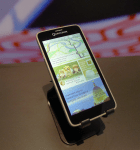
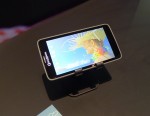
Qualcomm is getting a lot of attention this week thanks to their new 5.1 inch Mirasol screen, but most of the press coverage has left out one key detail.

The screen doesn’t actually work.

I spent a few minutes this morning in the Qualcomm booth, eager to play with their new prototype, but unfortunately it is more of a prop than a prototype. The display is completely non functional, and it would perhaps be better to describe it as a custom print job than a display. Qualcomm used manufacturing tech similar to what is used to make a Mirasol screen and printed the prototype that everyone is talking about.

If the stats are to be believed then this could one day be a super high resolution smartphone screen with a resolution of 2560×1440, or about 564 ppi. But at the moment it is simply a printed screen that has a lower resolution than my $150 inkjet printer.

The Qualcomm reps tried to sell me the same "it’s under development" line that they convinced everyone else to believe, but I don’t buy it.  The thing is, if nonfunctional props count as demos then Star Trek had the first tablets, cell phones, and so on. Show me a demo that works and I will call it a demo. Until then it’s a movie prop, no more and no less.

And given the difficulty that Qualcomm has faced with this screen tech, I don’t expect this screen to ever hit the market. I expect it to suffer the same fate as the 4.3″ smartphone demo units that Qualcomm showed off last year.

Amazon is Now Looking to Monetize FanFic & Once Again Disrupt Publishing

Hard-core fans have been writing stories about their favorite characters for nearly as long as books have been published, and now Amazon is going to help them get paid for their work.

Amazon has just announced Kindle Worlds, a new licensing initiative that will enable stories written by fans to be published in the Kindle Store. The stories will be authorized fanfic, and Amazon has already signed up a partner.

Update: I have a new take on Kindle Worlds now that Amazon has convinced 2 of their authors to sign up.

Warner Brothers' Alloy Entertainment is the guest of honor at today’s feast. Alloy is the book publishing division that coordinates with WB tv show production depts, and they have agreed to license Gossip Girl, Pretty Little Liars, and Vampire Diaries. The press release also mentions that more license deals might be in the works.

Did I mention that the fanfic authors are going to get paid?

Amazon will of course have to pay Alloy Entertainment, but the author of the fanfic will also be getting 35% or 20% of the net sales revenue. Stories over 10,000 words will be paid at the higher rate, while short-short stories will be paid at the lower rate.

In exchange for the royalty, the authors will agree to sign over their rights to Amazon Publishing. Yes, this isn’t a KDP program but an expansion of Amazon’s more traditional publishing effort. As such, Amazon Publishing will be picking which stories to publish and setting prices.

The program will officially launch in June with 50 titles. You can find out more on the Kindle Worlds webpage.

So is anyone surprised that Amazon was the first to come up with this idea? I’m not.

First of all, Baen Books is already using a crowd-sourced fanfic model to generate new content for the Grantville Gazette, the anthology series set in an alternate history universe. Baen has been publishing GG since 2003 (according to Wikipedia), and Baen has just released the 47th volume in the series.

But that was a small scale example; so far as I know Amazon is the first to commercialize fanfic on a large scale, and that doesn’t surprise me. Fanfic has been a well-established literary form for decades (modern fanfic dates back to Star Trek or Sherlock Holmes stories, take your pick), but my guess for why it hasn’t been widely commercialized is fear.

It’s not that publishers or creators didn’t want to make money (even off of fanfic). No, the problem was that their lawyers had convinced them of the terrible possibilities of what might happen to the original copyright. Ask a lawyer specializing in IP and they can spin a worst case scenario that might occur if a fanfic were even acknowledged (much less authorized).

I’ve heard a dozen different authors express more or less that same fear over the years, and I would expect that Alloy Entertainment’s lawyers raised the same objection.

Amazon was probably the only one who could break through the fear. They’re big, rich, and have a convincing track record for making money in markets that largely didn’t exist before Amazon entered them (Kindle Singles, ebooks, etc). And Amazon may have also paid a hefty license fee in advance just to sweeten the deal.

Kindle Worlds is  probably going to make Amazon a lot of money in the long run. But more importantly, it’s also going to legitimize a new segment of publishing that has been quietly ignored for decades. And that is the larger story today.

Amazon has just expanded the publishing industry beyond legacy publishers, self-published authors, and indie publishing. Now fanfic authors can go legit, and that is going to have an interesting effect on the rest of publishing.

Remember when self-pub was synonymous with vanity press and was a sign of an author’s failure? That’s no longer true, and 5 years from now writing fanfic will probably be considered just as legitimate.

And that is what Amazon did today.