Giving an eBook a Short Title Can be Good For Sales But Writing a Longer Story Helps More: Insights From Smashwords

Mark Coker of Smashwords has just posted the slides from the presentation he gave last week at the RT Booklovers Convention.

The graphs and the data on the slides are generated from the aggregated sales data of ebooks distributed through Smashwords. These slides are a great source of market research into the indie ebook market, and they answer questions that most other market research reports would charge dearly for.

This one of those things that you should bookmark so you can find it again.

Key findings include:

1. Books that ranked higher in sales tended to have shorter titles, though there isn’t that much of a difference between the best sellers and the bottom-ranked books:

I wouldn’t read too much into this; a good long title is probably better than a short and crappy one.  But if you can come up with a title that is both short and good, that’s even better.

2. Readers overwhelmingly prefer longer books over shorter books. The top 100 best selling titles were noticeably longer than the ebooks that ranked between 101 and 500, and the same general trend applies to lower ranking ebooks as well.

And no, there is not a typo in the chart. That gap in the data was left out intentionally.

3. The most common price point for indie ebooks is $2.99. Lower price points are nearly as popular, so much so that there is almost a congestion or clutter in that part of the chart.

Given how many authors are using the super low price points, it might make sense to price ebooks at $399 and above. That might sound crazy but sometimes separating yourself from the pack can be a good thing. And if nothing else, I’d pay $4 for an ebook.

4. Covers sell ebooks. A good-looking cover can be worth the cost. TThis is actually one that we knew all along, but it’s good to have it confirmed again. When one author replaced the cover on the left with the cover on the right, sales jumped through the roof:


5. The retail price can affect how many titles are sold. Here’s the other reason I say that a $3.99 price point is better: it actually generates more units sold (and thus more revenue) than an ebook priced at $2.99.

The interesting thing about this chart is that last year Smashwords' data identified a $2.99. Now there seems to be a second sweet spot at $3.99. Given the extra revenue, that is a price point worth pursuing.

On a related note, last year’s data also showed that an ebook priced at or about $6 could earn more than if the same ebook were priced at $2.99. As you can see from the following chart, that is no longer true. Now the most profitable price point is the one around $3.99, with the $6.99 price point coming in second:


Meet Earl, the Back-Country Android Tablet With a 6″ E-ink Screen

For the longest time now I have been wanting to buy an Android tablet with an E-ink screen, and while Earl isn’t quite the consumer model I wanted it has me drooling none the less.

Earl is a rugged Android tablet built around a 6″ HD E-ink screen . It’s destined to go out into the wild blue yonder, and comes equipped with a frontlight, solar panel, and a rugged shell that is both water and impact resistant.

Or at least it will be destined to go wild – if it gets enough pre-orders.

This tablet is not going to win any awards but the specs are solid nonetheless. It’s running Android 4.1 on a dual-core 1GHz CPU with 1GB of RAM, 16GB Flash storage, and a microSD card slot. This is also a well connected tablet with Wifi, Bluetooth, GPS, a conbo AM/FM/SW/LW radio,  and a FRS/GMRS/MURS radio for picking up emergency transmissions.

But the screen, now that’s where things get interesting. Earl uses an HD screen originally developed by LG Display. Unlike the average E-ink screen, the screen on the Earl is flexible, making it much more likely to survive rough treatment. This screen is also equipped with a frontlight and a glove/pointer friendly IR touchscreen.

And that’s not all.  Earl can also double as a weather station – and then some. It’s equipped with a magnetometer, thermometer, barometer, humidity sensor, and an anemometer. Other sensors include GLONASS, an accelerometer, a gyroscope, and an IR blaster for communicating with other gadgets.

Plus it can recharge itself with the solar panel conveniently mounted on the back.

This tablet weighs in at a svelte 303g, and is expected to have a battery life of 20 hours.

Earl is up for pre-order at the moment, and the asking price is $250. Sqigle, the company that developed Earl, is looking to raise $250,000 so they can take Earl from the current prototype to a full-fledged backwoods companion.

The $250 price tag is supposed to represent a discount of 30% off the regular price, which sounds a little low to me. The specs listed for Earl sound awfully expensive, so I wouldn’t be surprised if this tablet ends up selling for more than $350.

In fact, that price tag might end up being more than a tad unrealistic. I’m not sure that Sqigle will be able to sell enough units to keep the price tag below $450 or $500. Earl might be able to do a lot, and it doesn’t really have much competition at its price point, but there are only so many potential customers.

But as I sit here looking at it, I think Earl could easily find a home in the academic market.  Elementary and middle schools might jump at a chance to buy a rugged tablet with all those sensors. If nothing else Earl would simplify their equipment lists for science class.

Sqigle hopes to get Earl into production in July, with the first units shipping by the end of summer.

Specs:

  • Android 4.1
  • Flexible 6″ E-ink screen (1024×768)
  • Frontlight
  • IR touchscreen
  • Waterproof shell
  • i.MX 6 DualLight 1GHz Cortex A9
  • 1GB ram
  • 16GB memory + microSD
  • Wifi b/g/n
  • BT 4.0
  • FRS/GMRS/MURS
  • GPS + GLONASS
  • Accelerometer
  • Gyroscope
  • Magnetometer
  • Temperature
  • Barometer
  • Humidity
  • Anemometer
  • AM/FM/SW/LW
  • IR blaster
  • 20+ hour battery
  • 20″ usb lanyard
  • Weight: 303 grams (10.8 oz)
  • Dimensions 183mm x 121mm x 15mm (7.2″ x 4.75″ x 0.6″)

source

Celebrate the International Day Against DRM By Removing it From Your eBooks

 It’s that time of year again.

Today is the International Day Against DRM, the unofficial holiday dedicated to making more people aware of DRM and how to remove it.

I have long argued that one should always remove DRM in order to make sure you don’t lose your purchases, whether it’s due to switching computers, changing to a new ereader, closure of an ebookstore, or if a publisher simply decides to cut off access to the ebook.

And the events of the past year have once again proven me correct.  Several ebookstores have shut down in the past year, including Fictionwise, JManga, and BooksOnBoard. The closure of the first 2 stores has cost many former customers hundreds if not thousands of dollars, and the imminent bankruptcy of BoB could also cost readers hundreds of dollars. Fictionwise in particular was quite popular among international ebook fans, but when it shut down B&N simply cast those readers on the scrap heap.

And as we have been reminded repeatedly, DRM is inherently hostile to the end user. We need look no further than the Sim City launch debacle to know that. Earlier this year EA released the latest edition of the ever-popular Sim City. This game had DRM that required users to be online all the time, even when they were playing alone. To make matters worse, EA’s servers weren’t up to the load. They crashed repeatedly in the first month or so after launch.

This debacle was so huge and pissed off so many customers that EA has since gone out of business. Well, no, but it did make EA a shoo-in for Consumerist’s "Worst Company of the Year" Award.

Strip It

Since today is all about DRM, here are a few tools that will help you free your ebooks.

This is a FREE 1 step removal tool for Epub and PDF encumbered by Adobe Adept DRM. It can also remove the DRM from Kindle ebooks as well. I haven’t tried the Kindle tool yet, but I think it’s worth your time to take a look.

That tool is based on the work of Apprentice Alf, the patron saint of ebook DRM-removal tools.

How would you like to remove the DRM from ebooks ought from iBooks? Requiem can do that.

—

And for those who use calibre, did you know that you can install a DRM-removal plugin? I’ve posted instructions that show you how to configure a plugin to remove Kindle, Nook, or Adobe DRM. The same plugin now works for all 3 types of DRM, though setting it up for the Nook does require an extra step.

P.S. The above tools can also remove DRM from loaned ebooks and library ebooks. Please don’t.


B&N Breathes Life Into Nook HD Corpse – Finally Adds Google Play

It might have taken Barnes  & Noble far longer than any of us would like, but I think they just saved the Nook.

B&N has rolled out a new update today that brings Google Play and other Google apps to the Nook HD and Nook HD+. These media devices can now legitimately be called Android tablets.

The updates will be pushed out to the tablets over the next few weeks. If you don’t want to wait, you can download the updates from the B&N website:

I have installed it and from what I can tell B&N is only adding apps; the fundamental Nook platform will not change. My Nook HD+ still has support for multiple user profiles, Nook Video, and other features.

But in terms of new stuff, I can see apps for Gmail, Chrome, Google Talk, Youtube, and Google Play Books.

Yes, B&N’s tablets will now ship with a competitor’s reading app. That is probably an unpleasant pill for B&N to swallow but I suspect that Google made it a requirement for getting Google Play on the Nook hardware.

So do you think this will be enough to rescue the Nook platform?

It could be enough, I think.

Remember, the problem with the Nook wasn’t the quality of the hardware; the Nook HD and Nook HD+ are 7″ and 9″ tablets with excellent hardware and decent prices ($199 and $269, respectively). No, the biggest gripe I had was that B&N limited what you could do with a Nook tablet. That was why I returned my Nook Tablet in 2011, and it was a problem shared by the Nook HD and Nook HD+.

And I wasn’t the only one to be chafed by the limitations. B&N’s restrictions were also the reason that the various "Android on SD cards" did such a brisk business. I mean, Nook tablet owners were paying $30 or more just to escape B&N’s restrictions.  If that doesn’t show that there was a problem then I don’t know what does.

Update: I’ve just learned that the Nook HD+ still blocks me from sideloading apps. That is a poor decision on the part of B&N and it will to keep the Nook hardware less useful than the competition.

Move Over Apple – Samsung Files For a Patent on Page Turns

Samsung has a bad reputation for (supposedly) copying Apple, so today’s news probably won’t come as any surprise. Remember last year when Apple received a patent 0n the faux page curl in iBooks?

Even though many were amused by that patent, Samsung apparently can’t stand that Apple one-upped them in this way. The Korean gadget maker has just filed for their own patent on a method to turn the page in an ebook.

US Patent Application number 20130104017 was posted to the USPTO website last week, and as you can see from the images that Samsung included with the patent they really do want to patent the page turn:

The patent is attached below, and in spite of how absurd it might sound I think there’s real substance here. Samsung’s patent includes more than just a description of turning a page. The patent also describes a process for making a faux page turn that closely resembles how a real paper page would behave when you turn the page.

Samsung even gets into the physics od how a paper page might crumple when being turned:

Call me a geek if you want, but I find that impressive.

The patent goes on to describe a number of different on screen gestures that you might use to trigger a page turn including dragging from a corner, sliding a finger down the side of the screen, and swiping from the edge to the center of the screen.

When Apple got the patent on the page turn I didn’t cover the story. Like many I thought it was just an absurdity which was more than adequately covered elsewhere.

But this patent is another matter.  This has enough detail that it might deserve a patent – if not for the fact that I have seen similar faux page turn screen tricks (examples).

Several of the images that Samsung included with the application remind me of other faux page turn tricks I have seen in other reading apps. The ones that spring readily to mind are the Nextbook ereaders and Android tablets I have used. These gadgets were made by the Chinese gadget maker Yifang, and I swear that the reading apps used a similar page turn, and so does the reading app on the Nook HD+ (video).

Neither looks quite the way that Samsung laid it out in the images above, and the Nextbook devices didn’t use all of Samsung’s tricks, but there was enough similarity that I think you would need a patent lawyer to explain the difference. And that may have been what Samsung was going for all along.

Can Samsung really get a patent on such a common trick?

USPTO

patent (PDF)

Multi-Million Dollar Class Action Lawsuit Filed Against Penguin, Author Solutions

Three self-published authors filed a class action lawsuit last week against Penguin’s vanity press subsidiary, Author Solutions.  I have not yet seen the filing myself, but I’m told that the 3 authors claim that Penguin/ASI "cheats writers of royalties and charges them to correct typos in manuscripts that the company itself inserted".

The authors live in Calif. and New York, and they are represented by New York law firm Giskan, Solotaroff, Anderson, & Stewart. This is the firm that 2 months was looking for authors who had had negative encounters with Author Solutions.

The authors are asking for $5 million in punitive damages for breach of contract, unjust enrichment, various violations of the California Business and Professional Code, and violation of New York General Business Law. The list of complaints is comes as no surprise. The authors say that ASI had:

  • failed to pay royalties
  • failed to send authors accurate sales statements
  • introduced numerous and egregious errors into the books produced by ASI
  • sold useless and ineffective marketing and promotional services

Here’s more from the complaint:

"Author Solutions' revenues are estimated at $100 million per year," the complaint states. "Of the $100 million Author Solutions earns as revenue, approximately one third of that amount, or millions annually, comes from book sales. The rest of its revenue is derived from the services it offers, such as editorial services, formatting and design services, production services, and marketing services ('services')."

"Despite its impressive profits from book sales, Author Solutions fails at the most basic task of a publisher: paying its authors their earned royalties and providing its authors with accurate sales statements."

"Author Solutions also fails to take diligent care of its authors' works, making numerous and egregious publisher errors – errors made by the publisher, not the author. These errors include errors on book covers, in addition to various typographical and formatting errors. In fact, Author Solutions profits from its own mistakes. Aggressive sales techniques ensure that these errors are corrected only for a fee of several hundred dollars. Even though, as a matter of policy, Author Solutions promises to correct publisher errors for free, it rarely does."

"Most of Author Solutions' earnings are derived from its publishing and marketing services. These services, which can cost authors tens of thousands of dollars, likewise fail to deliver what they promise: more book sales and more opportunities for authors."

"Therefore, even while Defendant Author Solutions prominently markets itself on its website as '[t]he leading indie publishing company in the world,' authors often discover, once it is too late, that Author Solutions it is not an 'indie publisher' at all. It is a printing service that fails to maintain even the most rudimentary standards of book publishing, profiting not for its authors but from them."

Author Solutions has a bad reputation that goes back for years, so this lawsuit was inevitable. In fact, the only part that puzzles me is that it didn’t happen sooner. Penguin has deep pockets, so I would have expected to see a lawsuit filed almost as soon as the Penguin-ASI deal was finalized.

Penguin bought Author Solutions in July 2012 for $116 million, in spite of ASI’s existing poor reputation. ASI has been operating  under a variety of logos, including AuthorHouse, iUniverse, Palibrio, Trafford, and Xlibri. ASI is also providing similar sketchy services under contract to a number of otherwise respectable companies, including Simon & Schuster (Archway), Lulu, Penguin India (Partridge), and Harlequin (DellArte Press).

source


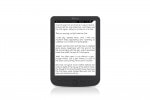
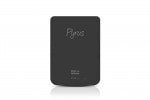
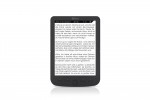
Trekstor Launches the Pyrus Maxi 8″ eReader

The German ereader maker Trekstor is back in the news again today with the launch of their latest ereader.

They’ve just unveiled the Pyrus Maxi, their second ereader to use a non-traditional screen size. It has an 8″ epaper screen, putting it near the midpoint between the more common 6″ screen found on most ereaders and the 9.7″ screen size found on the Jetbook Color and the now-defunct Kindle DX.

The Pyrus Maxi is basically a larger identical twin to the 4.3″ Pyrus Mini, the world’s smallest ereader. Like the Mini, this is a fairly basic ereader that has been stretch to fit a larger screen. It comes with 4GB of Flash, a microSD card slot, and it includes support for several ebook formats: Epub, PDF, FB2, and PDB. It can also read RTF, TXT, and html files.

But that’s about all the Pyrus Maxi can do. It does not have Wifi, a touchscreen, or an audiojack, so it is limited to only reading ebooks.

The screen on the Pyrus Maxi measures 8″ and has a resolution of 1024×768.  That’s essentially the same resolution as on the 6″ HD E-ink, only this 8″ screen doesn’t come from E-ink.

The Pyrus Maxi uses a screen that was made by Guangzhou OED Technologies. This is the screen tech that I have been calling knockoff E-ink screens, though I no longer believe that is technically correct. Instead I think we are looking at a screen tech that merely looks similar to E-ink’s screens without actually being based on any of E-ink’s technology or patents.

This ereader is expected to ship in mid-May with a retail of 149 euros.

That is a pretty steep price given the limitations. Sure, this ereader has a larger than average screen, but you can find the much more capable Kobo Glo for 129 Euros.  This ereader has a frontlight, touchscreen, and Wifi. Even though it is unfortunately tied to Kobo and their execrable customer service, the hardware is a much better value.

On a related note, Icarus was also supposed to have launched an 8″ ereader.  The Icarus8 was announced in February and was supposed to have shipped this month. The release date has been pushed back until May.

product page

source


How Not to Respond to Negative Reviews: The Anne Rice Edition

I don’t mention book reviews much on this blog but a particular review caught my attention today. The review itself was a good read, but the fallout when fans of the author responded to the review is another story.

The comments were so entertaining and so incendiary that I could not help but share them.

Last week, Kayleigh Herbertson, editor of the Articulate and Intricate book blog, posted a review of Pandora by Anne Rice. The tl;dr version is that she found the book to be a poorly written novel where the vampires didn’t act like vampires.

The review was well-written, IMO, even though the reviewer didn’t like the book. I’m not an Anne Rice fan but I still like reading the review; it reminded me why I don’t read Anne Rice. And after Herbertson was done writing the review she took the book, which was already falling apart, and turned it into decoupage.

Now, with most reviews the story would end here. Few authors would have found the review, and if they did they might (at worst) respond directly to the reviewer with a nasty comment.

But not Anne Rice. This author chose to respond by posting a link on her Facebook page (where her 740 thousand Facebook followers could find it) and appended the invitation: "Comments most welcome.".

Thousands of Ann Rice fans clicked the link and read the review.  At last count there were some 750 comments on that topic on Facebook as well as another 289 comments on the review itself.

Here is a selection of the more entertaining responses:

  • HOW DARE YOU EVEN COMPARE SHITTY ASS STEPHANIE MEYER TO THE QUALITY WORK THAT IS ANNE RICE HOW DARE YOU!!!!!!!!!!!!!!!! YOU FUCKING HAG, I HOPE YOU GET HERPES
  • You bitch! >:(
  • INSANE. To destroy a book like that is honestly the most disrespectful, idiotic thing anyone could ever do. An opinion is an opinion, but to do that… loved the rich descriptive narrative and historical context and character development (the other reason I read them).
  • “I couldn’t simply write my opinion I had to be a destructive little shit aren’t i awesome?”
  • Even if you dont like a book i dont get why you have to destroy it, Nazi memories perhaps? What you may dont get it is that a vampire is different from one another and a vampire drink less blood when he or she become more powerfull specially after the fight with Akasha, You even read the entire saga? You say is the second novel so i think no is the answer, anyway an interesting way to ask for atention to you and your blog.

The comments left on Facebook are almost as bad, though not quite as entertaining.

P.S. And if you think this was a fluke, check out Ann Rice’s response to negative reviews on Amazon. It is 1100 words long, a single paragraph, and it is truly epic.

Tor-Forge Reaches First Anniversary of Plans to Go DRM-Free – Reports No Increase in Piracy

Late last week Tor UK posted an update on their efforts to go DRM-free.

It’s been just over one year since Tor-Forge Books announced plans to distribute their ebooks without DRM (and 9 months since the DRM was officially removed), and the move has seen a lot of support by both authors and readers.

But the more important news today is that Tor UK is also reporting that they haven’t seen any correlation between DRM and piracy:

As it is, we’ve seen no discernible increase in piracy on any of our titles, despite them being DRM-free for nearly a year.

DRM has long been the bugaboo of this digital reader so I plan to trumpet this from the roof tops.

I have long said that DRM doesn’t stop the determined pirate (thanks to the ready availability of DRM removal tools). All that is accomplished by adding DRM to ebooks is to restrict and punish the legitimate customer. So when Tor UK announced that they hadn’t seen an increase in piracy I was not at all surprised. Pleased, but not surprised.

Tor Books UK

James Patterson Thinks That Books are Precious Snowflakes That Need to be Rescued From Oblivion

James Patterson is a well-known and well-respected author, but lately that hasn’t been enough for him. It looks like he recently decided to also take on the role of the publishing industry’s curmudgeon emeritus, a job that Scott Turow has more than adequately filled of late.

Last weekend Patterson bought full page ads (at right) in major newspapers which called for the government to take steps to rescue books, the publishing industry, bookstores, and libraries from the scourge of technological progress.

Yeah, it doesn’t make any sense to me either but Patterson has been getting press attention. Earlier this week he gave an interview for Salon.com in which he laid out his complaints:

Tell me about the decision to place the ad.

I do a lot of things to try to raise level of awareness of what’s going on in country right now. This is an unusual and different time for books, the most unusual in the history of this country. E-books are fine and dandy, but it’s all happening so quickly, and I don’t think anyone thought through the consequences of having many fewer bookstores, of libraries being shut down or limited, of publishers going out of business — possibly in the future, many publishers going out of business.

If you are thinking that he sounds like an old man screaming "get off my lawn you damn kids", you’re not alone. But before you write me off as simply a jerk let me explain exactly why Patterson comes across that way.

He laments the death of bookstores, libraries, and publishers when in fact the first has been withering for the past 30 years, the second is dying an unrelated death, and the third isn’t dying out so much as it is being replaced.

Bookstores aren’t suddenly going out of business as a result of increased ebook sales; they’ve been under attack by the major bookstore chains and Walmart for the past 30 years. It was big box retailers and their deep discounts that harmed bookstores the most, and while the move to online book sales and then ebooks exacerbated the effect the root of the situation started in the mid 1980s.

Where was Patterson 20 years ago when B&N and Borders were doing their best to kill off the competition? Where was Patterson 10 years ago when Amazon was doing the same?

I’ll leave that question to my readers.

Libraries are struggling to stay open, yes, but it’s disingenuous to mention them in the same breath as publishing and bookstores and it’s foolish to ask the government to rescue them. The biggest threat to libraries is a lack of funding, and given that tax revenues are down in most states it’s a little unrealistic to demand that libraries get more funding.

But never mind bookstores and libraries; it’s when Patterson calls for the rescue of publishing that I feel he has truly missed the point. Patterson is lamenting what he sees as the demise of the publishing industry when it’s really not dying at all. First, as a reader has pointed out, much of the industry is turning a profit. What’s more, the AAP reported that the industry as a whole saw an increase in revenue in 2012. Rather than a dying industry what we have here is one that is growing and changing into something new, and at worst it is being replaced by a new industry that is going to fill many of the same roles.

I get the sense that Patterson worships publishing as the guardians of culture, and that he thinks that the great and classic books of yesteryear would not exist without the publishing industry. Given that this is the same industry that publishes celebrity bios, I have to wonder about his selective vision.

But in spite of everything legacy publishing has created some lasting works. Can the same be said about the new publishing industry?

It’s too early to tell, really, but I don’t see how that is relevant. The role of a publisher is to be a business and make a profit, not to create a lasting work of literature. To pretend otherwise is to simply ignore reality.

All in all, I don’t see Patterson’s full page ad as a plea to save books so much as it’s an admission that he doesn’t understand the culture that surrounds him. It has changed too much from the one he grew up in, and he wants the govt to change it back.

Good luck with that.


The Perils of Digital Textbooks – CourseSmart Crashes During Exam Week

Like many other people I have a less than perfectly reliable internet connection, and that has taught me that having an offline copy is only prudent. So when I read about the problems that the Fairfax Public Schools and now CourseSmart have encountered with online textbooks, I can’t help but wonder why no one saw it coming.

CourseSmart is widely recognized as the leader of the digital textbook market. This start-up was founded by major textbook publishers in 2007 and is now used by hundreds of schools. Or at least it was used by hundreds of schools – right up until the servers crashed earlier this week.

Numerous Twitter users have complained (and CourseSmart has confirmed) that CourseSmart’s servers went down on Tuesday. Based on the complaints it seems to have lasted an entire afternoon, denying students access to their online textbooks.

Anyone who uses online services is used to crashes, I’m sure. Twitter, Tumblr, and even parts of Google have crashed on occasion. For a while there Twitter was even crashing on a fairly regular schedule. So it might not seem all that newsworthy that CourseSmart has joined the club.

But unlike those other services, CourseSmart isn’t free nor is it one that users can get by without. The students harmed this week had paid upwards of $100 for their digital textbooks, only to be denied access when they needed it the most.

The servers crashed during exam week, a time when many of these students were either getting in some last minute studying or finishing up work to hand in. As one student tweeted, "I have a final exam tomorrow at 9 am with two chapters left to read. A quick fix to this would be appreciated." And even those who didn’t have exams last week were frustrated by the downtime: "Ever feel like spending a crap load of money on something that will fail when you need it most? Buy a digital textbook from @coursesmart".

The fault here can be laid squarely on the shoulders of CourseSmart’s DRM policies, which limit how much a student can download at one time. A student is only allowed to "check-out" up to 5 of the rented digital textbooks at once. The textbooks are also downloaded by the chapter, so if a student didn’t have toe foresight to download what they needed before the out of luck.

Update: An earlier version of the above paragraph mentioned that CourseSmart had an online-only option at a cheaper price. This is incorrect. I had unfortunately confused CourseSmart with one of their competitors.

CourseSmart hasn’t shared an explanation for the crash, but this happened during an exam week, so I would guess that the servers were operating at maximum capacity and were unable to meet the demands placed on them. If that is correct then this won’t be the last time that CourseSmart’s servers will go down.

There is a growing push to force students to adopt digital textbooks, and with CourseSmart recognized as the market leader they are probably going to gain the most users. That is going to mean higher and higher demands being placed on CourseSmart’s servers, so I would not be surprised to learn that CourseSmart becomes known for crashing during exam week.

Paper textbooks, anyone?

image by BiblioArchives / LibraryArchives

 source

Pocketbook Unveils the World’s First 8″ Color E-ink eReader in Russia (video)

 Pocketbook has long been teasing us with a promised 8″ color ereader and today they finally revealed it to the world.

The Pocketbook Color Lux was announced earlier today at a Pocketbook press conference in Russia. This ereader features an 8″ screen and is the first ereader to use the Triton 2 E-ink screen in that size. It is also the first color ereader to use a front-lit screen.

The Color Lux is running Pocketbook’s own custom Linux-based firmware on an 800MHz Freescale CPU. It comes with a touchscreen, 4GB of storage, a microSD card slot, Wifi, and it has an audio jack.  The screen resolution is 800×600, and the screen supports 4096 shades ranging from a light gray to black (here’s why).

The Pocketbook Color Lux is expected to hit the market in Russia in June 2013 with a retail price of 9990 rubles (about $317USD). There’s no info available yet on a European launch.

I haven’t had a chance to get my hands on the Color Lux, obviously, but I did find this video from NoMobile.ru. It’s not in English, but it’s still worth watching because the subject demos the Color Lux, showing off interesting details like the way the frontlight is controlled via a swipe bar at the top of the screen.

The Color Lux is only demoed during the first minute or so; the rest of the time is spent showing off the other ereader and the Android tablet that Pocketbook launched today.

The second ereader in the video is the Pocketbook Touch 2. As you can see, it looks basically the same as the current Pocketbook Touch, only it’s been updated with a new and better screen.

This is the HD E-ink ereader that I was expecting Pocketbook to launch, and it has the same HD E-ink found on the Kindle Paperwhite and Kobo Glo. Screen resolution is 1024×768, and of course it also has a frontlight and touchscreen. It has 4GB of storage, a microSD card slot, Wifi, and it has an audio jack. Not all features are mentioned, but this ereader does support text to speech, and it appears to also have a new feature that can measure the speed at which you are reading.

It has a 1Ah battery with an estimated battery life of 7,000 pages. Retail will be 6990 rubles, or about $222 USD. It is expected to be available in Russia in May 2013.

Pocketbook also shared some details today on the number of devices sold. The CEO of PocketBook Russia reported told the assembled press that PocketBook had sold 1.5 million ereaders and tablets in 2012. Most were sold in Russia (71.5%), with 13.3% going to buyers in the Ukraine and 12% to Europe.

source

Amazon Announces the Most Well-Read Cities in the USA

Ask any doomsayer decrying the rise of video games and they’ll tell you that reading is dead. Ask any publisher bemoaning the rise of piracy and they’ll tell you that the book market is dead. And as Steve Jobs is well-known for proclaiming, no one reads any more.

That’s why I was surprised to learn today that Amazon has just released the 2013 list of the best-read cities in the US.

Amazon has pulled together all the book, magazine, and newspaper sales data  for the past 9 months and created a list of the US cities with that bought the most content on a per capita basis. The top 20 cities include a suburb of DC, 5 cities in Florida, and a sprinkling of cities from the other 49 states. Amazon’s home town of Seattle made the list:

  1. Alexandria, Va.
  2. Knoxville, Tenn.
  3. Miami, Fla.
  4. Cambridge, Mass.
  5. Orlando, Fla.
  6. Ann Arbor, Mich.
  7. Berkeley, Calif.
  8. Cincinnati, Ohio
  9. Columbia, S.C.
  10. Pittsburgh, Penn.
  11. St. Louis, Mo.
  12. Salt Lake City, Utah
  13. Seattle, Wash.
  14. Vancouver, Wash.
  15. Gainesville, Fla.
  16. Atlanta, Ga.
  17. Dayton, Ohio
  18. Richmond, Va.
  19. Clearwater, Fla.
  20. Tallahassee, Fla.

image by Don Hankins

DotDotDot Shows That the Future of Reading Is Neither eBook Nor RSS Feed, Neither Fish Nor Fowl

Right now the average reader spends their time in multiple reading apps. They might use Aldiko to read ebooks, Feedly to stay abreast of news, Instapaper to catch up on longer articles that have been saved, and Readmill to share annotations with fellow readers.

How would you like to combine much of that reading time into a single app? If that sounds appealing then I have an app for you.

One of my readers has just tipped me to dotdotdot. This app seeks to combine elements of the distinct and differentiated reading apps mentioned above into a single coherent reading experience. Rather than going for just a single type of content (fiction or non, short or medium or long, self-curated or community-promoted), dotdotdot wants to be the jack of all trades for reading.

dotdotdot | iTunes

There are a number of different ways to load content to read.  You can log in to your Google Reader account and read the feeds, load DRM-free Epub ebooks from the web or from Drpobox, and there is even a web browser built into the app that you can use to search for and import content.

None of those features are new, but it’s a little unusual to see them in a single app. And the annotation and sharing options add even more ways to read. Dotdotdot app supports both notes and highlights, which can be private or public.  You can even search your notes (or the tags attached to them) all at once – now that is a feature I appreciate.

A user can also follow another user and see what the other reading as well as the other user’s annotations and the public part of a user’s library. They can also track their own reading habits on their dashboard

I don’t know about you but this is the kind of app I always wanted. For some years now I have been trying to replicate what dotdotdot can do by using various apps to get content into my preferred reading app. I’ve exported articles from Instapaper as ebooks, used the dotEpub bookmarklet to capture and convert a webpage so it can be read offline, and I’ve even used Feedbooks' RSS-to-ebook tool when it was still available.

All of those tricks were clunky at best, so I am really hoping that dotdotdot will be able to grow into a serious alternative.

But dotdotdot is still in a very early beta (the oldest coverage I can find is from January), and it is limited to just an iOS app and the website. It’s also missing several features I want; there are no formatting options and dotdotdot is still dependent on Google Reader.  The latter issue is a serious concern, and it is half the reason I want to use this app.

This app is also missing a couple ways that I would like to add content (I’m never happy). It would be useful of I could tie in my Twitter account so dotdotdot could grab all the links I tweet, and email would also be useful. In fact, once I can email content to dotdotdot I don’t think it would need much else in terms of 3rd-party app integration; IFTTT is surprisingly capable in extracting content from various platforms and it can send emails.

I’m told that email support is on the roadmap, and so is an Android app. And of course breaking free of Google Reader is dependent on finding a viable alternative.

—

In spite of the issues this is definitely an app that is worth watching, and it’s just one of number of cross-discipline reading apps I expect to see this year.

The imminent demise of Google Reader is already having an effect in the news reader niche, and I fully expect the competition over the next year or so to redefine that niche. There are any number of tech companies angling to replace Google Reader, with Feedly, Zite, and Digg all having thrown their hat into the ring. I am expecting one or more of these tech companies to follow the lead of dotdotdot. I think someone will expand the abilities of their news reader platform so it can do more than just read the news.

TBH, we’re already seeing signs that this is happening. Feedly went from just looking pretty to also being functional. Flipboard went from picking content for the reader to also letting users build their own magazines. And even Zite unbent enough to let readers import content from their Google Reader feeds.

But those are really just enhancements that focus on the news reader niche; they don’t really cross boundaries like dotdotdot has done. Nevertheless, I expect the boundaries between the various types of reading apps (ebook, feed reader, save for later, news aggregator, etc) will get rather fuzzy this year.

And that is a good thing because the boundaries dividing the various reading apps are both artificial and arbitrary. For the most part they are a vestigial holdover from the way that we used to read content on paper, and the same goes for the labels we use to describe the content we read.

eBook? Article? eSingle? None of those labels are intrinsic to the content they describe, but instead are convenient handles that we have hung on chunks of digital content so we could better explain it to ourselves. Once you look past the labels you will see that digital content is digital content is digital content, all of which is streamed in one form or another.

I suppose this all sounds awfully metaphysical, but when we throw out all the vestigial holdovers from our paper past we also throw out the assumptions that are attached to the labels. And once the false assumptions are gone it is possible to see what should have been obvious all along. That’s when we end up with new ideas taking old, including ideas like The Magazine (startup tech company concept as applied to magazine publishing).

P.S. And to think I was considering changing the focus of this blog. Silly me.

P.P.S. If someone wants me to explain what I mean about The Magazine I can do so in another post. This one is already too long.

dotdotdot

iTunes

Used eBook Sales Now Illegal in Europe (For The Moment)

Used ebooks are a hot topic right now, with Apple and Amazon each pursuing a patent over reselling digital content and as a result sparking a debate on the legality, ethics, and morality of a second-hand marketplace for products that don’t decay.

This is a hot topic across the pond as well, only it has gone in a slightly different direction. A German court has ruled this week that ebooks cannot be resold.

That was fast, but if I were a publisher I would not be celebrating just yet. I don’t have access to the ruling, but just from reading between the lines of the original German coverage I can already see a couple problems with this case.

The lawsuit was filed by a German consumer advocacy group in the District Court of Bielefeld. According to Boersenblatt, a magazine that covers the German publishing industry (think Publisher’s Weekly), the judges ruled that ebooks were not software, so the ruling made last year that reselling software licenses was legal did not apply.

This is a rather curious decision, and I don’t think it’s going to pass muster. First, I think that this decision is splitting legal hairs. A strong argument could be made that the same legal principle should apply to both software and ebooks. If you can legally resell software in Europe then you should be able to legally resell ebooks, or at least that is how it looks to me. (Read this comment for an explanation as to why this paragraph is crossed out.)

But more importantly, this decision isn’t the end of the issue because something tells me the plaintiff won’t let it die. This lawsuit was brought by VZBV, the same consumer advocacy group that is suing Valve to force the software vendor to enable customers to resell software. I covered this story a couple months back because of the obvious ebook angle.

I don’t think VZBV is going to rest until they either run out of money or the case goes before the European Court of Justice. That’s the highest court in Europe, and that was the court that ruled software resale was legal in Europe.

That case is known as the Usedsoft decision, and it took 5 years to be resolved. I would not expect the ebook issue to be resolved any time soon, but I am also expecting that the ECJ will eventually rule that Europeans can resell ebooks.

Right now the ebook rights issue in Europe is largely the same as it is in the US. It’s not exactly illegal to resell ebooks, but the seller does have to get the copyright holder’s permission first (more detail here).

But once ebook resale is legal in Europe, we’re going to see consumer advocacy groups pushing the issue. And when that happens it’s going to make for interesting times.

For example, what if the seller and buyer are in markets where different publishers have the right to sell the ebook? Arguably Amazon (and other ebooksellers) would have the obligation to respect the territorial rights, but under European law they might not have the legal right to do so.

Do you suppose Amazon might take away a legally purchased ebook because of geographic restrictions? I don’t know, but it’s not out of the question.

I’m also looking forward to the first time a Kindle owner in Europe sells an ebook to a Kindle owner in the US. The latter cannot sell a used ebook, but it’s not clear whether the US Kindle owner can buy a used ebook.

Interesting, no?