Narrative Science raises $11.5M – Wants to Put Tech Bloggers, Content Farms Out of Work

Tech pundits often write about how a new tech disrupts an existing industry, and if Narrative Science is successful we’re going to be hoist by our own petard.

This 3-year-old startup announced today that they have raised $11.5 million in a series C funding round. This is their second round of financing this year, and it follows the CIA-backed venture capital firm In-Q-Tel investing in Narrative Science in June. This firm also went through at least one previous round of financing in January 2011, where it picked up $6 million.

Narrative Science has been working for the past several years to develop algorithms that can replace basic reporting. It’s been working with a number of news sites, including some as high profile as ABC and Forbes.

These news sites have been using Quill, the company’s automated authoring platform, to turn basic statistics into news articles. Quill combines data analytics with artificial intelligence to transform data into narratives and insights, freeing writers from having to write the same basic article for each financial report or analyst’s prediction.

GigaOm


How to Turn Turn your Kobo eReader into a Linux Tablet

Bord with your Kobo ereader? While you could make it the guest of honor at a skeet shoot, one hacker has found a better solution.

There’s a new post over on MobileRead today that detail the steps needed to install Debian Linux on a Kobo ereader. With a little bit of luck and a fair amount of technical know-how, you can create a one of a kind Debian tablet.

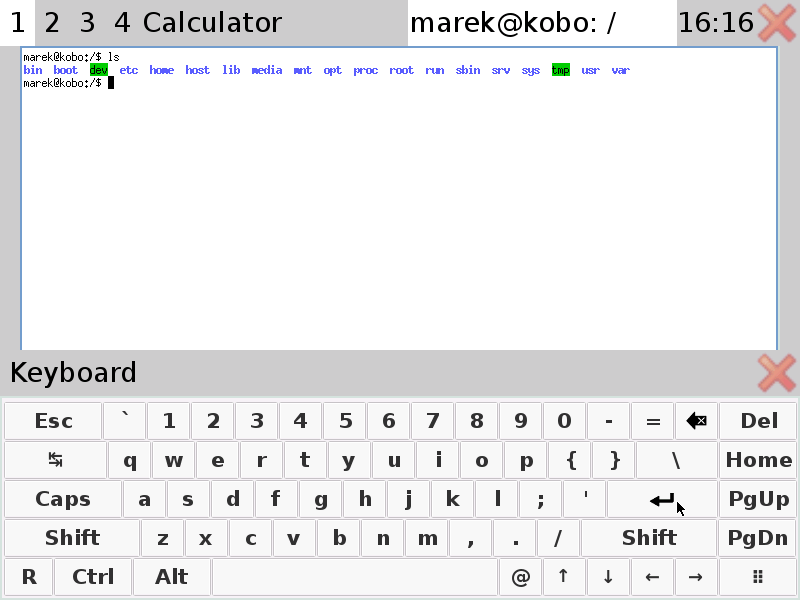
Marek, the Linux developer who has done most of the work, reports that he has gotten this project to work on a Kobo Touch and a Kobo Mini. He’s been working on it since the middle of August, and he’s posted proof of concept screenshots which show that FBReader is running:

Yes, I know that the screen shot is in color and the Kobo hardware has grayscale screens. The driver software for the screen hasn’t been modified yet; it still thinks it’s dealing with a color screen.

Other MR members have also been trying Marek’s early work. One has confirmed that this project almost works on the Kobo Glo. It had screen resolution issues but that is probably fixable.

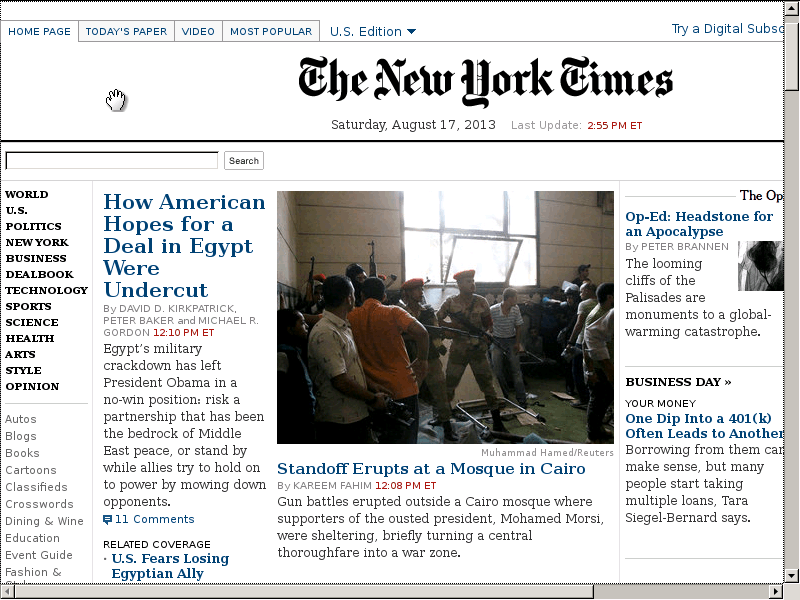
Marek has also gotten other apps to work, including a web browser, Solitaire, and a calculator:

MobileRead

Pocketbook Unveils New Smartphone Case With 4.8″ Plastic Logic Screen

Remember that new case for the Galaxy S4 which was unveiled yesterday? The press release hit my inbox this morning with some of the technical info.

It turns out that this is a lot more interesting than I expected. The new case isn’t a Samsung product like I had first assumed, and the name of the product isn’t "Pocketbook".

No, that is the manufacturer.

This new case is called the CoverReader, and it is a new product from the Ukrainian ereader maker Pocketbook. I don’t have details on the screen resolution yet, but I do know that this isn’t an E-ink screen.

The 4.8″ screen is made by PlasticLogic, makers of the ill-fated Que ereader. It looks they found a new use for their screen tech, and it’s one where their tech is actually better suited for the purpose than an E-ink screen. Plastic Logic’s screens have a range of benefits – such screens are flexible, shatterproof, ultra-thin, ultra-lightweight, power saving and daylight readable.

Update: It looks like Plastic Logic’s press release may have gotten ahead of itself. This first model has a glass backplane with an E-ink screen, not the plastic backplane that Plastic Logic is famous for. That means that the first CoverReader units won’t be nearly as sturdy as the later units.

Unfortunately, I don’t have the more important details like price, release date, or screen resolution; they weren’t shared by Pocketbook. But I do know that Plastic Logic will be making the new 4.8″ screen in their Dresden manufacturing facility.

Update: This case is expected to be released in October 2013 with a retail of 99 euros. I can confirm that the secondary screen uses the CPU and battery of the smartphone and cannot operate without it. I can also tell you that Pocketbook plans to release other cases for other smartphones including ones not made by Samsung.

 The-eBook.org

Pocket Launches New App for Chrome, Windows

Pocket is no longer satisfied to simply capture your attention on Android, iPad, OSX, and iPhone, and today they’ve launched a new app for Chrome.

The app brings all your favorite parts of Pocket’s Android and iOS apps, including offline reading with zero distractions, streaming video, and more. It runs as a standalone app (Chrome is required for Windows), and it can be set to automatically download your reading list so it can be read offline.

This app is built on Google’s new Chrome Apps platform, and it makes use of Google’s efforts to offer more offline features for Chrome. Yes, folks, you read that right. Google has conceded that web-only simply doesn’t work. It took them 5 years to realize that web apps are great but access cannot be guaranteed.

As you can see in the screenshot, the app offers a clean layout similar to the OSX app with a similar full-screen experience.  And like the OSX app, Pocket for Chrome ties into your existing Pocket account so that you any articles or video you save with another Pocket app or bookmarklet can then be viewed in the Chrome app.

Chrome Store


Kobo’s New "Premium eReader" Went From Cutting Edge to Out-of-Date in Only a Week

If you pre-ordered Kobo’s newest ereader because it was a premium device, you might want to rethink that decision. E-ink announced new screen tech today and the Aura doesn’t have it.

I have just received confirmation that the early hands on reports were correct. E-ink’s 4th-gen Carta screen tech wasn’t used in the Aura; it can only be found in the not-yet-released Kindle Paperwhite.

It was pretty clear when Kobo launched the 3 new Android tablets and the new Aura ereader last week that the 3 tablets in question had unremarkable specs compared to what is currently on the market and weren’t really worth waiting for, but the Aura got quite a bit of favorable coverage:

  • Courting All Bookworms, Kobo Debuts 3 New Reading-Friendly Arc Tablets, A New Aura E-Reader, And A Plan To Gain An Edge Over Amazon (TechCrunch)
  • Hands On With the Super-Light Kobo Aura E-Reader (Mashable)
  • Kobo Aura: New Kindle competitor sports classy design, higher price (CNET Reviews)

Sadly, for Kobo, the $149 Aura is now going to be overshadowed by the new Kindle Paperwhite, which retails for $119.

The 2013 Paperwhite is due out at the end of the month, and at this point it looks like it will be the only ereader with the new Carta screen tech. (TBH, without the new Carta screen I didn’t think even the Paperwhite was worth upgrading to. )

The Paperwhite has the same screen resolution as the Aura, and both have frontlights and touchscreens, but the Paperwhite will offer a greater contrast and a more reflective screen while still making use of the latest improvements that E-ink has made in providing smoother page turns.

And to make matters worse, the Paperwhite can be had for $30 less (with ads). Just about the only hardware advantage that the Aura has now is that it has more storage and a microSD card slot.

At this point the Aura is beginning to look more and more like an incremental improvement upon the Kobo Glo. It has a faster CPU, improved frontlight, and better screen refresh tech, but it also has a higher price tag.

Kobo was talking this past week that they had a plan to get an edge on Amazon. I wonder if launching unimpressive tablets and an ereader that used last year’s screen tech was part of the plan?


I reported on the new E-ink tech in another post. That post was neutrally worded. This one expresses an opinion, so I posted it separately.

And while I did read that hint last week, i wasn’t completely sure that Amazon had actual new screen tech until E-ink announced Carta this morning. The Regal waveform tech that improved the screen refresh (last week’s news) is a nice incremental improvement on past work but it really is only an incremental improvement.

E-ink Announces New (4th-Gen) Screen Tech – Carta

I am a naturally suspicious and doubtful person, so when Kobo, Amazon, and Sony (via the leaked retail box) all started claiming that their new ereaders were using an amazing and wonderful screen tech I tended to think the claims were all marketing hooey.

It looks like I was wrong.

E-ink has just formally announced a new generation of screen tech, and based on the technical description in the press release and the product page this new tech is probably already being used in the newly announced Kindle Paperwhite.

Here’s what E-ink says about the new tech:

E Ink Carta displays utilize a new electronic ink formulation and technology to provide a dramatic 50 percent improvement in contrast ratio and over 20 percent improvement in reflectance over previous generations of E Ink displays for a remarkably improved viewing and reading experience. The new Carta displays utilize the most advanced bistable electronic paper technology to deliver the best contrast ratio E Ink has ever delivered to the market with the same extremely low power consumption expected from an E Ink display.

The new display has been specifically tuned for reading applications, fully supporting E Ink Regal™ waveform technology. Regal waveforms dramatically reduce the need for full page refreshes after a few page turns. This enhances the reader’s experience by providing smoother page turns and more focused reading.

This is the 3rd named generation of E-ink screen tech (the first gen wasn’t named so far as I know):

  • Vizplex (2008)
  • Pearl (2010)
  • Carta (2013)

E-ink has also developed several related screen techs like Triton color E-ink screen, Mobius flexible screen, and the new Spectra 3 color shelf label (shown off at SID Display Week 2013).

I do not yet have specific confirmation that the new screen is used in the new PRS-T3 or the Kobo Aura, but based on what how those new devices are described I would bet that they do not.

The back of the T3’s retail box doesn’t mention an improved contrast, and I don’t see any mention of the improved contrast in the early reports on the Kobo Aura. That leads me to conclude that the T3 and the new Aura only gained the new Regal waveform tech, and that they are using it with the older Pearl screens.

Update: The press release for the T3 doesn’t describe it as having a new screen. Also, the CNet hands on article says that the Aura doesn’t have the new screen.

On a related note, is anyone else disappointed that we didn’t get to see the Ultra-HD E-ink screen? I know that was a long shot but it would have been cool.

Buy a Paper Book From Amazon and They’ll Sell You a Cheap eBook

I know a handful of people who have been buying books from Amazon since the late 1990s, and today is their lucky day. Amazon has just announced a new program where past customers who had bought new paper books from Amazon will be able to buy a Kindle edition of the paper books.

The program is called Kindle Matchbook, and while it sounds a lot like iTunes Match (and similar services offered by Apple’s competitors) it doesn’t quite work the same.

Kindle Matchbook is going to be launching in October, and getting that Kindle ebook could cost you as much as $3. There’s also only a limited number of publishers signed up for the program, with around 10,000 titles available when the program goes live. But that is likely to change as more publishers sign up.

“If you logged onto your CompuServe account during the Clinton administration and bought a book like Men Are from Mars, Women Are from Venus from Amazon, Kindle MatchBook now makes it possible for that purchase—18 years later—to be added to your Kindle library at a very low cost,” said Russ Grandinetti, VP of Kindle Content.

Amazon is promising that you’ll be able to look up past purchases in your order history (as far back as 1995) and find out if they are included in the program. After you buy buy the ebook, you’ll get access to all the same features as any other Kindle ebook owner including Whispersync, Popular Highlights, and X-Ray.

Post sale ebook bundling is a relatively new idea that is growing increasingly popular. For example. Amazon offers a similar program which bundles ebooks and audiobooks.

The University of Kentucky Press has launched a similar marketing program, and there is a Canadian startup called Bitlit that is about to launch a platform almost identical to Kindle MatchBook. It will let publishers offer their ebooks to customers either as a free or paid download, just like Amazon’s program. Bitlit has a dozen publishers signed up to join the program when it goes live, and I have been told that most will offer their ebooks as free downloads to buyers of paper books.

But as great as this sounds, Amazon still hasn’t signed up very many publishers. With only 10 thousand titles listed it’s pretty clear that most of the titles published by the Big 5 aren’t included. That’s obviously going to limit the usefulness of the program, but not for long.

I would not be surprised to if a lot of legacy publishers signed up for this program. One side effect of this program is that it will support one of the goals of Agency Model. While publishers wanted to restrain Amazon, they also wanted to increase ebook prices so ebooks wouldn’t bleed sales away from paper books.

The Kindle MatchBook program will increase the value of a paper edition at the expense of the ebook. IMO that serves the purposes of the Big 5.

Also, this program can serve as a way for publishers to generate new revenue on previous sales. Readers who had bought a book a decade ago might not be interested in paying retail for the ebook (not when they can get a used copy starting at $4) but they might pay $3 for the Kindle edition. That could be a could be a source of considerable additional windfall revenue for publishers and authors.

On the other hand, Kindle MatchBook is owned by Amazon, and in some circles that alone will generate an instant NO.  Had this program been announced by any of Amazon’s competitors it would probably have received a warmer reception.

Kindle Matchbook

 More Reading:

Txtr Beagle Has Been Discontinued

The German ebook company txtr has never had much luck with hardware.

Their first ereader, the aptly named and innovative txtr Reader, never overcame production and cost issues. It kept being delayed due to production issues and by the time it was ready in late 2010 its price ($400) kept it off the market.

And now it looks like the txtr beagle has suffered a similar fate.

There’s been no official announcement, but I have just learned that txtr has updated the product page for the beagle, their 5″ smartphone accessory. It has been officially labeled "ausverkauft". Depending on which translation you use that means that the device has either been discontinued or is out of stock. Given the general lack of market success I would bet that the beagle was retired as soon as the last of the remaining stock was sold.

Update: txtr has officially denied that the beagle has been discontinued. But given that it is not available anywhere I don’t see that there is a practical difference.

This device launched last October to a lot of fan fare but unfortunately never lived up to the hype. It was pitched as a 10 euro ereader, so naturally the price and its svelte size caught a lot of attention.

Unfortunately that price came with a couple catches. This device was only going to be available as a smartphone accessory, which means that you would probably only be able to get it with a new service contract. The beagle also came with a severe hardware limitation. It simply could not function as a stand alone device; it needed the txtr Android app to convert and transfer ebooks (more details here).

The beagle had a 5″ (600×800) screen, Bluetooth, a copious amount of storage and ran on a pair of AA batteries, but what set it apart was what the beagle lacked. It didn’t have a card slot, Wifi, or a USB port. These components were left out of the design in part to lower the cost but also to restrict how the beagle could be used.

This device was intended to be a smartphone accessory, so a lot of the excess components were deemed unnecessary. The beagle was supposed to be sold via telecoms, but so far as I now that never happened. Instead txtr ended up having to sell the beagle themselves. It retailed for 59 euros, or about 20 euros less than the Kindle.

I have been told that txtr never had much success in selling the beagle, and that by mid-July they had sold fewer than 100 units (seriously). That really comes as no surprise. By the time the beagle hit the market in April 2013 it was no longer the cheapest or the lightest ereader, so consumers didn’t buy it.

AlleseBook.de

Gembird to Launch EnerGenie 9.7″ E-ink Android eReader at IFA-Berlin

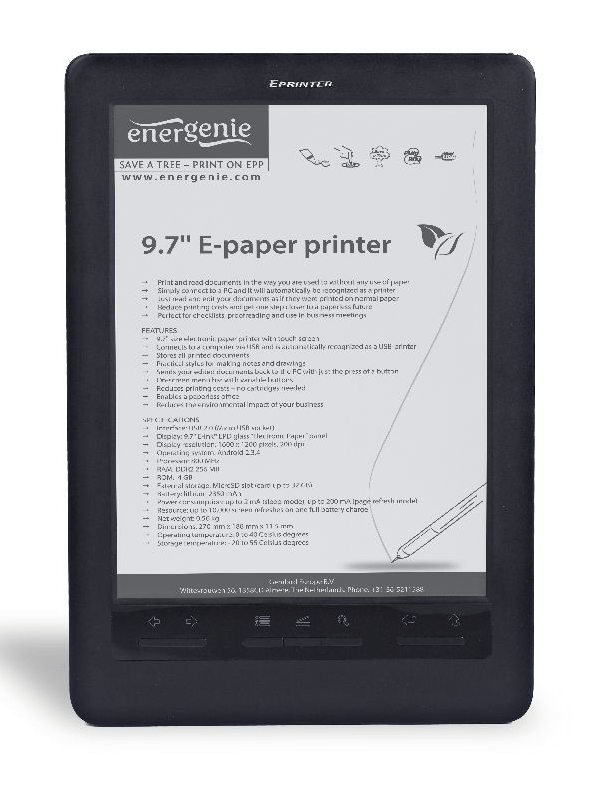
Every time I think there’s nothing new in ereaders something comes along to surprise me. The Dutch gadget maker Gembird is reportedly going to unveil their second 9.7″ ereader next week at the IFA-Berlin trade show.

The EnerGenie PP2 takes a hardware design that some readers will recognize, adds Android, and tries to convince everyone that a price between 399 and 499 euros isn’t completely nuts. It doesn’t succeed.

This ereader has a 9.7″ E-ink screen (1600 x 1200), a touchscreen (with stylus), and is running Android 2.3.4 on an 800 MHz CPU. It comes equipped with 4GB of storage, Wifi, and a microSD card slot.

As soon as I laid eyes on this device I recognized the hardware. This is the same hardware design as the Ectaco Jetbook Color, only without the color E-ink screen. That means that the EnerGenie PP2 is probably based on the Hanvon E920, and not the Hanvon C920.

Gembird is trying to position the EnerGenie PP2 as an "e-paper printer". You plug in the ereader to your PC via USB and it is automatically recognized as a USB printer. You can then "print" a document to the ereader rather than printing it on paper.

Basically Gembird is going to try to convince everyone that buying this expensive ereader is a better option than printing out paper. That’s pretty much the same marketing spiel as their first ereader, which showed up at CES 2012. That Energenie model had a docking station which looked cool, but so far as I can tell was never actually released (I cannot find it).

When I covered that earlier model in 2012 I pointed out that sending your documents to a tablet (like many of us already do) is a more cost-effective option given that you can use a tablet for more than just an ereader:

Gembird  has a great idea here, but do they really have to throw a €500 ereader into the deal? I think there would be a much better value to find a similar ability that utilizes the iPad or other existing tablets and ereaders.

In fact, there already is an option. Goodreader lets you edit PDFs on the iPad, and you can even email or print the PDF after you’ve edited it.  I’m not sure on the best way to get them to the app (email seems like a good bet), but this is still a better value.

But on the plus side, the Energenie will also let you send documents back to your PC:

BTW, while this ereader runs Android I  do not know yet whether you will be able to access the Android OS. It’s not uncommon for users to be blocked from accessing the OS on Android-based and other ereaders. But I also expect that one hacker or another will find away to unlock the OS, though given the price I’m not sure how many hardware hackers will want to buy such a limited device.

I’m not sure why anyone would want to buy it. A tablet would offer a better return, and if you are enamored of the idea of printing to your ereader then don’t forget that Amazon offers a similar ability for the Kindle platform. Even better, it doesn’t even require that you own a Kindle.

MobileRead

Wattpad for Android, iPad, and iPhone Updated With New Ways to Get Content

Wattpad, the world’s largest online writing community, rolled out an update earlier this week for mobile apps. In addition to the usual bug fixes and speed improvements, Wattpad has added a newsfeed option.

Readers will no longer have to go searching for new stories or to find out what their favorite authors are doing; now Wattpad will deliver the updates to their mobile apps. The newsfeed includes all the latest goings on in your local section of the Wattpad community, including story updates, comments, and who is following whom. And if there aren’t any updates, Wattpad will recommend stories to read.

The app also lets readers download free stories in a variety of genres, including SF, fantasy, horror, mystery, romance, thrillers, classics, poetry and more. Readers can share what they’re reading, vote on the stories, and leave comments  on what they just read. The app can also function as a writing app, enabling users to publish anything they write for others to read.

Wattpad is a 9-year-old site that, at last count, had garnered nearly 16 million page views per month, all while providing an environment that encouraged and enabled authors to post free stories for their fans to read. A few weeks back Wattpad announced a new crowd funding platform, Fan Funding, further strengthening the ties between creator and reader.


iTunes

Google Play

A Year of Library/Consumer eBook Price Comparisons: Has Anything Changed?

For the past year librarians with the Douglas County (CO) Libraries have been publishing a monthly price list which compared the retail price for an ebook with the price a library would have to pay (if they can buy the title at all).

The 12th such price list was compiled a few weeks back, and the librarians who compiled it took a moment to reflect on how the library ebook market has changed.

The short answer is that it hasn’t changed very much.

Each monthly list was generated by taking an existing best seller list (Amazon, NYTimes, USA Today, Kindle Store, etc) and then seeing which ebooks could be bought by libraries and how much each ebook would cost. The results have been fairly uniform, with libraries often having to pay 3 or 4 times what a consumer would pay for the same ebook.

For example, the July price list shows that 3 of the 17 titles weren’t available to libraries, and of the ones that were available only 2 titles were offered to libraries at a price even close to that of the consumer price. The rest were marked up 2 to 4 times the consumer price.

But over the past year things have changed slightly. Libraries can buy more of the titles on the July 2013 list than they could on the September 2012 list. Of course, the ebooks are as expensive now as they were a year ago but at least more are available to be purchased.

If you’ve been reading this blog for any length of time then you’ve probably read one or another of my rants about the high price of library ebooks.  And as you can see from these lists (here, scroll down) it’s not just me. Libraries really are being overcharged.

And that’s not the worst of it.  While the monthly list shows you the prices, what it doesn’t tell you is that some of the titles are sold under expiring licenses (more details here). HarperCollins and Penguin, for example, have several titles on the July list which they sell to libraries at a considerable markup (2 to 3 times retail). Those titles are sold under a license that expires in a year.

I should think that you would care about this as much as me. That’s our tax dollars being wasted, and it is out communities being harmed by publishers refusing to deal fairly with libraries.

Luckily there are signs that state and local govt aren’t going to let the situation stand. There are signs that more and more governments are considering regulating the library book market and forcing publishers to deal fairly. That can’t happen soon enough, IMO.

American Libraries Magazine

image by IvanWalsh.com

eBook Sales Remained Flat in First 4 Months of 2013 – Blame The Hunger Games

The AAP has released a new StatShot report for the first 4 months of 2013 and while the news is not bad it is nevertheless frustrating.

The overall market shrank by 6% in that period, with much of the drop due to the children’s/YA segment (religious and adult segments increased slightly). Both children’s hardback and kid’s ebook market segments are still normalizing after last year’s anomalous spike in sales caused by the release of The Hunger Games movie.

The total book market dropped by 6.1% ($2 billion vs $2.13 billion), while the adult segment was up 1.3% ($1.39 billion vs $1.37 billion). The religious book segment also increased by 1.9% ($193.2 million vs $189.7 million), while the kids /YA segment dragged down the rest of the market.

Thanks to the fact that there’s no blockbuster hit this year which matched last year’s success of The Hunger Games, the kids book segment dropped by 26.8% ($417.5 million vs $570 million).

The overall ebook market remained flat for the first 4 months of this year, also largely due to a lack of a blockbuster hit. Nevertheless, adult ebooks and religious ebooks both posted modest gains in that period (12.4% and 7.9%, respectively). The only reason that the ebook market as a whole remained flat was that sales of kids ebooks dropped by 43.7%.

If you factor out the kids ebook market, then the other 2 segments average out to a 12.1% increase over last year. That’s not great but it is also not the flattening out of ebook sales that Nicholas Carr would have you believe.

And if we focused on the adult market segment alone we’ll see that the digital content (ebook & audiobook) made up 38.1% of the reported revenue in the first 4 months of 2013 vs 35% in the same period of 2012. That is not a flattening market, IMO.

Speaking of anomalous spikes in sales, the AAP is also saying that their figures are now showing the effect of the second publication of 50 Shades of Gray last April. I am not sure that claim is true for April, but sales of  that book will likely be reflected in figures for May and June.

And while we are on the topic, let me share another reason that you shouldn’t read too much into these figures.

50 Shades was immensely popular last year, with news reports from as early as February saying that it was a widely read best-seller. That title was even at the top of the Kindle Store best-seller list in March 2012 (and earlier).

Here’s the fun part: Those early sales aren’t reflected in AAP figures for the first 3 months of last year. At that time the book was still published by an Australian publisher who obviously was not an AAP member.

I bring this up to remind everyone that this data only reflects the sales of 1195 US publishers, and not the rest of the world (this includes indie pub and self-pub).

P.S. Here’s the data, for those who are interested in playing along at home. Please note the absence of specific data for April; the AAP did not share that data so any stories which mention specific figures for April are at best iffy.

Kindle Paperwhite is Out of Stock on Several Amazon Websites

Fall is rapidly approaching, and that means that Amazon is going to launch new gadgets.

I still don’t have any leaked details on whether a new Kindle is coming out soon but I can tell you that another model seems to be on the way out. Supplies of the Kindle Paperwhite, Amazon’s newest ereader, are running low.

Reports are coming in from across the web that the Wifi mode is out of stock on Amazon.com as well as Amazon.it and Amazon.es. Those websites are still selling the 3G model, so readers aren’t completely cut off, but the better selling Wifi model is no longer available.

I was first tipped to this story at the beginning of the month by a reader, who told me that the KPW Wifi was out of stock on the European websites (Thanks, aceflor!). I didn’t think it meant anything at the time, but now that Amazon.com is showing a similar shortage of Kindle Paperwhites it’s clear that I was wrong.

It looks like Amazon is letting the Kindle Paperwhite go out of stock before they launch a replacement. That’s different from past years when Amazon continued to sell older models for several weeks or months after shipping their newest ereader.

On a related note, Amazon also stopped selling the Kindle Keyboard earlier this year, also without announcing a replacement. I am bring up that older news because two points make a line, and that line is pointing at a startling possibility. What if this is a sign that Amazon isn’t going to launch new Kindles this year?

That’s not as crazy as it sounds. We don’t really know much about the number of ereaders made and sold, though the latest quarterly reports from E-ink suggest that sales aren’t as good as they used to be (also that Amazon’s E-ink screen purchases had dropped). What if Amazon is seeing a decrease in the number of people interested in buying a grayscale screen?

This speculation would fit in with the news from earlier this year that Amazon bought Liquavista, a competing screen tech company with a low power color screen. Maybe Amaozn is hoping to goose their ereader sales with a color screen, though as one reader reminds me we aren’t likely to see that ereader this year.

On the other hand, maybe Amazon simply misjudged the demand for the Kindle Paperwhite. For all we know there might be a new E-ink ereader coming from Amazon in the next few months, possibly even with an ultra-HD screen.

It is frankly too early to say for certain.

Calibre Reaches Its 1.0 Release – an Event 7 Years in the Making

The ebook library management tool calibre has just hit a major milestone. Kovid Goyal, the lead developer, announced the official release of the 1.0 version of the app yesterday.

Calibre was initially launched in October 2006 at a time when Mr Goyal was still a university student.  It was called libprs500 at the time, and the original goal was quite modest. Kovid wanted to use his newly purchased Sony Reader PRS-500 with his preferred OS, Linux, but the ereader required software that was only available for Windows.

From those humble beginnings libprs500 quickly grew into the best open source ebook management tool anywhere. By the time I encountered it for the first time in early 2007 libprs500 already supported conversion from multiple formats and already had the basics of the ebook management tools it has today. It soon added support for more devices and ebook formats, and as the focus expanded beyond Sony’s first ereader Kovid rebranded libprs500 as calibre in mid-2008.

The last major update for this app was about a year ago, and since then contributors have added many new features like:

  • A grid view of book covers
  • A new, faster database backend
  • Virtual Libraries
  • Conversion of Microsoft Word documents
  • New metadata download sources
  • Full support for font embedding
  • An easy to use tool to edit the Table of Contents in ebooks
  • Rewritten PDF Output engine
  • New tool: "Polish books" that allows you to perform various automated cleanup actions on ebooks

Calibre is now actively used by over 3.4 million readers to support an unbelievable number of ereaders and ebooks. It now works with most Android tablets and smartphones, iOS devices, and more ereaders than you can even conceive of.

Congratulations to everyone who’s been involved in the development of calibre, and of course, first and foremost congrats to Kovid.

MobileRead

New Sony Reader PRS-T3 Leaks, Has HD E-ink Screen and Might Have a Frontlight

Sony might not be interested in making a cutting edge ereader any more but one thing they’ve always managed to do is leak their new gadget right before they announce it.

Two years ago the PRS-T1 leaked on a Dutch retail website, last year the T2 leaked on a US website, and today the PRS-T3 leaked on a Swiss website.

A reader tipped me to the news that the Swiss retailers BuchHaus.ch and OnlineBuchladen.ch (and Spanish and Canadian retailer) may have jumped the gun (Thanks!). They’re now showing incomplete product listings for the PRS-T3 which don’t have nearly as much info on this ereader as we had on the T2 last year, but I can tell you a few details. For example, the model number is PRST3BC.CE7.

Next, the thumbnail at right is the largest image I could find on either website, so here is a photo from the leaked FCC paperwork to refresh your memory:

This ereader has a 6″ HD E-ink screen (1024×758 resolution), IR touchscreen, Wifi, and it might possibly have a frontlight:

Leichter E-Book Reader inkl. Cover mit automatischer Start/Sleep-Funktion, mit IR Touchscreen, W-LAN (802.11b/g/n), Systemvoraussetzung: 6" Bildschirmdiagonale (152.4mm), E Ink Pearls HD Touchscreen (1024 x 758, 212 dpi), 16 Graustufen-Display. Aufladbar

This is an incomplete product description but Google Translate says that "Leichter E-Book Reader" means "light ebook reader". That might indicate that this ereader has a frontlight, though it is far from clear.

Update: Several commenters have already chimed in and told me I am wrong. They say that this would better be translated as "lightweight ereader". That doesn’t really make any sense given the other technical details but they are probably right.

One detail that is clear is that this ereader ships a smart cover. It’s described as having an automatic start/sleep function. The listing also said that this ereader weighs 200g, or about 40g more than the PRS-T2.

Update: This ereader is also going to have a cover with a built in light. Chalid uncovered this detail on BuchHaus.ch, and you can see it at right.

And that’s about all I can glean from the listings.

The Swiss retail price is going to be 179 Swiss Francs, or about $194 USD. BuchHaus.ch is expecting to ship this ereader in October.

There’s no indication of when this ereader will be announced, but in past years Sony has announced their new ereader in August so we are probably only a week or two away from the debut.

I haven’t been briefed on the new device, and I would like to thank Sony for excluding me again. If I had been briefed then I would be under an NDA and would not be able to write about this leak.