World’s First Book Writen by a Computer is Now Available as a PDF

Spambots and other computer generated text is widely considered the bane of the modern web, but that wasn’t always the case. There was a time where when this idea was new and clever, and someone reportedly even used a precursor to today’s spambots to write a book.

Back in 1983 a pair of programmer/writers released a text generator called Racter (short for raconteur). The program was pitched as a way to let the computer write stories and poems, but there are reports that it wasn’t terribly sophisticated and in fact the quality of the output more closely resembled that of a MadLibs style of story writing.

While the released version of Racter was limited, it looks like there might also have been a more sophisticated version. One of the programmers, William Chamberlain, later published a book which he attributed to Racter. That book was The Policeman’s Beard is Half Constructed, and it was published in 1984.

That book is long out of print, and there is no legit ebook either. Luckily this book was saved from obscurity by Udu, a nonprofit group that scans obscure and worthwhile art and literature.

I’m not sure how this book qualifies as literature, but it does strike me as historically significant. After all, it does stand as a testament to the time before spambots joined the dark side.

You can find it as a 33MB PDF.

If you absolutely insist on a paper copy, you can find it on Amazon for about $40.

via

Penguin eBooks Return to Libraries – But Probably Never the Kindle

You’ve probably already heard the breaking news this morning. Penguin is finally going to lessen their hostile position toward libraries.

They’re launching a new pilot program this fall with a couple libraries in the NYC area (NYCPL and and Brooklyn Public Library) to offer ebooks via the 3M Cloud library. The pilot launches in August, and if it goes well, Penguin will open up its e-books to libraries across the country.

The ebooks are going to be sold to libraries on a 1 year license, starting 6 months after they are published. The license will expire, and it doesn’t look like Penguin’s ebooks will be on the Kindle. But this is at least a slight move improvement on Penguin’s last decision on library ebooks.

That 1 year expiration seems a little extreme, doesn’t it? My first thought was that it was extortionate, but after I thought it through I calmed down a little and remembered that most librarians won’t be as upset as I am.

I also realized that with some books it won’t matter.  I’m more bothered by the length of the expiration, not the fact that libraries will need to rebuy ebooks. These won’t be the first expiring ebooks; the Harry Potter series came to OverDrive with a 5 year expiration attached, and I didn’t complain then because needing to buy a book every 5 years is much less punitive than buying it on a yearly basis. And there are other expiring ebooks on the library market, but those don’t get the attention of the big name deals like the one today.

In 5 years many technical books are outdated and need to be replaced. In 5 years many fiction books are forgotten and won’t need to be kept on the shelf. But the single year renewal is worse, and it’s going to make the ebook purchases difficult to justify.

On a related note Penguin’s justification for it is laughable. Penguin told the Wall Street Journal that the "renewable one-year expiration date on e-books, meanwhile, is designed to mimic the natural shelf life of print books." *snicker* So all those decade old hardbacks on the shelves of my local library have to be bought each year?

—

There’s a second story here which I’m not sure anyone has noticed yet. The 3M Cloud Library doesn’t yet support the Kindle, and thanks to this deal with Penguin it probably never will.

You might recall that one of Penguin’s complaints about library ebooks was the ease with which patrons could load the ebooks on to their Kindle. Penguin’s official statements mentioned security, but that was a code phrase for their real fear, which was that making ebooks to easy to use would negatively affect sales on the consumer market.

It’s my guess that Penguin went with 3M because 3M doesn’t support the Kindle. If I’m right then one of the conditions of the contract is that 3M will never support the Kindle.

That, my dear, is a stupid move. It gives OverDrive an advantage that 3M cannot match.

image by My name’s axel


Content Drives Tablet Use, Survey Says

The Online Publisher’s Association has just released the results of a new survey into how people are using their tablets, and it’s a good one. A total of 2,540 Americans were polled in March of this year.  About 760 reported that they were tablet owners, and here are the highlights of how they’re using their tablets:

  • 31% of Americans own tablets
  • Nearly as many own an Android tablet as own an iPad (47% vs 52%)
  • Half spend more than 10 hours a week on the tablet
  • 60% use their tablet several times a day (or more)
  • 60% get content several times a day (or more)

The above details just scratch the surface of the survey results, which run to 47 pages. It’s well worth a read, but there were a couple points that caught my eye.

This survey confirmed something I’d long suspected. While mobile use is up, it turns out that the users aren’t mobile. A full two thirds of the time spent on tablets is now at home, not while the user is actually in motion.

I’m not at all surprised by this because I’ve been tracking how I use my tablets. For example, right now I have a couple tablets sitting next to me. They’re set to ping whenever I get an email or tweet. I also use them when I want to sit back to read and contemplate someone’s blog post (rather than reading it on my laptop, where I lean forward).

The other point which caught my eye was both a surprise and an explanation for the decline in sales of E-ink screens.

When considered as a reading device, the tablet won out over everything from PCs and smartphones to magazines. That’s not much of a surprise, assuming that the content is well formatted. The bombshell was that respondents preferred tablets over dedicated ereaders like the Kindle:

It’s going to suck to be E-ink this year; the ereader market was quite lucrative. Now it looks like it might be disappearing.

image by lejoe

76% of US Libraries Lend eBooks

The American Library Association has just released the results of their annual survey today, and aside from budgets being cut while responsibilities are increased, things are looking good.

More libraries were lending ebooks and audiobooks last fall than the year before (76% vs 67%), and a significantly larger number of respondents said they were lending ereaders as well (39% vs 28%). The survey also showed an increase in the number of libraries that offered free Wifi, internet access, and technical training for patrons trying to use all the technology.

The statistics are drawn from the ALA annual survey, which is conducted on October of each year. The results o the October 2011 survey were just released today – 8 months later. What can I say, that’s how the ALA rolls.

You can find more information at the link below, but to be honest I’m only interested in the ebook stats. I’m surprised to see them up and the same goes for the ereader lending stats. 2011 was a tumultuous year for libraries, what with HarperCollins deciding to limit checkouts to only 26 per copy.

Methinks this is a sign that libraries are going to get into ebooks no matter what the major publishers do. The news of Penguin pulling their ebooks out of libraries and Random House quadrupling their prices will probably hardly even effect the next survey.

ALA

image by Robby van Moor

Next XBox to Get Tablet-Like Controller

We all know that Microsoft announced their new Surface tablet last night, but that’s not all that happened. One unrelated story was lost among the froth of excited bloggery in the build up to the launch yesterday, and as I look over it this morning I realize it is nearly as important.

A spec sheet leaked a couple days ago which detailed the not yet released Xbox Surface. I saw it yesterday, and I initially held the post so I could use the info to support the big news announcement last night. I’m glad I held it because it turns out that the Xbox Surface probably has very little to do with the event last night.

A number of sites reported on the Xbox Surface yesterday, and some called it a tablet. That’s not quite true. A close reading of the spec sheet suggests that the Xbox Surface isn’t a tablet so much as it’s just a wireless controller for the next Xbox. Have you seen photos of the new WiiU controller? While we don’t know what the Xbox Surface will look like, we can guess that it will work much the same way as WiiU controller.

The spec sheet indicates that the the Xbox Surface has a 7″ (1280×800) screen with card slots, Wifi, and Bluetooth, but what it doesn’t have is a CPU. That is in the "stationary computing device", which in fact has 2 multi-core CPUs as well as 5GB of RAM and an unspecified graphics chip.

Don’t get me wrong; I think the Xbox Surface is going to be great – assuming this spec sheet is for real. But the important thing to note here is that the Xbox Surface isn’t going to be competition for the Windows tablets announced last night – not in any form. Those are mobile devices while this one is fixed.  Microsoft is quite carefully not letting their 2 products get in each other’s way.

Clever, that.

Tunesviewer Brings iTunes U to Android, Linux

When Apple launched the updated version of iTunes U back in February, they had planned to only make it available on their hardware.Unfortunately for Apple, someone forgot to tell that to a Linux developer who has been working to make the content in iTunes U accessible to those not lucky enough to own an iPad or iPhone.

Tunesviewer is a 2+ year-old app for Debian, Fedora and Android. It predates the current iTunes U app by quite a bit, and it has one simple goal.  It helps Android owners (there’s more of them than Linux owners) find and download the podcast and videos in iTunes U.

The app won’t help you with the more sophisticated features that Apple added this year (like shared notes) but that’s okay.  It would require far more tricky programming to do more than simply download content. And it does show you everything that is currently available via iTunes U (I double checked with my iPad).

Update: The app has been updated and it now works for me.

TBH, I’m not sure it can even download content. I’ve now tried it on a couple Android tablets (including my eeePad Transformer) and I cannot download anything. I can find the course pages, but when I click the button nothing happens.

Right now I’m scratching my head.  This apparently worked for someone at some point, but it’s clearly not working for me. What’s more, I’ve looked through the various pages and I don’t see where I can do anything to change it. (Perhaps the app doesn’t like the latest version of Android?)

Even though I cannot get it to work, I’m posting this anyway. I’m hoping that it works for you and that someone might have pity on me and tell me how I can fix it. I am willing to put some work into troubleshooting my issues.

I definitely like the idea and I think the developer deserves a round of applause.

Tunesviewer

How to Add Android Market to Polaroid PMID702C

There are many many budget tablets on the market,  all with about the same specs and performance. Given that there’s not much to distinguish them (other than appearance), about the only way to choose among them is whether you can install Android Market and how well a tablet can run the apps you need.

This particular  tablet just arrived on the market this week, and as part of my plan to install Android Market on all my tablet I immediately tried my usual easy to follow instructions for installing Android Market. They worked.

Note that this isn’t  a set of instructions on how to hack the tablet; I’m only interested in achieving a certain minimum level of ability with the least work required.

Like the numerous other tablets I have hacked, installing Android Market was a straightforward process. All I did was repeat the steps listed in this post. It didn’t go quite the same way but the process achieved the goal.

  1. Download this ZIP file to your computer.
  2. Open the Zip file to your computer and copy the contents to a folder on your Polaroid tablet via a USB cable. Then unplug your tablet.
  3. Once you’ve done that, open the file manager on your tablet and go to the folder where you put the files. Try to install the following apps in this order (double click on the files in order to run them):
  • OneTimeInitializer-signed.apk
  • SetupWizard.apk
  • vending-3.1.3-signed.apk

As a 4th step you might want to press the home button, select the checkmark which says "open always with", and then select Launcher. This will guarantee that whenever you press the home button you will see the home screen and not be prompted with a menu.

Update: Does your tablet run Android 4.0 or above? Are you feeling lucky? Then you might want to try to install the file labeled "JB Play Store". This is a later version of the Play Store.  It only runs on Android 4.0 and above, and it doesn’t always work, but if you can successfully install it you will have a complete version of Google Play.

I have Aldiko and the Google Apps installed and they work fine. Note that I don’t have the Google videos working on the tablet and I have no way to test it due to the simple fact that I don’t buy my videos via Google Play.

Amazon Now Rejecting eBooks Made With Calibre

The open source ebook tool calibre has been able to make Kindle ebooks for several years now, and for mot of that time Amazon has accepted those ebooks into KDP with scarcely a murmur. While they often looked down their nose at the app, it wasn’t until very recently that  Amazon decided to start refusing to let authors submit ebooks made with it.

I found  thread over on MobileRead that a conversion specialist started earlier this week. The tech reported that one of their customers had a book bounced by Amazon. After first sitting on the ebook for close to a month, Amazon finally gave this explanation:

Our technical team has found that the content of your book was created by 'Calibre', hence it is not buyable on our web site.

Please upload your book in either a MOBI file created by KindleGen or upload the content file in Doc/HTML format. The book will then be made buyable and searchable in the next 24-48 hours after republishing.

Thank you for your immense patience and understanding during the time it took to research this issue.

That’s a first, not just for the specialist but for me and pretty much everyone who has submitted ebooks to Amazon. While Amazon doesn’t much like the fact we use unapproved tools, they’ve never gone so far as to refuse them simply because of the tools you used.

In fact, the only times I’ve heard of Amazon rejecting ebooks (including a retroactive rejection) were due to technical issues in the ebooks like poor image quality, horrendous formatting, and the like. (They also reject ebooks because they’re public domain or simply junk, but that’s not an issue here.)

And it turns out that in this case calibre probably did introduce some technical issues when the Kindle ebook was made. Another converter responded a few hours later with a similar report as well as a possible cause.

The problem is simpler than I expected. Calibre recently got the ability to make the combined KF8/Mobi ebook files that Amazon really wants you to submit. Unfortunately, it doesn’t do a very good job. According to Kovid Goyal, the primary developer of calibre (in reply to another comment):

If you were generating plain old MOBI files then that is highly unlikely as calibre’s MOBI output has not had any significant changes in a long time. If you were generating combined MOBI/KF8 then it is possible.

So it seems that Amazon might be rejecting ebooks because of flaws in how they’re made. That would be good news, because it means that you can fix and or prevent the problem by simply selecting the correct options while making the ebook.

I’d go back to simply making an ordinary Mobi ebook, at least for now. Leave the KF8 alone until the bugs get worked out of calibre.

But if you absolutely have to submit a KF8 ebooks, you could always try KindleGen or the Kindle Previewer. Both can make the new KF8 ebook format for you.

via


Yitoa Unveils a Flexible eReader in China (video)

Charbax is still on his trip to China and today he succeeded in uncovering a new ereader based on LG Display’s flexible 6″ E-ink screen.

Yitoa is a Chinese OEM, and it looks like they are showing off as clone of the flexible ereader I held in my hands yesterday. The ereader that Charbax found in their booth bears more than a faint resemblance to the Wexler FlexOne (including the Wexler label on the back). Of course, there’s a good reason for that; Yitoa is the manufacturing partner for Wexler.

As you watch the video, note that the listed specs has the wrong resolution; this device uses the plastic backed screen developed by LG Display; the correct resolution is 1024×768.

Hands On With the Wexler FlexOne eReader (video)

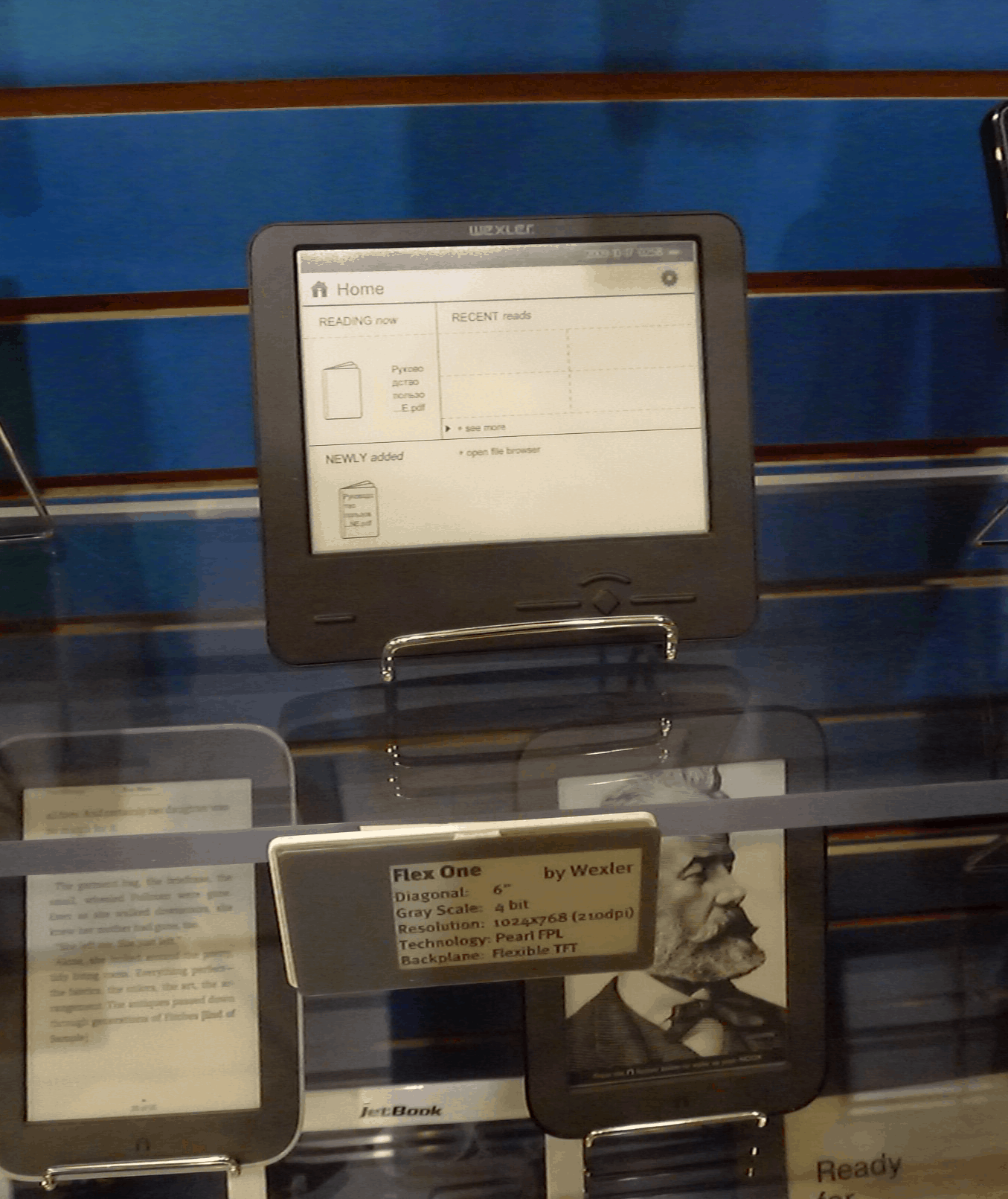
Wexler, a Russian ereader maker, was the first company to release an ereader which used the flexible 6″ E-ink screen made by LG Display. It’s been out in Russia for a few weeks now, but since Wexler won’t ship to the US this device hasn’t managed to cross the ocean.

Until now.

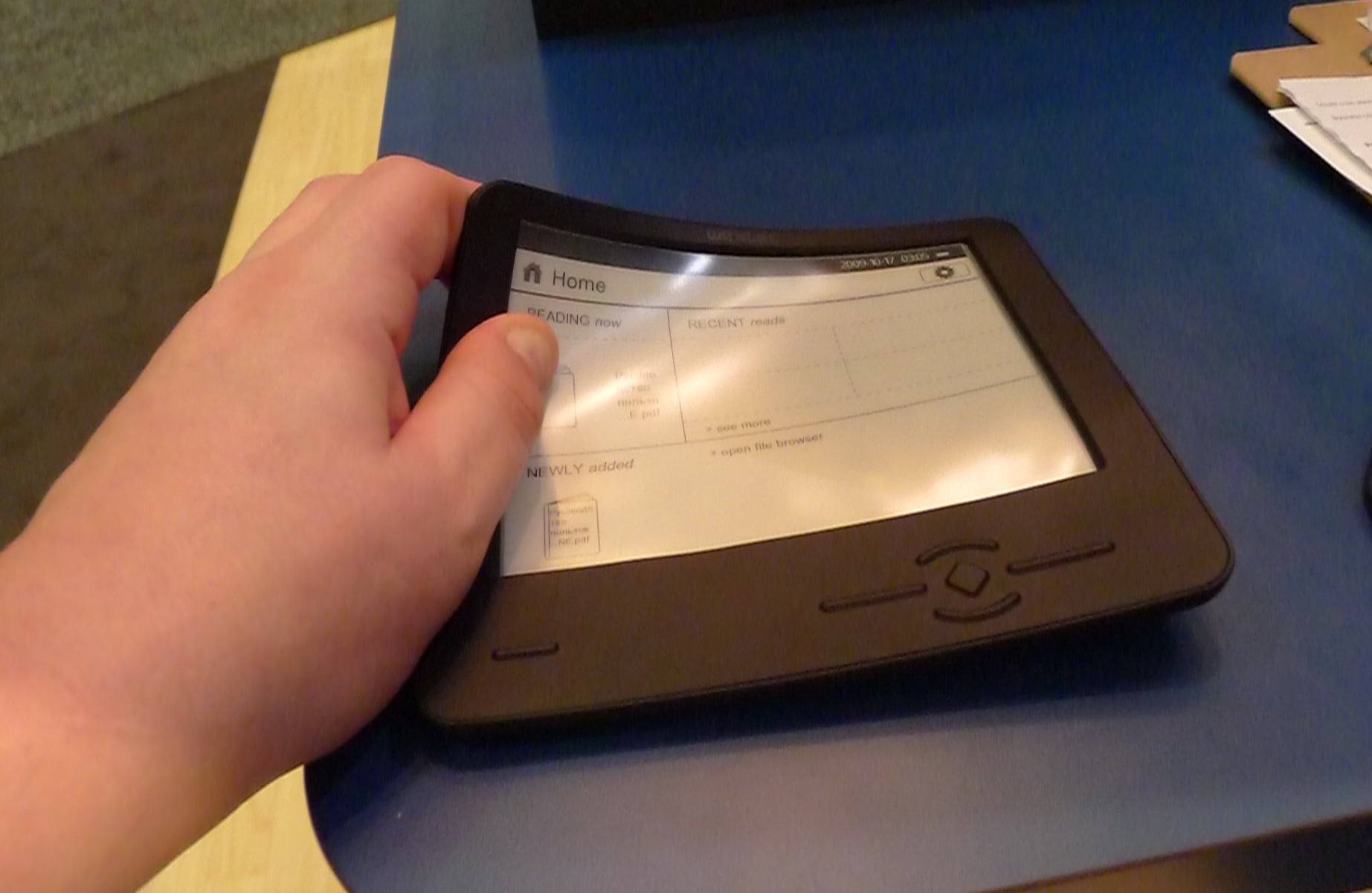
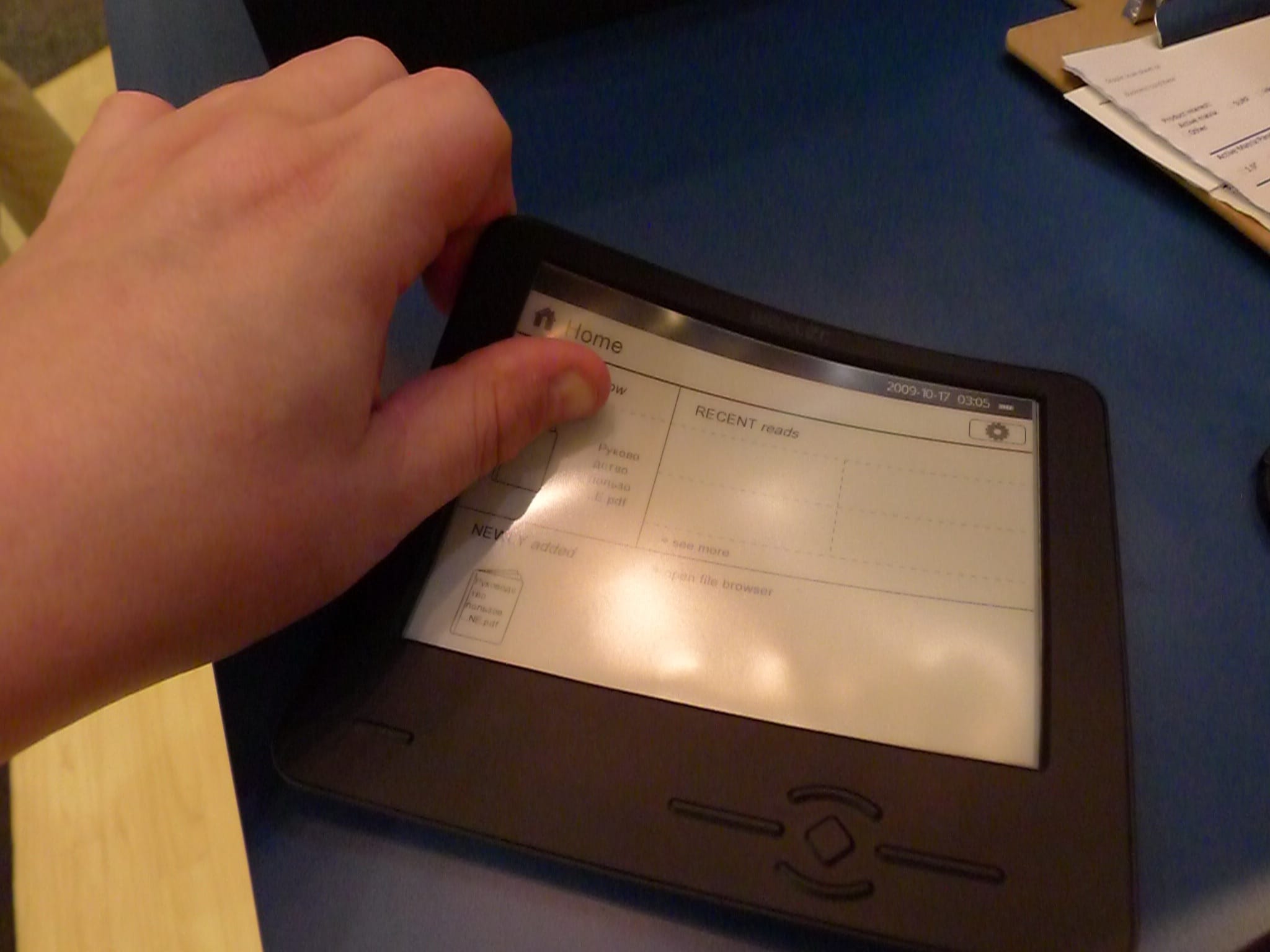
I got my hands on it for a few minutes yesterday, and the head of marketing at E-ink also helped Ron Mertens shoot a brief video (end of the post). I’m still trying to talk my way into buying it from E-ink (wish me luck). Just so you know, this is the screen that I was disappointed not to find in the LG booth, and I was a little surprised to see it in the E-ink booth.

The FlexOne looks just like the unit shown in the abuse video I posted a few weeks back. It is indeed that flexible:

Naturally I didn’t dare put any real effort into killing it; it wasn’t mine after all (and I’m still trying to get it).

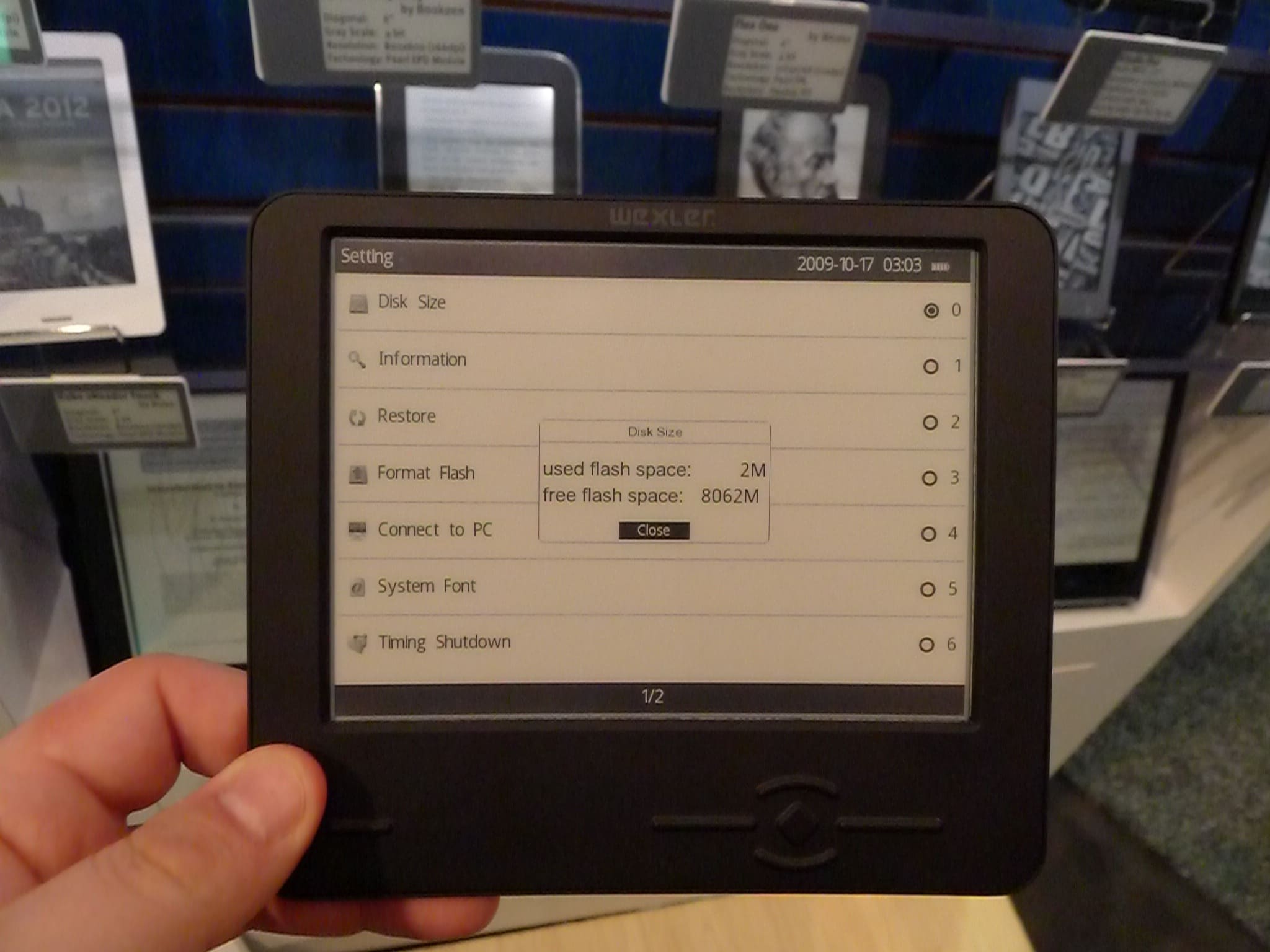
I also put a few minutes into trying out the features.  It’s a pretty basic device with no touchscreen, Wifi, or anything you wouldn’t expect to find on a cheap ereader. About its only remarkable feature is the flexible 6″ screen. I’m hoping to see it on the next Kindle or nook, aren’t you?


Sony Launches a Browser Based eBookstore (Finally)

This next piece of news comes from the "We’re not dead yet" dept.

Sony announced yesterday that their ebookstore was now available to browse and buy ebooks via any web browser.  This is a stellar achievement for Sony, and it comes a mere 6 years after they launched the Reader Store.

Nope, I’m not kidding there. Sony opened the Reader Store when they launched the PRS-500 way back in 2006. You could only access it via Sony’s app, which only ran on Windows (and poorly, at that).

In other news, Sony also released an updated version of the Reader app for Android. According to the listing in Google Play, the app has a new UI as well as several bug, stability, and performance fixes.


Plastic Logic’s New Color Screen Looks Better in Person

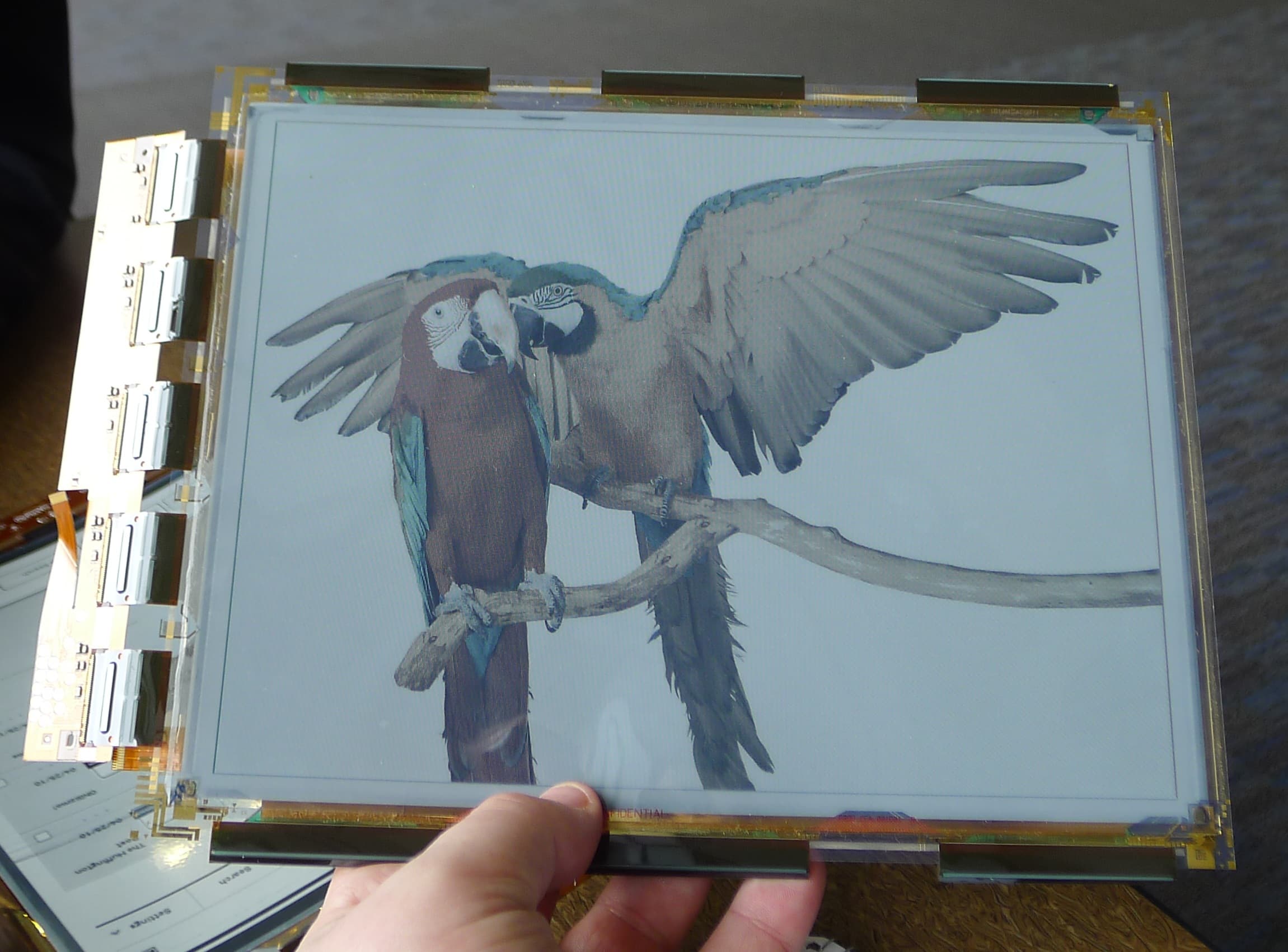
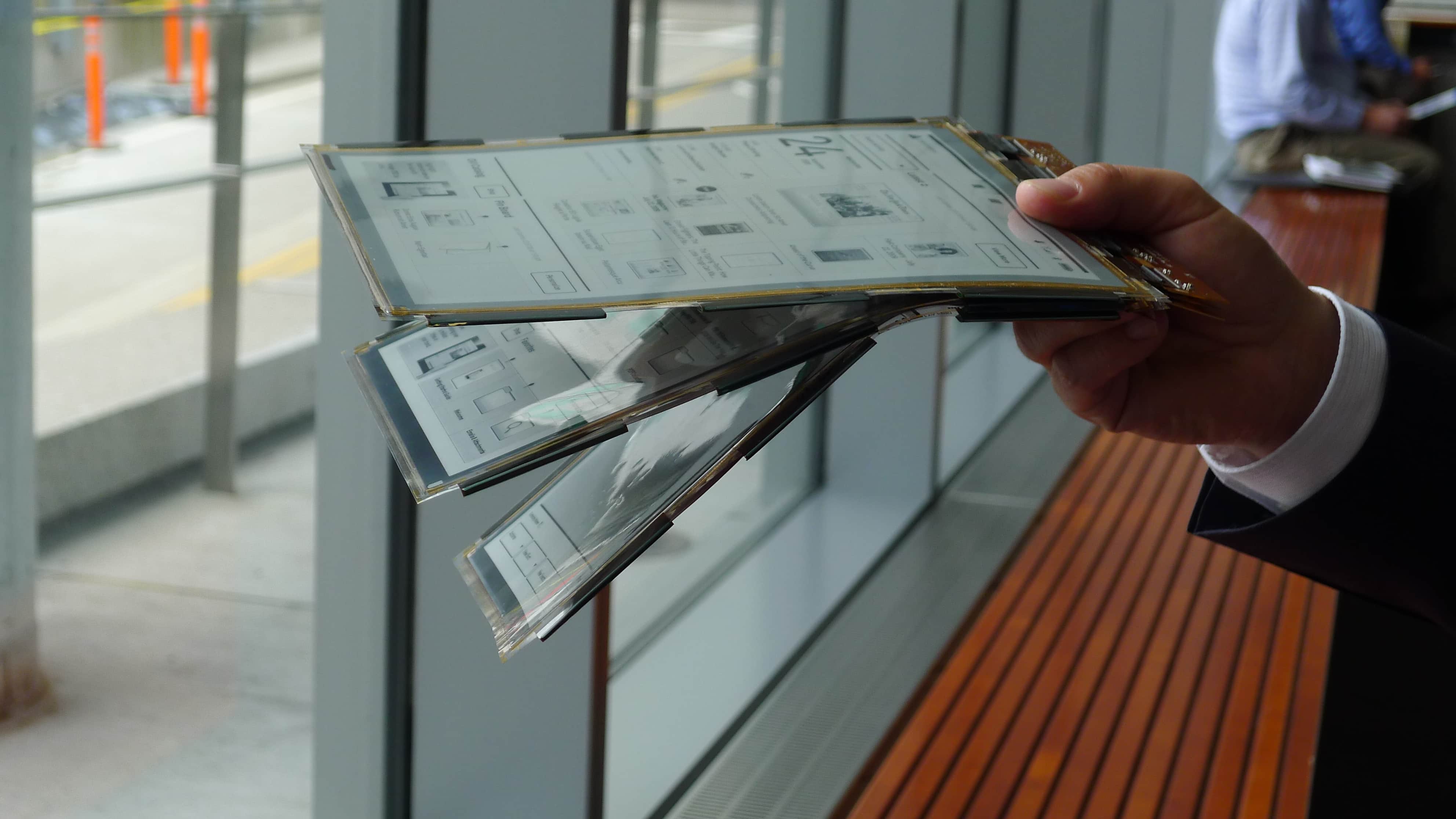
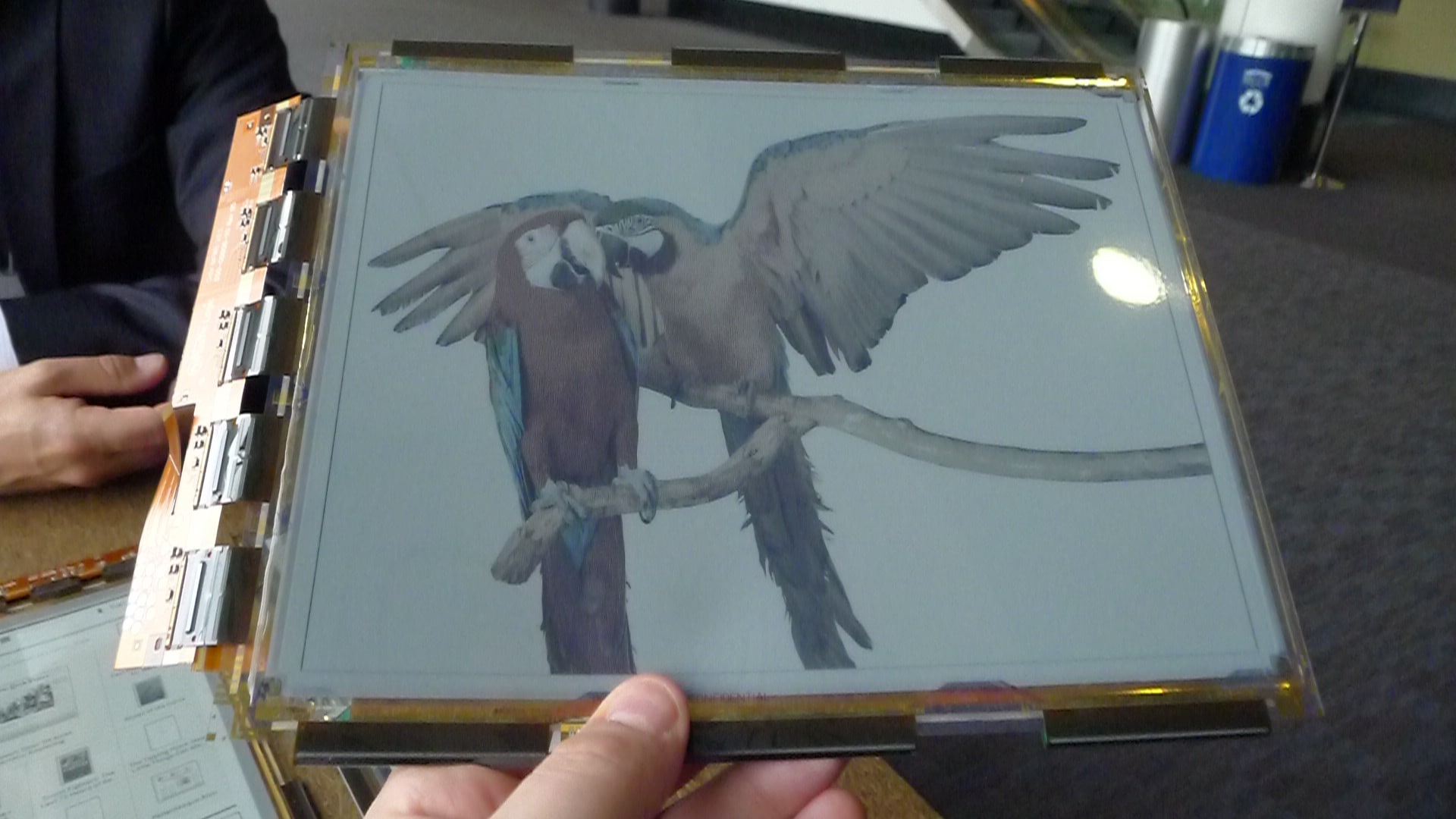
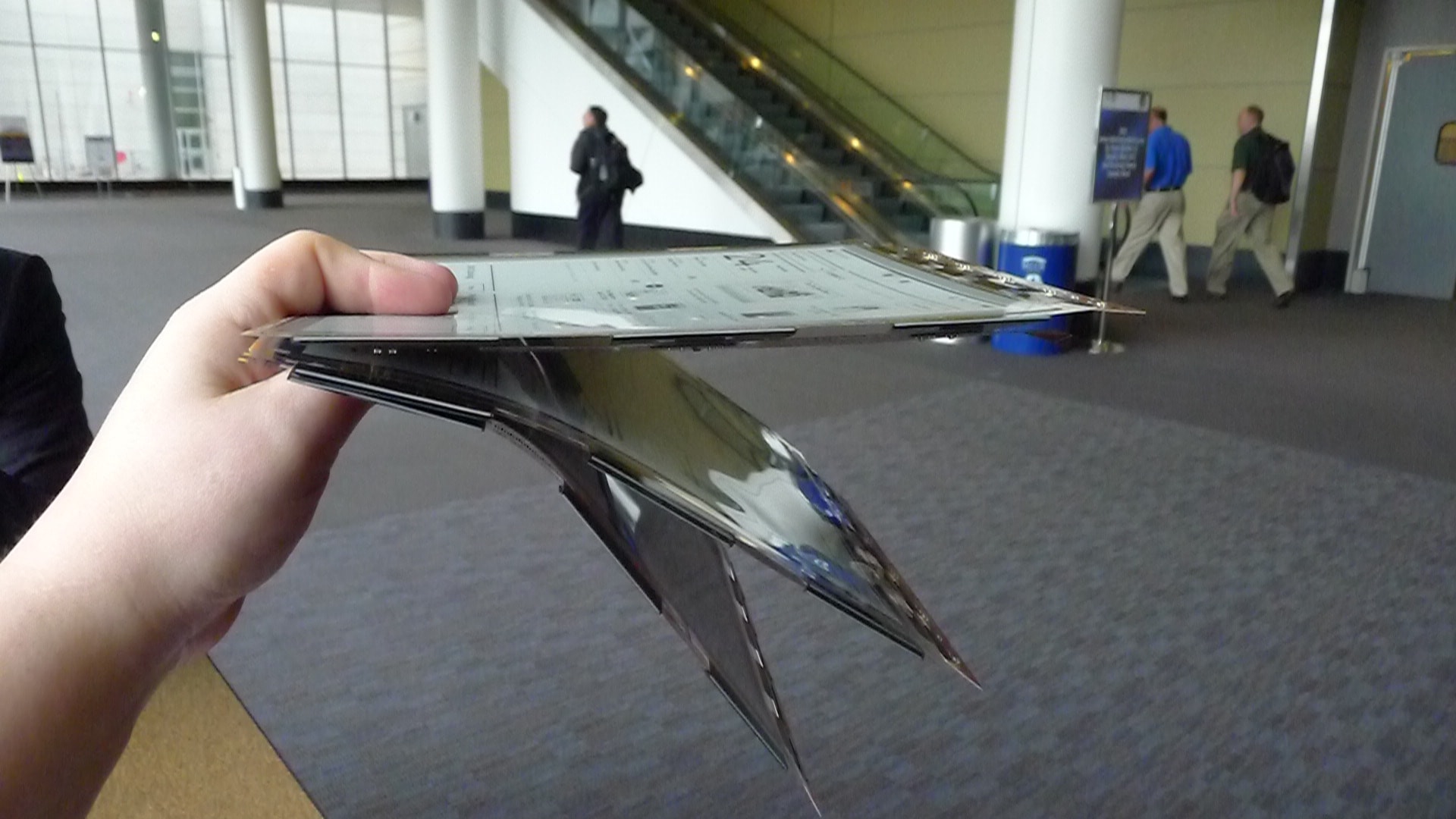
I finally got my hands on the new PlasticLogic screen today. I met with Dr. Peter Fischer earlier today and while there were a lot of questions he couldn’t answer, I did get some details as well as a bunch of photos.

When you look at the photos, note that the ones showing 3 screens also shows them bending at different rates. That’s not a trick; PlasticLogic has screens in 3 thicknesses (780, 330, 130 micrometers). The floppiest screen is the thinnest.

I also got a couple photos of Plastic Logic’s new color screen that I posted about a couple weeks ago. It’s about the same thickness as the 780 micrometer screen, and like the other 3 screens it uses Plastic Logic’s backplane to support an E-ink panel. yes, that’s the same screen material as used in a Triton E-ink screen, only PlasticLogic came up with their own backplane to mount it on. (Here’s what the E-ink material looks like before it is mounted.)

I thought the color screen looked a lot better than E-ink’s screen. It was much less gray and had a slightly higher resolution. And before you ask, I don’t know who did the color filter that is lying on top of the the E-ink component; Peter wouldn’t tell me.

PlasticLogic is still looking to sell this screen to partners, and Peter admitted to having met with the partners at this conference. Peter also told me that PlasticLogic might be postponing their plans for the new factory in Russia due to their recent withdrawal from the ereader market. They’re going to continue to make new screens at their current factory in Dresden.

I’ve Read the Past, And It Hurts

I took my new paper books on holiday recently. Now there’s a sentence I never expected to write.

According to all the Luddites in the mainstream media, something like 99 per cent of all known life are still reading paper books. Only freaks, geeks, and idiots currently buy ebooks. As a leading ebook blogger, I decided I ought to see what all the fuss is about so I bought some paper books.

I probably make that sound simpler than it really was. What I really did was: Drive to Books-a-Million… Not find all the books I want… Drive to 2nd & Charles… Still not find all the books I want… Drive to both local 2nd hand bookstores… Find a couple titles… Drive to B&N… Give up after spending a day in the car.

One unfortunate deficiency with paper books is that they cannot be downloaded the moment you buy them. They either take days to arrive by mail or you will be forced to spend hours in the car trying to find a bookseller that carries the titles you want.

But I did eventually get my suitcase packed with  the books I bought. Luckily I already had a larger suitcase to use; surprisingly paper books take up far more space than ebooks.

I stepped into the airport with my luggage rolling faithfully behind me, and went to the counter to check in. The clerk told me that I would have to check my bag. It seems that the dozen titles I bought, which would have fitted into an ereader without adding an ounce, weighed too much and took up too much space for them to come into the cabin with me.

My holiday companion sat beside me on the flight, smugly reading her Kindle. By the time we got to the pool (with me panting over my heavy paper books), she had finished her George RR Martin, and I had barely started my Hilary Mantel. With my old tried and true books, I was left behind.

And it was not an uneventful holiday. I was forced to go to a clinic not once but twice. Paper books, despite being reportedly more eco-friendly, are also more dangerous to use.  The edges of a page are quite sharp, leading to several cuts which got infected. What’s more, those hardback books were much larger and heavier than the paper books I had been told to expect. The effect they can have on your toes when knocked off a table are frightening to contemplate.

I got back from holiday with a limp, a bottle of antibiotics, and no lovely ebooks to share on one of the (authorized) lending sites, meaning that I was powerless to prevent my holiday companion from sharing Glen Beck’s latest work via my account then using the credit to borrow another ebook.

Next time I go on holiday, I’m taking only small, light, cheap ebooks, and then I’m going to bring them home and arrange them on Goodreads by author and title. I may be mistaken for a freak, a geek, and an idiot, but I’ll have read comfortably and I will be able to boast that I brought my entire library with me.

Editor’s Note: The above post was a satire of this article by Katy Guest. I hope you enjoyed it as much as I did.

image by nedrichards

Enhanced eBooks Don’t Enhance Literacy

An interesting but obvious report was released today by the Joan Ganz Cooney Center. This Sesame Street Workshop affiliate gathered 32 parents and their kids and had them read books, ebooks, and enhanced ebooks.  The goal was to see how the parent-child pair used each type of book and to see how much information the children retained.

I almost passed on this story because I guessed most of the results before I read them.

When print books were compared against enhanced ebooks, both the parents and the kids played far more with the extraneous features and the kids recalled much less from the enhanced ebook than from the print book.

That’s no surprise. Enhanced ebooks are more like games than they are like books. It’s easy to jazz up the content with extraneous material but it’s hard to integrate that content in a useful manner. Ask any teacher and they would have told you that the kids will be distracted by the noisy animation and miss important details in the text. Heck, most parents could have predicted that too.

If the goal here was to find out what we already know, then congratulations. They succeeded. But if you wanted to find new data you’re going to have to keep looking.

The data from the other part of the study is slightly more interesting. When comparing the print vs (basic) ebooks, the kids as well as the parents interacted more with the ebook than with the paper book and recalled more info from it. Interesting yes, but it was only a slight difference. Given the small study group (n=32), I’d hesitate to draw any conclusions from it.

In fact, the same goes for all the results. The only conclusion I’d draw from this is that the study should be repeated with a few hundred kids. I would expect that to provide more trustworthy results; with only 32 test subject pairs there’s a high chance that the test includes more outliers than  expected.

But until this study is repeated, about the only thing I draw from it is that enhanced ebooks shouldn’t be used to encourage reading. It doesn’t look like they will help. Clearly the game-like aspect is having a greater effect than the book content.

Here’s How You Should Look at The Taleist Self-Pub Survey

Taleist released the results of a survey of self-pub authors today. If you haven’t seen it yet, then you probably haven’t heard the statistics.

Good. That gives me a chance to explain my viewpoint. I read the results this morning, but it took me until this evening before I placed them into context.

Update: The Guardian has an article on these survey results and it’s an excellent example of not considering the context.

The thing is, no matter how little those authors made while self-publishing their ebooks, on average they are almost certainly better off than if they did not have the option of self-publishing.

Just over a thousand authors responded to the poll, and they made up a diverse group  (age, gender,and location). The results are only available as a Kindle ebook, so I went out and bought it. BTW, you can read it for free if you have a Kindle and an Amazon Prime membership.

Here are the highlights:

  • 72% of respondents lived in the US
  • 75% were between 30 and 60 years of age
  • Better than 65% had a college degree (BS, BA, or above)
  • One third work full time
  • Authors who got outside help earned 34% more on average
  • 53% self-published for the first time in 2011, with 20% having gotten a start in 2010
  • the 29% who went from a traditional publisher to self-publishing earned twice as much on their own as they did from their publisher
  • Only 60% of authors either could or would answer questions about their earnings
  • Average earning was $10k per author
  • Half of the authors earned under $500 in 2011 from their books
  • 10% of authors earned over 75% of the revenue
  • 97 authors indicated that they could live off of their ebook sales

The $500 median is probably the detail that will be repeated the most, and that is the one which I wanted to really understand before I  posted this. I expect those who need to defend traditional publishing will point to it as a sign that self-pub is a dead end and proclaim that traditionally published authors make more than that so it’s clearly the better system.

I see it differently. Over a third of the respondents couldn’t get a traditional publishing contract. If they earn so much as a dollar, it’s more than they would have under the old system.

While the published author might make more on average with a traditional publisher (disputable), I would bet that half or more of the 1,007 self-pub authors in the survey would never have been given the chance by a traditional publisher.  (In fact, 40% had tried to go the traditional route and still have the scars.) There’s a reason why we call them gatekeepers.

On the other hand, there is one point which I don’t mention above that I think is worth mentioning here. There might be a reason why those rejected authors were rejected. The indie authors who never tried to go the traditional route made an average of 41% more, suggesting that some of the rejections may have been justified.

All in all, it’s a fascinating read. You should go get it.