All Romance eBooks is Shutting Down

2016 has already brutally winnowed book industry blogs, and now it has claimed an ebook retailer.

All Romance eBooks has posted a notice on its site with the news that it is shutting down.

It is with a great sadness that we announce the closing of All Romance eBooks, LLC. For the first year since opening in 2006, we will be posting a loss. Despite efforts to maintain and grow our market share, sales and profits have declined. The financial forecast for 2017 isn’t hopeful. We’ve accepted that there is not a viable path forward.

All Romance has always been a labor of love. Over the years we’ve developed wonderful relationships with the vendors we’ve worked with, the publishers whose content it’s been our pleasure to sell, the authors who supported us, and the customers who it’s been our honor to serve. On midnight, December 31 our sites will go dark. Between now and then, we encourage consumers finalize any transactions, download purchases, and back up libraries.

If you directly publish content for sale through our platform or All Romance has acted as your publisher via our Publishing in Partnership program, you should be in receipt of an email from us with additional information. If not, please contact us at [email protected].

Like BooksonBoard, which abruptly shut down in 2013, All Romance eBooks has collapsed under a ton of debt.

There are several reports over at The Passive Voice (where I first learned of the closure) that ARE is offering authors and publishers ten cents on the dollar for their overdue royalty payments.

For example:

And unfortunately for me, they owe me money.

They’re asking for a settlement of .10 on the dollar for money owed. I’m not taking it, because of the amount of money they owe me. I’m also concerned that the settlement could count as preferential payments that’ll be at risk of being clawed back if they do end up in bankruptcy.

Edit: And there are reports on KBoards that ARE is giving customers only four days to download their books before the servers are turned off. That might be a little difficult given that the site has slashdotted itself and is no longer accessible.

Edit: The Romance Writers of America (RWA) has commented on the closure, saying that the "RWA finds it unconscionable for the owner of ARe to withhold information so long and to continue selling books through the end of the month when the company cannot pay commissions. RWA contacted ARe but has not yet received a response."

Edit: And it gets worse. ARE was pre-selling adverts for 2017 only days before announcing the shutdown.  They were asking for thousands of dollars for a single ad. Hopefully ARE’s victims will be able to use their credit cards to get the money back.

Edit: Authors published by ARE won’t be so lucky. They’re getting bupkis for their unpaid royalties. They’ve been offered rights reversion on condition that they consider this "a negotiated settlement of your account to be paid in full".

This is a mess all around.

image by cowbite

B&N: We Already Dealt With the Malware Infesting the new Nook Android Tablet

Barnes & Noble has issued a statement on yesterday’s story about the malware infesting the new $50 Nook Android tablet.

They say that the ADUPS malware has already been neutered, and that a future firmware update would entirely remove it from the tablet.

“NOOK Tablet 7” went on sale on November 26. By that time, the device automatically updated to a newer version of ADUPS (5.5), which has been certified as complying with Google’s security requirements, when first connected to Wi-Fi. ADUPS has confirmed to Barnes & Noble that it never collected any personally identifiable information or location data from NOOK Tablet 7” devices, nor will it do so in the future.

Finally, we are working on a software update to remove ADUPS completely from the NOOK Tablet 7”. That update will be made available to download within the next few weeks, but in the meantime customers can rest assured that the device is safe to use.” –  Fred Argir, Chief Digital Officer

I am still waiting for users to confirm that their tablets have been updated as B&N mentioned in their statement.

There is at least one user report which contradicts that claim, so I would suggest that you take it with a grain of salt.


Barnes & Noble’s New $50 Nook Tablet Ships with Bonus Malware

Barnes & Noble’s ongoing efforts to outsource as much of its Nook platform as possible has just come back to haunt it.

Linux Journal reports that the new Nook 7 Android tablet which launched last month comes with free malware and spyware installed:

The latest tablet from Barnes & Noble, the newly-released $49 BNTV450, has been found to include ADUPS. In the aftermath of the BLU data theft, ADUPS hostile data collection and control over Android may (or may not) be temporarily quelled, but harmful capability remains with the ADUPS agent. Devices running ADUPS should be considered under malicious control, and they should not be used with sensitive data of any kind.

This is the same malware which was discovered in Blu brand and other cheap smartphones last month, and it is a nasty customer.

It’s a piece of spyware which sends all sorts of data back to ADUPS servers in China. Just consider it a data colostomy:

These devices actively transmitted user and device information including the full-body of text messages, contact lists, call history with full telephone numbers, unique device identifiers including the International Mobile Subscriber Identity (IMSI) and the International Mobile Equipment Identity (IMEI). The firmware could target specific users and text messages matching remotely defined keywords. The firmware also collected and transmitted information about the use of applications installed on the monitored device, bypassed the Android permission model, executed remote commands with escalated (system) privileges, and was able to remotely reprogram the devices… The firmware that shipped with the mobile devices and subsequent updates allowed for the remote installation of applications without the users’ consent and, in some versions of the software, the transmission of fine-grained device location information.

To be fair to ADUPS, they insist that they have cleaned up their act since last month. They say they pushed out a new version of their malware which no longer spies on users.

I don’t know if that is true but it doesn’t matter for owners of the new Nook Android tablet. Linux Journal made it clear that the version of ADUPS they found on the new Nook tablet is an older version which harvests users organs and sells them on the black market which does transmit user data to China.

If you have one of these tablets, I strongly urge you to return it.

Fortunately, B&N has a holidays return policy which states that customers have until 31 January to return most merchandise (including Nook devices)  purchased between 14 November and 31 December.

So if you have that new tablet, and you still have the box and receipt, you can get a full refund.

Barnes & Noble was contacted for comment, but has yet to respond. I will update this post with their statement when it arrives.

eBook Evangelist

Hands On With Netronix 13.3″ ($520) and 6.8″ ($135) E-ink Notepad

Charbax recently caught up with ereader maker Netronix at a trade show and got a first glimpse of their new large-screen ereader. (Later in the video we get to see a new 6.8″ model which is reportedly in mass production. There was no mention of where you can buy one, however.)

Netronix has been showing off a 13.3″ ereader for a couple years now. It’s not even close to reaching the market, but thanks to the long wait the new demo unit is considerably more polished that what I saw at CES 2015.

Weighing in at under 400 grams, the new model is both lighter and thinner, but it still runs Android. It features a 13.3″E-ink display with a screen resolution of 1200 x 1600 and a stylus which utilizes passive digitzer technology.

As you can see in the video, it looks pretty cool, but I wouldn’t get your hopes up that we might one day see it on the market. Someone would have to commit to buy 3,000 units first at a cost of around $1.5 million, and given the small size of the market that just isn’t going to happen.

And that’s a shame because from what I have seen, Netronix has better software than its competition.

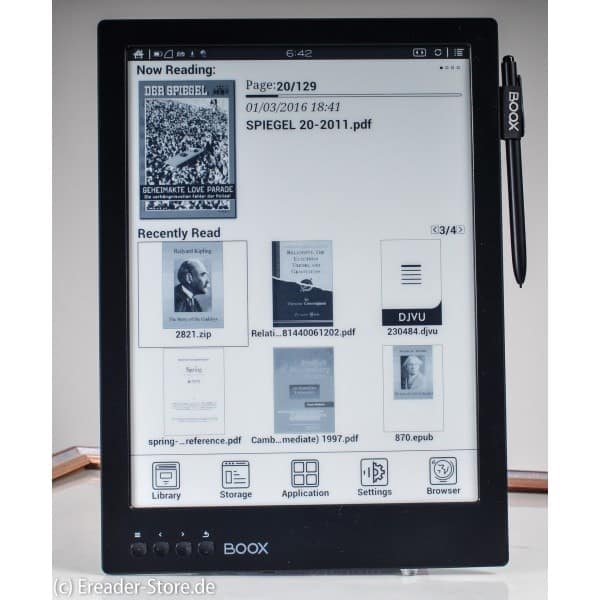
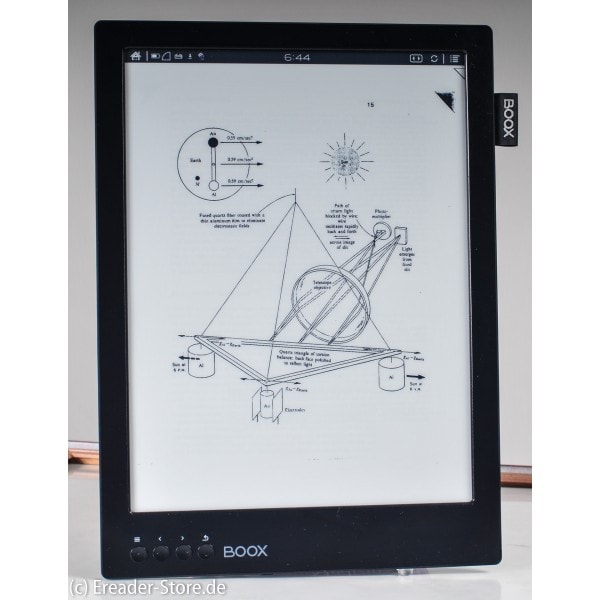
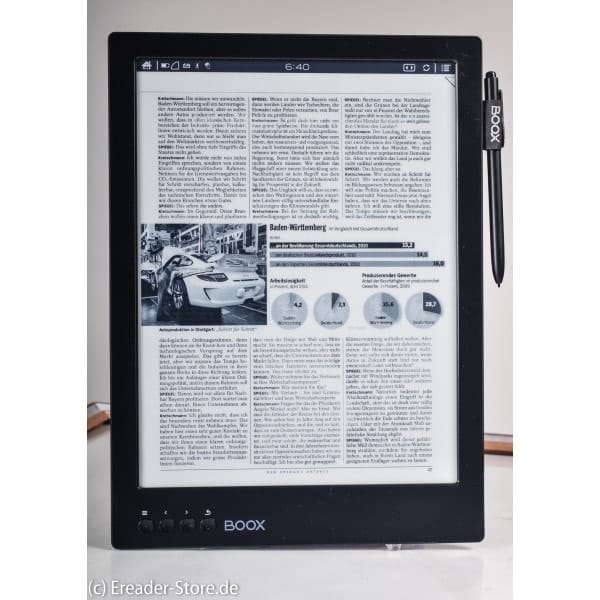
There is a similar device with a 13.3″ screen, the Onyx Boox Max, and the only reason that device made it to market is that Onyx is willing to sell it in smaller quantities. (You can buy the Max at eReader-Store.de.)

AAP Reports Publisher eBook Revenues Down in July 2016

The Association American of Publishers released their monthly Statshot report, and the ebook news continues to be bad.

Total revenues (for the 1,200 publishers who submit data to the AAP) were down 8% in the first seven months of 2016, to $7.5 billion, while trade revenues were down a fraction of a percent ($3.63 billion).

Focusing on the trade segment, revenues from the adult category were down 3.3%, while YA and religious presses were up 6.3% and 8.3%, respectively.

In terms of formats, audiobook and print revenues were up in that period, but not enough to compensate for the decline in revenues from ebook sales, which were down 19.2%.

Here is the press release:

Childrens and Young Adult titles grew 31.1% in July 2016 vs. July 2016, with the majority of that growth coming from hardback books. While revenue for Trade Books grew in April, May, June and July, the gains were not enough to counter declines from earlier in the year, and the overall category was flat (-0.4%) for the first seven months of 2016 vs. 2015.

Overall publishers’ revenues (sales to bookstores, wholesalers, direct to consumer, online retailers, etc.) were down 7.9% for the first seven months of 2016 vs. the same period in 2015. The revenue decline occurred because of lower sales for higher education course materials, and Prek-12 Learning materials.

Overview

  • From January to July, sales in all tracked categories were down 7.9% to $7.5 billion vs. the same time in 2015. Tracked categories include: Trade – fiction/non-fiction/religious, PreK-12 Instructional Materials, Higher Education Course Materials, Professional Publishing, and University Presses.
    • Publishers’ book sales in July 2016 declined in all categories except Children’s/YA books
  • From Jan. to July, trade sales were flat (-0.4%) to $3.63 billion:
    • Adult Books had $2.51 billion in sales, down 3.3%
    • Children’s/YA Books had $877.0 million in sales, up 6.3%
    • Religious Presses had $250.0 million in sales, up by 8.3%

Trends for Trade by Format

  • From Jan. – July 2016 vs. 2015:
    • Paperback books grew 8.4%
    • Downloaded audio grew 31.1%
    • Hardback books grew 2.6%
    • eBooks were down 19.2%

Educational Materials and Professional Books

  • Educational Materials had a revenue loss of 8.9% for K-12 Instructional Materials and 18.1% for Higher Education Course Materials, in the first half of 2016 vs. 2015.
  • Professional Publishing was down 19.4% in the first seven months 2016 vs. the same time in 2015. These categories include business, medical, law, scientific and technical books. University presses were down 3.9% during Jan. – July 2016 vs. 2015.

image by Radomir Cernoch

Datalogics Launches Bookvia Reading App

Earlier this year I reported that Datalogics was one of two companies which were using Sony’s new DADC ebook DRM. Bluefire was using the DRM in its new cloud library app, and Datalogics was offering the DRM as an option in its whitelabel textbook platform.

Now Datalogics has launched a new app, Bookvia, which uses the DADC DRM.

“We are very pleased to announce the launch of the Bookvia app,” said Ching Yue, Product Manager for eBook technologies at Datalogics. “This year has been dedicated to developing new and innovative solutions for our eBook customers. Being able to offer Bookvia, with the Sony DADC URMS integration, is a significant step forward in providing a complete solution to customers who want to adopt the URMS ecosystem for their eBook distribution channel.”

There isn’t much reason for consumers to download this app; the DRM is not used by any retailer. But according to Datalogics, the benefits include:

  • EPUB 3 support for URMS content
  • enabling users to consolidate their electronic publications in one app
  • Branding options
  • a powerful and engaging reading experience
  • Night reading mode
  • streamlined content delivery to the reader through a common bookshelf
  • Highlighting and page scrolling
  • In-app Dictionary

The app can be found in iTunes; an Android app is planned for next year.

Datalogics

E-ink is Now Selling ePaper Screen Units Direct to the Public

It has long been possible to buy E-ink screens and kits through electronics supply warehouses or through niche sites like AdaFruit – all that you needed was a credit card and a web browser.

Now E-ink is selling the screens units themselves. E-ink has quietly launched its first direct retail site.  The store has been under development since April(*), but was only discovered this week.

The site is in beta, and it currently carries 20 different screens with sizes ranging from a 1″ circular smartwatch display to a 32″ rectangular signage. Prices range from $99 for that 1″ circular display up to $2,000 for the 32″ sign unit.

While most of the screens are grayscale, E-ink does offer a number of the 3-color Spectra screens in a variety of sizes, including at least one size (5.83″) which I have been unable to find elsewhere.

It’s not clear why E-ink is getting into direct retail; DIY is not a big market (if it were, Amazon would be selling these screens). But one detail suggests that this is less about sales than market research.

E-ink won’t sell you a screen until after you tell it how you want to use it. Customers have to select an option (ereader, wearable, eNote, shelf label, signage,etc) from a drop down. There’s no restriction on how you can use a screen – you could for example use the 1″ round display for an ereader – but E-ink does want to know the intended use.

So apparently E-ink has decided that it needs to know more about how its tech is being used.

That’s a good idea, but wouldn’t it be cheaper and more effective to buy mailing lists from retailers and run an email survey?

P.S. Ask me how I know the site has been under development since April. Go on, ask.

P.P.S. The store is running on WordPress, and it uses WooCommerce and the Atkina theme plus common plugins like Contact Form 7.Looking at the code tells us that the first product photos were uploaded in April 2016.

2016 Was Not Kind to Book Industry Blogs

When we look back on 2016 it is going to be remembered as the year of The Donald; the year we lost everyone from Prince to Florence Henderson to Bowie; and in a smaller way 2016 should also be remembered as the year that book industry blogs took a beating.

Several blogs have either shut down, scaled back operations, or radically shifted their focus this calendar year.

While any one of these blogs was a relatively small fry in the grand scheme of things, collectively their demise left a huge hole in the news coverage for the book industry.

The carnage started in February of this year when I announced that I was stepping back from this blog. Advertising was no longer paying what it used to, so I had to find a day job.

I pivoted to become a web developer – I now build author websites, and help people solve problems with their websites.

The next to go was BookSlut, which shut down in May. Founded in 2002 by Jessa Crispin, that site was one of the first book blogs ever, but it was sadly subject to the same financial woes afflicting web publishing today: it couldn’t make any money.

Crispin told Vulture that "when I realized the sacrifices I was going to have to make in order for it to make money, it wasn’t worth it" and that

It’s just a really slow process. Running it takes a lot of time, and it makes no money so I’ve been pouring money into it for 14 years. We always were trying to figure out ways to keep it going. I had a meeting with my managing editor and we went through all these ideas and nothing seemed viable and we said, “Oh, we should just close it, shouldn’t we?”

BookSlut was followed a couple months later by Teleread, a site which was literally the oldest ebook blog on the web.

Teleread founder David Rothman had only just bought the site back from Napco in May 2015, but was forced to shift the site to Wordpress.com in June 2016.

While Teleread lives on, it is but a shadow of its former self, with fewer contributors and less frequent postings. As with Bookslut and The Digital  Reader, the root cause was money (I know lots more, but it was shared privately so I cannot repeat it).

The next to go was IndieReader. This seven-year-old site announced (PDF) last Monday that it was essentially shutting down its book review blog in favor of its author services division.

Amy Edelman told me by email that IR would "cease posting reader-centric editorial content and IndieReader Author Services (IRAS), IR’s sister company, will assume IndieReader’s URL", and that

In its new iteration, IR will focus its full attention on helping self-published authors produce books that can compete in today’s more crowded publishing marketplace. Dffering significantly from companies that offer packages emphasizing the “bells and whistles”.

And finally, GalleyCat abruptly shut down on Friday. Editor Dianna Dilworth did not explain why the blog shut down, merely saying that:

We are sad to report that we are closing the book on GalleyCat.

We thank you for your support and readership over the years. Over the past decade, it’s been our mission to keep you informed with news from publishers, authors, booksellers and libraries. We’ve had the pleasure of reading thousands of fantastic books and reviewing many of them along the way.

GalleyCat makes five book industry sites which have closed, scaled back operations, or shifted their focus – all in the space of a calendar year.

Edit: And as a reader reminded me, there’s also SF Signal. That blog shut down in May 2016. (Thanks, David!)

With about two weeks left in the year, what are the chances that 2016 will claim another victim?

image by dreamsjung

AAP Sends Letter to Trump, Snobbishly Dismisses Online Creators as Inferior

Just when you thought that the Association of American Publishers had made its way into the 21st century, it demonstrates that it is firmly entrenched in the 20th.

The AAP released a public letter to President Elect Trump this morning which, as you would expect from a bunch of dinosaurs, called for greater copyright enforcement.

You can read the letter over on the AAP website, but I will avoid reposting any of it because it is the usual nonsense about how publishing won’t survive without MOAR copyright enforcement and how the industry would not survive without copyright (which is why the fashion industry died decades ago – NOT).

It was the usual patronizing drivel which is hardly worth your time to read. This was entirely expected; what I did not expect was to have the entire internet rudely dismissed as inferior to book publishing:

While the Internet and smartphones have added texting, tweeting, emailing, instant messaging, social networking, and blogging to the ways individuals communicate privately with a few or publicly with a crowd, publishing an original work remains a compelling way to tell a story, explain any subject, offer a viewpoint, or spread facts and ideas.

While the AAP may make random grunts about representing web publishers, they are clearly stuck in the past.

We live in an age where we are more likely to find useful instructions online than in a book, where scholarly essays are published digitally first and print second, where thought-provoking essays are discovered and read online, and where news breaks online first before being published in print hours or days later.

The internet has already killed off encyclopedias, niche nonfiction like gardening books, and newspapers.

And yet the AAP doesn’t think any of that matters.

Please climb in the dustbin of history, AAP, and close the lid. You’re done.

image by CJS*64


You Can Now Check Out Library eBooks at Seattle’s Airport

Over the past few years the King County Library System has operated pop-up free book kiosks at Seattle’s Sea-Tac Airport, but when the librarians were setting up a permanent presence, they decided to go digital.

KCLS announced on Facebook earlier this month that they had installed two OverDrive media kiosks in Sea-Tac Airport:

Are you travelling this holiday season? Be sure to check out the new KCLS eBook kiosks at SeaTac near the A or D concourse. No library card needed!

There’s bright orange signs throughout the airport to let travelers know about the wealth of online materials (books, movies, music) available through kcls.org. We think you’ll be pleasantly surprised by what you find.

According to Voice of the Valley, the kiosks will be available until the end of 2017. They are available to everyone, including those who do not have a King County library card. Passengers who have that library card will be able to check out audiobooks and ebooks just like they would from the library’s website, and passengers without a King County library card will also be able to download up to two titles.

It’s not clear whether those two titles will be library ebooks or free works sourced from Librivox or Project Gutenberg, but either is possible.

A library system in Florida, Broward County Library, launched a similar program in 2011 where passengers traveling through the local airport could download free ebooks sourced from Project Gutenberg. That was an idea worth copying, although few library systems have done so.

In any case, the library ebooks checked out from the OverDrive media stations will expire after 7 days, so there will be no need to return them, either.

King County library’s previous efforts at the airport focused on giving away donated books and magazines. Those projects ran during the summers of 2012 and 2013.

KCLS blog

Study Suggests Better Tech Means Higher Reading Comprehension on the Small Screen

New research from the Neilsen Norman group casts doubt on previous research which had shown that readers are no longer losing reading comprehension when they read on smaller screens.

In 2010, researchers at the University of Alberta found that reading comprehension was impaired when content was presented on a mobile-size screen versus a larger computer screen. A simple explanation for this result was that, with a small screen, users saw less of the text at any given time, so they had to rely more on their memory to access contextual information needed during reading. In other words, the smaller screen resulted in a higher working-memory load. People could not sustain that higher load, so their comprehension suffered.

In our research, conducted six years later, we found a surprisingly different result. We asked 276 participants to read a variety of articles on various topics on either a mobile phone or a personal computer. Some of the articles were easy and some were difficult. After each article, we asked participants to answer a few questions to measure their level of comprehension of the content. We found no practical differences in the comprehension scores of the participants, whether they were reading on a mobile device or a computer.

You can find the complete report on their website; one detail worth noting is that the test subject read the difficult pieces slightly slower on mobile devices (learned or instinctual response to the screen limitation? you tell me).

All in all, I am not surprised to read about the different results nor am I puzzled by the conflicting research.

The differences can be explained by the differences in reading material used for the studies, and by improvements in mobile tech over the past six years.

The recent study tested readers on their comprehension of both easy and complex articles (there was no mention of the apps or devices used).

That earlier study had the test subjects read "the privacy policies of 10 popular websites: eBay, Facebook, Google, Microsoft, Myspace, Orkut, Wikipedia, WindowsLive, Yahoo!, and YouTube" and then tested their reading comprehension.

Those policies are ridiculously hard to understand under the best of conditions, so when the test subjects tried to read them on 2010-era mobile web browsers, reading comprehension dropped.

The problem wasn’t readers, or their reading methods. No, the poor results in the 2010 study stemmed from the horrible tech which had been inflicted upon users.

While there were a lot of mobile reading apps which looked great in 2010, most web browsers (and most websites for that matter) simply looked terrible on small screens.

This was the era where any serious website developed an iPhone app to compensate for how terrible said site looked on that smartphone. No one was building great mobile sites in 2010, so it is no wonder that test subjects were flummoxed in the 2010 study.

All that changed over the last six years as first responsive web design became the standard, and then Google started using its position as the king of search engines to force sites to improve mobile performance.

It’s no wonder that test subjects scored higher in 2016; the only question worth asking is whether the test subjects would have scored even higher had they been allowed to read on their preferred mobile device.

image by danxoneil

Google Play Books is Now Renting YA Titles from Harper Teen

eBook retailers like Amazon have been renting ebooks since forever, but until this week they only rented digital textbooks.

HarperCollins launched a special sale in Google Play Books yesterday. They’re offering a selection of YA titles like Divergent, Asylum, and I am Number Four.

Dystopian futures, forbidden loves, super-powered aliens, and dark secrets. Whatever world you love to get lost in, we make it easy with a special 99¢ rentals offer on great reads now through December 22nd. Explore top sellers, movie and TV tie-ins, and first in series with 24-hour rentals on the Best of Harper Young Adult. The rental period begins at the time of purchase, and can be accessed in your library for the next 24-hours, so dive in and discover your next favorite.

The sale includes 29 titles, and runs through the 22nd.

Just so you know, Google is still selling the ebooks while offering them for rent. Clicking the buy button brings up a new menu which offers both the sale and rental price:

In some cases the rental isn’t worth it; some titles, including Peaches, are renting for a buck and selling for $5.

But even with the more expensive titles,does this sale really represent a good value?

Aren’t the books a reader is mostly to finish in a day also the books they will most likely want to read again and again?

I know that is true for me; how about you?

Thanks, Fbone, for the tip!

Authors United Declares Victory Over Amazon, Announces "Merger" With The Authors Guild

Remember the book publishing industry’s astro-turfing group Authors United?

The group has been keeping a low profile since their last failed attempt to get Amazon investigated for non-existent antitrust violations (August 2015, also August 2014) and it looks like the group is throwing in the towel er, declaring victory and going home.

The Bookseller reports that Authors United head Douglas Preston sent an email to AU members announcing a shake up.

Authors United was originally set up in 2014 to push back against Amazon and its treatment of authors in its dispute with Hachette. Preston yesterday wrote to members to say that while it had prevailed against Amazon once, it was "only part of a graver situation that is not going away, but getting worse – and perhaps very, very much worse given the incoming administration".

Explaining why Authors United had decided to merge with the Authors Guild Foundation, Preston told members: "The guild is extremely concerned about potential high-level appointments in areas that affect writers: copyright, anti-trust, libel law, and freedom of the press. The Authors Guild cannot and will not stand by while the livelihood of authors and press freedoms are under attack."

…

"We prevailed against Amazon once but the struggle is far from over," Preston said. "This is going to be a long effort and the Goliaths are only getting bigger and more powerful."

The Guild will continue the work of Authors United on behalf of writers.

I just love Preston’s revisionist history, don’t you?

His group failed to achieve any visible change in Amazon’s practices or conduct, and Authors United also failed several times in 2014 and 2015 to get Amazon investigated for alleged antitrust violations, and yet Preston still says that the group triumphed over Amazon.

I know that authors frequently invent new meanings for words, but inverting the dictionary definition of "prevail" is going a step too far. (Unless he meant it sarcastically, in which case that sentence would make a lot more sense.)

Authors United was was created in 2014 during the Hachette-Amazon contract dispute, and it has always taken the legacy publishing industry’s position against a company which has created more opportunities for authors to reach readers than authors have ever had before.

From its beginning Authors United w as a puppet for the book publishing industry, and now it is a late and unlamented puppet.

Good riddance.

P.S. I am still waiting for a statement from The Authors Guild on the supposed merger. I will update this post with the official statement when it is released.

image by MIKI Yoshihito

Amazon Go is the Future of Cafeterias, Not Grocery Stores

Amazon’s taken the idea of automated self-checkouts to the next level.

Amazon’s new bricks-and-mortar grocery store doesn’t have at least one thing that supermarkets have – queues at the checkout counter. The online shopping giant’s new 1,800-square-foot convenience store, Amazon Go, in Seattle uses sensors to detect what shoppers have picked off the shelf and bills it to their Amazon account if they don’t put it back.

Amazon Go, currently available only for its employees, is expected to be publicly available early next year, the company said on Monday. Apart from groceries such as bread and milk, the store also offers ready-to-eat breakfasts, lunches and dinners made fresh by on-site chefs and local kitchens and bakeries, Amazon said.

Everyone is calling this a grocery store, but in its current form it is more of a new concept for a cafeteria or an automat. It’s not just that the location is small, but also that the selection is limited to snacks prepared on-site, basic groceries,  ready-to-eat meals, and Amazon Meal Kits.

This is not going to have Krogers quaking in their boots, although it might give convenience store chains like United Dairy Farmers sleepless nights.

The demo store just doesn’t carry enough items compared to the average grocery store, much less supermarkets, and furthermore, this concept is going to run into problems when introduced to a population which might not own smartphones.

This idea isn’t going to work for convenience stores, much lesss supermarkets. No, the only companies who should be concerned about Amazon Go (in its current form) are ones in the food service industry.

Once Amazon works the bugs out, this would be a great way to run a college cafeteria. Amazon’s system would require a greater upfront capital investment but the automation would also reduce the operating costs.

This idea won’t work with the general population because you can’t assume that all customers have the requisite app, but if an Amazon Go replaced a college cafeteria then it would be safe to assume that all of the college students would have the app.

Many schools require a student ID for the student meal plan, and if they cut a deal with Amazon then they would require that students use Amazon’s app (or perhaps they’d put an RFID chip in the student ID).

That is the perfect market for Amazon Go, and it would also have the added benefit of tying college students to Amazon in even greater numbers.

Amazon currently operates or plans to open nineteen pick up locations on and near college campuses. How much do you want to bet that those locations will soon be complimented by Amazon Go stores?

Reuters

Authors, Check Your Nook Sales

If you are an indie author with ebooks in Nook Press then you might want to check your dashboard.

Numerous authors are reporting over on KBoards that sale records are appearing and then disappearing from the Nook Press dashboard. For example:

On the "Sales" dashboard page in the upper left it’s got a box for "Units Sold" and "Royalty" for This Month and Last Month. Below that is a "Recent Sales" summary that shows "Today" and "Yesterday". When I looked at it yesterday, it showed 2 sales with the corresponding royalty under Yesterday – which would have been 12/1 (one each of the two books that follow on after my permafree). I wondered why the top of the page sales box still showed zero under "this month", but figured it was a lag in reporting.

Today I checked it…and there are no sales reported…at all. Now I wish I’d captured a screen shot to show the sales that were listed yesterday. I’ve downloaded the sales spreadsheet to see if someone bought and returned both books…or something weird. But the spreadsheet is blank. There’s no trace anywhere of the two sales…

Another author concurred, writing "I had a bunch of sales on B&N on 1 December. On 2 December, they all disappeared."

As of Sunday night there are eight different authors reporting that they have lost sales, and there are bound to be more affected authors among those who don’t watch their ebook sales obsessively.

No one knows what is causing this issue, but it has been brought to the attention of both Nook support and B&N corporate. There’s no word yet on how they plan to respond or fix the problem, but on the bright side there is one author who says that the last time this problem occurred, B&N fixed it in a few days.

Update: According to a statement, B&N has already fixed the problem:

This weekend we had a glitch in one of the reports that displays cumulative sales data in the NOOK Press sales dashboard. We have corrected the issue and reports should now reflect accurate cumulative sales. No sales or royalties were lost. This glitch only affected the reporting of the sales data. We apologize for any confusion this may have caused.

Have you checked the dashboard recently, and are you seeing any unusual changes to the sales patterns for your ebooks?

image by Mostly Muppet