Nate Hoffelder

Nate Hoffelder

Apple to Ship iBooks with iOS8, Invite More Scrutiny from the DOJ

Apple thrilled many in digital publishing when they announced earlier this week that iBooks would ship with iOS8, but I fear that joy may be short-lived. While this move is going to give authors better opportunities to market to to users of iDevices, it’s also going to make it a lot harder for Apple to carry out their business.

By adding iBooks to iOS 8, Apple is guaranteeing that any future action they take with respect to ebooks will be scrutinized by the US Dept of Justice. If there is even the slightest hint that one of Apple’s decisions will harm an ebook competitor then that decision will trigger a full blown investigation by the DOJ, and could result in another antitrust lawsuit.

I am suggesting this possibility not just because Apple is bitterly fighting an antitrust lawsuit at the moment, but also because the Apple/iBooks situation reminds me of a trick Microsoft pulled in the 1990s.

As you may recall, Microsoft was sued in 1998 by the DOJ (and 20 states) for violating the Sherman Antitrust Act. From Wikipedia:

The plaintiffs alleged that Microsoft abused monopoly power on Intel-based personal computers in its handling of operating system and web browser sales. The issue central to the case was whether Microsoft was allowed to bundle its flagship Internet Explorer (IE) web browser software with its Microsoft Windows operating system. Bundling them together is alleged to have been responsible for Microsoft’s victory in the browser wars as every Windows user had a copy of Internet Explorer. It was further alleged that this restricted the market for competing web browsers (such as Netscape Navigator or Opera) that were slow to download over a modem or had to be purchased at a store. Underlying these disputes were questions over whether Microsoft altered or manipulated its application programming interfaces (APIs) to favor Internet Explorer over third party web browsers, Microsoft’s conduct in forming restrictive licensing agreements with original equipment manufacturers (OEMs), and Microsoft’s intent in its course of conduct.

Microsoft and the DOJ ultimately settled that lawsuit in 2001, and the OS maker settled a similar investigation in Europe in 2009.

Apple will probably never get in trouble for controlling the OS running on the hardware they make, but any action they take which might favor iBooks over the competition will quite result in accusations of bundling, an antitrust violation.

For example, do you recall when Apple decided in early 2011 to require all transactions on iOS must go through Apple?

That rule was a practical impossibility for the major ebook retailers (none of them could afford to pay Apple 30% vig).  But more importantly, that decision (which emails show was made by Steve Jobs himself) was deliberately intended to harm Amazon. It is also known to have directly killed at least one ebook retailer.

If iBooks had been bundled into iOS at the time Apple would have been the subject of an antitrust investigation, and rightly so.

Given that Apple has already lost one antitrust lawsuit, they are going to have to be very careful to avoid triggering another investigation. If I were in their place, I would have never have bundled iBooks into iOS. It’s just too fraught with risk.

What’s more, it’s not like Apple needs the extra revenue; at best Apple earns a billion dollars a year from iBooks (my guesstimate). That’s chump change to a company that regularly posts quarterly revenues in the $30 billion to $50 billion range.

But I suppose someone at Apple decided that the small increase in revenue is worth the risk.
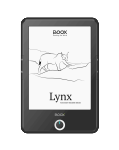
Onyx Boox T68 Lynx 6.8″ eReader Now Up for Pre-Order in Europe

If you’ve been waiting for the opportunity to get your hands on Onyx’s new 6.8″ ereader, here’s your chance.

Arta Tech, Onyx’s retail partner in Poland, is taking pre-orders for the Boox T68 Lynx. The list price is 143 euros plus VAT and shipping, and the Lynx is expected to ship after 9 June.

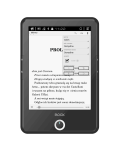
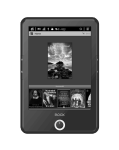
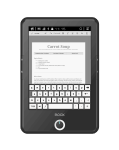
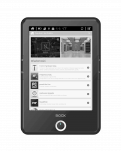
Onyx has been teasing us with glimpses of the Lynx since October 2013, and so far this ereader looks like everything the Aura HD could have been. The Boox T68, or Lynx, sports a 6.8″ screen with frontlight and touchscreen. It runs Android 4.0 Ice Cream Sandwich on a 1GHz CPU with 512MB RAM, 4GB internal storage, and a microSD card slot. And with a screen resolution of 1440 x 1080, the Lynx has the sharpest of any commercially available E-ink screen.

This ereader is more of a tablet than anything. It runs Onyx’s own reading software but it also ships with a full Android, including the option to install apps from Google Play. It also has Bluetooth, Wifi, a headphone jack, and TTS provided by the specialists at Ivona.

The price plus shipping to the US is around $250, making this ereader more expensive than all other ereaders and even a lot of tablets, but it’s a price I am willing to pay. I bought one.

I know that’s a lot to spend on an ereader sight unseen, but as you can see in the following demo video (found via my competition) it is an impressive device.

Arta Tech

UK eBook Market to Surpass Print Sales by 2018, and Other Nonsense

The ebook market in the UK is growing nicely at the moment, but analysts predict that it is going to grow by leaps and bounds. In a prediction which should sound familiar, PricewaterhouseCoopers believes that ebook sales in the UK will triple over the next 4 years and surpass print sales by 2018.

From The Guardian:

The ebook will overtake the paperback and hardback as Britons' preferred format for reading their favourite novels by 2018, according to a report. The UK consumer ebook market – which excludes professional and educational books – is forecast to almost triple from £380m to £1bn over the next four years.

Over the same period, accounting group PwC predicts that sales of printed editions will fall by more than a third to £912m as the UK population’s reading habits become dominated by tablets, with 50% of the country expected to own an iPad, Kindle or a similar device by 2018.

That prediction is about as likely to come true as PwC’s similar predictions for the US. As you might recall, PwC made a nearly identical forecast last year, saying that US ebook sales would exceed print by 2017. (I debunked that prediction last year.)

In its annual “Entertainment & Media Outlook,” set to be released Wednesday, PwC (PricewaterhouseCoopers) estimates that trade (consumer, not educational or academic) ebooks will drive $8.2 billion in sales by 2017 — surpassing projected print book sales, which it thinks will shrink by more than half during that period.

And PwC made this prediction in 2012 as well. Oh yes, PwC also predicted in 2012 that US ebook sales would exceed print by 2016.

New data from PwC’s media report projects that e-books will make up 50 percent of the U.S. trade book market by 2016.

Do you see where I am going here?

Given the generally flat behavior of the US ebook market this past year, it’s pretty clear that neither of PwC’s predictions for the US will come true. Sure, I am expecting to see some growth, but not enough to fit with PwC’s growth curve. What’s more, I am one of the few people expecting to see growth; many are predicting a flat ebook market or possibly even a declining market.

And if PwC is wrong twice in the US ebook market, what are the chances that their identical prediction will come true in the UK market?

I would rate it as not too damn likely.

Admittedly, we don’t know how the UK ebook market will grow, but we do know that ebooks are currently estimated to make up a smaller share of that market than ebooks make up in the US book market.

But do you really think that the UK ebook market is going to see 4 years of spectacular growth? That doesn’t even pass my BS filters.

Thanks, Malcolm!

PlasticLogic Debuts New Flexible AMOLED Prototype at Display Week 2014

PlasticLogic has been teasing me since January with hints of their new flexible AMOLED screen tech, and today I finally got to see it in person.

PlasticLogic had their new prototype on display today. Like the previous demo units, it uses a color filter on top of a flexible grayscale screen, but unlike the earlier units this one was capable of 256 shades of gray and was capable of full 30fps video.

In comparison, E-ink’s best screen can do close to 15 fps, at 16 shades of gray.

As you can see in the gallery below, the demo unit is impressive more for what it promises might come in the future, rather than what it can do now. It’s not very high resolution, though it colorful.

There’s still no news on who will license the tech and actually produce the screens, but I do know that PlasticLogic won’t be building it; they are looking to license the tech once it is fully developed.

PlasticLogic’s flexible AMOLED screen tech is being developed in partnership with NovaLED, a specialist in OLED and AMOLED technologies. They contributed the expertise to build the half of the screen which is visible to the naked eye, while PlasticLogic contributed the rear of the display, or backplane.

Update: PL posted a promo video on Youtube.

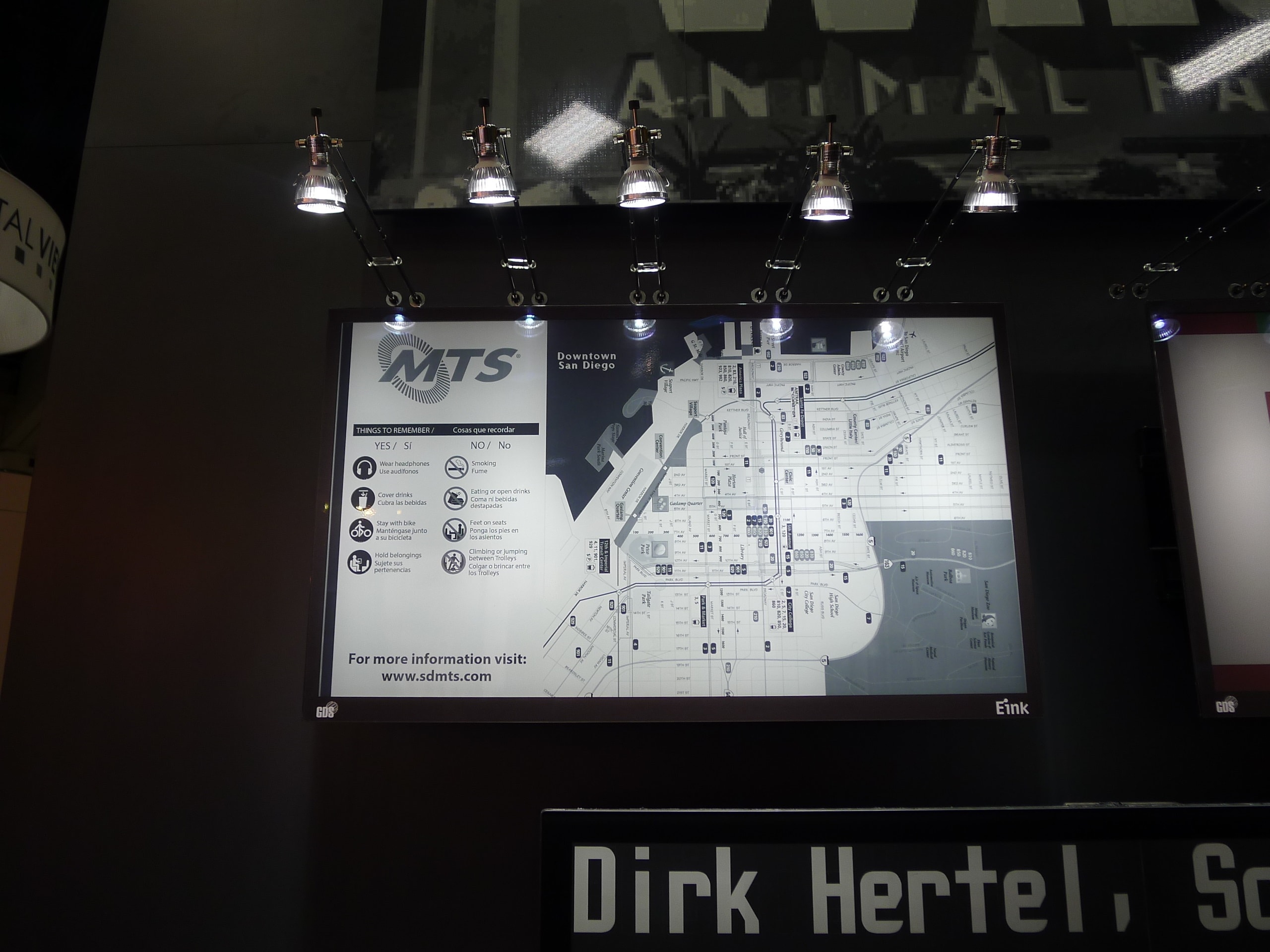
E-ink Debuts a 32″ Color E-ink Screen

E-ink hasn’t had much luck making a color ebook reader screen which was worth buying but their latest color signage might have a better chance of success. The screen tech company debuted a 32″ color sign at Display Week 2014, and compared to E-ink’s 8″ and 9.7″ color screens it looks surprisingly good.

The 32” color display sports a resolution of 2560 x 1440, and measures 27.75” by 15.75”. That give it a dpi of 94, which is very low compared to tablets or smartphone screens, but not for signage. What’s more, E-ink also had a black and white unit on display which sported a much higher resolution screen (5012 x 2880).

Update: There was some confusion before, and I got the stats mixed up. It turns out the grayscale screen has a resolution of 2560 x 1440, while the color screen is rated at 720p resolution. That’s a lower resolution but still workable, IMO, especially at a distance.

The color screen was obviously low resolution, but that turned out to be a plus. By making the color pixels large, E-ink was able to get around the grayness issue I and many others have seen on the 9.7″ Triton E-ink screen. The color pixels on this screen are almost a quarter of a millimeter in size, large enough that you can see them with the naked eye from about a foot away.

The screen looked quite good, and in fact it came close to showing a true white. E-ink’s past color screen have not been able to pull that off, only getting as close as a light gray color.

The new signs was developed in cooperation with Global Display Solutions (GDS). E-ink made the screen, and GDS finished the design with enclosure technology that enables the displays to be deployed in outdoor conditions with very low power consumption. This display is targeted primarily at applications in the digital signage and information kiosk markets, and is available in black and white and color modules.

Barnes & Noble is Shutting Down Their MP3 Audiobook Section

 Barnes & Noble sent an email to their customers yesterday, announcing that they will be shutting down their downloadable audiobook section at the end of the month. No explanation has been given, but customers are advised to download their audiobooks one last time and back them up.

B&N’s audiobook section was supplied by OverDrive, and thanks to the DRM you’ll need OD’s Media Console app in order to download the files. You can find more information in the email below or in the FAQ on the B&N website.

With the AAP reporting sales up 33% in 2013, audiobooks are rapidly growing into a valuable market niche as more people discover the convenience of listening on their smartphone or mp3 player. But it looks like this is not a market where B&N is having much success.

Update: Here’s B&N’s official statement on the matter:

Barnes & Noble is fully committed to the physical audio book business.  We were not satisfied that the digital audio book customer experience met with our high standards, which is why we recently disabled it.  And, we have plans to provide customers with a more well integrated digital audio experience at a future date yet to be determined.  We apologize to our customers for the inconvenience and ask for their patience.

I will freely admit that I didn’t know that B&N sold audiobooks, and given that this section is not easy to find on the B&N website I would not be surprised if most people were similarly unaware. Unlike Amazon, which is doing their best to promote Audible, B&N has the CD and mp3 audiobook sections mixed into a single section. That is not a good way to encourage sales, IMO.

Here’s the email:

Dear X,

We are writing to inform you that effective June 30, 2014, BN.com will no longer support MP3 Audiobooks.

Our records show that you previously purchased MP3 Audiobook(s) from us. If you have not already done so, we urge you to download your Audiobook(s) from BN.com by June 30, 2014. We also recommend that you save your Audiobook(s) onto your devices and back up your files on storage media.

Remember, you must install Media Console on your computer to allow you to download your MP3 Audiobooks — and it will help you easily transfer your MP3 Audiobook(s) to your NOOK and other mobile devices.

Need it? Get it for Windows or Mac.

If you have any questions, consult our Quick Guide for user-friendly answers.

image by Nina Matthews

Bookmate & Scribd: Two very Different Business Models for Subscription eBooks

Both Scribd and Bookmate are in the news this past week, raising funds for expansion. While these two companies ostensibly offer similar services in the ebook subscription market, they have very different business models.

It’s widely known that Scribd uses a pay-per-read model, but less is know about Bookmate. I spent a few minutes talking to the folks from this Russian startup earlier this week at BEA 2014, and it is clear that the company has several advantages over Scribd.

Scribd’s deal with publishers was revealed by Smashwords back in December:

For Scribd’s subscription ebook service, authors will earn 60% of the list price on all qualifying reads, and here they’ve added a cool twist.  With subscription services, the author or publisher earns credit for a full read when the reader reaches a certain trigger point, measured by the percentage of the book that is read.  The first 10% of the book is a free sample, similar to a retailer.  Excluding the sample, once the reader reads an additional 20% of the book, a full sale is triggered and the Smashwords author earns 60% of the list price, up to a maximum of about $12.50 per read.

Edit: Those are what authors are paid; Smashwords’s cut of about 10% isn’t included.

The exact terms offered to publishers likely vary somewhat based on the quality of each publisher’s negotiator, so it is unlikely that all 400,000 titles in the Scribd catalog are limited to $12.50 per read. (On the other hand, that $12.50 ceiling might apply to all of Scribd’s catalog; it would explain why Wiley only offers a limited section of titles.) Scribd’s catalog is likely also limited by the size of the advance which they are rumored to be paying to larger publishers; this too may have affected Wiley’s offering.

Scribd charges $8.99 a month for their service, and it doesn’t take an accountant to realize that the numbers don’t add up. All it takes is for the average reader to finish a fifth of an expensive ebook, and Scribd is in the red for a given month.

Is Scribd doomed? Maybe not, but I do think the terms they offered to Smashwords were generous to the point of being financially nonviable.

Bookmate, on the other hand, has a couple advantages that Scribd lacks. It started in a market where piracy was so rampant that publishers had nothing to lose by signing with Bookmate, and it pays publishers from a pool that consists of 50% of its revenues. Safari Online has used a similar model for over a decade, and it does okay.

(Now that I mention it, I would have thought that Scribd could have gained a similar benefit from focusing on markets where Amazon is so rampant that publishers have nothing to lose, but Scribd does not seem to have turned that to their advantage.)

With 300,000 titles from publishers around the globe, Bookmate now has around 1.5 million subscribers, about 7% of which pay around $5 a month for the service. The fee is collected by Bookmate’s partner telecoms,which brings us to another unique advantage Bookmate has over Scribd.

In addition to apps on smartphones and tablets, Bookmate has also developed reading apps for feature phones. This has let them partner with MVNOs including pay-as-you go companies similar to Tracfone here in the US. In some cases, Bookmate’s partners charge on an incremental day-by-day model, not a monthly fee.

While it is almost a truism that everyone has a cellphone, feature phones still outnumber smartphones in a lot of markets, and not everyone in the world has a credit card. Bookmate’s partnerships enable it to access market segments which Scribd cannot touch.

On the face of it, Bookmate is the more viable business model, but to be honest it is too early to tell. Bookmate’s focus on smaller payments and lower income brackets might give it an advantage in building up a subscriber base, but the smaller payments might not equal what Scribd earns from its monthly fee.

Frankly it is too early to tell.

FeedBooks Acquires Aldiko, Plans to Launch Aldiko App on iOS

The hot news story at BEA this week broke on Tuesday morning.

The indie ebookstore Feedbooks has added many services since it launched in June 2007, including conversion services, a free distribution channel for indie authors, and (much later) commercially published ebooks, and today Feedbooks is adding an ebook app.

Feedbooks has announced this morning that they have added the final stage in the author to reader chain. They have acquired their long time partner Aldiko, the leading ebook app for Android, for an undisclosed sum. The deal was financed by A Plus Finance, one of Feedbooks’s capital investors.

"Aldiko is a key piece of software in the Android ecosystem with its great Epub support and its ability to easily download books through OPDS catalogs," said Hadrien Garduer, founder of Feedbooks. "It is by far the most popular app accessing our catalog, with dozens of thousands of ebooks being distributed every day."

As a mid-sized independent ebook retailer, Feedbooks stocks around 800,000 titles. They also offer a free online ebook creation tool which I believe offers the best-looking output of any of the tools I have tested.

With around 20 million app installs, Aldiko is effectively the Stanza for Android. More readers use that app on Android than use Nook or Kobo Android apps, praising the app for its support for multiple ebook retailers and free ebook sites as well as the apps vast number of formatting options. This app, which is available in both a free and paid version, also supports DRMed ebooks.

I have been told that Aldiko will remain independent, and that Feedbooks founders Hadrien Gardeur and Loïc Roussel, and Aldiko founder Tiffany Wong will jointly run the new company. All of Aldiko’s staff will stay with the company, and they are currently hiring more.

According to Wong, "Basically, Aldiko will be operated as it is now except that we will have more resources after the deal so that we can expand the team, speed up the development and offer a better user experience to users." She added: " In addition, we feel that both companies are now at a stage where merging makes a lot of sense. There are strong synergies between the companies. Together we cover the full end-to-end experience. As the industry is fast consolidating, being able to offer the end-to-end experience is becoming more important if we want to keep innovating."

This is a match made in heaven. While neither Feedbooks nor Aldiko are in the same weight class as Amazon, Google, or Apple, they do each have a reputation for quality. By joining forces, the new whole is definitely going to be stronger that the parts.

Speaking of the whole, Feedbooks hasn’t disclosed all of their plans, but there is a mention in the press release that they want to release an app for iPad and iPhone.  Aldiko is currently hiring an iOS engineer for their Shanghai office, confirming the announcement.

Check Your Calendar: Hachette-Amazon Contract Dispute Started in November 2013

Amazon’s months-long dispute has been going on for longer than anyone had previously suspected.

The ongoing contract fight between Hachette and Amazon entered its Nth round today as the retailer removed the pre-order buttons for many Hachette titles. According to The Bookseller:

Amazon appears to have stepped up the pressure in its battle over terms with Hachette Book Group in the US, removing the pre-order button on a number of forthcoming titles including the new Robert Galbraith novel.

Instead of the option to pre-order, certain major titles are listed as “currently unavailable”, with customers offered the option of signing up to be emailed when the book is available.

Physical editions of J K Rowling’s next Galbraith novel, The Silkworm, out in the US on 19th June, and Tom Rob Smith’s The Farm, released in the US on 3rd June, are among the many titles affected by the removal of the pre-order option on the Amazon US site today.

Not all of the details have been disclosed by wither Hachette or Amazon, but it is clear that Amazon is seeking to renegotiate their contract with Hachette. Amazon is playing hardball by reducing the number of copies they stock and by giving Hachette exactly what they wanted under Agency pricing: an end to discounts from the retail price.

There are also reports that Amazon is selling Hachette ebooks at full price, though of course those cannot be delayed in shipping or stocking.

News about the contract dispute first broke earlier this month in the NY Times, which hinted at the dispute having gone on for months. Michael J Sullivan concurred, reporting on DBW that he had seen this going on since February 2014.

Now it seems that this dispute started even earlier than anyone had suspected. Earlier this week Kristin Nelson, an agent for a number of authors who have books with Hachette, wrote that she had noticed the stock issue as early as November:

This just hit the newswire in the last week but I’ve informally known about this since late fall 2013 (as early as November). The problem? My Hachette authors and I noticed this “shipping issue” multiple times and brought it to our Hachette Editors’ attention. 

Multiple times. Repeated emails. We were assured that all was fine. (Which we, of course, did not believe since it kept happening….)

This is yet another moment where big publishing could have chosen to partner with authors and agents by explaining the truth behind Amazon’s muscle flexing.

Instead, Hachette choose to go with “we don’t discuss contract negotiations” tactic, which leaves their authors in the dark, agents like me fuming, and fosters a general atmosphere of distrust that the publisher is not being forthright.

While most stories today will focus on the buttons being removed, I think the more important story is just how long this fight has been going on. We’re now in month seven, and Amazon has tightened the screws again.

I think we now know why Hachette’s parent company, Lagardère, reported a 5.3% drop in revenue in their publishing division last quarter. They don’t break out the revenue based on market (they have operations in France, US, UK, and elsewhere), so it wasn’t clear where the loss occurred, but I think we know.

I don’t think that drop in revenue is a coincidence; Amazon is having an explicit effect on the company’s bottom line.

Would anyone care to guess how big the drop will be in the next quarterly report?

Dynamite Comics Settles Bogus Trademark Lawsuit Over John Carter of Mars

The Edgar Rice Burroughs Estate’s 2-year-old trademark lawsuit against Dynamite Comics came to a surprising conclusion earlier this week.

In 2012 the Burroughs estate, upset over Dynamite Comics publishing graphic novels based on Burroughs 's Barsoom stories which had already fallen into the public domain, filed a legally questionable trademark infringement lawsuit:

Still, ERB, Inc. argues that Dynamic’s comic book series does not respect Burroughs’ original works and hurts ERB, Inc.’s image–the family argues that some comic covers even showed pornographic images with over-feminine features. Provided that these remarks could ground any claim of actual disrespect of Burroughs’ work, ERB, Inc. could have argued that Dynamic’s series infringes on Burroughs’ moral rights, which are permanent, and indeed cover any attack to the work’s integrity. No matter, then, that the works would have fallen in the public domain, ERB, Inc. would still be able to argue moral rights infringement. The likelihood of success of such a claim, however, is uncertain in the United States.

But trademark protection over Burroughs’ work is not much more likely to succeed. Unlike copyrights, trademarks can persist as long as the mark is identified as a source for specific goods or services. Under such a claim, however, a party must show that its mark is distinctive, protectable, and that the litigious work indeed infringes on the mark. As to distinctiveness, all courts have held so far that fictional characters only have distinctiveness when “they have undergone a reasonable degree of circulation and established some level of public recognition.”

The Burroughs estate alleged that the covers and images in the Dynamite Comics editions damaged their existing trademarks. The works were described as pornographic, but if you ask me they were fairly close to the descriptions in the original books.

Just so you know, Edgar Rice Burroughs died in 1950. The copyrights for most of his Barsoom books have expired in the US (the public domain works can be found on Project Gutenberg).

This means that thanks to the recent lawsuit over Sherlock Holmes the Burroughs estate can only claim copyright over elements unique to those two books. Everything else, including the character of John Carter, is out of copyright. But trademark is another matter, and it is far from clear that one can successfully sue a publisher for damaging a trademark in this way.

Alas, we’re not going to see this case argued in court. Earlier this week the Burroughs estate settled with Dynamite Comics. The exact details of the settlement have not been disclosed, and in fact the entire situation is obscured by the Burroughs estate also revoking a license granted to Marvel/Disney and signing a new contract with Dynamite Comics. (That Marvel/Disney license probably covered, for example, the execrable 2012 John Carter movie.)

And that is a pity, because I was hoping that this copyright troll would be taken down a notch or two.

The Burroughs estate has a history of making questionable copyright claims. For example, in 2004 they sent a threatening letter to a New Zealand publisher over the use of Tarzan. Needless to say, the copyright had already expired in NZ, but even the threat of a lawsuit was enough to discourage the publisher:

So even though Tarzan has been a part of our shared mythologies, daydreams and fantasies for nearly 100 years, shaping stories and art around the world, he’s still – as far as ERB Inc. is concerned – the company’s exclusive private property. And Nigel Cox was trespassing. VUP’s lawyers advised that ERB Inc.’s case was weak (at least in New Zealand), but fighting it in court would cost a fortune. There was nothing VUP could do. ERB Inc. insisted that Tarzan Presley never be reprinted or sold overseas. Cox’s masterpiece slipped out of sight, becoming a great lost treasure of New Zealand literature, buried in the depths of the copyright jungle.

Tarzan Presley, a book which is arguably legal to publish and sell even in the US, is not just out of print but it is also practically unavailable. The best price is $38 for a used copy on Amazon.

And a few years after that the Burroughs estate also bullied the publisher of an RPG manual:

They (through the same lawyers) tried to shut down my release of a Sword-and-Planet RPG called MARS ( http://www.rpgnow.com/index.php?cPath=272_4256 ) back in 2007, despite it being a pastiche and featuring NONE of Burroughs' creations or trademarks.

I informed them that they do not own a genre — and prior art exists, ranging from the Jandar of Callisto novels by Lin Carter, to ERB contemporaries like Otis Adelbert Kline, etc.

That case was resolved by the publisher forcing the Burroughs estate to back down, but the next publisher probably won’t be so lucky. Thanks to the Dynamite Comics contract, the Burroughs estate will continue to have funds to be a copyright troll, exacting a fee from creators who want to write new stories.

Copyright may have been intended to encourage the creation of new works, but as you can see here it is used far too often by vultures and other middlemen to squash new works being created. If this isn’t a strong argument for shorter copyright terms, I don’t know what is.

Yes, Trigger Warnings Could Lead to Censorship

If you’ve been following book news over the past few months then you may have noticed the ongoing debate about trigger warnings.

Professors and student advocates at some US universities have been debating whether classes which read certain types of literature should add a "trigger warning" to the class syllabus to warn students suffering from PTSD or who were victims of assault that a book might trigger an incident.

There’s been a lot of debate on this topic, with some going so far as to ridicule the idea, and on the other end of the spectrum propose trigger warnings for "heterosexism, cissexism, ableism, and other issues of oppression". As someone who is in principle in favor of the idea, I have been sitting out the debate, but today I decided to jump in and address one of my concerns that some have discarded out of hand.

Rebecca Schinsky, writing over at Book Riot, doesn’t see any reason why we should be worried about censorship:

Some of these pieces equate skipping a book that contains material that might trigger you with intellectual laziness and an unwillingness to be offended (that is: the writers of these pieces do not really understand what it is to have triggers). Others mount the hand-wringing slippery slope argument that trigger warnings will put us one step closer to book bannings (that is: they fail to acknowledge the significant differences between individual discretion and institutionalized, government-enforced censorship).

What Rebecca fails to acknowledge is that there are more types of censorship than government-enforced censorship. For example, there is the subtle commercial censorship system of the MPAA ratings. While that appears to be voluntary, any movie without an MPAA rating will have a difficult time getting into movie theaters. Similarly, any movie with an NC-17 rating simply won’t be shown.

And given that the MPAA’s ratings board has at times explicitly said that you need to change this, that, and the other in order to get a lower rating, this is a form of censorship:

And that’s not the only reason to be concerned. Here in the US we have a censorship issue on the local level.

It’s called book banning.

To name one example, it was only a couple months ago that an Idaho school district banned Sherman Alexie’s Absolutely True Diary of a Part-Time Indian, over the protests of students, teachers, and parents.

The book makes reference to masturbation, contains profanity and has been viewed by many as anti-Christian. Some Meridian School District parents and students cautioned the board about banning the book, while others labeled it pornographic and racist.

What Rebecca fails to acknowledge is that if trigger warnings become more widespread, if it becomes common for books to be listed in catalogs with trigger warnings, then we will be handing the book banners another weapon in their fight to remove literature from libraries and schools. We might even see parents groups pressuring schools and libraries to not buy these books in the first place, simply because they come with a trigger warning. And if that happens, we are all going to be harmed.

So yes, when someone raises concerns of censorship, they’re not misstating the case, they’re not misunderstanding the situation, and they’re not, as Rebecca put it, wringing their hands.

In conclusion, when The Guardian pointed out that trigger warnings were "one small step from book banning", they were not wrong:

Of course, life doesn’t come with a trigger warning, even if it should. And while a classroom conversation about emotionally fraught subjects would seem not only advisable but also just part of any decent teaching method, slapping a trigger warning on classic works of literature seems a short step away from book banning, a kind of censorship based on offenses to individual feelings.

And as the idea of trigger warnings moves forward, we need to keep the potential downsides in mind. The best way to avoid trigger warnings being misused is to not develop a system where they can be misused.

image by simonov

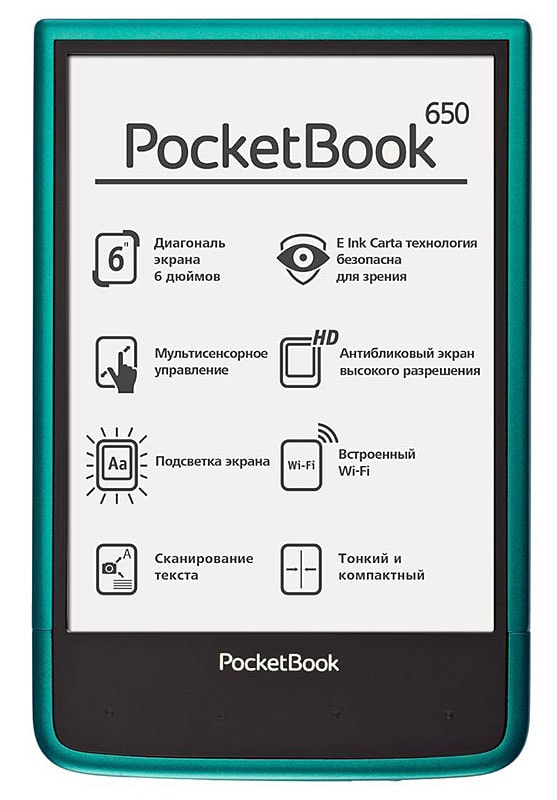
Pocketbook Launches the 6″ Ultra, 8″ Ink Pad eBook Readers

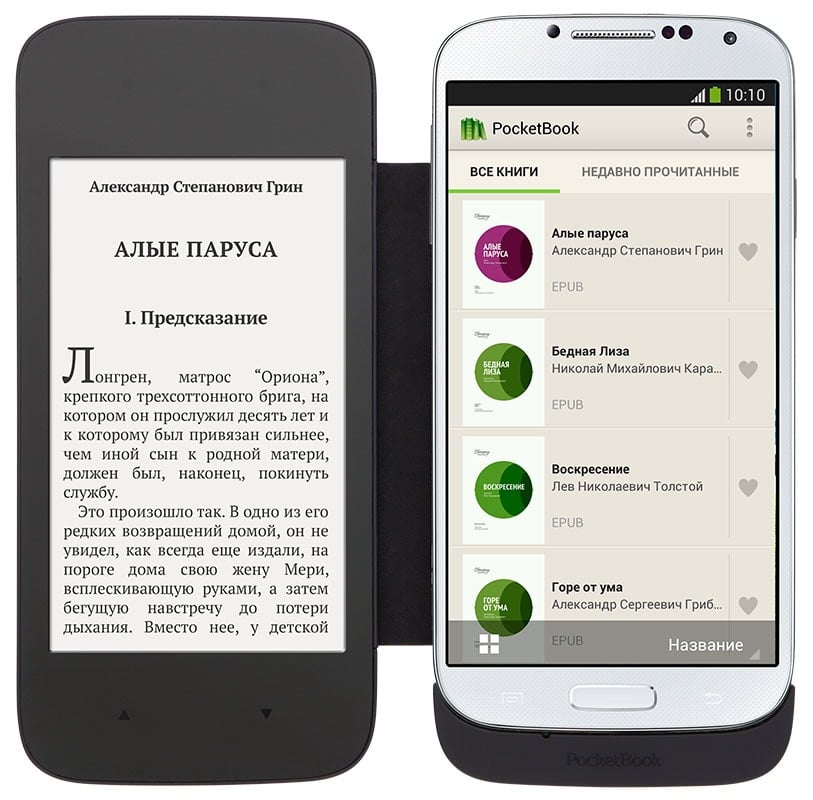
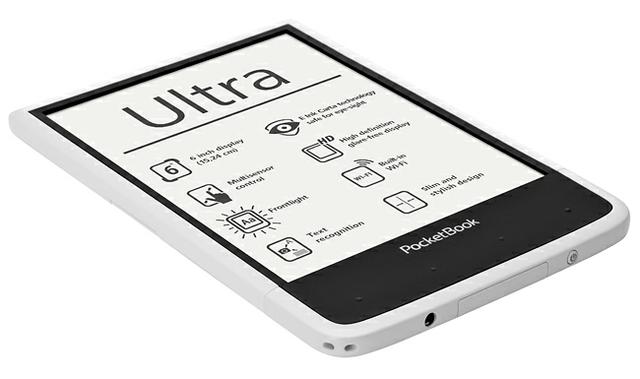
Pocketbook’s much-leaked, camera-equipped, high-end Pocketbook Ultra ebook reader officially launched today in Russia.

The Ukrainian ereader maker held a launch event today for their new devices. In addition to the Ultra, Pocketbook also showed off the CAD Reader (with its 13.3″ screen), the Aqua, the CoverReader (an E-ink case for the Samsung Galaxy S4), and a wholly unannounced and unexpected 8″ ebook reader – the Ink Pad.

Few details are known about the new models aside from the price (The-eBook.org didn’t post much), but I do have some new info on prices and the expected release date (in Russia).

The 6″ Pocketbook Aqua, which launched in Germany a few months ago, is going to be available in Russia in 2 to 3 weeks. Retail will be 6990 rubles, or about $200 USD.

The Pocketbook CoverReader, which as you may recall was first shown off late last year (video), is already available in Russia. It’s selling for 3490 rubles.

The 13.3″ CAD Reader is still in the works. Pocketbooks hopes to have it on the market by the end of the year, price unknown.

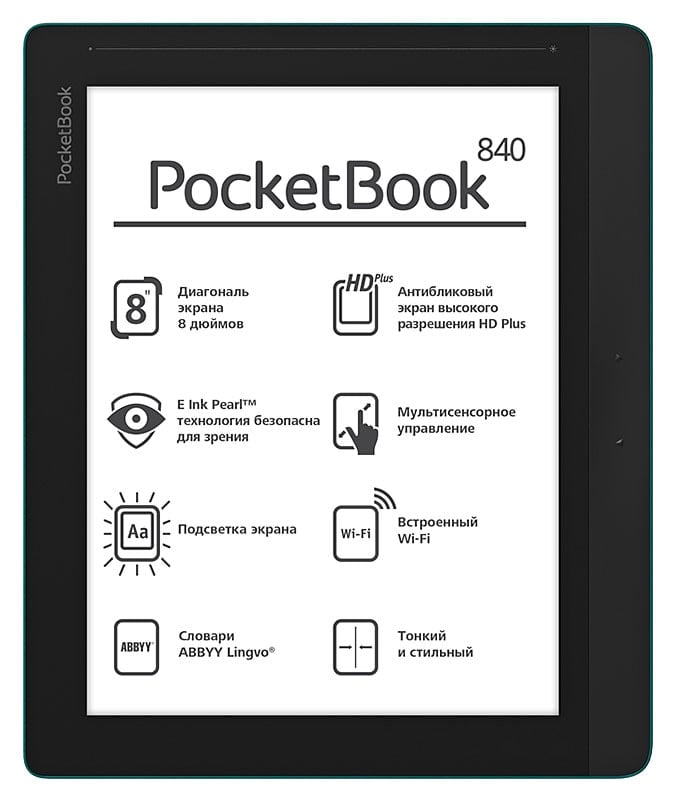
Ink Pad 840

And then there’s the PocketBook Ink Pad 840. This device came as a complete surprise, and it sports a high resolution 8″ E-ink screen with a touchscreen and frontlight. This is basically the same device as the Pocketbook Color Lux, only without the color E-ink screen.

Update: This ereader runs Pocketbook’s reading software on a 1GHz CPU with 512MB RAM, 4GB internal storage, Wifi, and a 1.5Ah battery which is expected to give up to a month of runtime (source). Thanks, Name!

The Ink Pad 840 has a screen resolution of 1,600 x 1,200 (the same as on the Onyx Boox i86), and it will cost 9990 rubles (about $290 USD) when it ships in Russia in July.

Ultra

And finally we have the Ultra.

There is in fact very little which we don’t know about this device, and in fact today’s launch doesn’t add any details other than confirmation that it has support for audio.

The Pocketbook Ultra is equipped with a 6″ Carta E-ink screen (screen resolution of 1024 x 758). It has a frontlight, touchscreen, page turn buttons mounted on the rear of the device, and a rear-facing camera. I cannot tell you the resolution, but I can confirm the reports that the camera is used to take photos so the user can OCR the text and add notes.

Update: The Ultra has a 5MP camera with Flash. It runs Pocketbook’s reading software on a 1GHz CPU with 512MB RAM, 4GB internal storage, Wifi, and a 1.5Ah battery which is expected to give up to a month of runtime (source). Thanks, Name!

The Ultra is scheduled to ship in Russia in early July, and it will sell for 8990 rubles (about $260 USD) . Previous leaks indicate that the price in Germany will be 199 euros, but I don’t have any details about pricing in other markets.


Kobo to Launch New Book Reviews Section

Whether they come from Goodreads, iDreamBooks, or Amazon, book reviews make the ebookstore. For the longest time now Kobo has lacked book reviews, but in the not too distant future that is going to change.

A few days ago Kobo announced on the Kobo Writing Life blog that they are growing their own review section:

In the near future, Kobo will begin featuring book reviews! Customers will be able to write reviews and choose star ratings for your titles and post them on the book page. We want to give KWL authors the opportunity to begin collecting reviews for their titles before the feature goes live!

The new review section is being developed in partnership with Evolcalize, and just about anyone can post a review. All that is required is a Facebook account; you don’t even have to log in with your Kobo account (in fact, you cannot).


If you would like to post a review, click this link, log in with your Facebook account, and search by  either title or author. Your review won’t be immediately posted to the Kobo website, but it will be added to the site in the near future (once this feature officially launches).

As you might recall, Kobo used to rely on Goodreads as a source of reviews, but they broke ties in July 2013. This was about 4 months after Goodreads was acquired by Amazon, raising questions as to whose idea it was to break up.

Frankly, I was a little surprised that it took Kobo this long to organize a replacement, especially considering that there already was a readily available alternative. iDreamBooks, which bills it itself as the Rotten Tomatoes of book reviews, launched in 2012. This review aggregator last crossed my desk in April 2013 when it announced a deal with Sony to supply reviews to the Reader Store.

It’s a shame Kobo couldn’t work out a similar deal.

Thanks, Stephen!

Were Indie Authors Really Segregated at the RT Booklovers Convention?

There’s a story going around today that self-published authors were relegated to second-class status at a book fair in New Orleans yesterday, but whether that actually happened is still up for debate.

Here’s what I know for sure:

  • The RT Booklovers Convention wrapped up yesterday with the Giant Book Fair, a massive event where 700 authors crowd into a couple ballrooms and sign and sell books. The authors were split between the Grand and Mardi Gras ballrooms at the Marriott Hotel in New Orleans, with one room over twice the the size of the other (floor plans).

Here’s what I don’t know:

  • Exactly how the authors were divided, or why.

According to Hugh Howey, the smaller Mardi Gras ballroom was reserved specifically for authors labeled as "aspiring". In other words, self-published authors:

Imagine selling two million books, having half a dozen of your novels hit the New York Times bestseller list, being inundated with thousands of fan emails every month, and then having someone call you an “aspiring writer.”

That’s what happened in New Orleans this weekend, when the planners of the RT Booklovers Convention decided to place self-published authors in a dinky room off to the side while the traditionally published authors sat at tables in the grand ballroom.

Authors like Liliana Hart, who is at the top of the game not just in the romance genre but in all of publishing, was labeled an “Aspiring Author.”

That sounds like a damning critique of the folks running the convention and their disdain for self-published authors, right?

Not exactly.

I was prepared to report on Howey’s post and second his complaints, but while I was looking for background information I found an alternate explanation as well as details which debunked Howey’s description.

For one thing, if you look at the floor plan I linked to you’ll see that the Mardi Gras ballroom is hardly a "dinky room off to the side". Depending on how the traffic was routed it might actually have been more accessible than the Grand ballroom.

And that’s not all. According to Courtney Milan, the authors were divided based on how their books were sold:

Some self-published authors are talking about one specific thing: that is, the separation of authors into two rooms on the basis of criteria that would not have been obvious to readers. Authors who were selling nonreturnable books–typically, authors from digital-first presses and self-published authors–were selling books on consignment, whereas the other books were being sold by a bookstore.

That meant that the authors needed to bring those books, have them checked out, determine the sales of books afterward, and fill out paperwork as to how they were to be paid. I believe RT handled those sales. By contrast, a bookstore was handling the sales for the books that were returnable. At the RT Giant Bookfair, for administrative ease, authors with nonreturnable books were put into a separate room. This saves a little time because then RT staff would automatically know if an author needed to be checked in/checked out.

…

Rumor has it that someone claimed that the authors with returnable books were “real authors” and that the authors who were selling their books on a consignment basis were “aspiring authors.” As far as I can tell, this appears to have been one misinformed volunteer, rather than the official RT Convention description. It was not something that I saw or heard, and I do not think it was widespread.

I don’t know that Milan’s explanation is correct; in fact I agree with the commenter on her blog who explained why the division was probably unnecessary.

But in spite of it being unnecessary, I think the division along returnable/consignment lines is much more plausible than dividing the authors based on self-published and traditionally published. It sounds like the kind of decision which was made to reduce the hassle of those in charge of running the Giant Book Fair, and hang the problems it created for everyone else.

And it did create problems; Kendall Grey took to Facebook this morning to detail just how cramped she was in the Mardi Gras ballroom. Among here complaints:

"Two authors will be at each table; therefore, you will have half of a 6 foot table — which is a 3 foot length." <–LIE. I didn’t have a ruler, but I took a picture, and my space was nowhere NEAR 3 feet. See below.

"Authors are arranged in alpha order by last name. This applies to every section." <–LIE. If we’d been organized alphabetically, the two rooms would have been broken up around the last names beginning with the letter M (or thereabouts), NOT by publishing platform.

I can’t tell you what really happened at the Giant Book Fair; I wasn’t there. (And from what I can tell, neither was Howey.) If you have a first hand account which better explains what was going on, the comment section is open.

But whatever happened, it’s clear that the policies were not well explained nor well executed.  If this event had been planned better then authors would not be complaining about being cramped. And if the policy had been explained better then we would not have rumors going around that self-published authors were being maligned.

Let’s hope the RT Booklovers Convention does better next year.

Amazon now Bullying Bonnier in Negotiations over Book, eBook Contracts

Hot on the heels of news about the bitter Amazon-Hachette renegotiations, new reports are coming out of Germany today that Amazon is using similar hardball tactics against another publisher.

Frankfurter Allgemeine Zeitung (FAZ) reported this morning that Amazon is renegotiating its contracts with Bonnier, a Swedish publishing conglomerate. Bonnier owns several German publishers (including Ullsteinhaus, Piper, Berlin, Carlsen), and Amazon is using tricks similar to the ones used against Hachette here in the US.

According to FAZ, Amazon is reducing the number of copies of Bonnier titles they carry in their warehouses, adding long shipping delays to newly ordered books.

Sources say that Amazon is seeking not just new terms for their book contract with Bonnier but also new terms for their ebook contract. The retailer is reportedly pressuring Bonnier into offering a steeper discount on ebooks. Rather than pay Bonnier the accepted industry standard 70%, Amazon wants to reduce that to only 50% to 60%.

And that’s not good news for anyone other than Amazon.

I know some might expect me to defend Amazon here in much the same way I took their side in the Hachette dispute, but one key difference between the Bonnier and Hachette negotiations is that with the latter there is a potential upside for consumers. Consumers stand to gain nothing from the Bonnier dispute.

In the US, Amazon’s fight is against a publisher which had previously conspired to raise ebook prices and restrict competition. If Amazon wins it means means lower book prices in the long run, but that probably will not happen in Germany.

Germany has fixed price book laws; publishers set the retail price and retailers are not allowed to discount their books more than (I think) 10%. As a result, any money that Amazon squeezes out of a publisher ends up in Amazon’s pocket, and not in the pocket of consumers.