Nate Hoffelder

Nate Hoffelder

Google Is Considering eBook Rentals, Now Accepts Epub3

Google might only have a 1% to 2% share of the ebook market but that doesn’t mean they’re not interested.

I have just learned that Google has recently updated the publisher policy page for Google Play Books. Gone are the mentions of book bundle pricing, and in their place Google has added several mentions of ebook rentals.

The mentions of rentals are vague, and there’s no hint of how long one might rent an ebook for:

The "List Price" allows non-agency publishers to recommend a price for a book on Google Play. The Specified Price is only a recommended price and may not be the final sale price of the book on Google Play. For books that you authorize to be sold for rental periods, currently Google allows you to provide a "Rental List Price" for each authorized rental period as a percentage of the ebook list price for the book.

Amazon, Barnes & Noble, and many other companies offer digital textbook rentals in addition to ebook sales, so it would make sense for Google to jump in to the market. In fact, I would bet that Google’s rental plans (if implemented) will look a lot like the manner in which Amazon rents Kindle ebooks. Amazon offers a variable rental period with a sliding price; the quoted text above is sufficiently vague that Google could be planning to do the same.

But just because we see the new policies does not guarantee that it will happen.

On a related note, the Google Cache of the old page (dated 23 June) reminds us that at one point Google was considering offering a print/ebook bundle for a single price. That never happened, so far as I know, and there’s a chance that ebook rentals might see the same fate.

IMO the more important news today is the changes to the file formats that Google will accept from publishers and authors.

Google has dropped support for the wide variety of ebook formats they used to accept (Epub, Doc, XML, HTML, and even Mobi & PDB) and slimmed down their acceptable format list to only Epub, Epub3, and PDF (but only if no Epub is available).

This policy change represents a paradigm shift for Google. They’re no longer looking back at the past in order to see how they have to catch up to the rest of the market; now they are looking forward to the future. Google is looking for a way to get ahead of the competition.

That is why Google is explicitly accepting Epub3 as well as Epub. Like Sony and Samsung (other also-rans of the ebook market), Google is working to stay current with the larger Epub market (and play catchup with Apple, which has been supporting Epub3 since May 2012).
Lesen.net

Appeals Court Tosses Out Class Action Status in Google Books Lawsuit

Remember that lawsuit that the Authors Guild and the AAP filed against Google over Google Print Google Book Search Google Books in 2005?

A 3 judge panel on the 2nd Court of Appeals just ruled that Judge Denny Chin erred in certifying that the plaintiffs could act as a class. Instead the 3 judges believed he should have first considered Google’s argument of a fair use defense.

"Putting aside the merits of Google’s claim that plaintiffs are not representative of the certified class — an argument which, in our view, may carry some force — we believe that the resolution of Google’s fair use defense in the first instance will necessarily inform and perhaps moot our analysis of many class certification issues," the 2nd Circuit said.

This lawsuit was originally filed 8 years ago over Google’s plans to digitize the catalogs of university libraries and share the content online. That project, which has since hit 30 million titles in April of 2013, naturally drew criticism and hostility from industry trade groups including the AG and AAP.

The parties have been fighting it out in court ever since. This trial was nearly settled in 2008 when Google and the lead plaintiffs tentatively agreed to a settlement, but that settlement was rejected by Judge Chin in 2011 because it gave Google the unique advantage of having free-range on the books they scanned and obligated authors to opt-out, a principle that is contrary to most accepted copyright law.

So where does this lawsuit go from here? No where fast, basically. Google and the plaintiffs will need to submit new briefs and argue whether a fair-use defense applies. If Google wins on that point it could render much of the rest of the case moot.

More Reading:

  • Second Circuit Decertifies the Google Books Class (The Laboratorium)
  • Appeals Court In Google Book Scanning Case Clearly Leaning Towards Fair Use Ruling (Techdirt) <- old but still useful

Ruling:

  • Authors Guild v Google (PDF)

source

image by Ewan-M

The Merger Has Been Finalized – Random Penguin Solutions is Born

Bertelsmann and Pearson have officially announced today that they have completed all the steps required to merge 2 of the world’s largest publishing conglomerates into an even more unwieldy monolith.

Random Penguin Solutions will be jointly owned by Pearson and Bertelsmann, with the latter controlling 53% of the new company.

Random House CEO Markus Dohle will serve as CEO of Random Penguin Solutions and John Makinson, who has headed Penguin since 2002, is the new company’s Chairman of the Board of Directors. The HQ for the new company will follow publishing industry standard practice of wasting money on real estate and be located in New York City. Random Penguin Solutions will employ more than 10,000 people on 6 continents, and it will publish nearly 250 imprints every year. Collected revenues are expected to reach $3.9 billion this year.

The merger follows approval by regulators in the US, Canada, EU, New Zealand, South Africa, and Australia. US approval was dependent on Random Penguin Solutions complying with Penguin-DOJ settlement over Agency Price Fixing lawsuit, meaning that all titles published by the new company will be sold on the wholesale model rather than with price controls.

Infographic: Who Spends the Most Time Reading in the World? (We Don’t Actually Know)

Have you ever wondered how your reading habits compared to the rest of the world? Then check out this infographic.

Russia Beyond the Headlines was the first to share the infographic below (it’s not clear who made it). As you can see, India, China, and Thailand lead the world in the number of hours spent reading – or at least that is what the infographic would have you believe.

I would not read to much into this infographic. So far as I can tell the data is drawn from a report published in 2005 (press release). That is simply too old to accurately reflect current reading habits, thus reducing this infographic to little more than a cute picture.

If nothing else, the rise of smartphones and ereaders in the past 8 years will have radically changed reading habits of their owners and probably increased the time spent reading.

The national literacy rates might be a better way to judge who reads more, but unfortunately that data is even older.

source

eBooks Analytics Startup Hiptype Shuts Down – Cites Lack of Support From Major eBook Platforms

Here’s an old news story that no one noticed happening at the time.

Hiptype, a startup that launched in July 2012 with the promise of offering publishers new insight into their customer’s reading habits, shut down in late December.

According to the Hiptype blog their business plan fell through when one, Apple updated iBooks and disabled code features that Hiptype relied upon, and two, Hiptype was unable to convince other major ebook platforms to let Hiptype spy on readers:

Just a few days after speaking with a representative from Apple, an iBooks update was released that removed the support for analytics we previously had. Progress with Amazon and Barnes & Noble had also stalled. …

The problem is that from all three vendors, we were eventually told the same thing – if we wanted a feature that wasn’t supported for eBooks, then we should be looking at their app platforms instead.

When Hiptype launched last Summer their ebooks analytics idea was built around inserting a snippet of code into ebooks. When you read the ebook that snippet of code would track what you were doing and send data back to Hiptype’s servers, where it would be collated and served up to the relevant publisher.

That snippet of code initially only worked in iBooks because that platform supported Epub3, while  getting similar data out of a Kindle or Nook ebook required the cooperation of Amazon or B&N. According to what Hiptype said at the launch this was in the works, but apparently neither Amazon nor B&N liked the idea as much as Hiptype did.

Yeah, that comes as no surprise. It might be true that Apple, Amazon, B&N (and many other companies) spy on their users, but they have little reason to let 3rd parties inside their walled garden ebookstores.

And so Hiptype is, for all intents and purposes, dead. Apple’s current security restrictions on iBooks prevent Hiptype’s code from working, and Amazon is never going to add the support Hiptype needs (there’s a reason why the new KF8 format is described as Epub 2.5; Amazon made KF8 less capable than Epub3 so they could also avoid the security problems and other issues).

Given that Apple and Amazon account for 70% or more of the world ebook market (with the rest spread between a half dozen companies: B&N, Google, Kobo, Sony, Pocketbook, etc), there’s really not much of a market for Hiptype.

And so the company is shut down.

According to their LinkedIn profiles, both of the founders now work elsewhere. The CEO has moved on to Urban Airship, and the CTO now works at Zynga.

If you’re wondering why I’m digging up such old news, it’s because yesterday I was looking into how a publisher might be able to use a snippet of code in an Epub3 ebook to spy on readers.  This was what Hiptype was doing last year so naturally I looked them up to see how well things were going.

I was planning to write a post that listed exactly what data Hiptype was collecting in their spying efforts, but as you can see they’re not collecting data anymore. So instead I will explain why I was interested.

Hiptype offered a service that depended on the JavaScript security holes that I wrote about yesterday. This is one of the things that would probably be blocked by any rational security policy designed to protect users from malware. While I personally see that as a good thing I’m not sure publishers would agree.


Japanese eBook Market Reaches New High in 2012 – $741 Million

A new report on the Japanese ebook market is due out next month and it looks like the market managed to grow in spite of what many see as widespread resistance.

According to the report the Japanese ebook market was worth 72.9 billion yen in 2012, an increase of 16% increase over the previous year. The 2011 Japanese ebook market was worth 62.9 billion yen, or about $639 million.

The following chart comes from the report, and it details the projected growth of the Japanese ebook market over the next several years. FYI: The chart is graphed in increments of 100 million yen, so the 629 on the far left is equal to 62.9 billion yen.

The 2012 figure and related increase is particularly interesting given that for much of 2012 Amazon didn’t have a local Kindle Store in Japan. The Japanese Kindle Store didn’t launch until October 2012, and apparently that market was able to grow reasonably well in the absence of the menace from Seattle.

Should you be interested in buying the report, it will cost around 61 thousand yen when it is released on 18 July.

source

New Sony Reader PRS-T3 Shows Up on FCC Website – With Photos!

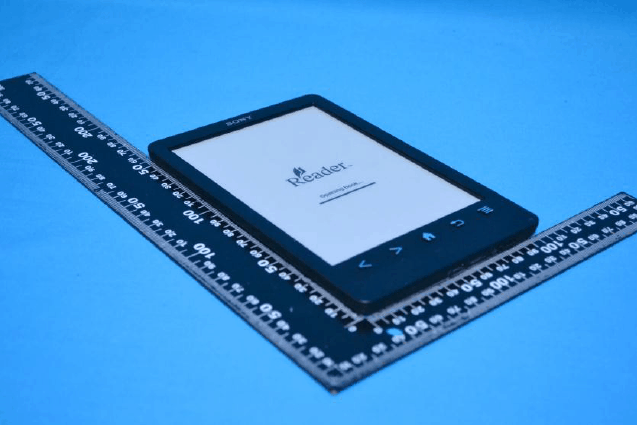
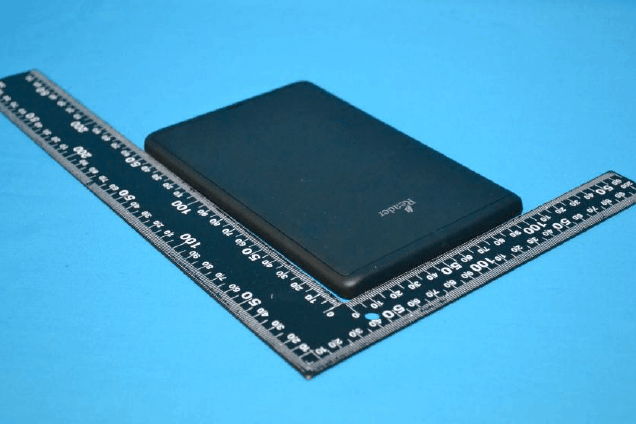
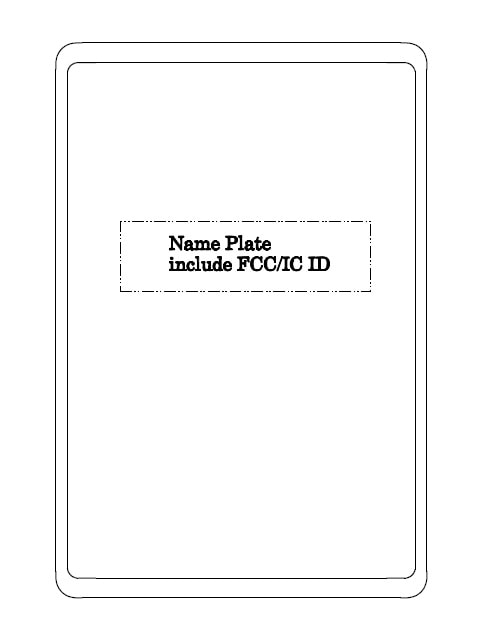
Sony’s latest ereader showed up on the FCC website today and it looks like the third time could be a charm. We don’t know much about the PRS-T3 (most of the important stuff is hidden), but I have gleaned a few details from the test reports and other docs posted on the website.

First of all, there are 2 model numbers listed, the PRS-T3 and the PRS-T3S. The S could stand for a touchscreen, but that’s not completely clear. But one detail I can tell you is that these models were tested for Wifi (though one report mentions Bluetooth).

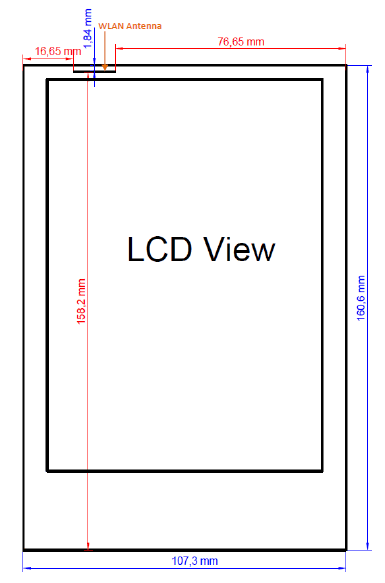
I can also tell you that the devices have the same set of buttons as the previous models and measure about 4.22″ by 6.22″, giving them a 7.5″ diagonal measurement.  Based on the photos and the diagram discovered in one of the test reports, my current estimate places the screen at 6″ (and not the 6.8″ screen found on the Kobo Aura HD).

And as you can see from the images above and below , the new T3 looks nothing like Sony’s current ereader, the PRS-T2. The T3 has a more traditional rectangular shape and it looks much more like a tablet.

Sony has not yet shared any details on the release date, price, or specs,but if they follow their previous release pattern this ereader will probably launch in the US and Europe in August 2013.

Update: I’ve just learned that someone added a couple revealing photos to one of the test reports. This post has been updated with the new photos and info. Thanks Nathan!

FCC (VUI-20130001)

PocketBook 515 eReader to Launch Next Month, Will Cost $90

Amazon, Icarus, Kobo, and Trekstor aren’t the only companies pursuing the bottom end of the ereader market. PocketBook has just announced a new cheaper and smaller ereader that they plan to launch next month in Russia.

Weighing in at 131 grams, the PocketBook  515 isn’t the lightest ereader but it is close. This ereader is equipped with a 5″ E-ink screen, 4GB Flash storage, and 256MB of RAM. It’s running PocketBook’s own proprietary version of Linux, and is expected to cost 2990 rubles when it hits the market.

The 5″ screen has a resolution of 600×800, just like the screen on the Kobo Mini, but that’s about the only thing these ereader have in common. The PocketBook  515 gave up a lot of hardware in order to hit its price point.

Due to the low price, this ereader doesn’t have a microSD card slot, Wifi, a touchscreen, or audio. It truly as limited as the Trekstor Pyrus Mini, the 4.3″ ereader which coincidentally costs about the same as the PocketBook  515.

But in spite of its hardware limitations, the PocketBook  515 is still moderately capable. It supports a broad selection of ebook and office doc formats including Epub, PDF, FB2, CHM. DJVU, RTF, txt, html, DOC, and Docx. In addition to letting you read ebooks the 515 also includes apps for a calculator, calendar, clock, and a few games (Snake, Sudoku, Chess).

There’s no word yet on whether this ereader will be available in other markets, but even if it does show up in Europe I am not sure I would recommend it.

The Pocketbook 5151 is priced at the equivalent of €69, and I can see that the Kobo Mini is being sold by a number of retails for €59. The Kobo Mini has a touchscreen and Wifi, and based on a simple comparison of the specs it is a much better buy.

On a related note, the Mini is also being sold in the US for $40 and in the UK for £29, making it the cheapest leading ereader anywhere at the moment.

source

No Names, No Jackets – Finally Something New in Book Discovery

One thing I’ve missed in switching from paper books to ebooks is the way I used to browse bookstores. I’m one of those people who pick a random book off the shelves of the SF section and read it to see if I like it, and that’s just not possible with most ebookstores.

Sure, most ebookstores have samples, but there is no element of randomness in choosing a sample and I miss that part. That is why I was thrilled today to read about a new ebook discovery site called No Names, No Jackets.

This site, which I heard about via Jane Litte of Dear Author, offers up random chapters of books and nothing else. You’re not offered the title, author, book cover, or blurb. You just get to read a chapter.

How cool is that?

You can either request a completely random chapter, or pick one from a specific genre, including Crime, Horror, SF, alt hist, and many more. There are only about 700 excerpts on the site so some of the categories are still rather thin, though I expect that will change. All the chapters were submitted by the authors or publishers, and at the end of each selection there is a link that leads to more information about the book.

This type of ebook browsing might not appeal to all readers, but I like it. It fits with how I used to browse for books, and that makes it an enjoyable change from the usual sales pitches that are often presented as suggestions for books I might buy.

No Names, No Jackets

image by zimpenfish


Amazon Expands Kindle Worlds Beyond Fanfic (Hint: Fanfic is Just the Smokescreen)

Amazon has just officially confirmed the story I broke last week.

They’re expanding Kindle Worlds beyond fanfic, and in addition to signing Blake Crouch and Barry Eisler they have also signed 2 other well-known authors and a publisher of graphic novels.

The publisher in question is Valiant, and they have licensed a number of series to Amazon including Bloodshot, X-O Manowar, Archer & Armstrong, Harbinger, and Shadowman. The press release say they’re planning to add more later.

Amazon Publishing has also signed new licensing deals with Hugh Howey and Neal Stephenson.  AP is looking to writers to contribute stories set in Howey’s Silo Saga and in Stephenson’s Foreworld Saga. (Are you familiar with a book called The Mongoliad? That’s the Foreworld Saga.) And of course I introduced Blake Crouch and Barry Eisler last week (two successful authors, with multiple bestselling novels and a tv series and a movie between them).

There’s not much in the press release today that I didn’t already report last week, but some of the half-truths are rather interesting. Amazon is trying to spin Kindle Worlds as an open program, when in reality it is closer to being one of their publishing imprints. For example:

Kindle Worlds is the first commercial publishing platform that will enable any writer to create fan fiction based on a range of original stories and characters and earn royalties for doing so.

Yeah, that’s only half true. While any writer can create stories, they’ll only be paid if the story is accepted.

When Kindle Worlds was announced a few weeks ago, I took the position that Amazon had legitimized fanfic. One of my readers took an opposing view, and I think it’s worth repeating:

I draw a major distinction between what Amazon is doing and fanfiction. Fanfic is by definition not approved by the creators, it’s fiction in the same universe written by fans. What Amazon is offering is for self-published authors to submit their fanfiction to be approved by the rights holders and then be published – the exact same process that normal licenced works go through. Authors have always been able to do so without Amazon’s involvement, all they needed to do was contact the publisher or rights holder with their pitch (manuscript) and get approval.

So it’s not fanfiction publishing, it’s publishing licensed works.

If Amazon had a blanket licence that allowed anyone to publish in-universe fiction and make money off of it this would be different. But as it is this is simply another publisher getting into licensed works.

I don’t usually agree with flyingtoastr, but in this case I think he is right. That approval step changes this from being a fanfic free-for-all to simply being yet another licensing deal. Rather than bypass existing publishers and enable more writers to be paid, Amazon is setting themselves up to be a publisher.

That puts Kindle Worlds in the same category as Kindle Singles, Amazon’s other stealth foray into publishing. Kindle Singles is pitched as a type of content, but it is a publishing imprint in all but name. The same can be said for Kindle Worlds.

Edit: If you need more proof, go check out the Kindle Worlds page on Amazon.com. It has been updated to include quotes from 10 writers who are contributing to one KW property or another. Guess what? All have at least one novel under their belt, putting them a step above your average fanfic writer.

Of course, we probably should have figured that out from the very beginning. Kindle Worlds was built out of Amazon Publishing, not KDP, and that should have suggested that Amazon was thinking like a publisher, not a distributor.

Further Reading

Amazon Brings Disintermediation to the Tie-in Industry  | The Digital Reader

Where Words Become Worlds | Hugh Howey

Q&A With Philip Patrick, Head of Kindle Worlds | The Heart of the Matter

Penguin Launches New Program to Get Early Copies of eBooks to Adoring Fans (AKA Thieving Pirates)

Are you eager to get an early look at your favorite author’s next book? Then I have good news and bad news for you.

Penguin has just announced a new program called First to Read. According to the press release this is an "exciting new program that will grant readers free sneak peeks of some of Penguin’s most anticipated books – months before they are available in stores and online retailers", but what we’re really looking at is Penguin’s latest marketing foray.

They are hoping to harness word-of-mouth advertising to build buzz for  their upcoming titles, only instead of using a service like NetGalley to get review copies into the hands of book bloggers First to Read is targeted at the average booklover.

“First to Read is a program created for all readers, providing exclusive, early access to our upcoming books. We know people love to talk about and recommend the books they’ve read and are reading, and to encourage that, we’ve integrated social sharing throughout the site,” said Suzie Sisoler, Sr. Director of Consumer Engagement.

The program is live now and it includes titles like Hotshot by Julie Garwood, The Signature of All Things by Elizabeth Gilbert, Sister Mother Husband Dog by Delia Ephron, A Disloyal Prof by Pilar Lofos, The Childhood of Jesus by J. M. Coetzee, and many more.

The ebooks are available in unproofed copies and are regrettably encumbered by Adobe DE DRM. Yes, Penguin has launched a program that implicitly assumes that the readers Penguin is trying to sweet talk are all thieving pirates.

And given how easy it is to remove DRM, there’s also the implied assumption that the readers participating in First to Read are too stupid to figure out how to remove the DRM that is stopping them from sharing the ebook.

Smart move, that.

P.S. This would normally be the spot where I would suggest using a less user-hostile form of DRM, say digital watermarks. But I already made that suggestion a few weeks ago in a post about HarperCollins' new digital galley program and I don’t see a need to repeat myself.

Three Out of Four eBook Pirates Prefer Calibre

If you’ve been following the ebook news this past week then you’ve probably read about Joyland, Stephen King’s latest novel, and how it has already been pirated and released digitally.

Now, Mr King had decided not to release Joyland as an ebook (he wants you to buy the paper book in a bookstore, or Amazon), so I was all set to write a post showing the pointlessness of his decision. I was going to explain how he has no effective control over the digital release of his novel; he can only control whether readers pay for the copy.

But I have already written that post, so today I wanted to take a different angle on the story. I was comparing all the different pirated copies of Joyland when I noticed something. Of the 4 distinct copies I found on The Pirate Bay, one was a PDF made with an Adobe Acrobat plugin, while the others were made with Calibre, the best free ebook library management and conversion tool.

Yes, 3 out of 4 ebook pirates prefer Calibre. I trust you see what this means.

Calibre enables ebook piracy, and users of calibre are enabling it. I hope you feel ashamed of yourselves.

I can only hope that Kovid Goyal, the developer of Calibre, soon feels the full wrath of the US government. His role in encouraging ebook piracy is incalculable, and so is the damage caused. No punishment is too severe for this malefactor, and one can only hope that justice is swift, thorough, and absolute.

I think we should take a lesson from the demise of Osama bin Laden and the dragged out extradition and prosecution of Kim Dotcom, and act accordingly. Working within the justice system, even when  many laws are twisted into a pretzel,  is probably going to prevent one of these evil, evil men from being brought to justice. Clearly we must act outside all laws and legal framework, otherwise this evildoer will go unpunished.

Who’s with me?

image by fuzzcat

P.S. If you cannot tell that this post is satire, I don’t know what to say.

gReader Updated With New Plugin System, Support for Tiny Tiny RSS, Bazqux

The Readerpocalypse is only 14 days away, and many news reader app developers are doubling down in their efforts to survive the shutdown of Google Reader.

The developer behind gReader, an Android-only news reader app, announced late last week that the app now had beta support for 2 of the smaller RSS feed services, with support for more services in the works.

There are a lot of great services beside Feedly that many of you would like to use. That’s why we have decided to support them as well. I want to introduce you a new app which is called News+. News+ is developed based on gReader great functional features. It also has an Extension system so that services could be integrated into News+.

I suppose it might sound a little odd for this developer to use external plugin system, given that most developers would integrate support inside the app, but the idea is beginning to grow on me.

It all comes down to how many developers can get involved with expanding support.

Feedly, for example, is going to support an app ecosystem of news reading apps, but they are unfortunately limited by the number of developers they have on staff. gReader, on the other hand, won’t be limited by the number of developers they can hire but by the number of outside partner developers that get interested in the idea. Potentially that could be a larger number than the developers hired by Feedly.

Right now only the only plugins available include Tiny Tiny RSS (a self-hosted solution) and Bazqux (I’ve mentioned it before), but that will hopefully change.

You can download the plugins here. Testing the beta support is not for the faint of heart but early use reports indicate that the plugins are working right now, though there are still a few bugs to work out.

Tolino Shine eReader Has Great Success in First 100 Days

Germany’s answer to the Kindle is reportedly having a lot of success in its first 100 days. Weltbild and Hugendubel, 2 of the retailers that make up the Tolino consortium, put out a press release this morning touting just how great the past 100 days have been.

They’re pleased to tell you that the Tolino Shine, the new generic 6″ ereader that launched with the Tolino platform 100 days ago, has seen sales in the "high five figure range". The press release doesn’t get into specifics on the sales figures, but it does note that sales exceeded expectations.

The Tolino ebook catalog has also grown in the past 100 days, and it now stocks over 500 thousand titles (up from 300,000 German language titles at launch). As impressive as that might sound, that is a paltry number compared to the 2 million titles that Amazon is showing in the Kindle Store on Amazon.de. And no details were released on how many ebooks were sold or downloaded from Tolino, making me wonder if ebook sales didn’t meet expectations.

Tolino is a cooperative ebookstore platform supported by 4 German retailers (Thalia, WeltBild, Hugendubel, and Bertelsmann) and Deutche Telekom. The 5 partners sell the Shine ereader in 1,500 retail locations across Germany as well as on their websites, and they also maintain 5 ebookstores with nearly identical content and (thanks to German book pricing laws) nearly identical prices.

That’s a rather thin press release, isn’t it? It makes me wonder  if Tolino is really all that successful in absolute terms. We know that the German ebook market was miniscule in 2012 (2.4% of the book market), and we also know that selection is still limited. Just over half of the current releases are available as ebooks, and only around 29% of publishers' backlist.  With that in mind there might not be any great news to share for some time.

Facebook to Unveil New Product on 20 June – Is This Their Second Foray Into Social Reading?

Mashable, ABC News, and a bunch of other sites are all reporting today that Facebook is holding a press event next week. No one has any leaked details yet, but it is more than likely that Facebook’s new product will have something to do with the code references to RSS feeds that showed up yesterday.

Update: Nope. The event focused on Instagram adding 15 second video uploads.

I don’t have any inside info either, but I have a couple guesses about the topic of next week’s Facebook event.

It’s my guess than Facebook is going to revamp their existing social reading apps and offer users more sources, a tweaked layout, and possibly the ability to import RSS feeds. In short, I think they’re going to unveil something like Zite, Flipboard, or the like.

Remember last Spring when Facebook unveiled the branded social reading apps?

Me neither. In fact, I thought the apps had been shut down late last year. But no, they still exist. The hot story of Spring 2012 was Facebook and social reading. Many, many publishers were signing on to create custom social reading apps that handing their readers over to Facebook. Eventually some realized that they were losing out on page views, and dropped out, but there are some social reader apps still functioning.

Based on the coverage of yesterday’s RSS feed story I think most bloggers had forgotten about Facebook’s social reading apps (even Techcrunch failed to make the connection), but as you can see from this page social reading isn’t dead. Facebook is still serving up articles from any number of websites, and they are showing the full article (and not just the excerpt plus link you would see in your timeline).

Don’t look now, but those social reading apps are only a half step away from being Zite or Flipboard. Just about the only difference between Facebook’s reading apps and its competition is that Zite and Flipboard pull content from the web; Facebook looks to be still set up to only display content that has been submitted by publishers.

In spite of my best efforts I couldn’t get Facebook to show me any posts from this blog. Given that my posts show up in Flipboard and Zite I would guess that Facebook is the one news aggregator that isn’t scraping this blog.

That could be what is going to change next week.

This is all just speculation on my part, but given the timing I really think that I am right. Facebook is holding this event only 10 days before the Readerpocalypse, and I do not think that is a coincidence.

In any case, let’s see what happens next Thursday.