Nate Hoffelder

Nate Hoffelder

Kobo Aura H2O to Go Up for Pre-Order 1 September, Will Ship 1 October

Kobo has yet to officially admit that they have a new ebook reader on the way, but that’s no longer important now that just about all of the interesting details have leaked.

Update: The product page for the Kobo Aura H2O is now live, and it confirms the leaks.

Thanks to a newly revealed leak, I can now report that the Kobo Aura H2O has an expected ship date of 1 October. Assuming all of these leaks are correct, the Aura H2O will have a retail price of $179, and sport a waterproof 6.8″ Carta E-ink screen.

The Aura H2O is an updated version of the Kobo Aura HD, and it was launched in part because the Aura HD showed Kobo that there was a market for a premium device. The Aura HD  was expected to add up to only 5% of Kobo’s hardware sales, but it actually accounts for a quarter of their device sales.

The Aura H2O has a similar screen size to the older model, but with a slightly lower screen resolution (1430 × 1080) and a newer generation Carta E-ink screen. It’s also certified to meet the IP67 standard, which means thee device is dust proof and waterproof to one meter for up to 30 minutes.

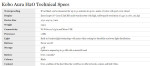
The Aura H2O is expected to launch next week. According to the leaked spec sheet , which was subsequently confirmed by the product listing, it will ship with a 1GHz CPU, 4GB internal storage, and a microSD card slot. It will of course also have Wifi, a frontlight, and an infrared touchscreen.

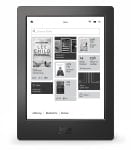
Based on the product images below, I would say that my previous suppositions that the Aura H2O would run Kobo’s proprietary software were correct.

AlleseBook.de

Kindle Unlimited to Launch Internationally at Frankfurt Book Fair?

There’s a new report going around today that Amazon will be expanding their ebook subscription service in the next couple months.

In a story behind a paywall (and referenced here), BuchReport.de is saying that Amazon will launch Kindle Unlimited at the Frankfurt Book Fair in October. I can’t see who their source is and no other details are available to me, but I tend to believe this rumor.

As I reported when Kindle Unlimited launched in July, there was a report coming from a French publisher via the French media blog Actualitte that Kindle Unlimited would launch in France in September or October.

The Frankfurt Book Fair runs from 8 to 12 October this year, so it fits with the time frame, and since it is a major international book fair this would be an ideal time and place for Amazon to launch Kindle Unlimited. We still don’t know for sure whether Amazon will launch in select countries or every where at once, but I would bet on a global launch.

Launched in the US just over a month ago, Kindle Unlimited enables Amazon customers to download and read up to ten ebooks at a time. It costs $8.99, and offers access to a catalog of over 600,000 titles.

Amazon hasn’t revealed yet how many subscribers have signed up, but there are signs that KU is already having an effect on the Kindle Store best seller list.

Unlike Amazon’s competitor’s Scribd and Oyster, the Kindle Unlimited catalog draws almost entirely upon indie titles distributed via the KDP Select program with only a smattering of traditionally published books mixed in.  Amazon has signed HMH, Scholastic, Wiliey, and a few other major publishers, but they do not yet have a deal with any of the Big 5 US trade publishers.

There’s also no information on major publishers in other countries and who they might have signed a deal with, but I would expect that information to be revealed when Kindle Unlimited launches internationally.

German Publishers Lose Antitrust Complaint Against Google

German publishers suffered a major defeat last week in their campaign to force Google to pay for the use of their snippets.

In addition to filing a copyright complaint which demanded 11% of Google’s revenues, in June 2014 a coalition of German publishers also filed an antitrust complaint against Google. That complaint was rejected last Friday by the Bundeskartellamt, the German Federal Cartel Office, which said in a statement (here, in German) that the German publishers had not offered sufficient basis to justify an investigation.

Google’s ability to offer free advertising to websites (aka search result listings) while still generating revenue has made publishers around the world jealous, and earlier this summer German publishers mounted another of their periodic attempts to collect fees from the search engine giant.

I caught the news in Spiegel and FAZ, both of which are part of the coalition which filed the antitrust complaint. While the coalition alleges that Google’s dominant position in the search engine market gave it undue power to force German publishers to agree to its terms, the Bundeskartellamt is described as saying that the antitrust complaint was inconclusive and unsubstantiated, and that the complaint did not tie in with a specific behavior of Google.

I am frankly surprised by that ruling, and given that I saw this antitrust complaint as the publishers' best shot at squeezing money out of Google I have to wonder where they will go from here.

The publishers are seeking to collect fees from Google under a 2013 copyright law which covers ancillary copyrights and was basically written to cover search engines. They want Google to pay for the use of their snippets and links in Google News. In addition to the antitrust complaint, they also filed a request for compensation with the Copyright Arbitration Board of the German Patent and Trade Mark Office.

Unfortunately for those publishers, Google anticipated the new law going into effect in August 2013 by changing their ToS in June 2013. Anyone who wanted to show up in Google search results (in Germany) had to agree to be listed for free.  In short, those German publishers already signed away their rights for nothing, and are now demanding that Google pay.

Not all German publishers agreed to Google’s new ToS, but the ones which did not are not listed in Google News. Since Google is not using their snippets I do not see how they would have grounds to sue.

It’s not clear where this story will go from here, but I do know that Google has in the past delisted websites rather than pay for the privilege of sending them free traffic. The search engine giant was even ordered to do just that when it lost a similar copyright infringement lawsuit in Belgium in 2011.

Should Google lose this fight, it is more than likely that it will delist those publishers in order to avoid having to pay any fees. It would seem the lack of search engine traffic over the long run will likely outweigh whatever short term boost in revenue the publishers get from Google, but the publishers do not appear to think that will happen – or at the very least, they think the potential gain is worth the risk.

German publishers have been trying to extract fees from Google for over 4 years now, but so far they have failed. Well, Nth time is the charm, as they always say.

With OpenStax, e-Textbook Reads You

For the past several years the non-profit OpenStax has been helping college students save money by producing and promoting open source textbook alternatives, and now they’re turning their attention to AP textbooks.

OpenStax recently announced the launch of a pioneering education project to develop new digital textbooks for high school students. Funded by a $9 million grant from the Laura and John Arnold Foundation (LJAF), the project hopes to develop free, digital textbooks capable of delivering personalized lessons.

Whether it’s autocorrect learning what words you use most, Netflix learning which movies to suggest, or Google identifying which ads you’re respond to, I’m sure we’re all familiar with technology that figures out what we might want or need next.

OpenStax wants to use similar tech to craft textbooks which adapt to serve the needs of individual students. "The technology is already here, in the sense that most of us use it online every day," said Daniel Williamson, OpenStax managing director. "However, the full potential of this technology has yet to be realized for education. The project will allow us to demonstrate that this technology is effective and can be used in the classroom to improve both students’ and teachers’ return on effort."

The new textbooks will track each student’s work and pinpoint areas where the student needs more assistance

That work is now being used to train machine-learning algorithms that give OpenStax’s biology and physics textbooks the ability to adapt to individuals. If a reader seems to be struggling with a particular topic – acceleration, say – the book will slot in additional explanations and practice questions, and increase emphasis on related subjects, such as centripetal force, that could otherwise trip that person up.

The adaptive textbooks also incorporate a learning method called retrieval practice, in which material that students have already learned pops up again in occasional quizzes. This method has been shown to enhance students' ability to retain material, and the algorithmic textbooks will be able to decide when to ask questions based on past exercises.

This is going to be at least a two year project, with the goal of creating proof-of-concept, fully personalized textbooks for high school AP biology and physics classes. Luckily OpenStax won’t be starting from scratch; instead they plan to work from 2 existing OpenStax College titles — Concepts of Biology and College Physics.

"The same sort of algorithms that might predict which songs or books you’ll like can be used to deliver a personalized experience to every child in a classroom," said OpenStax Founder Richard Baraniuk, Rice University’s Victor E. Cameron Professor of Engineering.

OpenStax is best known for the CC-licensed college textbooks it has published over the years. Using philanthropic grants, OpenStax has published eleven freshman textbooks (with 3 more on the way) that can be bought as print textbooks for around $34 each. The digital textbooks can be downloaded as PDF or Epub, and a handful of titles are also available in iBooks as interactive textbooks.

That print price is far cheaper than the typical bio 101, chem 101, etc textbook, which often reach a retail price of $200 or more, and the ebook price is simply incomparable. OpenStax reports that their first seven books have already saved students more than $13 million.

Rice University, New Scientist

image by francisco_osorio


New Leaks Show Kobo Aura H2O Coming 1 September, Will Cost $179

When Kobo’s newest ereader cleared the FCC last week I knew it was going to be one of the more interesting ebook readers to launch this fall, and now that the specs have crossed my desk I can see that I was right.

The Kobo Aura H2O is not only going to be the largest and most capable waterproof ereader on the market; it’s going to be the first to sport a new 6.8″ E-ink screen (reportedly).

Like its predecessor, the Kobo Aura HD, this ebook reader will be running Kobo’s proprietary reading software on a 1GHz CPU with 4GB internal storage. The Aura H2O will have a frontlight, infrared touchscreen, Wifi, and a microSD card slot.

Weighing in at 233 grams, the new device will be slightly lighter than the Aura HD. It’s also going to be slightly thinner; looking at the image above I would guess that Kobo lopped off the weird protrusions from the rear of the shell. According to what I was told it’s going to meet the IP67 standard for water, meaning that it is expected to survive being dunked in a meter of water for up to 30 minutes and that it is dust proof.

The Kobo Aura H2O is expected to go up for pre-order on 1 September, with a retail of $179. All in all I am looking forward to this device, and I haven’t even gotten to the best point.

If the is to be believed, the Kobo Aura H2O will have a brand-new 6.8″ Carta E-ink screen. With a screen resolution of 1430 x 1080, it will be ever so slightly less sharp than the screen on the Kobo Aura HD, but it will make up for the lost rows of pixels with a faster and better screen refresh rate.

Bestill my beating heart.

Somehow, Kobo has managed to scoop Amazon for the second year in a row. Last year Kobo got the 6.8″ E-ink screen first, and this year Kobo is (probably) going to get the new 6.8″ Carta screen first.

That leads me to wonder why Amazon is letting it happen, and I can give you three guesses:

  1. Liquavista
  2. Liquavista
  3. Liquavista

I think Amazon is passing on the larger screen because they want to move directly to using a Liquavista screen – possibly the hybrid screen detailed in the patent I discovered a couple weeks ago.

Now that would be fun, would it not?

Alles eBook


Studies Disagree on Whether Readers Absorb Less on Kindles than on Paper

The Guardian reported yesterday on a new study which showed that reading on a Kindle led test subjects to recall fewer details from the story, leading some to speculate that we’ve reached the edges of ebook usability.

While Nicholas Carr might want to use this paper to sound the death knell of ebooks, I think further study is warranted.

From the article:

The study, presented in Italy at a conference last month and set to be published as a paper, gave 50 readers the same short story by Elizabeth George to read. Half read the 28-page story on a Kindle, and half in a paperback, with readers then tested on aspects of the story including objects, characters and settings.

…

But instead, the performance was largely similar, except when it came to the timing of events in the story. "The Kindle readers performed significantly worse on the plot reconstruction measure, ie, when they were asked to place 14 events in the correct order."

The researchers suggest that "the haptic and tactile feedback of a Kindle does not provide the same support for mental reconstruction of a story as a print pocket book does".

The Guardian only briefly mentions the rest of the study, where the Kindle group tested about the same as the control group.

Luckily for us, The NY Times covered this story on Sunday and they crafted a handy little graphic to show us how the test scores differed (click to enlarge):

As you can see, in most categories there wasn’t a huge difference between the two test groups. The one exception is time and events, which is quite similar to plot reconstruction.

So does this mean that there are limits to reading comprehension on ereaders and tablets? Maybe, but maybe not.

For one thing, this study included only two experienced Kindle users, and as you can imagine that might skew the results.

But there are other studies which could shed some light on the issue. The paper referenced by The Guardian does mention a related study, but I don’t think it’s relevant. Tell me if you can see the structural problem with the study:

Mangen also pointed to a paper published last year, which gave 72 Norwegian 10th-graders texts to read in print, or in PDF on a computer screen, followed by comprehension tests. She and her fellow researchers found that "students who read texts in print scored significantly better on the reading comprehension test than students who read the texts digitally".

Luckily that’s not the only study on the topic.

I’ve been following this question for a few years now, and while it is clear that enhanced ebooks don’t enhance education that is certainly no reason to throw out the baby with the bath water.

I also know of a 2012 paper which showed that test subjects who read on a Nook scored slightly higher on reading comprehension tests. Like the latest study that older research was based on a small group of test subjects, so it’s not possibly to use one to refute the other, but it does suggest that further study is warranted.

All in all, I would say that it is too early to draw a conclusion either way.

image  by francisco_osorio,  David Boyle in DC

GigaOm is Wrong to Call Kindle Worlds a Bust

When Amazon launched Kindle Worlds in May 2013 many people misunderstood the new service, and it appears that misunderstanding continues to sway journalists even today.

On Sunday GigaOm published an article describing Kindle Worlds as a bust. Working from a recently published research paper, Jeff John Roberts calls Kindle Worlds "a bust for fans, and for writers too".

While it is possible that KW is a bust, Mr Roberts doesn’t prove that argument. In fact, his approach is not just wrong but completely irrelevant to the reason Kindle Worlds was created.

Later in this post I will discuss my standards for judging whether KW is a bust, but before we do that let’s pin down exactly what we are talking about.

Far from being a portal for fanfiction, Kindle Worlds is a publishing imprint. Organizationally, it belongs to Amazon’s publishing divisions, and it is not part of KDP. This is an important distinction because had KW actually been about fanfic then it would have been announced as a self-publishing portal related to KDP.

Instead, KW is about copyright holders (movie studios, authors, publishers, media companies) choosing whether they wish to publish works by outside authors.

As Tobias Buckell explained last year, it’s about licensing, not fanfic:

It’s really a way for Amazon to disintermediate media tie in novels, where packagers and publishers approach authors to write in an established media universe.

Amazon is using some elements of fan fiction to do an end run around the existing publishing structure of it.

If you look at KW from the viewpoint of licensed content and not fanfic then Mr Roberts arguments tend to fall apart:

In the month of June, authors contributed 46 Pretty Little Liars works to Kindle Worlds, which sounds like a fair number — unless you compare it to the more than 6,000 such works that appeared during this time on two other fan fiction sites.

More broadly, on one of those sites, FanFiction.net, fans posted 100 new stories every hour across all categories. And Amazon? Its entire output for all 24 “Worlds” of content, which also includes franchises like Gossip Girl and Vampire Diaries, was just 538 stories over the course of more than a year.

He is simply wrong to say that "authors contributed 46 Pretty Little Liars works to Kindle Worlds"; that is the number published, not how many were submitted.

We don’t actually know how many were submitted; all we know is the number of works that made it through the process and were published. And that’s not the same thing.

I do not think counting the number of works produced is the right way to go about measuring the success of a program; if that were the case then a publisher which produces 10 titles a year is only a tenth as successful as one which produces 100 titles each year. (And heck, I know one author who only writes a single novel each year; by Mr Roberts' reckoning she must be a failure compared to authors who write 4 or more books a year, and not a financially successful author with a rabid fanbase.)

Bigger is generally better, yes, but I think a better yardstick would be to track the revenues and count the reviews.  If you can show me that authors and publishers aren’t making a lot of money from this, now that would be an argument that Kindle Worlds was a bust.

But Mr Roberts doesn’t have that data, so his argument is a bust.

If you have first-hand experience with Kindle Worlds, please let me know whether you think the imprint is making an impression. I don’t have any financial data, so I can’t answer that question.

Delaware Passes Law Which Makes eBooks and Other Digital Content Inheritable

Do you know that clause in the TOS for the Kindle Store and many other digital content stores which says that the content is licensed to you and is nontransferable?

The state of Delaware just negated that clause (in part).

Last week Governor Jack Markell signed House Bill (HB) 345, “Fiduciary Access to Digital Assets and Digital Accounts Act”, giving heirs and the executors to estates the same rights over digital content which they would have over physical property.

In a case of life imitating art, the new law basically accomplishes what the Daily Mail fictitiously reported in 2012 that Bruce Willis wanted to accomplish; ebooks and other digital content can now be inherited.

Delaware is the first state to follow the latest suggestion from the Uniform Law Commission, a non-profit group that crafts model legislation and lobbies to enact it across all jurisdictions in the United States. Last month the ULC adopted a new legal standard, the Uniform Fiduciary Access to Digital Assets Act (UFADAA), which laid out what rights heirs should have over digital content belonging to the deceased.

Delaware is reportedly the first state to take the UFADAA boilerplate and pass it. While a few states, including Indiana, Virginia, and Rhode Island, do have some statutes related to the digital assets of the deceased, those provisions are far less comprehensive than the new Delaware law.

But even though those laws are more limited in scope, they will probably continue to have a greater impact on legal rulings. The new law in Delaware only affects Delaware residents and wills being probated there. It does not affect the tech companies registered in the state, according to one spokesperson. "If a California resident dies and his will is governed by California law, the representative of his estate would not have access to his Twitter account under HB 345," Kelly Bachman, a spokesperson for the Delaware governor’s office, said by email.

But even with the limited impact, this is still good news for digital rights advocates such as myself. Along with the ReDigi decision, which said that you could resell digital content under certain circumstances, the new law is a major milestone in a growing legal trend.

Year by year, consumers are gaining more rights over the digital content they buy. If this trend continues then it won’t be long before consumers have the same rights over digital content as they do over physical goods.

And while that might upset certain middlemen, as a consumer I am quite pleased.

Ars Technica

images by kalleboo, Meta Mourphic


ReadZap Wants to Deliver Your Next Read to Your Inbox

Are you running short of reading material on your mobile device and looking to get more delivered to your inbox?

Me neither, but just for the sake of moving this post along, let me show you ReadZap.

This recently launched service wants to enable users to "get new book recommendations, and comment and share your observations with your friends, all without leaving the comfort of your inbox". It sends out ebooks in short text installments to users' cell phones and other mobile devices, letting them read with whatever connected device they have at hand.

I personally can’t see the value of this service, but I do know that the developers believe that the time is rip for a device and platform independent service that keeps users from being "tied to entities that control how and when you can access the content you’ve paid for".

That sounds good, and while I am all for readers choosing whatever works for them I would point out that this idea has been tried before at least once, with little visible success.

In 2006, way back in the dark ages of the ebook era, there was an ebook startup called Daily Lit. That company got its start in emailing chunks of public domain works to subscribers, and later expanded into selling ebooks which were delivered in chunks to your inbox. After passing through a couple incarnations, Daily Lit was sold off and used to build Rooster, an iPhone app with a similar idea.

Daily Lit was a novel idea – in 2006. And since it solved the delivery/discovery problem it also wasn’t a bad idea for that era, but the same cannot be said for 2014. While Daily Lit served a purpose in 2006 (and solved a problem for at least some users), in 2014 no one really has any trouble finding new ebooks or getting those ebooks on to their mobile device.

Thanks to the plethora of book promotion sites, the average reader can find more ebooks in a day than they can read in a decade. And given the storage capacities of your average mobile device, you can now store more ebooks on a device than you can read in a year.

And that is why I don’t see the use of a service like ReadZap. Would you use it?

I really would like to hear a contrary opinion, and the comments are open.

New Kobo Aura H2O eReader Clears the FCC, Has Wifi and a 6.8″ Screen

The drought of news about new US ebook readers ended today with the discovery that Kobo’s next ebook reader has made an appearance on the FCC website.

Kobo (or rather their hardware partner Netronix) has taken the sensible precaution of placing most of the useful info under an embargo, but there were a few nuggets of information scattered across the filings.

I can confidently report that the new Kobo device is described as having a 6.8″ screen, and that it was tested for Wifi. There is also a mention of a microSD card slot but no hint that the new device has audio support.

It looks like we might have a replacement for the Kobo Aura HD, the 6.8″ ereader which launched last spring. That device sported a 1GHz CPU and had an infrared touchscreen, a frontlight, and a 6.8″ Pearl HD E-ink screen with a screen resolution of 1440 x 1080.

All in all, there’s very little to say about the FCC filings other than that they happened, and given the rumor that popped up last month I find I have more questions than answers.

Last month the ever reliable @evleaks reported that Kobo was going to release a waterproof ereader called the Kobo H2O. As I reported at the time, even though there was no evidence to support the rumor I thought it had a good chance of coming true.

Making an ereader waterproof was a logical next step for a device that could be used in full sunlight, but just as importantly one of Kobo’s competitors already has a waterproof model on the market in Europe. The Pocketbook Aqua is an unimpressive budget device with a premium price tag, but it shows that at least one ereader maker is thinking in this direction.

Update: This device is named as the Kobo Aura H2O in the PDF for the FCC ID label. (There was a second page to that PDF which I missed when I first looked at the PDF.)

Alas, while the FCC filings are tempting, they don’t definitively confirm that rumor. This new Kobo device could just as easily be based on the prototype ereader that Netronix showed off at a trade show a couple weeks ago.

Charbax caught up with Netronix at that show and showed us an ereader with a 6.8″ E-ink screen, Wacom touchscreen. It ran Android 4.1:

It is entirely possible that Kobo sent their version of the Netronix prototype through the FCC last week, and not the waterproof model. There’s also a chance that the prototype and the rumored waterproof model are one and the same.

There’s no way to tell at this point, so we will just have to wait and see.

FCC (NOIKBN250)

Amazon "Buy it Now" Links now Showing up on Washington Post Website, But I Don’t Think They Belong to the WP

News broke on Slashdot on Saturday that Jeff Bezos’s newspaper now uses Amazon affiliate links, but I don’t think that’s the whole story.

While reading a story in the Jeff Bezos-owned Washington Post, I saw that the paper had begun embedding Amazon Buy-It-Now links in the middle of story sentences. For example, in this article, a sentence about the sales figures for differing covers of The Great Gatsby read: At Politics and Prose, the traditional [BUY IT NOW] version — featuring the iconic eyes floating on a blue background — sold better than the DiCaprio [BUY IT NOW] cover.

While I can confirm that the buttons are cluttering up that article, I’m pretty sure it’s not as big of a deal as it first appears.

In the order of least to most important, here’s why I don’t think there’s a story here:

One, this type of link is not a new concept. It’s one of the common forms of web advertising, and it’s existed for a decade or more. Sure, the links on the WP website are more obnoxious than average but they are not that out of the ordinary.  So there’s no reason to bash the WP for adding them (the rest of the advertising, on the other hand … ).

Two, The links don’t reference the WP. If you click one you will see that the affiliate tag appears to belong to Slate, which does not belong to Jeff Bezos. Slate belongs to The Washington Post Company, the media company which sold the WP newspaper to Jeff Bezos. It’s not clear how Slate affiliate links ended up on the WP website, but I do know that:

Three, The affiliate links are not showing up in all articles. I checked a half dozen articles, and I cannot see any links to Amazon. Update: Pando Daily found affiliate links in an article and a letter to the editor. I guess the links are spreading.

Based on the points cited above, my current working theory is that the affiliate links are the result of a technical snafu of some kind, but I don’t have enough information to say for sure.

I’ve tried to reach out to someone at the newspaper for an explanation but I can’t find contact info. Until I get more info I will assume that this is less nefarious and less important than it was originally described.

At the very least, there are too many unanswered questions here to reach a definitive conclusion. If I learn anything new I will update this post.

Update: Digiday has a response from a WaPo spokesperson:

A spokeswoman for the Post, however, said the paper has been embedding buy-it now links in articles “for many years” and that they haven’t been used more widely under Bezos. She said the buttons are added by the copy desk, so the writers and editors who worked on the story are not involved.

As for why the button no longer appeared in the Aug. 15 article, she explained that the in-article button functionality was a mistake. The button was dropped when the Post recently introduced a new article format, then unintentionally added back in a way that put the links into the text instead of on the side.

“It was not intentional,” she said. “And yes, the button is being fixed and will go back on the side where it has always been.”

See, I told you it was a technical snafu. And on a related note,

image by clasesdeperiodismo

B&N Builds Buzz for New Galaxy Tab Nook with Promo Video

It looks like Barnes & Noble is taking a leaf from Amazon’s playbook.

Early this morning the retailer sent out an email to their customers, but rather than pitch ebook deals the email touts a new promo video for the Samsung Galaxy Tab 4 Nook. B&N is widely expected to launch the new tablet next Wednesday, and for once they decided to start promoting the new hardware before it officially launches.

The video regrettably doesn’t share any new details on price or specs, and instead focuses on reactions to the new device (in much the same way that Amazon has used reactions to a new Kindle as part of their launch events). But in spite of the lack of interesting or useful info, this is a good sign for industry watchers. It tells us that B&N isn’t just going through the motions when launching the new hardware; they want it to succeed.

Now if only they could have released a new tablet which had a better screen and performance that the Nook HD, that would be awesome. As it stands, the new Galaxy Tab 4 Nook doesn’t exactly offer a compelling reason to upgrade.

I had a Galaxy Tab 3, and was underwhelmed by the performance, and I also know several Nook HD owners (including Juli Monroe of Teleread) who don’t see why they would want to downgrade their screens.

Still, B&N has had close to two years since their last tablet launch to work on their software; perhaps they will blow us away on Wednesday. We’ll have to wait and see.

Amazon Expands Pre-order Buttons to All KDP Authors

With no fanfare or official announcement, earlier today Amazon quietly gave indie authors a sales feature some had been requesting for the past several years.

According to a new page in the KDP help section, authors and publishers who distribute their works through Amazon’s publishing portal can now elect to put their next work up for pre-order. Amazon asks them to first upload a draft copy of the work, and promises that Amazon will "publish a product detail page for it within 24 hours of approval". It’s not clear what Amazon means by approval, but I have confirmed with an author that this is for real.

Pre-order buttons were one feature that many indie authors wanted but few had – in KDP at least. While this option had long been available in iBooks, Amazon had restricted the option in the Kindle Store, limiting it to publishers and a select handful of indie authors.

But not anymore. Now Amazon has extended a much-wanted feature to KDP authors, giving them a way of boosting sales. To those outside the industry pre-order buttons might not look like much but they serve several purposes. For example, Hachette was used the pre-order buttons in the Kindle Store for their sales forecasting, so when Amazon took disabled the buttons Hachette last a valuable source of market info.

What’s more, Mark Coker showed in Smashwords’s last survey that pre-orders can significantly boost sales. One indie author even hit the iBooks best seller list based on pre-orders alone.

But as good as this news is, I have to agree with my source. he suggested that Amazon might have an ulterior motive:

Evil Wylie is obliquely referring to the ongoing contract dispute between Amazon and Hachette. As you might recall, in late May Amazon disabled the pre-order buttons which it was no longer obliged under contract to provide to Hachette.

This raised a hue and cry at the time, and now Amazon is extending the feature to indie authors. I do believe that Amazon is using this marketing option to serve a dual purpose; it helps indie authors sell more, while at the same time it drives home the point that Hachette still doesn’t have pre-order buttons restored.

I do believe in coincidences, but not this one.

eBooks Reach 6% of the Dutch Book Market

With ebook sales both up and down at major US publishers, no one knows exactly what is going on with the US ebook market. The same cannot be said for the Netherlands.

A new report from GfK revealed that the Dutch book market shrank in the second quarter, while the ebook market grew. Sales of paper book were down 15.5% from the same quarter last year, reaching 7.9 million units, and market value also dropping 11.5%, to 106.1 million euros.

That bad news for paper books was good news for ebooks, which accounted for 6% of the Dutch book market in the second quarter of 2014, up from 5% in the first quarter, with around 80% of the sales coming from fiction genres.

The Dutch ebook market may not be a large one but it has drawn the interest of the major ebook platforms. Apple, Kobo, Google, and even B&N have all launched a local ebookstore there in competition with the bol.com. Amazon has also reportedly shown an interest, and is currently looking to hire a Dutch translator.

eReaders.nl

image by albertstraub


Mobile Publishing Startup Onswipe to Close, Avoids Bankruptcy by Selling Itself

From the Not a Surprise Dep’t:

Fortune is reporting this morning (5 August 2014) that Onswipe has been sold off:

Onswipe, a New York-based ad-tech startup, has sold itself to Beanstock Media, a Silicon Valley-based adtech company, Fortune has learned. An announcement could come as soon as tomorrow.

A private message from Onswipe CEO Jonty Kelt, obtained by Fortune, called the deal a “soft landing,” which is startup parlance for failure.

Update (12 August 2014): The deal was officially announced today. The following story is mostly correct, with one exception: at least one existing investor, Spark Capital, will be getting equity in Beanstock as part of the deal.

Not to be mean, but this is one of those times that I wonder why a company stuck with an unworkable idea for so long.

Initially launched in 2011, Onswipe set an ambitious goal: "to power the way the world experiences the web on tablets". This startup developed a unique publishing platform which enabled websites to take their existing content, automatically generate an app-like layout for mobile devices, and monetize it by adding adverts. At first the  platform was only designed to support the iPad, but it was later expanded with support for a couple Android tablets, including the Nexus 7 and Kindle Fire, the iPhone, and (in late 2013) Android smartphones.

As you can see in the screenshot above, this looks like a cool idea, but unfortunately the nifty-ness of the tech didn’t translate into market success. Hardly any publisher wanted to use Onswipe; last fall Onswipe boasted that 27 million website visitors were viewing an Onswipe supported site each month. Compared to the 500 million plus iDevices then in use, that is a relatively small number.

Frankly, I’m not surprised by the limited adoption or by today’s news. As I pointed out last fall, Onswipe was promoting a solution which was – at best- clunky when it launched. By the time it was working well enough to offer consistent performance, it had been made redundant by advances in website design.

Thanks to a concept called responsive web design, Onswipe’s proprietary platform was redundant. If you take a moment from reading this post and adjust your browser window so it is narrow and tall, you’ll see that a well-designed website (or even an adequately designed site such as this one) supports all screen sizes from smartphone to desktop. That effectively killed any need for Onswipe.

Onswipe  is reportedly selling for just enough to retire its $2.5 million in debts and pay off a $2 million convertible bridge note raised this spring. The latter was provided six months ago “to keep the company alive in order to find a soft landing,” Onswipe CEO Jonty Kelt wrote in an email obtained by Fortune.

The company had raised around $12 million in funding.

According to Kelt’s email, Beanstock Media is acquiring Onswipe because it does not have a mobile strategy, and because it wanted more direct sales and a New York presence. This firm bills itself as a publisher trading desk company for ad placements. It had reportedly brought in $40 million in revenue in 2013, far more than the roughly $500,000 in monthly revenue Onswipe was reportedly generating.

It will absorb 24 of Onswipe’s 28 employees.

Fortune