PSA: Have You Canceled Your Account at Scribd? You Might Want to Double Check That

With the news coming out earlier this week that Scribd was cutting back its romance catalog (including titles from Harlequin), I’m sure some Scribd subscribers are thinking about cancelling their subscription (or have already done so).

And so I want to pass along a friendly warning about Scribd’s cancellation process.

Many companies have a relatively obvious process to cancel an online subscription. They may make you jump through hoops, beg you not to leave, but in the end I’ve rarely had trouble canceling a service.

Scribd, on the other hand, has set up their cancellation process so that it is easy to trick yourself into thinking that you’ve canceled your account before you’ve actually completed the process.

I had to find this out the hard way, and I’m hoping you can learn from my mistake.

Back in May I decided that I no longer needed my Scribd account, and I canceled the monthly payment – or so I thought. Much to my surprise, I discovered earlier this week that I was still subscribed to Scribd.

It turns out that, after navigating through 3 screens and after having told Scribd three times to cancel my subscription, I hadn’t actually canceled the account.

No, there was a 4th screen where I was required to scroll down, find the correct text entry area, give Scribd feedback, and cancel my account a 4th time before it would take.

Personally, I find the design of that process to be deceptive, but the more important issue here is that I want to help you avoid my mistake.

If you canceled your account at Scribd, go make sure they’re no longer charging you. And if you decide to cancel your account, please be more careful that I was.

We don’t want you to become part of the "gym membership" part of Scribd’s business plan (continue to charge people for a service they aren’t using). Scribd costs $9 a month, and if you’re not reading the ebooks that money is better spent elsewhere.

image by W_Minshull

B&N’s New Website Could Be the Kiss of Death For the Nook

After nearly two years of development, Barnes & Noble launched a new site that has some asking whether this will be the digital solution to B&N’s ecommerce woes.

I, however, am wondering how much damage the new site will do to B&N’s Nook sales.

The new site went live on Tuesday, and it is a mess. While it looks slightly cleaner and less cluttered than the previous design (Wayback Machine) the biggest change is in the backend for the Nook Store.

Barnes & Noble has taken a clunky but functional digital library platform and turned into a non-working piece of crap.

I have spent a couple of hours today trying to access the ebooks I bought from B&N, to no avail. Where I used to be able to archive, download, or (in some cases) read an ebook online, now I can only browse the content and be frustrated by an inability to use it.

The listing pages for many of the ebooks in my Nook Library have vanished, and the read online option has disappeared with them. What few links still work lead to the store pages for the ebooks.

Yes, B&N won’t let me download the ebook I bought but they will let me try to buy a replacement. And when I click the buy button I am shown this:


In case you were wondering, yes, you can actually buy from the B&N website; the process is just fucked up.

I have contacted B&N, both PR and customer service, and asked for help. I have not received a response, but I plan to watch and see how long it takes B&N to fix this.

***

There has been doubt in my mind as to whether B&N is really interested in keeping up the Nook platform. While they haven’t killed the Nook outright they also haven’t really invested in the platform in the past year.

The only major improvements and new services were designed more to make the platform attractive to investors when B&N still planned to spin it off, and now that that plan has been set aside I think apathy has set in.

I can understand the reluctance; digital revenues continue to drop quarter after quarter. Nook continues to be a money pit so B&N might take a pessimistic view and simply assume that the digital side is dead.

And if they do hold that view, they won’t make great strides to fix this issue. Instead they’ll ignore it and fix the other problems first.

But if B&N does fix this issue promptly then it would indicate that they’re still interested in the Nook, and that might give us a clue as to what B&N is planning to do this fall.

There’s been some speculation that B&N is going to update the Nook Glowlight this year. I’ve been hearing rumors from store-level staff about a new model, and a couple days ago Joanna Stern mentioned in her review of the new Paperwhite that:

… and Barnes & Noble hasn’t updated its Nook Glowlight in nearly two years. (I expect the company to refresh it this fall.)

I don’t think that is going to happen; B&N has previously shown no interest. But if B&N fixes the Nook Store promptly, I would change my mind.

A repaired Nook Store is one that B&N plans to keep. If it stays broken then the best we can hope for is that B&N sells it off quickly.

Photo credit: J.P. Gownder via Forrester

Scribd is Putting Harlequin Titles on the Same Chopping Block as Indie Titles

When news broke on Tuesday that Scribd was cutting romance titles from its catalog, all the stories focused on indie published titles from either Smashwords or Draft2Digital but the activity was not limited to just those two distributors.

At least one other ebook distributor was impacted, and Scribd has confirmed today what readers have been saying for a couple days now and what my own eyes saw in the Scribd catalog: that Harlequin, the world’s largest romance publisher, is feeling the pain as well.

eBook Partnership, a UK-based ebook distributor, confirmed that they too had received a notice from Scribd. They were unable to share specifics, but did note that they had only started to upload to Scribd fairly recently. Given that Scribd is cutting the more popular titles there is every chance that titles distributed through eBook Partnership might not have been in Scribd’s catalog for long enough to draw attention.

Similarly, BookBaby does not expect to have any titles pulled from Scribd’s catalog due to the simple fact that this ebook distributor doesn’t distribute romance titles to Scribd.

I was told that Bookbaby’s deal with Scribd initially excluded romance and erotica titles. That later changed, but those two genres were never a significant part of BookBaby’s catalog. Furthermore, BookBaby’s system is set up to restrict Scribd if the client selected erotica as a sub-genre, so it’s unlikely this distributor will feel the pinch.

Harlequin, on the other hand, is going to notice. Scribd has confirmed that titles from Harlequin, as well other traditional publishers had been removed from the Scribd catalog. This detail had been left unsaid earlier this week, but now I have been told that the "adjustments to the romance catalog are being handled identically with all publishers who provide us with romance content".

Harlequin had signed a deal with Scribd last October to give Scribd an exclusive on 15,000 titles from Harlequin’s backlist. That exclusive had likely expired by April when Harlequin signed a deal with Playster, but the 15,000 titles still made up a huge chunk of Scridb’s romance catalog.

According to user reports, Scribd’s romance catalog had 30,000 titles before the cull. That same user reported that the romance catalog now boasts 8,000 titles.

Edit: It’s been made clear that the 30,000 refers contemporary romance, not the entire genre. But if we apply it across the genre then this is a huge reduction.

I was a little surprised by that detail; like many I was under the impression that romance titles made up a major chunk of the 300 thousand plus titles in the Smashwords catalog, and that most of the romance titles had made their way to Scribd.

I have asked Scribd to confirm this detail, but they would only go so far as to say that "we have not specified the amount of titles".

Edit: Okay, now Scribd is willing to say that the figure is not accurate. Gee, thanks, guys.

While we won’t know the true scale of the cull until Scribd shares those figures, I do think we can point to the cause.

It would have to be that deal with Harlequin, and the subsequent promotion.

Scribd had been promoting its subscription ebook service with a 3-month free trial. It was widely available and heavily promoted by both Scribd and Harlequin. One author I know had even mentioned it in one of her giveaways.

Harlequin and Scribd were both encouraging voracious romance readers to read as much as they want for 3 months and not pay a dime.

In retrospect that was a terrible idea, but I would think that Harlequin at least should have foreseen the problems this would cause.

But would they care, and would they speak out against the idea?

No one is talking about that deal (not to the press, anyway) so there’s no way to know for sure. But it is clear from this week’s events that everyone is aware of the limitations of the subscription ebook model now.

As I and many others pointed out when Scribd and Oyster launched in late 2013, a subscription plan can’t afford to pay book publishers at the same rate retailers pay. This week has shown that the service only works until it is actually used as intended, at which point the company behind starts bleeding profusely.

The readers who would get the most value out of a subscription ebook service are also the ones who drove Scribd to cut their catalog this week. And to be clear, that was just a stopgap measure and not a true solution; those readers are still subscribed to Scribd (and to a lesser degree, Oyster) and so the problem is merely abated but not resolved.

In the long run the only solutions may be to either switch to payment terms similar to Kindle Unlimited or drop the unlimited aspects of certain Netflix-style ebook services.

TotalBoox, for example, is has developed a service where pay for what you read, but based on their recent press releases is having trouble drawing the attention of consumers or publishers. (A similar service proved unworkable when PaperC tried it a couple years ago.)

Similarly, Blloon launched with the goal of offering a much more limited service with restrictions on how much a subscriber can read in a given month.

Blloon is still in beta in the UK, but unfortunately it has gone down the same path as Scribd and Oyster. Blloon is now being pitched as an all you can read service with 700,000 titles and a cost of  £7.99 per month. That is no more a workable model than the service Scribd and Oyster offer, and I expect Blloon will suffer the same fate.

image  by docoverachiever
KDP Select’s New Royalty is Estimated to be Around Half a Cent Per Page

July marks the start of the new payment terms for KDP Select. Where Amazon used to pay participating authors based on the number of times an ebook was loaned in Kindle Owner’s Lending Library or KDP Select, under the new terms Amazon will pay each author based on the number of pages that have been read by subscribers.

Amazon has defined a new standard for a page called the Kindle Edition Normalized Page Count (KENPC)*, and at the end of the month they’ll count the KENPC and divide it into the funding pool.

Amazon hasn’t announced the total funding for KDP Select for July, and we obviously don’t know how many pages will be read. So at this point the payment per page is a little hard to pin down, but one author has come up with an estimate based on what we know about current activity.

According to Morris Rosenthal’s back of the envelope calculation:

My first estimate for the Kindle Select royalty system that starts today is $0.0058, or 0.58 cents per page read. This is based on Amazon’s announcement that the global pool for July will be at least $11 million, and that last month, the number of pages read was almost 1.9 billion.

I think that his estimate is a little high (KU subscribers will read more pages) but I also think it is in the same neighborhood as the per KENPC payment for this month. That’s good for authors because they can now use that estimate to calculate how much they might get paid for each book.

An author can calculate the payment they’ll get for a book by finding the book’s KENPC and multiplying it by the estimated royalty payment. Amazon says you can see a book’s KENPC listed on the "Promote and Advertise" page in the author’s Bookshelf (they can also see the total pages read on their Sales Dashboard report).

Amazon is letting authors opt out of KDP Select if they disagree with the new payment terms, but that’s a tough decision to make when an author doesn’t know how much money they could be earning.

but now we know that if a reader finishes a book with a KENPC of 100 then the author will be paid around 58 cents.

That is considerably less than the $1.35 Amazon was paying for an ebook loaned during April 2015, but then again Amazon was paying that fee for each short story or novel read by a subscriber, no matter the length. That tended to reward shorter works over longer ones, but the new system removes the financial incentive to split a work into multiple units.

Instead authors will be rewarded for volume. That means that some could be tempted to write even more short stories and novellas so they can stuff Kindle Unlimited with their work, but I don’t know at this time whether that trick will be successful.

What do you think?

Is the half a cent per page worth it?

I would like to say that this is the better option than what Scribd did yesterday when they reduced their romance catalog from 30,000 titles to around 8,000 titles. But to be honest that argument smacks of Amazon fanboyism but it is still some truth to it.

P.S. Here’s Amazon’s explanation for the Kindle Edition Normalized Page Count (KENPC): "We calculate KENPC based on standard settings (e.g. font, line height, line spacing, etc.), and we use KENPC to measure the number of pages customers read in your book, starting with the Start Reading Location (SRL) to the end of your book. Amazon typically sets SRL at chapter 1 so readers can start reading the core content of your book as soon as they open it. Non-text elements within books including images, charts and graphs will count toward a book’s KENPC."

image by Asim Bijarani, nan palmero

Correction: iBooks Author Updated, Can Now Make and Export Epub3 Files

Apple got a lot of attention for yesterday’s iOS 8.4 update, but that wasn’t the only release to come down the pipe.

The company also released a new version of iBooks Author which finally gave that OSX app the ability to make ebooks designed to fit the iPhone’s screen. Authors and publishers can now use iBooks Author to create fixed layout ebooks which look good on the iPhone’s screen.

Update: I’m running slow this morning and I missed the real story here, which is that iBooks Author now offers Epub templates which can be exported as Epub3 files. (I learned this thanks to an email from a reader; thanks, Kira!) Those files work on the iPhone, but they will also work on a lot of other reading apps including Adobe Digital Editions for Windows and iOS.

According to Apple, the new Epub templates:

  • Export to ePub3 format.
  • Allow the reader to read in both paginated and scrolling view.
  • Allow the reader to change the font size in the book.
  • Can include some interactive widgets, such as movies, audio clips, HTML, and image galleries.
  • Can be viewed in any ePub reader that supports ePub3.

That’s a huge change for Apple, and it changes the entire tone of this release. With that in mind, I’ve deleted some irrelevant parts of the post. You can find a new conclusion at the end of the post which better reflects the real story.

Talking New Media started working with the new templates yesterday, and they report that the templates are far less capable than what a developer can do when creating an ebook for the iPad:

I’m discovering serious problems with the new iBooks Author and its support of the iPhone. I found that if you use one of the ePub templates and have a video that you want to autoplay it will. If you have built a book with one of the older templates and have an autoplay video it will not autoplay. Big problem.

The other thing I noticed is that when building an eBook using one of the older templates you could disable portrait, or what they now call scrolling view. This can’t be done with the new ePub templates (not surprising since it is ePub). But this means you really cannot design for landscape, something required by many designers.

What we have here is a compromise: you can publish new books with limited design for the iPhone, and have your older eBooks work on the iPhone. But if you want a truly interactive eBook you’ll still have to design for the iPad. That may be disappointing news to many publishers, what with iPad sales declining.

So Apple will now let you make an Epub3 file?

That’s a huge deal, and I’m not exaggerating. When iBooks Author launched in early 2012 it only made ebooks for the iPad. It was a tool for making iBooks-format digital textbooks, and Apple launched it to support their goal of selling more iPads to schools.

Last week iBooks Author only made ebooks which worked only on Apple hardware. Now it can make ebooks which work everywhere. They won’t be as pretty as what you can make for the iPad but they should work.

Apple has torn down part of one of their walled gardens, and enabled anyone working in that garden to produce content for other devices. Something tells me they have assessed their location in the market and decided that they would rather have creators use their tools to make ebooks for other platforms rather than see creators use someone else’s (possibly inferior) tools.

iBooks Author is free in the Mac App Store.

Scribd is Culling Romance Titles From Its Catalog Because You’re Reading Too Damn Much

Scribd has just run up against one of the known problems with subscription ebook services.

Mark Coker has announced over on the Smashwords blog that Scribd is thinning out its catalog. More specifically, Scribd is now pulling titles from what is probably its most read genre: romance.

Effective immediately, I estimate 80-90 percent Smashwords romance and erotica titles will be dropped by Scribd, including nearly all of our most popular romance titles.  Books priced at free are safe and will remain in their catalog.

Based on what I’ve been able to glean, the lower the price and the higher the word count, the better the odds the book will remain.  Few books priced $3.99 and above will remain.  Scribd is not publicly revealing the formulas for what stays and what goes, probably because much of this is still in flux. They’re cutting all publishers and distributors with the same blunt knife.

It’s ugly.  The problem for Scribd is that romance readers are heavy readers, and Scribd pays publishers retailer-level margins for the books.

Neither Mark nor I know for certain why Scribd is doing this, but I agree with Mark’s conclusion.

Update: The culling has also hit authors and publisher who distribute through Draft2Digital. An author broke the news on Twitter, and Bob Mayer confirmed the news and posted the email he got from D2D.

Romance readers are voracious readers, and Scribd and Oyster were paying what was effectively the wholesale price anytime a reader read more than 10% of a book. To be more exact, Mark revealed in late 2013 that authors were earning 60% of the retail price when that threshold was reached.

Obviously that was going to be unsustainable in the long run (this is why Amazon went with a pool of money for KDP Select). In fact, I’m surprised that Scribd waited so long.

Scribd has been been paying authors at that "hello bankruptcy" rate for the past 18 months, while in that time Scribd has raised capital at least once (possibly twice). I would have thought that the VCs would have pushed for this culling as a condition of their investment (I would have), but I guess they were satisfied at the time with Scribd’s growth and the rate at which was burning through money.

Scribd has released a statement, but it was basically a shorter version of the text Scribd was sending to publishers.

Here’s that email:

Dear Publisher,

As you know, in starting Scribd, we bore the majority of the risk when establishing a business model that paid publishers the same amount as the retail model for each book read by a Scribd subscriber. Now, nearly two years later, the Scribd catalog has grown from 100,000 titles to more than one million. We’re proud of the service we’ve built and we’re constantly working to expand the selection across genres to give our readers the broadest possible list of books for $8.99 per month.

We’ve grown to a point where we are beginning to adjust the proportion of titles across genres to ensure that we can continue to expand the overall size and variety of our service. We will be making some adjustments, particularly to romance, and as a result some previously available titles may no longer be available.

We look forward to continuing to grow subscribers, increase overall reading, and increase total publisher payouts in a way that works for everyone over the long term. We of course want to keep as many of your authors and titles on Scribd as we can, so we’d love to discuss our plans and how we can best work with you going forward.

Thank you for your business.

I don’t know yet just how many publishers have received this email but I suspect that the culling is hitting traditional romance publishers just as heavily as it is impacting indie authors.

Curiously, Scribd is not talking about culling other genres (the statement only mentions romance) at this time but I suspect that SF&F will be the next to go under the knife.

SF readers are nearly as voracious as romance readers, which means they are draining Scribd’s pocketbook almost as fast. Scribd is going to have to get that loss under control, and since they’ve decided to cull the catalog and not the subscriber base, well …

So tell me, do you think this is going to work?

I don’t. My feeling is that the smaller catalog will be less attractive, leading readers to decide to cancel their subscriptions. Yes, that will get rid of the heaviest readers but it will also drive away the lighter readers.

Scribd needs readers who only read a single book a month; they’re Scribd’s bread and butter. If they abandon the service, Scribd is doomed.

image by mikecogh

Multi-touch iBooks on the iPhone: Like a PDF, Only From Apple

Pundits have been hoping for a couple years now that Apple would give the iPhone support for ebooks made with iBooks Author, and now that it has arrived I do not think it lives up to the anticipation.

The iOS 8.4 update was released today, bringing with it Apple Music,  bug fixes, and new features in iBooks on the iPhone. The app now supports the display of the fixed layout ebooks made with iBooks Author. Those ebooks were generally made to fit a 9.7″ iPad screen, so for obvious reasons Apple had previously stopped you from trying to view them on a 4″ iPhone.

But now that we have iPhone 6 and iPhone 6 plus (4.7″ and 5.5″ screens) Apple may have thought the screens were big enough that they could handle squeezing such a large page size down to a smaller area.

I’m not sure I’d agree. Talking New Media has beaten everyone to the punch and posted a video which shows what an ebook designed for the iPad looks like on the iPhone.

The tl;dr version is that it looks about the same as if you took an 8.5×11 PDF and zoomed it to fit a smartphone’s screen. Apple does add a few tweaks to improve the experience, including a TOC menu and an option to zoom in on a body of text (this can be either a true zoom or more of a reading mode where everything but the body of text is stripped away).

It’s workable in a pinch, but I agree with TNM that it would be nice if Apple would update iBooks Author with new iPhone-centric templates. That would let creators update their ebooks with designs that properly fit iPhone screens.

Update: And Apple has listened. The new version of iBooks Author includes iPhone templates.

iOS 8.4 Arrives, Brings Apple Music, Changes to iBooks

Apple’s latest update to its mobile OS arrived on schedule on Tuesday.

Along with the usual bug fixes, the update adds the new Apple Music app and makes changes to iBooks. Its launch coincides with the new Beats One webradio station. iOS 8.4 is available for the iPad 2 and newer, the fifth-generation iPod Touch, and the iPhone 4S and newer.

In terms of iBooks, the app now supports playing audiobooks inside the iBooks app. Apple has also moved the audiobook section of iTunes into the iBooks app. Playback remains unchanged, however.

The iBooks app on the iPhone also now support digital textbooks made with iBooks Author (which had previously only worked on the iPad). Android support for iBooks is still nonexistent, of course.

In terms of bug fixes, the update repairs the bug where a specific set of characters could crash the operating system, and it also fixes the intermittent problem which "prevented GPS accessories from providing location data". And best of all, the update "fixes an issue where deleted Apple Watch apps could re-install".

This is probably going to be the last update to iOS until iOS 9 is released this fall. The new version of iOS isn’t expected to do much in the way of ebooks but it will come with the Apple News app, split screen and multi-tasking modes, and a couple minor features like the Save to PDF sharing option.

ArsTechnica


Dasung’s 13.3″ E-ink Monitor is Now Shipping

Over the past couple weeks many readers have asked for a status update on the Paperlike E-ink monitor I bought back in April.

It has finally shipped, and FedEx says that it will arrive next week.

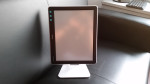
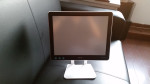
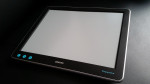
The Paperlike is a one of a kind USB-powered monitor based around a 13.3″ Fina E-ink display. It first made an appearance at CES 2015, but despite press reports to the contrary this device has not yet been released to the market. Production has so far been limited to a total of 50 units which were pre-sold in April. I got one, and I’m looking forward to its arrival.

And so are many other people. This monitor is the work of Dasung, a Chinese tech company, and it has captivated our attention because its E-ink screen promises to offer a unique solution to the LCD headache problem.

LCD screens don’t bother me that much but some people get migraines and vision problems when they stare into a backlit screen for too long. Since E-ink doesn’t have a backlight, it is viewed as a possible solution for office workers who have found that a Pixel Qi screen simply doesn’t cut it.

Pixel Qi makes a type of LCD screen which degrades from color to grayscale in full sunlight, and (on some models) also offers a backlight which can be turned off. Some users swear by it, but others say that it is a less than complete solution (they still get headaches).

The Paperlike cost about twice as much as a Pixel Qi monitor, and it’s not without its own problems. E-ink has a far slower refresh rate than LCD screens and only offers 16 levels of grayscale, and to get around the refresh limitation Dasung has developed new refresh modes, including  mode with only 5 shades of gray as well as a mode with 2 (black and white, basically). That black and white mode hearkens back to 1980s era monochrome monitors and is said to be nearly as fast as an LCD screen.

I’d take that with a grain of salt; that claim was made about a display unit on the show floor at CES 2015. We have yet to receive any reports of real world performance.

But that will change next week.

eBooks Made up 6.4% of France’s Book Market in 2014

The French publishing trade group SNE held its general assembly last week. Mixed in with the Amazon cursing and laments for the good old days, SNE president Vincent Montagne shared the latest stats on France’s publishing industry.

Book sales in France totaled 2,652 million euros on 422 million units sold in 2014. That’s down 1.3% in value and 1.2% in volume compared to 2013, which is relatively good news considering that the music market dropped a reported 7%, and the video sales decreased by 10%.

The SNE reported that 98,306 books were published in 2014, up 3% from 2013. They also reported excellent growth in the translation rights markets (a 6% increase over 2013).

The ebook market also grew in France in 2014; it now represents an estimated 6.4% of book sales in France, up from 4.1% in 2013. France’s ebook market totaled 161.4 million euros in 2014, up 53.3% from the previous year.

That 6.4% is concentrated in specific sectors, including professional publishing, where digital already accounts for over 40% of publishers' sales. Similarly, ebooks represent almost 25% of total sales in the social sciences category.

Curiously, ebooks still make up a negligible part of consumer book sales ( 2.9%, up from 2.3% last year).

And as for self-published ebooks, the SNE is unable to account for the number of self-pub ebooks sold in France last year. The above figures only reflect industry revenue, and thus they are missing anywhere from 10% to 50% of the French ebook market.

I know that is a broad range of possible error, but there’s a method to my madness. The lower end assumes that France has a small self-pub industry segment, while the upper end assumes that the French are buying a lot of ebooks from foreign publishers who sell ebooks cheaper than French publishers (not an outlandish idea, I think).

SNE via IDBoox

image  by jeroen_bennink

Comixology to Launch "All You Can Read" Subscription Plan

There’s an unsubstantiated, unverified,  and unsupported (but almost certainly true) rumor going around today that Comixology is about to offer a Kindle Unlimited type of subscription service for digital comics.

We know literally nothing about the service, but the current speculation is that:

At the behest of their new owners Amazon, the leading digital comics distributor and publisher ComiXology will be offering all-you-can-eat subscription services to readers, allowing them to pay a fixed fee, then have unlimited access to select comic books.

So is this true? Almost certainly.

Comixology’s new service would not be first to offer digital comics as a subscription. Scribd has been offering them since February (and now stocks over 10,000 titles), and a startup called ComicsFix has been running a digital comics subscription service for the past year. They don’t have the two major comics publishers (DC and Marvel) but they do have a large selection of titles from indie publishers.

Speaking of Marvel, this publisher has its own subscription service called Marvel Unlimited. That only offers backlist titles, but it still tells us that Marvel is not opposed to the idea.

I’m still waiting for Comixology to get back to me with a statement, but at this time I am almost certain that this rumor is true. To begin with, my source was also the first to report the Comixology acquisition rumor last year.

What’s more, I predict that the new service is going to be announced next week at the San Diego Comic-Con, when the press is gathered to cover the latest comics and related TV and movies news.

And that’s not all.

I’m betting that the new service will include both independent publishers as well as titles from Marvel. I can’t tell you the size of the catalog, but I do recall that Marvel recently signed a contract with Amazon which made Marvel titles exclusive to Comixology and the Kindle Store.

Do you really think that contract didn’t include a provision for a subscription service?

I think it does have that provision, although I’m not sure which store will be offering the subscription service.

With Marvel titles now in the Kindle Store, it’s entirely possible that Amazon could be planning to expand Kindle Unlimited by adding digital comics.

This is pure speculation, but it would tie in well with  the changes Amazon recently made to the KDP Select payment terms.

A couple of weeks ago Amazon announced that they would pay indie authors who choose to put their titles into Kindle Unlimited based on the number of pages read, with each page read counting for one share of a limited pool of revenue.

Don’t you think that pay-per-page model would work great for digital comics?

I do, and I’m betting that Amazon will be using that new model to pay the indie comics publishers who put their titles into Amazon’s new service. (Marvel could have gotten a special deal because they’re bigger.)

If anyone cares to take the other side of this bet, I know of a bookie in Vegas who can be trusted.

Drop me a line and we’ll talk about it.

image by Sam Howzit

Infographic: The History of Science Fiction

If you like to get lost in impossibly large charts like the Stephen King Universe then I have a treat for you.

I’ve just come across a drawing/infographic/chart by Ward Shelley which plots the history of science fiction from its earliest precursors, the epic myths lost to time, through the enlightenment and the gothic novel to the birth of the first true SF novel, Frankenstein.

Things get awfully complicated after that point as SF branches off into multiple subgenres which split and recombine in surprising ways. Click on the infographic below to see more detail.

But before you get lost in the drawing, I wanted to point out that you can buy this as a print. At 40″ by 22″ it is not a large poster, but it is an expensive one.  It cost me $44.

Too much, do you think?

How to Add a Kindle DRM-Removal Plugin to calibre

Update: These instructions were updated on  11 July 2015. They worked for me on that day.

DRM is the bugaboo of ebooks.  It’s the cause of more pain and agony than a Snooki photo, and today I plan to help fix that. I have long been on the side of removing DRM (it’s the best way to protect your purchases), but up until today I had never gone beyond pointing my readers at tools.


The process is minimally difficult and I’d like to share it with you. But first, a few warnings.

Warning

  • Note that these instructions are Windows only, and some details will be different between the various versions of Windows.
  • Note that these instructions were written without the permission or participation of Kovid Goyal, the creator of calibre.
  • These instructions are written in order to assist the average user in protecting their purchases. I did not write it to assist in committing piracy; I believe in buying content, when possible. But I also believe in controlling the content I buy and that is why I strip the DRM.

TL;DR

Here’s the short-short version: You need to get the DeDRM plugin from Apprentice Alf and install it in calibre (and reboot calibre). Once you’ve installed the plugin, all you have to do is find where Kindle4PC put the ebooks on your computer and drag each ebook into calibre (everything else is automatic).

Luckily for you, you only have to go through the set up process once in order to remove Kindle, Nook, and Adobe DE DRM. (Kobo is a separate process.) If you’ve followed my instructions for removing Nook DRM then you’ve already finished the process of setting up to strip Kindle DRM, and you can skip to the end of this post.

First Things First

You need to download and install these apps on your computer. If you have either of them then you do not need to install them again:

Calibre is of course the ebook library management tool. I’ve mentioned it once or twice, and that’s what you’re going to use to remove the DRM.  And K4PC is how you’ll download the ebooks.

Install the apps one at a time (and set up your account with the K4PC app, if you haven’t already). While it’s being installed, go to the Apprentice Alf website and download the ZIP file full of plugins.

Got everything installed? Good.

  1. UnZip the ZIP file you just downloaded. Open the folder called calibre and you should see a folder full of plugins.
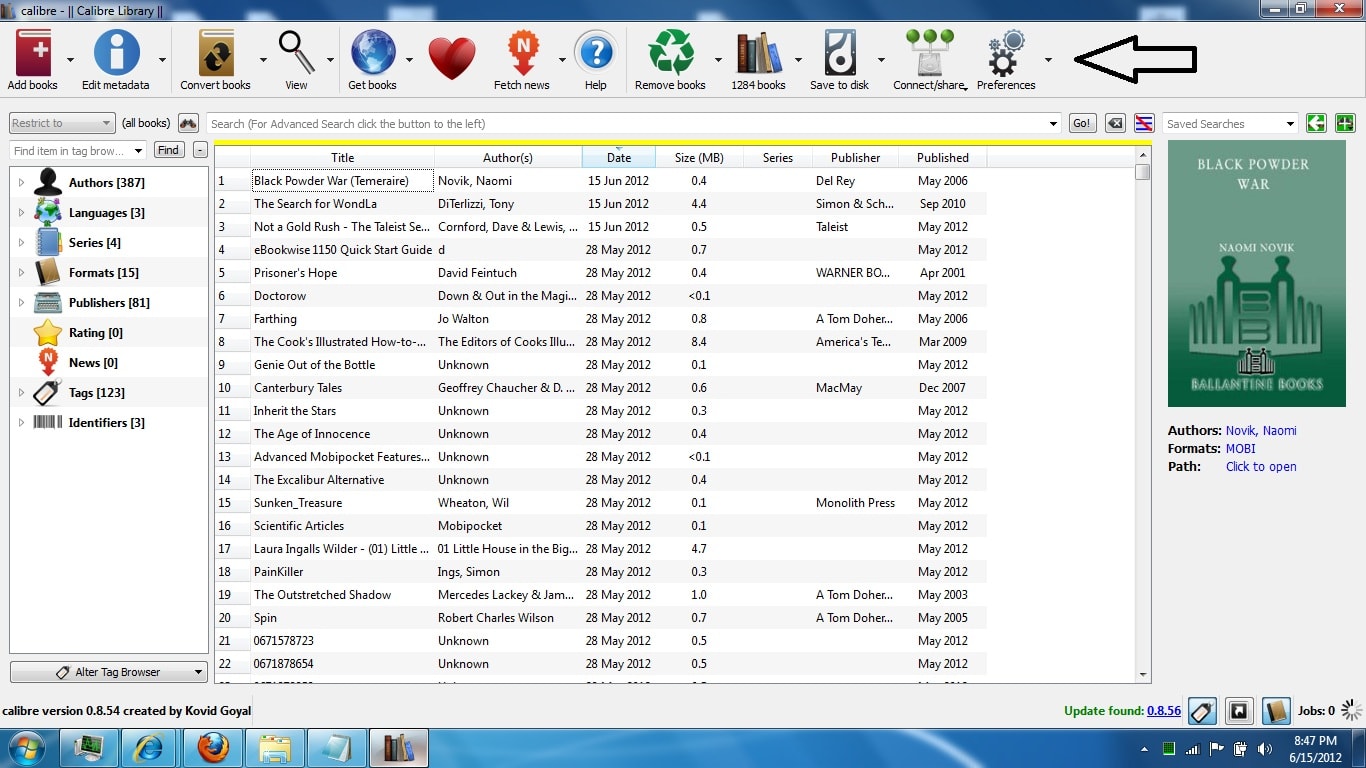
  2. Launch calibre. When it’s open, look at the icons on the top row. There’s one on the far right called "Preferences". Click on it.
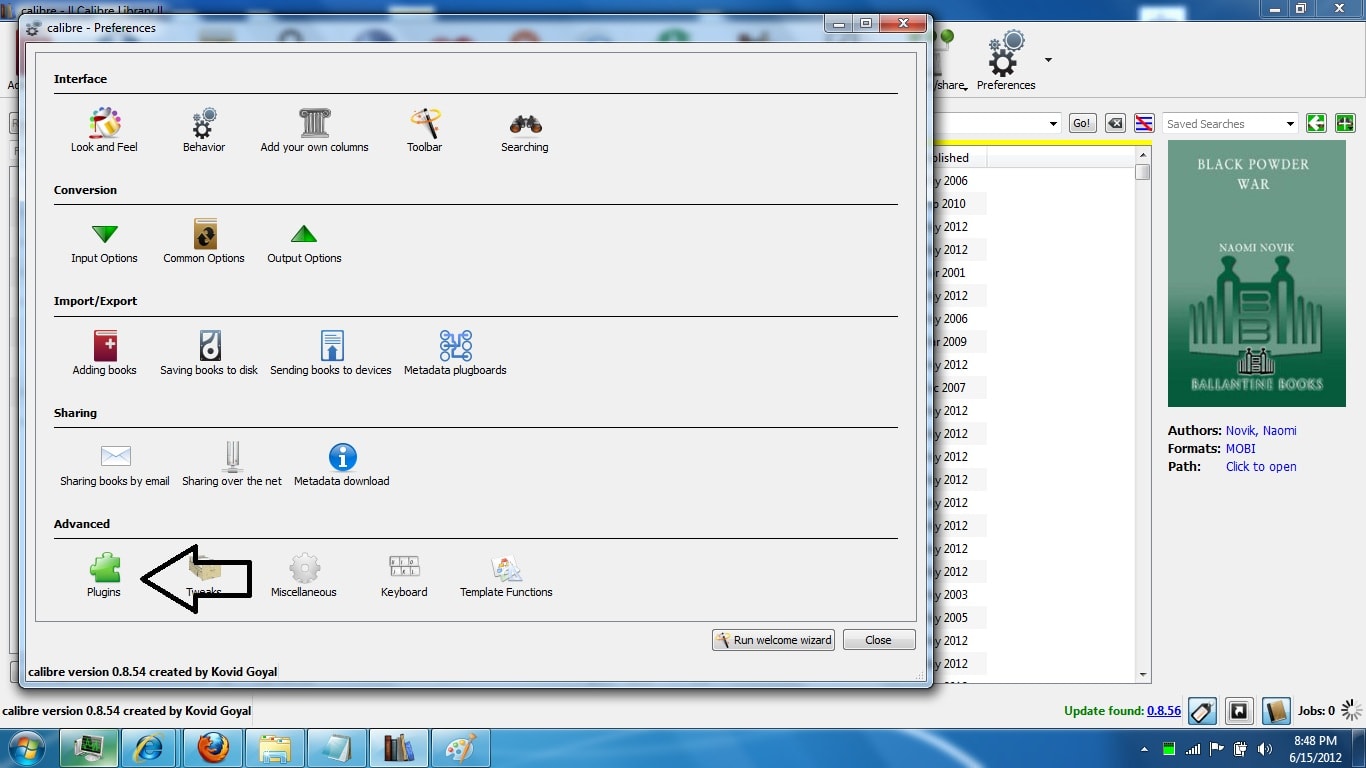
  3. It will bring up a new window with a bunch of icons.  Look on the bottom row for the one that says "plugins". Click it.
  4. And now you’ll get another new window. Look at the buttons on the bottom row. Click on the one that says "load plugin from file".
  5. Use the file browser window to find the folder you downloaded. Open it, and then open the DeDRM_calibre_plugin folder.
  6. There should only be a single ZIP file in that folder, and it should be called "DeDRM_plugin". Double click to select it.
  7. Shut down calibre and launch it again. Some times the plugin won’t kick in until you after you do this.

Yippee!

You’ve just installed and configured the plugin (assuming all went well).  You should be able to copy any ebook you’ve downloaded from the K4PC app to calibre.  Calibre should now be able to read the ebooks and convert them to whatever format you prefer.

But before you can do that you’ll need to find out where the Kindle ebooks are stored. This varies depending on which version of Windows you’re running, but they can usually be found under the My Documents folder.

I’m looking at my Win 7 laptop right now and the  Kindle ebooks are found in "My Kindle Content" under My Documents.

The ones you will need to copy are:

  • AZW/AZW1/AZW2/AZW3
  • MOBI
  • PRC
  • TPZ

After you copy the files into calibre, you might have some trouble getting calibre to open them so you can read them.   Windows will need to be told that calibre can open the files. This should only happen once, so it’s a relatively minor issue.

Note that if you simply convert the ebooks to Epub, you won’t have this issue.

images by pellesten, Rosino

How to Add a Nook DRM-Removal Plugin to calibre

Updated: 11 July 2015

What with B&N giving up on the international Nook Store and having trouble getting their new site to function properly, I’ve decided to dust off this two-year-old post and update the instructions so that they are applicable to users who find the post in July 2015.

It’s easier than ever before to strip the DRM from your legally purchased ebooks, but it does still take some work to rescue your purchases.

TL;DR

The short-short version is that you need to get the DeDRM plugin from Apprentice Alf and install it in calibre (and reboot calibre). Once you’ve installed the plugin, all you have to do is find where NookStudy or Nook4PC put the ebooks on your computer and drag each ebook into calibre (everything else is automatic).

Luckily for you, you only have to go through the set up process once in order to remove Kindle, Nook, and Adobe DE DRM. (Kobo is a separate process.) If you’ve followed my instructions for removing Kindle DRM then you’ve already finished setting up to strip Nook DRM, and you can skip to the end of this post.

Warnings

But if you’re finding this post for the first time, let me start with the standard warning:

  • These instructions are written in order to assist the average user in protecting their purchases. I did not write it to assist in committing piracy; I believe in buying content, when possible. But I also believe in controlling the content I buy and that is why I strip the DRM.
  • Note that these instructions are Windows only, and some details will be different between the various versions of Windows. They were also written without the permission or participation of Kovid Goyal, the creator of calibre.

First Things First

You need to download and install these apps on your computer. If you have either of them then you do not need to install them again:

Calibre is of course the ebook library management tool. I’ve mentioned it once or twice, and that’s what you’re going to use to remove the DRM.

And NookStudy is one of the PC apps that B&N released to read Nook ebooks. B&N no longer supports NookStudy, but it still works and you can use it to download your Nook ebooks (You can also use Nook for PC).

Set up NookStudy, and make sure you download the ebooks you bought. Install calibre. While it’s being installed, go to the Apprentice Alf website and download this ZIP file full of plugins

  1. UnZip the ZIP file you just downloaded.
  2. Launch calibre. When it’s open, look at the icons on the top row. There’s one on the far right called "Preferences". Click on it. See Pic 1.
  3. It will bring up a new window with a bunch of icons.  Look on the bottom row for the one that says "plugins". Click it. See Pic 2.
  4. And now you’ll get another new window. Look at the buttons on the bottom row. Click on the one that says "load plugin from file". See Pic 3.
  5. Use the file browser window to find the folder you downloaded. Open it, and then open the DeDRM_calibre_plugin folder.
  6. There should only be a single ZIP file in that folder, and it should be called "DeDRM_plugin". Double click to select it.

Tell calibre to install the plugin, and once it is down shut down calibre and restart it.

And that’s it. You’re done. At this point the plugin should be working, but we won’t know until you try it for the first time.

How to Remove the DRM

The DRM removal process is simple in practice. You just need to find where NookStudy put the ebooks on your computer, and copy+paste them into calibre. On Windows 7, the ebooks are stored in a folder with a location similar to:

  • C:UsersusernameDocumentsMy Barnes & Noble eBooksemail

You can tell that the process worked by using calibre to open one of the ebooks.

Addendum: Just so you know, there are files which NookStudy won’t download. That app doesn’t support everything B&N sells, so for some ebooks you will need to get the files off your smartphone of tablet and then copy them into calibre.  (I’m still working on a process to get those ebooks.)

images by Svadilfari,  Son of Groucho

How to Download Kobo eBooks (Including the Ones They Won’t Allow) And Strip the DRM

For as long as I’ve shopped there, Kobo has always had an issue with not letting customers download copies of all of the ebooks they buy.  I’ve never understood why and they’ve never supplied a consistent answer, but some of the ebooks bought at Kobo can only be read in Kobo hardware and apps.

Edit: This post is being updated on 29 January 2019.  The instructions worked on that day.

Historically this has been a minor issue, but there are a growing number of reports lately, both on Dear Author and on MobileRead Forums, that suggest that the problem may be getting worse (there’s also one report that claims this is a new problem, but it is bogus).

It’s not clear whether the increase in reports are the result of more titles being affected rather than more customers encountering the issue, but since there are a growing number of complaints I would like to offer a solution.

There is a calibre plugin which can grab all of your Kobo ebooks, convert them from Kobo’s own funky Kepub format, strip the DRM, and add them to your calibre library.

It’s called oboK, and it works with the Kobo for PC app. You’ll  need to download the ebooks with Kobo’s app first, and then run calibre. With a minimum number of clicks, the oboK plugin should be able to rescue most of your DRMed ebooks. Some formats aren’t supported by the Kobo4PC app (graphic novels, for example) and can’t be downloaded.

You can download the plugin here:

https://the-digital-reader.com/wp-content/uploads/2015/02/obok_plugin-3.1.1_trad.zip

Or the older version here:

https://the-digital-reader.com/wp-content/uploads/2014/10/obok_plugin_3.0.7.zip

***

The Usual Disclaimer

oboK, and the instructions provided to help install it, is intended strictly for personal use to enable a reader to rescue their purchases from the clutches of Kobo and the publishers. Please don’t pirate.

***

Like any calibre plugin, you can install it by right clicking on the preferences button, scrolling to the bottom of that menu, and then selecting the plugins option. When that menu pops up, select the option to load a plugin from a file.

Installation should be easy, and once it’s complete you should have a new button on the menu bar. Click it and the oboK plugin will spring into action. A new menu will appear and prompt you to select which of you Kobo ebooks you would like to rescue.

To be completely honest, I have not been able to get the plugin to work. But I am told other people have, and so I am sharing it with you today.

Update: I’ve solved my problem by deleting and reinstalling the Kobo app. Now Obok is able to rescue my Kobo purchases.

If you have a problem getting oboK to work, and then solve that problem, please leave a comment. I would like to be able to use it myself. Thanks!