The Adblocking Revolution Is Not Months Away – It’s Happening Right Now

Apple’s announcement that iOS 9 would include ad-blocking and tracker-blocking as a system level feature is widely expected to shake up the mobile advertising industry when iOS 9 ships later this year, but few seem to realize that the new blocking features are already having an impact.

I was reading a post today on Charles Arthur’s personal blog, The Overspill. Arthur writes for The Guardian and other august publications, but today he wrote on his blog how the ad blocking revolution was going to change everything.

While I generally agree that the impact will be revolutionary, I also think that the revolution has already begun.

I have seen more discussion of the negative impact of adverts on web browsing in the past four months than I had seen in the previous four years. What used to a niche topic discussed on sites where web publishers congregate is now hotly debated across the tech blogosphere.

Digiday, for example, informed us a couple weeks ago that the Washington Post has cut its side loading time by as much as 85%. No one other than a few techies used to care details like about that, but now we’re all talking about it.

You didn’t used to see leading link blogs like Daring Fireball comment favorably when iOS developers analyzed how adverts and trackers create a poor user experience on popular news sites like iMore, nor would you have expected the site in question to admit the truth of the analysis.

Similarly, I don’t know the last time that a major news site like The Verge has been called out for grousing about the mobile browsing experience when in fact that site had admitted two months before that it was one of the reasons why that expereince is so bad.

And who would expect a VC finance site like VentureBeat to show interest in a study that showed that blocking adverts cut network traffic. There’s also increased interest from sites like Digiday and Business Insider on how publishers are fighting back against ad blockers by blocking the blockers or trying to circumvent the blocks, and every month there are new editorials calling ad blocking immoral, or at least a bad move (*).

This, folks, is the revolution in action.

Change is already happening, and I would predict that by the time iOS 9 finally launches it will be the coup de grace, and not the coup d’etat that some are expecting. iOS9 could be the straw that breaks the camel’s back, but I don’t see it as a ticking time bomb.

P.S. Isn’t it curious how so many response can be mapped on to the five stages of grief? Those who protest the coming change are in the first or second stage (anger or denial). Charles Arthur and I, on the other hand, have moved on to the fifth stage (acceptance).

P.P.S. I am also stuck in the third stage (bargaining). Please don’t block my adverts; I promise to keep them from being too annoying. 😉

image by Steven Pisano
Amazon Has Run Afoul of Germany’s Fixed Price Book Laws – Again

Last week BuchReport.de broke the news that Bundesgerichtshof, the German Federal High Court, has ruled that Amazon had violated Germany’s fixed price book laws when it gave a 5 euro credit to customers who traded in books. That credit could be used to buy anything on Amazon.de, including books, leading some to argue that this broke the law.

The German bookseller trade group Boersenverein certainly thought so, and that is why they sued Amazon in 2012. According to the announcement of last week’s ruling, Amazon lost that case in August 2013, and then lost the appeal in January 2014, and now Amazon has lost the case for a third time last week.

Yes, Amazon has lost this case three times. What can I say, they take the book price control laws very seriously over in Germany.

Kidding aside, Germany’s laws are more complex than simply restricting the retail price of paper books and ebooks. Apple, for example, broke the law in 2013 when it sold discounted iTunes gift cards which, coincidentally, could be used to buy ebooks in iBooks. Amazon has also previously tried to get around the price restrictions by offering free shipping on books. This was over 5 years ago, and Amazon was initially successful but was later slapped on the wrist for their efforts.

Germany’s price control laws are intended to maintain a diverse retail landscape by restricting price competition, and to some degree it is working. But the laws don’t restrict larger retailers from negotiating better discounts, and it has not stopped Amazon from becoming the single largest ebook retailer and one of the leading online book retailers.

But it has slowed Amazon down considerably.

image by Rande Archer

Amazon to be Awarded $65 Million Contract to Supply eBooks to NYC Schools

Amazon is about to expand its school bookstore empire beyond running unstores for several US universities.

Capital New York reports that the NYC Board of Education is about to award Amazon a five-year, $64.5 million contract for the retailer to run an ebook marketplace where public schools would buy ebooks.

The contract will initially last three years and cost $30 million, and there’s also an option to renew for an additional two years, for an additional $34.5 million. (The odd accounting comes from the plan to phase the marketplace in over the first three years, building up to the third year where it is projected to cost $17.2 million.)

The contract is waiting on a formal vote at a Panel for Educational Policy meeting in late August before it is officially awarded, but it is expected to be approved. It will take affect this fall.

According to the RFA, this contract will make Amazon the NYC DOE’s primary distributor for digital textbooks and related educational materials. Amazon will distribute both contracted materials such as the standard textbooks and curricula, and it will also sell ebooks and other content to schools.

The RFA is less than clear on the technical details, but it does note that the marketplace will leverage Amazon’s three-year-old Whispercast platform. Whispercast was developed so educators could manage the content and devices used in their schools. It was recently updated with better license management, more admin options, and the option to buy apps and ebooks in bulk and distribute them remotely.

The DOE had been looking for a vendor since March 2013, and choose Amazon out of a field of fourteen proposals. Amazon’s offer is described as the best by far, and is expected to save the city money. DOE spokesperson Devora Kaye said that the deal was "fiscally savvy for the City—the DOE is not paying for the development of the new marketplace, and the robust competition and our procurement process will ensure that we continue to get the best prices for school texts."

image by Jim Bauer, flickingerbrad

Infographic: The Waterstones Best-Seller Formula

Do you know how there’s a formula for choosing the title of your great American novel?

Now there’s a similar formula for how to write a best-seller. Waterstones has crunched the numbers on the ten best-selling titles for each of the past ten years, and they say they’ve identified all the characteristics of a best-selling novel.

They found that 68% of best-sellers were either thrillers or contemporary novels, and that the authors had won an average of four awards and had previously written 13 books. The book should have a male lead (55% of the best-sellers did), be part of a series, (41%), and be set in the US (45%).

And be sure not to verb your title; that’s the kiss of death.

In conclusion, any author who wants to pen a best-seller should read the following infographic and follow its instructions to the letter. Because remember, formulaic homogeneity is the key to financial security.


Waterstones via eBook Friendly

Amazon Launches an Audible Unlimited Service in Japan

The two-month-old reports that Amazon is going to launch an unlimited audiobook service in Germany are still nothing more than rumors, but the service which launched in Japan earlier this month is considerably more real.

Last week Amazon launched an unlimited audiobook service in Japan which (for want of a better name) I am going to call Audible Unlimited. The new service boasts a catalog of approximately 2,000 titles (according to press reports; Amazon says 8,000).

According to one report Amazon plans to expand the catalog to 10,000 titles by the end of the year. In comparison, Audible.com has a catalog of over 150,000 titles for sale. (Amazon bought Audible in 2008 for $300 million.)

Audible Unlimited is not to be confused with Audible’s existing subscription service, which is available in the US, UK, Germany, France, and other markets. That service more closely resembles a "book of the month club" where subscribers pay for one, two, or three audiobooks each month. The new Audible Unlimited service is closer to streaming services like Spotify, where subscribers are paying for access and not buying the content.

Amazon’s Japanese customers can now subscribe for 1,500 yen (~$12.20) per month and listen to as many audiobooks as they like on Audible’s apps for Android and iOS. Amazon is pitching this service as a great feature for smartphones rather than pushing the service on its own Fire tablets.

Curiously, Amazon is not selling audiobooks in Japan. Only the streaming service is mentioned on Amazon.co.jp, and Audible makes it clear in its FAQ there are no options to buy the audiobooks.

For that, listeners would have to go to Amazon’s competitor, FeBe.jp. This service boasts a catalog of 13,000 audiobook titles, with prices ranging from 1,400 yen to 2,400 yen. FeBe is owned by Otobanku, Japan’s leading audiobook distributor/publisher. Otobanku has deals with 400 Japanese publishers, and is even providing 2,000 titles to Audible’s new service.


Audible.co.jp via CNet Japan, Asia One (Nikkei), ITMedia

image by Michael Casey

Infographic: Summer Reading Habits

With summer almost gone (in the northern hemisphere, anyway) there’s not much time left to meet our summer reading goals. And as you can see from the following infographic, some Goodreads members have set high goals.

A few weeks back Goodreads conducted a poll to learn more about its members’ summer reading habits. According to Goodreads' blog post, more than 95,000 votes were submitted, including about 9% from crazy people who planned to take  hardback books on a vacation (ebooks all the way, baby).

Goodreads via Galleycat

TeXet TB-578 8″ in Russia

With price tags around $250, the Pocketbook InkPad and the Onyx Boox i86 are two very expensive options should you want an ereader with a plus-sized screen, but they’re not the only options on the market. The Russian gadget maker Alkotel has unveiled the teXet TB-578 in Russia. This 8″ ereader only costs about half as much as the Inkpad or the i86, but it is also only half as good.

The teXet TB-578 runs a proprietary firmware on an unknown CPU with 4GB storage and a microSD card slot, and it sports a lower resolution "knockoff" epaper screen from E-ink’s Chinese competitor Ghanzhou. That display has a screen resolution of 1024 x by 768, far lower than the InkPad’s screen (1,600 x 1,200).

The TB-578 is also lacking a frontlight or touchscreen (one was specifically left out; the other is simply not mentioned) and there’s no mention in the press release of Wifi.

But the TB-578 does make up for the hardware limitations. It launched today in Russia with a price tag of 7490 rubles, or about $128. So while it might not be able to do much, it also doesn’t cost much, either.

The TB-578 is the 3rd 8 inch ereader from Alkotel; they’re only available in Russia (which is why I forget to mention them when writing about the 8″ ereaders available in Europe or the US).

If I could get it, I would not. The screen resolution is not high enough, the software too limited, and I’ve heard that the knockoff screens are lower in quality than E-ink’s own screens.

But it is cheaper.

Specs

  • Screen: 8″ epaper display
  • Resolution: 768 x 1024, 16 shades of gray
  • Storage: 4GB internal, microSD card slot
  • No Touchscreen or Frontlight
  • Support text formats: DOC, DJVU, TXT, PDF, EPUB, PDB, FB2, HTML, RTF, MOBI, CHM, PRC
  • Dimensions: 211 x 152 x 9 mm
  • Weight: 265g

The-eBook.org

New Survey Shows eBook Buyers in the UK Outnumber Pirates By Fourteen to one

The aggressive/hoarder ebook pirate is often held up as the boogeyman of authors and publishers but that individual is rarer than you might think.

A new report (PDF) released this month by the UK’s Intellectual Property Office (IPO) showed that ebooks were the one type media least likely to be pirated. Coincidentally, the report also showed that casual pirates tended to spend more than non-pirates (this confirms a similar report from Australia covered by Techdirt on Thursday). The UK conclusion can’t specifically be applied to ebooks, though, just other digital media including music, videos, and apps.

But what I can tell you about ebooks is that the hardcore pirate accounted for about 6% of ebook users. The vast majority (89%) acquired their ebooks legally:

Piracy is in fact less of an issue than the other author who is competing for the attention of readers, including the ones who give away their books for free. In fact, ebook pirates are outnumbered by freegans (readers whose ebooks are legal, but none are paid for) by a factor of five to one.

31% of respondents in this survey don’t buy any ebooks at all:

Free ebooks are so prevalent that a later section of the report estimated that 57% of ebooks were paid for – but only 6% were pirated.

The report also estimated that paper books still made up 65% of the total number of books consumed in the UK, which is itself an interesting statistic. Books are the one type of media that is still primarily consumed on physical media. Music, video, apps, and games have all gone primary digital.

Do you know how some pundits are now saying that ebooks have hit a plateau?

Assuming consumers develop the same preference for digital books that they currently show for other digital media, I would not assume that plateau is going to last.

P.S. The UK Publishers Association said that ebooks accounted for around 17% of the total sales volume (in pounds) in the UK in 2014.  Does anyone have data from the PA on the number of ebooks sold in the UK last year? I’d like to cross-check with the consumer survey.

Engadget

image by JD Hancock

Flipboard Raises $50 Million, Releases Updated App for iPad, iPhone

Some would quake at the thought of having both Facebook and Apple as competitors, but not Flipboard.

The news aggregator told VentureBeat Wednesday that it had raised $50 million in a new capital funding round. "I can confirm that we closed a $50 million round with a new institutional investor," a spokesperson wrote in an email. "We’ll use the funds to expand our engineering and sales teams as well as increase investment in infrastructure to support the growing number of readers and curators on Flipboard."

The funding round had been previously reported by Techcrunch, which said (based on DE state filings) that the funds had probably been raised in June. Flipboard had previously raised $160 million in four funding rounds.

This a bold move for a company facing new competition from Apple News, which is due out with iOS 9. Pundits had been speculating for over 6 months now that Flipboard might instead be acquired by a tech company with deeper pockets. Yahoo and Google were both rumored to be sniffing around, and so was Twitter.

In related news, Flipboard’s iOS app was updated this morning with a few tweaks and improvements:

  • By popularrequest, your “Likes” are saved and accessible in your profile tab. It’s a great, new way to share your interests, and bookmark your favorite stories for later.Improvements including better search relevance, a more robust privacy section, a new look for the compose feature, as well as many bug fixes.

You can find the app in iTunes.
TNM

Amazon Detractors Invited to Debate Its Monopolistic Bookselling on Twitter, But None Show Up

Sometime they’ll give a war and nobody will come, as the line from the poem goes, and that almost sums up what we saw on Twitter today.

Earlier today LitChat held a TwitterChat on the #LitChat tag, and invited Authors United and its allies (ABA, The Authors Guild, the AAR) to discuss Au’s recent announcement that it was sending a letter to the US Dept of Justice. (That letter has been covered and rehashed extensively elsewhere, so I won’t repeat it here.)

Alas, no one from Authors United or its allies showed up for the debate, which is unfortunate because the indie viewpoint was well-represented. Passive Guy caught wind of the event and announced it on The Passive Voice blog this morning about four hours before the debate. That gave the usual crew plenty of time to clear a space in our schedules, make some popcorn, and sharpen our wits.

Ably moderated by Judah Freed, the resulting 69-minute debate (it ran long) was as entertaining as it was one-sided. An ABA rep did speak up briefly and state that they were monitoring the discussion, but the active debaters were so clustered on one side of …

Well, I would not normally describe such a diverse group of individuals as a single side in any debate, but almost all the participants in today’s debate showed up with the intent of arguing against Authors United. You can blame the polarizing effect of Authors United for that.

While there were several authors who took the position of AU, the discussion was in fact so one-sided that Hugh Howey decided to play Devil’s Advocate and argue the other side. This led to unfortunate situations where a few participants who were encountering Howey for the first time took his tweets seriously.

All in all, it was an entertaining hour. If you missed it, LitChat archived the discussion in this PDF.

image by Liberal Democrats

Google Play Books v2.5 for iPad, iPhone Adds Literata Font, Google Drive Integration

Google is playing catch up today. They’ve released a new version of their ebook app for iOS today which adds many of the features that the Play Books Android app has been getting over the past few months.

According to the change log, this update adds the Literata font Google announced back in May and an option for left alignment (ragged right, yay). It also sounds like the iOS app now has some of the UI enhancements that Google added to the Android app last week.

And most importantly, the Play Books app for iOS now lets you sync your notes and highlights to Google Drive. As I reported yesterday for the Android app, each ebook’s annotations are stored as a separate doc in Google Drive (one doc per ebook), and can be viewed in Google Docs (example, other example).

Each annotation includes a link to its location in the ebook, so if you type a note and then share the doc, anyone who also has that ebook can open their copy and see what you were commenting upon.

And yes, this works with uploaded ebooks.

Play Books is not the only app that lets you export your annotations (you can, for example, export your Kindle notes) but the Play Books option is much more convenient.

However, it is also restricted by publisher permissions. Several of my ebooks have failed to send the highlights to the doc in Google Drive. From what I can tell, the publisher hasn’t enabled the option (or perhaps intentionally disabled it, I don’t know).

You can find the app in iTunes.

Changelog:

  • Read Now has a new look
  • A new default font, Literata, designed for book lovers
  • Sync notes and highlights to Google Drive – turn it on in Settings
  • Left-alignment is now available as a display option
  • Stability and performance enhancements


Booktrack Raises Another $5 Million, Still Can’t Explain Why Consumers Would Want a Sound Track in an eBook

Here’s a bit of news that has me scratching my head.

PW reports that Booktrack has raised another $5 million in a capital funding round led by investments from COENT Venture Partners and Sparkbox Ventures.  Counting the $3 million raised last April and in earlier rounds, that brings Booktrack’s total capital raise to $10 million.

There’s no word on how they plan to use the money, although:


Booktrack CEO Paul Cameron said, “our vision has always been to advance digital publishing and content to connect readers with an exciting and modern may to experience and e-book with a soundtrack.” The company has about 50 publishing deals and offers about 15,000 titles. Cameron claims Booktrack has attracted more than 2.5 million readers to its site.


That store opened in May 2015. The ebooks it sells feature annoying and repetitive soundtracks, and can only be read in Booktrack’s apps for iOS and Android or on its website.

I’m one of the many people who has never really understood the appeal of Booktrack’s product, and given the limitations of its platform (Booktrack does not distribute to other platforms like the Kindle Store, Kobo, or iBooks, and has a userbase on Android of under 100,000) I was frankly surprised to read this morning that it had raised another $5 million.

Okay, Booktrack is doing something unique; even the Kindle platform lacks soundtracks, but that is probably because consumers don’t want it.

What do you suppose they told/promised the VCs to merit the investment?

image by jenny-bee

Amazon Follow Lets Authors Connect With Fans

Whether it’s through an email list or social media following, one of the best ways for an author to pitch their next book is through direct promotion to their fans. And now Amazon has provided another way to do just that.

The retailer has quietly launched a new way for readers follow their faves. Not quite a blog’s RSS feed and not quite a social network account, Amazon Follow lets fans stay abreast of an author’s latest activity.

Readers can choose which authors to follow, and if one of those authors releases a new book (or makes it available for pre-order) the reader followers will be notified shortly thereafter. Amazon will also notify a reader if a person they follow publishes an article.

An author’s follow button can be found on their author page, and readers can manage their privacy settings as well as the authors they follow on each reader’s public profile page.

All in all, that’s not a bad tool – assuming you don’t mind that Amazon is going to have control of the connection between reader and author. That is a downside, but not everyone wants or is able to connect with author or fan via social network so it is good that Amazon is providing an additional option.

Self-Publisher Bibel


Macmillan Parent Company Holtzbrinck Opts for "Soft" DRM in Germany

The end of DRM is nigh.

Buch Report and Lesen.net are reporting on Monday morning that the Georg von Holtzbrinck Publishing Group is dropping encryption DRM from the ebooks it publishes in Germany.

Holtzbrinck is the parent company of Macmillan (which operates in the US, UK, and Australia), and in Germany it owns a number of publishers, including Droemer Knaur, Argon, Kiepenheuer & Witsch, Rowohlt and S. Fischer. According to my sources, all of Holtzbrinck’s German publishers will stop using "hard" or encryption DRM in August. They will replace it with digital watermarks, or what is often called a soft or "social" DRM.

Digital watermarks is the common term for adding customer-specific information to the metadata of a file so that a pirated copy can be tracked back to the original purchaser. Some would dispute whether  watermarks count as DRM, given that they do not prevent a user from sharing or pirating a file, but it still meets many of the same requirements and is equally effective at stopping piracy as encryption DRM like that used by Amazon, Adobe, and Apple.

Holtzbrinck’s announcement follows only a few short weeks after Bonnier made a similar decision to go DRM-free, and given Holtzbrinck’s  much larger size and the Tor-Forge connection it is arguably an even bigger story.

When Tor-Forge Books (a Macmillan imprint) went DRM-free three years ago today, many pundits hoped that the move marked the imminent demise of ebook DRM for at least one major global publisher. However, despite reports of no negative impact, Macmillan and its parent Holtzbrinck had shown no sign that they were going to expand the policy company wide.

But it turns out we were right; we had simply misjudged  the glacial pace of change in the publishing industry.

I have no info as of yet on Macmillan going DRM-free, but the most likely cause for delay (besides corporate inertia) would be making sure that the distributors offer digital watermarks as a DRM option.

For example, the Kindle Store does not offer this option yet, forcing publishers to choose between no DRM and Kindle DRM (there’s a similar issue in iBooks). In the long run this could lead some to decide to go with social DRM everywhere but the Kindle Store.

image by gruntzooki

Google Play Books v3.5 Lets You Sync Your Notes and Bookmarks to Google Drive

Google rolled out a new update to its Android ebook app on Thursday which delivered on new features that Google has been hinting about for the past couple months.

Google Play Books v3.5 has a whole new interface, a new book discovery page, tweaks to how your library is displayed, and more.

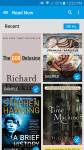
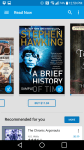
To start, the "read now" page is now based on a damnable carousel rather than a simple tile or list view. In order to see your ebooks, you’ll need to swipe left or right (or switch to the "my library" page). Google has also added a new prompt which asks you to "tell us what you like" so they can help you discover new works, and each book’s icon now integrates a progress bar which tells you how far along you are.

And inside the book Google has added a fit-width option for full-screen horizontal viewing, an image zoom mode, and the option to turn the page while zoomed in (useful for comics and large PDFs, I think).

And that’s not even the best part.

The new version of Google Play Books now lets you back up your annotations to Google Drive. You’ll need to first enable the option in the settings menu, but once you have done so the notes and highlights from each ebook will be saved as a Google Doc (one doc per ebook).

Here’s one example I threw together real quick just to show you that it works. As you can see, the text notes came through but the highlights did not. Each note or highlight is has a link to the page in the ebook where it was made.

It’s not clear why the highlights did not sync for that ebook, but the highlights did sync for another ebook, one which I uploaded to my Play Books account. I suspect that the publisher of the first book blocked this option behind the scenes.

In any case, Google has given us a new way to export or share our notes from ebooks in Google Play Books. That’s going to prove quite useful, don’t you think?

The app is free in Google Play.

Android Police