Draft2Digital Adds Oyster to Its Distribution Network

The ebook distributor Draft2Digital already covers most of the major ebookstores, and today it expanded its service further into the subscription ebook market.

Draft2Digital announced on Wednesday that it had signed a deal to distribute its catalog of 50,000 self-published titles Oyster. Self-published authors will soon have the option to opt into Oyster’s subscription service, Oyster Unlimited, which has more than a million titles in its library.

Until D2D made this deal, indie authors would have had to rely on Smashwords to get their books into Oyster (and Scribd).

D2D offers a distribution service which can get an author’s ebook into iBooks, Nook, Kobo, Tolino, Inktera, and Scribd. Like its much larger competitor Smashwords, D2D has no upfront costs and is commission based. According to the site, D2D collects about 10% of an author’s revenues.

While Draft2Digital is one of the smaller distributors, I’ve never had any complaints cross my desk. So far as I am aware D2D has maintained a low profile in the crowded ebook distributor field, along with eBookPartnership, BookBaby, XinXii, EpubDirect, Smashwords, Ingram, Createspace (POD), and Lightning Source (POD).

With all that competition, it’s probably a good thing that this type of service can be highly automated. That keeps overhead low by enabling companies to keep their staff small.

image by mpclemens


eBooks Won’t Actually Be Getting a Curfew in Germany

This blog broke the news late last week that German regulators were tightening the sales restrictions on adult ebooks. My two local sources had said that German ebook retailers would have to apply age verification and enact a curfew which restricted the sale of adult ebooks to between 10 pm and 6 am local time.

Yes, that is as crazy as it sounds, but now it appears that German regulators recognize that fact as well. A new story crossed my desk this morning which suggests that the curfew might not be enforced after all.

Boersenblatt has published an interview of Susanne Barwick, a lawyer with Boersenverein (the German book industry trade group). The interview is in German and is rather lengthy, but the key detail is that ebook retailers will probably not have to implement a curfew.

Yes, the ebook retailers will have to start verifying customer’s ages, but Barwick says that in the long run they will not have to restrict the hours in which they sell adult ebooks.

Edit: Boersenverein has also released an English language statement which makes the same argument. It’s in high legalese, but readable.

I don’t have the legal background to argue the point, but I can add that past events do bear out her argument.

A reader pointed out earlier this week that in late 2012 Nintendo was caught up in a similar situation. Due to German laws, Nintendo was abruptly forced to restrict online sales of adult-rated video games which it was selling in its Wii U eShop.

Engadget reported at the time that sales were limited to a four hour stretch between 11 pm and 3 am local time. And since Nintendo’s servers were based in Germany, sales to the rest of the EU were also restricted by that curfew.

That curfew was lifted four months later, in March 2013, after Nintendo showed that its systems ( the Parental Controls system on Wii U and Nintendo 3DS, to be exact) were capable of keeping kids from accessing adult content.

eBook retailers will probably be able to reach a similar accommodation with German regulators in short order. After all, the major ebook retailers already have some type of parental control.

Amazon has Kindle Freetime, and Kobo has a Kid’s Store as well as child accounts (not yet available in Germany).

What’s more, both Google and Apple have parental controls on their devices and currently sell adult content (apps, videos) in Germany. I would expect that both Google and Apple already comply with the relevant German laws and will simply adapt their policies and procedures to cover ebooks as well.

However, I don’t know yet exactly how the ebook retailers will respond; I queried several retailers on Friday but have yet to receive a response.

image by psd

First Look at the Boyue Shine (T63) – Android, 300PPI Screen

For the past week or so I’ve been tracking hints of a new ereader from the Chinese company Boyue, and today I finally have something to report.

First discovered by MR member hob last Monday, the Boyue Shine is Boyue’s next-gen ereader. The product renders suggested that this device would sport a design inspired by the Kindle Voyage with its flush glass screen, and the photos recently posted to Baidu confirm that report.

One lucky soul got their hands on what they’re calling the Boyue T63 and posted a set of photos last week on Baidu. They didn’t share much in the way of technical details (scroll down for more info), but they did mention that this device sports a 6″ 300ppi resolution screen.

They posted a total of 4 photos. The photos don’t show much, but they do confirm the basic design and that Boyue is working on a high-end ereader with a hardware design intended to compete with the Kindle Voyage.

Note that I said that the hardware is on par with the Voyage; I’m not so sure that the software will be its equal.

Boyue makes ereaders that run Android. I like them, but I agree with the general consensus among owners that the software isn’t too great. Sure, the reading app works okay and you have the option of installing Android apps, but many owners complain of problems with battery life and stability issues.

We know almost nothing about the Boyue T63 Shine, so this warning could be for naught. But this is a point I will be checking when the T63 Shine is released to market.

I have no inside info on the release date, but I am hoping that this device will be available in the next couple months with a price tag between $150 and $200. That is a higher price tag than the new Kindle Paperwhite ($139) or the Kobo Glo HD ($129) but I think the Android OS makes up for the difference.

Update: A reader pointed me to a listing for the Boyue T63 on a wholesaler website. These specs are not accurate and thus might not be legit, but according to the site this device does have a screen resolution on par with a Carta HD E-ink screen (for some reason, Pearl E-ink is mentioned instead).

According to the site, the Boyue T63 has a wholesale price of $70 with a MOQ of 100 pieces. This coulde asily be a $130 ereader when it hits the market.

Boyue T63 Specs

  • OS: Android 4.2 Jelly Bean
  • CPU: dual-core 1GHz
  • RAM: 512MB
  • 6″ E-ink screen with touchscreen and frontlight
  • Resolution: 1440 x 1080
  • Storage: 8GB, microSD card slot
  • Wifi
  • Audio
  • Dimension: 154 x 114 x 8mm
  • Weight: 160 grams

It’s Now Illegal to Sell Adult eBooks Before 10 PM in Germany

Germany has just given us a graphic example of what can go wrong when one unthinkingly applies decades old legal concepts to modern web tech.

Heise.de and Boersenblatt reported on Friday and Thursday that the Jugendschutzbehörde (Youth Protection Authority) has handed down a new ruling which extended Germany’s Youth Media Protection Law to include ebooks.

As a result of a lawsuit (legal complaint?) over the German erotica ebook Schlauchgelüste (Pantyhose Cravings), the regulators have decided that ebook retailers in Germany can now only sell adult ebooks between 10 pm and 6 am local time (4 pm and midnight, eastern US).

Update: Or perhaps not. A publishing industry lawyer is disputing the accuracy of the early media reports. She says that there will be no curfew.

No, seriously, I’m not joking. Germany really does have this law (Jugendmedienschutz-Staatsvertrag, JMStV). It was passed in 2002 and has been on the books ever since then, but regulators only just now decided that it applied to ebooks.

According to Wikipedia, the law (JMStV) covers a number of areas, including "the protection of minors in advertising and teleshopping". In this case it is intended to protect kids from adult ebooks, and it is backed up by fines of up to 500,000 euros.

Given that the law was written in the internet era, I am astounded that regulators would actually apply it in this manner. (I am also astounded that the regulators had not noticed the erotica and other adult content in the ebookstores in the four years since the Kindle Store launched in Germany, but that’s a whole other issue.)

Boersenblatt says that the 10 pm to 6 am window originally came from restrictions on adult cinema (where it made sense), but I still don’t understand what the regulators were thinking in applying that rule to the internet. Do they really believe that the adult internet, including porn sites, pirate sites, video sites, etc, is going to be turned off for 16 hours a day?

Maybe they do believe that, but I can assure you that said sites worked fine when I visited one earlier today (it was strictly a work-related activity, I swear).

And apparently that is how they want the ebook retailers to operate. According to my sources, the retailers are going to have to start tracking which titles count as "youth-endangering" under German law. Those ebooks will have to be isolated in a specific section of each ebookstore, which (theoretically) can then be made invisible using filtering software.

In a way, the new classification and the new filter are not dissimilar to the adult filter Smashwords applies in its ebookstore. It is also similar to a suggestion I made in late 2013 just before everyone got caught up in that moral panic over self-published ebook erotica.

But not too similar; the new German adult section will of course contain a different cross section of content from the titles swept up in the purge in 2013. In addition to the aforementioned self-published titles, erotica titles published by legacy publishers will also be folded in.

It is not clear at this time how the ebook retailers will respond. I have queried my contacts at Kobo and Amazon, and will report back with their responses.

Until I get a response, I will be sitting here pondering the sheer pointlessness of this legal decision. Given the prevalence of adult content on websites outside of Germany, trying to control access on sites in Germany  is just nuts.

Even King Canute knew that he could not hold back the tide, but apparently German regulators lack that level of common sense.

image by Jan Tik

Is the Booq Cervantes the First Open-Source eReader ?

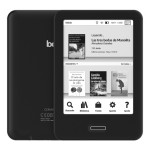
A reader has tipped me to the news that Booq, the Spanish ereader importer, is now promoting one of its ereaders as an open-source device.

Booq has been selling ereaders bearing the Cervantes name since at least 2010, but the latest model is a little different. This 6″ ereader has relatively unimpressive specs for its 140 euro price, but it does have one feature which could set it apart. Booq says that they have released its code under a GPL license, making the software easy to modify should the Cervantes fall into the right hands.

Update: Or at least it would be easy to modify if the Cervantes were in stock. According to the store page (which I didn’t think to check before) this device is not in stock.

The Cervantes boasts a 6″ Pearl HD E-ink screen with a frontlight, IR touchscreen, and Wifi. It runs a version of Linux on a 1GHz CPU with 512MB RAM, and 8GB internal storage.

Weighing in at 195 grams, the Cervantes measures 8.5mm thick and packs in a 1.5Ah battery. There is also a microSD card slot for additional storage, but no audio.

You can buy the Cervantes from the Booq website for 140 euros. I don’t think the specs justify that price, not when you can get a much better Kindle or Kobo device for less, but those other devices don’t have this promise on their product listing:

If you’re an advanced user and you’ve installed the developers’ version of the bq Cervantes’ firmware, you can modify the interface yourself. We’ve published the source code for our software under a GPL*, and you can find out all the details on this website.

Hacking ereaders to add additional features is a pastime that dates back to at least the first Sony Reader, and some of the more popular ereaders have their own dedicated hacker fanbases (Kobo, especially), so the idea of adding 3rd-party code to a commercially released ereader isn’t new.

But I can’t recall any ereader being pitched as an open-source device. Is that unusual, in your experience?

Update: Apparently my memory is not as good as it used to be. A reader reminded me that back when Irex made ereaders, they released the source code. Thanks, Gertjan!

Thanks, kuzelnik!

Marvel Renews Comixology Deal, Expands Exclusive Digital Comic Deal to Include Kindle Store

Amazon’s purchase of Comixology last year started paying the expected dividends this week.

Marvel and Comixology announced on Thursday that they had signed a deal to extend their exclusive relationship on single issue comics. Marvel’s digital floppies will continue to be exclusively available through Comixology (graphic novels are of course available more widely). And now that Amazon owns Comixology, you can also find the digital comics in the Kindle Store.

"Marvel, Comixology and Amazon are committed to bringing Marvel’s amazing stories to current and future Marvel fans across the globe," said Comixology CEO David Steinberger. "And this historic extension of our relationship with the expansion of Marvel’s single issues to Amazon’s Kindle platform is an enormous opportunity to reach more fans."

In one fell swoop Amazon has added 12,000 single issue digital comic books to its Kindle catalog, titles which can’t be found elsewhere.

Those comics are now available in a new section in the Kindle Store, and can be read on the Kindle Paperwhite and Voyage, Fire tablets, and in the Kindle apps for Android, iPad, and iPhone. The several listings I checked indicated that the prices are set by the publisher, making this effectively another agency deal.

The comics are also available through Comixology and its apps for the web browser, Android, or iOS. And of course you can find them in the Comixology-powered Marvel app.

The terms of the deal were not revealed, but it is safe to say that Amazon continues to pay a pretty penny for the exclusive distribution rights. that is money well spent, IMO. Comixology’s previous deal with Marvel kept it in the dominant position in the digital comics market and helped strangle potential competitors like Diamond Digital.

Amazon’s new deal with Marvel will guarantee Comixology’s continued dominance of the digital comics market.

Bonnier to Go DRM-Free in Germany

When it comes to the major publishers of the world, most insist on DRM, but Bonnier is breaking ranks. This Sweden-based media conglomerate is going to be dropping DRM from the ebooks published by its German subsidiaries.

Lesen.net reports that Bonnier Media Deutschland will be going completely DRM-free starting next month. This includes German publishers such as Piper, Carlsen, and Ullstein.

Update: Buchmarkt.de confirmed the news, but did not have anything new to add.

Do you know the tale about the book publisher who would love to go DRM-free – if their multi-national media conglomerate corporate parent would let them? That is more or less what is happening here.

Update: On maybe not. A helpful reader corrected me in the comments. He points out that Bonnier was one of the Swedish publishers who had switched from Adobe DRM to digital watermarks 2010. He sees this as the Adobe-free policy expanding to new markets. Thanks, Bjorn! 

While Bonnier is relatively unknown in the US (aside from that contretemps last year with Amazon), this is not a small publisher. In fact, in 2013 Bonnier had revenues greater than Simon & Schuster. Bonnier is rarely mentioned in book publishing circles in the US, where it owns over 40 magazine titles and a single book publisher, Weldon Owen. The conglomerate also owns book and magazine publishers in the UK, Germany, and Sweden as well as other media properties including tv stations, film studios and theatres in Sweden as well as properties in Poland, Russia, Eastern Europe, and elsewhere.

If you are looking for a way to view Bonnier, it might be better to consider them as a smaller version of Viacom, S&S’s parent company, rather than as a book publisher. Both Viacom and Bonnier are diversified multi-national media conglomerates.

That makes this a far more important story that Macmillan’s dalliance with going DRM-free by dropping DRM from ebooks published by Tor-Forge.

There’s no word at this time whether Bonnier’s other book publishing divisions will also forgo DRM, but it is not out of the question.

Lesen.net

image by jepoirrier

eBook Subscription Services Are Legal in France

If you’ve been following digital publishing news over the past 6 months then you probably know that in late December French regulators expressed doubts that subscription ebook services were legal under France’s fixed price book laws. Those doubts solidified into a legal opinion in February 2015 when Laurence Engel, la Médiatrice du livre, ruled that all the existing services were illegal under the letter of the law.

Kindle Unlimited and its local competitors Izneo, Youscribe, and Youboox were given five months to bring their services into compliance with the legal decision. I don’t have news yet on Kindle Unlimited but I can report that Youboox, Izneo, and Youscribe are either now legal in France, or will be soon.

The three services had made proposals to Engel which were accepted, and they will be legal once they’ve changed their practices to match the proposals. They have six months to comply.

Izneo’s solution was relatively straightforward: they pulled any digital comic titles not published by MP Group ( about 1% of the 1,500 titles offered via subscription). This move made Izneo’s service legal by effectively granting the MP Group control. French law requires that the publisher control the price, and as the only publisher in that particular subscription service MP Group controls the price by default.

In related news, Izneo’s retail store boasts 12,000 digital comic titles from over 60 different publishers.

I’m having trouble parsing the details being discussed in the source articles on Youboox and Youscribe, but I can report that my source says both services are legal. Youboox affirms that it will continue to charge a flat 10 euro per month fee.

We are still waiting to learn the steps Amazon will take to make Kindle Unlimited legal in France, and the same goes for Scribd.

Stay tuned.

IDBoox, IDBoox, IDBoox

Hands On With Netronix 13.3″ Android eReader (video)

Destined to be the perennial show floor demo but never the shipped product, Netronix’s 13.3″ Android-powered writing slate made another public appearance this week in Taipei.

Charbax caught up with Netronix at Computex a few days ago and shot a video of the latest pre-production model. Like the one I saw at CES 2015, this device is based on a 13.3″ Mobius screen (1600 x 1200 resolution). It has a dual touchscreen (capacitive and electromagnetic stylus) and runs Android 4.0.

It’s a nifty device and it would make a great competitor to the DPt-S1 from Sony, but as I pointed out before this device is no where close to landing on a store shelf. Netronix needs a customer before they can start production, and with a cost of over $600 per unit and a MoQ of 1,000, we’re looking at close to a million dollar investment.

Only a company like Sony, which cares as much about flagship products as profitable ones, can afford that kind of a boondoggle.

Netronix 13.3″ eReader Specs

  • Screen: 13.3″ Mobius E-ink
  • Resolution: 1200 x 1600
  • Touchscreen: Capacitive, electromagnetic stylus
  • OS: Android 4.0.4 Ice Cream Sandwich
  • Formats supported: JPG, PNG, PDF, ePub, MOBI, FB2, HTML, TXT, RTF, Doc.
  • Print documents from your PC to Notepad
  • MicroSD card slot
  • Battery: 1.5 Ah Li-polymer
  • Connectivity: Wifi
  • Dimensions: 310 mm x 233 mm x 6.6 mm
  • Weight: approximately 400 grams

The US Army is Adopting Epub

For reasons that escape me, the world’s largest military force is adopting Epub (as well as a proprietary format called E2Book).

This crossed my desk today:

The Army is pushing knowledge to the point of need by making e-Publications available for download to Soldiers’ mobile devices.

Doctrinal publications are accessible as Portable Document Formats (PDF) on personal computers and some mobile devices, but viewing them on mobile devices is less than optimal.

By the end of June, the Army will have converted many Army doctrinal publications to an EPUB format, making it easier to read on computer tablets and smart phones. Depending on the device’s sophistication, users can bookmark, highlight and insert notes on the publications.

The Army is in the process of converting their existing docs to Epub as well as to a rich ebook format I’ve never heard of before, E2Book.

It’s described as having videos, animations and other embedded multimedia, but from what I see online this looks to be just a variant of iBooks. I don’t have the specs so I can’t tell you if it is simply iBooks by another name (perhaps a subset of iBooks with a restricted feature set?), but the one I found to download is reportedly only compatible with the iBooks app.

While it’s all well and good that the Army is adopting a rich ebook format, I don’t see a reason to move to Epub.  I’ve found that nonfiction, particularly the dense and complex material that the Army publishes in its training docs, works best as a fixed layout format.

And since they’re already producing PDF, I don’t see a reason to replace them with Epub. Fixed layout Epub is significantly less useful and has fewer features than PDF, and it is also less widely supported.

But that hasn’t slowed adoption significantly in the civilian world, or apparently in the military.

Tradoc via Dvids

Baen Books Reveals Amazon’s Byzantine Policies on Kindle Email Delivery

When I first reported a few weeks ago that Baen Books was one of the publishers which was no longer going to email deliver the ebooks you buy from it to your Kindle, I was the one and only news site to report the strange news that Amazon was blocking publishers but not retailers from using this feature.

While it was puzzling that Amazon would discourage one source from emailing your ebooks to you but not another, I have learned today that the real situation is far more complicated than that.

Earlier today one Baen Books customer noted that his kindle account was still getting the ebooks from Baen. After he asked about this on Baen’s Bar, Jenny Cunningham (a member of the Baen ebooks team) responded with:

It will always work for a limited amount of customers each day depending on the size of the files sent. Once we reach the threshold, which Amazon has not disclosed, they will cut it off. They also have the ability to decrease the amount they let through if we keep hitting the cap. This is why we encourage our customers to use other download methods.

So, it’s basically a crapshoot whether it will work for you.

Cunningham’s comment is behind a registration wall so it is not visible to the public. But it has been seem by several people, including my source (Thanks, Fbone!)

I have no explanation for this policy of Amazon, and I am in fact having trouble believing it really is Amazon’s policy. But it is not entirely crazy, and as a matter of fact it points to a reason why two publishers had to give up the feature while a third publisher (O’Reilly) and several retailers did not.

Suppose Amazon has set a daily cap for each company which limits the number of ebooks they can send to customers' Kindle accounts. Pragmatic and Baen could be the two most active emailers of the companies which had been contacted, and once they realized that they would hit the cap everyday they decided to simply announce that the feature was going away.

The other companies either weren’t contacted, or have not been impacted. O’Reilly, for example, won’t admit to any change in the policy. All they said was "We are hoping to continue this service with Amazon."

I don’t know that we can call that a confirmation of the Baen Books statement, but at the very least it does not disprove it.

I have queried Amazon for an explanation, denial, or obfuscation (I’m optimistic that I can get all three in a single email).

Stay tuned.

image by Sergey Galyonkin

Amazon Changes Terms for KDP Select, Will Now Pay Authors Based on Pages Read

Over the weekend I explained how Amazon was using the payment terms in KDP Select to manipulate the supply of ebooks in Kindle Unlimited, and damned if they didn’t just do it again.

Amazon has just announced that starting 1 July, they will no longer be paying authors based on the number of times an ebook has been loaned and read in Kindle Unlimited. Instead, the new payment term will be based on the number of pages read.

Ever since KDP Select launched with the Kindle Owner’s Lending Library in late 2011, Amazon has counted the number of ebooks which were loaned and read and used that number to divvy up a pool of money. The pool started small, but it has since grown to exceed $10 million in May 2015, and is expected to pass $11 million in July 2015.

That $11 million is going to be divided based the number of pages read, and not the count of whole books.

  • This means, for example, that longer ebooks are going to be worth more than shorter ebooks (assuming that they’re read cover to cover).
  • It also means that quality matters more now; if a reader loses interest a third of the way in then the author will not be paid for the rest of the book.
  • And last but not least, this change might make it worthwhile for authors to submit longer novels once again.

Amazon explained that they made this change in response to authors who had been telling Amazon that "paying the same for all books regardless of length may not provide a strong enough alignment between the interests of authors and readers".

That is true.

Hugh Howey is one of the authors who had been pushing for the new terms. He wrote today that the change is "one many of us have been clamoring for and even expecting." He added, "If anything, I’m surprised it took this long."

Later in his post he writes:

I have a feeling we’ll see some knee-jerk reactions from authors without considering these pros and cons. Shorter works still make a lot of sense in KU. It’s hard to justify selling short stories for more than a dollar, and you only make 35 cents on that dollar under KDP terms. In KU, a 20 page story might earn just as much as a sale. What we should celebrate is that short stories will no longer earn the same amount as a novel, especially since the 10% threshold was much easier to reach on a short story. That system just wasn’t fair. The new system is a vast improvement.

I agree.

As I explained over the weekend, the old payment terms had been encouraging authors to submit short works to KDP Select. A short ebook was worth the same as a long one, so authors were writing to suit the market.

And now they’re going to have to write to suit a different market. While it is too early to say how this will impact authors, I do think that readers will benefit. They’ll be able to enjoy longer stretches of stories without having to switch between one ebook and the next.

images by kodomut, seanmfreese

Tom Kabinet Opens a Membership-Supported eBookstore

With Kindle Unlimited, Oyster, Scribd, Blloon, and other services toiling away, ebook subscription services are quite common today. However, Tom Kabinet has found a way to turn the model on its head.

Last week Tom Kabinet launched a new ebook service. I’m still not quite sure how to classify this service, but I did glean from the FAQ that readers can sign up to pay 4 euros per month to join a club of some kind.

According to the FAQ, readers are paying a monthly fee for the privilege of "donating" the ebooks they buy elsewhere so that Tom Kabinet can resell them to other paying members. And once a member reads an ebook, they can donate it to Tom Kabinet again. Each time a book is donated, the member who gives it away will get an extra week’s membership.

Yes, I do think that sounds odd, but the FAQ does match up with the report in Twinkle Magazine. The latter said that Tom Kabinet has links with several Dutch ebook retailers (Bol.com, Poeken.com, eBook.nl, Libris, and Kobo) which will enable its club members to access those stores and donate the purchased ebooks to Tom Kabinet.

This is very likely handled via LeesID, the non-profit cloud ebook service which launched in the Netherlands last September.

The ebooks are described as being DRM free, but that is probably not completely accurate. Due to Tom Kabinet’s legal troubles last year, the ebooks are probably marked with an otherwise imperceptible digital watermark. However, they won’t have encryption DRM like Adobe’s.

When you boil it down, it looks like Tom Kabinet has opened a membership-supported bookstore for used ebooks. That’s not quite what I was expecting when they announced plans for a subscription service earlier this year, but if we squint just right then we can see the resemblance.

And this certainly does fill Tom Kabinet’s needs for making sure that the ebooks it handles are legally purchased.

As you might recall from last year, Tom Kabinet initially launched as a used ebook marketplace in June 2014. After a series of legal battles,  that marketplace was ruled legal in the Netherlands with the caveat that Tom Kabinet is allowed to continue to operate so long as it makes sure that the ebooks it handles were legit (whether the service is legal in the EU is another matter) .

Tom Kabinet had to purge their marketplace in order to comply with that caveat, and the new model was likely designed around that legal requirement.

Of course, that does not mean that this service is legal or that publishers are going to be happy. But Tom Kabinet does have legal precedent on its side as well as a friendly court. So long as it has the funds to win court battles while still covering its operating costs this site will likely continue to function for the next several years.

TBH, I am unconvinced that this model will work. Are there enough ebook users in the Netherlands to support this club?

I don’t know. Sure, locally published ebooks are expensive, and that makes a membership worthwhile. But is it enough?

image by Paulo Marcel Coelho Aragão

How Le Guin (Accidentally) Got It Right: Amazon is Manipulating the eBook Market

When Ursula K Le Guin posted her Amazon rant a couple weeks ago she was roundly derided by the indie publishing community, but it turns out her arguments may have accidentally hit the mark.

Le Guin blamed Amazon for destroying for destroying the legacy publishing industry through over-commercialization, a hyper-focus on best sellers, and turning books into commodities.  Her arguments were false in that they ignore the historical facts that every complaint she made pointed to a trend which existed long before Amazon was even a gleam in Jeff Bezos' eye (*).

But even though Le Guin was generally wrong in every point she raised, her general argument was true to some degree for a small segment of the ebook market. Amazon is driving  a small part of the ebook market in a way that I’m not sure the larger industry has noticed.

I am referring to Kindle Unlimited, or rather KDP Select, the program which Amazon uses to recruit indie authors and publishers into Amazon’s subscription ebook service.

For those not familiar with its history, Amazon created KOLL in late 2011 and used KDP Select to supply the ebooks. They kept the funding high enough that authors would put their novels in, and not just short works. Also, they limited KOLL to a single title, thus making it important that an ebook was worth the rental.

And then Amazon launched KU, and by manipulating the monthly pool of funding they let the payment drop to the point that novels were no longer profitable. Amazon also let KU subscribers read as much as they want, thus encouraging snacking on short works.

As I have been reporting month after month, Amazon has been keeping the funding pool for KDP Select small enough that the payment for each ebook loan has stayed below $1.40 for most of the 11 months since KU launched(**).

As one author explained in a pair of comments over in the comment section for The Passive Voice, that low payment is driving authors to write short works which can be read quickly:

This is truly a new world. Short, episodic fiction will be available and it must be created at extremely high volume in order to stay profitable.

I don’t see how trad pub could even hope to compete. I’ve gotten to the point where if I don’t release a new “book” (and I use this term very loosely) every 3-5 days, I’m seeing a big drop off in my earnings.

In 2012, my idea of frequent releases was probably twice a month (and that was still way more than most authors were doing at the time). Now, twice a month is like a snails pace.

Kindle Unlimited’s impact first came to my attention last December when it was mentioned in the comment section of one of my posts about how "Kindle Unlimited is killing retail sales". That trend proved to be less of a trend than an annual cycle amplified by authors seeing their novels do poorly in KU, but in the ensuing debate one commenter raised the point that shorter works were doing better in KU than novels.

And here we are in June, where we find Hugh Howey chiming in, agreeing that he sees the same trend.

Think I haven’t noticed? 🙂 Check out what I’ve been releasing lately. Short stories. And I’ve got two other projects in the works tailor made for KU.

Lest you feel inclined to ignore this as not being part of the true book market, I would remind you that one, when it comes to ebooks length matters less as a distinction than it does in print (where it was primarily a commercial divisor, anyway); and two, these are book authors seeing a market opportunity in short works. Time spent writing those shorter works is time not spent writing novels.

Howey and the unnamed author see a gold rush opportunity in the $9.8 million (and growing) pool of money Amazon is using to fund KDP Select each month.

That is a small sum of money in terms of the entire ebook market, but it is also a section of the market that is both growing and still below the radar of some indie authors. (It is other things as well***.)

And so Le Guin was right to a limited degree.

Just so we’re clear, that pool of funding, KDP Select, and Kindle Unlimited are all the creations of Amazon. The retailer invented a market and continues to  manipulate it.

Amazon is driving part of the ebook market, but it is such a small segment that it raises the question of whether Le Guin was wrong on the larger point of Amazon’s power.

I leave that point up to the reader to decide.

***

P.S. Some of the trends Le Guin complained about, including the commercialization of book publishing, can actually be traced back to before Le Guin was born. See the use of serial fiction in the Victorian era, to name one example. That was less a storytelling device than a response to market conditions.

P.P.S. While we’re on the topics of loans in subscription ebook services, I’d like to point out that the AAP recently announced estimates for the US subscription ebook market for 2014. Those estimates are almost certainly wrong in that they missed most of the activity in Kindle Unlimited and Kindle Owner’s lending Library (I’m working on a post).

P.P.S. Kindle Unlimited is also going to prove a greater threat to magazines and anthologies as the number of short increase.

image by Patrick Feller

AAP Launches New Annual Market Stats Estimate, Reports eBook Volume Flat in 2014

The Association of American Publishers (AAP) has just debuted a new annual estimate of the US book market.

StatShot Annual (not to be confused with the monthly StatShot report or the now retired BookStats program) is based on the reported annual revenues of some 1,800 US publishers. It shows that the total US book market (including  trade and other segments) amounted to just shy of $28 billion in 2014, with 2.7 billion units sold.

Edit: Just to be clear, all the figures in this post represent industry revenue, and not consumer sales.

This was up about 4.6% from 2013, but only up 1% from 2012:

The trade segment showed a similar dip in 2013 before rising 4.2% in 2014, but has yet to equal the 2012 peak:

But this being an ebook blog, we’re not interested in the overall market so much as the ebook and audiobook markets.

Downloadable audiobooks are still a small segment in absolute terms (48 million units) but it is growing at a fast clip. The segment saw record growth in both units (27.0%) and revenue (26.8%) over 2013, while physical audiobooks slightly declined.

As for ebooks, the monthly Statshot report from December 2014 already told us that the market was up slightly, and today the AAP tells us that the total market grew by 3.8% to an estimated $3.37 billion dollars, with 510 million ebook units sold (up 0.2%).

As I pointed out this morning, that is more than twice the ebook unit volume Nielsen reported for 2014.

That’s almost as large of a volume as the number of hardbacks sold in 2014 (568 million), and best of all it doesn’t include the ebooks subscription estimates.

For the first time ever, the AAP is tracking ebook and audiobook subscription services. They estimate that 2.47 million and 3.88 million audiobooks were loaned in 2014.

There are no figures for 2013, but that is not a serious issue as any figure would be incredibly small. The US ebook subscription market only really got started very late in 2013, and KU of course did not launch until July 2014.

In terms of the total units sold in the trade segment, ebooks amounted to 21% of volume:

All of the above data is based on the press release sent by the AAP on Wednesday. You can find a copy of that release over on DBW.

But before I go, here’s one final note. The AAP also estimates that brick-and-mortar stores saw a resurgence in 2014. Books sold by physical retail stores saw an increase of 3.2% in revenue ($3.80 billion from $3.68 billion) and 4.1% in units (577 million from 554 million) in the trade category.

More books were still sold online (832 million units in volume and $5.90 billion in revenue) but the increase in offline sales lends credence to the reports of the revival of US bookstores.