New Pew Survey Reveals Most Americans Don’t Know Their Library Has eBooks

The Pew Research Center released a new report on the state of the American library user. The report is based on a survey conducted in March and April of this year, and while it is far too long to be summarized in a blog post few details jumped out at me.

For one thing, there’s growing support for the type of book-less library made prominent by Bexar County in Texas and adopted in growing numbers by college libraries.

Pew asked its survey group whether they thought that libraries should  move some print books and stacks out of public locations to free up more space for such things as tech centers, reading rooms, meeting rooms and cultural events.

Some 30% of respondents thought it was a great idea (up from 20% in 2012), while 40% thought that libraries should “maybe” do that, and 25% were opposed to the idea (down from 36% in 2012).

This is a sign of the growing appreciation that books aren’t quite so important as they used to be. They’re a means to an end (disseminating knowledge), and thanks to new tech books are now just one of many ways for libraries to inform their patrons.

Libraries also, for example, have ebooks. The American Library Association says that 90% of public libraries in the US, but sadly most patrons aren’t aware of that fact:

Pew’s survey found that:

People are increasingly aware that they can borrow e-books at their public library. Some 38% say their public library has e-books, compared with 31% who said this in 2012. Those more likely to be aware that their library has e-books are college graduates (52% say they are aware of e-book lending), parents (44%) and those in homes where the annual income is over $75,000 (44%).

Only 16% of the 38% have checked out a library ebook, which means that only 6% of library patrons are making use of a service that many libraries offer.

Even accounting for those who don’t have the tech required to check out ebooks, that is a disappointingly low number.

And that goes double when you consider that 66% of those who visited a library in the past 12 months said that they checked out a paper book. Sure, the paper book collection is larger at most libraries, but you would think that all the attention generated by the Kindle would have resulted in higher library ebook use.

You can find the complete report on the Pew website.

image by state_libraryofohio
LEAKED! Specs, Image for the New Fire Tablets Show Up Online

Amazon’s PR campaign for its next tablets entered the nmext stage today with the planned release of a "leaked" image and hardware specs.

That ten inch Fire tablet which was hinted at by WSJ and then showed up on the FCC website has just made its first public appearance. Even Blass tweeted a product image for the tablet. Blass has a near-perfect record for accuracy, so it’s safe to say that this is the real thing:

In related news, Amazon has also leaked the specs for this tablet, and the 8″ model we were expecting.

According to the benchmarks over on GFXBench, both the 10″ and the 8″ models will have screen resolutions of 1280 x 800. They’ll run Amazon’s custom version of Android on a quad-core MediaTek MT8135 CPU with PowerVR Rogue G6200 graphics.

They’ll have 1GB RAM, 16GB internal storage, a pair of cameras (5MP and 1MP), Bluetooth, and Wifi. In terms of sensors, the tablets will have an accelerometer, pedometer, and a gyroscope. There could be more but that’s all that is listed in the benchmark.

Those are considerably better specs than the ones Amazon leaked last week for the six inch tablet. That tablet had a much weaker CPU and GPU, as well as a rumored $50 price tag.

Without knowing the price, it’s hard to say whether the larger tablets are a good value. But I can add that they have the same screen resolution, RAM, CPU, GPU, and storage as on last year’s Fire HD 7.

The only real difference is the size of the screens, and the cameras (last year’s tablet had VGA and 2MP cameras). So if you’re looking to upgrade, you should ask whether the larger tablets are really worth it.

I just got a Fire HD 7, and I am relieved to know that I didn’t make the wrong decision. I am not tempted by either the budget-priced 6″ model or the larger screens on the 8″ and 10″ models.

But YMMV.

Kindle Unlimited Payment Dipped in August 2015 as KU Passes Nook Store in Terms of Revenue Generated

Amazon has released the monthly stats on its streaming ebook service, Kindle Unlimited.

The retailer hasn’t told us the number of subscribers, but we do know that in August 2015 publishers and authors were paid from a pool worth $11.8 million.

According to the two authors who (quietly) sent me info, Amazon paid authors about $0.0051 per page read. That is down from the $0.0058 that Amazon paid authors in July 2015, with the decline due to the sharp increase in the number of pages read (2.23 billion, up from 2 billion pages read last month).

There is little commentary on the news just yet, but I do have one interesting datum for you: In terms of revenue paid to authors and publishers, Kindle Unlimited is now larger than the Nook Store.

B&N’s latest quarterly report revealed last week just how far B&N’s ebook empire has fallen. Not only were B&N digital revenues smaller last quarter than they had ever been before, the share paid to authors and publishers were also smaller than the amount Amazon paid out for Kindle Unlimited.

B&N sold $37 million worth of digital content in the May-July fiscal quarter, while Amazon paid $33.6 million to authors and publishers who had in Kindle Unlimited.

It’s past time to call it; Kindle Unlimited is one of the world’s largest ebook services.

So where do you think KU ranks on the list, before or after Kobo and Google Play Books?

P.S. The previous monthly pools were worth:

  • May 2014: $1.2 million
  • June 2014: $1.2 million
  • July: $2.5 million (Kindle Unlimited launches early in the month)
  • August: $4.7 million
  • September: $5 million
  • October: $5.5 million
  • November 2014: $6.5 million
  • December 2014: $7.25 million
  • January 2015 – $8.5 million
  • February 2015: $8 million
  • March 2015: $9.3 million
  • April 2015: $9.8 million
  • May 2015: $10.8 million
  • June 2015: $11.3 million
  • July 2015: $11.5 million
  • August 2015: $11.8 million

Florida Indie Author Bookstore Expands

When Patti Brassard Jefferson opened Gulf Coast Books in April of this year, it occupied a space that more closely resembled a cubby than a retail store, and it only had room for a few dozen indie authors.

Five months have passed since then, and everything has changed.

Children’s author and illustrator Patti Brassard Jefferson has announced that next month she plans to open a new larger bookstore called PJ Boox.  The new store will fill a 1,700 square foot store front in Fort Myer’s, Florida, and carry ten times as many books as its predecessor, Gulf Coast Books.

PJ Boox will be many multiple’s the size of its predecessor, and it will also be about six times the size of Local Editions, another indie-focused bookstore which launched in Colorado last month.

The books will still be stocked face out, but there will be room for more than books by more than 500 indie authors from across the US. PJ Boox will keep to the original ideal of Gulf Coast Books, which has proven immensely popular with authors:

But it’s not just Brassard who has been excited by Gulf Coast’s launch. Of the 54 authors who signed up to be featured at Gulf Coast with their own bookshelf, 48 opted to renew after the first three months. According to Brassard, the vacancies were filled from the waiting list in less than 15 minutes. She also heard from nearly 200 authors who aren’t local, who wanted to be represented in a similar bookstore, which is what prompted her to start P.J. Boox.

The store will operate on a consignment model, with each shelf rented to authors.

Edit: This is similar to the coop fees publishers pay chain bookstores for placement, only on a smaller scale.

As at Gulf Coast Books, authors will be paid monthly and get 100% of net revenues (minus credit card fees) for books sold in store. They will also receive 80% of revenues for books sold through the store’s website.

Brassard is also planning to maintain an active events schedule with in-person author events as well as virtual visits via Skype. There’s space to comfortably seat 20 people for readings and book clubs, and PW reports that the mall can accommodate larger crowds.

PJ Boox is the third domino in a chain that will only get longer and wider as time goes by. As I pointed out last month when I wrote about Colorado Springs-based Local Editions, indie authors are responding to being shut out of bookstores by routing around the problem. They’re launching their own stores so they can sell to the public.

This is only the beginning.

September 2015 Author Earnings Report

The latest edition of the Author Earnings Report is out today, and the news does not look good for the legacy publishing industry.

You can find the report on the Author Earnings website, and you can find additional commentary over on The Passive Voice. Both are long and detailed, so I will only give you the highlights.

Based on a survey of the Kindle Store, indie authors are selling more ebooks with each passing quarter while the Big Five are selling less:


The Big Five are still earning a disproportionate share of the ebook revenues, but it is not as large as it used to be.

According to the report, the 1,200 publishers that make up the monthly AAP Statshot report only account for 32% of all Kindle ebook unit sales, down from 45%. The AAP 1,200’s share of gross ebook revenue in the Kindle Store is also down from its historical high of 64%, and now only accounts for 50% of unit sales.

The Big Five account for about 80% of the monthly revenue reports (and that’s based on the AAP’s own list of participating publishers).

The above stats don’t reflect the print market, which still accounts for the lion’s share of book sales (but will it stay that way forever?) so it is obviously less than a complete view of the book market.

But this is enough to tell us that the AAP’s recent reports of a declining market do not reflect the ebook market but publishers shrinking share of that market. The same is true for Nielsen Pubtrack, which (in spite of what they claim) tracks an even smaller share of the ebook market.

And since we know that the official view of the ebook market is incredibly incomplete, how much do you want to bet that the print market will show a similar discrepancy?

image by GotCredit

DHS Bullies New Hampshire Library Into Suspending Its Anonymous Web Browsing Effort

What do you get when you take ludditism, and mix in a badge and paranoia?

According to ProPublica, we get a small library being intimidated into shutting down a privacy effort.

In July, the Kilton Public Library in Lebanon, New Hampshire, was the first library in the country to become part of the anonymous Web surfing service Tor. The library allowed Tor users around the world to bounce their Internet traffic through the library, thus masking users’ locations.

Soon after state authorities received an email about it from an agent at the Department of Homeland Security.

“The Department of Homeland Security got in touch with our Police Department,” said Sean Fleming, the library director of the Lebanon Public Libraries.

After a meeting at which local police and city officials discussed how Tor could be exploited by criminals, the library pulled the plug on the project. “Right now we’re on pause,” said Fleming. “We really weren’t anticipating that there would be any controversy at all.” He said that the library board of trustees will vote on whether to turn the service back on at its meeting on Sept. 15.

Technically, the Kilton Public Library was not the first public library to get involved with Tor.

I’ve found several news stories on libraries that have installed the Tor web browser on their library computers. This enabled the library patrons that used the computers to browse anonymously, but it only helped protect the privacy of the patrons sitting at the computers.

The Lebanon Public Libraries took the idea to the next level. They are the pilot test library for the Library Freedom project, and they installed a Tor exit node in the Kilton Public Library. This helped protect the privacy of library patrons, but it also helped protect anonymous users all over the world.

Tor, or The Onion Router, is the name for a cooperative anonymous web browsing effort that enables anyone using a Tor web browser to mask their web traffic.

Rather than just browse the web through their internet connection, a Tor user’s web browsing is instead routed through relay nodes in the Tor network and out a Tor exit node elsewhere in the world.

This is all software, and a Tor user is still using their local internet connection,  but thanks to the Tor network that user would appear to be browsing from a completely different location – from a library in New Hampshire, for example.

Or at least that is what the library would like to have happen; they have been pressured into putting the project on hold.

Why?

Because TERRORISM. Also, CRIME.

DHS spokesperson Shawn Neudauer said the agent was simply providing "visibility/situational awareness,"” and did not have any direct contact with the Lebanon police or library. "The use of a Tor browser is not, in [or] of itself, illegal and there are legitimate purposes for its use," Neudauer said, "However, the protections that Tor offers can be attractive to criminal enterprises or actors and HSI will continue to pursue those individuals who seek to use the anonymizing technology to further their illicit activity."

When the DHS inquiry was brought to his attention, Lt. Matthew Isham of the Lebanon Police Department was concerned. "For all the good that a Tor may allow as far as speech, there is also the criminal side that would take advantage of that as well," Isham said. "We felt we needed to make the city aware of it."

While he’s at it, Lt Isham might also want to warn city officials about other technology that criminals might use to commit crimes. For example, criminals could use a car to go to or from a crime, or they could use a phone to coordinate their efforts. They might also use a pen to forge a check, or they might illuminate a gang get together with a light bulb.

Obviously this tech is just as prone to misuse as a Tor exit node, and thus its use should be strongly discouraged.

image by Magnus the Great

Scammers Are Using Createspace to Spam Amazon With Pirated Textbooks

A reader has tipped me to the news that Amazon’s own website is a great source of pirated books.

Scot Schad discovered that pirates had been ripping off freely available digital textbooks, and then using Amazon’s POD service to sell print versions on Amazon.

Here’s how it works.

The scammers identify a popular textbook, copy the name, and then start selling the paper copy of a pirated book under that name.

They’re hoping to sell the pirated book to an unwary buyer who might mistake the knockoff for the legit textbook, and it must be working because they keep doing it.

Take, for example, Practical  Electronics for Inventors. This is a real textbook from a legit publisher, but if you search for it on Amazon you will find that at least two of the results lead to pirated scam textbooks with identical names but different authors.

One of those books, by Benjamin Ward, uses content pirated from a textbook published by BookBoon. The other, by Naomi A. Patterson, rips off the syllabus for a course taught at Amity University in India.

That second book is no longer available, but Patterson does have another textbook on Amazon. Her other book uses content pirated from a book published by SyncFusion.

Three pirated textbooks might not sound like much, but this is just the tip of the iceberg. Schad identified a half-dozen other pirated POD textbooks on Amazon, and I found at least dozen other titles sold by the same "authors" of the pirated books.

For example, there’s a copy of Linear Algebra and Its Applications by the aforementioned Ben Ward. This book was pirated from a Linear Algebra textbook published by Bookboon.

I also found dozens of books from those "authors" which were no longer available but also showed every sign of having been pulled because they were pirated.

This copy of Windows Azure for Students, for example, contains work originally published by SyncFusion. The book is no longer available, but the scammer is still in operation on Amazon, and the other scammers show a similar work history.

It is difficult to say how long this operation has been going on (months? years?), but I would say that we are looking at industrial scale pirates second only to the ones that used to infest Google Play Books (it looks like Google has fixed the problem).

The only real difference is that these scammers are targeting POD textbooks, rather than ebooks, and that the POD scammers are going after even the most arcane title.

Schad told me that he learned of this problem when the scammers copied the name of his graduate paper:

I only noticed the problem when two clones of my M.S. thesis appeared on Amazon. My title, Hydrocarbon Potential of the Caney Shale in Southeastern Oklahoma, is about as obscure as it gets. Amazingly, the two bogus books pretending to be mine boasted that they were the second edition!

Schad complained directly to Jeff Bezos, and those books are gone now, but Amazon continues to sell the other pirated textbooks.

And Amazon isn’t just selling the pirated textbooks; Amazon is also advertising the textbooks through its ad network:

But wait, there’s more.

This isn’t just a problem with pirated books on Amazon. What you see here are signs of a fundamental problem with one of Amazon’s platforms.

All of the textbooks mentioned above, as well as all the other textbooks published by these scammers, were distributed through Createspace.

And that is a huge problem for everyone because Createspace doesn’t just distribute to Amazon’s website.

These books are available through every online book retailer that has a contract with Createspace. That Ward’s Linear Algebra, for example, is available from Amazon sites around the globe as well as Powell’s, Abe Books, Half.com, and Barnes & Noble.

A quick check of BookFinder shows that the "author" in question has a half dozen other books to his name, all of which were distributed by Createspace, and all of which are widely available.

OOO

Folks, Amazon has a well-deserved reputation for keeping pirated, public domain, and spam ebooks out of the Kindle Store. They earned that reputation by keeping a close eye on ebooks uploaded to the KDP portal and discouraging or deleting undesirable books.

The pirated textbooks mentioned above are not available in the Kindle Store because the pirates know that Amazon would catch on quickly, but unfortunately Amazon’s vigilance does not extend to its other platforms.

Createspace clearly does not have the same safeguards as KDP.

But something tells me that Amazon will make it a priority to address this issue.

image by Marcus Jeffrey

Washington Post is Blocking Ad Blockers

With the release of iOS 9 less than a week away, online advertising (as well as the many ways to block it) is on everyone’s mind. That includes The Washington Post, which is now experimenting with a drastic response to ad blockers.

Buzzfeed reports that The WP is testing special nag screens that only pop up for visitors that are using ad blocking plugins for their web browser:

It starts with a gentle nudge and ends with a hard block and a demand for cash. The Washington Post has begun intermittently redirecting desktop users to a subscription page if they are using the popular AdBlock software, some readers have reported.

In one case, using Chrome with AdBlock on, the Post had a dialog box redirecting users to enter their email for a free six week subscription. The anti-AdBlock measures don’t seem comprehensive just yet — we were able to view articles after clicking through from a search results link in Firefox with the ad blocking software turned on. But when we clicked through to another article on the site, the redirect screen popped up.

I think Buzzfeed is misinterpreting some of what’s going on here, but not all. Like many sites, The WP is pushing people to get subscriptions, and they’re also trying to get you to sign up to a newsletter.

That is a common activity, and The WP’s metered paywall (with its limit of five free articles each month) is also fairly common.

But this is not so common:

Nor is this:

While I have not seen these pop-ups myself, I can add that this kind of trick is simple on a technical level. I’ve looked at adding similar popups to this blog, but passed because they were too annoying.

The Washing ton Post has a different view, and the paper has confirmed its attack on its readers.

"Many people already receive our journalism for free online, with digital advertising paying only a portion of the cost,” a The Washington Post spokesperson told BuzzFeed. "Without income via subscriptions or advertising, we are unable to deliver the journalism that people coming to our site expect from us. We are currently running a test using a few different approaches to see what moves these readers to either enable ads on The Washington Post, or subscribe."

In short, The Washington Post is thinking about going nuclear on its readers, just like the advertiser trade groups want them to do.

When Jeff Bezos bought The Washington Post in the summer of 2013, he said he was going to make changes to the paper so it could thrive in the modern era.

Apparently those changes include fighting with the newspaper’s customers rather than changing the newspaper so its goals were the same as readers' goals.

Given that Amazon is a customer-centric company, this comes as a surprise. This is more of a tactic I would expect out of the RIAA, and not Jeff Bezos.

The Washington Post won’t be the first web publisher to go down this path. Other publishers are turning ad-blocking into an arms race, and some have taken to blocking ad blockers.

There are as many responses to ad blocking as their are web publishers, and going to war against readers will prove to be the least effective in the long run.

Blocking users just because they won’t look at the adverts is not going to work, not when the adverts are as annoying as the ones used by The Washington Post.

There are simply too many sources for news, and not enough hours in the day to read it all. So unless The Washington Post can repeatedly come up with compelling content that gets casual visitors to either subscribe or drop their ad blockers, this tactic just won’t work.

image by PeterJBellis

Wales Plans National Library Card

Late last week the Welsh government awarded a contract to LMS vendor SirsiDynix to develop a new library card platform. Their goal: give everyone with a Welsh library card the option to utilize any library in Wales.

A single library card across Wales would mean users could borrow and return books in any library across the country. It would also open up access for people to take advantage of free computer use in libraries no matter where in the country they are and create a national e-books and e-zines service with free seamless downloads.

…

Currently library users can only use public library cards within the local authorities they are registered. The system would provide a new and modern approach, which will benefit customers, for example those who work in a different local authority to which they are registered, and widen choice.

The system is expected to be adopted starting next year, and the government thinks local authorities could save as much as 70% on their platform costs after they switch over to the new system.

But as anyone who has watched large technical projects flounder can tell you, both estimates are probably highly optimistic.

With a population around 3 million, Wales won’t come close to being the largest single unified library system (many major cities, including NYC, have public library systems that serve larger populations). But with 22 counties and hundreds of library branches, Wales has its work cut out for it.

On the plus side, Wales does have a national library organization. When the new platform is operational and integrated with the local library systems, that organization will enable patrons to more easily find digital resources at other libraries.

Wales.gov via Infodocket

image by evans.photo

Amazon’s Next Fire TV Box Has Cleared the FCC

Amazon is expected to update both of its TV products this fall, and it looks like at least one of those gadgets has shown up on the FCC website.

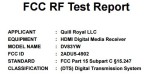
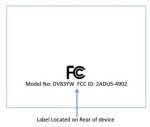
A company by the name of Quill Royal LLC has filed the paperwork for an "HDMI Digital Media Receiver" with the model name DV83YW.  All of the interesting details, including who Quill Royal really is, have been concealed under an embargo, but I have been able to glean a few dribblets from the certification tests.

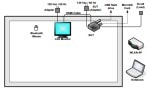
The device was tested for Wifi and Bluetooth, and according to one of the tests it also has an HDMI port, microSD card slot, USB slot (for flash drives), and Ethernet:

It’s not completely clear from the paperwork whether this is a dongle or a set top box, but the device does have more ports than Amazon put into its Fire TV stick. That suggests that we are looking at a new box, and not a dongle.

If the benchmark that leaked in July are accurate (and belong to this device) then Amazon’s new Fire TV will run Android 5.1 (plus Amazon’s special sauce) on a quad-core MediaTek MT8173 with 1.5GB RA, PowerVR GX6250 graphics, and 8GB internal storage.

However, that earlier leak did not mention any other hardware (like ports and card slots) so there’s a chance that it belongs to another Amazon device.

FCC (2ADU5-4902) via Liliputing

Streetlib Adds BajaLibros to its Distribution Network

Hot on the heels of the report on StreetLib’s partnership with OverDrive comes news that StreetLib is expanding further. This Italy-based ebook distributor has clinched a deal with the leading ebook retailer in Latin America, BajaLibros.

Starting 21 September, BajaLibros will be selling ebooks distributed by StreetLib in Latin America, the US, and Spain. The latest estimates put BajaLibros as the largest ebook retailer in South America (after Amazon), with a considerably smaller footprint in other markets.

BajaLibros is primarily a Spanish-language retailer. It has its own apps for Android and iOS, and in the past it also offered an ereader, the Papyre, which is no longer available.

This retailer has been in the US since 2013, but it originally launched in Argentina in 2010 before expanding into the rest of South America, Latin America, and Spain. It has also opened a branch in Canada, or so its website suggests.

***

Speaking of Latin America, BajaLibros is just the latest local ebook retailer to strike a deal with StreetLib.  StreetLib can also get an authors work into other Latin America stores like Mexico’s Librerias Gandhi, Panama’s El Sotano, PeruBookstore, and Nubleer (this last looks like a magazine service, not a bookstore, actually).

StreetLib also distributes to the major ebookstores, Kindle and iBooks, as well as Kobo, Nook, Google Play Books, Tolino, OverDrive, Bookmate, and many more.

StreetLib via eBookBargainsUK

image by DoNotLick

Amazon, Kobo Announce Price Policy Changes for Japanese eBook Sales

Here’s a quick heads up to remind authors that Amazon and Kobo will be changing how they collect taxes on ebooks sold in Japan.

Kobo and Amazon have each sent out reminders over the past week that, starting 1 October, they will be bundling Japan’s 8% consumption tax into the price of the ebooks sold in that country.

eBooks distributed through KDP and Kobo Writing Life and sold in the local Kobo and Kindle Stores will no longer have the taxes applied at the point of sale. Now the taxes will be reflected in the list price for the ebooks (just like VAT in Europe).

Both Kobo and Amazon have sent out notices so authors have time to adjust their prices. You can read the Kobo notice in their blog post, and you can find a copy of Amazon’s KDP email at the end of this post.

This shift represents the latest stage in Japan’s two-year-old plan to close the ebook tax loophole and tax foreign ebook retailers. It’s unclear whether it will generate additional funds, although it is bound to cause many headaches.

Kobo, for example, say that they were already collecting the required tax. It is unclear whether Amazon was collecting the tax, but given their habits of (legally) avoiding collecting taxes in Europe there’s a good chance they were pulling a similar trick in Japan.

Hello,

Starting October 1, 2015 an 8% consumption tax will be applied to all ebooks sold to customers living in Japan. No action is required of you, but we are notifying you because you currently have one or more titles available through KDP that may be affected by this change.

One-time Adjustment for Existing KDP Titles
Beginning October 1, list prices set for Amazon.co.jp will be tax-inclusive, meaning that the 8% consumption tax will be included in the list price you give us. For example, if you set your Amazon.co.jp list price at ¥1250, your new tax-inclusive list price would be ¥1250. Tax will be deducted from this price, and your royalties would be calculated on a resulting price of ¥1157. Keep in mind that you can change your price at any time subject to KDP’s Terms and Conditions….

Setting List Prices for Amazon.co.jp
Starting October 1, to make it easier to set customer friendly list prices without having to calculate tax, authors will set list prices for the JP marketplace that include consumption tax. To accommodate this, the KDP pricing grid will be updated to accept tax-inclusive list prices. In the pricing page, authors will also see their suggested price without tax to help them understand how royalties will be calculated. For those authors who set their JP marketplace price automatically from their US list price, we will convert the US list price to local currency and that will be the list price that includes tax.

For more information about this change, visit our Help pages.

image by eblaser

ALA Regains Control Of its Facebook Page After 3-Day Hack

Following 3 days of clickbait updates and hilarious commentary from librarians, the American Library Association took control of its Facebook page early Monday morning.

Sometime on 5 September hackers got access to one of the admin accounts that managed the ALA’s page, and the hackers quickly dumped  the other page admins, locked everyone else out, and proceeded to post updates like:

The ALA confirmed on Twitter on Saturday that their FB pad been hacked, Facebook had been informed, and that nothing was happening because (apparently) the responsible parties at Facebook were enjoying the holiday weekend and not checking their emails.

The hackers were also enjoying the weekend, and so were the librarians who trolled the clickbait updates with hilarious comments.

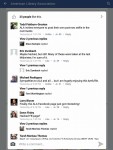
For example, Steve Kemple has been classifying each update with the relevant Dewey Decimal library categories:

Other responses include:

Fun was had all around, so much so that I wish the hacker was invited to stay. Alas, this morning the ALA reported that they had been handed control of the page again.

They’ve deleted the clickbait, and posted a staid update with the promise that the ALA’s social team would review its security procedure and make sure this does not happen again. I for one hope they don’t succeed; the hacked account was much more fun.

P.S. You can find an archive of the updates and responses on Facebook (courtesy of Tobey Maguire); some were found via Buzzfeed.

image by toodlepip


Walmart is Carrying a Self-Pub POD Book In-Store

Walmart might not have a large book section in most of its stores, but it can still move a lot of books. And that’s why Jamie McGuire, a hybrid author with S&S, was pleased to announce that she had gotten one of her books on to the store’s shelves:

Today, in a groundbreaking move by Wal-Mart, Beautiful Redemption: A Novel will be on the shelves in select stores! This is huge. This is pioneer stuff, friends, and this isjust the beginning of your favorite self-published titles being available to you!

I’m still looking for confirmation of this story, but I can add at this time that the novel in question is the second book in a trilogy. The first book in the series was published by Atria (S&S), but the last two books were self-published.

You can find the print edition of Beautiful Redemption on Amazon and other websites; it is distributed by the POD service Createspace (and so is its sequel). This book came out in January but is not yet listed on the Walmart website.

It is, however, in at least one Walmart store.

It’s quite common to find POD books on bookstores websites (this includes Walmart, where I found 60 titles in a search) but it’s far less common for those books to show up on a bookstore’s limited shelf space. (None are available in a Walmart store within 50 miles of my location.)

If McGuire has pulled this off (I want to see books on a shelf before reporting it as fact) then it is a major coup.

Update: Scratch that; a third search in Twitter has turned up a tweet that confirms the report. So this has happened.

Second Update: It’s a week later, and I have found a half-dozen other sightings (one, two, three, four, five, six).

found via IndieReader, ThePassiveVoice

image via Robert Swartwood

WSJ: High eBook Prices Result in Reduced Revenue

The Wall Street Journal has noticed that one of the classic laws of economics, namely the inverse relationship between price and demand, has been playing out in the US ebook market over the past six months.

It seems the agency contracts that the major publishers struck with Amazon really were as counterproductive as they appeared:

When the world’s largest publishers struck e-book distribution deals with Amazon.com Inc. over the past several months, they seemingly got what they wanted: the right to set the prices of their titles and avoid the steep discounts the online retail giant often applies.

But in the early going, that strategy doesn’t appear to be paying off. Three big publishers that signed new pacts with Amazon— Lagardere SCA’s Hachette Book Group, News Corp’s HarperCollins Publishers and CBS Corp.’s Simon & Schuster—reported declining e-book revenue in their latest reporting periods.

“The new business model for e-books is having a significant impact on what [the big] publishers report,” said one publishing executive. “There’s no question that publishers’ net receipts have gone down.”

A recent snapshot of e-book prices found that titles in the Kindle bookstore from the five biggest publishers cost, on average, $10.81, while all other 2015 e-books on the site had an average price of $4.95, according to industry researcher Codex Group LLC.

The WSJ must have good sources, because while we know that S&S and Hachette both reported declines in ebook revenue, the publicly available data from HarperCollins lacked specifics as to whether ebook sales had increased or declined.

Leaving that aside, it is true that ebook prices are higher, with ebooks gtom the major publishers sometimes costing as much as the hardback:

In some cases e-books cost almost as much as the hardcover. Amazon is selling the hardcover edition of Jonathan Franzen’s new novel “Purity” for $15.10—11 cents more than the $14.99 e-book price set by Macmillan Publishers, a unit of closely held Verlagsgruppe Georg von Holtzbrinck GmbH. The publisher declined to comment.

On Thursday morning, there wasn’t a single title priced at $9.99 among the top 20 titles on the company’s Kindle best-seller list. Last summer, Amazon offered the digital edition of James Patterson’s thriller “Invisible” for the bargain price of $8.99. Mr. Patterson’s newest tale of suspense, “Alert,” went on sale Aug. 3 on Amazon for $14.99, a price set by Hachette, Mr. Patterson’s publisher. The unit sales for Mr. Patterson’s e-books weren’t available.

Those ebook prices are so high that you might almost think that Amazon was engaging in a price war by slashing the prices of hardback books.

But that’s just crazy talk.

All we really know at this time is that, Mike Shatzkin put it in the understatement of the year, "unfortunately, it may be that consumers aren’t happy with the higher prices".

image by Jo Jakeman