Amazon Vending Machines Now Popping Up in Airports, Malls

My biggest issue with the Amazon retail store rumor is that Amazon has always chosen to make capital in hardware and systems as a way of reducing operating costs.

That’s why they bought the robotics maker Kiva Systems, and that’s why they invested in delivery boxes, so when I learned today that Amazon’s retail footprint now included a vending machine spotted in McCarran Airport I was not at all surprised.

If you should happen to be flying through Las Vegas and in the mood for some uber-geeky sight-seeing, stop by Terminal C. That is where you will see this:

If you should think that vending machine looks familiar, your eyes aren’t tricking you. I think it bears a striking resemblance to the vending machines which were said to be part of the Amazon booth which popped up last month. I only had a single poor quality image to post last month, but I thought the general design was the same.

Geekwire was the first to notice the vending machine in Las Vegas, and they report that they were the second to buy from it (a Kindle power adapter). The machine stocked Kindle ebook readers and tablets as well as accessories, including the Kindle Fire HDX 8.9. While it might surprise you that someone could buy a $380 tablet from a vending machine, it’s not the most expensive item I’ve seen. best buy has similar vending machines in airports and they sell iPads.

According to Geekwire Amazon’s vending machine is operated by Zoom Systems, a company which makes similar vending machines for Media Markt, Reebok, Best Buy and other retailers. This is just one of the vending machines that Amazon has been installing in malls airports, and other locations across the US. They also reported that the shopping experience was not without issues; the machine hung once or twice before finally dispensing their purchase and printing a receipt.

It didn’t, unfortunately, offer to let them enter an email so the sale could be associated with an account, and that is a pity. It would be nice if this machine were capable of vending Kindles and then attaching them to an account; the new user would be able to get them up and running that much faster. It also wouldn’t be a bad idea if the machine offered a Kindle-only Wifi hotspot so customers could register new devices and download content.

P.S. Does anyone want to start a betting pool on when Amazon will buy Zoom Systems?

Hands on With Gajah’s 3.5″ eBook Reader

Remember yesterday when I described the Alcatel MagicFlip as the smallest ereader I had ever handled? I wish I had held that post, because about an hour later I found an even smaller device.

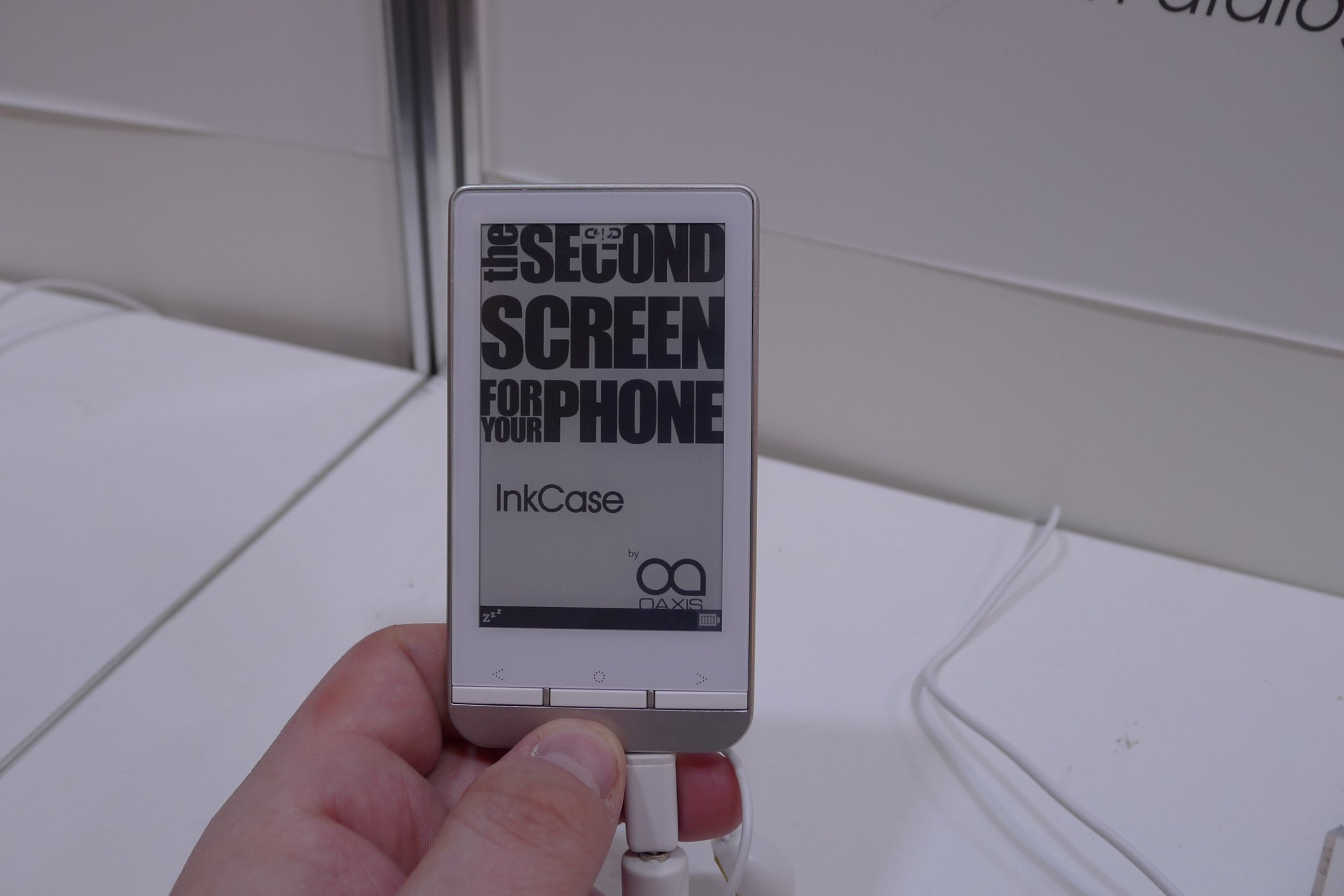
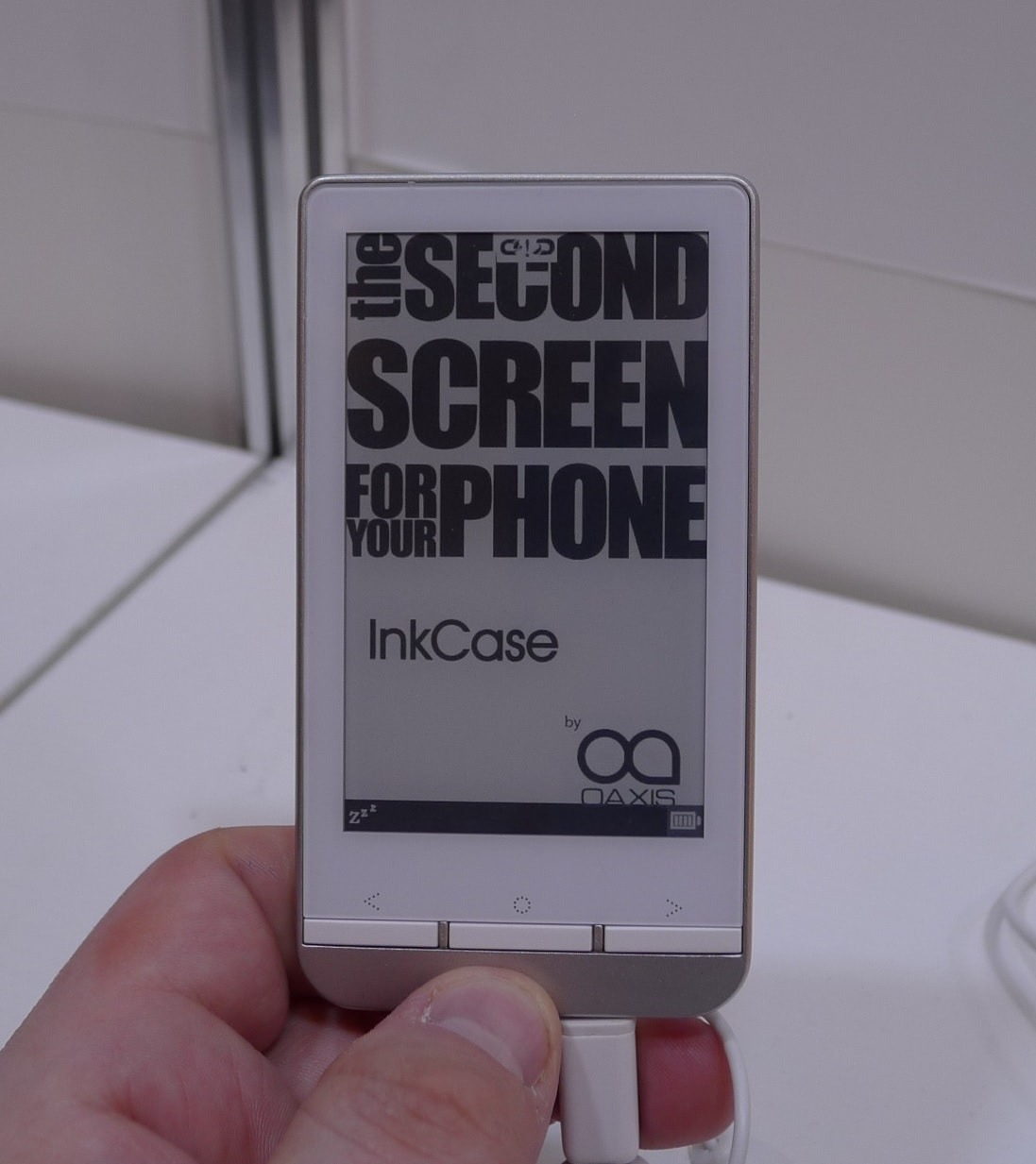
Gajah, a Singapore-based OEM that specializes in tablets, ereaders, and consumer electronics, their InkCase smartphone cases a step further. They did away with the case entirely, and came up with a smartphone accessory which adds a 3.5″ E-ink screen to any Bluetooth enabled Android smartphone.

Gajah’s current InkCase models add an E-ink screen to  either an iPhone, Samsung Galaxy Note 2, or Samsung S4. As I am sure you know, this is a rather limited selection of supported models (there are hundreds of Android smartphones on the market) so rather than try support all Android smartphones with unique covers Gajah instead released one pocketable device which should work with all of them.

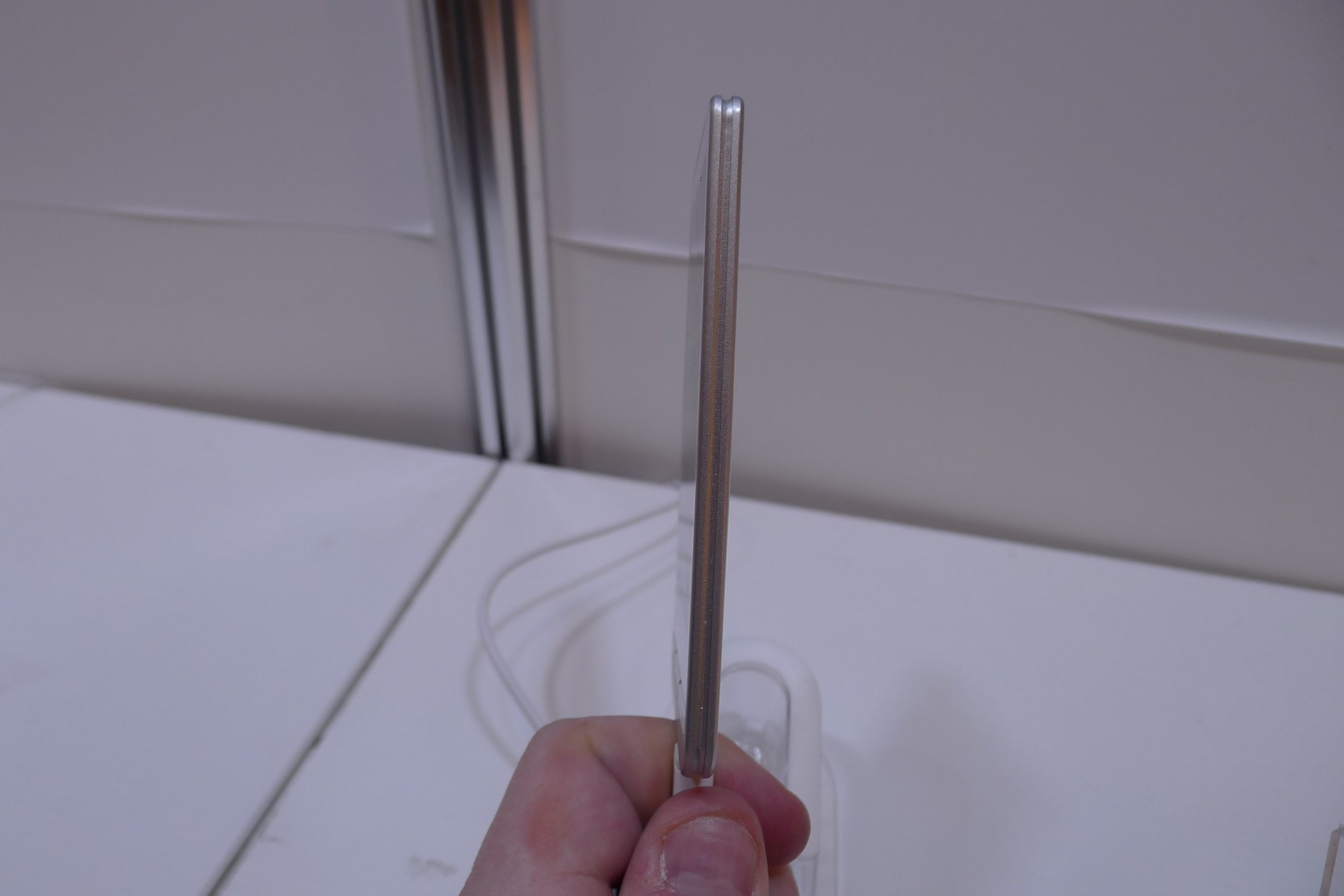
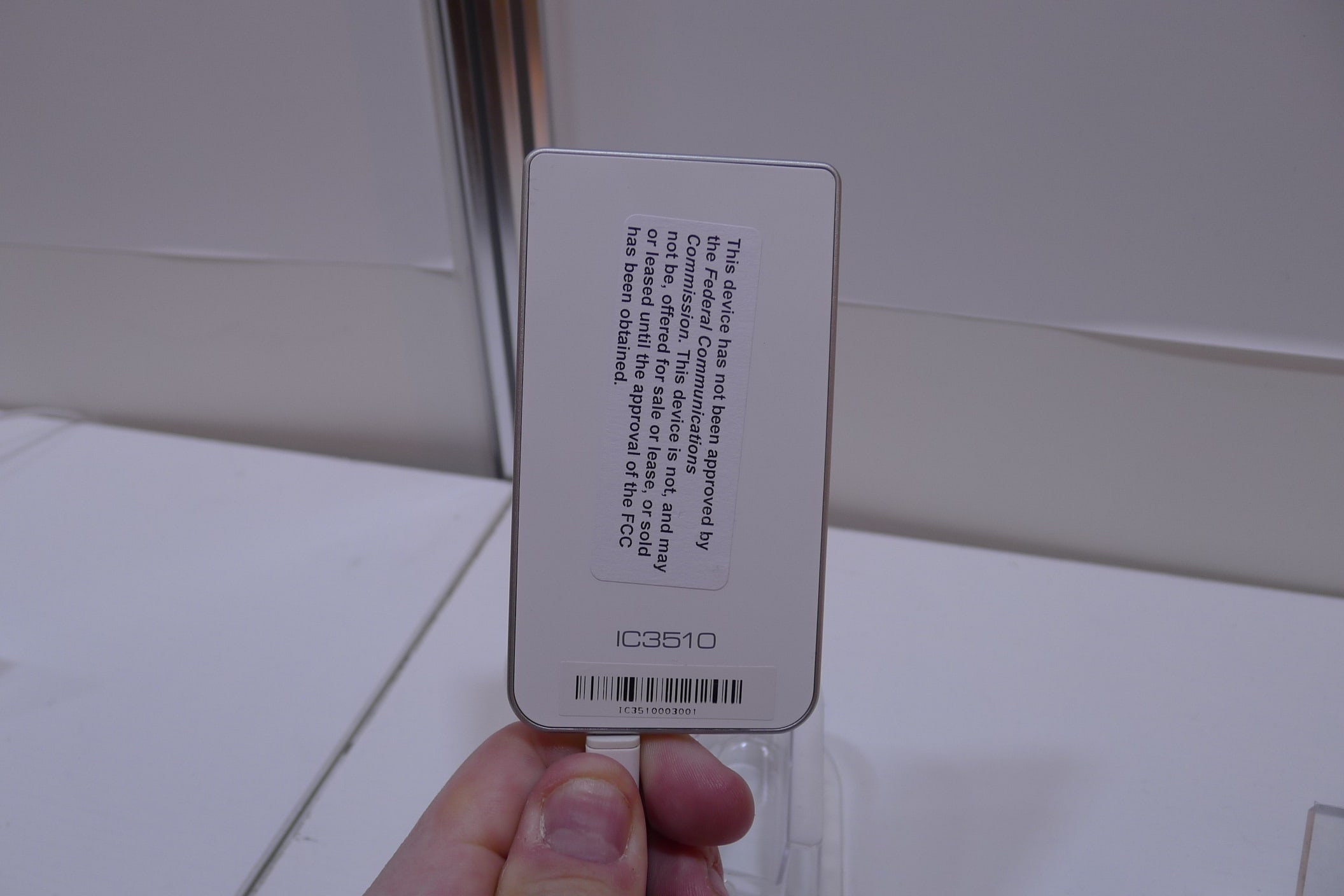
The ic3510 has a 3.5″ E-ink screen with a resolution of 360 x 600. This is the same screen as on Gajah’s case for the iPhone 5, only the ic3510 has been stripped of the plastic needed to attach the screen to the iPhone. This resulted in a much smaller device that is about the size of a credit card.

I didn’t think to compare the sizes when I had the ic3510 in my hand, but a standard credit card measures 4″ diagonally, so there’s a chance that this really is smaller. And if nothing else, the ic3510 is much smaller than the Alcatel MagicFlip I saw yesterday.

I got to play with the ic3510 at CES 2014. The firmware was still under development so didn’t do much and it wasn’t stable, but it was still fun to hold it in my hands. Then again, Gajah’s existing InkCase model’s don’t do much either; the cases were announced 6 months ago and there are still only a few apps which work with them.

The ic3510 is intended to pair with an Android smartphone over Bluetooth, and aside from the screen and BT the only other notable features are the 3 buttons on the front and the USB charging port. This is a very tiny and light ereader, almost dangerously so. Do you recall how one of the early Macbook Air review units got mixed in with a Sunday NYTimes and was accidentally thrown away? That could happen with the ic3510, only you wouldn’t need nearly as much paper. This device could disappear into a single paper bill, and that could be a problem.

Then again, maybe not. This device is small enough that you can carry it around in your pocket and never notice the weight. So long as an owner habitually puts the ic3510 in their pocket it should have little risk of getting lost.

The ic3510 is scheduled to hit the market in the first half of this year. If we’re lucky we’ll get reports from users, explaining what they did to avoid discarding their new gadget.

Boeye Shows Off Android E-ink Tablets in Hong Kong (video)

CES 2014 is all about tablets and mobile gadgets, but it’s not the only tech trade show in the world. Charbax caught up with Boeye, a Chinese OEM, at the HKTDC Hong Kong Electronics Fair a while back and got a look at their Android E-ink tablets.

Boeye’s tablets sport a 6″ E-ink screen and run Android 2.3 Gingerbread on a Rockchip RK2906 CPU. They’re ready to be produced now, and there is at least one model with a frontlight and a touchscreen. Boeye is also working on an update which adds Android 4.0, and it should be ready soon. They also offer a number of other models, including a couple devices that are simple ebook readers based on Linux and not Android. They also have 7″ and 8″ Android tablets available for license.

Zola Books Buys Bookish

Here’s a head scratcher for you.

News is breaking today that indie ebookstore Zola Books has bought Bookish, the book marketing site owned by Simon & Schuster, Hachette, and Random Penguin Solutions. The terms of the deal have not been disclosed but they would have to be rather unusual.

Both Zola Books and Bookish are rather new to the ebook scene and they both launched to much fanfare but later fizzled. Zola Books launched in mid-2012 with the goal of being a major ebookstore by the end of 2013 (they missed), while Bookish officially launched in February 2013 after several years development.

According to the Zola Books blog:

At Zola we’ve been working to build the tools for that kind of serendipity for many months now. And we are about to take a huge step forward by joining forces with Bookish, a book discovery site that has the most sophisticated and unique book recommendation system on the web.

Bookish works differently from other recommendation sites.

They’re absolutely right; Bookish is more of a marketing channel than a book recommendation site.

According to recent numbers given to Publishers Weekly, Bookish has relationships with approximately 50 publishers and some 600,000 titles in its recommendation engine. It was clear from the moment Bookish launched that it existed to promote books published by its 3 owners as well as anyone else who has a marketing dept. This leaves me a little puzzled because I’m not sure how that will jive with Zola Books, which promotes itself on the strengths of its exclusive content.

And that’s not the only thing that has me puzzled today. To start, Bookish was originally started in 2010, then announced in 2011, but didn’t formally launch until February 2013. The site was sold only 11 months later, which means that the site was under development for well over twice as long as it was operational before being sold.

And it seems to have sold for a very low price. Techcrunch has a statement from a Zola Books spokesperson which says that there were several bids for Bookish, but I find that hard to believe. Zola Books simply doesn’t have the resources to get into a bidding war.

According to their Crunchbase profile, Zola Books has raised somewhere under $15 million in financing (it’s not clear how many funding rounds they have had). That rather limits what they can afford to pay for Bookish, leading me to wonder if perhaps S&S, Random Penguin, and Hachette even recovered their initial investment and development costs.

Update: Publisher’s Lunch is reporting that the 3 publishers sank "at least $10 million to $20 million in funding" into Bookish, so it’s pretty clear that this was a boondoggle for them. Of course, that doesn’t mean that Zola Books will have equally bad luck.

In any case, Zola Books is saying that Bookish will continue to operate as an independent site, while at the same time its recommendation engine will be incorporated into the Zola Books ebookstore. Zola Books will also be taking over Bookish’s content deals, which means their ebookstore will offer a larger catalog.

B&N is Coming to CES 2014 Sans Nook

For the second year in a row Barnes & Noble is renting a booth at CES. Once again they will be occupying a booth in the lobby of the Las Vegas Convention Center, and once again they won’t be showing off the Nook (or so the exhibitor listing and scheduled event suggest).

I know that last year I said that it was crazy to come to a gadget trade show and not bring a gadget to show off, but I think there may be a method to B&N’s madness.

This post finds me stuck home for a night due to a weather -induced flight cancellation, and that delay has given me time to sit and think about B&N’s latest crazy stunt. I’ve come to the conclusion that it’s not as crazy as it looks. I’m beginning to think Barnes & Noble came to CES this year to promote their core business:

Bookselling.

Sure, the Nook platform gets all the attention but the reality is that Barnes & Noble has always made more from their stores than from the Nook. That was true even before the Nook started its decline last holiday season, and it is even more true today. And that could be why B&N is coming to CES this year.

Much to my surprise, Barnes & Noble is acting like a bookseller. They even have an all day event scheduled for Tuesday where they promise that prominent leaders in tech will be autographing their books.

Now, the next question that comes to mind is whether this is a good investment. I tend to think it’s not, but even though I think it is ill-advised I also have to say that it is not a dumb idea (how I described it last year).

B&N might not see a direct monetary or marketing gain from exhibiting at CES, but that doesn’t mean that they don’t have something to gain from showing up.

Would anyone care to guess what that is?

I know that more than a few of my readers run businesses of one type or another, so I am betting that you have a better idea what B&N stands to gain. What do you think they’re going for?


Five Digital Publishing Predictions for 2014

As the calendar year comes to a close, many pundits have turned to prognostication and published lists of predictions for 2014. Here’s my list:

  1. Some things will change. Some things won’t change.
  2. New fads will replace old fads.
  3. One in four of 2013’s rumors will turn out to be true, while the rest will be forgotten.
  4. 10% of the rumors which first circulated in 2012 will come true. The rest have already been forgotten.
  5. Everything that happens in 2014 will become 2015 predictions.  (h\t to @willentrekin)

Snarkyness aside, I can’t actually make many predictions that wouldn’t be obvious as soon as I wrote them down. (Mark Coker, on the other hand, did a fairly good job on identifying how current trends will be reinforced.)

Here are the three of my predictions that I think are worth repeating:

One: Amazon will announce a program, buy a startup, or launch a product that will surprise everyone at the time but will be an obvious expansion on what they have done before.

Sunday deliveries, buying Goodreads, and Kindle Matchbook all could have been predicted had someone phrased the right question. Launch a smartphone / set-top-box? This will almost certainly happen; it makes too much sense for Amazon not to follow through.

My (un)surprising prediction for Amazon for 2014 is that they will buy an indie ebookstore/platform. I don’t know the name, but this store will probably outsell Amazon in certain markets or with certain types of content. The company will be acqui-hired less for its market share and more for its technical skills. (This prediction is not a surprise because I already made a similar prediction months ago.)

My other (un)surprising prediction is that Amazon will buy a startup that is working on clear solar panels (if they don’t already own one). Again, this prediction should not come as a surprise. Amazon will want to put the panel on a Kindle’s screen, but the tech will probably have too many engineering issues.

Two: The hot buzz word for 2014 will be the global ebook market.

Lots of people spent the last 6 months of 2013 pointing at the AAP statistics and bemoaning the flattening ebook market.  Starting some time in May or June 2014, those same folks are finally going to notice that the ebook markets in much of the world are actually on the rise.  You can expect to read a lot of buzzworthy stories about how this market or that market is the next great opportunity. DBW 2015 will focus an entire track on international expansion.

Three: The US ebook market will also increase in terms of dollar value, unit sales, and market share.

This is a pretty safe bet to make; the US ebook market was down in 2013 in part because of the 2012 market bubble and because of increased price competition from the majors. Christmas gadget sales and new lower prices for big name titles will combine to boost the US ebook market above the reported AAP figures for 2013.

Will the US ebook market in 2014 match the high point reached in 2012? Maybe, but probably not unless there is a surprise blockbuster hit. The next Hunger Games movie isn’t due out until November 2014, and while it will have a positive effect the sales bump won’t be quite as large as when the first movie was released in 2012.


How to read a PDF on an Android tablet

Update: This post was written in late 2010, a time when it was difficult to find a PDF app for a cheap Android tablet. That is no longer true.

If you need a PDF app today, look in Google Play. If you can’t access it, try the Amazon Appstore. If that is inaccessible then the apps mentioned below will tide you over until you find something better.

If you are reading this then you have probably found yourself in need of a PDF reading app. (If you’re in a hurry, scroll down to the end.)

So did I, and after looking here and there I found a number of free PDF readers. In order to save myself some trouble next time around, I pulled together a list of 7 apps. All are free and can be downloaded from your web browser.

Is this every PDF reader? No. Just the ones I could find easily and link to.

I ended up getting the apps from only 2 sources. One is the SlideMe App Store and the other is Freeware Lovers. In total, I checked 7 sites. The other 5 had poorer selections and didn’t have any app that I couldn’t find at the first 2.

Update (29/5/2011): Amazon has launched their Appstore, so you might want to check there for free PDF Readers. I found Aldiko there, but it requires a later version of Android than i have on my Pandigital tablet.

If you can, you might want to look at the Android Market. I’m sure there are PDF apps in the Marketplace but since I can’t access it I couldn’t test them.

I was disappointed with all the apps. None of the apps had any annotation abilities, support for table of contents, or a zoom setting that cropped the white space. I was also surprised that only one had text search. I have a 6 year old version of Adobe Reader for WinCE that could meet or beat all of the abilities of all of these apps. That’s pathetic.

Some apps I didn’t test

Several of the office suites for Android include PDF viewers. If you have one then you might want to check it and see if it works for you. I also didn’t test anything that I couldn’t find outside of the Android Market. I’m sure there are PDF apps in the Marketplace but since I can’t access it I couldn’t test them.

Update: Kindle, Montano, Bluefire Reader for Android, and Aldiko can display DRM-free PDFs.

DroidReader

(SlideMe, v1.5+) Page turns and opening the file were reasonably fast. It has a go-to-page and zoom options, but it lacks reflow, search, and TOC support. Also, whenever I tried to zoom in, it crashed. (It’s still under development). But it does have little on-screen page turn buttons in the bottom corners.

Update: The developer behind DroidReader left a comment about features he’s planning to add.

Update 29/5/2011: It appears to be broken. I can’t get it to open any PDFs.

PDF Viewer

(SlideMe, v1.5+) It doesn’t do page turns, only scrolling. It has zoom,  go-to-page, and text search options (this may not be working right) but no reflow or TOC support. I think this one would be good for a smaller screen (under 5″), but it was a waste on a 9″ tablet. On a smaller screen the scrolling could be a useful feature.

Update 29/5/2011: This app has been updated since I reviewed it last, but it doesn’t appear to have any new features.

Adobe Reader 9.0.2

(Android Freeware) Based on the ones I’ve tried, this was the best app if you have a large screen tablet. It only has the fit to page width option, but it also has text reflow. There’s no search, page jump, or TOC support. But I like that you can either scroll or turn the page. This was also the only app to find my PDFs and list them without having to find them manually.

Adobe Reader 10.0

(Android Freeware) This couldn’t install. It requires v2.1, unfortunately.

VuDroid

(Android Freeware) This is a basic app with only a page jump option, but no search, reflow, TOC support, zoom. You can scroll but not turn the page.

PDFDroid

(Android Freeware) This is pretty much the same app as VuDroid. It only had a page jump option, but no search, reflow, TOC support, zoom. You can scroll but not turn the page.

Addendum

All of the PDF readers were tested on a 9″ Android tablet running v2.0 and the Spare Parts app. I couldn’t find compatibility info on several apps so I don’t know that they will work with earlier versions of Android. Also, some of these apps might require the Spare Parts app  in order to display full screen on a large tablet so you might want to install it.

The Txtr Beagle Hits the Market in Hungary, Will Cost 30 Euros

It’s been well over a year since txtr first unveiled the beagle (and about 3 months since I incorrectly proclaimed its death) and txtr has found a telecom willing to take it on.

I have just learned that txtr has signed a deal with the Hungarian subsidiary of Deutsche Telekom. txtr has a long history of providing ebookstores for Deutsche Telekom’s various divisions, and now txtr is going to provide hardware as well.

The beagle will be bundled with certain new smartphones (Samsung Galaxy Young, Sony Xperia M, or LG L7 II) as part of a 2 year contract. The subsidized price will be 30 euros (3 times the price that txtr had originally planned to charge).

And for those who don’t want a 2 year contract the beagle will be available separately with a retail price of 60 euros. That  price is going to make it more expensive than a number of ereaders on the German market, so I am not sure that there will be much interest.

But I could be wrong. The beagle was briefly available from txtr earlier this year, and it was selling for 59 euros (the same price as the Amazon Kindle). Sales were reportedly good enough that they were the deciding factor in the decision to carry the beagle in Hungary.

The beagle, which is really more of a smartphone accessory than an ereader, is equipped with a 5″ E-ink screen, Bluetooth, and is powered by a couple AAA batteries. It’s capable of holding 5 titles at a time, and is designed to work in partnership with the txtr app for Android and iPhone. The beagle cannot work without the txtr app, and that is because it cannot actually display ebooks. Instead txtr’s reading app has to convert an ebook from an Epub or PDF file to a collection of page images.

The Inkcase E-ink smartphone case I reviewed last month uses basically the same trick, albeit with a different set of hardware. The trick does work, to a limited degree, but it also comes at the expense of any of the more useful features found in most ebook readers like annotation, book marks, and a TOC.

Deutsche Telekom will be supporting the beagle in Hungary with an ebookstore that has a catalog of over 900,000 titles, including 3,000 titles in Magyar (the Hungarian language).

BuchReport.de

Kindle for Android Updated with Collections, New Option to Enable/Disable Publisher Formatting

Amazon rolled out a new update for the Kindle Android app yesterday. In addition to the usual bug fixes, the app also gained a couple new features, some improvements which you might not notice, and at least one feature that took me several minutes to find.

The Kindle Android app now supports the collection feature which lets readers organize their ebooks, magazines and documents into directories (I’m old fashioned). The app also gained better support for the accessibility features in later versions of Android, including both Talkback and Explore by Touch.

The changelog also mentions a prompt that asks you to rate an ebook when you’ve finished it. I’m not sure what Amazon changed, but I do know that some version of this feature was already present in a previous version of the Kindle app; I remember writing about it.

And then there’s the biggie. According to the changelog, the Kindle app will now let you choose to turn on or off the publisher’s font choices. that’s not quite true. I’ve been playing with this feature this morning; it’s the one that was hidden and it took me some time to figure out that I had to press the Android menu button to see the menu where this option had been placed.

Edit: And now the option appears to have vanished after I reset the Kindle app. Weird.

Update: If you don’t have the menu button I mention, look in the upper right corner of the Kindle app. If you see an icon resembling 3 dots, press it. That is the menu where I found this option (confirmed on a Sero 7 Pro).

This option doesn’t just enable a publisher’s font; it also turns on and off the publisher designed formatting. Turning it on radically changed  the formatting of A Song of Fire and Ice.
The font changed, of course, but the screen margin also got wider and the the line spacing increased.

Here is a pair of before and after screenshots:

Someone please correct me if I’m wrong, but this is a new feature. And while I don’t care to use a publisher’s formatting (it often gets in the way of reading fiction), it’s still a good addition to the app.

Judging based on how often the topic comes up over at MobileRead, lots of readers want to use publisher formatting.  I can’t recall how many times I have read a complaint about Aldiko or some other reading app not supporting publisher formatting (or rather the reader didn’t know the option had to be enabled), so I am sure that Amazon has had similar requests.

Edit: And as a reader reminded me, controlled is often very useful for nonfiction where the text and illustrations have to fit just so or the reading experience could come up short.

You can find the app in Google Play and other fine establishments.

Changelog:

• Organize your books, magazines and documents into collections
• Accessibility improvements for Talkback and Explore by Touch
• Turn publisher fonts on or off
• Rate the book before you go


New Estimates Show That Amazon’s eBook Market Share is Shrinking in Germany

Ask most publishing industry pundits and they’ll tell you that Amazon dominates 4 ebook markets: US, UK, Germany, and Australia. If current trends continue that list could be knocked down to 3.

The market research firm GfK has released a few details from their latest report on the German book market. I don’t have the full report, sadly, just the driblets shared with the German-language press, but it does not present a pretty picture for Amazon.

GfK is estimating that Amazon’s share of the German ebook market slipped to 43% in the third quarter from 48% in the second (source). Their report also says that ebooks accounted for 5% of the German book market in the first half of 2013; this is over twice as much as 2012, when ebooks accounted for an estimated 2.4% of the market.

There is also mention that ebook prices are averaging 20% lower than print book prices, and that more consumers are starting to buy directly from publishers. There weren’t any specific details on that point, though.

The Tolino consortium, which is the second largest ebook platform in Germany, has siezed on this as great news. Deutsche Telekom has an article posted on their website which boasts that Tolino accounts for 37% of the German ebook market. They don’t explain where they got this detail and I’m not sure that GfK released it, so we probably want to take it with a grain of salt.

Tolino initially launched in March of this year with a generic looking ereader and a plan: to beat Amazon. Four media retailers and Deutsche Telekom decided to combine their ebook efforts and share a single ebook platform while still operating competing ebookstores. At the time they had an estimated 35%  to 40% of the ebook market (it depends on who you ask).

In the nearly 9 months since launch, Tolino has sold a reported half a million Tolino Shine ereaders, released a pair of tablets, and managed to hold on to their market share as the ebook market nearly doubled in size. But one thing they have not managed to do was take market share away from Amazon. Someone else is doing that, but I don’t have specific details as to who it was.

The leading candidates include Apple, Google, and Kobo, and it is difficult to guess which one is coming out ahead.

Any thoughts?

Amazon Drops Minimum Payment Threshold for Indie Titles

Amazon has an early Christmas present for indie authors, and like most of Amazon’s innovations it is going to gall some legacy publishers.

The retail giant sent out an email yesterday to KDP authors and publishers with some good news. According to the screen shot I saw (and confirmed online), payments for ebooks sold in the Kindle Store will now be sent out on a monthly basis, 60 days after a given month ends. Amazon is no longer going to require a minimum payment threshold. Instead payments from each of the Kindle Stores will be processed automatically (with the exception of the Brazilian Kindle Store).

Amazon has always managed more timely payments than legacy publishers, some of which make royalty payments to authors twice a year (if you’re lucky), and now Amazon is going a step better.

My only puzzlement today is why this took so long. Amazon announced a similar change to their publishing division’s payment processing back in March 2013. That was when Amazon Publishing announced that they would be sending royalty checks monthly instead of quarterly, in much the same way that I get my Amazon affiliate payments on a monthly basis.

Amazon has confirmed the change in payment processing on the KDP website.

Thanks, Tristan!


eReatah Relaunches as Entitle – Still Won’t Let You Download the eBooks They "Sell" You

When eReatah launched their book club style subscription service in early September they promised that users would be buying and owning ebooks rather than paying for access in the likes of Spotify, Oyster, and the like.

This service is leaving beta this week with a new name and a redesigned website (the old one was horrendously bad), but sadly they are still no closer to keeping that promise than they were 3 months ago.

Entitle, as eReatah is now known, has raised $5.3 million in capital, and it offers a subscription plan that more closely resembles Audible than Oyster. This startup has a catalog of more than 100,000 titles, including both backlist and frontlist works from HarperCollins, HMH, IPG, Ingram Content Group, and Simon & Schuster.

It sells a subscription plan that lets customers add 2 to 4 titles per month to their library. Prices start at $15 per month, and the ebooks can be read on Entitle’s apps for Android, iPad, or iPhone.

Entitle is boasting that they offer recent releases from major authors including the likes of Stephen King, Dan Brown, Doris Kearns Goodwin, Walter Isaacson, and Janet Evanovich. This is a claim that Oyster and Scribd  will have trouble matching with their Netflix-style subscription plan, so I’m sure that it’s going to appeal to a lot of readers.

Unfortunately, this service suffers from the same limitation of Oyster and Scribd. Like its competitors, Entitle doesn’t actually sell you the ebooks. Sure, you can access the ebooks after your subscription expires, but you are stuck with using Entitle’s apps.

Update: Entitle now supports downloading ebooks and transferring them to ereaders.

Want to read on your ereader? Sorry, that’s not possible. Want to download a copy for safekeeping? You can’t do that either. Would you like to read on your Windows smartphone? You can’t because Entitle hasn’t released an app for that platform yet.

Do you want to remove the DRM? Sorry, that’s not possible, which means that Entitle isn’t really selling the content. Like Oyster and Scribd, Entitle is selling access to the content.

And as recent events have shown us, so long as the vendor controls access to the content you don’t actually own it. it was only yesterday that Boing Boing informed us about an Amazon Video customer that lost access to a video when Disney yanked the rights.

The customer was under the mistaken impression that he had bought the video, but apparently that was not the case:

Bill sez, Last "December I bought some favorite Christmas specials for my kids with the idea they could watch them every year. Went tonight to watch one ('Disney Prep and Landing 2' if you’re curious) and it was gone from our library and couldn’t be found on the site at all. Amazon has explained to me that Disney can pull their content at any time and 'at this time they’ve pulled that show for exclusivity on their own channel.' In other words, Amazon sold me a Christmas special my kids can’t watch during the run up to Christmas. It’ll be available in July though!"

Update: Amazon has worked to restore access to the content they took away (AllThingsD). That’s good, but it doesn’t change that they took it away in the first place. Also, this is not the first time that Disney has taken back previously purchased content (AppAdvice).

Like Entitle, content in Amazon Video is trapped inside the vendor’s apps. That’s what made it possible for Disney to take back the content that was "sold", and Entitle is stuck in a similar position.

I’m not saying that Entitle is going to have the same problem, but I am saying that until you can get the content out of their apps, until you gain control, you don’t actually own it. This issue is why I don’t "buy" videos from Amazon, iTunes, or most other services, and it is why I am avoiding Entitle.

What about you? Do you think this is a good value, given the risks?

TechCrunch

German Newspaper Bild Launches eBookstore, Now Sells Tolino eBook Readers

The Tolino ebook consortium gained a new retail partner today.

Germany’s leading tabloid Bild announced that they are expanding their content store. Bild.de already sells video and offers a subscription music service, and as of this morning they launched a new ebookstore at ebooks.bild.de.

This store is being operated in partnership with the media retailer Buecher.de, and it draws its ebook catalog from the Tolino platform. The site stocks millions of titles, and is already selling the 99 euro Tolino Shine. The Bild catalog includes bestsellers, novels, biographies, guidebooks and photo books, as well as a line of reissued public domain novels by authors such as Daniel Defoe, Alexandre Dumas, Mark Twain and Jules Verne, with prices starting at under 1 euro.

The ebooks are sold in Epub, and they can be read on the Tolino Shine, as well as on any ereader or reading app which supports Adobe DE DRM. On a related note, Bild is also selling paper books.

So how did a German tabloid come to launch an ebookstore?  This initially confused me, but after I asked Johannes Haupt of lesen.net he explained the connections between Tolino, Bild, and Bluecher.

The first thing you should know is that Buecher.de has been part of Tolino since that platform launched in March of this year, and has been selling ebooks for all of that time. That name has not come up before on this blog, but it turns out that it is owned in part by Weltbild, one of the original 5 Tolino partners.

Buecher.de is also owned in part by Holtzbrink (which also owns Macmillan and the Skoobe ebook subscription service). And Buecher’s third owner is the publishing conglomerate Axel Springer, which also owns Bild.de.

Once you know who owns whom it makes a lot more sense, doesn’t it?

The Tolino consortium, when viewed as a group and not nearly a dozen different ebookstores, is either the first or second largest ebook platform in Germany. It’s not clear at this time whether the Kindle has a larger market share, but I suspect that it does.

The Tolino platform was announced in March along with the Tolino Shine ereader, which has a 6″ Pearl HD E-ink screen. Tolino has since launched an updated Shine as well as a couple Android tablets.

Are Deep Discount Sales Blasts Like Bookbub’s Still Effective Sales Tools?

What with the growing concern that indie authors are facing more price competition from traditional publishers, many authors are looking to get the most bang for their promotional dollar. That’s why when a post came across my desk last night which questioned the effectiveness of Bookbub, a book-focused promotional mailing list, I immediately started looking into the matter.

Renée Pawlish, writing over at her indie publishing blog To Become a Writer, raises questions about Bookbub and hints that there are behind the scenes rumblings. She doesn’t get into specific figures, but it was enough of a teaser to get me interested:

By now I’m sure just about every indie author has heard about Bookbub.  I seemed to have heard about them later than others, but I’ve used them a few times now for advertizing.  And although their results are better than anywhere else, I believe that there are some concerns with their site.

This isn’t the first time I have read someone questioning the value of Bookbub or the service they offer. Jane Litte, writing over at Dear Author, noted about a month ago that discounted ebooks (like the ones that Bookbub often promotes) aren’t getting her attention (as a reader and buyer) quite so much anymore. She’s simply seeing too many good deals:

A few on the Kindleboards have reported more diminished success with Bookbub, a newsletter that broadcasts sales and freebies to an audience of hundreds of thousands of subscribers. I’ve come across a couple of author posts that suggest that free and even 99c promotions aren’t working as well as they might have in the past even though promotional pricing is more popular than ever.

To me that confirmed my own reading habits of buying and then hoarding at 99c. At some point, I wonder about the 99c efficacy. But price promotions like this will continue unabated.  Even more stingy publishers like Random House and Penguin have started discounting the first in a series to promote an upcoming book and readers are beginning to learn the signs. A recently reduced book signals a new release.

But as more and more books are being discounted including ones by big publishers are discounts teaching readers to wait and diminishing the likelihood readers will take a chance on full priced books by new authors?  In other words, is a discounted book the only way to introduce a new author?

So is Bookbub becoming less effective? I’m not an author and I’ve never used the service, so I can’t speak from experience. But I can note that the service still has its proponents over on KBoards.

Bookbub had its supporters among indie authors, with several on KBoards noting that their book had placed high on the Kindle Store’s best-seller list as a result. Jack Killborn has even shared actual sales data; he reported that in the 4 days following a promotion on Bookbub (and a related promotion on the competing BookBlast service) he "cleared an extra $2460" after an investment of $600.

Even the major publishers like it. BB Griffith points out that at least one email last week included authors with major publishers like Penguin Random House and HMH. Heck, even the occasional Amazon author has made an appearance (though it’s not clear to me whether the promoted title was indie or published by Thomas & Mercer).

Okay, so discounts are working and everyone is using them. So what’s the problem?

That, actually, is the problem: both indies and traditional publishers are using discounts. The excess of discount offers is encouraging readers to, in the words of Jane Litte, buy and then hoard their purchases. It’s encouraging the purchase of a book but not encouraging readers to connect with authors. Or as a friend told me on Twitter:

The point I am trying to get at is that long-term success is dependent on making a real connection between the author/series and the reader. Many people (including both readers and publishers) are saying deep discounts sales are failing in this regard.

Arguably this is a sign that services like Bookbub are only short term solutions, and not a tool which authors and publishers should rely on in the long run.

Thoughts?

image by normanack

Indie Authors Are Getting Clobbered by Big Name eBook Discounts – But Not For The Reason You Think

If you’ve been following ebook news over the past 6 months then you’ve noticed that ebook prices have tended to drop. In fact, the average prices of ebook bestseller lists have shown a fairly consistent downward trend for the past year as more and more titles exit agency price controls and enter the free market.

Indie authors are beginning to notice, and one in particular blogged about it last week. That blog post crossed my desk yesterday, and while it’s interesting and factually correct I don’t the author reached a valid conclusion.

Toby Neal wrote this over on her blog:

The DOJ price-fixing case with Apple and the Big 5 publishers was settled awhile ago, but September was when Amazon began really discounting big name books. I get several email lists of discounted books daily in my inbox, and I’ve been agog to see big names like Janet Evanovich, Louise Perry, Michael Connelly, Patricia Cornwell and most recently, Donna Tartt’s Goldfinch, one of the Best Books of 2013, going for 2.99 or less.

…

And in September, my sales went to half of what they’d been. They’ve stayed at half what they’d been in spite of doing active marketing, ads on Kirkus Reviews, giveaways, promos in those same lists I get in my email inbox, and launching two new books.

Toby Neal blames her drop in sales on Amazon heavily discounting agency titles. That could be true, except that such heavy discounts are probably more than Amazon could do on their own. The new post-agency contracts limit Amazon’s ability to discount ebooks, so if heavy discounts are dropping prices for titles from legacy publishers enough to affect cheap indie titles then there is probably another cause.

And just to be clear, all signs point to ebook prices dropping and indie ebooks facing more price competition; I just want to offer a more nuanced explanation.

Edit: I’m not sure that this is related, but Dear Author posted in mid-November that free and deep discounting is not as effective of a promotional tool as it used to be:

In the early days of digital publishing, free was one of the most powerful tools that could be used to elevate the profile of a book.  In a self publishing world, the price is probably the number one promotional tool of an author.  But is it still working?

A few on the Kindleboards have reported more diminished success with Bookbub, a newsletter that broadcasts sales and freebies to an audience of hundreds of thousands of subscribers. I’ve come across a couple of author posts that suggest that free and even 99c promotions aren’t working as well as they might have in the past even though promotional pricing is more popular than ever.

As anyone in publishing can tell you, the Big 5 publishers release most of their Fall titles in a tight window starting in late September and stretching to early December. That’s a huge influx of content from popular and best-selling authors, and it’s pretty obvious that the major ebookstores are going to push the hot new releases. So of course indie authors might see a noticeable drop in sales  as readers spend their limited budget on more expensive ebooks.

But that only accounts for the time since the end of September; Toby Neal saw a drop in sales early in that month, and that was probably due to the major publishers putting their older titles on sale in anticipation of the Fall releases.

That sounds like a good promotional model, but you don’t have to take my word for it; check out this best-seller price index from Digital Book World. Note the severe dip extending from late August to late September:

I’m not usually one to put any weight into best-seller lists but this graph, simply as a price index, fits too closely to be ignored.

At this point I’m sure that some are wondering why this year is different. After all, some agency titles were already ex-agency around this time last year so why didn’t indie authors see a similar effect?

For one thing, the above chart tells us that there is increasing price competition in the best-seller lists now that the major publishers no longer get to set the price and shove it down consumers' throats. The effect appears to be cumulative over time (so far), and if it continues it could have an interesting effect next Spring and Fall.

The other possible reason why indies didn’t see price competition last Fall is that, according to Kristine Rusch, the publishers were still coordinating their release schedules:

Events in traditional publishing are Event Novels. Until 2012/2013, it was common practice for the editors in chief of traditional publishing houses to have a polite, if off-the-record, discussion with cohorts at other publishing houses. The editors would scatter their Event Books throughout the fall season—which is the big season in publishing.

…Book publishers have had that same attitude too, but they don’t announce their lists that early. They announce the fall lists in January, sometimes even in March, of the same year. And all of the book publishers announce at roughly the same time.

So, until last year, they would have “informal” discussions, designating September 24 Stephen King week, and October 22 John Grisham week, and so on. No one would schedule a tent-pole book—a blockbuster, if you will—against another tent-pole. Unless those tent-poles were in radically different genres. Sure, a romance publisher might release a sweet contemporary romance blockbuster on September 24, under the assumption that romance book-buying dollars are different than horror book-buying dollars. In other words, the romance reader wouldn’t be buying the King, and the King reader wouldn’t be buying romance.

I think part of the reason why indies are taking a hit in the wallet is the general uncoordinated nature of the major publishers' sales promotions. They’re promoting all the titles heavily due to the more intense competition, and while that does help their sales it also hurts anyone that doesn’t have the huge marketing budget.

If that is true, and if  book prices continue their downward trend, then the problems that Toby Neal reported last week are only going to get worse. Can you imagine what is going to happen next April, when the major publishers start their Spring release schedule? I think indie authors might want to consider getting a day job just in case.

On a related note, I think we may be looking at practical proof of Mike Shatzkin’s argument that high agency prices reduced the amount of direct price competition that indies might face:

But I want to argue here that all authors, including those who self-publish for $0.99 or $2.99, should be applauding the big publishers’ efforts to keep the perception of value for branded books high by keeping prices high and stopping retailer discounting. Authors should be vocally supporting price maintenance and the agency model, even if they are not “in the union”. There are several reasons for this.

…

3. If big publishers reduced their prices sharply, the key marketing distinction that fostered the discovery of such writers as Amanda Hocking and John Locke would be eliminated. On the comment stream of a blogpost I read on this subject (can’t find it so can’t link it), one person posted a string of suggestions for major publisher survival strategies that included “cut all your prices to $2.99.” Why? Because it would eliminate all the competition from the self-published riff-raff that is using price as a marketing tool. So not only would the publishers and branded authors make less money, the aspirants would find their path to success cut off as well.

That’s now going away, and indie publishing might wither with it.

Oh, I don’t think that indie publishing is going to die, but I do think we’re going to go into a brutal Darwinian period where the weak and the merely unlucky will be slaughtered. The next 6 months to a year could be a major upheaval in indie publishing as indies have to face more direct competition from the majors.

If I were an author, I would follow the advice of Toby Neal and start aggressively developing pursuing new options. I think she’s right when she says that it will be necessary.

P.S. I would like to thank Kristine Rusch for sharing the details about the Fall and Spring launch windows and Will Entrekin for pointing me in the right direction.