Amazon’s New "Page Flip" Feature for Kindle is like a Virtual Forefinger in an eBook

The ability to hold your place with a forefinger or bookmark while quickly flipping around the pages of a book is one of the few functional advantages paper books have over ebooks – or rather, it was.

On Tuesday Amazon introduced a new navigation feature for Kindle platform called Page Flip.

With Page Flip, readers can easily flip back and forth between pages in an ebook to reference different parts of the book while they read.  Their original location will be saved, enabling them to quickly jump to the back of a book to check a map or glossary and then return to the story.

As any Kindle user could tell you, the Kindle platform already had a feature like this where you could flip through a comic book. Also, the Kindle ereader already let you push the page you’re reading to the background and flip around inside a book, but the new Page Flip feature improves upon that feature.

With Page Flip you can flip through  nine thumbnails of page images at a time. Check it out in this GIF:

As you can see in the GIF, the bottom menu bar has a scroll bar and two buttons for the two different flipping features. The one on the left is for the old feature, while the button on the right is for Page Flip.

“As an author, I love knowing that my work is presented with fluid clarity, freeing my readers from the page shuffling that can cloud and spoil the narrative,” said Laura Hillenbrand, best-selling author of Unbroken. “With Page Flip, books become vastly more accessible, navigable, interactive, and enthralling. As a ravenous reader and scholar, I savor the ease with which Page Flip allows me to keep thumbnails of maps and diagrams, my notes and highlighted passages, and bookmarked pages before me as I read, so that all I wish to see is accessible with the tap of a finger and my focus never has to leave the storytelling.”

You can find more info at Amazon.

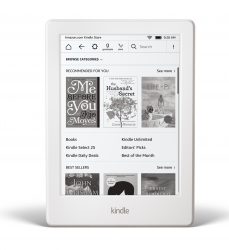
Amazon is rolling Page Flip out to all its apps in the next few weeks, and it will be coming to the Paperwhite, 2014 basic Kindle, Voyage, and Oasis as a firmware update.

From what Amazon is saying on its site, this is a feature of the Kindle ebook format, and not a software feature. So it won’t work with sideloaded ebooks right away, nor even with all ebooks sold in the Kindle store.
Geekwire

AAP Reports Publisher Book, eBook Sales Down in January 2016

Bookstore retail sales may have been up in January 2016 and for the previous calendar year, but you wouldn’t be able to tell that from the AAP’s January revenue stats.

The Association of American Publishers announced on Monday that total revenues for its member publishers had dropped in January 2016, to under a billion dollars.

Trade books were down 13.7%, to $488 million, with both adult and YA segments reporting double digit losses (religious presses posted a 4% increase as a result of people researching whether Trump’s campaign was a sign of the end times).

In terms of formats, paperback sales were up, while hardback sales and ebooks sales both declined precipitously. eBook sales fell 25%, possibly due to digital fatigue.

You can find the publicly available stats below. The figures of course only reflects the revenues of the 1,200 odd publishers which submit their data to the AAP; it does not reflect the market as a whole.

O O O

Press release:

Publishers’ revenues were down Jan. 2016, compared to Jan.2015. Trade publishing had double-digit declines in Childrens/YA Books and Adult Books, while Religious Presses had modest gains. Notably, eBook sales had another steep decline with reporting publisher sales declining nearly 25%, compared to Jan. 2015.


Big Picture Data:

  • Publishers’ book sales for Jan. 2016 were $991.7 million, down 6.7% from $1.06 billion in Jan. 2015.  These numbers include sales for all tracked categories (Trade – fiction/non-fiction/religious, PreK-12 Instructional Materials, Higher Education Course Materials, Professional Publishing, and University Presses.)
  • Trade (consumer) books sales were $488.0 million in Jan. 2016, down 13.7% from $565.4 million in Jan. 2015. This includes Childrens/YA Books, Adult Books and Religious Books.

o   Adult Books had $338.9 million in sales in Jan. 2016, down 12.9% from $389.2 million.

o   Childrens/YA Books had $111.7 million in sales in Jan 2016, down 20.4% from $140.3 million.

o   Religious Presses grew by 4.2%, up to $37.5 million from $36.0 million.

Format Trends for Trade

  • Trends appeared to continue from 2015. In Jan. 2016 vs Jan. 2015:

o   Paperback books grew 4.3% to $169.3 million and downloaded audio grew  30.1% to $20.4 million.

o   eBooks were down 24.9% to $99.9 million and hardback books declined 18.7% to $151.3 million.

Educational Materials and Professional Books

  • Educational Materials had gains of 7.9% for K-12 Instructional Materials and 2.2% for Higher Education Course Materials, in Jan. 2016 vs Jan. 2015.
  • Professional Publishing was down 19.8% in Jan. 2016 vs Jan. 2015 which includes business, medical, law, scientific and technical books and journals.

About StatShot


Publisher net revenue is tracked monthly by the Association of American Publishers (AAP) and includes sales data from more than 1,200 publishers (#AAPStats). Figures represent publishers’ net revenue for the U.S. (i.e. what publishers sell to bookstores, direct to consumer, online venues, etc.), and are not retailer/consumer sales figures.

image by Jorge Franganillo

Pop-Up Book Lets You Animate Its Illustrations With A Vintage Technique (video)

Here’s a book which combines aspects of pop-up books and interactive ebook apps.

Milan-based filmmaker Virgilio Villoresi has collaborated with illustrator Virginia Mori to create a paper book which uses vintage pre-cinema animation techniques to tell a story.

The book is called Vento, and if you like you can think of the book as a collection of proto-GIFs, only on paper. It lets the reader construct and deconstruct the story through time. There’s no text, just images, and each image tells its own story, letting readers make their own connections through the narrative.

You can see the effects in the trailer below, and you can buy the book from, well, no where. It is sold out.

eBook Friendly

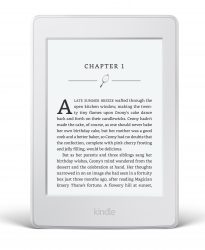
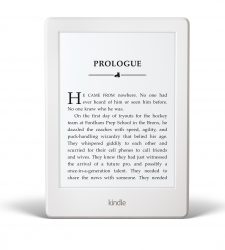
White Kindle Paperwhite Available Worldwide Starting Next Week

Remember the white Kindle Paperwhite Amazon launched in China and Japan back in April? Soon you’ll have the chance to buy one.

In addition to launching the new white basic Kindle today, Amazon has also announced that the white Kindle Paperwhite will be start shipping in the US and elsewhere in the world on 30 June (it’s listed on local Amazon sites, yes).

The price is the same as with the black model ($119. 119 euros, £109, etc), and all of the technical details are the same, including the 300 ppi screen, 4GB of internal storage, frontlight, touchscreen, the works. It even supports the Voiceview accessibility feature which Amazon launched earlier this year.

It is, in almost every way, the same Kindle as before, only now with a white shell. And that raises the question: Why would you want one?

A white shell tends to make E-ink screens look more gray, whereas a black shell makes it look more white. So wouldn’t you want to have a black shell and a whiter screen?

Sure – unless, as one reader pointed out to me last year, you want to make full use of the screen. The nice thing about a white shell is that it lets you reduce screen margins to the bare minimum, and have text right up against the edge of the screen.

Having the text so close to a black shell would look terrible, but with a white shell it effectively makes the shell the page margins, giving you a larger screen.

I’d still prefer a black shell, but I can see the value, can’t you?

Amazon Launches Online Bookstores in India for Bengali, Gujarati Languages

The updated white Kindle isn’t the only thing Amazon launched on Wednesday morning; it has also opened two additional language-specific bookstores in India.

Amazon already supported bookstore sites for Hindi, Tamil, Marathi, Malayalam, and Kannada, and now it’s adding Bengali and Gujarati to the list.

From The Times of India:

The retail giant Amazon Indiahas announced the launch of two dedicated online language book stores — Bengali and Gujarati. According to the company, the book stores have a wide selection of over 10,000 titles.

The range of books include classics, literature, fiction, biographies, business and finance, self-help, cook books and children’s books. There are also bestselling books by acclaimed authors like Rabindranath Tagore, Kaajal Oza Vaidya, Suchitra Bhattacharya, Satyajit Ray, Naresh Shah, Ankit Trivedi amongst others for readers.

Bestsellers from both the languages such as the Bengali titles Byomkesh Samagr and Shanku Samagra as well as the Gujarati titles Krishnayan and Mahabharat Manav Svabhar Nu Mahakavya are among the books that book lovers can find in the stores.

Curiously, the Kindle Store does not offer ebooks in either Bengali or Gujarati, nor are they supported in KDP. This is a print only deal.

There is, however, a Hindi section of the Kindle Store. It was added after the Kindle Store launched in India in 2012.

Noor Patel, director, category management, Amazon India said, "We started launching our dedicated language book stores last year and have witnessed an enthusiastic response from readers across the country. Having launched Hindi, Tamil, Kannada, Marathi and Malayalam, we are excited to launch the dedicated Gujarati and Bengali book stores on Amazon.in. These two new stores enable a convenient and easy access for book lovers and reading enthusiasts, based anywhere in India, to a huge selection of books in the language of their choice".

image by formatc1

The New Basic Kindle Has Twice the RAM, Bluetooth, Still Costs $79

Earlier this year a Kindle firmware update dropped hints about a new basic Kindle code named Woody, and today it finally launched.

The new basic Kindle still costs $79 with ads, only now it comes with 512MB RAM, and is available in both black and white. (The white basic Kindle had previously been available in Asia and Europe, but not the US.) The new model sheds the excess thickness of the 2014 model, and Amazon also dropped the weight to 5.7 ounces.

And best of all, it has Bluetooth. This will be the first Kindle to be able to use Amazon’s accessibility feature, Voiceview, without the $20 adapter. (The Oasis will likely be the second).

The new basic Kindle is available for pre-order now, and is going to ship in the next couple weeks. The Kindle Paperwhite is now also available in white as well in the US and around the world. It had previously been limited to just China and Japan. There’s no word on whether it has Bluetooth, though.

In related news, Amazon has also mentioned that they’re adding a new export option for annotations. The Kindle iOS app lets you export your notes via email, and soon the Kindle ereaders will support that option as well.

Export Notes—It’s now easy to export notes and highlights from a book to your e-mail, so you can always have them on-hand for reference. Receive your notes both as an easily printable PDF that’s ready to bring to your book club, and as a simple file you can open in your favorite spreadsheet app. This feature will be available as part of a free, over-the-air software update in the coming weeks.

Digital Fatigue, or the New Industry Spin on eBook Sales

For the past three years or so pundits and the mainstream media have pointed to sales figures from groups like the AAP and proclaimed that the ebook apocalypse had failed to occur and that ebooks weren’t going to replace print.

Over the past year that recurring story has been recognized as a trope, and a false one at that. Even The Bookseller has acknowledged that data from the AAP did not represent the full market, and that presents a problem for anyone who wants to spin the topic as "ebooks are failing".

Fortunately for the pundits, a new spin is just arriving on the scene. It was introduced on Friday by Publishers Weekly, and picked up by Flavorwire.

Folks, meet "digital fatigue":

Preliminary figures from the Association of American Publishers found that sales of e-books for trade publishers fell 14% in 2015 compared to 2014 and accounted for 20% of overall trade book revenue, down from 23% in 2014. Going beyond AAP’s member publisher sales performance, the Codex Group’s April 2016 survey of 4,992 book buyers found that e-book units purchased as a share of total books purchased fell from 35.9% in April 2015 to 32.4% in April 2016. The Codex survey includes e-books published by traditional publishers and self-publishers and sold across all channels and in all categories.

In light of the April study results, Codex president Peter Hildick-Smith believes that the book industry’s experience with digital sales differs from that of music and video because of two factors. First, electronic devices are optional for reading books (unlike for listening to music or watching video), and the current range of e-book reading devices—including smartphones, tablets, and dedicated e-readers—has not delivered the quality long-form reading experience needed to supplant print, even with e-books’ major price and convenience advantages. Second, Hildick-Smith said, a new consumer phenomenon, “digital fatigue,” is beginning to emerge.

The piece then goes on to cite a blizzard of data about declining ereader ownership, before ending with this paragraph and a couple graphs:

Unless the e-reader device market is recharged with lower-price, higher-quality options, Hildick-Smith expects that consumers tiring of their digital-device experience will have further digital fatigue, leading to continued e-book sales erosion.

Coincidentally, Teleread covered the same story last month as part of their coverage of BEA 2016; they have a different selection of data from the same report from the Codex Group, but make no mention of  "digital fatigue" (otherwise I would have credited Teleread as the source of the spin).

And yes, I do think it’s spin. My problem with the claim of digital fatigue is that it is too convenient of a label. It fits with exactly how the Codex Group’s customers, legacy publishers (also PW’s customers), want to spin their declining ebook sales when it doesn’t really explain the larger demographic trends.

Are people reading fewer ebooks? According to other sources, yes. But is it due to digital fatigue?

That is debatable.

The Codes Group says that fewer book buyers are reading ebooks, but when we look at the general population we see a very different picture.

Last fall the Pew Research Center released the latest in their semi-annual reports on American reading habits. It showed a slight dip  in the number of respondents who had read an ebook in 2015 vs 2014, but it also showed an even steeper decline in the number of people who had read a print book.

You can see the data in the chart at right.

If fewer people are reading fewer ebooks as a result of digital fatigue, then what’s your explanation for the fact they’re also reading fewer print books, and fewer books overall?

I don’t have one, myself, although I am looking forward to when Pew (hopefully) releases the next survey report this fall.

The obvious explanation would be that consumers are getting distracted by other activities, including digital activities on their mobile devices, and that goes against the idea of digital fatigue.

But it is a convenient label, which is why you’re going to hear it a lot over the next few months.

Thoughts?

image by IntangibleArts

Researchers Reveal Booxtream’s Digital Watermark DRM

The general details about Booxtream’s digital watermark DRM have been known since someone deconstructed a Harry Potter ebook from Pottermore in 2012, but have you ever wondered about the specific technical details?

Thanks to an anonymous hacker going by the name of Paigey the Book Pirate, now we know.

Late last night an email graced my inbox with a link to a file on Pastebin which detailed the various parts of Booxtream digital watermark DRM as used by Verso Books. I can’t share that link (it had someone’s personal info in it) but I do have a copy of the file for you sans PII.

booxtream.txt

The file is worth a read both for the technical details and for the humor. This is at least the second time I know of that someone has posted a detailed technical analysis of Booxtream DRM, but it is the first to use a humorous tone:

The Institute for Biblio-Immunology specialises in textual pathogen identification and antigen synthesis. Several vials of in vivo samples suffering from a "social DRM" watermarking infection were recently brought to the attention of our cellar scientists. In this, our inaugural communique, we will explore our dissection of said samples and offer an initial expatiation regarding the contaminant undesirables discovered therein, as well as offer preliminary guidance for a successful course of treatment.

…

Prudence tells us that the only time books should be used as weapons of terror is if they are thrown, gleefully aflame, through a publishing conglomerate’s window. Instead, we find that the publishing company Verso Books is using books to facilitate the surveillance of readers. By embedding uniquely-identifiable personal information in individual copies of ebooks, Verso (and the company they are relying on for the actual watermarking, BooXtream) are turning vectors for cultural transmission into, effectively, tracking beacons designed to identify who is sharing said ebooks, so as to then neutralise said ostensibly undesirable (by Verso) knowledge transmission paths. This will not stand.

While I don’t share Paigey’s opinion about the evils of digital watermark DRM, I can appreciate their hard work.

The text file above details seven different ways that Booxtream adds identifiable info to an Epub. (Booxtream can also embed digital watermarks in a Mobi file which can be read on the Kindle, but that is not covered here.)

In addition to adding a unique serial number to the names of files found inside the Epub ebook, Booxtream also embeds the original buyer’s name and email on the title page as well as in a footer at the end of each chapter. The digital watermarks can also be found in image metadata and the CSS file, and there’s a time stamp which records the specific time the original ebook was downloaded.

All in all, this file is a great read for anyone who wants to know how they are being tracked as well as anyone who wants more details on digital watermark DRM.

It will probably not, however, be very useful for stripping the digital watermarks from an ebook you buy. Booxtream is already aware that some of their technical secrets have been revealed, and they will undoubtedly be taking steps to change how they apply digital watermark DRM.

image y Mark Morgan Trinidad A

Why Amazon Doesn’t Add ePub Support to the Kindle

My colleague with the confusingly named blog pondered this morning on whether Amazon should add support for Epub on the Kindle platform.

I’ve wondering about that point for the past few years (in fact, I asked this very same question back in 2011), so I’d like to answer his question:

Fire tablets support ePub with apps available through Amazon’s own appstore so what’s the big difference?

Adobe DRM’d ebook are obviously out of the question; Amazon will never in a million years pay Adobe for rights to use their crummy DRM. But why not add support for DRM-free ePub ebooks?

Why should Amazon care if someone is reading an ePub they got five years ago when the odds are the person is going to use the Kindle to make future ebook purchases?

It seems like an easy way to convert a bunch of longtime Kindle holdouts into new customers. Lots of people have acquired vast numbers of ePub ebooks over the years and that keeps them from wanting to get a Kindle. Even though converting ePubs to Kindle format is an easy process with Calibre, it’s still a hassle that some people don’t want to work through.

Amazon should at the very least add ePub as a supported format to their Kindle format conversion service. Being able to send ePubs over email or with a Send to Kindle app and have them get automatically converted to Kindle format would be a big advantage for Amazon.

I have been wondering about this same point for years, and while I can’t speak for Amazon I do have a few ideas about why Amazon has the no-Epub policy.

If I were in Amazon’s position, I would avoid supporting Epub simply because it cuts down on my tech support headaches and software development hassles.

No Epub support means not having to maintain yet another rendering engine so the ebooks can be displayed, and it means not having to tell users that yes the Kindle supports Epub – just not the DRMed ebook the user has. It also means not having to explain to users who a Kindle Epub files doesn’t work on other ereaders due to the DRM restrictions.

Speaking as a reader, I would much prefer Epub being supported on the Kindle platform, or at least through the email conversion service. (Other services will take an Epub and send it to your Kindle, but not Amazon). This would help me a lot.

But how would it help Amazon? And would it be worth their time and expense?

Remember, the Kindle platform controls the majority of the trade ebook market, and most of the remainder is claimed by iBooks – which has proprietary DRM and restrictions on downloading even DRM-free ebooks.

Those Epub users who want to load their ebooks on to the Kindle represent a tiny fraction of a market which has arguably already chosen the Kindle formats as the standard.

Why should Amazon support a non-standard format when it already supports the market standard?

image by pasa47

How Kobo Overcame Great Odds & Showed Maverick Thinking, Or, How to Masturbate in Public

Kobo published a self-congratulatory post on Medium this week which was sorely lacking in any achievements worth celebrating.

They’ve posted the text of the talk  Rakuten Kobo CEO Michael Tamblyn gave at The Economist’s Canada Summit where he lauded Kobo’s accomplishments. While they may have sounded impressive to Kobo, they don’t amount to a hill of beans.

For example:

They say when you’re starting a new business, you should look for the white space, be first to market, go where your competitors are not. Or there is another option. You can do the exact opposite. In 2009, starting here in Toronto with a handful of people, we picked a fight with the largest ecommerce company in the world, with the most successful hardware company ever, with the world’s largest book retail chain, and the most profitable search engine in history.

And you lost all four of those fights. Amazon won. Google won. Apple won. (I’m not sure which book retail chain won, but I know it wasn’t Kobo. )

Bravo. Slow clap.

Seven years later, 27 million users, 20 countries, millions of devices, tens of millions of ebooks and a $315M acquisition later, I get to tell you why that worked, why being Canadian mattered, and why sometimes the best revolutions don’t look like revolutions at all.

Seven years after Kobo launched and Amazon owns the market for trade ebooks, while Kobo is in a distant fourth or fifth place behind Kindle, iBooks, Kindle Unlimited, and (possibly) Play Books.

Yes, Kobo lost to Amazon not once but twice. Congrats.

Kobo was born to disrupt.

Kobo didn’t disrupt shit. Amazon disrupted the ebook market, and Kobo came along for the ride.

Even Kobo’s one major accomplishment, being the leading ebook retailer in Canada, only came about because Kobo was launched by Canada’s largest bookstore chain, Indigo, and took advantage of Canada’s protectionist economic policies. That makes Kobo the corporate equivalent of a trust fund baby, not a disruptor.

And –

Sorry, but I can’t take any more of that crap. I would like to fisk the piece, but it exceeds my tolerances. (I’ll forward it to Konrath, and see if he wants to have a go.)

Folks, Kobo’s sole great accomplishment is that they outlasted a lot of the also-rans in the ebook market, including Sony Reader, txtr, Samsung, Oyster, Nook, Bebook, and a UK-based company whose name I cannot recall.

And I’m sorry, but I just don’t see "we survived" as deserving a medal.

Do you?

image by N1NJ4

Innocent Authors Are Getting Burned in Amazon’s Fight Against KU Bot Farms

Remember earlier this year when authors were being punished for putting a table of contents at the end of their ebooks?

As David Gaughran inferred and Amazon confirmed, those authors were getting caught up in one of Amazon’s fights against Kindle Unlimited scammers who were tricking readers into clicking links which lead to the end of an ebook (this enabled the scammers to get paid for an entire read).

Now authors are getting caught up in another enforcement action, only with much more serious consequences. Author Becca Mills writes on her blog, The Active Voice (which I found via The Passive Voice), about an author who was banned because the author had books in KU which showed suspicious reading behavior.

Here’s the email Amazon sent the author:

We are reaching out to you because we have detected that borrows for your books are originating from systematically generated accounts. While we support the legitimate efforts of our publishers to promote their books, attempting to manipulate the Kindle platform and/or Kindle programs is not permitted. As a result of the irregular borrow activity, we have removed your books from the KDP store and are terminating your KDP account and your KDP Agreement effective immediately.

As part of the termination process, we will close your KDP account(s) and remove the books you have uploaded through KDP from the Kindle Store. We will issue a negative adjustment to any outstanding royalty payments. Additionally, as per our Terms and Conditions, you are not permitted to open new KDP accounts and will not receive future royalty payments from additional accounts created.

A search of the KDP support forums turned up two more authors with similar tales. One dates to early May, and was posted by an author who had made the mistake of submitting their book to the wrong KU readers list on FB, but the other may be from an innocent victim.

All of these authors are either innocent victims of, or participants in, shady book promotions scams which are designed to scam Amazon out of Kindle Unlimited royalties by pumping up page views.

As Ann Christy explained over on TPV, the innocent authors with just one or two low ranking books (aka "prawns") are being used for camouflage by the scammers:

Bot driven KU accounts are hired by click-farms. Just like with Adsense and other such click schemes, how do they obfuscate that they are bot driven?

They download a random real book and make sure to do the same to that one. By doing it enough times interspersed with the books they’re hired to click-farm, they make it hard to figure out they’re a click farmer at first glance.

Unfortunately, now that Amazon has responeded to the click farming, they are hammering the innocent victims of the click farmers attempts to hide what they are.

If you’re a prawn, you’re a potential target.

I don’t know which authors were willing participants, unwitting participants, or innocent victims, but that doesn’t matter here.

What matters is that Amazon is banning both scammers and victims. In all fairness, I don’t think Amazon can tell the difference (the willing participants look a lot like the victims), but again, that doesn’t matter.

What matters is that there is a problem, and only one real solution. All authors can do to protect themselves is remove their books from Kindle Unlimited.

That stinks, yes, but what else can authors do?

image by garann

Libraries Should be Able to Lend eBooks, Says EU Advocate General

The EU is one step closer to adopting a universal legal policy enabling libraries to lend ebooks. Earlier today Advocate General Maciej Szpunar published a nonbinding advisory opinion which said that libraries should be able to lend ebooks just like they do paper books.

From Ars Technica:

A 2006 EU directive says that the exclusive right to authorise or prohibit rentals and loans belongs to the author of the work. However, countries may opt out of this rule for the purposes of “public lending,” provided that authors obtain fair remuneration.

In the Netherlands, e-books do not fall specifically under that exception. But the association of Dutch public libraries—Vereniging Openbare Bibliotheken (VOB)—has argued that the rules should be the same for digital lending as for traditional books. It went on to bring a case against Stichting Leenrecht, an authors' rights collecting foundation.

Under VOB’s “one copy, one user” system an e-book at a library’s disposal may be downloaded by a user for the lending period, on the understanding that it is not accessible to other library users during that entire period.

At the end of that period, the book in question will automatically become unusable for the borrower in question and may then be borrowed by another user.

Szpunar believes VOB’s method is fair under the law. He points out that bringing digital lending under the scope of the directive could lead to better security for authors, provided those e-books have been made available to the public by the rightsholder or with the their consent, and that the books are obtained from lawful sources.

You can find Szpunar’s opinion here (PDF), and IPKat has more details in a 2014 when the case was referred to the Court of Justice of the European Union by the Court of Appeal of The Hague.

I can’t speak for you but my mind is boggled that a matter as simple as ebook ownership should require the equivalent of a Supreme Court ruling. While I don’t think anyone minds that Europe created a jobs program for unemployable lawyers, did you really have to let them escape civilian control and form a government?

Why didn’t you call in NATO, or the Boy Scouts, or something? We would have helped, I swear.

image by Joris Leermakers

Did Amazon Drop the eBook Affiliates Because They were No Longer Needed, or to Improve the User Experience?

When I broke the news yesterday that Amazon had dropped ebook discovery sites like eReaderIQ from its affiliate program, I argued that Amazon had decided to end its relationship with sites it thought it no longer needed.

Hugh Howey has a different take.

Writing over on his blog, Howey argues that this had less to do with expediency than with Amazon’s desire to control the user experience.

In 2013, Amazon tried to influence the number of free ebooks that affiliate partners were driving readers toward. In 2016, Amazon is trying to influence the discounted ebooks that affiliate partners drive readers toward. What’s happening? Again, I don’t think it’s about money. I think it’s about customer experience.

The Algorithms

Amazon is in a constant battle with those who attempt to understand and maximize their use of Amazon’s rank and sales algorithms. There is a lot of money to be made by people who find chinks in Amazon’s armor. Some of these parties are outright scammers, uploading stolen ebook content in new packaging, taking advantage here of the simplicity of KDP self-publishing. A recent scam involved putting links in ebooks that drove readers to the back of the book, getting credit for an entire read in Amazon’s Kindle Unlimited program. …

One of the unintended consequences of Amazon’s affiliate program is how powerful these email blast discounters have become in shaping the Amazon bestseller lists. In a way, these websites have introduced Barnes & Noble style merchandising on a storefront that has prided itself on not having any merchandising dollars or effects whatsoever. Remember, Amazon is maniacally focused on the customer experience. They practically invented the reader review. They rely on also-boughts (books purchased alongside other books) and shopping/browsing histories to recommend titles to readers. The bestseller list, they hope, reflects what readers crave. Their idea is that this will maximize profits in the long run, because readers will more often than not be happy with their purchases, enjoy the read, and so come back for more.

That’s an interesting argument, but I think I can see a few problems with it.

One, as anyone in publishing will tell you, Amazon accepts/extorts co-op fees from large publishers. Those fees affect a publisher’s ranking in some non-visible way, so you can’t really say that Amazon has no "merchandising dollars".

Two, Amazon games its own best-seller lists by giving Prime members a free copy of the books it publishes. The program is called Kindle First, and we get the ebooks the month before the book is officially published. Check out the free titles for June, and you’ll see that they have been boosted to the top of the best-seller lists. (I’m looking at the best-seller list right now, and the six free titles for June currently occupy the top six spots.)

Three, Goodreads implies in its own FAQ that it will eventually accept paid placement in its ebook discovery service:

How much does it cost to have my deal included in Goodreads Deals?
We’ll announce pricing soon. Stay tuned.

Howey may think that Amazon worships the best-seller list as the expression of what its customers really want, but that is certainly not what I see. I see a company which is gaming the list now and has done so in the past.

So no, I don’t think Amazon is focused on the user experience here.

How about you?

image by Cubosh

Amazon Lowers the Boom on Discount eBook Sites

When Amazon-owned Goodreads launched its discount ebook service last month, I wondered whether Amazon would find reasons to prune back its competition.

The first to lose its affiliate status with Amazon was Fussy Librarian, which went under the axe the week before Goodreads announced. At the time it looked like that was an isolated incident, but now it has been followed by two more sites, Pixel of Ink and eReaderIQ.

Fussy Librarian continues to operate, but the fate of the other sites is less certain.

Pixel of Ink announced today that they have shut down. They didn’t give a specific reason, but did say that "due to changes in the eBook world and in our life, it is time for us to move on, and Pixel of Ink must now end".

I’m still following up with PoI, so I can’t tell you the specific reason for its closure, but I do know that it wasn’t the only casualty. eReaderIQ has made a similar, albeit more detailed announcement today. They’ve posted a notice on their homepage to the effect that:

As of June 10, 2016, eReaderIQ is no longer eligible to participate in the Amazon.com affiliate program. What this means is that we are no longer able to monetize this site simply by having users click on our links.

Because of this, we will need to rely on our users' support to keep the site running. Our short term goal is to generate enough user support to cover the costs of operating the site.

The notice goes on to ask for donations, and say that the site may relaunch as a subscription-based service in the future.

I spoke to eReaderIQ founder Christian Hupfeld on the phone this evening, and he told me that Amazon terminated the site’s affiliate account for various violations of Amazon’s ToS.

Like Fussy Librarian, eReaderIQ offered an email service where users could be notified of deals in the Kindle Store, and it also had a Chrome extension. Both are violations of Amazon’s ToS, but rather than give the eReaderIQ a chance to correct the violations Amazon has instead cut the site off.

And that’s not all.

Hupfeld told me that Amazon didn’t just disable eReaderIQ’s affiliate account; they also terminated all of his other unrelated affiliate accounts with Amazon sites in other countries (Italy, Germany, etc) even though they had nothing to do with eReaderIQ.

He has effectively been blacklisted by Amazon.

And he’s not the only one, nor will he be the last. Hupfeld told me that another ebook site had also been blacklisted, even after it cleaned up its act and tried to use other affiliate accounts, and as the weeks go by we will surely hear of additional sites shutting down.

Amazon’s affiliate system is one of the retailer’s great strengths. It’s easy to use, and gives websites a financial incentive to send their visitors to Amazon.

This system, and the bevy of ebook sites that grew up around it, helped make the Kindle the biggest ebook platform by giving it lots of cheap advertising.

But now that Goodreads has its own discount ebook service (and now that Amazon has no ebook competitors left), apparently the retailer has decided that it no longer needs the help of the ebook sites.

And so after turning a blind eye to rules violations for many years, it has now decided to crack down.

That is certainly Amazon’s right, but let’s not pretend that Amazon is motivated by anything other than a desire to squash their competitors.

Amazon has demonstrated in the past that they can take a milder approach if they so choose. Remember, in 2013 Amazon took steps to discourage these same ebook sites from promoting the download of free ebooks.

eReaderIQ, for example, was generating one hundred free ebook downloads for each ebook purchased, and then was profiting off the affiliate fees generated when a free ebook downloader went on to buy other items. This cost Amazon money without generating any real sales for Amazon, which is why Amazon took action.

Even though these sites were violating Amazon’s ToS at the time, Amazon didn’t ban any of the sites, but they did hit the sites in the pocketbook and force them to start promoting more paid ebooks deals and fewer free ebooks.

But that was back when Amazon still needed the ebook sites to keep the Kindle on top. Now that Amazon has no real competition in the ebook market, the sites are superfluous.

And they have been given the boot.

image by Akira Ohgaki

Penguin Revives Decades-Old Software for 30th Anniversary Edition of "The Blind Watchmaker"

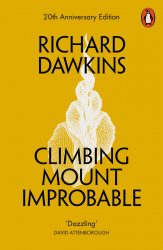
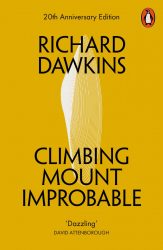
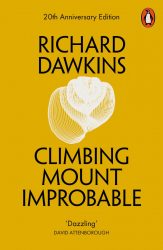
Even in 2016, publishers and authors are still struggling when it comes to re-releasing decades-old books, but Penguin had a unique problem when it set out to publish a 30th anniversary edition of Richard Dawkin’s The Blind Watchmaker.

The Bookseller reports that Penguin decided to revive four programs Dawkins wrote in 1986. Written in Pascal for the Mac, The Watchmaker Suite was an experiment in algorithmic evolution. Users could run the programs and create a biomorph, and then watch it evolve across the generations.

And now you can do the same in your web browser.

A website, MountImprobable.com, was built by the publisher’s in-house Creative Technology team—comprising community manager Claudia Toia, creative developer Mathieu Triay and cover designer Matthew Young—who resuscitated and redeployed code Dawkins wrote in the 1980s and ’90s to enable users to create unique, “evolutionary” imprints. The images will be used as cover imagery on Dawkins’ trio to grant users an entirely individual, personalised print copy.

The project came about, Toia says, through Dawkins: “In The Blind Watchmaker and Climbing Mount Improbable, he references a suite of computer programs that he wrote that simulate the process of evolution, creating a ‘biomorph’, as he termed it. Unfortunately these programs were obsolete—they were written in an old programming language called Pascal, which doesn’t run on modern computers—so we wondered if we could bring them back to life again, with the ultimate aim being to make them available and accessible to all.” The new code has since been made open source, for users to utilise or adapt further.

Triay explains the new iteration: “We got hold of a copy of Dawkins’ code and spent a while figuring out how his algorithms work— there is very little documentation available for the Pascal programming language, so it took a lot of trial and error—and once we did, we were able to start rewriting them in a modern programming language, Javascript.

The Bookseller is mostly wrong when it claims that Pascal won’t run on modern PCs; you can compile that old Pascal program and run it, and you can even find online emulators and compilers, but there’s no guarantee that it will run correctly.

Those old Pascal programs are in basically the same situation as a 30-year-old Wordstar document; you might still have the file, but it’s a crap shoot whether you’re going to recover all of the data.

And even if Penguin had been able to run the program, it wouldn’t be very useful by today’s standards. – not compared to what they built after rewriting the programs in Javascript. (Or so The Bookseller implies; the website says that Alan Canon rescued the Pascal programs, rewrote them in Java – a completely different language – and posted the code on SourceForge.)

The original Pascal program would be useful for generating a single book cover, but the new program runs on a website and enables everyone to learn more about algorithmic evolution.

Today Penguin launched MountImprobable.com, a website where users can generate a unique biomorph which can be used on a book cover. They can also buy a copy of Dawkin’s books although not one with a cover they created.

They can also take the biomorph they generated and use Dawkin’s program to watch how it evolves across the generations.

Details of the biomorphs, such as how many branches there are, and the lengths and angles of the various branches, are controlled by ‘genes’ which are just numbers in the computer. Genes in real trees, like genes in us and genes in bacteria, are coded messages written in the language of DNA. The DNA is copied from generation to generation with great, though not perfect, fidelity.

When a biomorph has a child, the child inherits all the genes of its parent (it only has the one parent, for there is no sex), but with some possibility of random mutation. A mutation is a slight random increase or decrease in the numerical value of a gene.

Have you tried it?

I did, although I’m not sure I was watching evolution.

The site lets you choose a biomorph and how many children it has. You can then pick one of the kids, and spawn a second generation, and then a third, fourth, etc.

In as few as five generations, you can end up with a biomorph which looks nothing like the original. But as anyone who has raised livestock can tell you, that’s not evolution; it’s merely selective breeding.

But even with that caveat, it’s still an interesting experiment.