Infographic: The Author Behind the Pseudonym

It may surprise you, but many authors have chosen to publish under a pen name.

Mark Twain was born Samuel Langhorne Clemens, JK Rowling publishes her mystery novels as Robert Galbraith, Isaac Asimov wrote several books as Paul French, and John le Carre was born David John Moore Cornwell.

For some, using a pen name is a way to escape the hype and expectations that come with using their own name, while for others writing under their own name wasn’t an option due to the perceived gender roles or professional etiquette. James Alfred Wright, for example, wrote about being a veterinarian under the pen name Jame Herriot, and Michael Crichton used several aliases to keep his medical profession apart from his early writing career.

The following infographic by Jonkers Rare Books lists a couple dozen authors and their pseudonyms.

Do you see one that should be included? Let me know in the comments.

image by JefferyTurner

How to Find Free and Open Source Fonts for E-ink Screens

The recent news about Amazon’s new Ember font has sparked a renewed interest in fonts for E-ink screens.

Last weekend I posted instructions on how to install fonts on a Kobo ereader, and at the request of a reader I have now pulled together a collection of fonts which users can install in their Kobo ereader, embed in an ebook, or install in a reading app.

Fonts can be found and downloaded from any number of websites (some of which are even legal). But those fonts won’t all work well on E-ink.

You can find modified fonts over at MobileRead, including pirated fonts which are being shared in violation of commercial license agreements (user beware).

If you would prefer to stick with legal downloads, then I have just the thing.

The following ZIP file contains nine font families. Seven of the font families have been customized for E-ink screens by the owner of an ereader. The other two fonts, Exo and Open Dyslexic, have not been modified but I am including them on the recommendation of readers.

All of the fonts in this bundle except for the Amazon fonts were released under an open license. (I checked.) The Amazon fonts are included with Amazon’s indifference (I asked, and they won’t say yes or no).

Font bundle.zip

Of the 9 fonts, I prefer Bookerly. This serif font just looks the nicest, but if I wanted a bold option I would probably go with Linux Libertine. It too is a serif, and very strong.

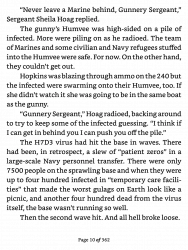
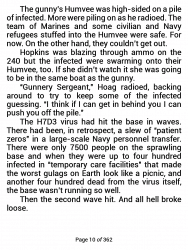
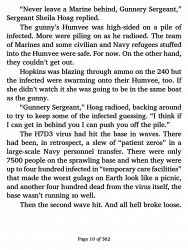
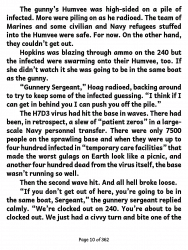
And here’s what those fonts look like.

The following screenshots were taken on a Kobo Aura HD. I did not change the settings between fonts; some of the fonts are stronger than others because that is how they were made or modified.

Which one do you like?

image by jm3

Startup Wants Pubs to Give Up On Choosing Books, Outsource the Decision to a Computer

Over the past few years Macmillan, Amazon, and other publishers have experimented with letting readers pick which titles should be published, and now a startup has convinced Macmillan to let a computer program pick the next book it should publish.

Flavorwire reports that Tor-Forge Books has signed a deal to ebook startup Inkitt to publish the second book in Erin Swan’s Sky Riders fantasy series:

The novel chosen by Inkitt’s “artificially intelligent” algorithm is Erin Swan’s Bright Star, a young adult fiction submitted to the publisher through a writing contest called “Hidden Gems.” Part of a multi-book “Sky Rider” series, it tells the story of the “fantasyland” Paerolia, “where war and conflict has created strong divides,” and where a a rebel leader named Kael helps a slave named Andra “discover the strength that has always been within her” and “fight to win back what Fate kept beyond her reach” — namely a dragon “that should have been her own.” Bright Star is expected to be released in 2017.

You can find the press release announcement over at DBW (which is down right now), and you can read more about the company on Writers Beware and the MobyLives blog.

Bright Star is only Inkitt’s second title published; the first was also by Erin Swan and was  "published" by Inkitt itself (and for some reason it’s not available other than on the Inkitt website).

For a startup publisher that announced its first anniversary in February, that’s a surprisingly small catalog, and that’s not the only odd detail about the company.

Inkitt was founded on the principle that there is no such thing as an expert opinion:

Who are we or any editor in the world to judge whether your book is worth publishing? We don’t think that we or any so-called “expert” is in a position to judge your work. You write your book for your readers, and the most important factor is whether your readers like it or not. That is what we measure at Inkitt.

Given that the crowd-source programs mentioned above, and indie publishing in general, are predicated on the idea of letting the market decide, one could conclude there’s a certain amount of truth to Ikitt’s argument that there is no such thing as an expert.

But what is strange about Inkitt is that after  poo-pooing human experts, the publisher proceeds to use an expert algorithm, one which was written by people, to choose which books to publish:

This is why we built artificially intelligent algorithms that have the ability to analyze reading pattern data and engagement levels. This allows us to make objective and data-driven decisions regarding a story’s potential to become a bestseller.

Does anyone else see the logical inconsistency there?

Inkitt is simply replacing one expert with another, and using smoke and mirrors to distract you from that fact. That expert algorithm will be biased by the opinions of its creators and will be no more objective than your average human editor (and possibly less so, given that the human editor has more experience in choosing books than the programmer who wrote the algorithm).

In short, Inkitt is just another gatekeeper, and as Writers Beware points out Inkitt is taking 15% of an a title’s net revenue for the privilege of acting as a gatekeeper.

They have set themselves up to be a middleman while at the same time proclaiming that:

We have built a platform that is cutting out the middleman in the publishing industry: the acquisitions editor. There is a long list of books whose authors faced rejection at the hands of publishers. That list includes everything from Moby Dick to Harry Potter. Why? Because individual editors and literary agents make decisions that are subjective – often based on their gut instinct – and this means they sometimes get it wrong.

What makes this last quote so utterly ridiculous is that Inkitt’s whole business model is based on signing authors and then pitching those same acquisition editors.

If nothing else, you have to admire Inkitt for their chutzpah, don’t you?

Text-to-Speech Voice Found on the Kindle Oasis

When the first Kindle Oasis leaks and the FCC paperwork which showed that the $290 Oasis had Bluetooth, many hoped that was a sign that it would support audio through a BT speaker.

Now Amazon has just raised that from a hope to a strong probability. SelfPublisherBibel.de reports this morning that they found a folder on their Kindle Oasis which was named "Voice". Inside that folder they found a text-to-speech voice called "Salli".

For those who don’t have a Fire tablet at hand, Salli is the default TTS voice for Amazon’s tablets in the US market. It’s the one that Amazon updated about a month back, and its presence on the Oasis is a strong indicator that it will support audio in the near future.

Coincidentally, the Oasis already has its first firmware update (see Amazon’s website for more details).

And in related news, the Kindle Oasis owner’s thread over on MobileRead has confirmed that Ember is a font option. It replaced the Open Dyslexic font. Also, contrary to earlier reports there is no USB port on the case.

If the TTS option does come to pass then the Oasis will be the first new Kindle with text-to-speech since the Kindle Touch,which was released in 2011. Some have been agitating ever since then for Amazon to add TTS to the Kindle, and now they could be getting their wish.

Speaking of which, how do you suppose Amazon will support audio on the Oasis?

Unlike the first four generations of Kindles it has no speaker or headphone jack, so Amazon is either going to have to enable Bluetooth, or release a case with an integrated speaker.

The latter option is less likely given the cost of the case, but it is not impossible.

Barnes & Noble Founder Len Riggio to Step Down in September

Len Riggio is going to be stepping away this year from the book retail empire he built and acquired.

From the WSJ:

Book retailer Leonard Riggio said in an interview Tuesday that he will step down as executive chairman of Barnes & Noble Inc., following the company’s annual meeting scheduled for September.

“I’m no longer going to be in charge,” Mr. Riggio said. “I’m done with that. I’m done with being top banana.”

Mr. Riggio, who built Barnes & Noble into the nation’s largest bookstore chain, said he played an active role last fall in the hiring of the company’s current chief executive,Ronald Boire.

..

Mr. Riggio is the company’s largest individual shareholder with a 17.5% stake. He says he has no plans to sell or add to his stockholdings. Mr. Riggio, who resigned as the company’s CEO in 2002, will remain on the board after stepping down as executive chairman.

Len Riggio got his start in college bookselling in 1965, and built a small company in that market. He then acquired the NYC bookstore B&N in 1971 and proceeded to built a national chain using the name. B&N had just a single store at the time, and you can see it in the lead photo.

Riggio was one of the people who disrupted bookselling a generation before Jeff Bezos. He saw the same opportunities Bezos did, and ruthlessly disrupted the stale and inefficient indie bookstores with chain (and later, big box) stores that offered a huge selection and good service.

And then thirty years later Jeff Bezos came along and pulled the exact same stunt on Riggio that Riggio had pulled on indie bookstores: offering an even larger selection with the best service.

Of course, Riggio wasn’t the only person to see that opportunity; Waldenbooks predated Riggio by a generation, and he also had contemporary competition like Crown Books (imploded) Books a Million (which is still around) and Target’s B. Dalton (Wikipedia). That bookstore chain was the largest in the US when B&N acquired it in 1987 (it had more stores than B&N, yes, but it did not have a committed ownership).

Really, Riggio is less the sole book retail genius of his generation, an impression you might get from the stories circulating today, than he is the survivor of a Hunger Games type of book retailing that spanned fifty years.

And that is a feat which I find even more impressive once we understand the context.

image via Wikimedia Commons


Are Authors Really Losing Out in the Kindle Unlimited Pay-Per-Page Scam – Or Is It Amazon?

As The Guardian and other parts of the mainstream media begin to notice the month and a half old story on the Kindle Unlimited page count scam, it’s time that we consider just who is being harmed.

In early March David Gaughran discovered, and Amazon confirmed, that scammers were taking advantage of a loophole in how Amazon tracks reading behavior in Kindle Unlimited.

Starting in July 2015, Amazon paid publishers and authors who have books in Kindle Unlimited based on the number of pages read. The changeover was a response to authors who were gaming the system by releasing short works and were being paid at the same rate as Amazon was paying for novels.

This system worked great right up until scammers figured out that Amazon cannot track the actual pages being read. Instead, Amazon tracks a reader’s location in an ebook as a distance from the beginning of the ebook.

Scammers are taking advantage of that limitation by padding their titles out with filler text like multiple machine translations and random gibberish, and then tricking readers into clicking through to the end of the ebook.

Amazon records that jump to the end of the ebook as the ebook having been read, and pays the scammer (up to approximately $14, based on the page count cap and the current payout rate).

No one knows the scale of the problem, but many have concluded that authors and publishers are being harmed by the scam. From The Guardian:

All the authors who choose to make their books available on Kindle Unlimited are paid, not a flat rate for each page read, but a portion of funding pool that Amazon provides. The size of the pool fluctuates, from $11m last summer to $15m last month, but it’s set by Amazon. No matter how successful the scammers are, Amazon doesn’t lose any more or less than the $15m it sets aside to pay Kindle Unlimited authors.

But other authors do lose out. The same pool goes to pay more “pages read”, reducing the fee for each individual page read.

That’s one way to look at it, but can you really prove that is the case?

In retrospect, there is evidence that Amazon has known about this problem since January, and has been changing the rules and adjusting the Kindle Unlimited pool to compensate for the scams.

Amazon demonstrated that they were aware of this scam in January, and we can see that in the changes Amazon made to the Kindle Unlimited rules on 1 February.

The retailer adjusted how they measured a page size, and they also set a hard limit on the number of pages paid for a given title. That cap of 3,000 pages was ridiculously large (most novels run to 300 to 400 pages in Amazon’s system) and was likely intended as a response to the scammers.

And ever since January, the per-page rate has held steady, suggesting that Amazon may be increasing the funding to compensate for the scammers.

Note: The monthly funding pools were announced after the fact.

  • In January 2016, the funding pool totaled $15 million and the per-page rate $0.00411.
  • In February 2016, the funding pool dipped to $14 million while the per-page rate rose to $0.00479.
  • In March 2016, the funding pool rose again to $14.9 million as the per-page rate dipped to $0.00478.

The per-page rate has not fallen through the floor like The Guardian assumed would happen as the scammers cheated their way to higher revenues.

So unless you are going to argue that the rate would be higher in the absence of the scammers, we have to consider whether Amazon is aware of this problem, and is keeping authors from being harmed.

What do you think?

image by seanmfreese
 

Amazon Confirms Fire Tablet De-Registration Problem – Also, How To Protect Yourself

Amazon has yet to come out and explicitly confirm that some of its tablets have been spontaneously developing amnesia, but on Saturday Amazon did tacitly admit that this was a widespread problem.

eBook Evangelist noticed that Amazon had posted the following message in its official support forums:

If you’re having trouble finding your photos, apps, or other content on your Kindle Fire HD 8.9”, please check your current registration status by swiping down from the top of the screen, selecting More, and then selecting My Account. If your device is not registered, tap the Register button and then enter your Amazon account information. After you register your device, you may need to download your content again. To learn more, go to http://www.amazon.com/gp/help/customer/display.html?nodeId=201730090.

That’s great, but it doesn’t exactly help those who have already suffered from Amazon’s snafu.

As we’ve been hearing for the past week, many Fire tablet owners are reporting that their tablet has spontaneously deregistered itself, wiping its memory in the process.

Anything not backed up has been sent to the great Recycle Bin in the sky.

Speaking of which, Amazon does offer a backup option for its Fire Tablets, one which ill save your "device settings, network settings, bookmarks, installed apps, and more" to Amazon’s servers.

This option was enabled by default in my $50 Fire tablet, but it was not enabled in my Fire HD 7 (2014). That tablet was upgraded to Fire OS 5.1 Bellini earlier this year.

I don’t know when Amazon added the feature, so I can’t say with any certainty which generations of the Fire tablets have it, but if your tablet has a backup option you’ll be able to find it in settings menu > device options > backup & restore.

Depending on the model year, some Fire tablet might not have this feature, so it would be a really huge help if we could crowd-source a list of tablets which do and do not have a backup option.

Does your Fire tablet have this option?

{list to be added here}

image by Open Grid Scheduler

How to install Bookerly, Ember, Roboto, and Other Fonts on Kobo eReaders

Thursday’s news about Amazon’s new font, Ember, inspired me to go find instructions on how to install it on an ereader.

While you can’t install custom fonts on a Kindle or a Fire tablet without hacking them, it’s relatively easy to  install fonts on Kobo ereaders.

Sidenote: Did you know you can embed a font in a Kindle KF8 file? The short version is that you need to make an Epub file with the embedded font, and then use Kindle Previewer to convert that Epub file to a Kindle ebook.

The above Epub trick also works to get a font on to a Kobo device, if you like. But embedding a font in an ebook is a hassle, and fortunately we don’t have to bother with that step to load a font on to a Kobo ereader.

The process could not be simpler.

  • Simply plug your Kobo device into your computer over USB, and then use your computer to create a new folder called fonts in the root folder of the device.
  • Note that the folder must be named fonts, with an "s", or the device won’t see it.
  • Copy all the font files into that folder. A font family usually comes in sets of four, and they all have to have similar names otherwise they won’t all be found by the device.

If you’re looking for fonts, I have posted a copy of the Bookerly and Ember fonts (with Amazon’s indifference, if not outright permission). You can also find additional fonts over at MobileRead (where I found the instructions).

Once you have installed the fonts, you should be able to select them from the font (Aa) menu from inside an ebook.

Here are a few screenshots of fonts I tested this evening:

Of the four, I think I like Bookerly the most. The Kobo Nickel font wastes too much space, and I am ambivalent to Ember and Roboto.

Which font do you like?

image by p_a_h


Cheap "Touchable Ink" Could Drastically Lower the Cost of Printing, Reading Braille

Only a tiny fraction of the visually impaired population reads Braille, and that is in part due to the fact that Braille printers can cost anywhere from $1800 to $80,000.

Now researchers at J. Walter Thompson (Bangkok) in Thailand have found what could prove to be a cheaper option. They’ve developed a new type of ink which can be printed from regular inkjet printers on paper to create 3d effects like Braille.

Dubbed Touchable Ink, rests on the surface of the paper rather than being absorbed. “This results in an embossed effect that makes the printed areas highly perceptible to the sense of touch. This innovative ink can therefore enable braille printing on normal paper through normal printers to substitute a dedicated braille embosser that is far more expensive,” explained Satit Jantawiwat, chief creative officer at J. Walter Thompson Bangkok.

“It also allows embossed printing of non-braille characters and other shapes and patterns. This will open up a new world to people with visual impairment and revolutionize their knowledge accessibility,” Satit adds

Touchable Ink is still more of a research project than a commercial product, but if it does reach the market it could be used, for example, to print out a map with the key details raised above the surface so that they can be found by touch rather than sight.

And if the ink binds well enough to let you deposit multiple layers, this might even offer a new alternative for 3d printing, but it’s still too early to say.

The ink is currently being test-printed by the Thailand Association of the Blind. There’s no mention of a commercial partner which could get it into mass production, but one could step forward if they knew there was a wider market for the ink.

It’s cool that it can be used to print Braille, but that’s a tiny market. In order to get the price down, the manufacturer will have to find other uses for the ink.

How would you like to see this ink used?


TechinAsia

Amazon Reportedly Actively Recruiting Publishers into Kindle Unlimited

About six months back I broke the news that a number of smaller publishers had followed indie authors into signing up for Kindle Unlimited, and were being paid by the page. Now it seems Amazon is looking to grow that number.

The Bookseller has a piece up this morning which makes the bold claim that Amazon is on a charm offensive. The retailer is trying to recruit book publishers into Kindle Unlimited:

Representatives from Amazon’s US and UK Kindle teams held meetings with three major agency publishers and a group of prominent agents last week in a bid to encourage them to sign their authors’ titles up to Kindle Unlimited (KU).

The Bookseller understands David Naggar, vice-president of Kindle Content for Amazon.com, along with other Amazon representatives from its US and European operations— including Alessio Santarelli, Kindle’s director, EU Content Store, and Amy Worth, director, Kindle Content, UK—gave presentations at Penguin Random House (PRH), HarperCollins (HC) and Hachette, and to a group of Independent Alliance publishers.

The sessions, described by Amazon as an “all hands” meeting, concluded on Friday with a presentation to around 25 literary agents.

The meetings were attended by around 100 people at each major publisher from sales, editorial and marketing departments, including sernior executives.

While the talks covered the success of a range of Amazon’s e-book promotions, such as its Daily Deals, according to multiple sources the whole presentation was a pitch for KU, Amazon’s e-book subscription service.

It’s not clear what terms Amazon is offering to the publishers, but The Bookseller said that "Amazon is willing to be flexible on terms for publishers if they sign up to the service".

But given that the piece also said that "the royalties authors earn if their book is downloaded from KU are the same as if it were a direct sale through the Kindle store", I’m not sure we can trust that the specific details are accurate.

If Amazon were going to pay the publishers at the same rate as for the retail part of the Kindle Store then there would be no need to "recruit" them. Amazon would simply use its existing contracts to add the titles to Kindle unlimited, and then pay based on those contracts.

A select few publishers have been getting the favorable terms since before Kindle Unlimited launched, at Amazon’s discretion, while most have submitted their titles and accepted the same terms as offered to indie authors (exclusivity, a per-page payout, and a split of the limited monthly funding pool).

If Amazon is actively recruiting publishers then the retailer is trying to get them to accept the same terms as indie authors.

I wish Amazon luck with that. Given the current problems with scammers cheating the funding pool, publishers would be advised to stay away until after Amazon has fixed the problem.

In fact, that would have been my number one question in those meetings. Kindle Unlimited has a fundamental flaw in its security, and Amazon needs to fix it.

It’s a shame we don’t know if anyone asked Amazon, or how it responded. Now that would be newsworthy.

image by ToGa Wanderings


What do You Think of Amazon’s New Font, Ember?

Ember bookerly Early last year Amazon released a firmware update for the Fire tablets with a custom serif font, Bookerly, which was developed exclusively for Amazon’s use on its Kindle platform. Now Amazon is about to release a sans-serif font, and you can get an early look.

When the Kindle Oasis starts shipping next week, it’s going to include a new font called Ember. Developed by font foundry Dalton Maag, Ember is a custom font developed just for Amazon. It’s already started showing up in recent updates for the Kindle ereaders as well as in early hands on videos of the Kindle Oasis, and now you can download it and try it yourself.

A friend was kind enough to snag a copy of the font family for me, and I have attached it below.

I haven’t tried the font in its native environment, yet. It is not listed as an option in either my Fire tablets or my Kindles (although I have been told that Amazon is already using it in the menus on the Kindle).

But I plan to go test the font by embedding it into an Epub file.

If you try it, let me know what you think.

image by jm3

Onyx Boox Kepler Pro Coming Soon – Android 4.0, Waterproof, Flush-Mounted Carta E-ink Screen

Here’s an interesting addendum to yesterday’s ereader video from Charbax. Regular TDR commenter Hrafn has identified the 6″ ereader shown late in that video, and posted the info over at MobileRead.

It’s called the Kepler, and Onyx has already posted the product listing. There are going to be three models, and one, the Kepler Pro, will be a competitor to the 3rd-gen Kindle Paperwhite (we don’t have the specs for the other two models).

The Kepler Pro runs Android 4.0 on a 1GHz CPU with 1GB RAM, 16GB internal storage, and a microSD card slot.

It has a flush-mounted Carta E-ink screen (1442 x 1072 resolution) with frontlight and either a capacitive touchscreen or a digitizer with stylus (the listing contradicts itself, but no stylus was shown in the video). Under that screen you’ll find Wifi, Bluetooth,a 3Ah battery, all  wrapped in a waterproof shell.

For obvious reasons there’s no headphone jack or speaker, but the Kepler Pro does have audio support via Bluetooth. It can play mp3 files or stream TTS over a Bluetooth speaker.

Weighing in at 205 grams, the Kepler Pro measures 8 mm thin.

All in all, this ereader is bound to appeal to a wide variety of users. If the flush-mounted high resolution screen doesn’t draw you in, the waterproof shell might, or Android, or the Bluetooth support.

All in all, this is about three-quarters of the ereader many wish the Kindle Oasis would have been. The only way Onyx could improve upon this design is to put page turn buttons on one side of the screen to make it easier to use one-handed.

Who knows, maybe that will turn up in the next model.

Will Google Ever Reopen Its eBook Publisher Portal?

Earlier today someone made the unsubstantiated declaration that Google had closed its publisher portal "forever". While there is zero evidence to back up that assertion, I fear that it will be proven correct.

It was around this time last year that I broke the news that Google had a industrial-scale piracy problem. I showed how ebook pirates were basically setting up their own ebookstores in Google play, pirating ebook after ebook with impunity. All Google did to fix the problem was to remove ebooks in response to DMCA notices and issue a bland statement about "taking the issue seriously".

Google proceeded to ignore the negative press coverage, but they did finally respond when the Dutch publishers trade group NUV demanded that Google fix it.

Google responded by closing the publisher portal to new signups on 25 May 2015, saying that:

We’ve temporarily closed new publisher sign ups in the Play Books Partner Center, so we can improve our content management capabilities and our user experience. We’re working to reopen this to new publishers soon. Thanks for your patience.

The Play Books Partner Center is Google’s equivalent of KDP. Authors and publishers (and pirates, for that matter) can use it to upload ebooks for sale through Google Play books.

If you have an account, that is. Google hasn’t let anyone sign up for a new account since last May, and you shouldn’t expect them to.

As I explained to a reader in March, Google has only a minimal interest in ebooks.  Google isn’t Amazon. One is a retailer, but Google is an ad network giant which is not driven by sales and really only wants ebooks so it can complete a checklist of content types.

Since Google has ebooks from publishers, and from distributors like Vearsa, Streetlib, and eBook Partnership, it doesn’t need to reopen that portal.

In short, the Play Books Partner Center probably will be closed forever (good luck getting Google to admit it, though).

image by cowbite


Barnes & Noble, Kobo Have Shut Down Their HTML5 Reading Apps

In 2011 browser-based HTML5 reading apps were hailed as a rebuff to Apple’s demand for a vig. Everyone from Kobo to Nook to Kindle were releasing their own app, and there were even a couple independent platforms like Bookish. The ebook market was showing every sign of going for web apps over native apps, but as the years passed the momentum swung the other way.

First Ibis Reader and then Booki.sh were acquired and shutdown, and now both Kobo and Barnes & Noble have quietly retired their web apps.

Over the weekend a reader tipped me to the news that Kobo had quietly removed the install option for Kobo Instant Reader. Launched in 2012, this app was one of the better HTML5 reading apps (I seriously couldn’t tell that it wasn’t the iPad app). You could use it to read ebooks offline, and even buy the ebooks in the app.

Alas, the great experience wasn’t enough to keep the app around. It is now gone, and Kobo is not responding to queries on the topic.

While we don’t know why Kobo abandoned their app, we do know a little more about B&N’s Nook for Web.  That app was lost in last year’s botched relaunch of the B&N website. Barnes & Noble did not bring the app from the old site to the new one, and I can understand why.

Launched in July 2012, Nook for Web was never fully developed. It was a frankly shitty app which did not work offline, could not remember to keep you logged in, and didn’t support all browsers or even most mobile devices.

Its demise went unremarked but not unnoticed. With the B&N website working about as well as a one-legged man in a butt- kicking contest, the death of that web app was relatively unimportant. (Plus there was the chance that B&N might fix the app, or replace it.)

But with Kobo having dropped their app as well, it was worth noting that B&N had passively let Nook for Web die. It’s gone now, and that leaves just Amazon, Google, and OverDrive (they bought Booki.sh) with web reading apps.

image by Ultra

DIY Solar Case for the Kobo Aura H2O

Amazon is reportedly planning to release a solar-powered case for the Kindle Oasis, but thanks to one industrious hacker it’s going to be the second premium ereader with a solar case, rather than the first.

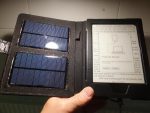
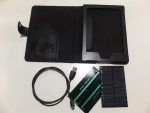
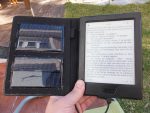
A Kobo Aura H20 owner has crafted a one of a kind case for their ereader. They combined a cheap after market case with a couple solar panels and a USB cable to create a case which can charge their ereader on the go.

The hacker cut out sections of the inner liner to fit the panels, wired them to the USB cable, and glued them in place.

The resulting DIY solar-case can’t match the output of a standard wall charger, but the hacker did report that the panels provided enough power, both in direct sunlight and inside a building, to trickle charge the Aura H2O.

They haven’t posted a complete set of instructions, but the photos I found over at MobileRead look straightforward enough.

It shouldn’t be too hard to duplicate this project if you have the necessary skills.

I don’t, so if I were in need of a solar charger I would get one off of Amazon or Ebay. You can find all sorts of chargers there, including ones with a USB cable, and best of all those commercial kits are both cheaper than the home-made charger shown above as well as more useful (they’re capable of charging items other than just an ereader).

That’s why I have never been tempted to copy the solar-powered ereader mods I’ve seen over the years.


MobileRead