Apple Launched iBooks Editions, And No One Noticed

Aside from the news that the iOS Ten beta would let you remove Apple’s spam apps including iBooks, there wasn’t much in the way of ebook news in today’s WWDC keynote.

There was, however, one small bit of ebook news which Apple announced last last week. On Thursday Apple debuted iBooks Editions.

Not to be confused with the many technical enhancements which can be built into the iBooks format by iBooks Author, "iBooks Editions" are a new line of romance titles which feature "exclusive bonus material from your favorite romance authors".

The new category currently includes 20 titles, with prices ranging from $3 to $5 (four of the titles are currently free). According to what I can see in the Books section of iTunes, the bonus content can be anything from "bonus scenes which reveal a character’s motivations to never before published epilogues which tell you what happens after the last chapter wraps".

I don’t have an iDevice any more, so I can’t comment on the quality of the bonus material, but based on what I’ve seen so far I have to second Bradley Metrock’s take on the new program:

Now, nobody cares if Apple wants to promote racy romance novels in the iBooks Store.

But isn’t it just a bit myopic to ONLY promote racy romance novels in the iBooks Store?

 What about educational textbooks created with iBooks Author?

What about scientific works by leading minds?

What about non-fiction works of all different kinds?  History?  Psychology?

What about The Mozart Project, the amazing interactive book created with iBooks Author?

What about taking the opportunity to freshly promote the JK Rowling enhanced editions of the Harry Potter series as well?

What about LITERALLY ANYTHING ELSE?

 This is it?

And none of these books were enhanced using iBooks Author, the technology SPECIFICALLY BUILT BY STEVE JOBS TO ENHANCE DIGITAL BOOKS?

 Seriously?

He’s not wrong. If Apple is going to promote iBooks then why not focus on its unique features rather than a few dribs and drabs of bonus content?


How a Traditional Publisher Could Harm a Writer’s Career

Examining current ebook sales data suggests that remaining with a traditional publishing house may actually hinder a writer’s long-term success. While industry analysts often focus on total revenue, it is the volume of units sold that reveals a massive shift in the publishing landscape. In the United States, digital books are expected to represent nearly 30% of all trade sales in 2012, a dramatic climb from just 0.5% in 2007. Because digital titles are typically cheaper than print, these percentages actually understate their true market share in terms of what readers are actually consuming.

Data indicates that pricing has a profound impact on an author’s ability to build a following. Research into indie publishing shows that while free titles attract the most interest, books priced at $2.99 often generate higher total earnings for the author than those priced at $6.99 or more. Furthermore, a $2.99 price point can attract four times as many readers as a $9.99 price point, and six times as many as a title costing over $10.

This presents a paradox for traditionally published authors. An independent author might earn roughly $2.00 on a $2.99 sale, whereas a writer with a major publisher might only receive about $1.50 for a $9.99 sale. Consequently, authors who stick with high-priced traditional models are at a disadvantage; they earn less per copy while reaching a significantly smaller audience, which slows the growth of their personal brand. Bestseller lists on platforms like Apple’s iBookstore, which appear to prioritize unit sales over dollar volume, increasingly feature independent titles that are successfully capturing the public’s attention.

Furthermore, the historical gatekeeping power of traditional publishers is eroding. In the past, writers needed these companies to access physical bookstores and printing presses. Today, the tools for professional-grade digital production and distribution are accessible to everyone. As physical bookstores decline and digital formats gain dominance, the value of traditional print distribution diminishes.

Traditional publishers are beginning to recognize this shift in power, as evidenced by Pearson’s recent $116 million acquisition of Author Solutions for its Penguin imprint. However, this move is controversial. Author Solutions has been criticized for functioning as a "vanity press," deriving the majority of its revenue from selling services to writers rather than selling books to consumers. Its digital sales figures are also remarkably low compared to specialized ebook distributors.

The acquisition suggests that major publishers are desperate to find a way to stay relevant to independent-minded writers. However, as the barriers to entry vanish and the financial benefits of self-publishing become clearer, traditional firms face an uphill battle in convincing authors to stay within their ecosystem. For the modern writer, reaching more readers at a lower cost may be the most effective way to secure a lasting career.

Literary Hub’s "Book Marks" Wants to be the Next "Rotten Tomatoes" of Book Reviews

Literary Hub announced on Tuesday that it’s launching a book review aggregation service called Book Marks.

It’s more or less Rotten Tomatoes clone, only for books. Book Marks aggregates reviews from more than 70 sources (newspapers, magazines, and websites) and averages them into a letter grade.

“We understand it is difficult to summarize the nuance and complexity of a review into a letter grade,” said Literary Hub Editor-in-Chief Jonny Diamond. “But we believe that Book Marks will lead more readers to reviews, and amplify critics’ voices in a way that benefits readers and writers alike.”

From the press release:

While online readers’ reviews create robust conversations about books and foster new and diverse book-loving communities, it is also valuable to read what professional critics have to say about a title. Book Marks will, as well as linking back to their source. Each book’s cumulative grade functions as both a general critical assessment, and, more significantly, as an introduction to a range of voices and opinions that make up the world of American literary criticism.

Interesting.

Book Marks is (at least) the second such aggregator in the book space. The first, iDreamBooks, launched several years ago. Sony was using iDreamBooks in its ebookstore, and at the time the site was aggregating reviews from both the major news sites as well as book blogs.

The latter sources appear to have been dropped from iDreamBooks at some point in the past several years, however.

Now iDreamBooks is using more or less the same sources as Book Marks, with one exception. BM’s FAQ mentions that it excludes trade reviews at the moment (the service focused on consumer reviews). Reviews from publications like Kirkus are included in iDreamBooks.

You can find a complete list of Book Marks' sources on its site. As you can see, very few independent book blogs are included.

Tolino to Cut Royalties on Cheap eBooks to 40%

Germany’s leading ebook retail consortium announced on Monday that it is no longer going to pay a 70% royalty on all ebooks distributed through its publishing portal, Tolino Media.

e-Book-News.de, BuchReport, and Boersenblatt report that starting on 1 July, Tolino will drop the payout for ebooks costing less than three euros. eBooks priced above that point will continue to earn 70%, but ebooks priced below 3 euros will only generate a 40% royalty. In comparison, Amazon’s KDP pays a 35% royalty for ebooks which sell for less than three euros in Germany.

Tolino explained that operating costs was the driving force behind the change. Jördis B. Schulz, Director Tolino Publishing, explained in a statement that the download cost and payment charges were so high for cheap ebooks that Tolino could no longer justify paying the 70% royalty.

In related news, Tolino will also be withholding a higher VAT rate starting on 1 July, from 7% to 19%.

The change, I’m told, reflects an unanswered question on the business relationship between authors/publishers and distributors like Tolino. A license is taxed at 7%, and a digital service at 19%, and Germany’s tax collectors are insisting that the higher rate applies. Tolino is changing their policy just to be safe.

Launched in 2013, Tolino is an ebook platform where the costs are shared among the participating retailers. It is supported by seven retailers and tech companies (Thalia, Weltbild, Hugendubel, Club Bertelsmann, Libri, eBook.de, and Deutsche Telekom), and has its own servers, mobile apps, ereaders, and tablet.

The consortium had been paying the 70% royalty ever since it launched  Tolino Media, its own publishing platform, last April. When it launched it was limited to authors from Germany, Austria, Switzerland, and other EU countries. It distributes ebooks to the ebookstores operated by the seven retailers as well as Tolino-partnered ebook sellers in the Netherlands, Belgium, and Italy.

image by sbchemnitz

Gvido Dual-Screen Sheet Music Reader Debuts in Cannes

Gvido is a sheet music reader based on a pair of 13.3″ Mobius E-ink displays. it was announced on Friday, and according to the press release it was being shown off at a music industry conference in Cannes (said conference ended on Monday – today).

Weighing in at 650 grams, the Gvido measures 48 cm by 31 cm when unfolded. It has a Wacom touchscreen, Wifi, Bluetooth, and supports PDFs. You can use the Wacom stylus to annotate the PDF, and even save the notes and bookmarks for future use.

Gvido is the work of Terrada Music Score Co, but AV Watch also notes that it was designed in partnership with Fujio Noguchi, the former head of Sony’s ereader division.

This is not a Sony product, but it is going to be manufactured in a Sony plant in Nagano and is running software licensed from Sony.

It’s hard to say what that means in terms of software features, however.

Over the past few years several startups have teased us with dual-screen document viewers. So far neither Printless Plans nor NotesNote have brought their devices to market, but now it looks like one might.

But when will the Gvido hit the market?

Terrada isn’t saying. They have, however, released this nifty demo video showing the Gvido in action:

https://www.youtube.com/watch?v=209Y6cspMAA

AV Watch

The Sudden Demise of BookTrope has Left Authors to Clean Up the Mess

When Booktrope launched its publishing service five years ago, this hybrid publisher offered authors the best of both worlds: a five-year contract with no costs for the author, and pro quality work on the book.

But when the publisher suddenly shut down at the end of April, authors were abruptly saddled with all of Book trope’s obligations to the pros who had worked on a book.

You see, BookTrope was based on a revenue-sharing model where everyone who worked on a book would get a cut of the net revenue (less 30% to Booktrope). The authors had even signed a contract (PDF) with the rest of the team, so even after the author got their rights back and Booktrope shut down, the authors were still required to pay the rest of the team.

And that’s causing a lot of stress for the several hundred authors who had published nearly 1,000 books with Booktrope. Elizabeth Barone detailed her experiences on KBoards:

On April 29th, my small press publisher announced they were closing on May 31st and authors' rights would revert June 1st. The catch: because their model was team publishing with royalty split, the contracts we’d signed mandated that authors need to continue sharing royalties for the duration of the term. Each book’s agreement was for five years.

Cue the panic attack. I’m broke. Being with small press publisher actually resulted in a hit to my income. (They didn’t distribute to Kobo, and previously, Kobo was paying my bills because of their majestic indie promo list.) Re-publishing would cost me more (I had to update four books' ebook files (fees to Vellum), paperback files (free; DIY), and covers (fees to designers) to remove all instances of the publisher). I knew I couldn’t afford to LLC and hire an accountant. There was no way. (Side note: some authors' team members started demanding payouts rather than royalties, which they weren’t entitled to. This was another panic attack. Other authors' team members absolved authors from any further payment.)

Someone suggested I use Lulu to self-publish, because they distribute everywhere and also have a nifty feature that allows you to share royalties. But of course, there’s a catch.

I’d settled up with my team — who were all wonderful about the whole thing — and was ready to go at midnight. I’d gone direct with Kobo (to take advantage of those promos), and logged into my Lulu dashboard just to check everything over and uncheck Kobo from the distribution list. Unchecking Kobo resulted in Amazon automatically being unchecked, too.

What a mess.

A lot of these authors had signed with Booktrope because they didn’t want to be self-published authors, and now they’re finding themselves stuck with obligations to pay a whole team of people.

Fortunately for the authors, most of the contributors are apparently willing to release the authors from the contract and write the losses off as a learning experience., but the authors are still left with the headache of recording the quitclaims and republishing the book(s).


What’s even worse is that this is a problem some former Booktrope participants saw coming a mile away. Ally Bishop and Patricia Eddy published a post on Medium in late April where they explained how the shared royalty model was doomed.

What’s worse?—?it failed phenomenally. “Almost 1,000 books” published, yet they couldn’t make their go-for-the-bottom-of-the-pile book marketing plan work.

Why is that?

Because Booktrope never placed a priority on qualifications when hiring. The people at the top had little-to-no book publishing or editing experience, yet those same people were their acquisitions team.

“‘I really feel like literary snobbery is not what the public needs,’ Sears said…Booktrope’s approach is all about letting readers, rather than editors, provide that filter.” Somehow, expecting and producing a high quality, well-written, and polished book became defined as “snobbery,” and releasing books that often received substandard services was the grassroots approach.

Booktrope had no editing or graphic design test in place for bringing on new talent. They didn’t ask, didn’t check backgrounds, didn’t require their book marketing managers to have any previous marketing experience. When Ally was brought on, she received a cursory interview by a woman who was gone from Booktrope’s population the next week. As editors, our preference for proper grammar was called “archaic” and unnecessary, and our suggestions for authors’ stories were deemed optional. …

Booktrope was never going to pay off.

What they preached was a “five year plan” of making $20/month on a book and building a portfolio of work. As though one book will always make the same amount every month. As though authors who stop writing or books that aren’t marketed properly will continue to roll over low profits month after month.

What a mess.

image by Aussie~mobs

New Survey Shows 26% of Brazilians Have Read an eBook in the Past 3 Months

A new survey by the Instituto Pró-Livro has revealed that ebooks are slow to catch on in Brazil.

According to the 4th edition of the Retratos da Leitura no Brasil survey report, ebooks have been read by 26% of survey respondents. The survey showed that the number of ebook readers in Brazil grew 6% between 2011 and 2015, and that the average number of books read in the three months prior to the survey was 2.54 books.

The smartphone was the most popular reading device, used by 56% of those who read ebooks, followed closely by computers (49%) and tablets (18%). eBook readers like Kindle, Kobo, and Lev came in a distant fourth, at 4%, thus making Brazil one of the countries which (as I explained three years ago) jumped right past the ereader phase and straight to the app phase of ebook market growth.

Free downloads far outweighed sales, as one would expect, with 88% of respondents having downloaded an ebook versus 15% having bought one. The most popular type of ebooks were literature books such as short stories, novels, or poetry (47%), followed closely by technical books (33%).

The report is based on a survey of 5,012 personal interviews across Brazil. Among those polled, 8% indicated they were "illiterate" or "did not attend formal school."Another 21% said they had elementary school (1st to 5th grade), a quarter had attended middle school (6th to 9th grade), 33% high school, and 13% had taken some higher education classes or completed college.

Globo

image by GiPereira

Dasung Paperlike E-ink Monitor Up for Pre-Order on Indiegogo, $799

With two limited production runs and a single retail partner, it’s not exactly easy to get your hands on a Paperlike E-ink monitor, but now is your chance to get in line to pre-order a Paperlike at a discount.

A few days back Dasung quietly launched an Indiegogo campaign for the Paperlike. (The launch was so quiet that they didn’t even tell me.) The campaign is three days old and has already achieved its goal of $10,000, and that means it is now on schedule to ship the monitors in August 2016.

The Paperlike is currently the world’s first and only E-ink monitor, and thus one of the few types of screen which sufferers of computer vision syndrome can use. (LCD screens give them migraines.)

It’s built around a 13.3″ E-ink screen, and connects to your PC via a USB cable which supplies both power and data. It has a screen resolution of 1600 x 1200, and supports two plus native display modes. The Paperlike can mirror your existing monitor or act as an external monitor at resolutions of 800 x 600 or 1600 x 1200. Also, the latest set of drivers will also let you mirror your existing monitor at its current resolution.

For example, my Dell laptop has a maximum screen resolution of 1366 x 768. The Paperlike can take that screen resolution and either stretch it to fit its 13″ screen or mirror my laptop’s screen in a window which measures 1366 x 768. It can also use one of the lower resolution screen settings, and display that on its E-ink screen.

The stretch mode doesn’t look great, but it is very, very usable.

You can find additional videos in the post I wrote last week.

I wouldn’t want to stick with the Paperlike for all my computer activity, but when it comes to basics like web browsing, writing, email, etc, it works surprisingly well. In fact, I am typing this post with the Paperlike.

Or at least I was until it fell over, which brings me to a problem.

The Paperlike ships with a wholly inadequate stand which isn’t really up to supporting the monitor properly. If you buy one you should also invest in a real monitor stand/arm to go with it.

Fortunately the Paperlike has the standard mounting points on the back so it should work with standard equipment.

I’ve been following the development of the Paperlike since I first discovered it at CES 2015 sixteen months ago, and I feel that today (for the first time) I can honestly say that the Paperlike is ready for consumers. Over the past couple weeks the software has lived up to the promise of E-ink screen.

Now would be a great time to get one.

P.S. Full disclosure: I bought a Paperlike in the pre-order last year. I was one of the owners' whose monitor died, and so this year Dasung sent me a free replacement. That replacement monitor is currently sitting on my desk.

Macmillan Acquires Self-Pub Distributor Pronoun

When Vook announced last May that it was reorganizing as Pronoun and pivoting to offer a distribution platform which was free to authors, many people were left wondering just how Pronoun would keep the lights on.

They said they were going to generate revenue from outside development work, which didn’t make a whole lot of sense.

Now it looks like Pronoun had another plan.

Pronoun has sent out an email to authors who signed up with the platform, informing them that the company had been acquired:

That’s why we’re excited to announce that Pronoun is joining Macmillan Publishers, a global trade book publishing company with over 100 years experience, and amazing imprints around the world. Macmillan shares our philosophy that publishing exists to serve the full spectrum of authors. By joining forces, we’ll be able to invest even more in improving and growing Pronoun’s self-publishing platform, all while giving successful independent authors a path towards more opportunity.

As a division of Macmillan, we’ll be doubling down on Pronoun’s free core platform, while also investing in additional levels of service and support. We will continue to make the best products we can, starting with the needs of authors and building from there. We can’t wait to show you what we’ve been working on lately!

That’s an oddly appropriate next step for a company that has more pivots in the past 7 years than any other in the digital publishing space.

Pronoun got its start as Vook in 2009. At the time, it was a publisher which made enhanced ebook apps for the iPhone. It later expanded to include the iPad and Android apps, and enhanced ebooks for Kindle and other platforms, and then pivoted to making the enhanced ebooks as a service for authors and publishers.

And then in 2012 it pivoted to focus on distributing ebooks, including all types, before finally rebranding in 2015 itself as Pronoun.

And now it’s a Macmillan sub.

How long do you think it will be before Macmillan kills it?


BookBub Now Selling CPM Ads in Its Deals Newsletters

Bookbub has long charged authors and publishers fees in order to be accepted into one of its ebook deal newsletter, but it has always set a certain standard for quality (reviews) and editorial fit. Now it is setting aside those standards, and is going to start listing straight adverts in its newsletter.

On Wednesday Bookbub announced that publishers and authors no longer have to have a deal for readers in order to get their ebook listed in the Bookub newsletter:

BookBub Ads run in a dedicated space in BookBub’s daily emails. Advertisers — authors, publishers, agents, and other book marketing professionals — can use this space to promote full-priced books, discounted books, audiobooks, novellas, multi-author box sets, and much more.

Bookbub has also posted an FAQ.

The new ad units are CPM ads like you would find on most websites, and not fee-for-placement like the the rest of the email. Bookbub says that the price of an ad unit is determined by a competitive bidding process, with the high bidder obviously getting priority.

Bookbub has long been the king of the ebook discount newsletters, but over the past year has been pivoting more and more to  be a marketing service. One industry insider told me that "strategically speaking it seems to me they’re starting to compete with Amazon for the most important nuggets – the direct connection between author and customers", and they were right.

Bookbub had already expanded beyond just pitching deals. It also encourages authors to fill out their profile on Bookbub’s website so that readers can follow authors and get news about new releases.

This is similar to a service Amazon offers through author pages on its site, and it is only the the most obvious way that Bookbub competes with Amazon.

How long do you think it will take before they get stepped on?

Or even better, how long until Bookbub gets acquired?

A discount newsletter service has a short half-life in an ever shifting retail market landscape, but a marketing service would have real value to a publisher (or Rakuten, which might buy Bookbub and then pivot the company).

Thanks, Anthony!

Thanks, Irish!

Up Close With E-ink’s New High Resolution Color ePaper Displays

I was suspicious when E-ink announced its newest color epaper display today; no E-ink screen could really look as good as what you can get from a high-quality inkjet printer.

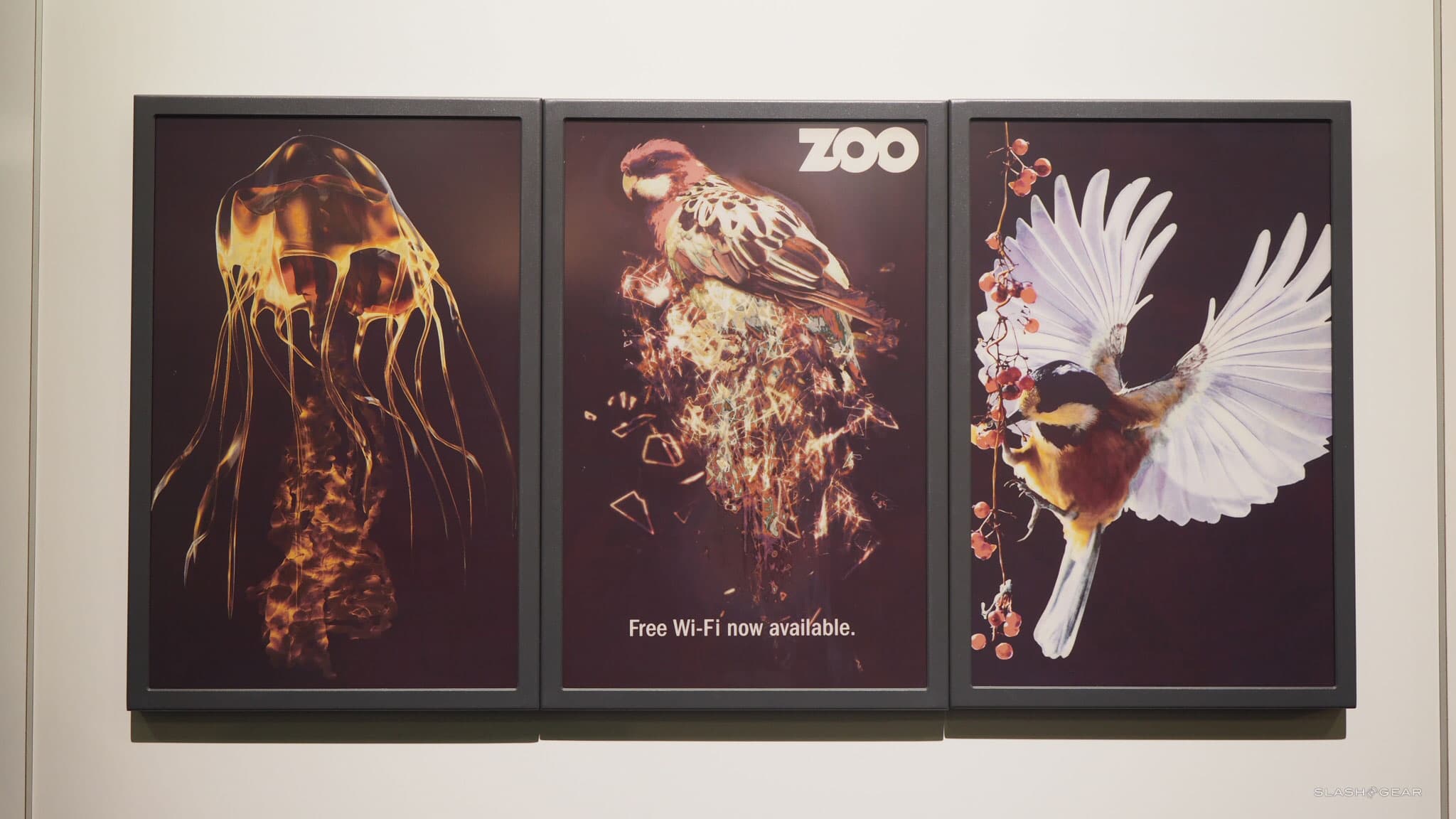
But now that I have seen some first-hand photos and a video of the screens on display at SID Display Week, damned if I wasn’t wrong.

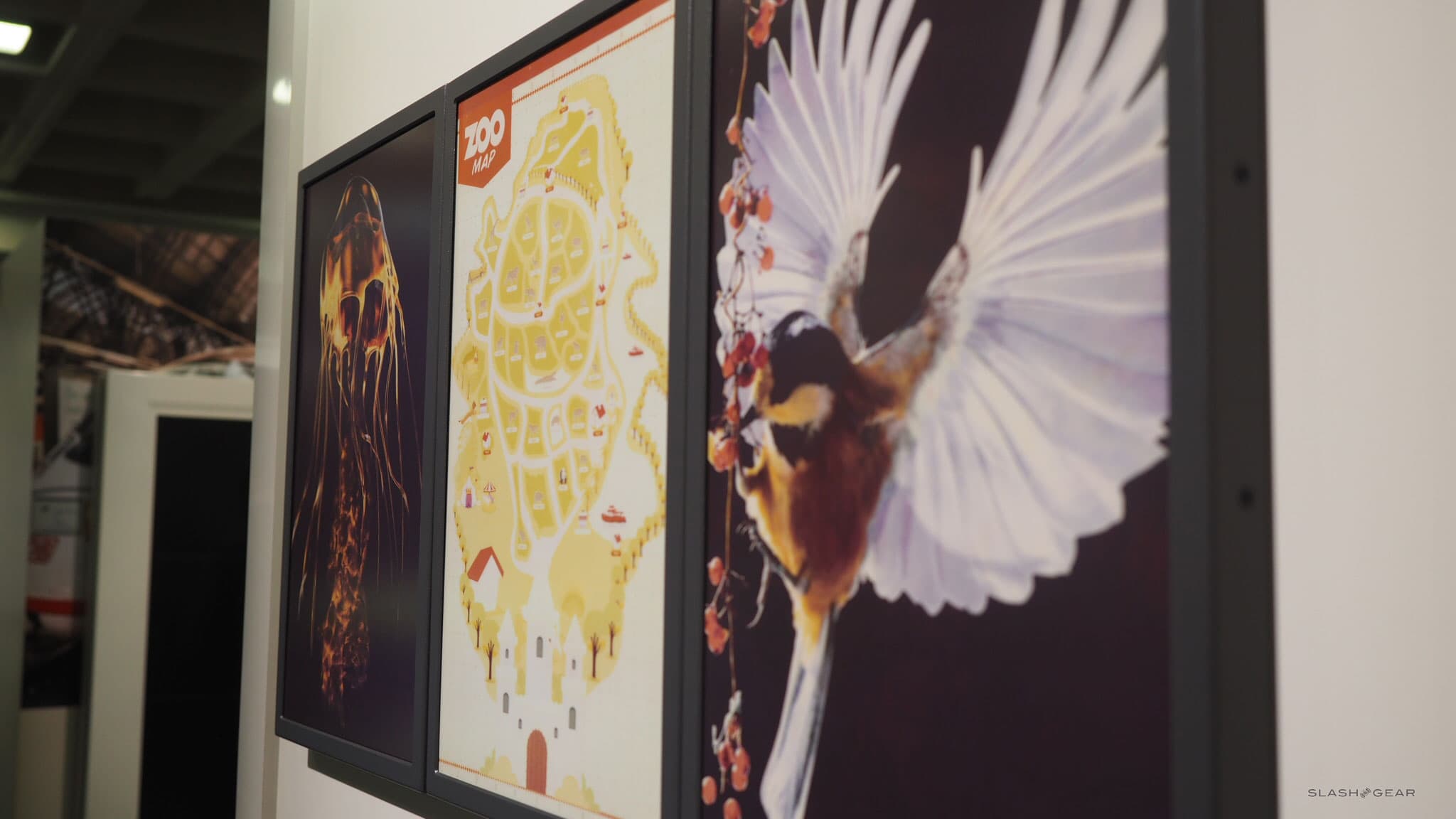
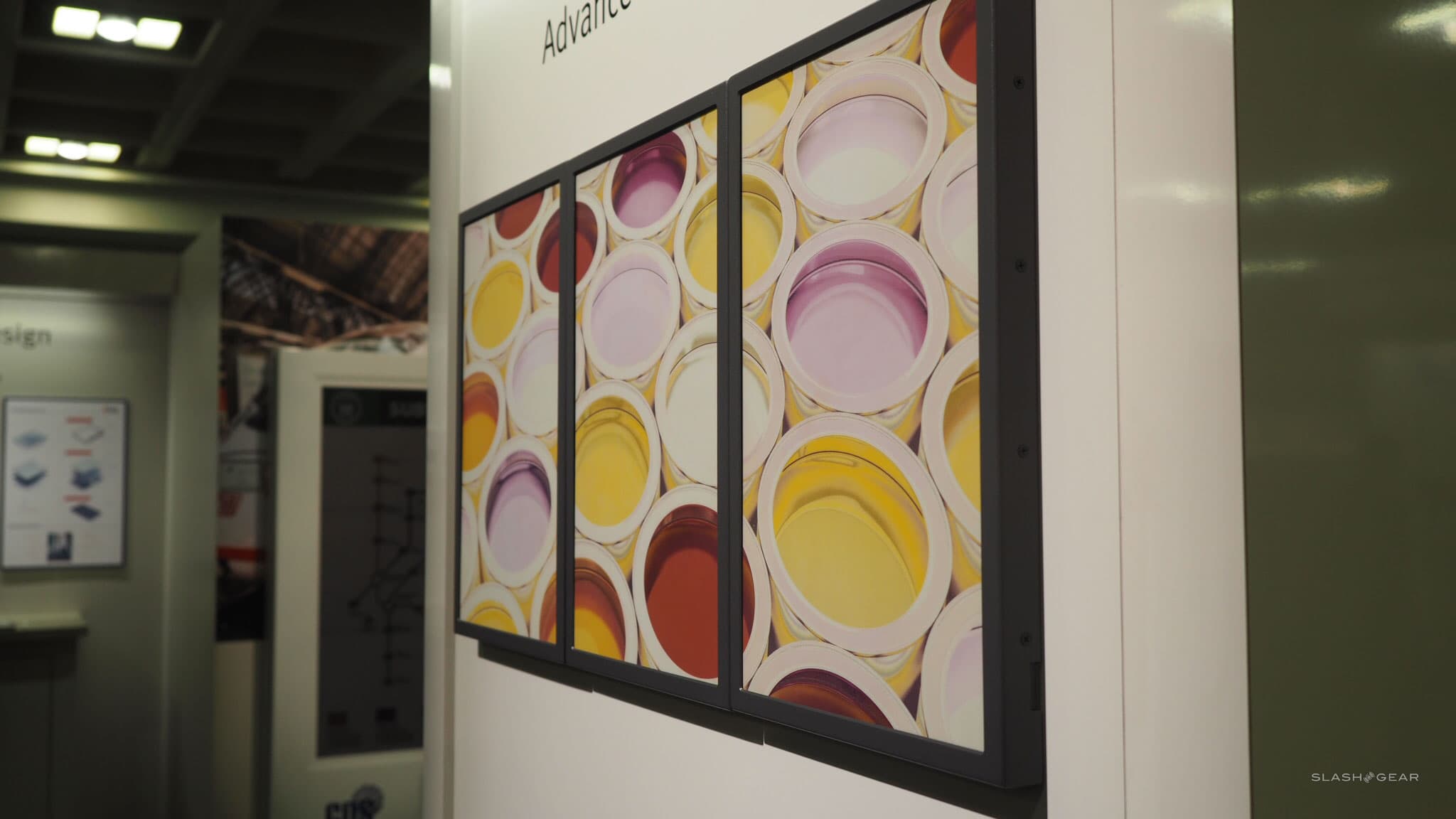
Slashgear has gotten up close and personal with E-ink’s new Advanced Color ePaper (ACeP, for short). This wholly-new epaper does away with the color filter required for previous color epaper screens and instead displays a full color gamut, including all eight primary colors, using only colored pigments in each pixel.

This means that the new ACeP screen doesn’t have just white and black pigment capsules in each pixel like regular E-ink screens (or in the case of Spectra, yellow/red, black, and white).

Instead the new screen has seven sets of pigment capsules a single pixel. E-ink doesn’t name them, but if I had to guess I’d say that the colors are white, black, red, purple, blue, green, yellow, and orange. (Chris suggested a different set over at Teleread.)

That sounds impressive, but as you can see in the video all those pigments come at a cost.

The flashing you see in the video is the screen reversing itself in preparation of activating another color. In other words, thanks to the 7 pigments the refresh rate is very low, which is why this isn’t going to be made into an ereader.

E-ink has targeted the ACeP screens for the signage market. They’ve built 20″ displays, with screen resolutions of 1600 x 2500 at 150 ppi, and they expect this technology to go into commercial production in the next two years.

So this is not the ereader screen we have been hoping for. But even so, it’s pretty.

P.S. Do you think it would be any good for a monitor, or as a document display?

Author Sues Simon & Schuster Over eBook Royalties on a Book It Doesn’t Publish

There’s a story going around this weekend about a new class action lawsuit filed against Simon & Schuster. Doctor and author Sheldon Blau is alleging that S&S is paying him for ebooks as sales when they are in fact licensed, only the story is not nearly that simple.

From Copylaw:

A book is a book, except when it comes to eBook royalties. That’s the premise of a class action lawsuit filed on Thursday, May 19, 2016, in the Supreme Court of the State of New York by class representative Sheldon Blau, MD.

The lawsuit alleges Simon & Schuster has been cheating its authors by improperly categorizing eBook transactions as "sales" rather than "licenses."

The distinction is significant, because the royalty rate for sales is much lower than the rate for the license of rights.  If categorized as a license the author receives 50% of net receipts, rather than 25% of net typically paid to authors for the "sale" of an eBook.

…

The eBook royalty class action looks back approximately six years, the statute of limitations on contract actions in New York State.  It alleges Simon & Schuster engaged in a "pattern and practice of paying Plaintiff and others similarly situated royalty payments for the distribution of licenses for electronic books, or "e-books," at a rate for book "sales," or some other lower rate than that required for "license" transactions."

You can find the filing, as well as commentary, over at The Passive Voice.

This case should immediately remind you of Eminem’s lawsuit against his record label over royalties. Like S&S, Aftermath Records (a UMG sub) was collecting license fees on mp3 sales and passing them along as "sales".

This case was filed in 2007 and decided in Eminem’s favor in 2010, and Blau’s case shows every sign of following the same pattern, right?

I wouldn’t be so sure.

We don’t have all the details, but there’s a less than obvious complication. Law360 noticed this detail, but apparently no one has realized its significance.

The problem is that while Simon & Schuster has a contract with Blau, it isn’t publishing his book. The book is still carrying the S&S name, but:

A spokesman for Simon & Schuster told Law360 on Thursday that the company sold the division handling Blau’s 1997 book to another company the following year and are no longer its publisher. In addition, the spokesman said Simon & Schuster never published an e-book edition of Blau’s book.

According to the listing on Amazon and every other retail site I checked, this book is actually published by Wiley. (WorldCat says S&S, however, and the Kindle edition still mentions S&S on the copyright page.)

So rather than this being a straight-forward situation where a publisher is allegedly underpaying royalties, what we have here is some complicated contract quagmire which might end up having nothing to do with ebook royalties at all.

And without seeing the contracts in question, we really don’t know what is going on.

P.S. Anyone else wonder why Blau is under the impression that his book is published by S&S?

image by XWRN


Ellora’s Cave Now Threatening RWA With Bogus Defamation Lawsuit

The romance publisher Ellora’s Cave has moved on from trying to silence book bloggers with a SLAPP lawsuit; now it is reportedly making threats against the Romance Writers of America.

The RWA is the leading writers association for the romance genre. While it has no legal authority, it does have considerable industry clout. It can sanction publishers for violations of the RWA’s Code of Ethics for Industry Professionals, and has done so in the past when publishers cheated  authors out of royalties or otherwise tried to exploit authors (Harlequin and DellArte Press, for example).

Throughout Ellora’s Cave’s ongoing financial problems, the RWA has been pressuring the publisher to pay authors overdue royalties or release the authors from their contracts. The RWA has banned Ellora’s Cave from conferences and forbidden the publisher from contacting RWA chapters to recruit new authors.

Ellora’s Cave has been turba non grata with the RWA since September 2015, but matters took a turn for the worse this week.

Author Kellie Jamieson has revealed on Facebook that Ellora’s Cave is making legal threats against the RWA. On Thursday she published part of a notice which she says the RWA sent out.

RWA has repeatedly contacted management at Ellora’s Cave to demand payment to authors. RWA has also requested that the publisher revert rights if it is unable to pay authors in full. The response we received was a letter signed by Steve Mastrantonio, attorney for Ellora’s Cave, in which he states, “any premature comment by RWA that Ellora’s Cave is in breach of their agreements is reckless, false and Defamatory.” Mr. Mastrantonio asserts that Ellora’s Cave is paying authors as it should, and “any false comments by RWA to harm his clients reputation will be dealt with in a forceful manner.

In light of Ellora’s Cave’s lawsuit against the Dear Author book blog, that is not a legal warning so much as it is an outright threat, an attempt to silence the RWA through legal intimidation.

Update: I have confirmation from a second source. The RWA really did inform its members that it had been threatened by Ellora’s Cave.

Assuming, of course, that this statement came from the RWA. I am still seeking confirmation from the RWA. The RWA was contacted over 24 hours before this post was published, and they have not responded.

If and when they do respond I will update this post, but as of right now I don’t have confirmation that the initial report is accurate. If you have seen the notice from the RWA and can confirm the report, please let me know in the comments.

I can, however, add that authors are disputing the claim that Ellora’s Cave is paying authors on time. They have told me that EC’s standard specifies payments every three months, and numerous authors are insisting that they have not been paid in months, if not longer.

" I received a check in Jan. So now they’re only holding 10 months of royalties hostage. 10. Months," one told me on Twitter. Another chimed in with "They’re only 7 months late paying me…last check supposedly covered thru 9/15." A third author told me that "At the end of this month it will be 11 months owed to me."

In short Ellora’s Cave is in the same poor financial state it has been in for the past several years.

As initially reported by Dear Author in 2013 and 2014, Ellora’s Cave has been struggling to pay authors (and staff, for that matter) following a downturn in its sales. Rather than trying to fix the issue, reorganize the company, or shutdown, EC chose to respond to the news coverage by filing a defamation lawsuit in 2014 against Dear Author and its owner.

Given the corroborating reports from authors, this was nothing more or less than a SLAPP lawsuit intended to silence DA.  It accomplished nothing other than wasting money neither party had to spare (DA had a crowd-funded defense fund, fortunately) and was settled in October 2015.

And now Ellora’s Cave may be threatening the RWA.

Good luck with that. The RWA has stood up to Harlequin in the past; does Ellora Cave really think a has-been publisher can intimidate a writers association which made Harlequin blink?

image by Ezra.Wolfe

UK Nook Owners Now Discarding Their "Useless" eReaders

When B&N announced that it was closing its Nook UK Store and handing its customers off to Sainsbury’s, I predicted that some Nook owners would find themselves with worthless hardware which neither B&N nor Sainsbury’s would support, and sadly, that has come to pass.

While some former Nook customers are only just getting the notice that their ebooks are transferring or are still waiting for ebooks to show up on the Sainsbury’s site, others are having trouble with their Nook.

"I purchased a book and transferred it to my Nook but it cannot read the format so my wife and I will dispose of our Nooks and not get involved with Barnes & Noble ever again," one wrote in the comment section of this blog. Another expressed similar frustration, writing "We have two Nooks which are now completely useless. I have downloaded a book to one of the Nooks from Sainsburys but it says it is an unreadable format. I have decided to dispose of the Nooks and never get involved with Barnes & Noble ever again."
And a third Nook owner is reporting an even more serious problem: "I need to reregister my Nook. At the moment I cannot do so, which means I cannot access the 300+ books I have on there. It has all been transferred to Sainsbury’s but they can’t or won’t help me."

And there are other similar complaints on that post, and elsewhere on the web.

B&N is going to have to do something to help the third owner, but it sounds like most of the problems experienced by Nook owners in the UK are the usual problems with transferring DRMed ebooks from a computer to an ereader. It’s really hard to be sure without having one of the uncooperative ereaders in my hand, but that is what this sounds like.

In some ways that is good news because a local public library should be able to help the Nook owners with the technical hurdles of downloading an ebook to their PC and transferring it to the Nook (mine would be able to help, anyway).

On the other hand, some people don’t have the skills or wherewithal to overcome this issue, in which case they are better off switching to reading in an app on their smartphone or tablet, where Sainsbury’s will be able to automatically deliver their ebooks to them.

They could also consider getting a Kindle or Kobo ereader and relying on those ereaders' automatic delivery feature, but that would involve simply abandoning their Nook library.

This, folks, is the perfect example of why Amazon came up with the idea of free ebook delivery when it launched the Kindle in 2007, and why both Kobo and Barnes & Noble copied the idea.

Thanks to DRM, the process of reading an ebook was needlessly complicated, and so Amazon took steps to make sure users never noticed the DRM. Now that these Nook owners have been discarded by B&N, we are seeing just how much that effort matters to the average user.

Is it any wonder that the Kindle is the most successful ebook platform? Honestly, who else can you trust in this industry?

images by indi.ca, Danni Alexandria

Oracle Gave Amazon a Discount on Java to Keep Android Off the Paperwhite – Wait, What?

The ongoing Oracle v Google patent infringement spat is currently in week Nth of its retrial, and this week’s testimony is shedding new light on otherwise closely-held deals between Amazon and Oracle.

Techcrunch reports that Oracle co-CEO Safra Catz testified that Oracle gave Amazon a steep discount to keep Android off the Kindle Paperwhite.

Yes, she said the Paperwhite almost ran Android, bBut I don’t know how much weight we should give this testimony:

“Amazon… had used Java to create [the Kindle] reader for many years,” she said. “Then they had another product called the Kindle Fire and that one they used Android. They didn’t license Java at that time.

“The way we look at different discounts and handle them with customers comes through an approval process that comes through me. I was made aware through that process that Amazon was going to [develop] the Kindle Fire with Android.

“They were now considering a new product called the Paperwhite and they were considering whether to use Java for that or Android.

“In order to compete with [Google], we ended up giving a 97.5 percent discount for the Paperwhite. Instead of what we would have historically offered them, because our competition was free, we had to offer them a cents on the dollar price.”

There’s a few problems with this testimony.

For one thing, Java is a programming language while Android is an operating system. It’s not clear from the testimony how one would be used to replace the other. Also, part of Android (including Android apps) is _written_ in Java, which is why this makes less and less sense as we get deeper into it.

Furthermore, I can see from my old notes from 2012 that the Paperwhite runs on the exact same software as its predecessor, the Kindle Touch: Linux, with a Java app for the reading app.

The only _Java_ part which could be replaced is that reading app, and that frankly was not a high probability. That app was originally developed for the first Kindle, every Kindle ereader since then have run later versions of that same app – including the Voyage, Oasis, $79 basic Kindle, and the current Paperwhite.

Catz is telling us that in 2012 Amazon was considering chucking over six years worth of work and replacing it with an Android app. Companies do that sometimes, yes, but not without a very good reason.

I can’t tell you whether Catz is obfuscating, doesn’t know what she’s talking about. or if perhaps Amazon tricked Oracle into discounting the Java license, but I do  know we should take this testimony less as historical fact than as eyewitness testimony (and you know how unreliable that can be).

image by grotos