Did Amazon Just Ban Suggestive eBook Covers from the Kindle Store?

There is an unconfirmed story going around today that Amazon has issued new standards and guidelines for cover images for ebooks in the Kindle Store.

According to one cover designer, Amazon has banned a long list of human anatomy from appearing on covers in the Kindle Store.

Erin Dameron-Hill, writing on her Facebook page, reports that Amazon has changed what they will allow in cover images:

 Hey there! Amazon has made a few changes to their rules on accepting covers.

  • No model can be handcuffed (this will instantly flag you), blindfolds are okay for now (but I don’t expect them to be in the future).
  • Handcuffs are allowed if they are separate–not on the models . The model can hold the cuffs.
  • No side boob or big cleavage.
  • No upper butt. (No nudity, obviously).
  • No lower hair patch for men (or women).
  • No sexual positions–no doggie style, missionary (or any position that implies penetration).
  • No hands on boobs or private areas.
  • No women on their knees in front of men (even fully clothed).
  • No men between women’s thighs.
  • No men’s faces on breasts (resting, etc–even fully clothed).

For those of you with erotic, dark erotic, or BDSM romances, I would highly recommend a symbolic cover otherwise your books are likely to be flagged. I hope this has been enlightening.

It looks like Amazon may be taking a drastic response to the erotica brouhaha which blew up last year. Last October Amazon and other ebook retailers responded to the hysteria instigated by the Daily Mail and other "news" organizations by removing vast swaths of content based on little more than keyword searches.

On the other hand, maybe not.

This story currently only has a single source, and has yet to be confirmed by Kindle PR (I queried Amazon a couple hours ago) or the several authors I asked. Also, I briefly checked the Kindle Store and can tell you that there are any number of cover images which violate the new policy.

But most importantly, I cannot find any similar reports from forums where authors gather. I checked Absolute Write and KBoards and I didn’t find any authors commenting, complaining, or even mentioning the new rules. If this new policy was real then there would be dozens of comments by now.

Folks, without the confirmation I don’t think we can assume that this really is a new policy from Amazon. Instead, this could well be another case of some mid-level drone making up the rules as they go along.

It’s happened before.

Last April a similar story went around concerning Amazon banning works under 2,500 long. That story also lacked confirmation and turned out not to be true at all. As I pointed out at the time:

While Amazon is in the habit of suddenly enforcing new rules with little notice, they also make sure to tell everyone about it. In May 2012 Amazon got serious about banning public domain and junk ebooks from the Kindle Store, and they sent out an email to all KDP authors and publishers. The email highlighted Amazon’s content rules, which said in part:

Some types of content, such as public domain content, may be free to use by anyone, or may be licensed for use by more than one party. We will not accept content that is freely available on the web unless you are the copyright owner of that content. For example, if you received your book content from a source that allows you and others to re-distribute it, and the content is freely available on the web, we will not accept it for sale on the Kindle store. We do accept public domain content, however we may choose to not sell a public domain book if its content is undifferentiated or barely differentiated from one or more other books.

Without confirmation from another source or explicit confirmation from KDP, I would lay odds that this story is not as true as it appears.

If anyone can confirm or deny this story, the comments are open.

Update: Dameron-Hill has since backpedaled, explaining in a follow up comment that the list was her own creation and not an official list from Amazon. The list is based on what her clients had told her concerning ebooks rejected or pulled by Amazon. So basically I was right; this is a case of unnamed drones establishing policy by fiat.

image by kodomut
References to New Nvidia Shield Tablet Leaked Online

Rumors have been circulating for about a month now that Nvidia was planning to release a tablet to complement its Shield handheld gaming device, and I think I found the first evidence to show that the rumors are true.

A new page was uploaded to Nvidia’s TegraZone.jp website over the weekend. The page, which is actually listed under games and not as a device, doesn’t tell us anything about the Shield tablet beyond the name, but I may have found a few interesting details hidden in the metadata.

While the page content may not say anything about the tablet, the keywords list says a few things:

SHIELD Tablet, SHIELD Tablet android, SHIELD Tablet app, SHIELD Tablet tegra, SHIELD Tablet review, SHIELD Tablet video

TBH, I’m not sure whether that tells us anything; it looks to be the same keyword list auto-generated for every page. What’s more, the TegraZone site is focused only on apps which have been customized to take advantage of Nvidia’s Tegra CPUs; the site doesn’t even have pages for Nvidia’s own hardware (the Tegrra Note 7″ tablet and the Tegra Shield handheld).

Or at least, the site doesn’t have the pages yet; this could be a sign that Nvidia is planning to add such pages. This would make some sense, but it’s just as likely that I am grasping at straws.

At this point, folks, we really don’t know anything. But even so, this is the first time we’ve seen the words “Shield” and “tablet” next to one another on an Nvidia website, and that gives us the hope that there is some truth to last month’s rumor.

—

For those just tuning in, the Shield is Nvidia’s name for a cutting edge handheld gaming device which launched last year. It runs Android on a Tegra 4 CPU, and offers near-desktop quality graphics on a 5″ screen.

The rumor which circulated last month alleged that Nvidia was going to release a tablet to complement the handheld. According to the rumor, the tablet is going to be powered by the new and super powerful Tegra K1 chip. This is Nvidia’s best CPU, and it’s only been used in a couple devices so far (the Google Project Tango tablet and the Mi Pad from Xioami).

On a related note, there was also a set of benchmarks for an "Nvidia Mocha" tablet, and while that device does have a Tegra K1 CPU there’s also a good chance that the Mocha tablet is a reference design which has since been announced as the Mi Pad.

There has been speculation that the Mocha tablet is going to be the Shield tablet, but given that the Mocha appears to have already launched with Xioami’s brand I don’t think the Mocha is the Shield tablet.

But TBH no one knows for sure at this point. While I think it is very likely that Nvidia will release the Shield tablet, at this point that is pure speculation.

Qualcomm Announces New Mirasol Screen Tech at Display Week 2014

Qualcomm unveiled its next-generation version Mirasol display at SID Display Week 2014 last week. The new screen tech is called SMI (single mirror IMOD), and if/when it hits production it promises to offer richer color than Qualcomm’s existing Mirasol screen tech.

IMOD, or Interferometric modulator display, is a type of reflective display that creates color not by shining light through a pixel but by manipulating a micro-cavity in the display. Changing the shape of the cavity makes different colors appear.

While the existing Mirasol screen (like the one found on the Toq smartwatch) requires 3 different micro-cavities to display a single pixel, the new screen tech only requires a single micro-cavity which can display an entire range of colors.

I didn’t get to see the new screen tech; Nikkei says that there was a demo, but it must have been shown off privately because I did not see a new screen in the Qualcomm booth.

In the demonstration, Qualcomm MEMS Technologies switched among several still images. But the new display can show video, depending on the backplane, the company said.

That is better than what Qualcomm showed off last year, when the high point of the Mirasol display was a nonfunctional 5.1″ screen. I saw that 5.1″ dummy again this year, and I also saw the Toq smart watch, but I didn’t see a new screen tech demo. Perhaps I happened to visit at the wrong time.

On a related note, Qualcomm also showed off the 7″ Pixtronix screen which they had on display at last year’s SID Display Week; it’s still not in production and they could not say when it would be available on consumer devices.

Is the Hiatus Ending? Google Play Books Launches in Norway

Google quietly launched a local ebookstore in Norway last week, ending a 6 month long drought. The new store sells ebooks in krone, and it has been customized for Norwegian (mostly):

This launch ended a 6 month period of me wondering what the bleep was going on with Google Play Books.

Last year Google was launching ebookstores left and right. Every month to 6 weeks Google would quietly add anywhere from five to a dozen local ebookstores to Google Play Books at a single go, but that ended in December 2013 with a push into Latin America.

They were up to 44 countries when their expansion stalled in December, making Norway the 45th country to have a local Google Play Books.  I can’t tell you why Google stopped, but this was an issue which I was watching carefully and I was planning to comment on the stoppage at some point.

In Norway, Google faces local competitors as well as Amazon, Nook, and iBooks. (Amazon has not launched a local Kindle Store in Norway, but they do support the language.)

P.S. Does anyone know the size of the Norwegian ebook market, or who the leading ebook retailers are? I lack the info, and I would like to know.

Android Police

Verso Books Shows That it is Possible to Use Customer-Friendly DRM While Still Calling Customers Pirates

I have long been a supporter of milder types of DRM like digital watermarks. This DRM is more customer-friendly than encryption DRM schemes like Adobe Adept while still being equally effective at stopping piracy.

I used to see digital watermarks as a way for publishers to show that they don’t see all of their customers as potential ebook pirates, but apparently some are using the DRM and still regarding their paying customers as untrustworthy.

Verso Books, which opened their own ebookstore in March, is one such publisher.

As you may know, digital watermark is a term for a type of DRM which (usually) involves subtle additions to a file in order to mark it with identifiable info which can be traced back to the original owner. Verso Books uses a digital watermark platform provided by Booxtream, a Dutch company which also provides DRM to the Pottermore eboosktore, the official Harry Potter site.

Yesterday a reader (who for obvious reasons will not be named) forwarded a copy of an ebook purchased from Verso Books. This ebook is so full of notices that it contains DRM that it implies that the customer is needs to be constantly reminded not to pirate the ebook.

In addition to a notice at the back of the ebook (which claims there is no DRM, LOL), Verso Books also defaced the ebook with a huge splash image right after the cover that includes the buyers name and email. Also, the end of each chapter includes a footer which identifies the email of the buyer.

And that’s not all.

That footnote is also present on the title page, copyright page, TOC, bibliography, forward, the about page, and every other page in the ebook. That footnote is so prevalent that it is a slap in the face of legitimate customers. It says that customers are too stupid to be honest and have to be constantly reminded that the ebook has DRM.

Or as my source put it:

Personally, I felt like I was constantly being sent a stalker’s note saying, "I know where you live." It put me off reading the books entirely.

What I find sickening is that while they do state their use innocuous sounding and (sadly for me) not as eye-catching "watermarking," Verso’s site repeatedly makes statements such as, "Verso ebooks are free of Digital Rights Management (DRM-free)." That sample is from their ebook license.

It very much reminds me of listening to an NSA official saying that data is only "collected" when they decide to officially look in the vast collection they’ve made, that they didn’t "collect" data when they collected all our data and stored it vast digital data storage centers.

Verso Books stands as an example of how not to use DRM and how not to treat their customers. This publisher is so fearful of piracy that they have harmed the reading experience. No matter whether you are for or against the use of DRM, I am sure that we can all agree that this is not a good outcome.

image by Kris Krug

Barnes & Noble Commits to Selling 1 Million Nook-Branded Galaxy Tab 4, Including Both 7″ and 10″ Models

Barnes & Noble has set itself a difficult goal for the next phase of its hardware business.

Earlier today they announced a deal to sell a Nook-branded tablet from Samsung, and a few hours later they spelled out the Samsung contract in a new SEC filing. I’m still working my way through the filing, but it’s already revealed quite a few details not mentioned in the press release.

For example, B&N has committed to buying a million tablets from Samsung in the first year:

NOOK Media has agreed to a minimum purchase commitment during the first twelve months after the launch of the initial co-branded NOOK devices of 1,000,000 devices; provided that if NOOK Media does not meet certain sales thresholds of the initial co-branded NOOK devices by December 31, 2014, the twelve month period referred to above shall be extended to fifteen months.

The B&N-Samsung deal is going to commence with the Galaxy Tab 4, but the filing hints that it might expand to other models in the future.  This agreement also includes a marketing fund which will be supplied by Samsung, as well as joint efforts to promote both Samsung hardware and the Nook platform. The co-branded devices are going to be unavoidably tied to the Nook platform; the filing says that this is a registration step which cannot be skipped.

And most importantly, this deal initially includes rebranding both the Galaxy Tab 4 7.0 and the Galaxy Tab 4 10.1:

For the initial Co-Branded Devices, NOOK Media hereby selects Galaxy Tab 4 7” and Galaxy Tab 4 10” Tablets, each in two SKUs (black and white). Samsung shall use its best efforts to make the 7” initial Co-Branded Device available for a commercial Launch during the week of [***] (the “ Initial Availability Date ”), with the 10” initial Co-Branded Device to follow sixty (60) days after the Launch of the Galaxy Tab 4 7”.

The 7″ model is expected to ship in August, according to B&N, which would mean the 10″ tablet will likely ship in October 2014. Both devices have largely the same specs.

Given B&N’s previous lack of success, in selling tablets, do you think they will do better in selling Samsung devices?

I don’t think so, but that could be my pessimism talking. I just don’t think of B&N as a place to buy a tablet – not when BestBuy, Walmart, and Amazon are all carrying multiple models.

Publishers Lunch


Samsung Scores New eBook Coup – Will Develop Co-Branded Samsung Galaxy Tab 4 Nook Tablet

Barnes & Noble has long been promising to launch a new tablet in partnership with a major device maker, and today that promise came true. The bookseller has just announced that they will be partnering with Samsung to produce a new Nook-branded Galaxy Tab 4 tablet.

The new tablet will be released later this year (in early August) and feature the Nook software and access to more than 3 million books, magazines and newspapers.

The tablet will be displayed along with the Nook Glowlight and sold at Barnes & Noble’s 663 bookstores across the U.S. and online. Barnes & Noble, which is facing mounting losses in both hardware sales and ebooks, has also said that they will continue to offer the Nook GlowLight, which launched last Fall.

B&N hasn’t released specific details on the specs of the Nook-branded Galaxy Tab 4, but based on the specs posted by Samsung I would say Nook is aiming for a lower market tier. The last Nook devices, the Nook HD and HD+, were premium quality enhanced ereaders when they launched in late 2012. They had screens and CPUs comparable to the best mid-level and premium tablets – for 2012.

The Samsung Galaxy Tab 4, on the other hand, is more of a budget tablet. It runs Android 4.4.2 KitKat on a 1.2GHz quad-core Snapdragon CPU with 1.5GB RAM, Wifi, and Bluetooth. It has a 1.2MP front-facing camera and a 3MP rear camera. Screen resolution is 1280 x 800. The Galaxy Tab 4 retails for $199, or about $80 more than  comparable tablets that don’t carry a Samsung brand.

This deal is Samsung’s second major ebook partnership in only 4 months; in April Samsung partnered with Amazon to release a Kindle for Samsung app. A short time later Samsung retired their ebook app in favor of the Kindle app.

The partnership with Samsung is very much the type of deal that many pundits expected when Microsoft and Barnes & Noble announced the launch of Nook Media more than two years ago. Between the initial payment and performance terms built into the contract, Microsoft has invested upwards of $600 million in Nook Media. In exchange they got B&N’s help with a Microsoft reading app which is expected to launch this year, and 30 localized Nook Stores in Europe and Australia. B&N has also announced that they will be retiring the Nook app for Windows 8 in favor of Microsoft’s not-yet-launched reading app.

In related news, over the past year B&N has trimmed Nook staff, and on Thursday the company announced that Nook Media will relocate from their existing Palo Alto offices as another cost-cutting measure. Moving to offices in new technology campuses in Santa Clara and Mountain View, California are expected to save the company about $10 million in annual occupancy expenses, reducing its future lease commitments by about $102 million, the company said.

Apple to Ship iBooks with iOS8, Invite More Scrutiny from the DOJ

Apple thrilled many in digital publishing when they announced earlier this week that iBooks would ship with iOS8, but I fear that joy may be short-lived. While this move is going to give authors better opportunities to market to to users of iDevices, it’s also going to make it a lot harder for Apple to carry out their business.

By adding iBooks to iOS 8, Apple is guaranteeing that any future action they take with respect to ebooks will be scrutinized by the US Dept of Justice. If there is even the slightest hint that one of Apple’s decisions will harm an ebook competitor then that decision will trigger a full blown investigation by the DOJ, and could result in another antitrust lawsuit.

I am suggesting this possibility not just because Apple is bitterly fighting an antitrust lawsuit at the moment, but also because the Apple/iBooks situation reminds me of a trick Microsoft pulled in the 1990s.

As you may recall, Microsoft was sued in 1998 by the DOJ (and 20 states) for violating the Sherman Antitrust Act. From Wikipedia:

The plaintiffs alleged that Microsoft abused monopoly power on Intel-based personal computers in its handling of operating system and web browser sales. The issue central to the case was whether Microsoft was allowed to bundle its flagship Internet Explorer (IE) web browser software with its Microsoft Windows operating system. Bundling them together is alleged to have been responsible for Microsoft’s victory in the browser wars as every Windows user had a copy of Internet Explorer. It was further alleged that this restricted the market for competing web browsers (such as Netscape Navigator or Opera) that were slow to download over a modem or had to be purchased at a store. Underlying these disputes were questions over whether Microsoft altered or manipulated its application programming interfaces (APIs) to favor Internet Explorer over third party web browsers, Microsoft’s conduct in forming restrictive licensing agreements with original equipment manufacturers (OEMs), and Microsoft’s intent in its course of conduct.

Microsoft and the DOJ ultimately settled that lawsuit in 2001, and the OS maker settled a similar investigation in Europe in 2009.

Apple will probably never get in trouble for controlling the OS running on the hardware they make, but any action they take which might favor iBooks over the competition will quite result in accusations of bundling, an antitrust violation.

For example, do you recall when Apple decided in early 2011 to require all transactions on iOS must go through Apple?

That rule was a practical impossibility for the major ebook retailers (none of them could afford to pay Apple 30% vig).  But more importantly, that decision (which emails show was made by Steve Jobs himself) was deliberately intended to harm Amazon. It is also known to have directly killed at least one ebook retailer.

If iBooks had been bundled into iOS at the time Apple would have been the subject of an antitrust investigation, and rightly so.

Given that Apple has already lost one antitrust lawsuit, they are going to have to be very careful to avoid triggering another investigation. If I were in their place, I would have never have bundled iBooks into iOS. It’s just too fraught with risk.

What’s more, it’s not like Apple needs the extra revenue; at best Apple earns a billion dollars a year from iBooks (my guesstimate). That’s chump change to a company that regularly posts quarterly revenues in the $30 billion to $50 billion range.

But I suppose someone at Apple decided that the small increase in revenue is worth the risk.

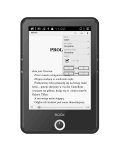
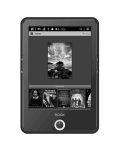
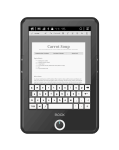
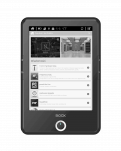
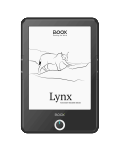
Onyx Boox T68 Lynx 6.8″ eReader Now Up for Pre-Order in Europe

If you’ve been waiting for the opportunity to get your hands on Onyx’s new 6.8″ ereader, here’s your chance.

Arta Tech, Onyx’s retail partner in Poland, is taking pre-orders for the Boox T68 Lynx. The list price is 143 euros plus VAT and shipping, and the Lynx is expected to ship after 9 June.

Onyx has been teasing us with glimpses of the Lynx since October 2013, and so far this ereader looks like everything the Aura HD could have been. The Boox T68, or Lynx, sports a 6.8″ screen with frontlight and touchscreen. It runs Android 4.0 Ice Cream Sandwich on a 1GHz CPU with 512MB RAM, 4GB internal storage, and a microSD card slot. And with a screen resolution of 1440 x 1080, the Lynx has the sharpest of any commercially available E-ink screen.

This ereader is more of a tablet than anything. It runs Onyx’s own reading software but it also ships with a full Android, including the option to install apps from Google Play. It also has Bluetooth, Wifi, a headphone jack, and TTS provided by the specialists at Ivona.

The price plus shipping to the US is around $250, making this ereader more expensive than all other ereaders and even a lot of tablets, but it’s a price I am willing to pay. I bought one.

I know that’s a lot to spend on an ereader sight unseen, but as you can see in the following demo video (found via my competition) it is an impressive device.

Arta Tech

UK eBook Market to Surpass Print Sales by 2018, and Other Nonsense

The ebook market in the UK is growing nicely at the moment, but analysts predict that it is going to grow by leaps and bounds. In a prediction which should sound familiar, PricewaterhouseCoopers believes that ebook sales in the UK will triple over the next 4 years and surpass print sales by 2018.

From The Guardian:

The ebook will overtake the paperback and hardback as Britons' preferred format for reading their favourite novels by 2018, according to a report. The UK consumer ebook market – which excludes professional and educational books – is forecast to almost triple from £380m to £1bn over the next four years.

Over the same period, accounting group PwC predicts that sales of printed editions will fall by more than a third to £912m as the UK population’s reading habits become dominated by tablets, with 50% of the country expected to own an iPad, Kindle or a similar device by 2018.

That prediction is about as likely to come true as PwC’s similar predictions for the US. As you might recall, PwC made a nearly identical forecast last year, saying that US ebook sales would exceed print by 2017. (I debunked that prediction last year.)

In its annual “Entertainment & Media Outlook,” set to be released Wednesday, PwC (PricewaterhouseCoopers) estimates that trade (consumer, not educational or academic) ebooks will drive $8.2 billion in sales by 2017 — surpassing projected print book sales, which it thinks will shrink by more than half during that period.

And PwC made this prediction in 2012 as well. Oh yes, PwC also predicted in 2012 that US ebook sales would exceed print by 2016.

New data from PwC’s media report projects that e-books will make up 50 percent of the U.S. trade book market by 2016.

Do you see where I am going here?

Given the generally flat behavior of the US ebook market this past year, it’s pretty clear that neither of PwC’s predictions for the US will come true. Sure, I am expecting to see some growth, but not enough to fit with PwC’s growth curve. What’s more, I am one of the few people expecting to see growth; many are predicting a flat ebook market or possibly even a declining market.

And if PwC is wrong twice in the US ebook market, what are the chances that their identical prediction will come true in the UK market?

I would rate it as not too damn likely.

Admittedly, we don’t know how the UK ebook market will grow, but we do know that ebooks are currently estimated to make up a smaller share of that market than ebooks make up in the US book market.

But do you really think that the UK ebook market is going to see 4 years of spectacular growth? That doesn’t even pass my BS filters.

Thanks, Malcolm!

PlasticLogic Debuts New Flexible AMOLED Prototype at Display Week 2014

PlasticLogic has been teasing me since January with hints of their new flexible AMOLED screen tech, and today I finally got to see it in person.

PlasticLogic had their new prototype on display today. Like the previous demo units, it uses a color filter on top of a flexible grayscale screen, but unlike the earlier units this one was capable of 256 shades of gray and was capable of full 30fps video.

In comparison, E-ink’s best screen can do close to 15 fps, at 16 shades of gray.

As you can see in the gallery below, the demo unit is impressive more for what it promises might come in the future, rather than what it can do now. It’s not very high resolution, though it colorful.

There’s still no news on who will license the tech and actually produce the screens, but I do know that PlasticLogic won’t be building it; they are looking to license the tech once it is fully developed.

PlasticLogic’s flexible AMOLED screen tech is being developed in partnership with NovaLED, a specialist in OLED and AMOLED technologies. They contributed the expertise to build the half of the screen which is visible to the naked eye, while PlasticLogic contributed the rear of the display, or backplane.

Update: PL posted a promo video on Youtube.

E-ink Debuts a 32″ Color E-ink Screen

E-ink hasn’t had much luck making a color ebook reader screen which was worth buying but their latest color signage might have a better chance of success. The screen tech company debuted a 32″ color sign at Display Week 2014, and compared to E-ink’s 8″ and 9.7″ color screens it looks surprisingly good.

The 32” color display sports a resolution of 2560 x 1440, and measures 27.75” by 15.75”. That give it a dpi of 94, which is very low compared to tablets or smartphone screens, but not for signage. What’s more, E-ink also had a black and white unit on display which sported a much higher resolution screen (5012 x 2880).

Update: There was some confusion before, and I got the stats mixed up. It turns out the grayscale screen has a resolution of 2560 x 1440, while the color screen is rated at 720p resolution. That’s a lower resolution but still workable, IMO, especially at a distance.

The color screen was obviously low resolution, but that turned out to be a plus. By making the color pixels large, E-ink was able to get around the grayness issue I and many others have seen on the 9.7″ Triton E-ink screen. The color pixels on this screen are almost a quarter of a millimeter in size, large enough that you can see them with the naked eye from about a foot away.

The screen looked quite good, and in fact it came close to showing a true white. E-ink’s past color screen have not been able to pull that off, only getting as close as a light gray color.

The new signs was developed in cooperation with Global Display Solutions (GDS). E-ink made the screen, and GDS finished the design with enclosure technology that enables the displays to be deployed in outdoor conditions with very low power consumption. This display is targeted primarily at applications in the digital signage and information kiosk markets, and is available in black and white and color modules.

Barnes & Noble is Shutting Down Their MP3 Audiobook Section

 Barnes & Noble sent an email to their customers yesterday, announcing that they will be shutting down their downloadable audiobook section at the end of the month. No explanation has been given, but customers are advised to download their audiobooks one last time and back them up.

B&N’s audiobook section was supplied by OverDrive, and thanks to the DRM you’ll need OD’s Media Console app in order to download the files. You can find more information in the email below or in the FAQ on the B&N website.

With the AAP reporting sales up 33% in 2013, audiobooks are rapidly growing into a valuable market niche as more people discover the convenience of listening on their smartphone or mp3 player. But it looks like this is not a market where B&N is having much success.

Update: Here’s B&N’s official statement on the matter:

Barnes & Noble is fully committed to the physical audio book business.  We were not satisfied that the digital audio book customer experience met with our high standards, which is why we recently disabled it.  And, we have plans to provide customers with a more well integrated digital audio experience at a future date yet to be determined.  We apologize to our customers for the inconvenience and ask for their patience.

I will freely admit that I didn’t know that B&N sold audiobooks, and given that this section is not easy to find on the B&N website I would not be surprised if most people were similarly unaware. Unlike Amazon, which is doing their best to promote Audible, B&N has the CD and mp3 audiobook sections mixed into a single section. That is not a good way to encourage sales, IMO.

Here’s the email:

Dear X,

We are writing to inform you that effective June 30, 2014, BN.com will no longer support MP3 Audiobooks.

Our records show that you previously purchased MP3 Audiobook(s) from us. If you have not already done so, we urge you to download your Audiobook(s) from BN.com by June 30, 2014. We also recommend that you save your Audiobook(s) onto your devices and back up your files on storage media.

Remember, you must install Media Console on your computer to allow you to download your MP3 Audiobooks — and it will help you easily transfer your MP3 Audiobook(s) to your NOOK and other mobile devices.

Need it? Get it for Windows or Mac.

If you have any questions, consult our Quick Guide for user-friendly answers.

image by Nina Matthews

Bookmate & Scribd: Two very Different Business Models for Subscription eBooks

Both Scribd and Bookmate are in the news this past week, raising funds for expansion. While these two companies ostensibly offer similar services in the ebook subscription market, they have very different business models.

It’s widely known that Scribd uses a pay-per-read model, but less is know about Bookmate. I spent a few minutes talking to the folks from this Russian startup earlier this week at BEA 2014, and it is clear that the company has several advantages over Scribd.

Scribd’s deal with publishers was revealed by Smashwords back in December:

For Scribd’s subscription ebook service, authors will earn 60% of the list price on all qualifying reads, and here they’ve added a cool twist.  With subscription services, the author or publisher earns credit for a full read when the reader reaches a certain trigger point, measured by the percentage of the book that is read.  The first 10% of the book is a free sample, similar to a retailer.  Excluding the sample, once the reader reads an additional 20% of the book, a full sale is triggered and the Smashwords author earns 60% of the list price, up to a maximum of about $12.50 per read.

Edit: Those are what authors are paid; Smashwords’s cut of about 10% isn’t included.

The exact terms offered to publishers likely vary somewhat based on the quality of each publisher’s negotiator, so it is unlikely that all 400,000 titles in the Scribd catalog are limited to $12.50 per read. (On the other hand, that $12.50 ceiling might apply to all of Scribd’s catalog; it would explain why Wiley only offers a limited section of titles.) Scribd’s catalog is likely also limited by the size of the advance which they are rumored to be paying to larger publishers; this too may have affected Wiley’s offering.

Scribd charges $8.99 a month for their service, and it doesn’t take an accountant to realize that the numbers don’t add up. All it takes is for the average reader to finish a fifth of an expensive ebook, and Scribd is in the red for a given month.

Is Scribd doomed? Maybe not, but I do think the terms they offered to Smashwords were generous to the point of being financially nonviable.

Bookmate, on the other hand, has a couple advantages that Scribd lacks. It started in a market where piracy was so rampant that publishers had nothing to lose by signing with Bookmate, and it pays publishers from a pool that consists of 50% of its revenues. Safari Online has used a similar model for over a decade, and it does okay.

(Now that I mention it, I would have thought that Scribd could have gained a similar benefit from focusing on markets where Amazon is so rampant that publishers have nothing to lose, but Scribd does not seem to have turned that to their advantage.)

With 300,000 titles from publishers around the globe, Bookmate now has around 1.5 million subscribers, about 7% of which pay around $5 a month for the service. The fee is collected by Bookmate’s partner telecoms,which brings us to another unique advantage Bookmate has over Scribd.

In addition to apps on smartphones and tablets, Bookmate has also developed reading apps for feature phones. This has let them partner with MVNOs including pay-as-you go companies similar to Tracfone here in the US. In some cases, Bookmate’s partners charge on an incremental day-by-day model, not a monthly fee.

While it is almost a truism that everyone has a cellphone, feature phones still outnumber smartphones in a lot of markets, and not everyone in the world has a credit card. Bookmate’s partnerships enable it to access market segments which Scribd cannot touch.

On the face of it, Bookmate is the more viable business model, but to be honest it is too early to tell. Bookmate’s focus on smaller payments and lower income brackets might give it an advantage in building up a subscriber base, but the smaller payments might not equal what Scribd earns from its monthly fee.

Frankly it is too early to tell.

FeedBooks Acquires Aldiko, Plans to Launch Aldiko App on iOS

The hot news story at BEA this week broke on Tuesday morning.

The indie ebookstore Feedbooks has added many services since it launched in June 2007, including conversion services, a free distribution channel for indie authors, and (much later) commercially published ebooks, and today Feedbooks is adding an ebook app.

Feedbooks has announced this morning that they have added the final stage in the author to reader chain. They have acquired their long time partner Aldiko, the leading ebook app for Android, for an undisclosed sum. The deal was financed by A Plus Finance, one of Feedbooks’s capital investors.

"Aldiko is a key piece of software in the Android ecosystem with its great Epub support and its ability to easily download books through OPDS catalogs," said Hadrien Garduer, founder of Feedbooks. "It is by far the most popular app accessing our catalog, with dozens of thousands of ebooks being distributed every day."

As a mid-sized independent ebook retailer, Feedbooks stocks around 800,000 titles. They also offer a free online ebook creation tool which I believe offers the best-looking output of any of the tools I have tested.

With around 20 million app installs, Aldiko is effectively the Stanza for Android. More readers use that app on Android than use Nook or Kobo Android apps, praising the app for its support for multiple ebook retailers and free ebook sites as well as the apps vast number of formatting options. This app, which is available in both a free and paid version, also supports DRMed ebooks.

I have been told that Aldiko will remain independent, and that Feedbooks founders Hadrien Gardeur and Loïc Roussel, and Aldiko founder Tiffany Wong will jointly run the new company. All of Aldiko’s staff will stay with the company, and they are currently hiring more.

According to Wong, "Basically, Aldiko will be operated as it is now except that we will have more resources after the deal so that we can expand the team, speed up the development and offer a better user experience to users." She added: " In addition, we feel that both companies are now at a stage where merging makes a lot of sense. There are strong synergies between the companies. Together we cover the full end-to-end experience. As the industry is fast consolidating, being able to offer the end-to-end experience is becoming more important if we want to keep innovating."

This is a match made in heaven. While neither Feedbooks nor Aldiko are in the same weight class as Amazon, Google, or Apple, they do each have a reputation for quality. By joining forces, the new whole is definitely going to be stronger that the parts.

Speaking of the whole, Feedbooks hasn’t disclosed all of their plans, but there is a mention in the press release that they want to release an app for iPad and iPhone.  Aldiko is currently hiring an iOS engineer for their Shanghai office, confirming the announcement.